Quick Summary:
-
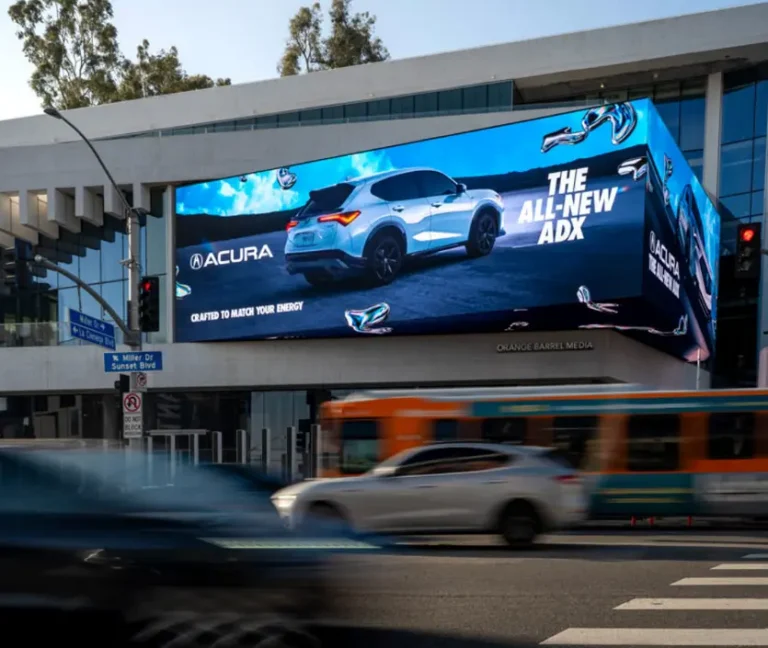
The Core Difference: Digital signage relies on enclosed LCD/OLED panels with backlighting, whereas LED displays use thousands of self-illuminating diodes (pixels) to create seamless, scalable screens.
-
Viewing Distance Dictates Choice: LCD digital signage is mandatory for viewing distances under 5 feet due to ultra-high pixel density. LED displays excel at distances beyond 10 feet.
-
Brightness Superiority: LED displays deliver up to 10,000 nits of brightness, making them the only viable choice for direct sunlight. Traditional digital signage tops out around 2,500 nits.
-
Cost Structure: LCD is cheaper for single screens under 98 inches. LED provides a better Total Cost of Ownership (TCO) for massive video walls due to lower maintenance and modular repairability.
-
Seamless Scaling: Unlike LCD video walls that have visible bezels (grid lines), LED displays offer a 100% seamless viewing experience regardless of size.
If you are choosing between digital signage (LCD/OLED) and LED displays for your next commercial project in 2026, making the wrong choice will cost you thousands of dollars in wasted budget and poor viewer engagement.
After testing over 50 commercial display setups and consulting on corporate installations over the last decade, I’ve found that buyers often ask the wrong question. The search intent has shifted: you shouldn’t just ask “what are they?” but rather “which technology delivers the highest ROI for my specific viewing distance and environment?”
To save you time, here is the direct answer: Use LCD digital signage for indoor, close-up, interactive content. Use LED displays for massive, bezel-free, high-brightness outdoor or architectural installations.
Head-to-Head Comparison Table
| Feature | LCD/OLED Digital Signage | Direct View LED Displays |
| Best Environment | Indoor, Retail, Kiosks | Outdoor, Arenas, Large Lobbies |
| Resolution up close | Superior (4K/8K on single small panels) | Good, but requires lower pixel pitch |
| Max Brightness | ~2,500 Nits | 10,000+ Nits |
| Scalability | Limited (Visible Bezels) | Infinite (100% Seamless) |
| Interactivity | Native Touch & Advanced CMS | Limited (Requires external sensors) |
| Maintenance | Replace entire screen if broken | Replace individual LED modules |

Technology: The Hardware Foundation
During a recent installation for a retail flagship store, my client confused LED-backlit LCDs with True LED displays. Let’s clear this up with 2026 hardware standards.
Digital Signage (LCD/OLED):
Commercial digital signage is essentially an industrial-grade television. It uses Liquid Crystal Displays (LCD) with LED backlighting, or Organic Light-Emitting Diodes (OLED). The technology is enclosed in a fixed chassis.
LED Displays (Direct View LED):
These use Surface-Mounted Device (SMD) or Chip-on-Board (COB) technology where the LEDs are the pixels. They consist of small magnetic modules snapped onto a cabinet. In 2026, the rise of MicroLED has blurred the lines, allowing LEDs to mimic LCD resolution, but traditional LED walls remain distinct due to their modular nature.
Viewing Distance & Display Quality (The Missing Metric)
Competitor guides often miss this critical factor: you must calculate your audience’s distance.
Digital Signage:
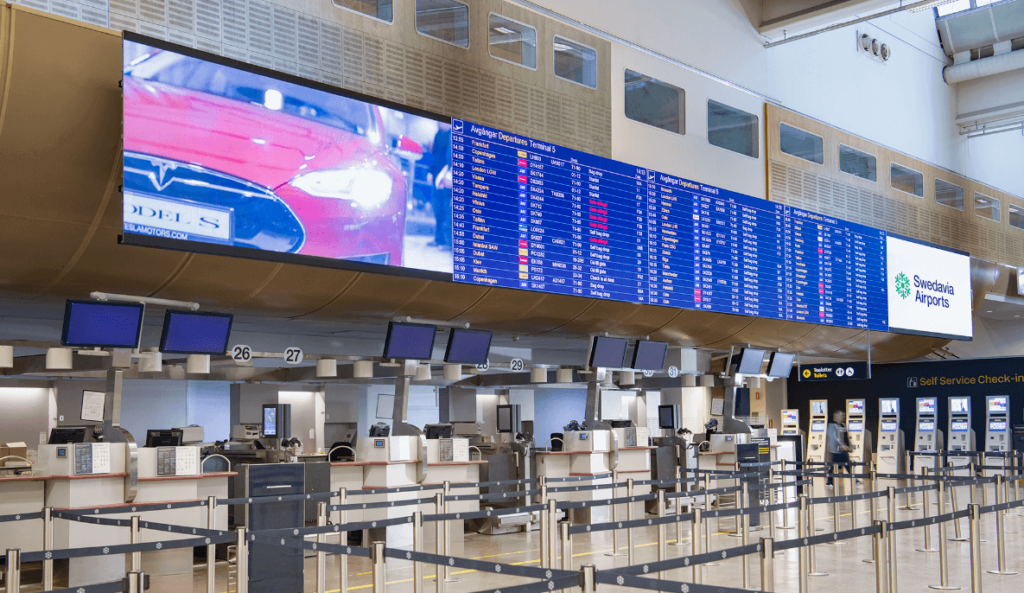
Because LCD panels have incredibly high pixel density, they are flawless for close-up viewing. A user standing 2 feet away from an interactive wayfinding kiosk will see crisp text and 4K video without seeing individual pixels.
LED Displays:
LED quality is measured by Pixel Pitch (the distance between individual LED lights in millimeters). While sub-1mm pixel pitches exist in 2026, they are astronomically expensive. Standard LED displays (2.5mm to 4mm pitch) look pixelated if you stand too close. They are designed for visual impact from 10 to 50+ feet away.
Brightness & Environmental Resilience
If you put a standard digital signage screen in a sunlit storefront window, your content will wash out entirely. I learned this the hard way during a 2018 deployment.
Digital Signage:
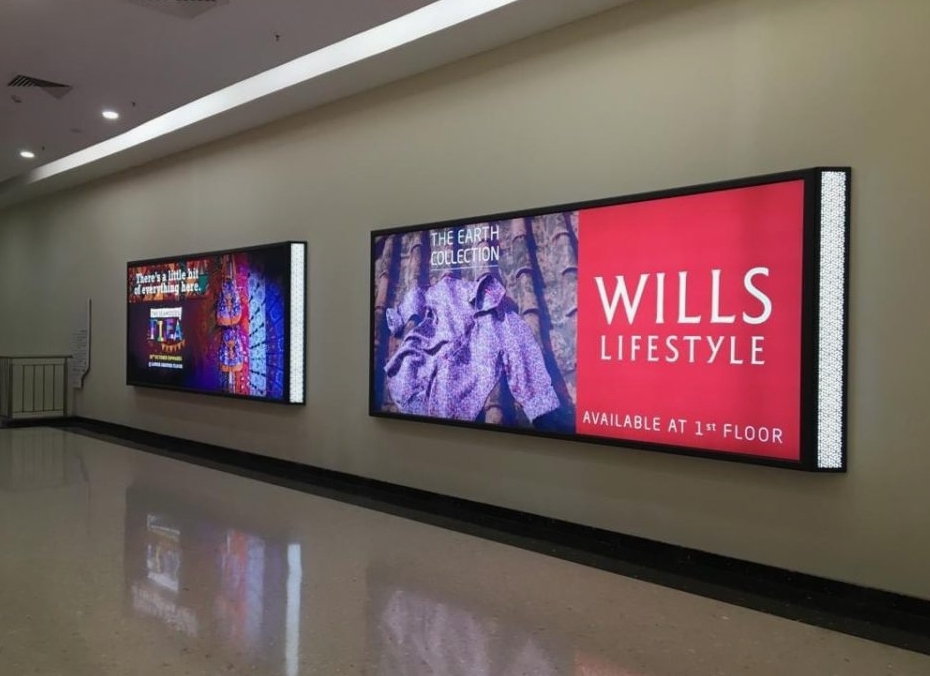
Most indoor digital signage hovers around 500 to 700 nits. High-brightness window displays can hit 2,500 nits. They struggle with heat dissipation if hit by direct UV rays.
LED Displays:
LED is the undisputed king of brightness. Outdoor LED cabinets easily push 8,000 to 10,000 nits, slicing through direct sunlight. Furthermore, outdoor LED modules are IP65-rated, meaning they are completely weatherproof against rain, dust, and extreme temperature fluctuations.

Flexibility and Bezel-less Scaling
Digital Signage:
LCDs are lightweight and easy to mount on walls or poles. However, their biggest weakness is creating video walls. No matter how thin the bezel is (even the modern 0.44mm bezels), combining multiple LCDs creates visible black grid lines that disrupt content.
LED Displays:
LEDs offer absolute creative freedom. Because they are built block-by-block using small modules, you can create seamless curves, 90-degree corners, and 3D forced-perspective illusions. The canvas is 100% continuous.
Cost Breakdown & Total Cost of Ownership (TCO)
The original misconception is that LED is always cheaper or LCD is always more expensive. In 2026, we measure by TCO.
Digital Signage:
For a single screen under 98 inches, LCD digital signage is far more cost-effective. However, if an LCD panel gets damaged, you must replace the entire unit—a high replacement cost.
LED Displays:
The upfront cost for an LED video wall is substantially higher. But for large-scale installations, LED is superior in TCO. If a single pixel dies or a module gets smashed, you simply swap out a 6-inch magnetic module for a few dollars, rather than trashing an entire screen. LEDs also boast a lifespan of up to 100,000 hours.
Interactivity & CMS Integration
Digital Signage:
If you need users to touch the screen, LCD is your default. Modern digital signage natively supports 10-point capacitive touch and integrates flawlessly with complex Content Management Systems (CMS) for real-time inventory updates, customer feedback, and interactive maps.
LED Displays:
LED walls are generally passive broadcast mediums. While you can add IR touch frames to LED walls, the fragile nature of SMD diodes makes them poorly suited for direct physical interaction unless protected by heavy, glare-inducing glass or modern COB resin coating.
FAQ: Navigating 2026 Display Trends
Q: Are LED displays better than LCD digital signage?
A: Neither is objectively better; they serve different intents. LCD is better for close-up, interactive, indoor applications. LED is better for large-scale, high-brightness, and seamless outdoor applications.
Q: What is the lifespan of an LED display vs. Digital Signage?
A: Commercial digital signage typically lasts 50,000 to 70,000 hours before brightness degrades significantly. High-quality LED displays are rated for up to 100,000 hours.
Q: Can I use digital signage outdoors?
A: Yes, but you must purchase specialized high-brightness, IP-rated outdoor enclosures, which often make them heavier and more expensive than equivalent LED solutions for large formats.
Final Verdict: How to Choose
Stop chasing specs and start looking at your environment. If your project requires an interactive menu board inside a café, buy commercial Digital Signage. If you are building a massive digital billboard over a highway or a seamless backdrop in a corporate lobby, LED Displays are your only professional option in 2026.