If you are researching how to make an LED billboard, you must first clarify your scale: are you building a small DIY storefront sign (channel letters), or are you commissioning a massive commercial DOOH (Digital Out-of-Home) digital screen for a highway? The manufacturing processes for these two are entirely different.
Having managed commercial digital signage manufacturing and DOOH installations for the past 10 years, I can tell you that a true commercial LED billboard is not built with a soldering iron in a garage; it is a highly engineered assembly of die-cast aluminum cabinets, specialized SMD modules, and cloud-based synchronous controllers.
This guide breaks down exactly what constitutes a modern LED billboard in 2026, the exact step-by-step professional construction process, the real costs involved, and a modified guide for building small-scale DIY LED signs.
What Exactly is a Commercial LED Billboard?
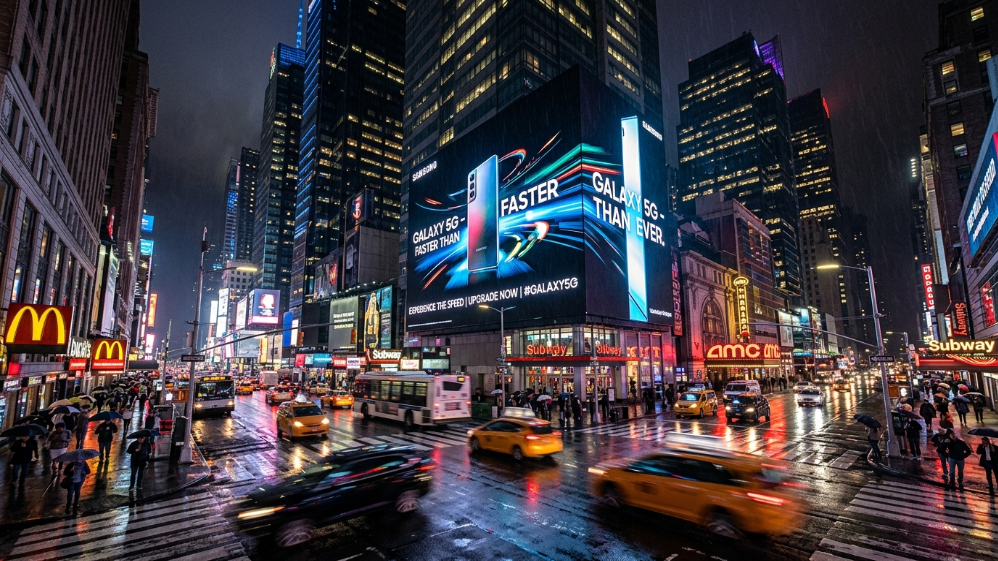
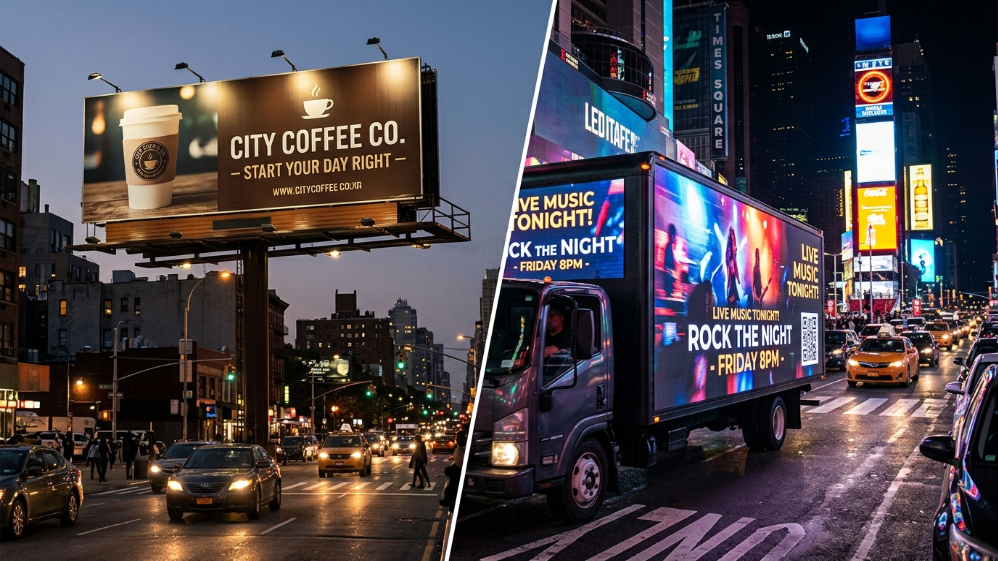
In the past, a billboard was simply a printed piece of vinyl stretched over a steel frame and illuminated by heavy floodlights. Today, an LED billboard is a dynamic, massive flat-screen television engineered to survive outdoors.
Instead of a single LCD panel (like your home TV), an LED billboard is composed of dozens or hundreds of individual square LED Cabinets (usually measuring 960x960mm). Inside each cabinet are smaller magnetic LED Modules, power supplies, and a receiving data card.
When linked together, a central video processor stitches the image across the entire canvas flawlessly. This modular nature means a digital billboard can be custom-built to almost any size or shape—including curved 90-degree corners for Naked-Eye 3D advertising.
The Core Advantages of LED over Print
Why are real estate developers and advertising agencies ripping out traditional static billboards and replacing them with digital LED versions? Based on field data from 2026, the ROI justifies the upfront cost:
-
Multi-Tenant Advertising: A static billboard sells to one client per month. A digital CMS (Content Management System) allows media owners to rotate 6 to 10 different advertisers every minute, multiplying revenue.
-
Daylight Visibility: Modern SMD diodes push brightness levels over 8,000 nits, cutting through intense morning glare far better than front-lit printed vinyl.
-
Remote Content Management: Gone are the days of paying a crew with cherry-pickers to paste new vinyl. Through 4G/5G cloud-based controllers (like NovaStar’s VNNOX), operators update content globally from a laptop in seconds.
-
Dynamic Triggers: Modern DOOH screens integrate with live data feeds. A billboard can automatically display a coffee advertisement when the local temperature drops, or an umbrella ad when it starts raining.
How to Make an LED Billboard: The Professional DOOH Process
When clients ask me how we “make” a massive 50-square-meter highway screen, they are often surprised to learn that 40% of the work is civil engineering. Here is the actual professional workflow for building a commercial LED billboard:
Phase 1: Structural Steel Engineering
You cannot attach an LED screen directly to a wall. A custom galvanized steel sub-structure must be welded to the host building or highway pylon. This structure is designed by civil engineers to handle extreme wind loads, seismic activity, and the sheer weight of the display (which can exceed 2,000 kg).
Phase 2: Cabinet Manufacturing & Assembly
In the factory, the hardware is assembled.
-
Die-Cast Aluminum: We use precision CNC-machined aluminum cabinets to ensure there are zero visible gaps (seams) between the panels.
-
Module Placement: Waterproof LED modules are screwed or magnetically attached to the front of the cabinet.
-
Internal Wiring: IP68-rated power supplies and data receiving cards are wired inside the sealed cabinet.
Phase 3: The Factory Aging Test
Before shipping, the entire billboard is assembled on the factory floor. We run a 72-hour continuous “aging test” where the screen displays pure white at 100% brightness. This forces any weak diodes or faulty power supplies to fail and be replaced before the screen ever reaches the installation site.
Phase 4: On-Site Rigging and Splicing
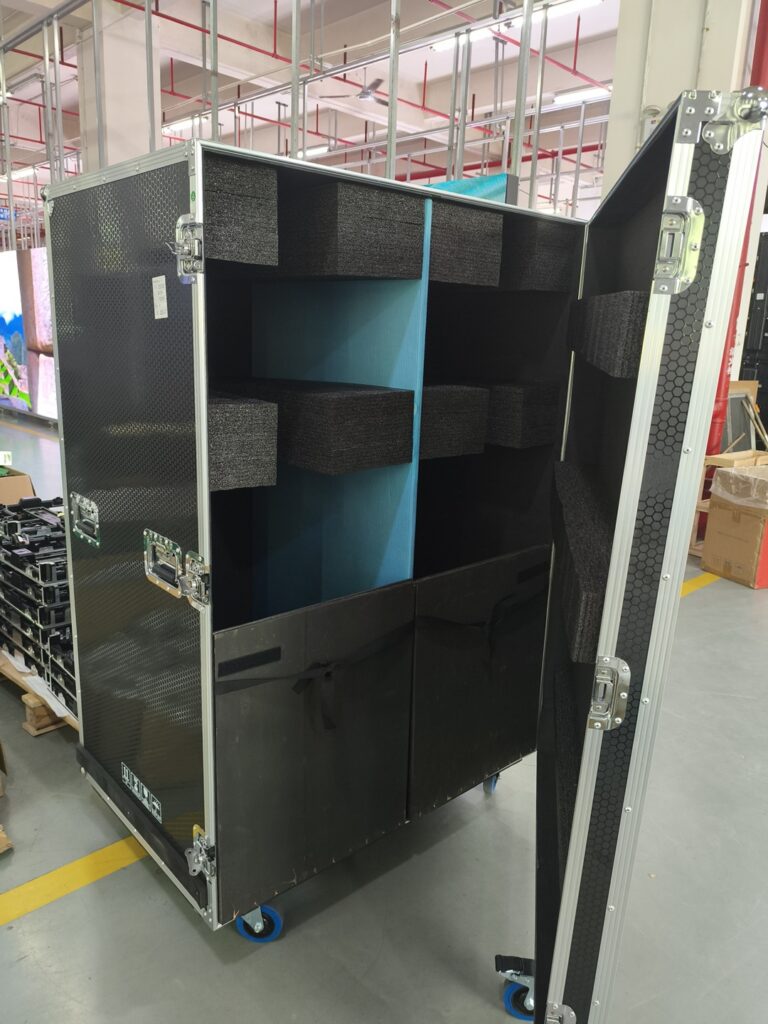
The cabinets are shipped to the site in flight cases. A crane hoists the cabinets onto the steel structure, where technicians bolt them together row by row. Fiber optic cables are run from the billboard back to a climate-controlled server room hosting the central video processor.
Phase 5: Software Mapping
Once powered on, the screen will look like a jumbled mess. A technician connects to the screen using software like NovaLCT, maps the X and Y coordinates of every single cabinet, and synchronizes them so they act as one unified monitor.
How to Make a Small Storefront LED Sign (The DIY Method)
If you found this article looking to create a small, personalized glowing sign for a retail shop or cafe, the professional method above does not apply to you. You are looking to build LED Channel Letters or an LED Light Box.
Here is how you can make a custom storefront sign yourself.
Tools & Materials Required:
-
30W or 40W electric soldering iron and rosin-core solder.
-
Electric drill (with 5mm or 8mm metal bits).
-
Pre-molded iron or aluminum character shells (purchased from a sign supply shop).
-
12V waterproof LED string lights (LED injection modules).
-
A dedicated 12V LED switching power supply.
-
Industrial glass glue or a heavy-duty glue gun.
The Step-by-Step DIY Construction Method:
-
Drilling the Shell: Take your pre-molded iron characters. Drill holes through the metal face spaced roughly 10mm to 30mm apart. Expert Tip: The closer the holes, the brighter the sign, but the more LEDs you will need to buy.
-
Inserting the Lamps: Clean off any metal burrs from drilling. Push your LED string bulbs through the holes from the inside of the letter out.
-
Sealing: Use your glass glue or hot glue on the inside of the letter to lock each LED bulb firmly into place so wind cannot push them back in.
-
Wiring the Circuits: This is the critical step. LED strings are wired in parallel. Connect all the red wires (positive) together, and all the black wires (negative) together. Run a primary line from these grouped wires to your 12V power supply. Never plug 12V LEDs directly into a 110V/220V wall outlet, or they will explode.
-
Aging and Testing: Turn on the power supply. Let the sign run for 24 hours to ensure no bulbs burn out and the soldering joints hold up to thermal expansion.
2026 Breakdown: Professional LED Billboard Production Costs
A major content gap in old industry blogs is the failure to explain total project costs accurately. If you are budgeting for a commercial digital billboard, you must categorize your expenses into hardware, structural, and integration costs.
The LED Light Source & Modules (Hardware Cost)
This is the core visual component. Depending on the pixel pitch (resolution), outdoor commercial panels generally cost between $500 to $1,500 per square meter. P10 (10mm pitch) is cheaper and used for high-speed highways. P4 (4mm pitch) is expensive and used for close-range pedestrian malls.
Structural Frame & Panel Materials
The external casing matters. Galvanized steel cabinets are cheaper but heavy and prone to rust over a decade. In 2026, the industry standard is die-cast magnesium or aluminum, which costs a premium but saves thousands of dollars in structural steel support because of its low weight.
Video Processing & Additional Functions
An LED billboard is just dead metal without a “brain.” The video processor and sending cards are what translate your raw media files into specific pixel data. Many first-time buyers make the fatal mistake of underfunding this critical component, leading to constant technical failures.
While a basic, locally wired synchronous controller might cost around $800, a professional DOOH (Digital Out-of-Home) screen in 2026 requires an autonomous, remotely managed ecosystem.
Expert Field Note: To ensure 100% uptime and legal compliance, you should expect to spend between $2,000 and $5,000+ on your control ecosystem to integrate the following essential hardware and software features.
Essential Smart Control Features for 2026:
-
🌐 Asynchronous 5G Cloud Playback
Instead of leaving a vulnerable Windows PC physically housed inside the billboard structure, modern media players (such as the NovaStar Taurus series) utilize built-in 5G SIM modules. This allows your agency to upload, schedule, and change 4K video content globally via cloud platforms (like VNNOX) right from a laptop. -
☀️ Automated Brightness Sensors
This is no longer just a “nice-to-have” feature; it is legally mandatory in most municipalities. Ambient light probes continuously read the sun’s glare, automatically dropping the screen from a blinding 8,000 nits at noon down to 500 nits at midnight to strictly comply with local light pollution and traffic safety laws. -
🔌 Smart Power Relays (Remote Reboot)
If a billboard’s operating system freezes, dispatching a bucket truck and a technician to the highway at 2:00 AM costs thousands of dollars. Smart power distribution units (PDUs) allow your IT team to execute a hard hardware reboot remotely via a smartphone app. -
🔄 Dual Signal Redundancy
Commercial setups run a “ring loop” data architecture. If a primary ethernet or fiber-optic cable is damaged by weather or pests, the secondary backup line instantly takes over in milliseconds. The screen never goes black, ensuring zero revenue loss from paying advertisers.
Surface Treatment & Environmental Protection
To survive coastal salt fog or desert sandstorms, outdoor billboards require “conformal coating” on the PCB boards and UV-resistant plastic masks over the diodes. These surface treatments are usually baked into the per-square-meter cost but should always be explicitly requested in your manufacturing contract.
Logistics and Import Taxes
LED cabinets are incredibly heavy and bulky. Shipping a 30-square-meter screen from a manufacturing hub in Shenzhen to Los Angeles or Dubai via sea freight will incur significant costs. Always calculate the “Landed Cost” (DDP or CIF terms), which includes customs duties and final mile flatbed trucking.
Navigating 2026 Structural & Regulatory Challenges
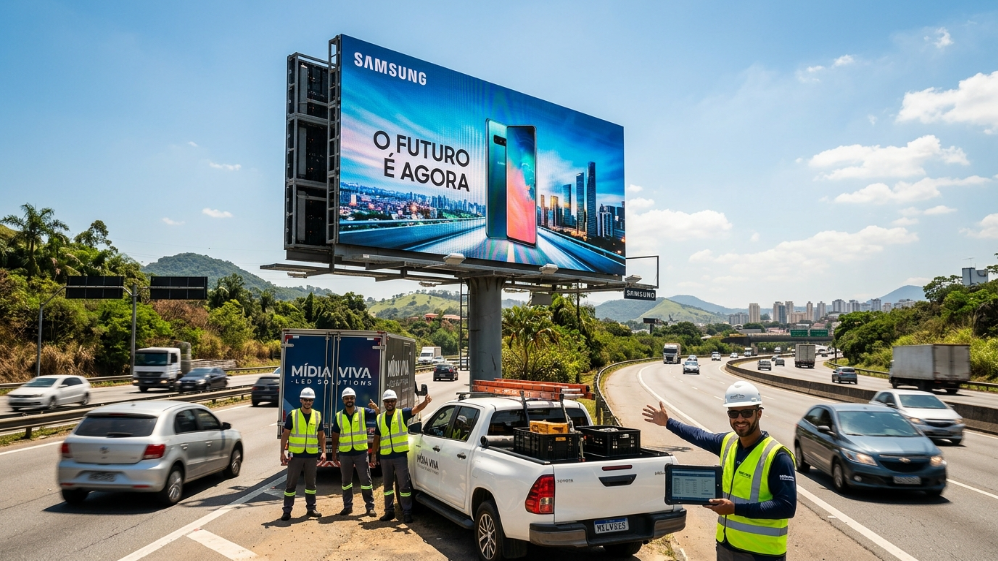
If you are planning to build a large LED billboard, the actual assembly of the LEDs is the easiest part. The real challenge lies in compliance.
When I audit failed DOOH projects, 90% of them fail because they ignored local municipality laws. In 2026, you cannot simply erect a bright screen facing traffic.
-
Light Pollution Compliance: Most modern cities mandate that outdoor billboards must automatically dim after sunset. Your screen must be equipped with an ambient light sensor and configured in the software to drop to a maximum of 300 to 500 nits at night to prevent blinding drivers.
-
Structural Permitting: You will need a licensed structural engineer to sign off on wind-load calculations before your city council approves the build.
-
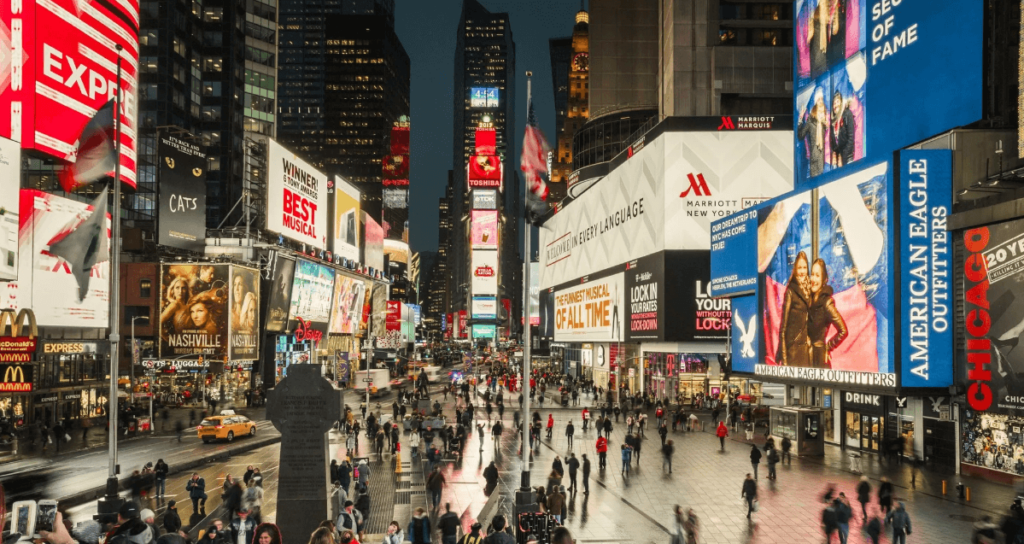
Refresh Rate Standards: If the billboard is in a high-tourist area (like Times Square or Piccadilly Circus), people will take photos of it. If you buy cheap hardware with a 1920Hz refresh rate, the screen will show ugly black scan lines on smartphone cameras. Always specify a 3840Hz high refresh rate for commercial builds.
Frequently Asked Questions (FAQ)
How long does an LED billboard last?
A high-quality commercial LED billboard built with premium SMD diodes and operated responsibly (not running at 100% brightness 24/7) will last approximately 100,000 hours, which translates to roughly 10 to 11 years of continuous operation.
Does a digital billboard use a lot of electricity?
Yes. Power consumption is a major operational cost. A modern outdoor LED billboard consumes an average of 250 to 350 watts per square meter, peaking at around 800 watts when displaying bright white content on a sunny day.
How do I fix a broken pixel on a massive billboard?
Commercial LED displays are modular and strictly front-serviceable or rear-serviceable. If a section dies or suffers physical damage, you do not replace the whole screen. A technician climbs into the catwalk behind the screen (or uses a bucket truck in the front), unscrews the specific 320x160mm module, unplugs the data ribbon, and snaps a spare module into its place. The repair takes less than five minutes.
Final Thoughts on Your LED Project
Whether you are soldering a small open sign for your bakery or drafting a multi-million-dollar DOOH network, mastering the basics of LED hardware is critical. For large-scale commercial deployments, do not try to piece together parts from random vendors. Partner with a professional LED display manufacturer who can provide engineered blueprints, matched-batch modules, and comprehensive warranty support to guarantee your advertising investment lasts into the next decade.