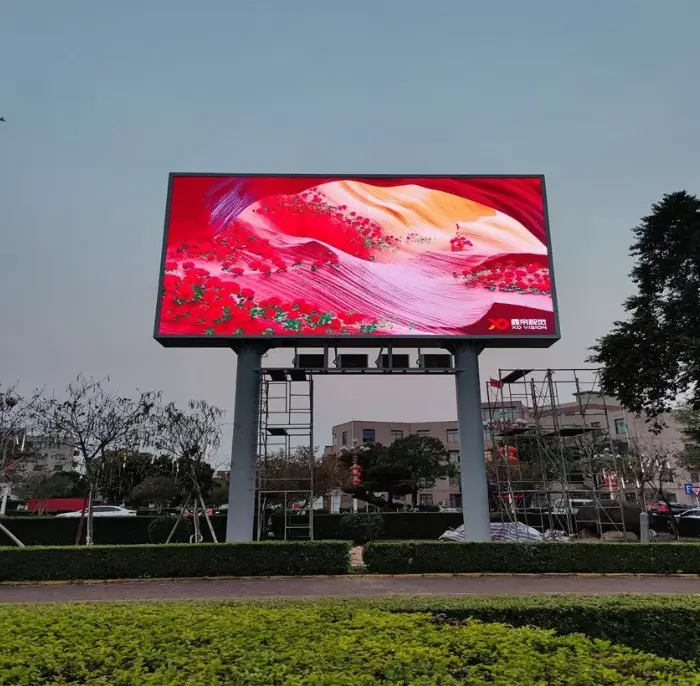
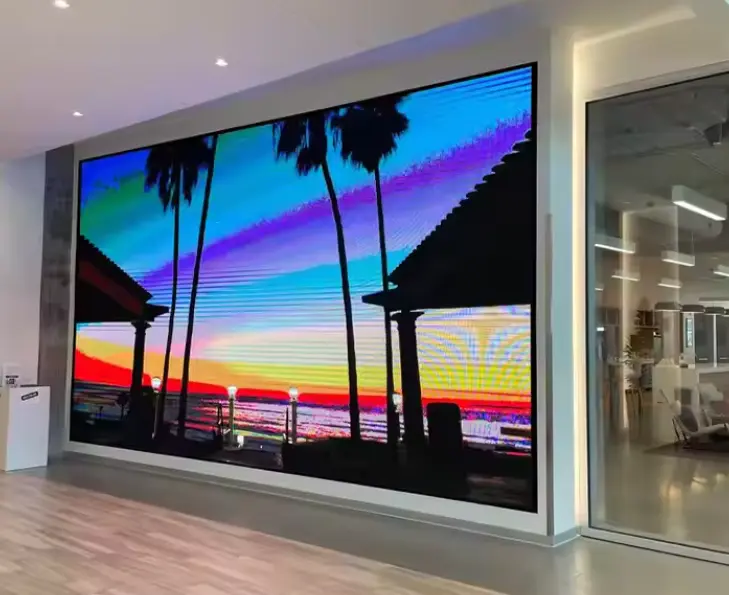
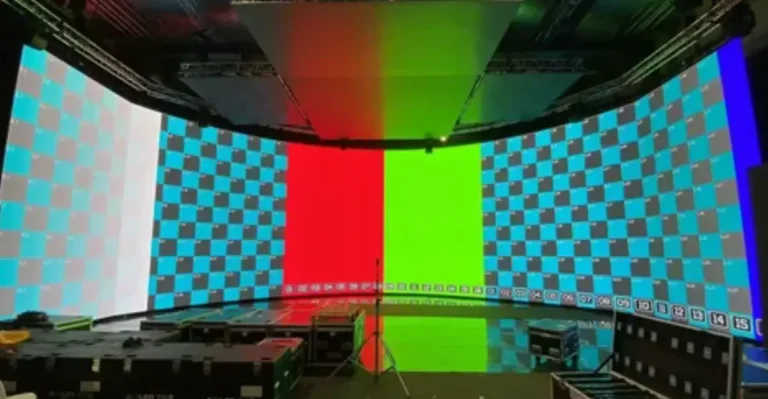
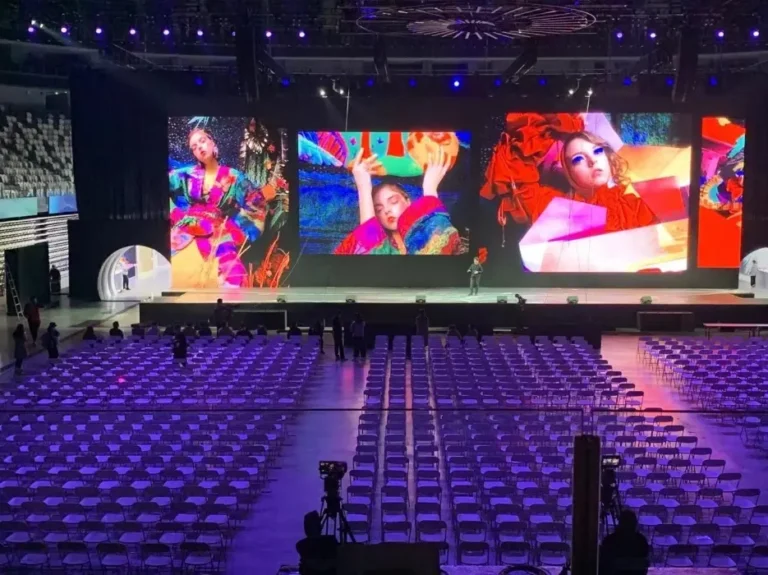
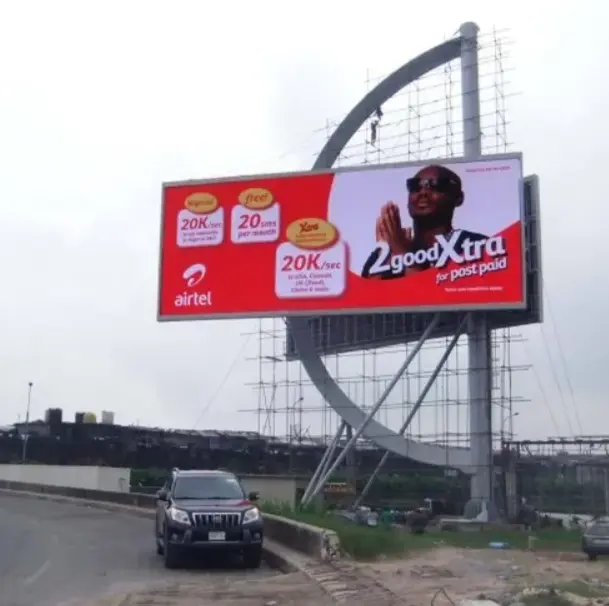
In the world of Digital Out-of-Home (DOOH) advertising, 10,000 nits of brightness represents a clear dividing line between standard outdoor displays and truly top-tier commercial media.
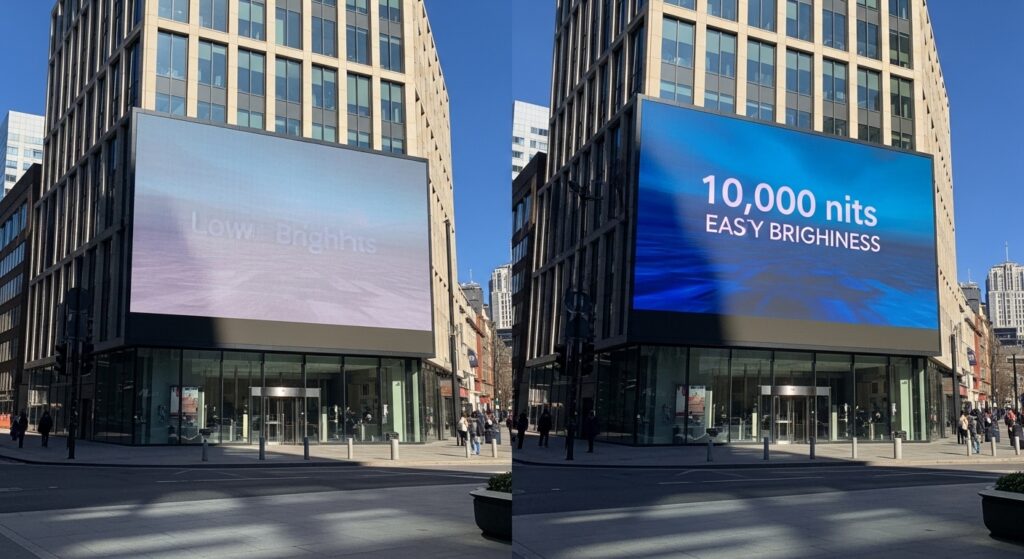
The core value of 10,000 nits is not simply “being brighter.” Its real purpose is to maintain high contrast and color saturation under extreme lighting conditions—specifically up to 100,000 lux of direct midday sunlight in summer—while completely eliminating the common “washout” effect.
For event production procurement managers, export-oriented factory owners, and manufacturing engineers, choosing a 10,000-nit solution is not about pushing visual limits. It is about solving real operational pain points:
-
rapid brightness decay caused by excessive heat
-
high power consumption that drives up long-term operating costs
As a national high-tech enterprise with 14 years of industry experience, Sostron has leveraged breakthroughs in thermal management from its 4,000-square-meter R&D center to deploy multiple 10,000-nit projects worldwide—achieving a reliable balance between performance, efficiency, and service life, even in extreme brightness environments.
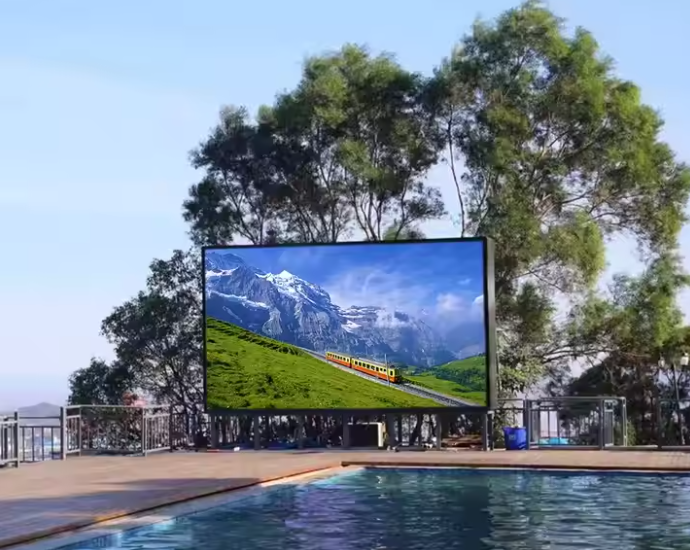
Why 10,000 Nits Is the Only Viable Option in Extreme Sunlight
Before discussing specifications, it is critical to understand one basic physical reality: direct sunlight is extraordinarily bright.
According to industry reference data, when ambient light exceeds 5,000 lux, conventional 5,000-nit displays already begin to cause visual fatigue. In tropical regions or high-latitude areas at noon, ambient light intensity frequently reaches 80,000–120,000 lux.
Fighting the “Washout Effect”
When a display’s brightness is lower than reflected ambient light, viewers see a washed-out gray image. For advertisers, this directly translates into lost attention and sharply reduced ROI.
Based on real-world measurements from Sostron outdoor projects in southern France, switching to Ares Series 10,000-nit displays increased the effective viewing distance by over 40% compared to standard 6,000-nit screens.
The Strategic Value of Brightness Headroom
A common question from engineers is:
“Do I really need to run 10,000 nits all the time?”
The answer is no.
Ten thousand nits provides brightness headroom, not constant output. It ensures the screen can deliver peak visibility under extreme conditions, while intelligent light sensors automatically reduce brightness during mornings, evenings, and overcast conditions—significantly extending LED lifespan.
Industry Reference Data
According to IEC 62341 standards and outdoor display contrast studies:
-
For sunlight-readable visibility, the contrast ratio between screen brightness and reflected ambient light must be at least 5:1
-
For “cinema-grade” visual performance, the ratio must exceed 10:1
10,000 nits is the recognized benchmark for consistently achieving these ratios in direct sunlight.
Core Technology: How Sostron Solves the Heat Challenge of High Brightness
For manufacturing engineers, 10,000 nits is both exciting and concerning.
Traditionally, brightness increases are achieved by raising current, which results in higher power consumption and severe heat buildup. Sostron’s engineering team breaks this trade-off through three core technologies—proving that high brightness does not have to mean high heat.
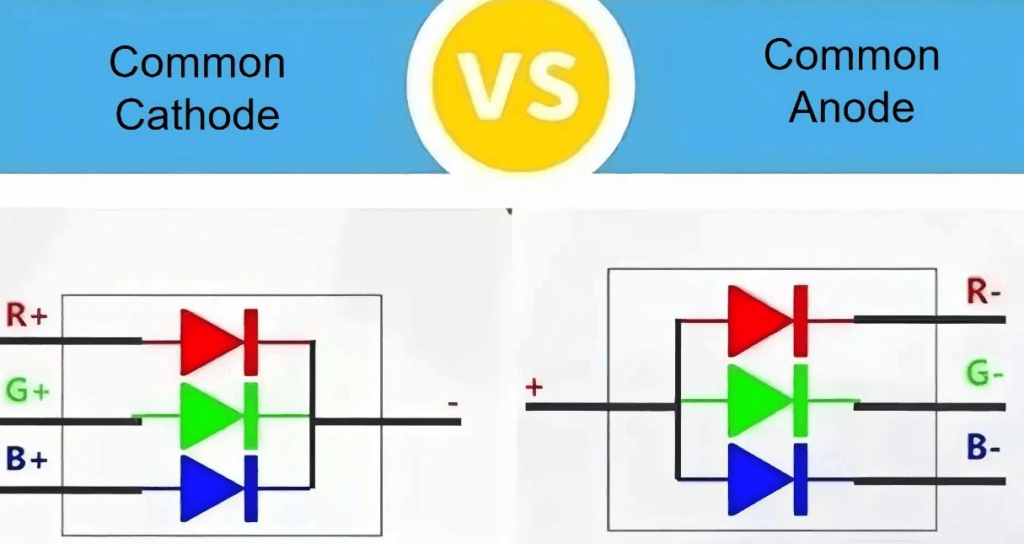
Common Cathode Energy-Saving Technology
This is the core architecture of the Ares Series (Classic Energy-Efficient Outdoor) displays.
Traditional Common Anode Design
-
RGB LEDs share the same voltage
-
Red LEDs require less voltage
-
Excess voltage is converted directly into heat
Sostron Common Cathode Design
-
Precise voltage is delivered individually to R, G, and B LEDs
Based on internal testing, this architecture:
-
reduces power consumption by 30–50%
-
lowers operating temperature by more than 15°C (27°F)
Full-Aluminum Structure and Passive Thermal Design
Unlike standard plastic modules widely used in the market, Sostron’s flagship products utilize full aluminum cabinets and modules.
Aluminum has significantly higher thermal conductivity than plastic. Combined with a fan-free, silent design, heat is efficiently dissipated through the module backplate into the air—without mechanical failure points.
Core Technical Comparison: 10,000-Nit Displays
| Key Feature | Sostron Ares Series (10,000 nits) | Typical High-Brightness Displays (8,000 nits) |
|---|---|---|
| Driving Architecture | Common Cathode, energy-saving | Traditional Common Anode |
| Cabinet Material | Ultra-light full aluminum (≈20 kg/m²) | Die-cast aluminum or steel |
| Cooling Method | Passive conduction, fan-free | Fan-dependent forced airflow |
| Protection Rating | IP65, dual-side potting | Single-side protection or basic waterproofing |
| Typical Lifespan | >100,000 hours (minimal decay) | ~50,000 hours (accelerated decay from heat) |
From Brazilian Highways to Chilean Music Festivals
Real-World Applications of 10,000-Nit Displays
With 14 years of global deployment experience, Sostron views 10,000-nit displays not as simple hardware—but as 24/7 communication tools. Two representative scenarios illustrate this clearly.
Transportation Infrastructure: São Paulo Highway Project
Highway environments in São Paulo are extremely demanding. Displays face intense UV exposure and sudden heavy rain.
Challenge
At highway speeds, displays below 8,000 nits cause motion blur or ghosting at long distances.
Solution
The project adopted Ares Series P5 high-brightness displays. Peak brightness of 10,000 nits ensures traffic guidance and commercial messaging remain sharp even at noon.
Engineering Insight
Experience from São Paulo—and similar projects in Cairo and African crossroads—confirms that IP65 dual-side potting combined with ultra-high brightness is essential for maintaining low failure rates over five years or more in desert and tropical climates.
Procurement Decision Model
Evaluating Total Cost of Ownership (TCO)
For factory owners and engineers, initial purchase price (CAPEX) is only part of the equation. Operating expenses (OPEX) ultimately determine profitability.
Five-Year Cost Comparison (100 m² Outdoor Display)
| Cost Category | Sostron Ares 2 (Common Cathode) | Standard Market Displays (Common Anode) | Difference |
|---|---|---|---|
| Annual Electricity Cost | ~$12,000 | ~$19,500 | ~38% energy savings |
| Cooling System Maintenance | $0 (fan-free) | ~$1,500 (fan replacement & cleaning) | Reduced hardware wear |
| Brightness Degradation | <10% after 5 years | >25% after 5 years | High-brightness reserve extends lifespan |
| Maintenance Frequency | Front/rear service, very low | Frequent PSU inspections | Aluminum structure is more stable |
Practical Insight
Although 10,000-nit displays may cost 15–20% more upfront, energy and maintenance savings typically offset the price difference within 24 months.
FAQ: Common Questions About 10,000-Nit Outdoor LED Displays
Q1: Will 10,000 nits cause light-pollution complaints?
Answer:
Ares Series displays include intelligent ambient light sensors integrated with cloud-based CMS control.
-
Daytime: full brightness for visibility
-
Nighttime: automatically reduced to 500–800 nits
This protects eyesight and complies with local environmental regulations.
Q2: Why emphasize full aluminum instead of steel cabinets?
Answer:
Steel cabinets act as heat reservoirs under high brightness. If heat from 10,000 nits cannot dissipate quickly, irreversible LED brightness decay occurs.
Aluminum dissipates heat over three times faster, which is critical for achieving a 100,000-hour service life.
Q3: Are ultra-bright displays suitable for glasses-free 3D?
Answer:
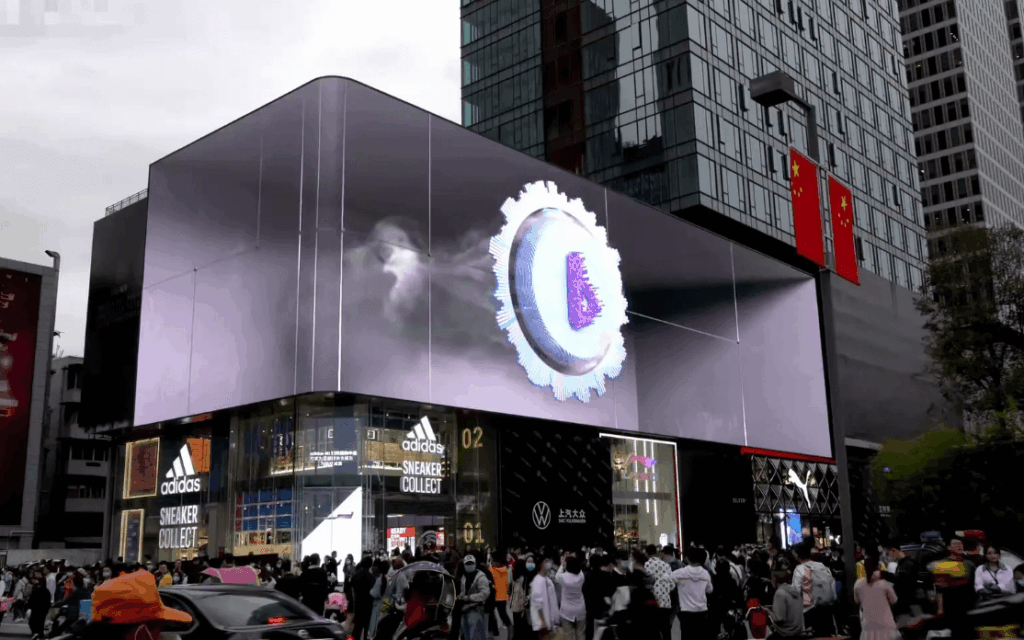
Absolutely. Glasses-free 3D relies heavily on contrast and brightness depth. Higher brightness enhances shadow layering and depth realism—especially in outdoor urban environments—creating a far stronger sense of visual immersion.
Conclusion: Unlimited Vision, Grounded Quality
In the outdoor display market, 10,000 nits is not a vanity specification. It is a safeguard for brand visibility and advertising ROI.
From highways in São Paulo to city centers in London, Sostron continues to rely on two core pillars—Common Cathode energy efficiency and full-aluminum thermal design—to deliver uncompromising performance.
If you are planning a landmark outdoor project or require a solution tailored to specific climate conditions, Sostron’s engineering team provides direct technical support from its 15,000-square-meter manufacturing base to the installation site.
References:
IEC 62341 – LED Display Lighting Standards
ASTM Standards – Outdoor Visual Signage