When launching a large-scale digital project, LED screen daily power consumption calculation is the technical cornerstone that determines the success or failure of the project. As a chief engineer, I suggest that you skip those complex physics textbooks and directly use the practical model we have summarized for global system integrators.
The following is a quick estimation table of daily power consumption based on mainstream hardware efficiency in 2026:
Table 1: Comparison of Average Daily Power Consumption Under Different Technical Architectures (Taking a 50㎡ outdoor screen running for 16 hours as an example)
| Screen Technology Type | Maximum Power Consumption (Max) | Average Power Consumption (Avg) | Daily Power Consumption (Estimated) | Core Technical Endorsement |
|---|---|---|---|---|
| Traditional Common Anode (SMD) | 850W/㎡ | 300W/㎡ | 240 kWh | Standard outdoor P5 solution |
| Sostron ARES Series | 600W/㎡ | 180W/㎡ | 144 kWh | Common Cathode |
| High-end COB Flip Chip | 550W/㎡ | 160W/㎡ | 128 kWh | Cobra Series (Indoor Ultra HD) |
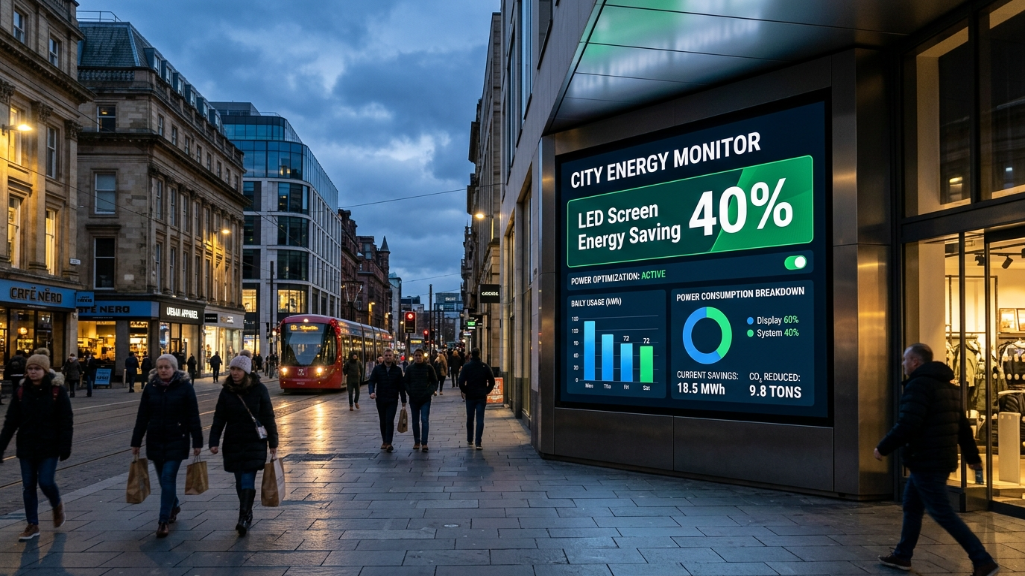
The conclusion is obvious: simply by switching to common cathode technology, you can save nearly 40% of electricity costs every day.
Why Accurate Power Consumption Budgeting Is the “Lifeline” for B2B Buyers?
Based on our experience of delivering more than 6,000 projects in over 90 countries, many engineering contractors often fall into two extremes in the early planning stage: either overestimating power consumption, leading to inflated costs (CAPEX) for distribution cabinets and cables and wasting budget; or ignoring the additional power consumption caused by heat dissipation in high summer temperatures, resulting in frequent tripping during peak operation periods.
In a highway P5 project delivered by Sostron in Brazil, the client initially faced extremely strict power quotas. Based on our ARES series measured data, we customized an energy efficiency solution for them. Through precise daily power consumption calculation, the client not only reduced the initial power distribution construction investment by 30%, but also obtained local green energy subsidies due to its energy-saving performance. This proves that data is not just cold numbers—it is the guarantee of your ROI (Return on Investment).
Basic Algorithm: How to Scientifically Calculate the Daily Power Consumption of LED Screens?
To obtain accurate values, you must distinguish between theoretical maximum power consumption and actual average power consumption.
Key Formula: From Physical Parameters to Operating Costs
In the LED industry, the most common calculation logic is as follows:
Maximum Power Consumption (P_max)
This is the instantaneous power when the screen displays 100% full white at maximum brightness. The formula is:
Power (P) = Voltage (U) × Current (I)
Average Power Consumption (P_avg)
This is the actual power consumption based on dynamic changes in video content. Based on our engineering experience, P_avg is usually about 30% to 50% of P_max.
Daily Total Power Consumption (W_daily)
Daily Energy (kWh) = Average Power (W/㎡) × Area (㎡) × Operating Time (h) ÷ 1000
Why Content Material Is the “Regulator” of Energy Consumption?
LED is a self-emissive technology. This means that when the screen displays black areas, the corresponding LEDs are in a dormant or low-current state.
Feature: High contrast black level performance.
Business Value: If your advertising content uses a dark background, the actual electricity cost will be more than 20% lower than playing light-colored content. When designing indoor display solutions for luxury brands such as Dior, we often leverage this feature, combined with the ultra-high black level control capability of the Cobra series, to achieve a perfect balance between visual depth and energy efficiency.
Practical Example: Calculating a 50㎡ ARES Outdoor Screen
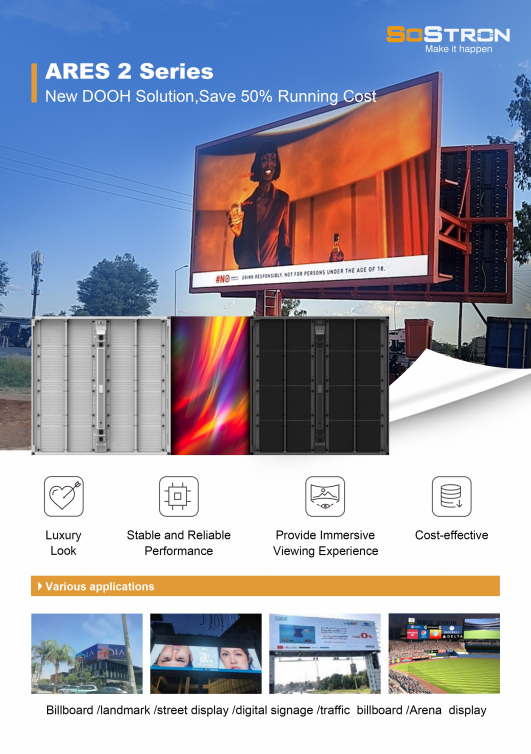
Assume a 50㎡ ARES P8 outdoor display is installed in Dubai, operating 16 hours per day for DOOH advertising.
- ARES Maximum Power Consumption: ≈ 650W/㎡
- Estimated Average Power Consumption (40% load factor): 260W/㎡
- Daily Energy Consumption:
260W × 50㎡ × 16h = 208 kWh - Benchmark Comparison (Traditional Solution):
Using a conventional configuration with an average of 400W/㎡:
400W × 50㎡ × 16h = 320 kWh - Energy Savings:
A daily reduction of 112 kWh. Under commercial electricity pricing, this gap compounds into a significant annual operating cost advantage.
The “Behind-the-Scenes Drivers” of LED Video Wall Energy Consumption
In addition to the screen power itself, several physical variables can significantly affect your electricity bill.
Brightness and Ambient Light Control: Nits Is Not Always Better
Outdoor screens usually require 5,000 to 10,000 nits to counter direct sunlight.
Technical Logic: For every 1,000 nits increase in brightness, power consumption does not increase linearly but rises in steps due to current thermal effects.
Solution: All Sostron outdoor series are equipped with a brightness auto-adjustment system. It senses ambient light in real time through sensors. On cloudy days or at night, the system automatically reduces output current. This not only extends LED lifespan but also significantly reduces daily power consumption at night.
Scan Mode and Driver IC Efficiency Loss
Screens with different pixel pitches use different scan modes, such as 1/2 scan, 1/5 scan, or static scan.
Professional Analysis: The lower the scan ratio (e.g., static scan), the higher the brightness but the greater the instantaneous current.
Energy Efficiency Strategy: We use high-efficiency driver ICs with high power factor correction (PFC). This means the power supply unit (PSU) can convert more electrical energy into light rather than wasting it through heat dissipation.
Hidden Energy Consumption of Cooling Systems: Fans and Air Conditioning
In tropical regions, internal heat accumulation is the enemy of electronic components.
Traditional Drawback: Ordinary iron cabinets have poor heat dissipation and must rely on high-power industrial fans or even external air conditioning. This part of the electricity cost often accounts for 10%–15% of total power consumption.
Sostron Optimization: Our Storm Pro series uses die-casting aluminum cabinets. The high thermal conductivity of aluminum, combined with a fanless design, allows heat dissipation through natural convection. In daily power consumption calculations, you can directly eliminate the “cooling equipment” budget item—this is the dimensionality reduction brought by structural engineering.
Technological Breakthrough: How Common Cathode Technology Reshapes Your Electricity Bill?
When performing LED screen daily power consumption calculation, the core variable is not the number of LEDs, but the topology of the driver chip. As the R&D core of Sostron, we are committed to solving the most troublesome operating expenses (OPEX) for B2B customers through innovation in underlying circuits.
Traditional Common Anode vs. Sostron Common Cathode: Eliminating Ineffective Heat
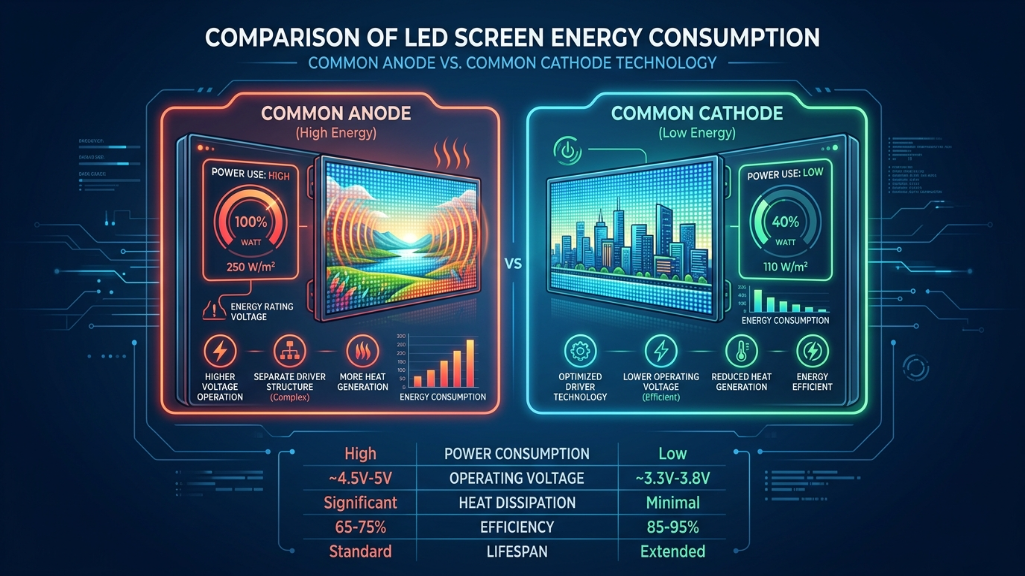
Traditional LED displays mostly use a “common anode” design, where red, green, and blue chips are powered by a unified voltage (usually 5V).
Physical Pain Point: Red chips actually only require about 2.8V. In a common anode structure, the excess 2.2V is converted into heat through resistors.
Sostron Solution: Our ARES series adopts Common Cathode Technology. Through independent power supply, it precisely allocates the optimal voltage required for red, green, and blue chips.
Value Transformation (FAB): Reduced heat generation means slower aging of electronic components. According to measured data, the ARES series can save 50% of operating electricity costs compared to similar products while maintaining 10,000 nits brightness. For long-term DOOH projects, this is not only energy saving but also direct cash flow optimization.
Measured Data Comparison: The Operational Economics of the ARES Series
Based on our delivered outdoor P3.9 project in southern France, we can make a simple ROI projection.
Experimental Group: 100㎡ ARES series (common cathode).
Control Group: 100㎡ traditional outdoor screen (common anode).
Result: Under the same brightness settings, ARES can save approximately 4,500 kWh per month. Based on the average commercial electricity price in Europe, the client can fully offset the initial price premium of the screen within 18–24 months through electricity savings.
Purchasing Guide: How to Choose a Truly Low-Power, High-Performance LED Screen?
As a buyer, when reviewing the technical specifications provided by suppliers, you should pay attention to the key indicators hidden behind “power”.
Check the PFC Indicator of the Power Supply
An excellent power supply unit (PSU) should have a high PFC value (usually greater than 0.95).
Professional Background: The higher the PFC value, the higher the utilization efficiency of electrical energy and the lower the line loss.
Pitfall Avoidance: Low-cost screens often use cheap power supplies. Although the panel’s nominal power consumption is not high, they impose a significant reactive power burden on the grid, easily causing transformer overheating or electricity penalties.
Pay Attention to Energy Certifications and High Efficiency Ratings
Do not rely solely on verbal promises from salespeople. Formal ETL, FCC, or CE certification reports usually include energy efficiency test data. All Sostron export products undergo 100% full inspection to ensure that the actual operating power consumption error is controlled within ±5% of the specification.
Structural Materials and Natural Heat Dissipation Synergy
The reason why the Storm Pro series becomes an energy efficiency benchmark is inseparable from its physical structure.
Feature: Full die-casting aluminum cabinet.
Benefit: Aluminum has far superior heat dissipation performance compared to steel. Through scientifically designed surface area, it can quickly dissipate heat generated by driver ICs. This “passive cooling” design not only reduces “cooling power consumption” to zero in LED screen daily power consumption calculation, but also lowers internal temperature rise, ensuring color consistency.
Typical Scenarios of Daily Power Consumption
Different application scenarios show significant differences in power consumption characteristics.
24/7 Outdoor DOOH Billboards
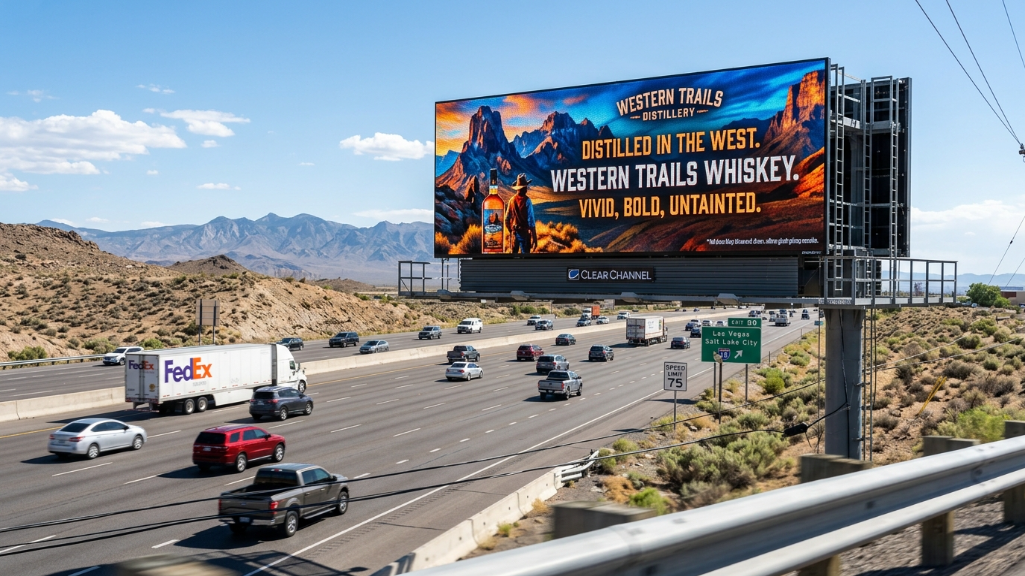
For highway billboards, extremely high brightness is required during the day to counter ultraviolet rays, while brightness needs to be reduced at night.
Strategy: Use the ARES series combined with automatic brightness adjustment.
Benefit: In such all-weather scenarios, the advantages of common cathode technology are maximized. Due to more precise current distribution during low-brightness nighttime operation, the overall average power consumption can be reduced to about 25% of the maximum value.
High-End Conference Rooms and Indoor Fine Pitch Displays
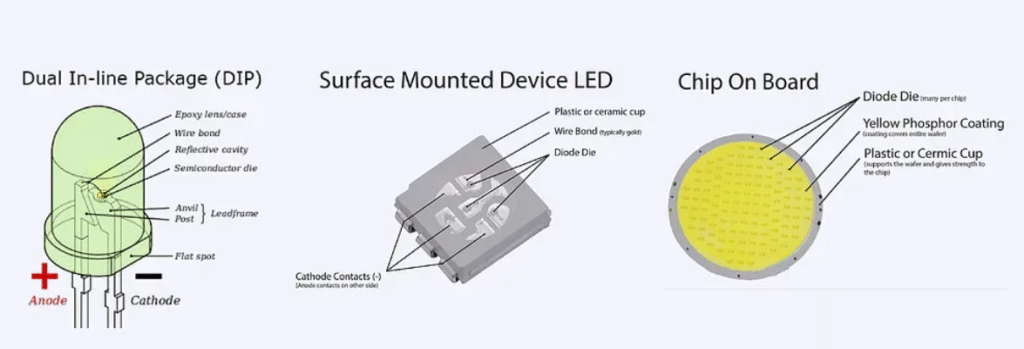
Indoor environments do not require thousands of nits of brightness, typically between 600–1200 nits.
Sostron Solution: Cobra series (COB flip-chip technology).
Feature: COB technology, due to its flip-chip structure, has higher luminous efficiency.
Performance: When displaying presentations or static images, the Cobra series has extremely low “black level” energy consumption. This ultimate black level control not only delivers an ultra-high contrast ratio of 25,000:1, but also keeps the power consumption of long-running indoor equipment at a very low level, avoiding additional air conditioning loads caused by heat accumulation.
FAQ
Q1: Will power consumption increase after LED screens age?
A: There will be slight fluctuations. As LEDs and driver ICs age, internal resistance increases and luminous efficiency decreases. However, Sostron ensures extremely stable energy efficiency performance in the first three years of the product lifecycle through 72-hour module and cabinet dual aging tests.
Q2: Can a black background really save power on LED screens?
A: Yes. Unlike LCDs (where the backlight remains on even when displaying black), LEDs are self-emissive. When displaying black images, the current of LEDs is almost zero. Therefore, adding dark backgrounds in advertising design is the simplest and most effective way to reduce daily power consumption.
Q3: How to further optimize daily energy efficiency through system software?
A: You can use the cloud management system provided by Sostron to set scheduled tasks. For example, preset brightness curves according to local sunset schedules, or automatically enter “sleep mode” during late-night periods with no traffic, keeping only the control system active to minimize unnecessary energy consumption.
Q4: What size transformer should I prepare for a 50㎡ outdoor screen?
A: When calculating transformer capacity, you must base it on “maximum power consumption” and reserve a 20% safety margin. While average power determines your electricity bill, maximum power ensures that the entire block will not trip when displaying a full-white frame.
Expert Verdict
When evaluating LED screen daily power consumption calculation, do not be intimidated by the “maximum power consumption” provided by suppliers—it is only for transformer redundancy design. But also do not blindly trust uncertified “energy-saving” labels.
My advice is: if your project operates more than 12 hours per day, or is located in regions with high electricity prices (such as Europe, North America, or Australia), directly choose the ARES series with Common Cathode technology. Although it increases the initial investment by about 15%, over the 5–8 year lifecycle of the project, the savings in electricity and maintenance costs are enough to buy another new screen. Energy efficiency is the most hidden competitive advantage in B2B procurement.
References:
U.S. Department of Energy (DOE)
Global electricity consumption trends