Quick Answer: What You’re Actually Going to Pay
Stop here if you need a number fast.
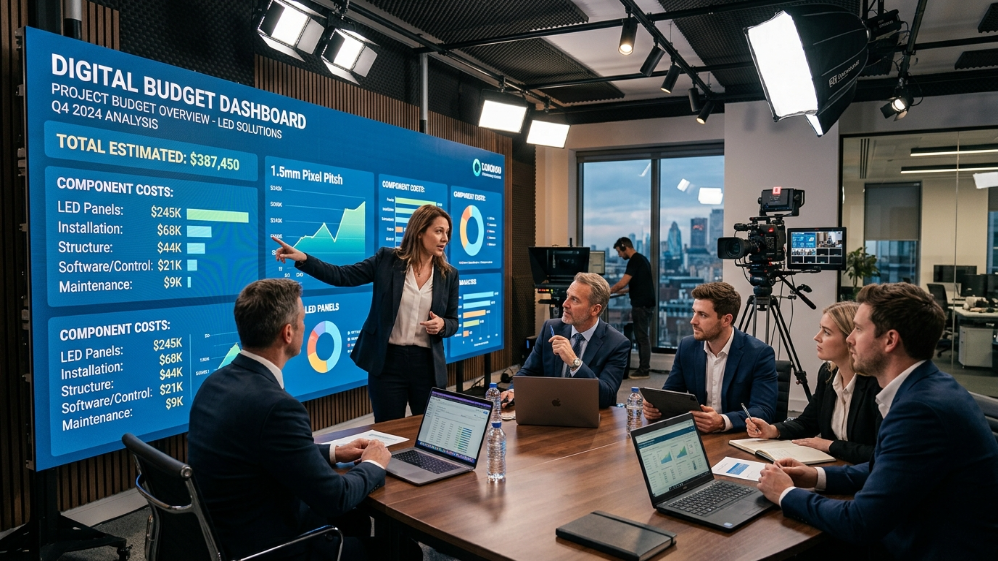
A studio LED display system—panels, processor, cabling, and installation—will run you anywhere from $8,000 to $500,000+, depending on studio type, screen size, pixel pitch, and signal chain complexity. That range isn’t a cop-out; it reflects genuinely different product categories serving genuinely different use cases.
Here’s the honest breakdown by studio archetype:
| Studio Type | Typical Screen Area | All-In System Cost | Cost Per m² (Installed) |
| Podcast/Influencer Backdrop | 4–6 m² | $8,000–$25,000 | $1,800–$4,500 |
| Corporate Live Stream Studio | 10–18 m² | $25,000–$80,000 | $2,200–$5,500 |
| Broadcast News/Talk Show Set | 25–40 m² | $80,000–$220,000 | $3,500–$7,000 |
| Virtual Production LED Volume | 60–150 m² | $220,000–$600,000+ | $4,500–$12,000+ |
Note: “All-in” above includes LED panels, processor, media server (basic), rigging hardware, cabling, and one-day calibration. It excludes electrical upgrades, structural engineering, and content creation.
If your quote looks significantly cheaper than these floors, you’re either looking at a different product category than you think, or something critical is missing from the scope. We’ll address both scenarios throughout this guide.
What Type of Studio Are You Budgeting For? (This Determines Everything)
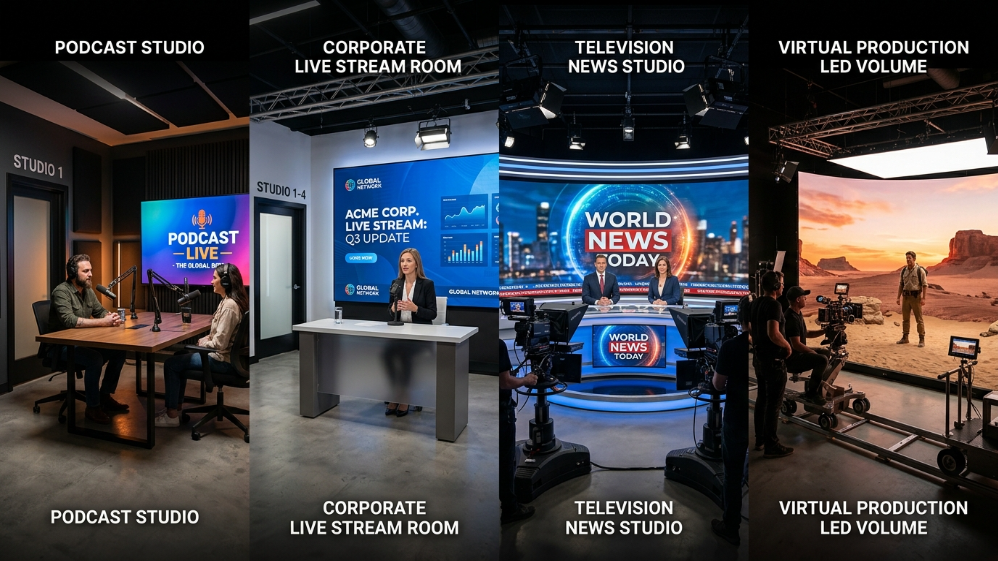
The phrase “studio LED display” is doing a lot of heavy lifting. It describes a $9,000 podcast backdrop and a $450,000 ICVFX volume in the same breath—two products with almost nothing in common except the underlying LED technology. Before you evaluate a single quote, you need to know which category you’re actually in.
Podcast & Influencer Background Screens
This is the entry tier, and it’s where the most budget misalignment happens. Buyers in this segment often see consumer-grade LED panels or low-cost P3.9 rental panels marketed as “studio solutions,” and the price looks attractive—$800–$1,200 per square meter for panels alone. The problem surfaces immediately on camera.
What actually matters at this tier:
-
Refresh rate: Your camera needs to see the LED wall without flicker or banding. Minimum 3,840Hz refresh rate is non-negotiable for modern mirrorless and cinema cameras. Budget panels typically run at 1,920Hz, which produces visible rolling shutter artifacts on any camera using a global or electronic shutter.
-
Color accuracy: For a backdrop to read as natural on camera, you need panels that hit at minimum Rec.709 color space coverage. Anything below 95% coverage will produce color casts your colorist will fight in post.
Reliable all-in cost range: $8,000–$25,000 for a 3m×2m setup from a Tier 2 supplier; $18,000–$40,000 for the same footprint with a Tier 1 panel brand like Absen or Unilumin.
Corporate Live Streaming & Conference Studios
At this tier, the demands shift. You’re now dealing with multiple input sources, real-time switching, and often a permanent installation that needs to be operated by non-technical staff. The signal chain starts to matter as much as the panels themselves.
Key considerations:
-
LED processor: You’re now in Novastar VX600 or Colorlight CL960 territory. These are $2,500–$6,000 processors that handle scaling, mapping, and redundancy. Budget processors at this tier are a serious operational risk.
-
Panel modularity: Corporate studios are frequently reconfigured. Front-service panels—where all maintenance is done from the front face without removing the panel from the wall—add 15–25% to panel cost but save hours of labor per service event.
Realistic budget: $25,000–$80,000 all-in for a 5m×3m wall. Anything quoted below $20,000 for this footprint should be scrutinized line by line.
Broadcast Television & News Set LED Walls
This is where the price curve steepens sharply, and for defensible technical reasons. Broadcast environments introduce a set of requirements that consumer and prosumer LED simply cannot meet.
The core technical delta:
-
Moire interference: When LED pixel pitch interacts with camera sensor resolution, it creates moire patterns—interference patterns that make the screen look like it’s vibrating on air. Avoiding this requires either a very fine pixel pitch (P1.5 or below) or precise engineering of the camera-to-screen distance. Fine pitch panels cost $800–$1,800 per module at broadcast grade versus $200–$500 for standard pitch.
-
HDR compliance: Broadcast sets increasingly demand panels capable of HDR10 or HLG output, which requires processors with 10-bit or 16-bit signal processing and panels with sufficient peak brightness (minimum 800 nits for HDR work, typically 1,200–2,000 nits on broadcast-grade panels).
-
SMPTE standards adherence: Color pipeline from content source through processor to panel must maintain compliance for broadcast distribution. This isn’t a panel spec—it’s a system integration requirement that adds engineering cost.
Realistic budget: $80,000–$220,000 for a primary news set wall. Tier 1 brands in this segment include ROE Visual, Leyard, and Absen.
The 4 Core Pricing Drivers That Determine Your Final Quote
Once you know your studio category, the next step is understanding what specific variables are moving the number on your quote. There are four—and only four—that account for the vast majority of price variation between comparable-looking systems.
1. Pixel Pitch: The Single Biggest Cost Variable
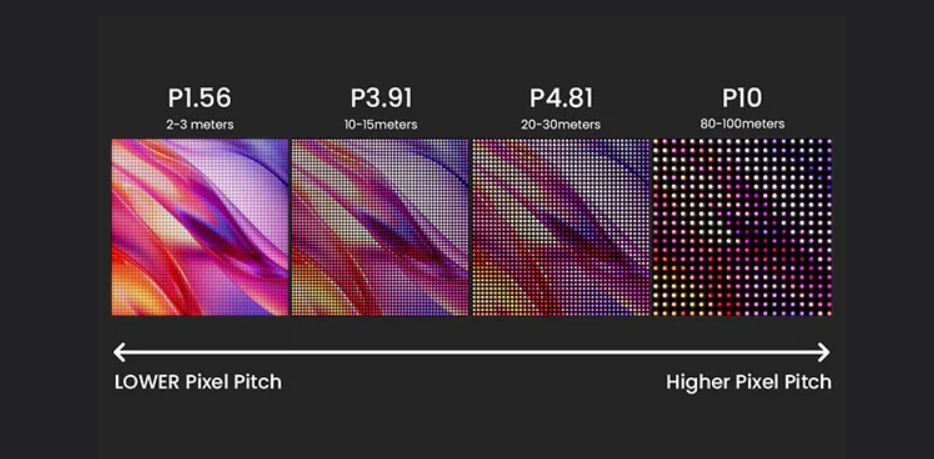
Pixel pitch is the center-to-center distance between LED pixels, measured in millimeters. A P1.5 panel has pixels spaced 1.5mm apart; a P3.9 panel spaces them 3.9mm apart. More pixels per square meter = exponentially higher cost.
Here’s the real-world price delta per square meter (panel only, ex-processor and installation):
| Pixel Pitch | Typical Application | Panel Cost Per m² | Minimum Viewing Distance |
| P0.9–P1.2 | VP volumes, broadcast close-up | $1,800–$3,500 | 0.9m–1.2m |
| P1.5–P1.9 | Broadcast/premium studio | $900–$1,800 | 1.5m–2.0m |
| P2.6–P2.9 | Corporate studio, mid-range | $500–$950 | 2.5m–3.0m |
| P3.9–P4.8 | Large venue/distant viewing | $200–$500 | 4.0m–5.0m |
The most common budgeting mistake in studio LED procurement is over-specifying pixel pitch. If your camera operator will never be closer than 4 meters to the screen, buying P1.5 panels is a pure waste of capital. Calculate your minimum viewing distance first—the formula is straightforward: multiply pixel pitch (in mm) by 1,000, and the result is your minimum comfortable viewing distance in millimeters.
2. Panel Brand Tier: Where Quality Diverges and Prices Split
Not all LED panels at the same pixel pitch are the same product. The market has three distinct tiers, and understanding them prevents the most painful post-installation surprises.
Tier 1—Broadcast & VP Grade:
-
Brands: ROE Visual, Absen, Unilumin, Leyard, Roe Visual Carbon
-
Characterized by: Consistent binning across batches (critical for color uniformity on large walls), MTBF ratings above 100,000 hours, full datasheet transparency, proprietary cabinet engineering
-
Price premium: 40–120% above Tier 2 for equivalent pixel pitch
-
When it’s worth it: Any permanent installation, any broadcast application, any environment where panel replacement logistics are costly
Tier 2—Value Commercial Grade:
-
Brands: Numerous OEM manufacturers from Shenzhen, often sold under reseller brands
-
Characterized by: Acceptable performance at installation, higher variance in long-term color consistency, limited after-sales support infrastructure
-
Price position: $300–$800 per m² for P2.6–P3.9
-
When it’s acceptable: Temporary setups, rental inventory, non-critical applications where replacement panels are easily sourced
Tier 3—Consumer/Event Rental:
-
Not designed for permanent installation; IP ratings, thermal management, and duty cycles are insufficient for continuous studio operation
-
Do not specify for any permanent studio installation regardless of price. The total cost of replacement within 18–24 months will exceed the Tier 1 premium you avoided.
The Real Total Cost of Ownership: What Your Vendor Quote Won’t Show You
The panel price is the starting point of the conversation, not the end of it. In over a decade of studio LED procurement consulting, the projects that blow budgets almost never fail on panel cost—they fail on the infrastructure nobody quoted upfront. Here is where the money actually goes after you sign the panel contract.
The Controller & Signal Chain (Budget: 15–25% of Total System Cost)
The LED processor is the brain of your display system, and it is frequently either underspecified or omitted entirely from initial quotes. For any studio installation beyond a basic single-input backdrop, you need to account for:
-
LED processor: Novastar VX600 or VX1000 runs $2,500–$5,500; Brompton Tessera SX40 (broadcast standard) runs $12,000–$18,000; disguise gx 2c for virtual production starts at $45,000. The gap between these is not marketing—it reflects fundamentally different capabilities in color science, redundancy architecture, and integration with third-party rendering engines.
-
Video distribution: Fiber optic signal extenders for runs longer than 10 meters, $800–$3,000 depending on channel count and distance.
-
Switching infrastructure: SDI or HDMI routing switchers, video scalers, and backup signal paths for broadcast environments—budget $3,000–$15,000 for a professional switching rack.
-
Cabling, connectors, and patch panels: Consistently underestimated. For a 20m² broadcast wall, materials alone typically run $1,500–$4,000.
Rigging, Structural Engineering & Electrical (Budget: 20–35% of Total Project Cost)
This is the category that produces the most post-signature budget shocks. The physics of LED walls—particularly ceiling-mounted or large free-standing installations—require structural assessment that most AV vendors are not qualified to provide and will not volunteer to quote.
-
Structural engineering survey: Required for any ceiling-mounted display, any wall-mounted system exceeding 200kg, or any installation in a leased space. Cost: $1,500–$6,000 depending on survey complexity and your location.
-
Rigging hardware and hoists: Motor hoists for flown panels, truss, chain, and safety backup systems—$3,000–$25,000 depending on configuration.
-
Electrical infrastructure: A 20m² LED wall at 500 nits average brightness draws approximately 6–10kW. Most studios require a dedicated circuit installation, potentially a sub-panel upgrade. Budget $2,000–$12,000 for electrical work, which is entirely separate from your AV quote and requires a licensed electrician.
-
UPS (Uninterruptible Power Supply): For broadcast environments, a mid-spec UPS protecting the processor and media server runs $1,500–$4,500. Optional for corporate studios; effectively mandatory for live broadcast.
Content Playback Infrastructure (Budget: $2,000–$80,000+)
What plays on the screen has to come from somewhere, and the hardware required scales dramatically with content complexity:
-
Static/looping content: BrightSign XT1144 or equivalent—$800–$1,500. Sufficient for simple graphic backdrops.
-
Live switching with multiple sources: A mid-range media server with Resolume Arena or similar—$4,000–$12,000 for hardware and software licensing.
-
Real-time 3D environments (virtual production): A disguise or custom-built Unreal Engine workstation with dual RTX 4090 GPUs—$20,000–$80,000. This is the floor, not the ceiling, for serious ICVFX work.
Long-Term Maintenance & Pixel Replacement (Budget Annually: 2–5% of Hardware Cost)
The hidden cost that almost no procurement budget includes:
-
Annual calibration: Professional colorimetric calibration using a Colorimetry Research CR-100 or similar spectrophotometer—$800–$2,500 per session. Skip this for two years and your wall will visually segment as panels age at different rates.
-
Pixel mortality and module replacement: Industry standard failure threshold is typically 3 dead pixels per 10,000—but in a studio context where cameras are close and content is high-contrast, even a 0.1% failure rate is visible on air. Budget 1–2% of hardware cost annually for module replacement parts.
-
Spare parts inventory: Any professional installation should carry a minimum 5% spare panel inventory on-site. Factor this into initial procurement—buying spare panels at time of original order avoids the color-matching problem that arises when you order replacements 18 months later from a different production batch.
Simulated Budget Case: A Mid-Tier Corporate Live Streaming Studio
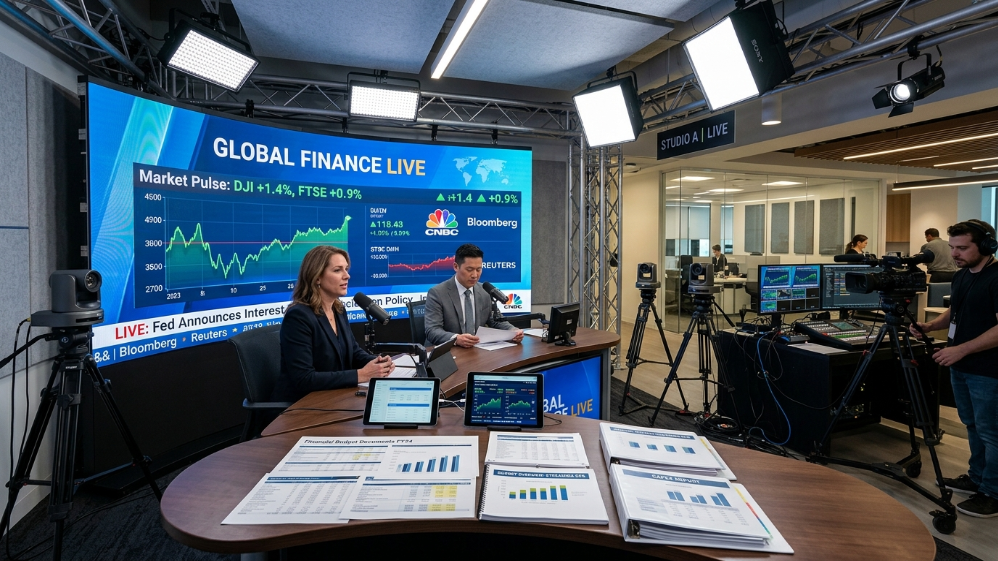
Scenario: A financial services firm is building a permanent 6m×3m (18m²) live streaming studio in a leased office space in Chicago. Primary use: weekly executive communications broadcasts and client-facing webinars. Camera distance: 4.5 meters minimum.
| Budget Line Item | Specification | Estimated Cost |
| LED Panels (18m²) | P2.6, Tier 1 brand (Unilumin), front-service | $54,000 |
| LED Processor | Novastar VX1000 with backup card | $4,800 |
| Media Server | Resolume-based playback system | $7,500 |
| Signal Distribution | Fiber extenders, switching, patch | $4,200 |
| Rigging & Mounting | Wall-mounted steel sub-frame | $6,500 |
| Electrical Upgrade | Dedicated 30A circuit, conduit | $3,800 |
| Structural Survey | Load assessment (leased space) | $2,200 |
| Installation Labor | 3-day crew, commissioning, calibration | $8,500 |
| Spare Panel Inventory | 5% of panel count | $2,700 |
| Total Year 0 | $94,200 | |
| Annual Maintenance (Year 1–5) | Calibration + parts budget | $2,800/yr |
| 5-Year TCO | ~$108,200 |
The panel cost represents 57% of Year 0 spend—meaning 43% of the real project cost is in infrastructure that a panel-only quote would completely exclude. This ratio is consistent across studio LED projects of this scale.
FAQ: Real Questions Buyers Ask Before Signing a Studio LED Contract
Q: Can I use rental-grade P3.9 LED panels for a permanent studio installation to save money?
A: Technically yes, but it’s a false economy. Rental panels are engineered for 500–800 hours of annual use, not 2,000–4,000 hours of continuous studio operation. Thermal management and cabinet sealing are insufficient for permanent duty cycles. Expect accelerated pixel failure and color drift within 12–18 months. The replacement cost will exceed the Tier 1 premium you avoided upfront.
Q: Why does my LED wall look fine on the monitor but terrible on camera?
A: Camera sensors interact with LED refresh rates differently than the human eye. A panel running at 1,920Hz will produce visible banding on cameras with electronic shutters at certain shutter speeds. The fix requires a processor and panel combination capable of 3,840Hz or higher refresh rates—this cannot be solved with camera settings alone and requires hardware-level specification at procurement.
Q: Does a higher pixel pitch always mean worse image quality for studio use?
A: Not inherently—it depends on viewing distance. A P2.6 panel viewed at 4.5 meters produces a visually cleaner image than a P1.5 panel at the same distance, because the absolute pixel density relative to perceived image area is sufficient. The mistake is specifying pixel pitch without first calculating minimum camera-to-screen distance. Over-specifying by one pitch tier costs 40–60% more with zero perceptible quality gain in your specific geometry.
Q: What warranty should I insist on for a studio LED installation, and what does “on-site warranty” actually mean?
A: Insist on a minimum 3-year on-site replacement warranty from the panel manufacturer, not just the integrator. “On-site” means the vendor ships replacement modules to your location within a defined SLA—typically 48–72 business hours. “Return-to-base” warranties, common on lower-cost panels, mean you ship failed modules back, leaving dead sections on your wall for weeks. Confirm in writing which warranty model applies before contract signature.
The Real Trap: Why First-Page Price Is the Wrong Number to Optimize
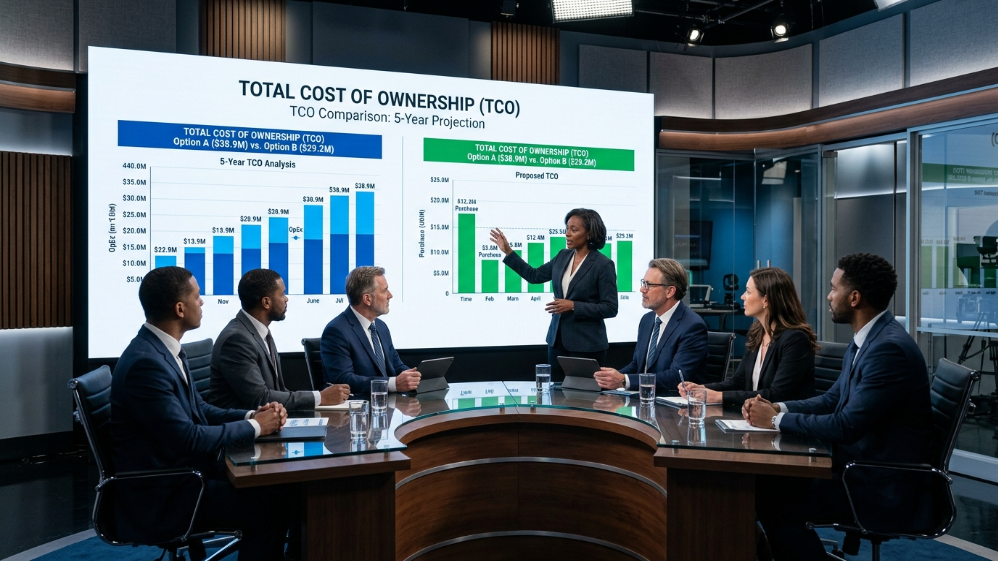
Every studio LED procurement that ends in regret shares a common decision point: someone optimized for the per-square-meter panel price instead of the system cost, the total cost of ownership, or the operational fit for their specific studio environment.
A P3.9 panel at $280/m² is not a bargain if your camera distance is 2 meters. A Tier 2 processor is not a cost-saving measure if your studio runs live broadcasts with no backup path. Cheap rigging hardware is not an acceptable trade-off when your display weighs 400 kilograms above a staffed studio floor.
The number on the quote is not the cost of the project. The cost of the project is what it takes to achieve reliable, broadcast-appropriate, camera-compatible output in your specific physical space—and that number emerges from engineering, not from a price list.
Because installation environments, ceiling load capacity, camera specifications, and viewing geometries vary so significantly between studios, accurate budgeting requires site-specific analysis rather than per-square-meter estimates applied to a floor plan. Contact our engineering team to receive a precise, no-obligation custom quote built around your actual space, camera setup, and content requirements—not around a generic configuration that may not serve your production environment.
B2B Procurement Summary & Insights
B2B Procurement Note: When budgeting for commercial studio LED displays, enterprise buyers must look beyond the initial hardware price lists. The actual hardware procurement (LED panels) typically represents only 55% to 65% of the total Year 0 capital expenditure. Ancillary infrastructure—encompassing advanced processing units (e.g., Novastar or Brompton), structural rigging, dedicated electrical sub-panels, media servers, and professional calibration—comprises the remaining 35% to 45% of deployment costs. Furthermore, a comprehensive Total Cost of Ownership (TCO) model must factor in an annual operational budget of 2% to 5% of the hardware value to account for batch-matched spare inventory, colorimetric calibration, and pixel maintenance. Optimizing strictly for low per-square-meter panel pricing without verifying camera geometry, refresh rates, and processing capabilities frequently leads to catastrophic moiré or rolling shutter failure, destroying long-term operational ROI.
References:
SMPTE (Society of Motion Picture and Television Engineers)
EBU – European Broadcasting Union