If your LED screen looks perfect to the naked eye but shows black scan lines or flickering on a smartphone camera or live broadcast, you’re dealing with a classic issue: insufficient refresh rate.
High refresh rate LED screens (3840Hz or higher) typically cost 15%–25% more than standard 1920Hz displays. This premium mainly goes toward upgrading the driver ICs and PCB circuit design.
At Sostron, drawing on 14 years of manufacturing experience, we’ve compiled a clear breakdown of the key factors that determine pricing:
Core Comparison Table
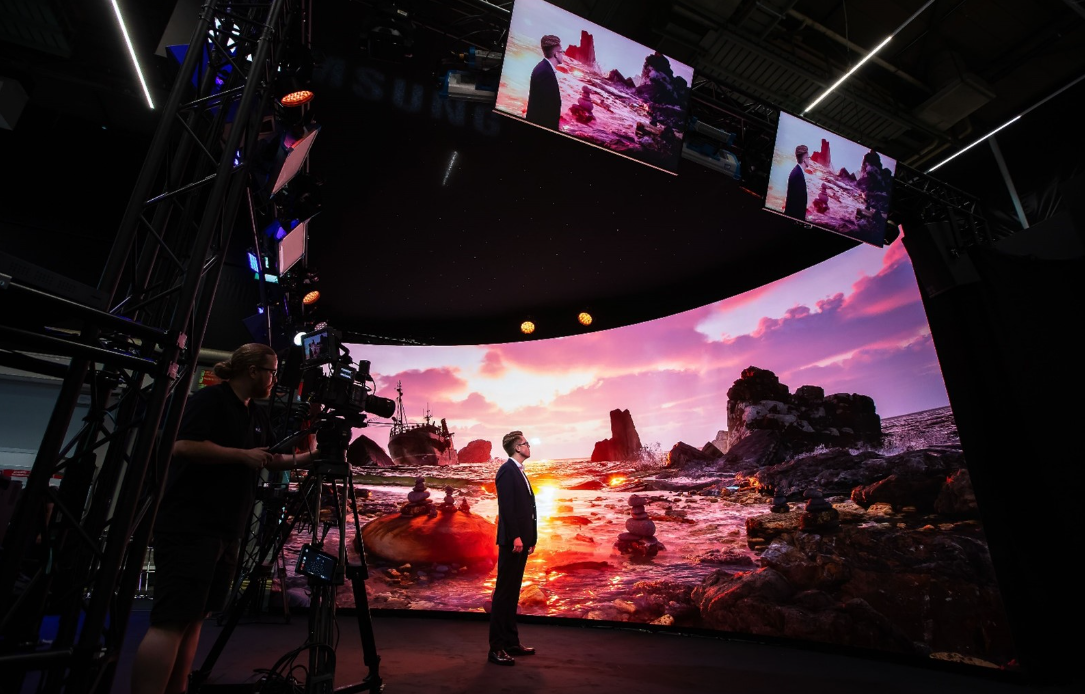
- Camera Flicker: Visible black bars (rolling shutter effect) when filmed.
- Content Loss: Fast-moving content may appear blurry or tearing.
- Not Broadcast Ready: Unsuitable for professional live streaming or TV.
- Flicker-Free: Crystal clear image on all cameras (1/2000s+ shutter speed).
- Smooth Motion: Perfect for fast video playback and sports.
- XR Ready (7680Hz): Essential for virtual production and XR studios.
| Core Parameter | Standard Refresh (1920Hz) | High Refresh (3840Hz / 7680Hz) | Price Impact |
|---|---|---|---|
| Main Applications | Outdoor billboards, info display | Concert rentals, XR shooting, broadcasting | Low / Medium-High |
| Driver IC | Basic constant current IC | Advanced PWM IC | ~70% of cost difference |
| Camera Performance | Visible ripple on phones | Flicker-free on HD cameras | Key premium factor |
| Grayscale | 12–14 bit (loss at low brightness) | 14–16 bit (high grayscale at low brightness) | Impacts image quality |
For procurement managers and engineers, the real challenge isn’t understanding that high refresh is better—it’s proving to finance that the extra cost is justified.
As a national high-tech enterprise with a 15,000㎡ manufacturing base and a 4,000㎡ R&D center, Sostron breaks down the true cost logic behind the supply chain to help you make ROI-driven decisions.
Real Cost Difference: High Refresh (3840Hz+) vs Standard (1920Hz)
Many buyers ask:
“Why does a 3840Hz module cost significantly more when it looks identical?”
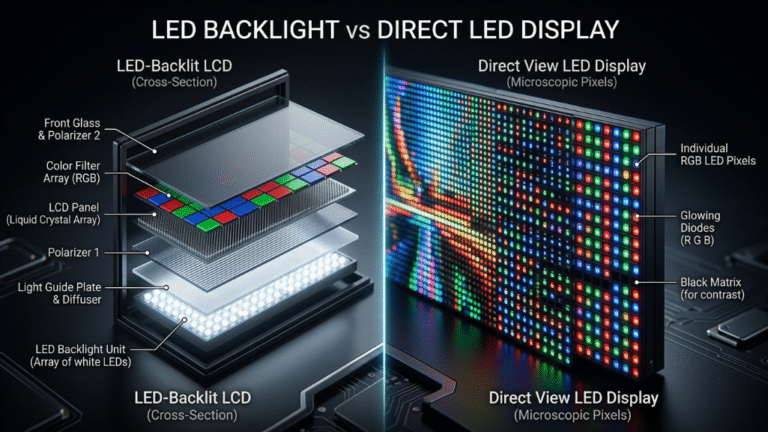
Based on real BOM (Bill of Materials) analysis, LED lamp beads contribute little to the price difference. The real cost driver is hidden on the back: the driver IC.
The Core Cost Driver: Driver IC
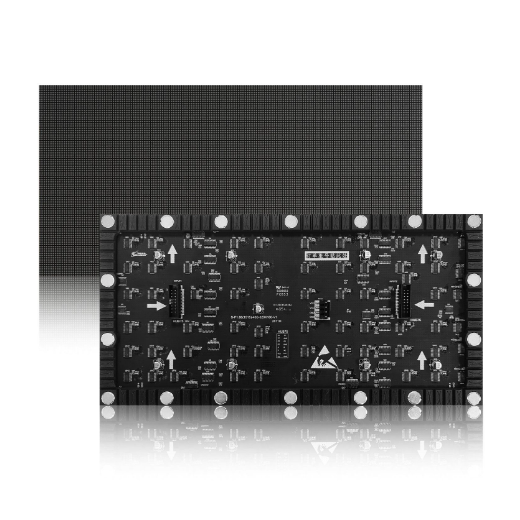
The driver IC is the “brain” of an LED display.
1920Hz Solution (Baseline Cost)
-
Uses standard dual-latch ICs
-
Meets basic human visual persistence
-
Ideal for long-distance viewing (e.g., highway billboards)
-
Best value-for-money option
3840Hz+ Solution (Cost Increase Source)
-
Requires advanced ICs with PWM (Pulse Width Modulation)
-
Commonly from leading brands like Macroblock or Chipone
Hard Technical Costs
-
Higher GCLK frequency
-
Supports higher scan rates (e.g., 1/16 or 1/8 scan)
PCB Upgrade Costs
-
Requires upgrading from 2-layer to 4-layer PCB
-
More capacitors needed for stable power delivery
Industry Insight
Some vendors claim “software-based high refresh,” which artificially boosts Hz by sacrificing grayscale.
-
Result: washed-out image and color banding
-
Sostron approach: true hardware-level PWM ICs for both refresh rate and image quality
Estimated Premium & Value Exchange
If a standard P3.91 rental module is priced at 100% baseline:
-
Upgrading to true 3840Hz increases cost by 15%–25%
What Does That Extra 20% Buy?
-
Longer lifespan (lower heat, better efficiency)
-
Low brightness, high grayscale performance
-
Better detail retention instead of crushed blacks
Why Procurement Managers Must Care About High Refresh (ROI Analysis)
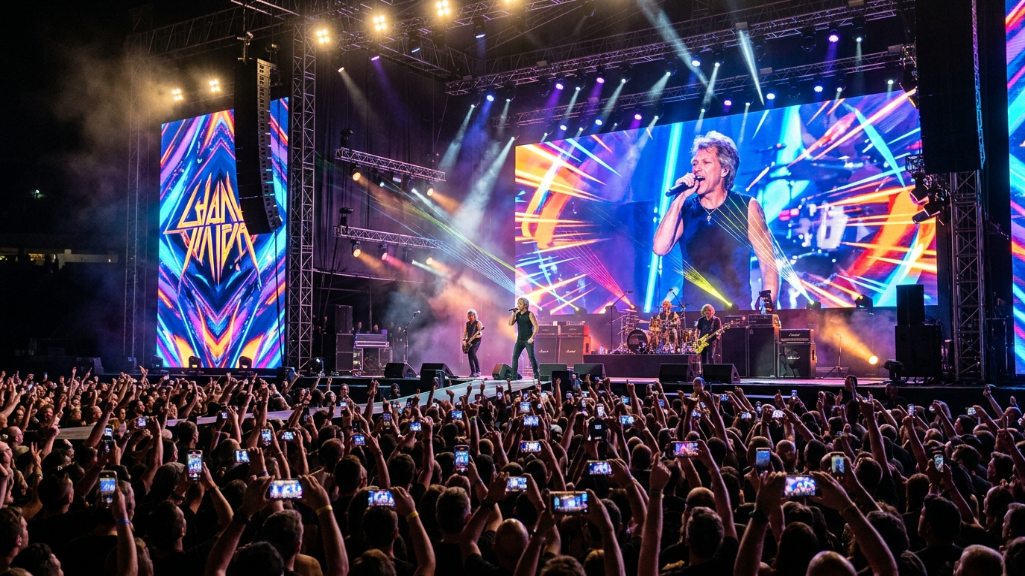
In B2B decisions, specs alone don’t win—risk and return do.
Entertainment & Rental Companies: The “Smartphone Test”
Your LED screen is your revenue engine.
If audiences record your event on iPhones and upload to Instagram or TikTok—and your screen flickers—you lose credibility instantly. Provide you with 3840Hz LED rental display: live event and stage application guide.
Risk Scenario
-
High-end product launch
-
CEO on stage
-
Background LED shows moiré patterns or flicker
Sostron Solution
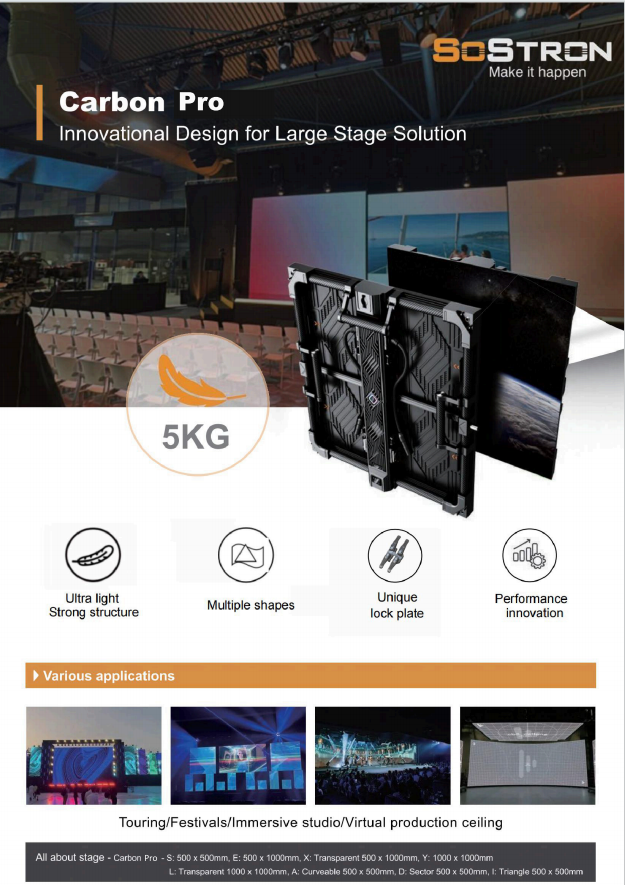
Carbon Pro (carbon fiber rental LED screen):
-
7680Hz refresh rate
-
Flicker-free even under professional cameras
-
Ultra-lightweight cabinets (5kg each)
-
Reduced transport and installation costs
Real Case: Chile Music Festival
At a major outdoor music festival in Chile:
-
Previous LED screens caused flickering during live broadcast
-
Audience complaints impacted organizer reputation
After switching to Sostron Carbon Family Series (P4.8):
-
7680Hz refresh ensured stable visuals
-
No flicker on TV cameras or smartphones
-
Seamless integration of lighting and visual effects
Result:
-
Restored organizer credibility
-
Elevated rental provider’s premium market position
Broadcasting & XR Virtual Production: A Hard Requirement
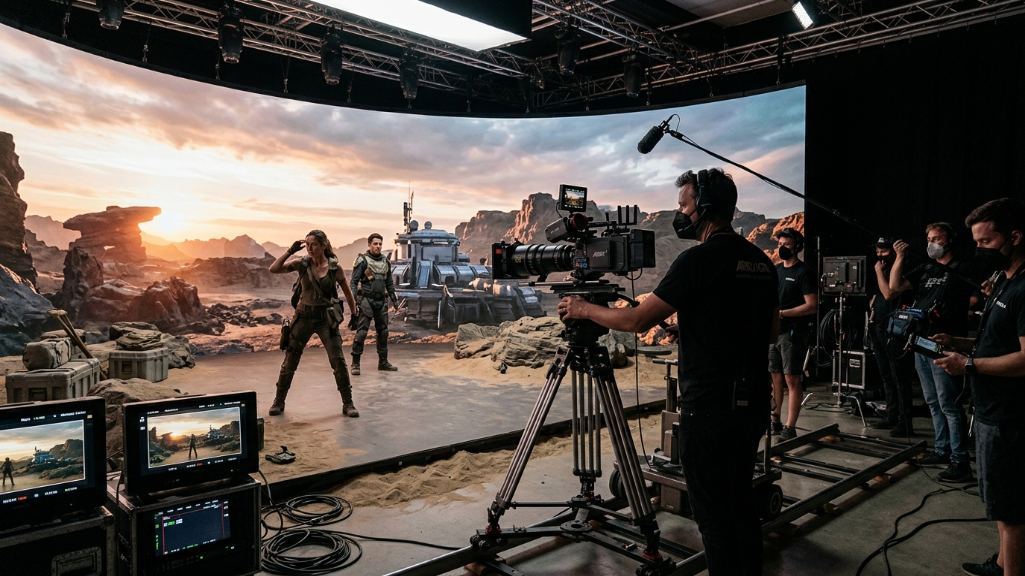
If your business involves XR studios or virtual production, refresh rate is not optional—it’s critical.
Technical Threshold
Industry standards (e.g., SMPTE recommendations) require:
-
7680Hz or higher for LED background walls
Consequences of Low Refresh
-
Frame tearing during camera sync
-
Failed chroma key compositing
-
Entire footage becomes unusable
Recommended Solution
Sostron Hima Series:
-
7680Hz refresh rate
-
High contrast
-
Low reflectivity
-
Ideal for XR production environments
Technical Deep Dive: It’s Not Just About Hertz
Many buyers assume “3840Hz” on paper is enough. In reality, refresh rate is part of a system-level design.
Refresh Rate vs Frame Rate
-
Frame Rate: video source speed (e.g., 60fps, 120fps)
-
Refresh Rate: how often the screen redraws
Think of it like:
-
Frame rate = film projector
-
Refresh rate = shutter speed
If refresh rate is too low, cameras capture partial frames, resulting in scan lines.
Grayscale vs Brightness (14-bit vs 16-bit)
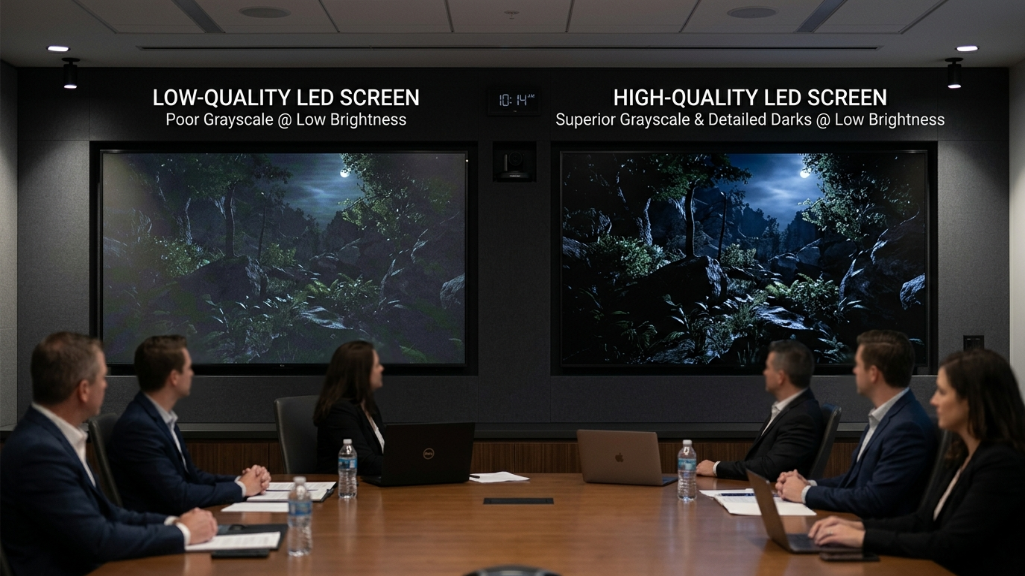
In high-end indoor environments:
-
Brightness often reduced to avoid glare (e.g., 20%)
-
Standard screens lose grayscale → visible color banding
Sostron Solution
Reta 2 Series (ultra-thin indoor fine pitch):
-
Supports 16-bit grayscale
-
Maintains detail even at 200 nits brightness
This is known as “low brightness, high grayscale”—only achievable with premium driver ICs.
How Sostron Controls Cost While Delivering High Refresh
Sostron isn’t just an assembler—we optimize cost through scale and engineering.
Automated Production = Higher Yield
High refresh modules demand extreme SMT precision.
-
Manual production = inconsistent quality
-
Sostron uses fully automated Japanese SMT machines
Result:
-
Higher yield rate
-
Lower production loss
-
Competitive pricing for premium products like ARES 2 Series
Strict Aging & Thermal Testing
High refresh = higher switching frequency = more heat.
Poor thermal design leads to:
-
Color decay
-
Dead pixels within months
Sostron Factory Standards
| Test Item | Standard | Purpose |
|---|---|---|
| 72-hour aging test | Full white, full load | Eliminate early failures |
| Thermal imaging | ±3°C PCB variation | Prevent IC overheating |
| Vibration test | Simulated transport | Ensure rental durability |
FAQ: Top 3 Questions from Procurement Managers
Q1: Can I upgrade my existing screen to 3840Hz via software?
Answer: No.
Refresh rate is limited by hardware (driver IC and receiving card). “Software boosting” sacrifices brightness and grayscale.
Recommendation: Upgrade modules or receiving cards. Sostron offers compatibility assessments.
Q2: Do high refresh screens consume more power?
Answer: Yes—but not necessarily in practice.
Sostron ARES 2 Series uses common cathode technology:
-
Red: 2.8V
-
Green/Blue: 3.8V
Result:
-
Offsets high refresh power consumption
-
Reduces total operating cost by 30%–50%
Q3: Do outdoor billboards really need 3840Hz?
Answer: Usually no.
For static ads viewed at distance:
-
1920Hz is sufficient
-
Better to invest in:
-
Higher brightness (e.g., 6000+ nits)
-
Weather protection
-
Conclusion: Don’t Compare Price—Compare Value Per Event
In LED procurement:
-
Price is what you pay
-
Value is what you gain
A cheap 1920Hz screen may save 15% upfront—but one failed broadcast could cost you future contracts.
A 3840Hz/7680Hz Sostron display:
-
Stable performance
-
Ultra-low failure rate
-
Camera-perfect visuals
That’s not a cost—it’s your growth foundation.
Not Sure What Your Project Needs?
Don’t guess.
Contact Sostron’s engineering team for a free project-based cost analysis and factory-direct quotation, tailored to your application—whether it’s events, advertising, or corporate environments.
References:
SMPTE Standards for High Frame Rate and Image Capture Systems
Digital Display Image Quality and Performance Metrics