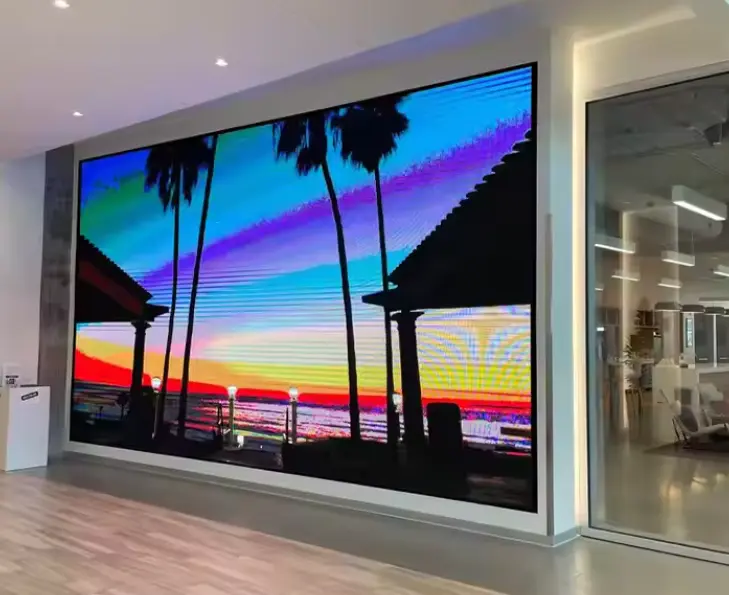
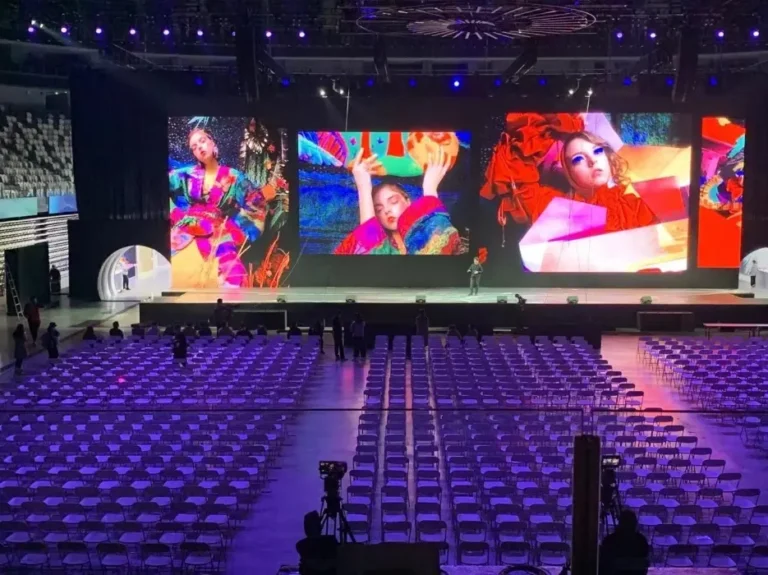
If you are planning LED screen rental for theaters, the right choice depends on more than screen size. For most indoor theater productions, P2.6–P3.9 can be practical for stage backdrops and general viewing, while P1.9–P2.6 is more suitable when the audience sits close to the screen or when the display will be captured by professional cameras. Rental pricing can range from several thousand dollars to well over $10,000 per event day depending on screen size, pixel pitch, rental duration, rigging, labor, logistics, and technical support. Current event-rental examples show large LED walls commonly reaching several thousand to tens of thousands of dollars per day.
| Theater Requirement | Recommended LED Specification |
|---|---|
| Small indoor stage | P2.6–P3.9 |
| Audience seated close to screen | P1.9–P2.6 |
| Large theater or auditorium | P2.6–P3.9 |
| IMAG / live camera production | 3,840Hz+ refresh rate |
| Broadcast / cinematic production | P1.9–P2.6, 3,840–7,680Hz |
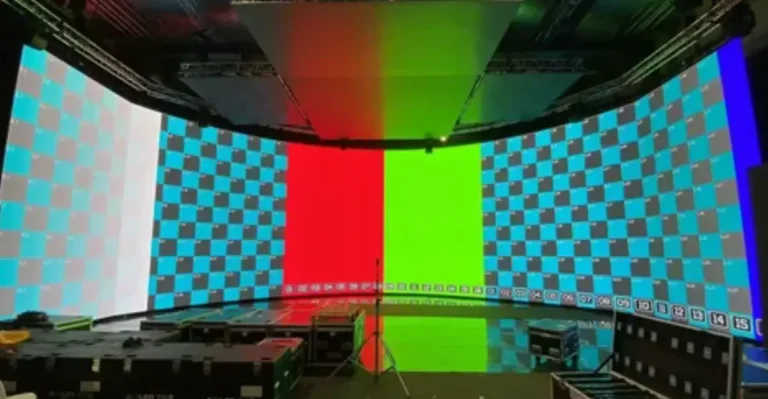
| Curved or creative stage | Rental LED with curve-lock cabinets |
| Large suspended wall | Lightweight cabinets + professional rigging |
How Much Does LED Screen Rental for Theaters Cost?

There is no universal theater LED screen rental price because rental companies normally quote according to the complete production configuration rather than only the LED panels.
For a basic indoor LED wall, current U.S. rental examples show prices ranging from roughly $3,000 to $10,000+ per day for many medium-sized configurations, while large, fine-pitch or fully supported productions can reach $15,000–$30,000+ per day. Some suppliers quote smaller packages separately, while others include delivery, installation, processors and technicians in the rental package.
A useful budgeting model is:
Total Theater LED Rental Cost = LED Wall + Processing + Structure/Rigging + Delivery + Installation + Technician + Teardown
The biggest price drivers are:
- Screen size
- Pixel pitch
- Indoor or outdoor specification
- Rental duration
- Rigging or ground support
- Installation complexity
- Video processing requirements
- On-site technician support
- Transportation and venue access
- Insurance and additional equipment
For example, one current rental provider lists a 13.1 × 8.2 ft P2.6 LED wall at about $4,995 per day including the LED tiles, frame/support, 4K processor, cabling, delivery and installation/strike. This illustrates why comparing only the advertised “screen rental price” can be misleading.
How to Choose the Right Pixel Pitch for a Theater
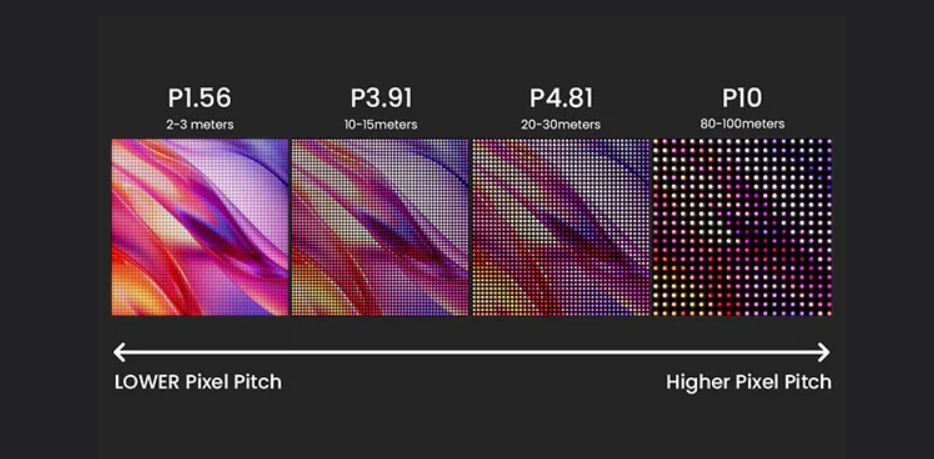
Pixel pitch is one of the most important specifications when selecting a rental LED screen for a theater.
Pixel pitch refers to the distance between adjacent LED pixels. A smaller pixel pitch creates higher pixel density and allows viewers to sit closer to the display without seeing individual pixels.
P1.9 LED Screen
P1.9 is a strong option for:
- Small theaters
- Close-viewing audiences
- Camera-facing stages
- Broadcast productions
- Cinematic presentations
- High-detail stage content
The higher pixel density produces a cleaner image at short viewing distances, but the rental price is normally higher.
P2.6 LED Screen
P2.6 is often a practical balance between image quality and rental cost.
It works well for:
- Indoor theater stages
- Musical performances
- Corporate theater events
- Medium-sized auditoriums
- IMAG applications
- Live streaming
Current rental suppliers commonly position P2.6 as an indoor high-resolution solution where viewers may be relatively close to the screen.
P2.9 LED Screen
P2.9 can be an economical choice when the audience is farther away but high-definition presentation is still important.
It is suitable for:
- Medium and large stages
- Theater backdrops
- General event production
- Larger viewing distances
P3.9 LED Screen
P3.9 is commonly used for larger stage environments where the audience is not sitting close to the LED wall.
It can provide a good balance between:
Screen size + visual impact + rental cost.
One current rental configuration lists P3.9 at 3,840Hz with a stated viewing range of approximately 3.91–40 m, demonstrating how pixel pitch and viewing distance are normally evaluated together.
Viewing Distance Matters More Than Simply Choosing the Smallest Pixel Pitch

A common purchasing mistake is assuming that P1.9 is automatically better than P2.6 or P3.9.
It is not.
If the first row is 20–30 meters away, spending substantially more on an ultra-fine-pitch LED wall may produce little practical benefit. Conversely, if the first rows are only a few meters from the screen, a coarse pixel pitch can make the LED structure visibly distracting.
For theater applications, evaluate:
- Distance from the first row to the LED wall
- Distance from the last row
- Screen height
- Content detail
- Camera shooting distance
- Audience viewing angle
The screen should be selected according to the actual sightlines of the venue rather than by pixel pitch alone.
Why Refresh Rate Matters for Theater LED Screens
Refresh rate becomes particularly important when cameras are involved.
A theater may use LED displays for normal audience viewing, but modern productions increasingly include:
- IMAG
- Live streaming
- Recording
- Broadcast
- Social media video
- Professional photography
- XR or virtual production
A low-refresh-rate LED display may appear acceptable to the naked eye but produce flicker, scanning lines or rolling bars when recorded by a camera.
For professional theater productions, 3,840Hz or higher is a sensible specification when camera capture is important. Higher-refresh systems such as 7,680Hz can be considered for demanding cinematic, XR and virtual-production workflows. SoStron’s current Carbon rental series, for example, offers 3,840Hz–7,680Hz configurations and positions them for camera-facing and XR applications.
LED Screen vs. Projector for Theater Productions
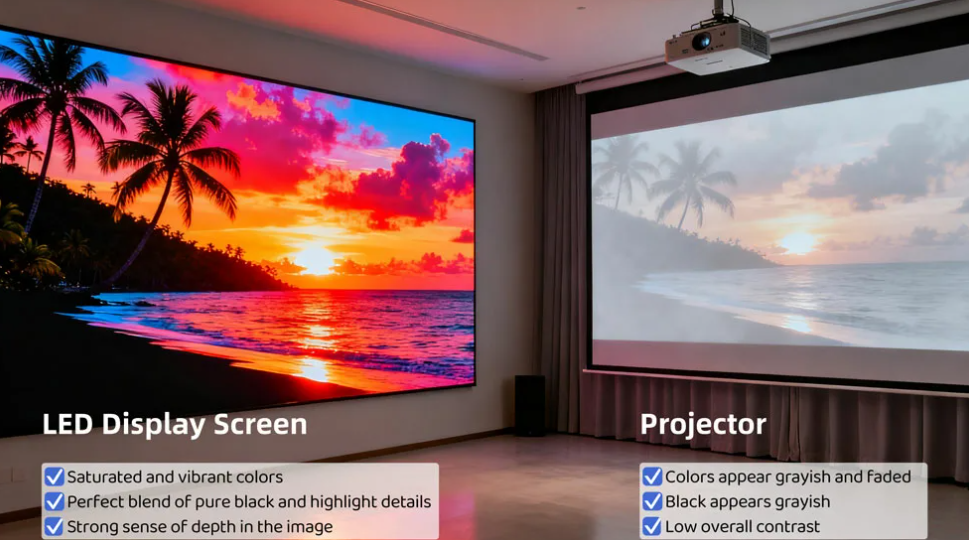
LED walls and projectors can both work in theaters, but they solve different problems.
| Factor | LED Screen | Projector |
|---|---|---|
| Brightness | High and self-emissive | Depends heavily on ambient light |
| Black level | Strong with suitable LED technology | Depends on projector and room |
| Screen size | Modular | Flexible |
| Shadows | No projector shadow | Possible |
| Installation | Modular panels and structure | Projector + screen system |
| Creative shapes | Excellent | More limited |
| Close viewing | Fine-pitch LED performs well | Image quality depends on projection |
| Rental cost | Usually higher | Often lower for simple setups |
For dark, traditional theater environments with a simple rectangular image, projection can remain a cost-effective solution.
For productions requiring high brightness, modular stage design, unusual screen shapes, close viewing or frequent setup and teardown, rental LED displays offer significant advantages.
Consider Rigging and Ground Support Before Ordering
A theater LED wall is not simply a collection of panels.
A large wall may require:
- Hanging bars
- Rigging points
- Ground-support structures
- Safety cables
- Stacking frames
- Power distribution
- Signal distribution
- Load calculations
If the screen is suspended above the stage, the weight of the cabinets and supporting structure must be considered together with the venue’s rigging capacity and safety requirements.
Lightweight rental cabinets can reduce handling and structural load. SoStron’s Carbon Series, for example, is designed around lightweight carbon-fiber construction and rapid rental deployment, with configurations intended for suspended and ground-stacked applications.
For a theater project, always confirm the rigging method, total system weight, attachment points, safety factor and venue approval requirements before finalizing the rental order.
What Should Be Included in a Theater LED Rental Quote?

When comparing suppliers, request a detailed quotation rather than accepting a single daily rental number.
A professional quote should clearly identify:
LED Hardware
- LED cabinets
- Pixel pitch
- Cabinet dimensions
- Resolution
- Brightness
- Refresh rate
- Indoor/outdoor rating
Video System
- Sending card
- Receiving cards
- Video processor
- Signal converters
- Media server, if required
- SDI/HDMI/DP or other inputs
Installation
- Delivery
- Load-in
- Assembly
- Rigging or ground support
- Testing
- Calibration
- Teardown
- Load-out
Technical Support
- On-site LED technician
- Show operation
- Backup modules
- Spare power supplies
- Emergency replacement support
This distinction matters because two suppliers can quote the same nominal LED wall size but provide very different levels of service.
Theater LED Rental Checklist
Before signing the rental agreement, confirm these points:
1. Screen size: Does it match the stage and audience sightlines?
2. Pixel pitch: Is it appropriate for the closest viewer?
3. Refresh rate: Is it suitable for cameras and live production?
4. Brightness: Is it optimized for the theater’s lighting conditions?
5. Processing: Can the system handle the required content resolution and signal sources?
6. Rigging: Has the venue approved the hanging or stacking method?
7. Installation: Who is responsible for assembly and calibration?
8. Technical support: Is a technician available during rehearsals and the performance?
9. Backup equipment: Are spare modules, power supplies and signal paths available?
10. Total price: Does the quote include delivery, installation, teardown and labor?
Common Theater Applications for Rental LED Displays
LED screen rental for theaters is no longer limited to a simple stage backdrop.
Common applications include:
- Musical theater
- Drama productions
- Dance performances
- Concerts
- Theater premieres
- Award ceremonies
- Corporate stage events
- Live broadcasts
- IMAG systems
- Immersive theater
- Virtual production
- Product launches
- Educational performances
For productions requiring curved or unconventional stage architecture, modular rental LED systems can also create concave, convex or multi-surface configurations.
For example, SoStron’s sPad Pro 2 supports indoor and outdoor rental configurations from P1.9 to P4.8 and offers curved configurations for stage applications.
How to Choose a Reliable Theater LED Rental Supplier
Price should not be the only selection criterion.
A reliable supplier should be able to provide:
- Detailed technical specifications
- Previous theater or stage projects
- Professional installation
- Rigging documentation
- Pre-event testing
- Technical support
- Spare components
- Clear rental contracts
- Insurance information
- Delivery and teardown planning
The supplier should also understand the difference between a display designed for ordinary audience viewing and one designed for camera-facing theater production.
This is where manufacturer experience becomes important. The original SoStron guide already emphasizes supplier experience, technical support, installation, testing, transportation and contract terms as important rental considerations.
Why Choose SoStron for Theater LED Display Solutions?

SoStron is an LED display manufacturer providing rental LED solutions for stages, events, theaters and other professional applications. Its rental product portfolio includes large-stage systems such as the Carbon Family and flexible rental systems such as sPad Pro 2.
For theater projects, SoStron can support the process from LED display selection and configuration to installation guidance, technical support and remote assistance. The company also provides CMS-based remote monitoring and support capabilities for compatible LED systems.
For buyers comparing LED screen rental for theaters price, the most important point is to compare the complete production package rather than the panel rental rate alone. The right specification should balance pixel pitch, viewing distance, refresh rate, screen size, rigging, installation and technical support.
Explore SoStron’s Rental LED Display Solutions
If you are looking for a lightweight, high-performance rental LED system for large theater stages, explore the Carbon Family large-stage rental LED display, designed for rapid deployment, suspended applications and camera-facing productions.
For theaters requiring curved, flexible or creative stage configurations, the sPad Pro 2 curved rental LED display supports multiple pixel pitches and concave/convex configurations for professional stage production.
Need a theater LED screen configuration and quotation? Provide your stage dimensions, viewing distance, audience size, event duration and camera requirements to your LED supplier. Those five inputs are enough to turn a vague rental request into a technically meaningful quotation.
References:
Entertainment Technology – Requirements for Temporary Display System Structures
Recommended Practice: Lighting Theaters and Worship Spaces