High-quality P1.53 HD LED screen quotes in 2024 typically range from $1,800 to $3,600 per square meter, depending on configuration. Premium setups (gold wire LEDs, high-end PWM ICs, 6-layer PCB) fall between $2,800–$3,600/sqm, standard configurations range from $1,800–$2,600/sqm, while low-end options can drop below $1,500/sqm but often come with significant compromises in reliability and performance.
Before obtaining an accurate P1.53 HD LED screen quote, system integrators and buyers must understand one thing: P1.53 is by no means a standardized bulk commodity. Its pricing structure is highly dependent on the underlying BOM (Bill of Materials) configuration. According to market research from Q1 2026, the current price range for high-quality indoor fine-pitch P1.53 LED displays is typically distributed as follows:
Price Range by Configuration Level (USD/sqm)
| Configuration Level | Estimated Price Range (USD/sqm) | Core Material Features | Application Scenarios |
|---|---|---|---|
| Premium | $2,800 – $3,600 | Nationstar gold wire LEDs + high-end PWM IC (MBI5264) + 6-layer PCB | High-end command centers, broadcast-grade studios |
| Standard | $1,800 – $2,600 | Kinglight copper wire LEDs + common high refresh IC (ICN2153) + 4-layer PCB | Corporate meeting rooms, exhibition halls, smart city monitoring |
| Value | < $1,500 | No-name LED brands + standard driver IC + steel cabinet or bare modules | Short-term displays, low-budget non-critical projects |
Based on our 10 years of engineering delivery experience in the fine pitch LED field, many B2B buyers who initially receive low-price quotations often encounter 30%-50% hidden additional costs during the actual installation phase. If the quote you receive is significantly lower than the above range, be cautious of “downgraded” configurations in LED packaging or PCB layer count.
Unveiling the Price Black Box: Real Per-Square-Meter Cost Breakdown of P1.53 LED Screens
When you search for “P1.53 HD LED screen quote” on Google, most suppliers will only provide a vague unit price. However, in real projects, every price difference in P1.53 corresponds to physical limits of reliability and visual performance.
The Three Core Cost Drivers: LED Chips, Driver IC, and PCB
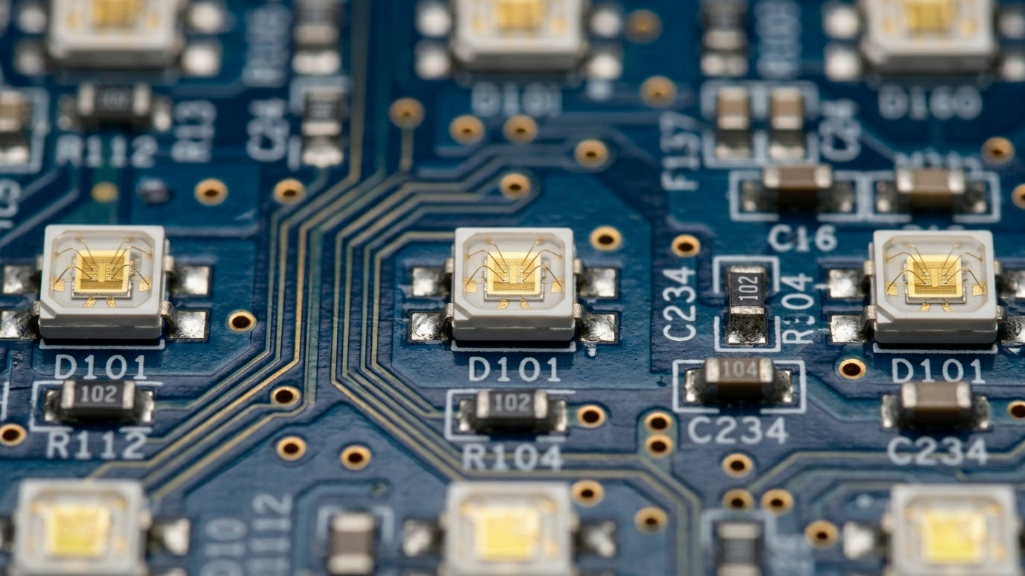
According to industry data analysis, LED chips (SMD1010) account for 40%-50% of the total material cost. For P1.53, the pixel density reaches 427,989 dots/sqm, meaning there are over 1.28 million emitting chip points per square meter.
Packaging Material Trade-off (Gold Wire vs. Copper Wire)
Top-tier quotes typically use Nationstar gold wire packaging. Gold wire has extremely high oxidation resistance and conductivity, ensuring brightness decay remains below 10% over 5–8 years. In contrast, copper wire LEDs commonly found in low-cost quotes are prone to “dead pixels” in high humidity or high temperature environments.
Feature to Benefit: Choosing gold wire increases initial cost by 20% but reduces 80% of future maintenance service costs.
Driver IC Technology Gap (PWM IC)
The HD characteristics of P1.53 require maintaining 16-bit grayscale performance even at low brightness. High-end PWM driver ICs (such as MBI5264) eliminate scan lines and achieve refresh rates above 3840Hz.
PCB Heat Dissipation Design
Fine pitch displays generate concentrated heat. A 6-layer PCB with 2.0oz copper thickness provides better heat dissipation paths than standard 4-layer boards.
Feature to Benefit: Better heat dissipation means longer half-life and more stable white balance consistency.
Module Price vs. Die-cast Aluminum Cabinet Price
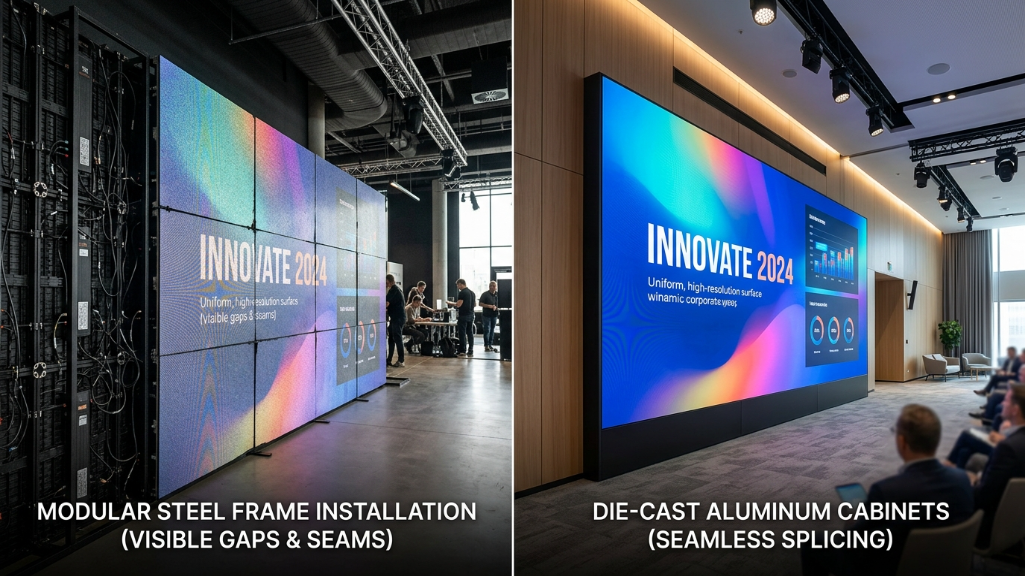
This is the most common “word game” in B2B quotations. Some suppliers quote only bare module prices to appear highly competitive.
Comparison Table
| Component | Modular Solution (DIY/Steel Frame) | Die-cast Aluminum Cabinet Solution |
|---|---|---|
| Flatness | Depends on on-site steel structure adjustment, prone to seams | CNC precision machining, seamless splicing |
| Installation Speed | Very slow, requires extensive cabling and calibration | Fast lock system, 70% faster installation |
| Heat Dissipation | Poor in enclosed space | Aluminum self-dissipation, no direct AC needed |
| Price Impact | Low surface price, high labor cost | Higher surface price, lower total cost of ownership (TCO) |
Based on our experience, for precision screens like P1.53, die-cast aluminum cabinets are the only option system integrators should consider. Even slight structural deformation will be magnified at a 1.5mm pixel pitch, resulting in unacceptable “dark lines” or “bright lines.”
The Logic Behind Visual Excellence: Core Principles and Technical Parameters of P1.53
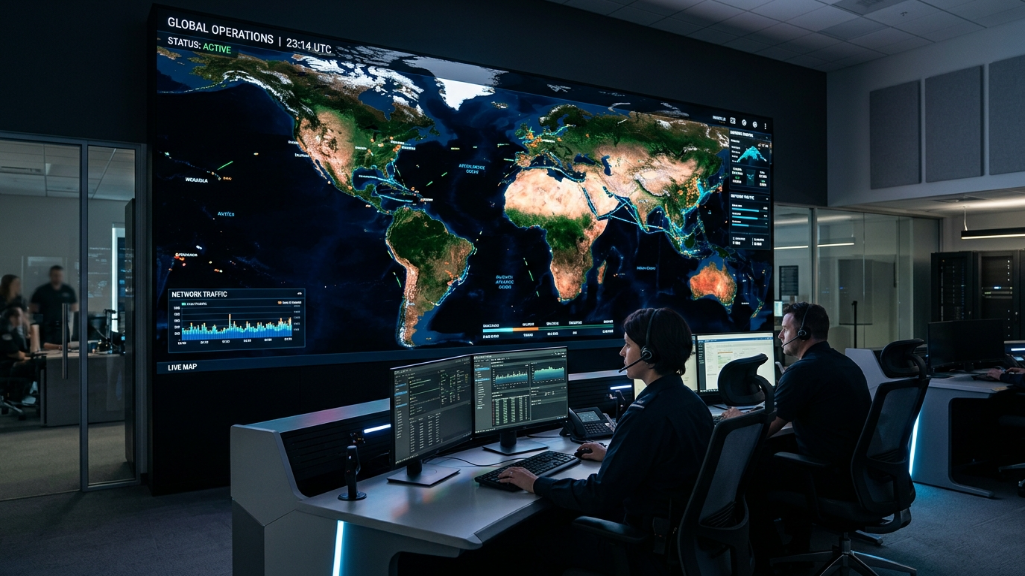
Why has P1.53 become the “sweet spot” in the high-end indoor display market? Because it achieves a perfect balance between resolution density and power consumption.
427,989 Dots/sqm Pixel Density with SMD1010 Packaging
The pixel pitch (center distance) of P1.53 is exactly 1.538mm. This density allows indoor displays to transition from “visible pixelation” to a “retina-level” experience.
We use SMD1010 packaging, which provides more space for black background.
Feature to Benefit: A higher black ratio achieves extremely high contrast, resulting in deep blacks and vivid colors, ideal for high dynamic contrast video content or detailed monitoring maps.
Why 640×480mm Cabinets Easily Achieve 4K/8K Golden Ratio
In fine pitch design, cabinet size directly determines the complexity of backend image processing. The common 640×480mm cabinet uses a 4:3 ratio; four cabinets form a perfect 16:9 ratio.
Logical Advantage
16:9 is the standard ratio for all modern video sources (1080P, 4K, 8K).
Pixel-to-Pixel Mapping
Using this cabinet size, integrators can easily build standard 1920×1080 or 3840×2160 resolutions.
Feature to Benefit: No need for expensive video scalers, avoiding image blur and text aliasing caused by resampling, ensuring absolute clarity for business presentations and monitoring data.
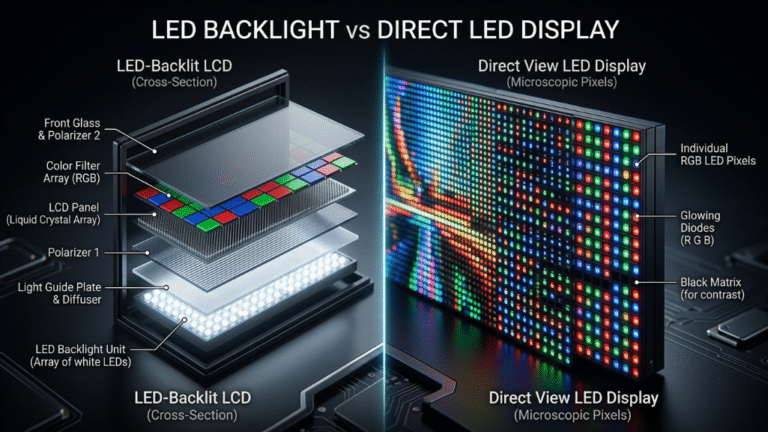
According to industry test data, at an optimal viewing distance of 2.5 to 4 meters, P1.53 eliminates physical seams compared to LCD video walls and improves brightness uniformity by over 45%. This is why high-end conference rooms choose it despite higher pricing. What are the main advantages of using LED displays compared to traditional LCDs?
Pitfall Avoidance Guide: How System Integrators Evaluate and Obtain Accurate P1.53 Quotes
In B2B procurement, obtaining a P1.53 HD LED screen quote is only the first step. As a system integrator, you must focus not only on screen price but also on overall system delivery capability. Based on audits of over 500 global fine pitch projects, “hidden costs” often omitted in quotations determine project profitability.
Total Cost of Ownership Checklist
| Component | Required Specs | Cost Weight | Pro Tip |
|---|---|---|---|
| Control System | NovaStar or Colorlight high-end series | 8%-12% | Must include sending box and sufficient receiving cards. High pixel load requires enough cards to maintain refresh rate and grayscale. |
| Video Processor | Supports 4K 60Hz and HDR10 | 5%-10% | Must support pixel-to-pixel scaling. Cheap processors ruin image quality. |
| Spares & Accessories | 5% spare modules + redundant power + suction tools | 3%-5% | Without spare modules, future color matching becomes impossible. |
| Mounting Structure | Adjustable steel frame or aluminum structure | 5%-15% | Wall flatness is poor; adjustable structure is essential. |
TCO Awareness: Don’t Forget Control Systems and Installation Materials
A common mistake: buyers receive a $2,000/sqm quote but later discover additional costs for processors, sending boxes, and customs duties.
Feature to Benefit: A true turnkey solution must include NovaStar system configuration services. For P1.53, integrators should require HDR10 compatibility and low-brightness high-gray technology to ensure deep blacks in low-light meeting environments.
Grayscale and High Refresh Rate
Price differences also come from driver IC selection:
- Standard (ICN2038S): 1920Hz refresh rate, visible scan lines on camera, unstable image
- High-end (MBI5264/ICN2153): 3840Hz+, 16-bit grayscale, no flicker, suitable for XR and broadcast studios
Maximizing ROI: Typical Application Scenarios for P1.53 Displays
High pricing must be justified by high-value applications.
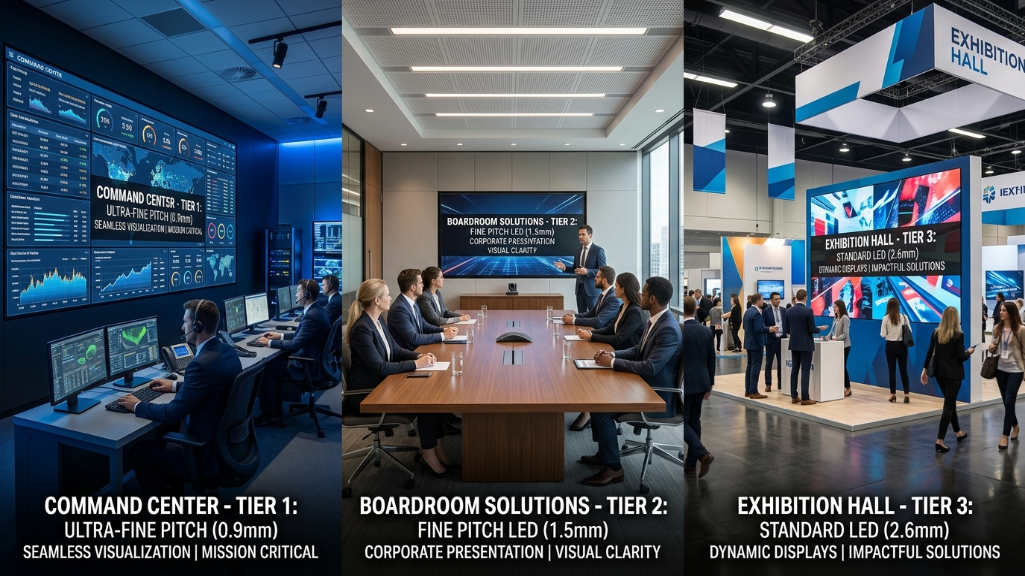
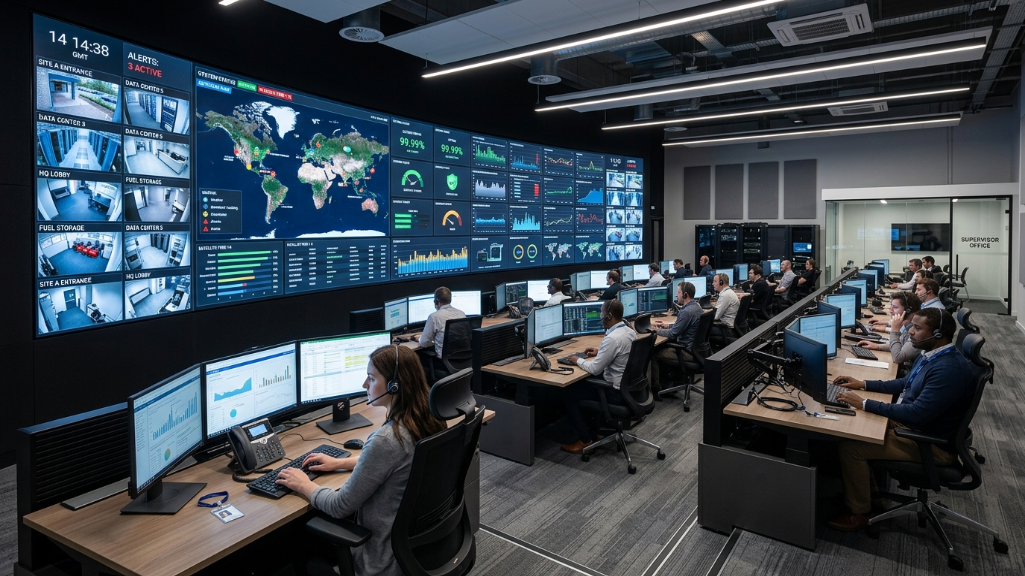
Mission-Critical Command Rooms
Traffic or smart city centers require dense data visualization. P1.53 ensures clarity even in 24 split-screen modes.
Engineer’s Note: Must include dual power supply and dual receiving card backup for seamless switching within 0.02 seconds.
Executive Boardrooms
Traditional LCD walls have 1.8mm–3.5mm bezels that disrupt data visualization. P1.53 enables seamless splicing.
ROI Analysis: Visual continuity enhances brand image and creates immersive experiences in negotiations and video conferences.
FAQ: P1.53 LED Screen Quotation and Selection
Q1: Is P1.53 worth the extra cost compared to P1.86?
A: P1.53 offers ~48% higher pixel density. For viewing distances of 2–3 meters, the improvement is significant. For distances over 5 meters, P1.86 may be more cost-effective.
Q2: What information is required for an accurate turnkey quote?
A: Minimum requirements:
- Screen dimensions
- Installation method (wall-mounted, embedded, or freestanding)
- Viewing distance
- Content type (static PPT or high-speed video)
- Delivery timeline
Q3: What is the power consumption?
A: Average: 200–300W/sqm; Peak: ~600W/sqm. Projects over 10 sqm must include a power distribution cabinet to prevent inrush current.
Q4: Shipping cost for a 10 sqm screen?
A: Total weight (with packaging): 500–700kg. Sea freight to the U.S. East Coast costs about $800–$1,200 (including customs). Air freight is recommended to avoid moisture damage.
Q5: Is front maintenance necessary?
A: Absolutely. Indoor fine pitch screens are wall-mounted with no rear access. Without front maintenance, repairing a single module may require dismantling the entire wall. Front maintenance increases cost by ~5% but reduces 90% of maintenance labor.
Expert Verdict
When reviewing a P1.53 HD LED screen quote, remember: “you get what you pay for” is an absolute truth in the LED industry. As a chief engineer, the recommendation is clear: choose gold wire LEDs, high refresh ICs, NovaStar system, and die-cast aluminum cabinets. It is better to choose a high-end P1.86 than a low-end P1.53. Cheap P1.53 configurations will lead to dead pixels, poor flatness, and grayscale issues that can wipe out your project profit during the warranty period.
Get Your Custom P1.53 Quote
Still struggling to compare supplier quotations? Contact our senior engineers. We will provide a 100% transparent P1.53 project solution including BOM, system diagrams, and logistics estimation.
References:
MDPI Grayscale Standardization Research