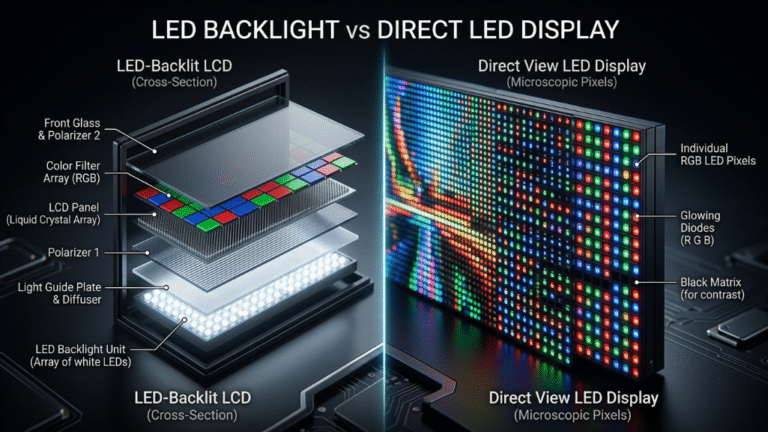
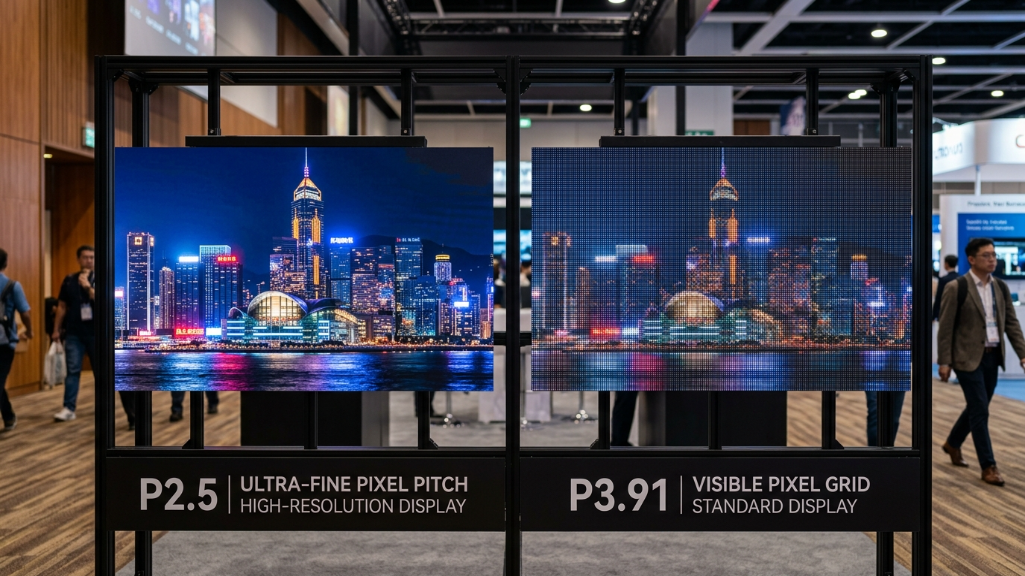
When selecting an LED display, P2.5 and P3.91 represent a major dividing line. The core difference is this: P2.5 (2.5mm pixel pitch) is designed for high-definition indoor fixed installations with ultra-close viewing, delivering 160,000 pixels per square meter. In contrast, P3.91 (3.91mm pixel pitch) is the gold standard for the rental stage market, offering 65,536 pixels per square meter—striking a balance between long-distance visibility and cost efficiency.
For procurement managers in event companies, factory owners in international trade, or engineers in manufacturing, choosing the wrong specification doesn’t just mean a grainy image—it can lead to structural incompatibility or serious budget waste. Backed by a 15,000㎡ smart manufacturing base and 14 years of global project experience, Sostron provides a deep dive into the technical gap and application logic between these two options.
Core Specifications: More Than Just a 1.41mm Difference
Many non-professional buyers assume the difference between P2.5 and P3.91 is just 1.41mm. In reality, this gap represents a completely different level of pixel density and hardware configuration.
Key Physical Specification Comparison
| Technical Parameter | P2.5 Indoor HD Display | P3.91 Rental / Fixed Display | Performance Impact |
|---|---|---|---|
| Pixel Pitch | 2.5 mm | 3.91 mm | ~60% finer image detail for P2.5 |
| Pixel Density | 160,000 dots/㎡ | 65,536 dots/㎡ | Fundamental difference in resolution |
| LED Type | SMD 1515 / 2020 | SMD 1921 / 2121 / 2525 | Larger LEDs in P3.91 = better impact resistance |
| Optimal Viewing Distance | 2.5m – 15m | 4m – 30m | Determines audience positioning |
| Module Size (Typical) | 160×160mm / 320×160mm | 250×250mm | Affects cabinet design flexibility |
1. Setup Project Data
e.g., 1.25, 2.5, 3.9, 4.8
Based on real-world testing from our indoor P2.5 projects in Mexico and Malaysia:
-
At viewing distances under 3 meters, P3.91 shows visible pixelation.
-
It fails to meet the standards for high-end retail displays or conference presentations.
-
P2.5, with higher PPI (pixels per inch), delivers superior clarity for text, charts, and HD video.
Visual Performance: Viewing Distance Formula & Ambient Light Balance
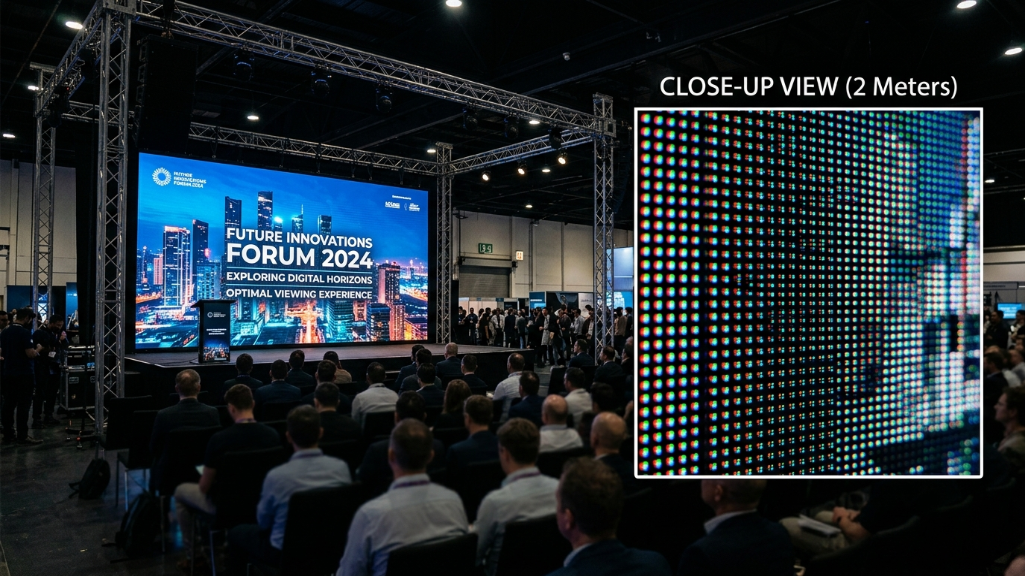
Before choosing a specification, engineers typically rely on industry formulas such as the IEEE viewing distance model or common rules of thumb:
-
Minimum viewing distance (no visible pixels):
Pixel Pitch (mm) × 1 -
Optimal viewing distance (best comfort):
Pixel Pitch (mm) × 2 ~ 3
Scenario-Based Visual Decisions
According to Sostron’s R&D data, brightness and contrast requirements vary significantly by application:
P2.5 Indoor Fine-Pitch Display
-
Typical brightness: 600–1200 nits
-
In Sostron’s Reta 2 ultra-thin series, full die-cast aluminum panels ensure exceptional flatness.
-
Higher pixel density enables smoother grayscale transitions.
-
Ideal for:
-
Luxury retail stores
-
Airport duty-free shops
-
Custom-shaped installations (e.g., bowling center projects)
-
P3.91 Versatility
P3.91 bridges indoor and outdoor applications:
-
Indoor: Suitable for standard stage setups
-
Outdoor (e.g., Ares series exported to southern France): Up to 10,000 nits brightness
This makes P3.91 highly cost-effective for large venues and long-distance viewing.
Expert Insight
“Don’t blindly chase smaller pixel pitch,” says a senior Sostron engineer.
“At a music festival project in Chile, we recommended P4.8 instead of a finer pitch. At 20 meters, the visual difference between P4.8 and P2.5 is nearly zero—but the client saved almost 40% in hardware and bandwidth costs.”
Application Divide: Fixed Installations vs Rental Staging
From Sostron’s 14 years of global service experience, the real dilemma between P2.5 and P3.91 comes down to how the space is used.
P2.5: The “Detail King” for Indoor Fixed Installations
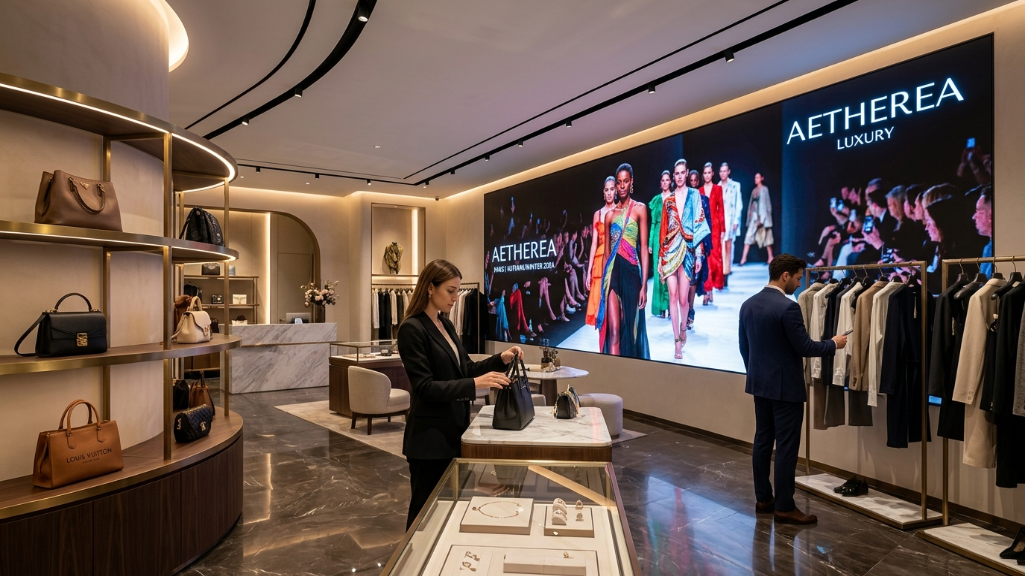
P2.5 is the sweet spot for high-end indoor displays where image quality is critical:
-
Conference rooms & broadcast studios
Crisp text with no jagged edges when displaying presentations or data dashboards -
Luxury retail windows
With the Reta 2 ultra-thin series (30mm cabinet depth), displays integrate seamlessly into walls, enhancing a premium tech aesthetic -
Case example
In a Malaysia project, a cable-free design significantly improved system stability
P3.91: The “All-Rounder” for Rental & Large-Scale Displays
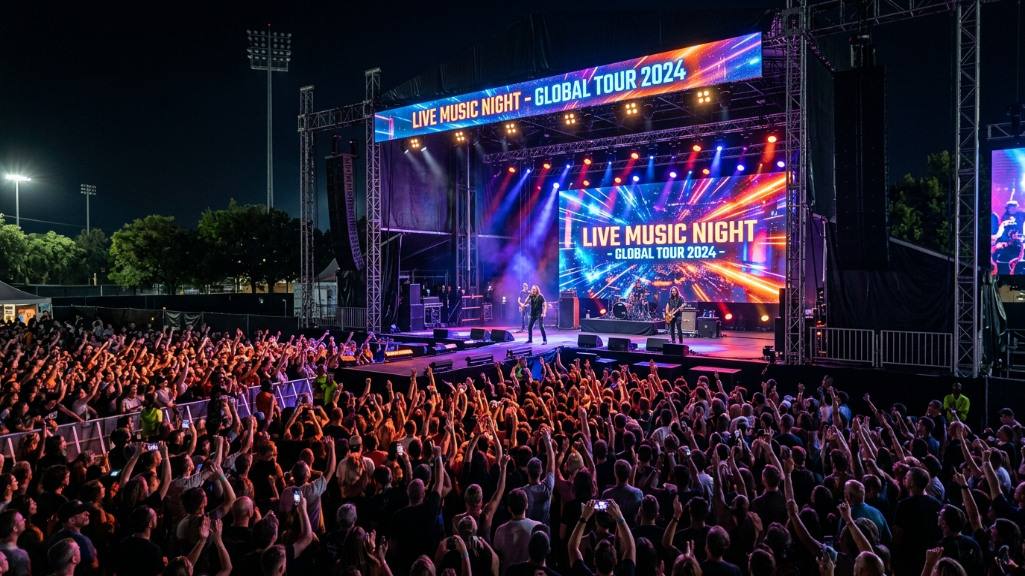
P3.91 dominates the rental market, especially for stages, exhibitions, and events:
-
Frequent assembly/disassembly
Larger LED spacing and stronger solder pads improve durability during transport and installation -
Creative stage design
Flexible rental series like SPad Pro2 often use P3.91 to achieve curved or “S-shaped” installations -
Case example
At a Chile music festival, the Carbon Pro carbon fiber rental series delivered 7680Hz refresh rate, eliminating scan lines on camera and supporting large-scale outdoor performances
Cost & ROI: A Full Lifecycle Perspective
For factory owners and procurement managers, the unit price is just the tip of the iceberg. The real focus should be total cost of ownership.
Cost Comparison Table
| Cost Factor | P2.5 Indoor Solution | P3.91 Rental/Fixed Solution | Sostron Recommendation |
|---|---|---|---|
| Hardware Cost | Higher (2.4× more pixels) | Lower (cost-effective) | Choose P3.91 for tight budgets |
| Control System | Higher (more receiving cards/processors) | Lower (larger load per card) | P2.5 requires higher bandwidth |
| Power & Cooling | Moderate | Very low (optimized) | Ares series recommended |
| Maintenance | Complex (smaller LEDs) | Easier (modular quick service) | P3.91 preferred for rentals |
Data Insight:
According to the 2025 Global LED Display Market Trends Report, under the same brightness conditions, P2.5 systems are about 35% more complex to integrate than P3.91.
This means:
-
In large venues (e.g., auditoriums), using P2.5 requires upgrades not just to the display—but also to processors and fiber transmission systems.
Manufacturing & Durability: A Factory-Level Perspective
Why does Sostron’s 15,000㎡ manufacturing base matter? Because P2.5 and P3.91 demand completely different levels of SMT (Surface Mount Technology) precision.
SMT Placement Accuracy
P2.5 LEDs are extremely close together. Even slight misalignment can cause:
-
Dark lines
-
Uneven seams
Sostron uses fully automated vision alignment systems to ensure flatness deviation is controlled within:
±0.1mm per module
Heat Dissipation & Energy Efficiency (Common Cathode Technology)
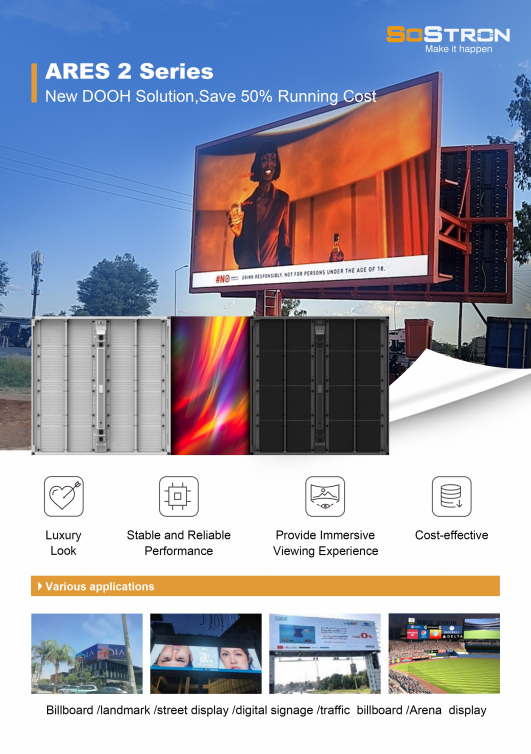
In outdoor P3.91 applications (e.g., Ares 2 flagship energy-saving series):
-
Common cathode technology precisely controls voltage for RGB LEDs
-
Reduces operating costs by up to 50%
-
Effectively solves heat buildup issues in dense displays
FAQ: Common Questions About P2.5 vs P3.91
Q1: Can P2.5 be used outdoors?
Generally, no.
-
Smaller LEDs struggle to handle the high current required for outdoor brightness
-
Achieving high IP protection at such tight spacing is difficult
For outdoor HD needs, consider Sostron’s Storm Pro series.
Q2: Will P3.91 look pixelated at a 3-meter viewing distance?
Yes.
At 3 meters, the human eye can distinguish individual pixels on P3.91 displays.
For:
-
High-end showrooms
-
Brand flagship stores
You should strongly consider P2.5 or smaller pitch.
Q3: Why is P3.91 more popular in the rental market?
Because it hits the sweet spot:
-
Clear enough beyond 5 meters
-
Strong physical durability
Combined with Sostron’s Carbon Pro cabinets (only 5kg), single-person installation becomes possible—dramatically reducing labor costs.
Conclusion: Which One Is Right for You?
Your choice ultimately depends on your core KPI:
-
Maximum visual quality, close interaction, premium branding → Choose P2.5 (Reta 2 series)
-
High ROI, versatile applications, fast payback → Choose P3.91 (Hima or Ares series)
With 14 years of experience as a national high-tech enterprise, Sostron doesn’t just supply screens—we deliver end-to-end display solutions.
References:
LED Viewing Distance & Pixel Pitch Guide