Table of Contents
-
Why Two Quotes Can Differ by 100%
-
Three Core Technical Variables That Determine Price
-
The Hidden Ledger: TCO and ROI Analysis
-
How to Assess a Supplier’s True Capabilities
-
Frequently Asked Questions (FAQ)
-
Sostron Solutions
-
Conclusion
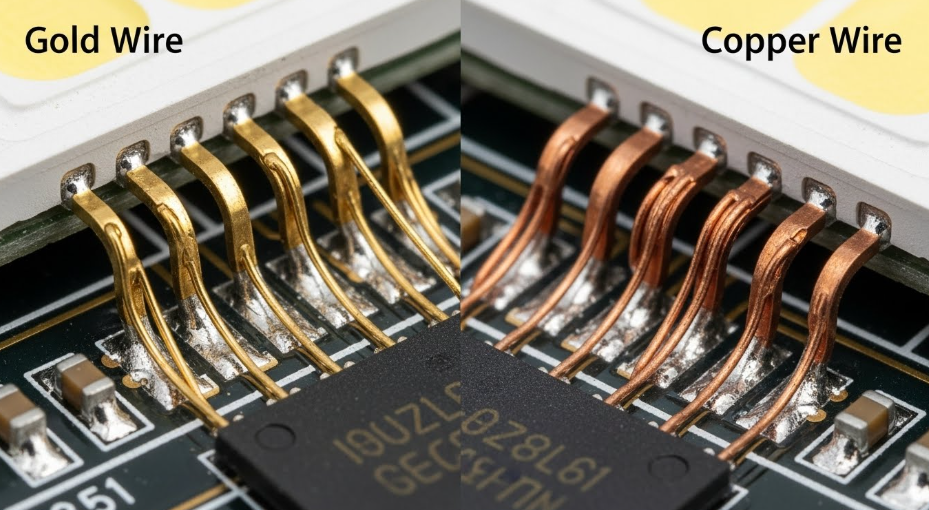
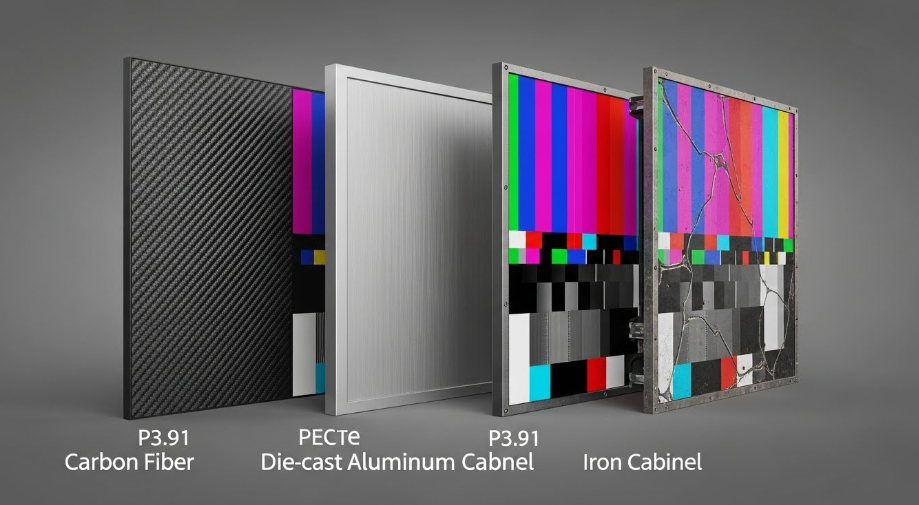
P3.91 outdoor LED rental screens generally fall into the $600–$1,500 per square meter (USD) price range. The real reason behind this wide gap isn’t the resolution—it’s driven by LED encapsulation quality (gold wire vs. copper wire), driver IC refresh rate (3840Hz vs. 1920Hz), and cabinet materials (carbon fiber vs. die-cast aluminum).
For rental companies, the BOM (bill of materials) accounts for just 60% of the total cost of ownership (TCO). The remaining 40% comes from labor for setup and teardown, plus logistics for cross-country or global touring.
Why Two Quotes Can Differ by 100%: A Supply Chain Director’s View
I’m the Supply Chain Director at Sostron. After 20 years in the LED display industry and thousands of RFQs, the most common question I see is:
“Same P3.91, same 5,000 nits—why is one supplier quoting half the price of another?”
The answer is hidden inside the BOM you never see.
Low prices often mean the risk has been shifted onto you. To hit a $500/m² price point, factories usually rely on copper-wire LEDs and recycled aluminum cabinets. These may survive fixed installations, but for rental work—constant setup, teardown, transport, outdoor exposure—they’re a disaster waiting to happen.
This guide strips away vague marketing. We break down the actual cost structure and show you how to evaluate quotes like an industry pro.
Market Segmentation
According to the latest data from our Shenzhen supply chain, P3.91 outdoor rental screens fall into three tiers:
Low-End Assembly Screens ($400–$650/m²)
Configuration: Iron or basic aluminum frames, copper-wire LEDs from second-tier brands, standard IC.
Risks: Weak waterproofing (“fake IP65”), LED oxidation within six months leading to high dead-pixel rates.
Best for: Temporary, ultra-low-budget events.
Mid-Range Standard Screens ($700–$1,100/m²) — Industry Mainstream
Configuration: Die-cast aluminum cabinet, Nationstar/Kinglight LEDs, standard high refresh.
Comparable to: Sostron Hima Series.
Best for: Local weddings, commercial roadshows, general rental applications.
High-End Touring Screens ($1,200–$2,000+/m²) — Flagship Level
Configuration: Carbon-fiber or magnesium-alloy cabinets, gold-wire LEDs, dual-backup power/signal, creative configurations.
Comparable to: Sostron Carbon Series and Ares Series.
Best for: Global tours, music festivals, broadcast-level events, premium product launches.
Three Core Technical Variables That Determine Price (Tech Deep Dive)
If you’re only evaluating “pixel pitch” and “brightness,” you’re basically allowing the supplier to clear outdated stock. These three components determine real cost:
1. LED Encapsulation: Gold Wire vs. Copper Wire
LEDs account for 30–40% of the entire BOM.
Copper-Wire LEDs
Pros: Cheap
Cons: Oxidizes easily, weak in high-humidity or salt-spray environments
In our Chile seaside music festival project, copper-wire LEDs failed within days due to moisture-induced wire corrosion.
Gold-Wire LEDs
Pros: Superior oxidation resistance, excellent durability
Used in Sostron’s Carbon Series with Nationstar gold-wire LEDs.
Business impact:
Gold-wire LEDs cost ~20% more upfront but reduce maintenance rates by up to 90%, preventing the most expensive rental nightmare—on-site emergency repairs.
2. Refresh Rate & Driver IC: Avoid Broadcast Failures
1920Hz (Standard Refresh)
Looks fine to the naked eye,
but filmed with professional cameras (>1/1000s shutter), it shows dark scanning lines.
3840Hz+ (High Refresh)
Professional standard for concerts, touring, XR studios, and broadcasting.
Powered by ICs like MBI5153 and ICN2153.
Sostron configuration:
All Ares & Carbon products: 3840Hz minimum, ensuring zero flicker under 4K/8K cameras.
3. Cabinet Material: Weight Determines Profit
Rental screens are moved constantly. Weight directly affects:
-
Setup speed
-
Labor cost
-
Truss load capacity
-
Logistics cost
-
Damage rates
Die-Cast Aluminum
7.5–9 kg per 500mm panel
Carbon Fiber (Sostron Carbon Series)
Only 4.8 kg, one of the lightest in the industry.
Business benefits:
-
One-person operation
-
Faster rigging times
-
Lower staging and truss costs
-
Massive savings in air freight
Table 1: Sostron P3.91 Product Line Comparison
| Feature | Ares Series | Carbon Series | Hima Series |
|---|---|---|---|
| Cabinet Material | Magnesium-aluminum | Carbon fiber | Die-cast aluminum |
| Weight | 7.5 kg | 4.8 kg | 8.5 kg |
| Brightness | 10,000 nits | 5,000 nits | 4,500 nits |
| Refresh Rate | 3840Hz / 7680Hz | 3840Hz | 1920Hz / 3840Hz |
| Protection | IP65 front/back | IP65 front | IP65 front |
| Key Strength | 40% energy savings | Ultra-fast setup, lightest weight | Economical & stable |
| Best Use Case | Outdoor signage, high brightness | Global tours, premium events | Local rentals, weddings |
Expert Tip:
If your business involves frequent intercity or international events, Carbon Series typically pays for itself in 6 months via freight savings.
The Hidden Ledger: TCO & ROI Analysis
In rental businesses, the EXW purchase price is only the beginning. The largest cost-drivers are:
-
Logistics
-
Labor
-
Damage & maintenance
Add 1 kg per panel, and your annual profit shrinks immediately.
Three “Profit Killers” in Rental Operations
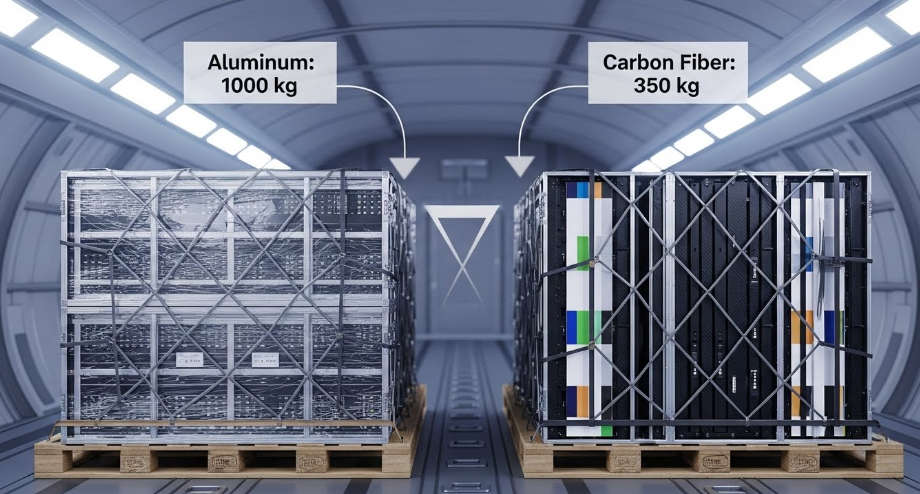
1. Logistics Costs
For air-shipped shows (like our Chile festival):
100 m² of P3.91:
-
Traditional die-cast: ~3,000 kg
-
Carbon Series: ~1,800 kg
Difference: 1.2 tons
At global air freight averaging $5/kg, that’s:
👉 $6,000 saved per one-way shipment
2. Labor Costs
Traditional screen (100 m²):
-
5 workers
-
6 hours
Sostron Carbon:
-
3 workers
-
4 hours
Savings per event: 18 labor-hours
3. Maintenance & Damage
Frequent teardown = frequent edge damage. Even a single broken LED requires module replacement and repair downtime.
All Sostron rental screens include corner protection, reducing damage by 80%.
Table 2: ROI Example (100 m²)
| Cost Item | Traditional Die-Cast P3.91 | Sostron Carbon P3.91 | Difference |
|---|---|---|---|
| Equipment Cost | $80,000 | $100,000 | +25% |
| Total Weight | 3,000 kg | 1,800 kg | 40% lighter |
| Logistics (20 tours/yr) | $30,000 | $18,000 | Saves $12,000 |
| Labor (20 tours/yr) | $20,000 | $12,000 | Saves $8,000 |
| Year 1 TCO | $130,000 | $130,000 | Break-even |
| Year 3 TCO | $230,000 | $190,000 | $40,000 more profit |
Bottom Line:
For high-frequency rentals, the Carbon Series recovers its premium within 12 months.
How to Assess a Supplier’s True Capabilities
Even if you can’t disassemble the screen, factory visits reveal everything. Watch for these:
1. Aging Test Protocol
Workshops:
-
24 hours
-
Low-load video playback
Sostron Standard:
-
72-hour full-white max-brightness aging
-
In our 15,000 m² intelligent factory
A screen that passes this test is extremely unlikely to fail on-site.
2. Real IP65 Testing
Workshops:
-
Glue on the surface
-
Fake “outdoor” labeling
Sostron Standard:
-
High-pressure spray chamber testing
-
Validates both rainproofing and cleaning resistance
Critical for harsh environments (UK roadside, Brazil highways, etc.).
3. Spare-Part Ratio Trap
Many factories ship insufficient spare modules to create an artificially low quote.
Industry standard: 3–5% spare modules.
Anything below that means:
-
Longer repair cycles
-
Rental downtime
-
Higher long-term cost
Sostron follows the 5% standard for rental projects.
Frequently Asked Questions (FAQ)
1. What’s the standard lifespan of P3.91 outdoor rental screens?
Typically 5–7 years for mid/high-end models.
Gold-wire LEDs and high-refresh ICs extend usable lifespan significantly.
2. Can P3.91 be used for indoor events?
Yes—if brightness can be lowered and cabinets support indoor rigging.
Hima and Carbon Series both support mixed indoor/outdoor use.
3. What brightness is recommended for outdoor daytime use?
-
Concert stage: 4,000–5,000 nits
-
Direct sunlight: 6,000–10,000 nits (Ares Series)
4. Are carbon-fiber cabinets durable?
Yes.
Carbon fiber has superior strength-to-weight ratio and is now the global standard for touring-grade LED screens.
5. Does refresh rate affect power consumption?
Higher refresh has minimal impact on total power.
LED brightness and driver efficiency matter far more.
Sostron Solutions
Sostron offers three major P3.91 product lines:
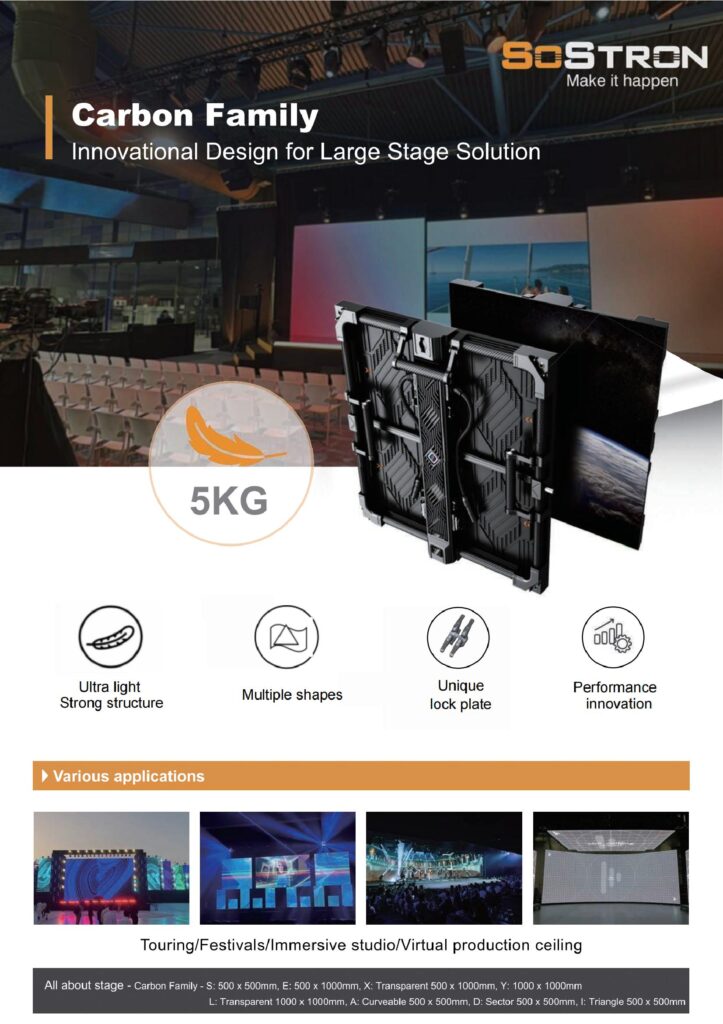
Carbon Series — Touring Flagship
-
4.8 kg carbon-fiber cabinet
-
3840Hz refresh
-
QuickLock system
-
Best choice for global tours and high-frequency rentals
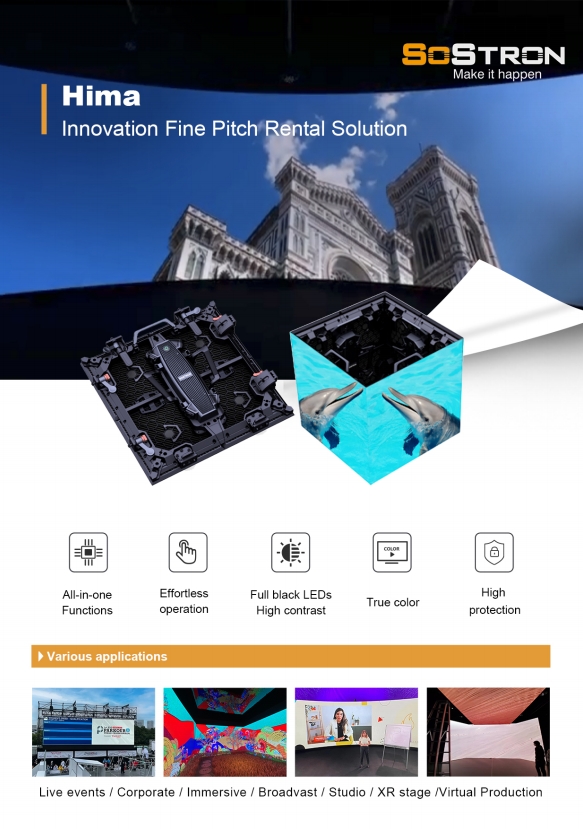
Hima Series — High Value Standard
-
Die-cast aluminum
-
Stable, affordable, reliable
-
Ideal for event companies focusing on local rentals
Conclusion
The price of P3.91 outdoor LED rental screens varies widely because the differences under the hood are massive—LED encapsulation, IC refresh rate, and cabinet material directly determine performance, reliability, logistics cost, and long-term ROI.
If your business depends on touring, frequent setups, or international transport, choosing lightweight, gold-wire, high-refresh panels isn’t an upgrade—it’s how you protect your profit margin.
Sostron’s Ares, Carbon, and Hima series offer flexible options for different budgets, workloads, and event types. By evaluating TCO—not just upfront cost—you’ll make decisions that increase reliability and long-term profitability.
References:
IEC 62031 – LED modules for general lighting: Safety specifications
AVIXA / InfoComm Professional AV Rental Market Reports