The Real Challenge of Buying LED Screens in Riyadh
Most LED screen buyers in Riyadh make the same mistake: they compare price per square meter and pick the lowest quote. Three months later, the screen is washed out in afternoon sun, the cabinet is clogged with sand, or the shipment is stuck at Jeddah Islamic Port waiting for SASO clearance.
The Riyadh market is not like Europe or Southeast Asia. Ambient temperatures regularly exceed 50°C, haboob sandstorms can reduce visibility to near zero, and UV radiation accelerates component degradation faster than in any temperate climate. A screen spec’d for Dubai or Singapore will underperform here. This guide covers what actually matters — climate-hardened specs, compliance requirements, realistic pricing, and the Vision 2030 market context that is reshaping demand across the Kingdom.
Riyadh’s LED Display Market in 2026: Why Now
Saudi Arabia’s LED display market reached USD 83 million in 2025 and is on track to hit USD 216.7 million by 2034 (IMARC Group). The outdoor segment alone was valued at USD 117.86 million in 2024, growing at 7.1% CAGR.
The catalyst is Vision 2030. Government-backed mega-projects are generating unprecedented LED procurement volumes:
- NEOM — smart city infrastructure requiring thousands of display nodes
- King Salman International Airport — flight information, wayfinding, and luxury brand advertising
- KAFD (King Abdullah Financial District) — corporate lobbies, facades, and public plazas
- Red Sea Global — hospitality and resort signage
- Riyadh Season / Jeddah Season — large-scale event rental screens
Programmatic DOOH (Digital Out-of-Home) is also arriving. Platforms like Moving Walls and Hivestack are enabling real-time ad delivery based on traffic data, weather, and audience demographics — the same shift that transformed advertising in London and Singapore is now happening on Tahlia Street and King Abdullah Road.
Climate Requirements: What the Desert Actually Demands
This is where most imported screens fail. Riyadh’s environment creates four distinct hardware threats:
| Threat | Consequence if Ignored | Required Solution |
|---|---|---|
| 50°C+ ambient temperature | Internal temps reach 80°C+, causing premature LED failure | Common-cathode technology; fanless aluminum chassis |
| Haboob sandstorms | Dust ingress destroys circuit boards within months | IP65 minimum; IP68 recommended; fully sealed cabinet |
| Intense UV radiation | Silicon masks yellow and crack; LED output degrades | UV-resistant silicon masks on all LED modules |
| 24/7 operation demand | Standard diodes lose brightness within 2 years | Premium gold-wire diodes (e.g., Nationstar); wide-voltage PSUs |
Common-cathode technology (also called “Cold Screen”) is the single most important spec for Saudi Arabia. It delivers precise voltage independently to each R, G, B chip rather than sharing a common anode, reducing heat generation by approximately 30% and cutting energy consumption by 30–40%. This eliminates the need for external industrial air conditioning units — a significant operational cost saving in a country where electricity demand peaks in summer.
Fanless aluminum chassis is equally non-negotiable. Fan-based cabinets act as dust vacuums in sandstorm conditions. Aluminum passive heat dissipation with hermetically sealed enclosures is the only reliable long-term solution.
Brightness: The Number That Matters Most
Standard global LED screens ship at 5,000–6,000 nits. In Riyadh’s direct afternoon sun, that is not enough. The screen washes out and becomes unreadable — defeating the entire purpose of the installation.
| Installation Context | Minimum Brightness Required |
|---|---|
| Highway billboard, open facade | 8,000–10,000 nits |
| Shaded canopy or covered walkway | 6,000 nits |
| Indoor mall atrium (high ambient light) | 3,000–5,000 nits |
| Indoor conference / retail (controlled light) | 800–2,000 nits |
Auto ambient light sensors are strongly recommended. They reduce brightness automatically at night, cutting energy consumption and preventing light pollution complaints from neighboring properties.
Pixel Pitch Selection Guide
Pixel pitch (P-value in mm) determines resolution and minimum comfortable viewing distance. A practical rule: P-value in mm ≈ minimum ideal viewing distance in meters.
| Application | Recommended Pitch | Key Priority |
|---|---|---|
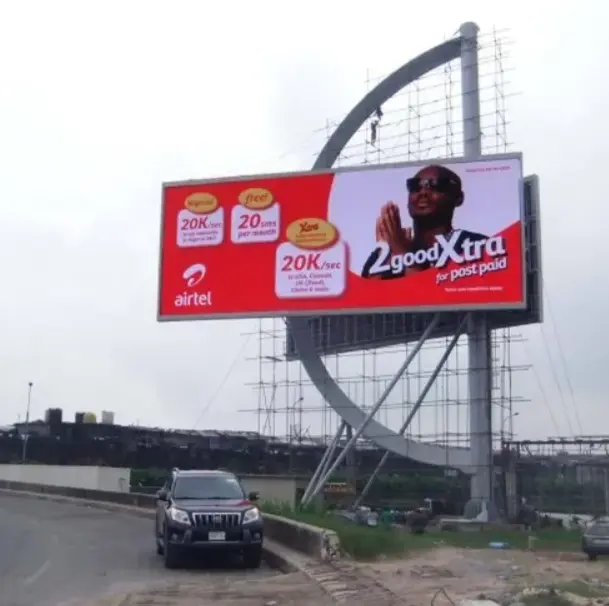
| Highway billboard | P8.0–P10.0 | Brightness, structural cost efficiency |
| Mall facade / street retail | P3.0–P5.0 | Visual prestige, close-range clarity |
| Sports stadium / arena | P5.0–P8.0 | High refresh rate ≥3,840 Hz |
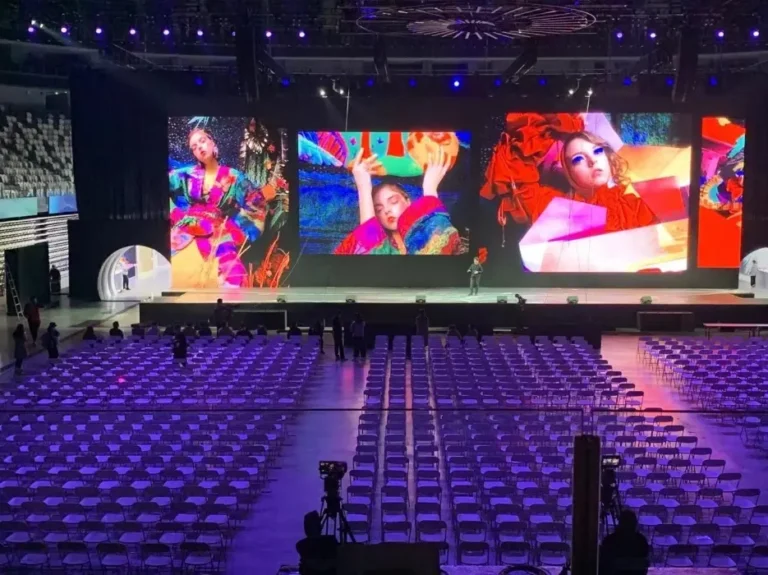
| Event rental / Riyadh Season | P2.9–P3.9 | Lightweight, fast assembly/disassembly |
| Indoor lobby / showroom | P1.5–P2.5 | Fine detail, premium finish |
For most Riyadh street-level commercial installations, P4–P6 hits the right balance between image quality and cost. Highway applications can use P8–P10 without visible quality loss at distance.
Compliance: SASO/SABER Certification Is Not Optional
This is the step that catches importers off guard. Saudi Arabia requires all LED display products to carry SASO (Saudi Standards, Metrology and Quality Organization) certification via the SABER platform before clearing customs. Non-compliant shipments are held at Jeddah Islamic Port or King Abdulaziz Port in Dammam — sometimes indefinitely.
Key compliance requirements:
- SABER product certificate — obtained through a SASO-approved certification body (e.g., TÜV SÜD, SGS, Bureau Veritas)
- IECEE CB test report — required for electrical safety compliance
- GSO conformity mark — GCC Standardization Organization certification for regional market access
- Municipal installation permit — required for all roadside and rooftop installations; issued by the relevant Amanah (municipality)
- Saudi General Directorate of Traffic approval — mandatory for any screen visible from a public road; brightness limits apply to prevent driver distraction
Always request SASO/SABER certificates from your supplier before placing an order. Reputable manufacturers provide these as standard documentation. If a supplier cannot produce them, walk away.
LED Screen Pricing in Riyadh: Realistic Benchmarks
Prices vary significantly based on technology tier, pixel pitch, and whether the quote includes installation and CMS. The table below reflects 2026 market benchmarks for turnkey supply (hardware + basic installation, excluding structural steel and civil works):
| Screen Type | Pixel Pitch | Approx. Price (USD/m²) | Typical Use Case |
|---|---|---|---|
| Indoor standard | P2.5 | 900–1,200 | Retail, hotel lobby |
| Indoor standard | P3.0 | 550–750 | Conference, showroom |
| Indoor standard | P4.0 | 400–550 | Large venue, exhibition |
| Outdoor standard | P4.0–P5.0 | 600–900 | Mall facade, street retail |
| Outdoor standard | P6.0 | 450–650 | Commercial billboard |
| Outdoor highway | P8.0–P10.0 | 300–500 | Highway, large billboard |
| Outdoor premium (IP68, common-cathode) | P4.0–P6.0 | 900–1,400 | High-traffic Riyadh locations |
Important caveats:
- Structural steel, civil foundation, and electrical supply are typically quoted separately and can add 20–40% to total project cost.
- CMS (Content Management System) licensing runs 300–1,500/screen/year depending on provider.
- Customs duties, VAT (15% in Saudi Arabia), and freight add approximately 15–25% to FOB prices.
- Always calculate Total Cost of Ownership (TCO) over 5 years, not just the hardware quote. A cheap screen requiring replacement in 2 years costs more than a premium screen lasting 8+.
Indoor vs. Outdoor: Application Breakdown for Riyadh
Indoor applications in Riyadh are concentrated in:
- Shopping malls (Mall of Arabia, Riyadh Park, Al Nakheel Mall) — video walls, wayfinding totems, retail brand displays
- Hotels and hospitality — lobby feature walls, ballroom backdrops, digital concierge displays
- Corporate offices and KAFD towers — reception walls, boardroom displays, trading floors
- Exhibition and convention centers — event backdrops, sponsor branding, directional signage
Outdoor applications span:
- Commercial street advertising (Tahlia Street, Olaya District, King Fahd Road)
- Highway billboards on Ring Roads and major arterials
- Sports venues (King Fahd International Stadium, Prince Faisal bin Fahd Stadium)
- Government and public infrastructure — metro stations, airports, public plazas
- Event and seasonal installations (Riyadh Season venues, Diriyah Festival)
Choosing a Supplier: What to Verify
Not all LED screen suppliers serving the Saudi market are equal. Before signing a contract, verify:
- SASO/SABER certificates — request the actual certificate numbers, not just a promise
- Climate test reports — ask for thermal performance data at 50°C+ ambient; reputable suppliers have third-party test reports
- Local after-sales support — confirm there is a service team or authorized partner in Riyadh, not just a remote support line in China
- Spare parts availability — insist on 3–5% spare modules, power supplies, and receiving cards included in the contract
- Front-maintenance design — for urban installations, rear-access designs are impractical; confirm module swap is possible from the front with a magnetic tool
- Warranty terms — minimum 3 years on hardware; 5 years is the industry standard for premium suppliers
- CMS ecosystem lock-in — understand whether the CMS is proprietary or open; proprietary systems can create long-term dependency
2026 Trends Shaping the Riyadh LED Market
Programmatic DOOH is the biggest structural shift. Screens are increasingly connected to demand-side platforms (DSPs), allowing advertisers to buy specific time slots, dayparts, and audience segments rather than fixed placements. This is already live on premium Riyadh locations and will expand significantly through 2026–2027.
AI-driven content optimization is emerging — dynamic creative that adapts messaging based on real-time weather, traffic, and audience data. A screen showing a cold drink ad when temperature hits 45°C, switching to a coffee ad at 7am, is no longer a concept — it is operational.
Rental market growth driven by Riyadh Season and similar government-backed entertainment events is creating strong demand for modular, lightweight P2.9–P3.9 panels that can be assembled and disassembled quickly.
Energy efficiency mandates are tightening. Saudi Arabia’s Vision 2030 sustainability targets are pushing procurement toward common-cathode and other low-power technologies, particularly for government-funded projects.
FAQ
Q: Do I need a permit to install an LED screen in Riyadh?
Yes. All roadside and rooftop installations require a municipal permit from the relevant Amanah. Screens visible from public roads also require approval from the Saudi General Directorate of Traffic. Budget 4–12 weeks for the permit process.
Q: What is the minimum IP rating for outdoor screens in Riyadh?
IP65 is the minimum. IP68 with a fanless, fully sealed aluminum chassis is strongly recommended for locations exposed to sandstorms or coastal salt fog (Jeddah, Dammam).
Q: Can I use a standard global LED screen in Riyadh?
Technically yes, but it will underperform and likely fail prematurely. Standard screens at 5,000 nits wash out in direct sun, and fan-based cabinets clog with sand. Saudi Arabia requires climate-specific hardware.
Q: How long does SASO/SABER certification take?
Typically 4–8 weeks through an accredited certification body. Factor this into your project timeline — it must be completed before the shipment departs the factory.
Q: What refresh rate do I need for social media recording?
Minimum 3,840 Hz for flicker-free recording on smartphones. If your screen will be filmed for TikTok, Instagram, or broadcast, this spec is non-negotiable.