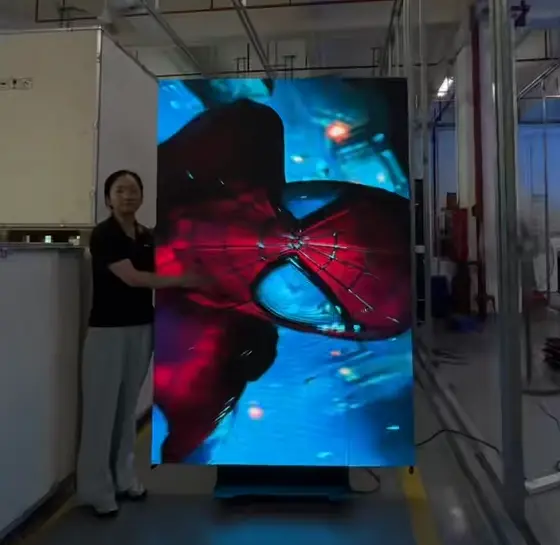
The most common question I receive from architects, retail brand managers, and event producers is simple: “I want a display that wraps around a concrete pillar—can that even be done?” Fifteen years ago, the answer was no. A decade ago, the answer was “technically possible but prohibitively expensive.” In 2026, the answer is a confident yes—but you need to understand what you are actually buying.
Let me give you the direct answer right here: A flexible LED display is a thin, lightweight, bendable screen that can be curved, wrapped around columns, or configured into virtually any three-dimensional shape your space demands, while still delivering the brightness, contrast, and resolution you expect from modern digital signage. It is not a gimmick; it is a structural evolution of display technology. Traditional LED displays are rigid boards, like a single panel of drywall. A flexible LED display is more like a roll of carpet or a flexible vinyl wrap—able to follow contours, hug curved surfaces, and transform awkward architectural spaces into seamless digital canvases.
Over the past five years of specifying displays for retail flagships, corporate lobbies, trade show booths, and museum installations, I have seen flexible LED go from a niche experimental product to a mainstream option. In 2026, the flexible LED market is growing at nearly 7% CAGR, projected to reach $15 billion by 2035. But market size does not help you make a purchasing decision. This guide will take you from basic working principles to practical applications, show you exactly what you should pay for, and help you determine whether flexible LED is the right investment for your specific project.
By the end of this 2026 guide, you will understand how flexible LED technology works, the key performance metrics that separate good displays from bad ones, the application scenarios where flexible LED truly excels, and the specific questions you need to ask suppliers before signing a contract.
Quick Summary: At a Glance
| Feature | Flexible LED Display | Standard Rigid LED Display |
|---|---|---|
| Substrate Material | Flexible PCB (FPC) with silicone encapsulation | Rigid FR4 fiberglass board or aluminum cabinet |
| Bending Capability | Yes—concave, convex, S-curves, column wraps | No—flat surface only |
| Minimum Bending Radius | Typically R ≥ 50–150mm (depends on design) | Not applicable (cannot bend without damaging circuits) |
| Typical Module Size | 240×120mm, 320×160mm variations | 500×500mm, 960×960mm standard cabinets |
| Weight per m² | 5–12 kg | 15–30 kg |
| Maximum Pixel Pitch Availability | P1.25–P10 (finer pitches in development) | P0.9–P20+ |
| Brightness Range | 800–4,000+ nits (indoor/outdoor versions) | 800–10,000+ nits |
| Best Applications | Curved walls, column wraps, creative installations, rollable/temporary setups | Standard rectangular walls, billboards, large-format flat installations |
| Installation Complexity | Higher (requires custom curvature planning, magnetic alignment) | Lower (standard flat mounting) |
| 2026 Price Range (per m², panels only) | $500–1,500+ (varies with pitch, COB vs SMD, customization) | $400–2,000+ (varies with pitch and grade) |
*Source: Standard rigid LED displays begin around $800 per square meter for entry-level indoor models, rising to $2,000+ for advanced high-resolution panels. Flexible LED commands a premium over standard rigid in most configurations due to specialized materials and manufacturing.*
What is a Flexible LED Display?
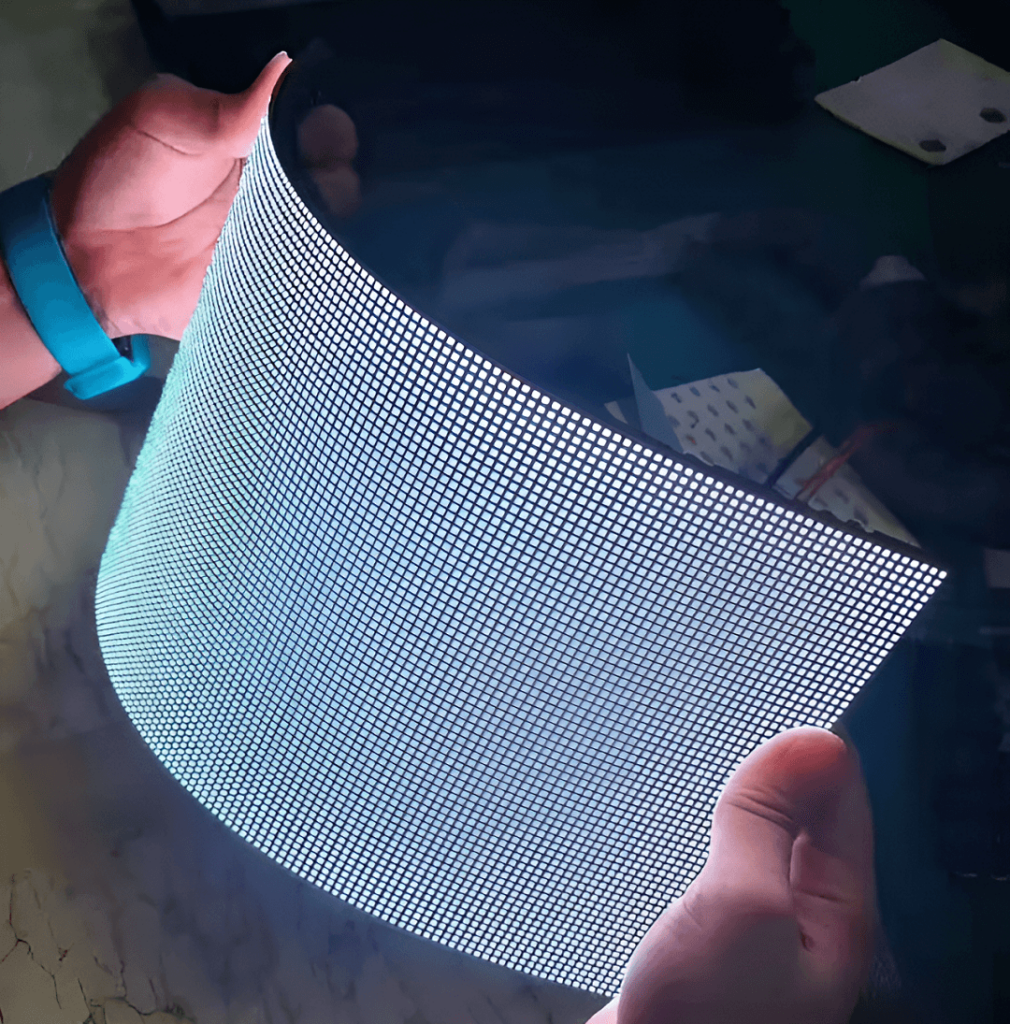
A flexible LED display, also known as a flex LED screen or soft module, is a display technology composed of ultra-thin, lightweight, bendable light-emitting diodes mounted on a pliable substrate. Unlike traditional rigid displays confined to flat cabinets, flexible LED screens can bend, curve, or conform to non-flat surfaces while maintaining visual performance.
In technical terms: a flexible LED display uses flexible printed circuit boards (FPCs) as the substrate instead of rigid FR4 fiberglass. LED chips are soldered onto the FPC—capable of being bent, folded, or rolled multiple times without breaking electrical connections. The assembly is encapsulated in silicone or epoxy resin to protect the circuitry from moisture, dust, and mechanical stress while preserving flexibility.
In plain English: Take a traditional rigid LED sign, remove the heavy aluminum frame, swap the stiff circuit board for a bendable one, replace the hard plastic casing with flexible silicone, and you have the basic architecture of a flexible LED display. It is thin enough to roll up like a yoga mat and light enough to hang from a single mounting point—yet it can output 2,000+ nits of brightness that holds up even in sunlit atriums.
How Flexible LED Displays Actually Work: Behind the Bend
The working principle uses three core technologies working together: a flexible substrate (FPC), LED chips mounted onto that substrate, and a driver system that controls each pixel.
The Flexible PCB (FPC) Core
The most critical component is the flexible printed circuit board. Standard flexible modules typically use dual-layer FPC boards. However, in challenging installations like S-curves or high-frequency rental applications, dual-layer FPCs are highly susceptible to circuit fractures. Premium manufacturers insist on multi-layer laminated FPC with high thermal conductivity, which provides improved heat dissipation efficiency and zero-delay pixel signal transmission even under extreme bending conditions. The specific minimum bending radius (R_min)—typically R ≥ 50mm for standard modules, with customizations available down to R ≥ 25mm—determines how tightly the display can wrap around architectural features.
LED Packaging: SMD vs. COB vs. GOB
The packaging method has become a major differentiator in 2026:
SMD (Surface-Mount Device): LED chips are individually packaged and then soldered onto the FPC. Cost-effective and widely available. Suitable for standard viewing distances and moderate-traffic environments.
COB (Chip-on-Board): Multiple LED chips are bonded directly onto the display substrate without individual packaging. COB technology can cut power use by up to 60% compared to traditional SMD LEDs at the same brightness levels, reducing energy costs and environmental impact while maintaining brightness. COB models offer finer pixel pitches, a slimmer profile, enhanced durability, and higher contrast ratios. Contrast ratios can reach 10,000:1 or even 15,000:1 in premium COB implementations.
GOB (Glue-on-Board): An additional encapsulation layer applied over SMD modules. GOB provides IP65 protection (moisture and impact resistant), enhancing durability for demanding indoor and semi-outdoor environments. According to LED industry reliability data, more than 70% of flexible display failures occur due to environmental factors that GOB encapsulation effectively mitigates.
For engineering managers evaluating flexible LED, the shift from “Is it bright?” to “Is it stable?” represents industry maturation. In 2026, the question has become: “What is the refresh rate and what packaging is used?”
Types of Flexible LED Displays (2026 Buyer‘s Guide)
| Type | Description | Best For | Key Considerations |
|---|---|---|---|
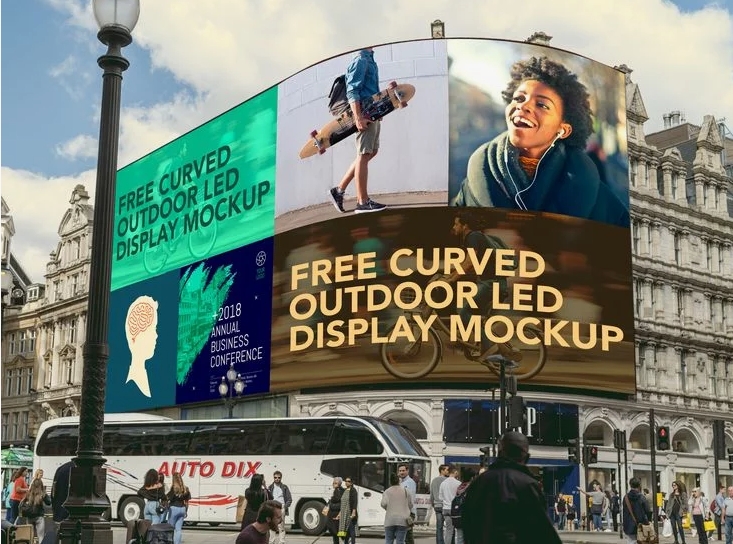
| Curved LED / Fixed‑Arc | Designed with a fixed bend radius to wrap content around the viewer’s peripheral vision; maximises immersion | Permanent architectural installations—cinemas, gaming arenas, premium retail | Limited reconfigurability; requires precise mounting |
| Rollable LED | Engineered to roll up for transport and storage like a scroll; quick setup and takedown | Trade shows, rental/staging, pop‑up events, touring productions | Risk of creasing over time; robust case required |
| Transparent Flexible LED | Allows light to pass through (60–90% transparency) while displaying digital content | Storefront windows, museum exhibits, smart glass, luxury retail | Lower contrast in bright environments; visible grid lines up close |
| Bendable LED (Configurable Curvature) | Can be shaped on‑site to match columns, arches, or custom forms; maintains consistent brightness while bent | Complex architectural surfaces—curved walls, pillars, domes | Higher installation complexity; may require custom mounting |
| Flexible OLED | Self‑emissive organic pixels enable true black levels, infinite contrast, and extreme thinness | Premium consumer electronics, high‑end automotive displays, luxury branding | Higher cost; burn‑in risk for static content; limited scalability |
| Dual‑Side Flexible LED | Two independently functional flexible panels facing opposite directions | Information kiosks, hanging displays, transit hubs with foot traffic in multiple directions | Increased power consumption; more complex control system |
Source: Transparent flexible displays achieve 60–90% transparency, allowing natural light to pass through while delivering dynamic messaging and promotions. Curved LED screens create wider fields of view, reduced glare, and better depth perception for large audiences in fixed locations.
Key Technical Specifications Engineering Managers Must Know
In 2026, engineering managers should focus on these parameters when evaluating flexible LED displays:
Pixel Pitch
Pixel pitch (measured in millimeters) is the center-to-center distance between LEDs. Smaller pixel pitch = higher pixel density = sharper image at close viewing distances = higher cost.
| Model | Pixel Pitch | Pixel Density | Typical Viewing Distance | 2026 Price Range (per m²) |
|---|---|---|---|---|
| P1.86 | 1.86mm | 288,906 dots/m² | Close-up viewing (1–3m) | $950–1,500 |
| P2.0 | 2.0mm | 250,000 dots/m² | Moderate indoor (2–5m) | $800–1,250 |
| P2.5 | 2.5mm | 160,000 dots/m² | Retail, corporate (3–8m) | $580–880 |
| P3.0 | 3.0mm | 90,000 dots/m² | Larger indoor spaces (5–10m) | $500–750 |
| P4.0 | 4.0mm | 62,500 dots/m² | Long-distance viewing (8–15m) | $400–600 |
Source: P2.5 flexible LED screens typically cost $580–880 per square meter; P2.0 commands approximately 25–35% higher price per square meter; P1.86 may be 40–70% higher.
Brightness
-
Indoor flexible LED: 800–1,500 nits (standard), with high-brightness versions up to 4,000 nits
-
Outdoor/weather-resistant versions: 2,000–5,000+ nits (rare for flexible format—most outdoor remains rigid)
-
Match brightness to ambient light levels. A lobby with floor-to-ceiling windows requires higher nits than a basement conference room.
Refresh Rate
Flexible LED displays in 2026 typically achieve refresh rates from 3,840Hz to 7,680Hz. High-refresh panels (≥ 3,840Hz) eliminate visible flicker when captured on camera—critical for broadcast studios, event filming, and content creation environments. Flagship products now offer 7,680Hz refresh rates supporting ultra-clear 8K filming.
Viewing Angle
Flexible LED generally maintains consistent color and brightness at viewing angles up to 140–160°, superior to many LCD alternatives.
Protection Rating
-
IP30 (basic indoor, dust protection only)
-
IP54 (splash-resistant, suitable for indoor/humid environments)
-
IP65 (fully dust-tight and water-jet resistant, available with GOB coating for demanding indoor applications)
Minimum Bending Radius
The industry standard minimum bending radius in 2026 high-end flexible modules is R ≥ 150mm, with laboratory-supported customization for ultra-small radius bending without damage. For tightly wrapped columns (e.g., 200mm diameter), verify that the manufacturer‘s minimum bending radius is compatible.
Flatness Tolerance
Magnetic mounting systems rely on even magnetic force distribution. Uneven distribution creates visible “ribbed patterns” on curved surfaces. Professional engineering specifications require flatness tolerance within ±0.1mm when using aluminum alloy structural frames—a critical threshold for achieving naked-eye 3D visual effects.
Contrast Ratio
SMD flexible modules: typically 3,000:1. COB-based flexible modules: up to 8,000:1–15,000:1 using low-reflection black LED technology. COB superior contrast makes it particularly well-suited for close-viewing environments where pixel visibility and color fidelity matter most.
*Source: COB flexible modules achieve contrast ratios up to 10,000:1; premium GOB-coated SMD modules reach 8,500:1; standard active flexible displays provide approximately 1,500:1 or less.*
Best Use Cases in 2026
Retail Environments
Flexible LED displays can be installed on cylindrical pillars, curved walls, wave-shaped partitions, and organic architectural forms to attract attention and display dynamic product information. In flagship retail stores, luxury brands use flexible modules to wrap around columns or create flowing ribbon-like installations that reinforce brand identity through visual storytelling. Retailers report that curved displays capture customer attention significantly longer than flat digital signage, with corresponding increases in dwell time and purchase consideration.
Corporate Lobbies and Digital Architecture
First impressions define brand perception. In corporate environments, flexible LED modules don’t just illuminate—they integrate into design, accompany the architecture, and generate experiences. Physical space plays a key role in brand strategy. Flexible LED solutions can turn corporate lobbies into dynamic brand statements, with curved welcome walls, digital pillars, and immersive arrival experiences.
Stage and Live Events
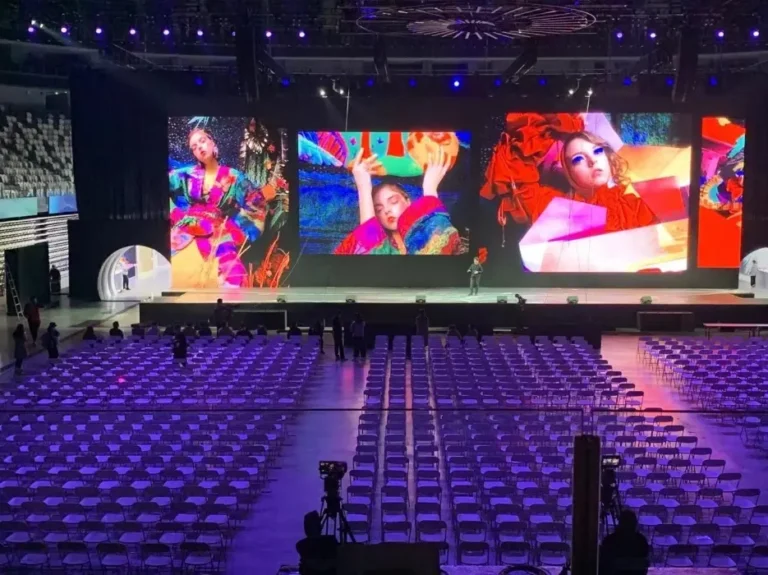
Flexible LED creates dynamic curved and wraparound backgrounds that enhance visual immersion in live performances, concerts, and theater productions. The ability to configure concave, convex, and S-shaped installations without resolution loss gives stage designers creative freedom rigid panels cannot provide.
Trade Shows, Exhibitions, and Pop-Up Retail
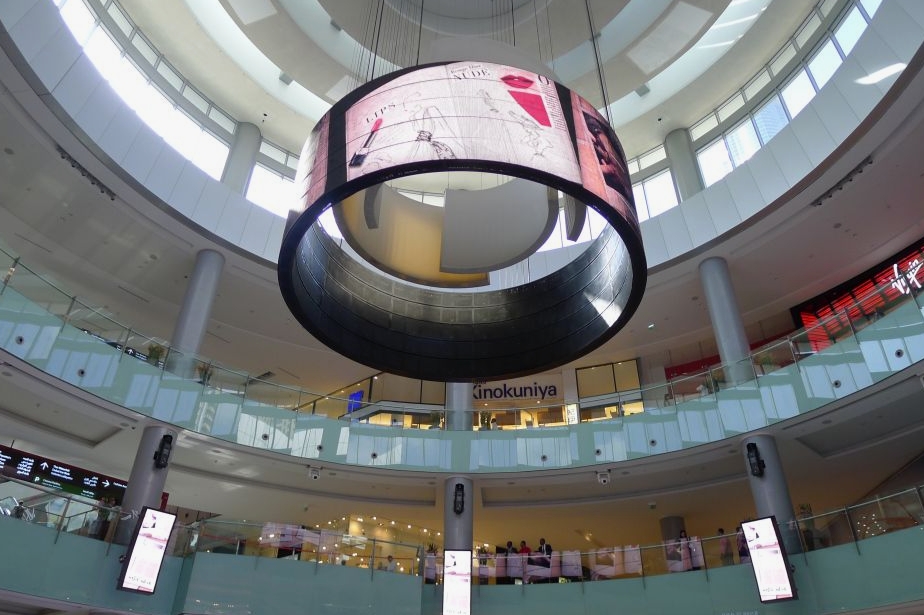
Rollable flexible LED screens are portable, quick to set up, and space-efficient for storage. A roll-up display that fits in a standard shipping case and deploys in under 30 minutes transforms rental and event logistics. Foldable LED posters deliver approximately 32% higher return on investment over five-year deployment periods compared to LCD alternatives, driven by superior durability, operational efficiency, and flexibility.
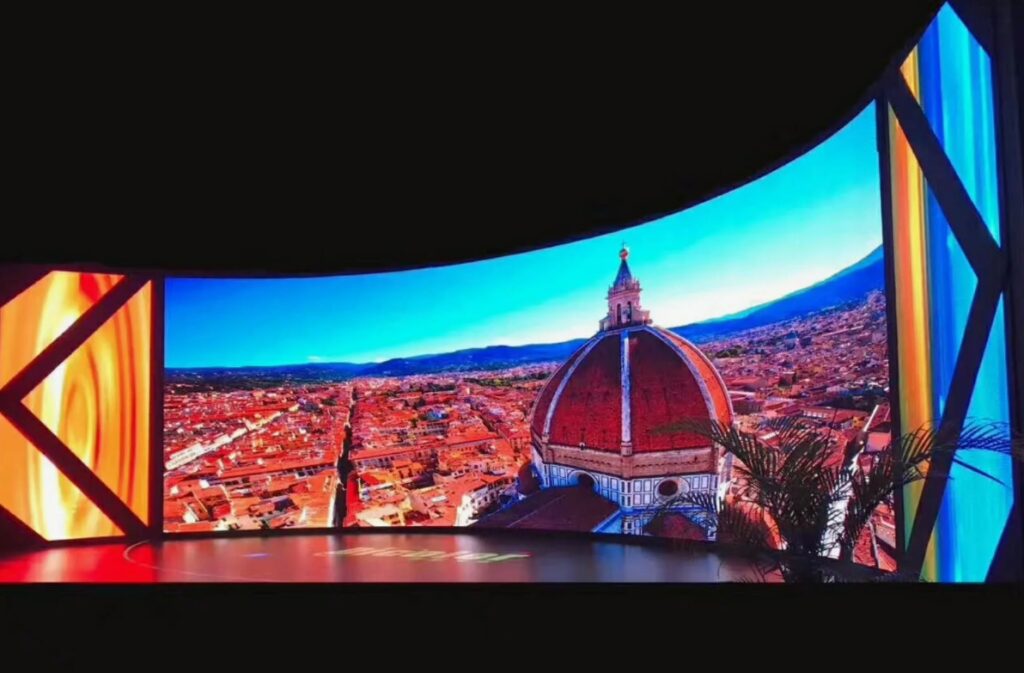
Airport and Transportation Hubs
Houston Airport‘s 220-foot continuous custom elliptical flexible LED display, visible from both floors and positioned directly above passenger circulation, functions as both a media canvas and an architectural element. Transportation hubs increasingly deploy flexible LED for wayfinding, advertising, and ambient passenger engagement across curved ceilings and column wraparounds.
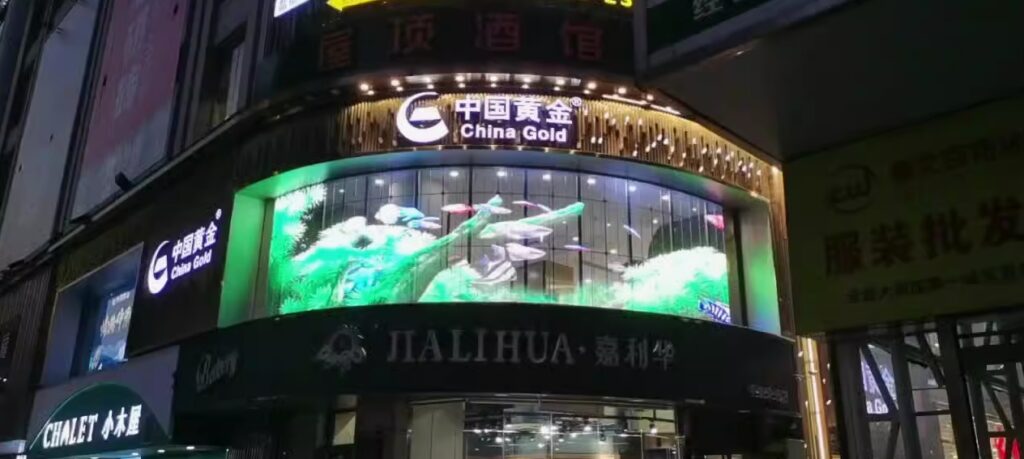
Museums and Themed Entertainment
Flexible displays create immersive exhibits—wrap-around video walls, curved timelines, interactive domes, cylindrical artifact displays. Samsung transformed the Berlin Planetarium with an immersive flexible LED installation using 2.0mm pixel pitch and 3,840Hz refresh rate, supporting educational visualizations, event previews, and live ISS feeds.
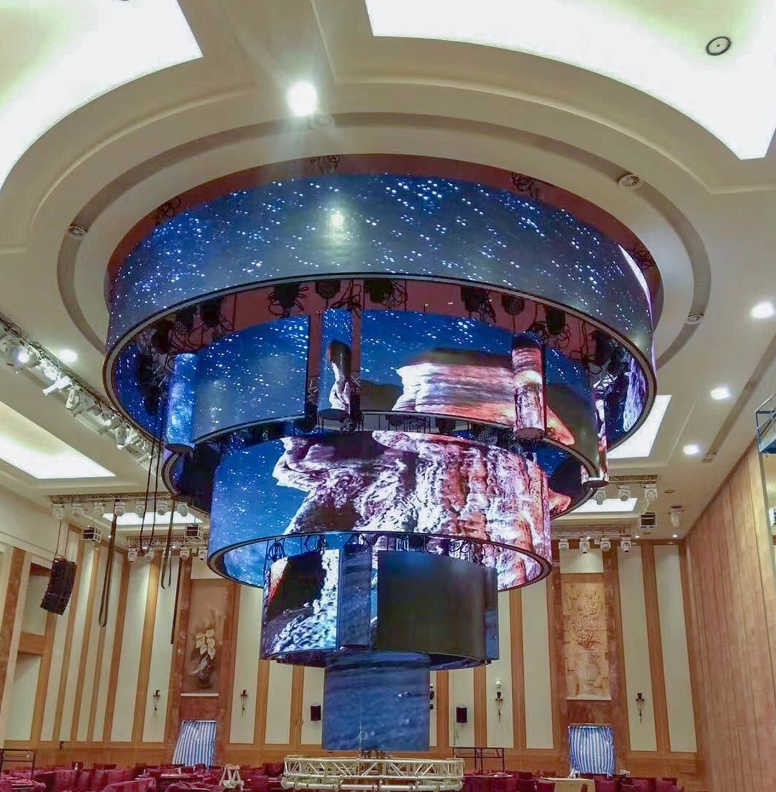
Broadcast Studios and Virtual Production
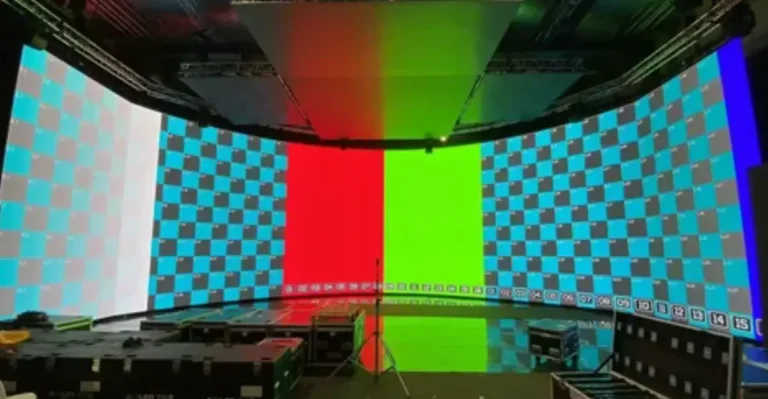
Flexible LED technology supports curved LED volumes that replace green screens, enabling real-time in-camera visual effects (XR/VP). Broadcast studios increasingly deploy fine-pitch flexible displays for curved set walls and immersive anchor backgrounds.
Smart Windows and Architectural Integration
Transparent flexible LED displays allow 60–90% of light to pass through while projecting dynamic content. A storefront can show interactive ads without blocking the view inside. Museum displays can overlay historical context on artifacts through glass. Corporate lobbies can turn windows into information portals without structural obstruction. A 60–90% transparency rate ensures natural light continues to pass through; in-store displays can convey messages in real time while maintaining visibility from both sides.
Outdoor Advertising and Building Facades
While flexible LED is less common outdoors than rigid (due to weather-sealing requirements), specialized flexible mesh and transparent flexible products are gaining traction for curved building facades, street-level retail, and covered outdoor spaces.
Sports and Entertainment Venues
NBA China Games returned with a 500-square-meter flexible LED installation featuring over 70 million pixels, using more than 2,000 panels to build dynamic custom configurations beyond traditional flat walls.
How Flexible LED Displays Benefit Your Business in 2026
Brand Differentiation in Crowded Spaces
In saturated retail and commercial environments, attention is currency. Flexible LED displays break away from standard rectangular screens that blend into visual noise. A column-wrapped digital display or a flowing ribbon screen creates an unignorable focal point that static media cannot match. Early adopters in luxury retail, automotive showrooms, and flagship hospitality are using flexible LED to differentiate their physical spaces.
Higher ROI Through Audience Engagement and Operational Efficiency
Creative LED displays generate value differently than standard screens—instead of simply minimizing costs, they maximize impact. Research indicates that flexible creative displays deliver approximately 32% higher ROI over five-year deployment periods compared to standard displays. This ROI calculation factors: lower replacement frequency (flexible displays rated for 80,000–100,000+ hours), lower damaged-module replacement costs (modular front-serviceable design), and increased revenue from higher foot traffic driven by creative installations that standard signage cannot achieve.
Architectural Integration Without Compromise
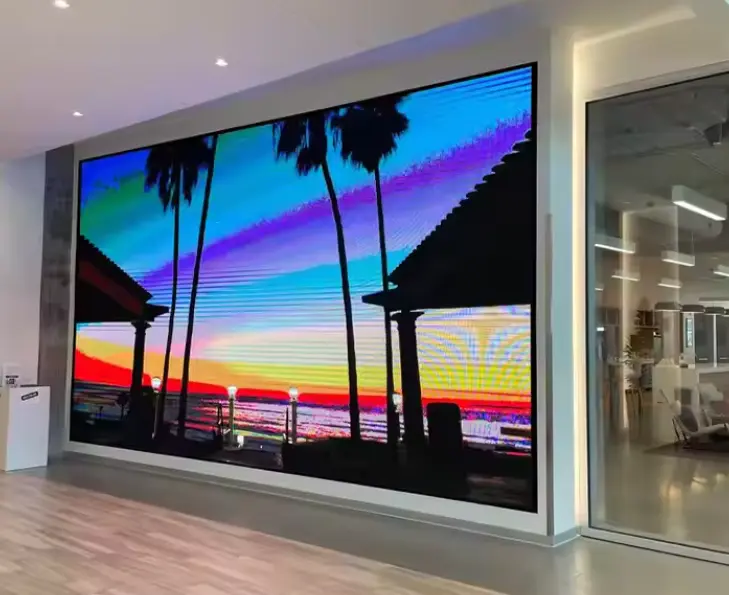
Flexible LED modules allow designers and facility managers to use every inch of space. Columns become advertising pillars. Curved atrium walls become digital canvases. Ceilings become immersive overhead displays. No more asking “is this wall flat enough?”—the display conforms to the space, not the other way around.
Real-Time Content Management and Personalization
Modern flexible LED systems integrate with CMS platforms for centrally managed, scheduled content updates. At ISE 2026 and ISLE 2026, manufacturers showcased AI-powered analytics embedded in signage—screens that adjust content based on audience demographics, time of day, weather, or foot traffic patterns. Screens are moving from display terminals to “thinking, working” smart terminals.
Sustainability and Energy Efficiency
Energy efficiency dominated InfoComm China 2026 and ISLE 2026. COB-powered flexible displays consume up to 60% less power than standard SMD at the same brightness. Extended 80,000–100,000-hour product lifecycles mean fewer replacements and less e-waste. China‘s five-year plan targets a 17% reduction in CO₂ emissions by 2030, and the ProAV industry has responded with efficiency as a core specification. For organizations tracking ESG metrics, specifying low-power COB flexible displays directly improves environmental reporting.
Enhanced In-Person Experience
In an era where physical retail must compete with e-commerce, in-person experience is the only differentiator. Flexible LED creates immersive environments that encourage lingering—wrap-around imagery, interactive surfaces, dynamic architectural lighting. The visual spectacle translates into measurable business outcomes: increased dwell time, higher purchase conversion rates, and stronger emotional connection to brand.
Source: Screens no longer compete only on size or resolution. Today they compete for form, integration, and the ability to transform spaces. Flexible LED modules don‘t just illuminate—they integrate into design, accompany the architecture, and generate experiences that connect with people.
2026 Price and Budget Guide
Price Ranges (Panels Only, per square meter)
For most buyers in 2026, flexible LED screens can be segmented into pricing tiers:
-
Entry-level indoor (P2.5–P4 SMD): $500–800/m²
-
Mid-range indoor (P1.8–P2.5 SMD): $800–1,200/m²
-
Fine‑pitch premium (P1.2–P1.8, COB/GOB): $1,200–2,000+/m²
*Source: Standard rigid indoor LED walls start at approximately $800/m² for entry-level models, rising to $2,000+/m² for advanced high-resolution panels. Flexible LED generally commands a premium over standard rigid.* A coarser pixel pitch (e.g., P3–P4) reduces module density, fewer LEDs per square meter equals lower price—provided viewing distances justify it.
Total Project Cost: Beyond the Panel Price
Display cost is rarely the full story. A complete flexible LED project includes:
-
Control system and receiving cards: $2,000–$15,000+ depending on resolution and features
-
Mounting structure and magnetic mounting system: 10–20% of display cost
-
Installation labor: 15–30% of total project budget (higher for curved/freeform shapes)
-
Shipping and logistics: varies by distance, weight, and packaging
-
Site preparation (power, network, structural reinforcement): project-specific
-
Initial calibration and commissioning: often included but confirm with vendor
*Source: Installation and setup often consume 15–30% of total expenses. For complex curved or custom-shaped installations, the share may exceed 30%.*
Hidden Costs to Budget For
-
Custom mounting hardware for irregular shapes and tight bend radii
-
Extended warranty and service agreements
-
Replacement module inventory (recommend 5–10% of total modules as spares)
-
Content creation tailored to curved or non-rectangular displays
-
Power infrastructure upgrades if existing capacity insufficient
Cost Comparison: Flexible vs. Standard Rigid in 2026
| Cost Factor | Flexible LED | Standard Rigid LED | Notes |
|---|---|---|---|
| Panel price per m² (comparable pitch) | $500–1,500 | $400–1,200 | Flexible typically 15–40% higher |
| Installation complexity | High (curvature planning, magnetic alignment) | Low (standard flat mounting) | Curved shapes add significant labor |
| Mounting structure cost | Moderate–High (custom brackets for curvature) | Low–Moderate (standard off-the-shelf) | |
| Replacement module cost | Similar (by pixel pitch and packaging) | Similar | |
| Maintenance accessibility | Front-serviceable (no rear access required) | Varies (front vs. rear serviceable) | Flexible design advantage |
| Long-term ROI | Higher (≈32% over 5 years vs. standard) | Standard baseline | Driven by engagement, flexibility, durability |
Source: Industry reliability data indicates average annual maintenance cost typically ranges from 3% to 8% of initial equipment cost. Preventive maintenance (20–30% of maintenance budget) extends lifespan and reduces sudden lamp failure rates.
Flexible vs. Standard LED Display: Direct Comparison
| Aspect | Flexible LED | Standard Rigid LED | Verdict |
|---|---|---|---|
| Design freedom | Unlimited (curves, columns, waves, S-shapes) | Limited to rectangles | Flexible wins for creative spaces |
| Installation complexity | Higher; requires curvature planning and magnetic precision | Lower; standard flat wall mounting | Rigid wins for simplicity |
| Weight per m² | 5–12 kg (significantly lighter) | 15–30 kg | Flexible easier for overhead and temporary installs |
| Portability | Rollable options are highly portable | Requires specialized transport cases | Flexible for rental/staging |
| Pixel pitch availability | Down to P0.9 (COB), P1.25–P10 typically | Down to P0.9, full range | Comparable |
| Brightness (indoor/outdoor) | 800–4,000 nits indoor; outdoor limited | 800–10,000+ nits; full outdoor available | Rigid for high-brightness outdoor |
| Cost per m² (comparable pitch) | 15–40% higher | Baseline | Rigid for budget-conscious flat applications |
| Maintenance | Front-serviceable; modular swaps | Varies (many require rear access) | Flexible advantage for accessibility |
| Long-term ROI (creative applications) | ≈32% higher over 5 years vs. standard | Baseline | Flexible for engagement-driven spaces |
| When to choose | Curved/irregular spaces, rental/staging, creative brand moments | Flat walls, standard signage, cost-sensitive flat installations | Context-dependent |
*Source: Research indicates businesses using LED displays report lower annual maintenance costs. Creative flexible LED displays deliver approximately 32% higher return on investment over five-year deployment periods compared to standard displays.*
Application Guide: Which Technology Should You Choose in 2026?
Choose flexible LED when:
-
Your surface architecture includes curves, columns, angular or tapered walls, or non‑flat surfaces of any kind
-
You need a display that can be rolled up and transported between events (rollable configuration)
-
You want a transparent screen that preserves visibility through the display surface (transparent configuration)
-
First impression and visual spectacle matter more than minimum cost per square meter
-
You have design team support for content tailored to curved canvases
-
In spaces where architecture is the hero and the display must integrate into it
Choose standard rigid LED when:
-
Your installation is a standard rectangular flat wall
-
Budget is the primary constraint
-
Outdoor high-brightness or weather‑exposed applications (outdoor flexible is less common)
-
You need industry‑standard cabinet dimensions for easy replacement sourcing
-
Extreme high brightness (5,000+ nits) is required
-
You have standard rectangular content without custom curvature requirements
Consider Flexible OLED when:
-
Superior contrast and true black levels are critical
-
You need extreme thinness and light weight
-
Budget is less constrained (premium segment)
-
Application scales are smaller (not massive video walls)
Consider transparent flexible LED when:
-
You are installing on glass surfaces (storefronts, museum cases, lobby partitions)
-
Preserving light transmission and architectural openness is as important as the display itself
-
You want overlay content that does not block the view of physical products behind the display
Frequently Asked Questions (FAQ)
Q: How long does a flexible LED display last? Leading flexible displays, particularly COB and premium SMD models, are rated for 80,000–100,000 hours (8–10+ years of continuous 24/7 operation) under normal conditions. Lower‑grade modules may have reduced life expectancy.
Q: Can I install a flexible LED display outdoors? While possible with specialized weatherproofed products (mesh screens, IP65+ rated modules), outdoor flexible remains less common than rigid outdoor LED. Confirm IP rating, UV protection, and operating temperature range with the manufacturer.
Q: What is the minimum bending radius? High‑end flexible displays in 2026 can achieve R ≥ 150mm for reliable operation, with custom configurations available for tighter radii.
Q: How much does flexible LED cost in 2026? Panel prices start around $500–800/m² for entry-level indoor P2.5–P4, $800–1,200/m² for mid-range P1.8–P2.5, and $1,200–2,000+/m² for fine-pitch or COB flexible. Installation adds 15–30% of total project budget.
Q: Can flexible LED displays be repaired? Yes. Flexible LED modules are front‑serviceable—individual modules can be removed, replaced, and recalibrated without dismantling adjacent modules. GOB‑encapsulated modules offer additional protection against environmental failures.
Q: What is the difference between flexible LED and flexible OLED? Flexible LED uses inorganic LEDs on flexible PCB; offers higher brightness and longer lifespan for large-format signage. Flexible OLED uses organic light-emitting polymers on flexible substrate; provides superior contrast and thinner profile for premium consumer applications. For commercial signage, flexible LED generally wins on brightness, scalability, and cost‑effectiveness.
Q: Does flexible LED support 4K resolution? Yes—large flexible displays can achieve 4K resolution by tiling sufficient fine‑pitch modules (P1.25 or finer). However, panel count and control system cost scale accordingly.
The Final Verdict (2026 Edition)
After more than a decade in display technology, including years quoting, installing, and troubleshooting flexible LED projects of all scales, here is my honest conclusion:
Flexible LED has moved from an experimental product to a practical mainstream option. The technology has matured. The reliability has improved. The price point has reached levels where the creative advantages often justify the premium over standard rigid displays.
However, flexible LED is not for every project. If your wall is flat, your budget is constrained, and your content is standard rectangular, a rigid LED wall will serve you perfectly well for less money. But if your space includes a curved architectural feature, a column that demands attention, or a brand moment that must be unforgettable—flexible LED is not just an option; it is the only technology that can deliver the result.
In 2026, the global flexible LED display market is valued at $8.18 billion, growing 6.98% annually to reach $15 billion by 2035. The flexible transparent display segment alone is expanding at 20.86% CAGR, from $3.23 billion in 2025 to $12.19 billion by 2032. COB technology is lowering power consumption, improving durability, and bringing flexible displays into price parity conversations with rigid alternatives.
For a procurement manager: Prioritize pixel pitch based on viewing distance, specify packaging technology (SMD vs. COB) based on environment, and budget 15–30% for installation beyond panel cost.
For a designer or architect: Specify flexible LED when the display must integrate into—not fight—the contours of your space. World-class installations at ISE 2026, InfoComm China 2026, and CES 2026 all share this principle: the best digital signage does not look like signage at all—it looks like the space itself came to life.
For a business decision-maker: Calculate ROI not just on cost per square meter, but on audience attention, brand memorability, and the competitive advantage of being the space that people remember.
If you are still unsure, request a side‑by‑side demo of flexible vs. rigid LED at your target viewing distance. Walk around it. Look for pixelation, color shift, and reflections. Compare brightness under your actual ambient light. Factor in whether the installation shape requires flexible—if it does, standard rigid is not a cheaper alternative; it is an incompatible one.