Why Installation Method Matters Before You Buy
Most buyers focus on pixel pitch, brightness, and price — and treat installation as an afterthought. That’s a mistake. The installation method determines structural requirements, maintenance access, long-term serviceability, and in some cases, whether a given screen size is even feasible at your location.
A display that looks perfect on paper can become a maintenance nightmare if the installation type doesn’t match the site conditions. A roof-mounted screen with no rear access and no front-service design means every repair requires scaffolding. A wall-mounted screen on a partition wall that can’t bear the load is a safety liability.
This guide covers all seven standard LED display installation methods — what they are, where they work, what they require structurally, and what to watch out for.
How to Choose Before You Read Further
Work through these three questions first:
1. Indoor or outdoor?
- Outdoor → column, roof, or embedded in building facade
- Indoor → wall-mounted, suspended, cantilever, or freestanding
- Semi-outdoor (covered but exposed) → wall-mounted or cantilever
2. Is there an existing wall or structure to attach to?
- Yes → wall-mounted, embedded, cantilever, or suspended
- No → column-mounted or freestanding
3. What are your maintenance constraints?
- Can access from front only → specify front-service cabinet design
- Can access from rear → standard cabinet design acceptable
- Difficult access (roof, high ceiling) → modular hot-swap design is essential
Wall-Mounted Installation
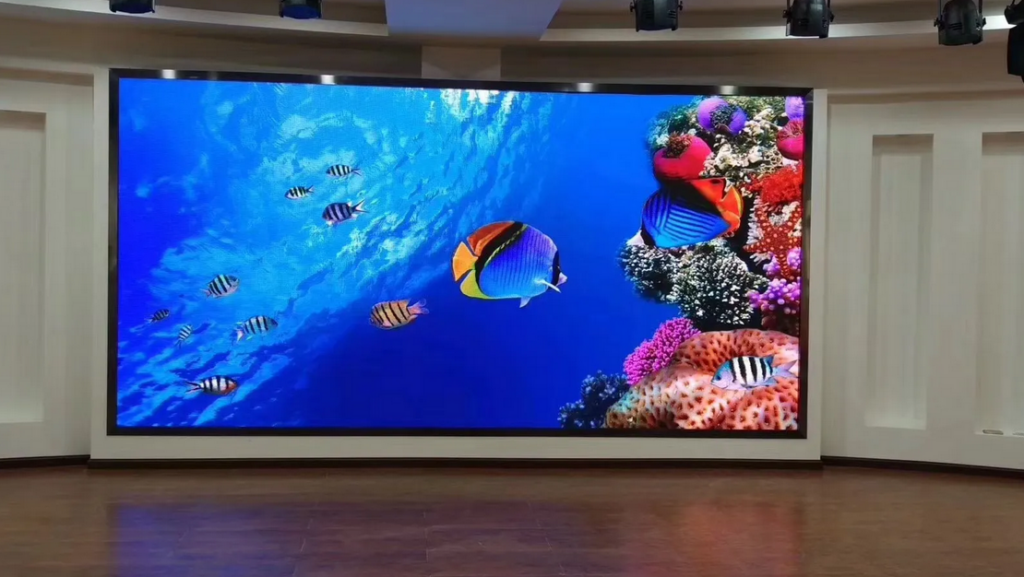
Wall-mounted is the most common indoor installation method. The display is fixed directly to a load-bearing wall using a steel bracket frame. For smaller screens (under 10 m²), the entire unit is typically removed for maintenance. For larger screens, a front-service design is standard — technicians access components from the front face without dismounting the display.
Structural requirement: The wall must be verified for load-bearing capacity. Partition walls and lightweight drywall are generally not suitable without additional reinforcement. Anchor points should reach the building’s primary structural members.
Best for: Indoor lobbies, retail spaces, conference rooms, hotel reception areas, and semi-outdoor covered facades.
Key spec to specify: Front-service vs. rear-service cabinet design. For any wall-mounted screen where rear access is impractical, front-service is non-negotiable.
| Screen Size | Recommended Design | Maintenance Method |
|---|---|---|
| Under 10 m² | Foldable integrated frame | Full unit removal |
| 10–30 m² | Column assembly, front-service | Front panel access |
| 30 m²+ | Modular cabinet, front-service | Individual module hot-swap |
Embedded (Mosaic) Installation
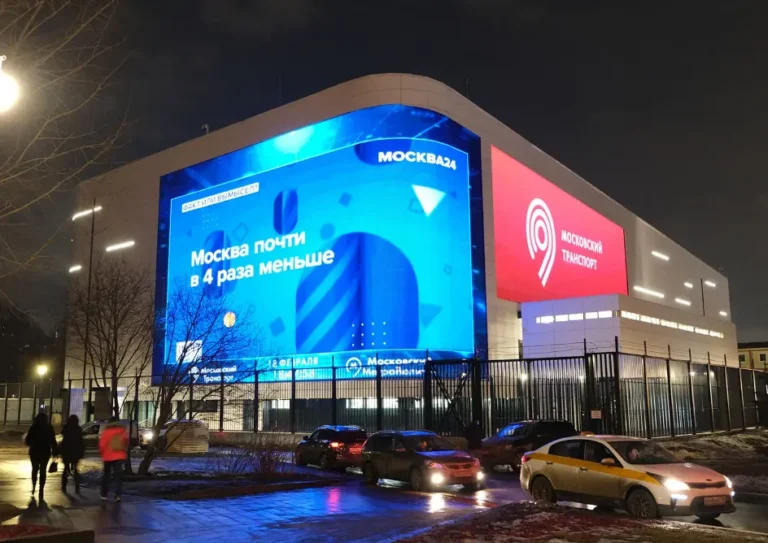
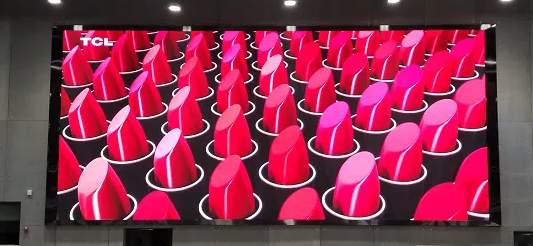
Embedded installation recesses the display flush into the wall surface, so the screen face sits level with the surrounding architecture. A steel subframe is built into the wall cavity, and the display is mounted within it. Because it’s flush-mounted, no additional support structure is visible.
This method is predominantly used on building exteriors and premium interior environments where aesthetics are a priority — the seamless integration into the wall creates a cleaner visual result than surface-mounted options.
Structural requirement: Precise wall cutout and cavity preparation. The wall must have sufficient depth to accommodate the cabinet depth plus the steel subframe. Retrofitting into existing walls is complex; this method is easiest to plan during construction or major renovation.
Best for: Building facades, premium retail entrances, hotel lobbies, and architectural feature walls. Best suited to smaller display areas with fine pixel pitch.
Limitation: Not practical for large display areas. Maintenance requires front-service cabinet design, as rear access is typically impossible once embedded.
Stepped (Staircase) Installation
Stepped installation mounts LED modules along the vertical face (riser) of staircase steps, creating a dynamic display surface that follows the staircase geometry. The display changes color and content as viewers ascend or descend, producing a high-impact visual effect in architectural spaces.
This is a specialized application rather than a general-purpose installation method. The optimal viewing distance is typically 3 meters or more — close-range viewing reveals the stepped geometry rather than a unified image.
Best for: Shopping mall atriums, hotel lobbies, entertainment venues, and architectural feature installations where the staircase itself is a design element.
Key consideration: Content must be designed specifically for the stepped geometry. Standard rectangular video content requires remapping to display correctly across the angled surface.
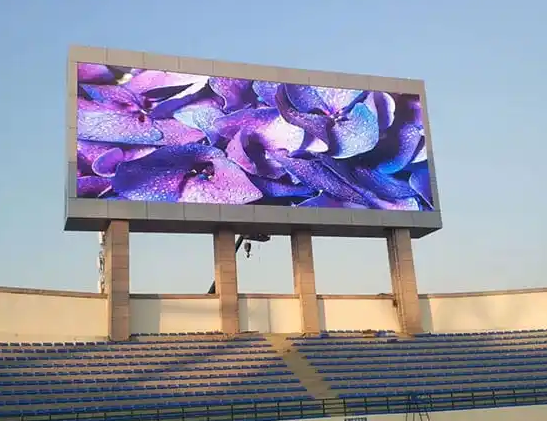
Cantilever Installation
Cantilever installation projects the display outward from a wall or structural column using a bracket arm. The screen extends into the viewing space rather than sitting flush against a surface. This creates excellent sightlines for audiences approaching from a specific direction — particularly useful in transit and wayfinding applications.
Structural requirement: The bracket must handle significant torque load — the weight of the display multiplied by the arm length. Wall or column attachment points must be engineered accordingly. This is not a DIY installation; structural calculation is required for any screen above 2 m².
Best for: Subway station entrances, airport corridors, railway platforms, highway traffic guidance, shopping mall walkways, and any environment where the audience is moving in a defined direction and floor space cannot be obstructed.
Limitation: Practical screen size is limited by the torque capacity of the bracket. Very large screens require a different approach (column or wall-mounted).
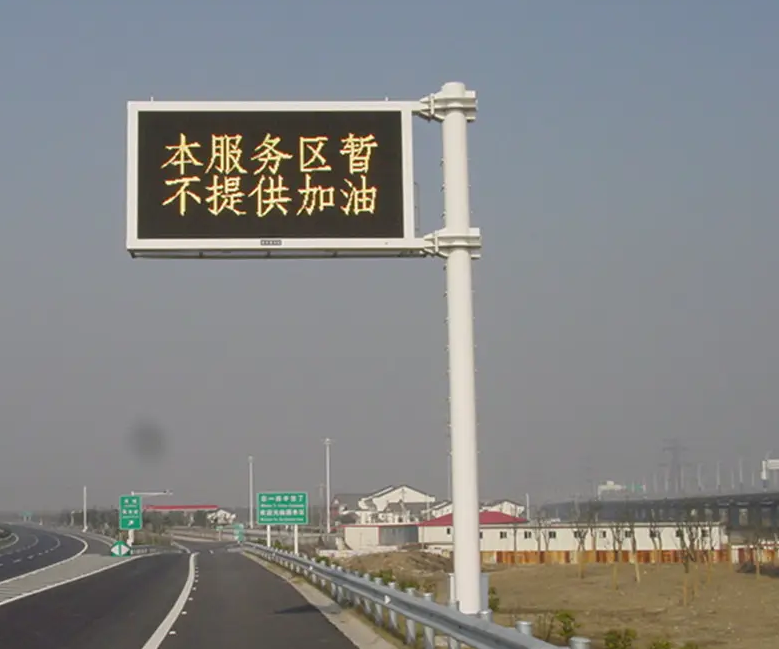
Roof-Mounted Installation
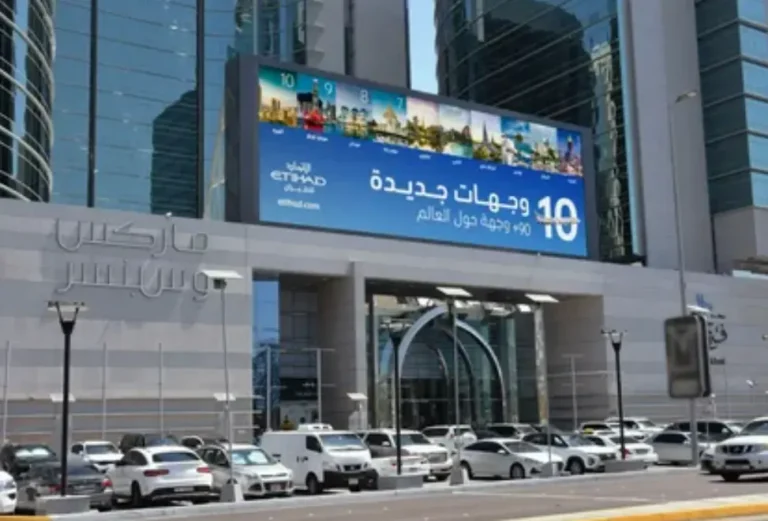
Roof installation places the LED display on top of a building, maximizing visibility over long distances and above street-level obstructions. It’s the dominant method for high-impact outdoor advertising in urban environments.
Wind resistance is the critical engineering variable. Rooftop displays face amplified wind exposure compared to ground-level installations. Industry standard requires certification for wind speeds of 120–150 km/h minimum; typhoon and hurricane zones require higher ratings. The display frame must be anchored to the building’s primary structural members — not just the roof deck — and all roof penetrations must be waterproofed.
Tilt angle: Roof displays are typically installed at an 8–15° forward tilt toward the audience. This improves viewing angle for street-level observers. Every degree of tilt increases wind load and must be factored into structural calculations.
Additional requirements for 2026 installations:
- Integration into the building’s lightning protection system (mandatory)
- IP65 or higher environmental rating for all components
- Front-service cabinet design (rear access on a rooftop is a safety hazard)
- Permanent anchor points or rails for fall-arrest harnesses (required by local safety codes)
- Annual structural inspection of all connection points
Best for: Outdoor advertising, urban landmark signage, and high-visibility brand installations where maximum viewing distance is the priority.
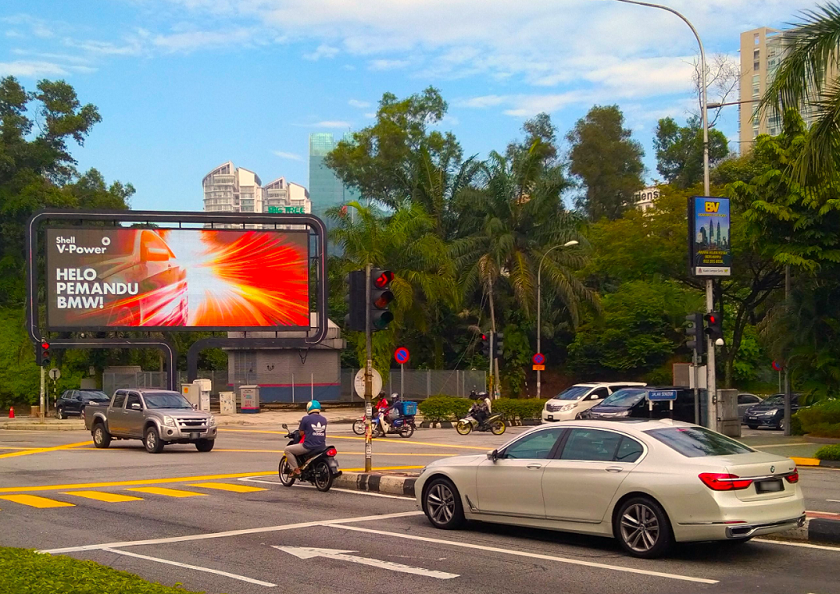
Suspended (Hanging) Installation
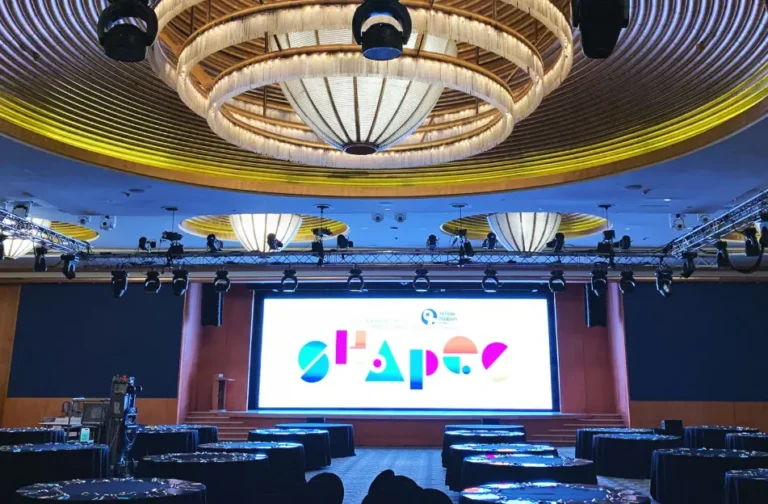
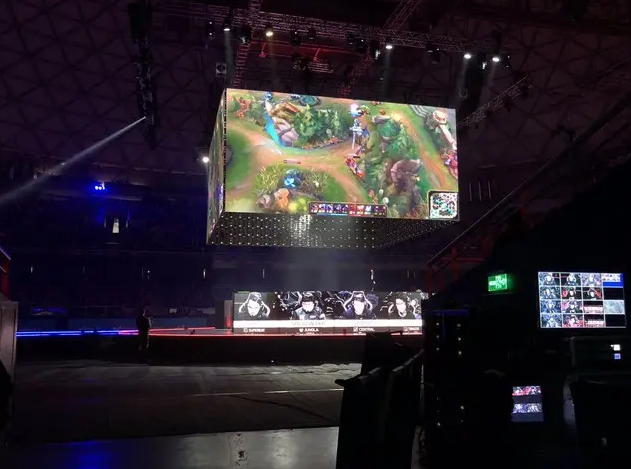
Suspended installation hangs the LED display from an overhead steel structure — a ceiling truss, rigging grid, or purpose-built frame. Unlike cantilever (which projects from a wall), suspended installation hangs vertically from above.
This method is common in temporary and semi-permanent applications because it requires no wall attachment and leaves the floor completely clear. For events and exhibitions, it’s the fastest method to deploy and strike.
Structural requirement: The overhead structure must be rated for the display’s dead load plus dynamic loads (wind for outdoor, vibration for events). For permanent installations, a structural engineer must verify ceiling or truss capacity. For temporary event use, rigging should be handled by certified riggers following local entertainment industry standards.
Best for: Stage backdrops, concert and event venues, exhibition halls, airport terminal ceilings, shopping mall atriums, and any temporary installation requiring fast setup and teardown.
Limitation: Long-term permanent suspended installations require more rigorous structural verification than temporary use. Maintenance access requires elevated work platforms or the ability to lower the display.
Column-Mounted Installation
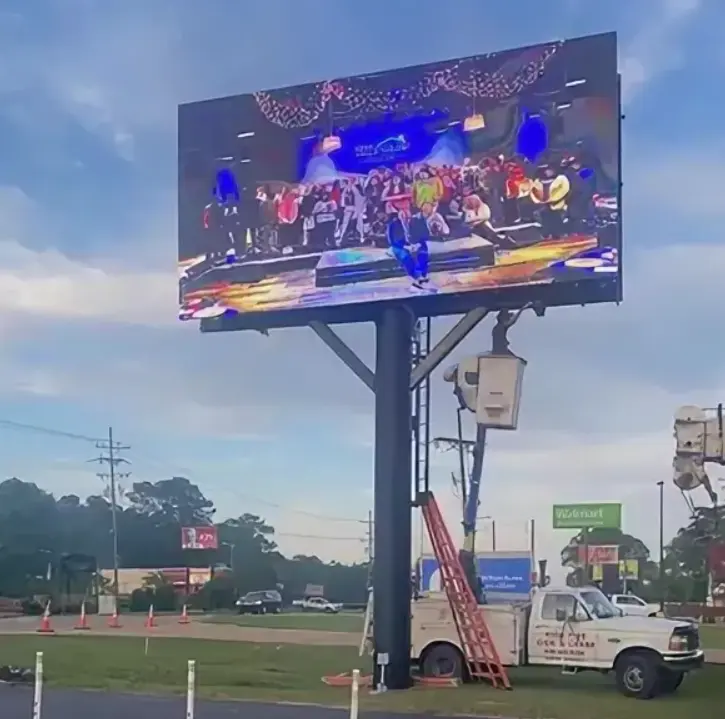
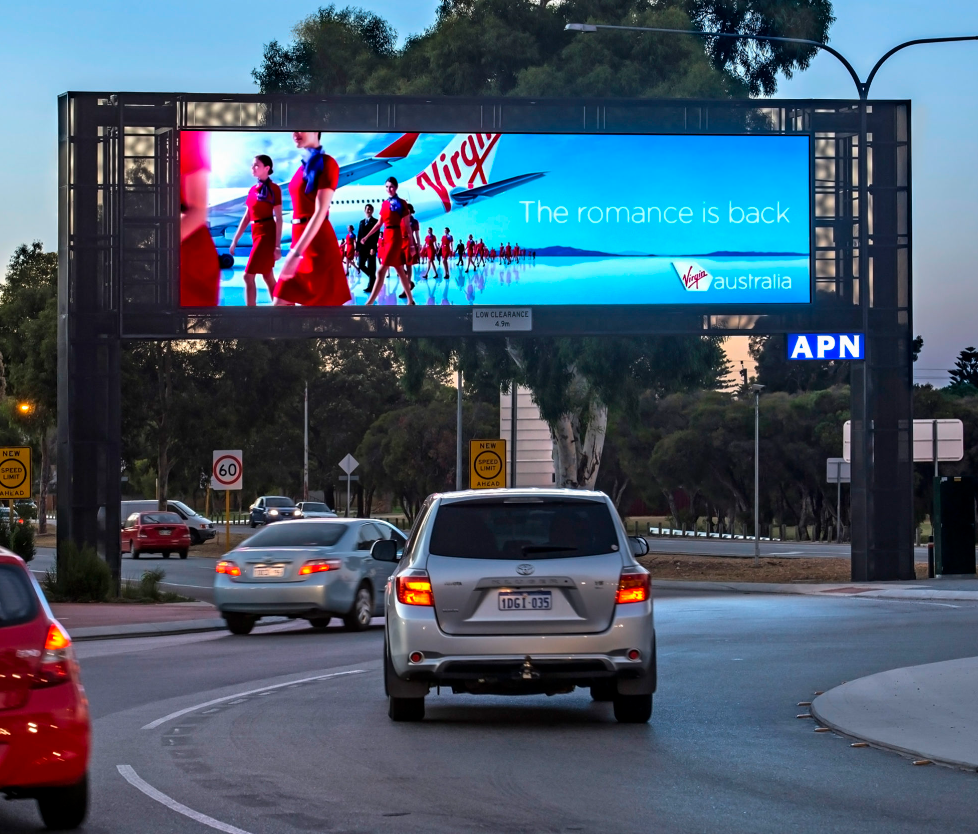
Column installation mounts the display on one or two vertical steel poles anchored in a concrete foundation. It’s the standard method for outdoor roadside billboards, parking lot signage, and any location where no existing wall or structure is available as a mounting point.
Single-pole vs. double-pole:
- Single-pole: suitable for smaller screens (typically under 10 m²)
- Double-pole: required for larger screens where a single pole cannot provide sufficient stability
Structural requirements:
- Concrete foundation depth and diameter must be engineered based on screen size, local wind load codes, and soil conditions
- Steel pole specification (diameter, wall thickness, grade) must be calculated for the combined dead load and wind load
- Large outdoor screens in typhoon-prone regions (Southeast Asia, East Asia coastal areas) require engineering to local wind code standards
Best for: Outdoor roadside advertising, highway billboards, parking lots, sports facility perimeters, and any open-area installation without existing structural support.
Key consideration: Column installations are permanent. Site selection, foundation work, and permitting must all be completed before installation begins. Budget 4–8 weeks for foundation curing before the display can be mounted.
Installation Method Comparison Table
| Method | Environment | Typical Screen Size | Key Structural Need | Maintenance Access | Best Application |
|---|---|---|---|---|---|
| Wall-mounted | Indoor / semi-outdoor | Any | Wall load capacity | Front-service or removal | Lobbies, retail, conference |
| Embedded | Indoor / outdoor facade | Small–medium | Wall cavity depth | Front-service only | Premium facades, entrances |
| Stepped | Indoor | Custom | Step geometry | Front-service | Staircases, atriums |
| Cantilever | Indoor / semi-outdoor | Small–medium | Bracket torque rating | Moderate | Transit, corridors, highways |
| Roof-mounted | Outdoor | Medium–large | Wind load engineering | Difficult (front-service required) | Urban advertising, landmarks |
| Suspended | Indoor / temporary | Any | Ceiling/truss load | Overhead access or lowering | Events, airports, malls |
| Column-mounted | Outdoor | Any | Foundation + wind load | Via maintenance channel | Roadside, parking, highways |
Structural Safety: What Every Installation Needs
Regardless of installation method, these requirements apply to all permanent LED display installations in 2026:
Steel structure:
- Hot-dip galvanized or powder-coated steel to resist corrosion
- All welds inspected and certified before display mounting
- Connection hardware (bolts, anchors) rated for the calculated load with a minimum safety factor of 1.5×
Electrical:
- Dedicated weatherproof conduit for power and data cables
- GFCI/RCD protection on all circuits
- Lightning protection bonding for all outdoor installations
Environmental:
- IP65 minimum for outdoor installations; IP66 for vehicle-mounted or high-exposure environments
- Thermal management: outdoor cabinets must handle ambient temperatures up to 50–60°C
- Annual structural inspection for all permanent outdoor installations
Maintenance planning:
- Specify front-service cabinet design for any installation where rear access is impractical
- Modular cabinet design allows individual failed modules to be hot-swapped without full disassembly
- Document anchor point locations and load ratings for future maintenance teams
Key Insights
- The seven standard LED display installation methods are: wall-mounted, embedded (mosaic), stepped, cantilever, roof-mounted, suspended (hanging), and column-mounted.
- Choosing the installation method before specifying the display is the correct sequence — the method determines cabinet design, maintenance access, and structural requirements.
- Outdoor LED display installations must be engineered for wind loads of 120–150 km/h minimum; typhoon-zone installations require higher ratings.
- Roof-mounted LED displays must be installed at an 8–15° forward tilt and integrated into the building’s lightning protection system.
- Column-mounted installation is the standard method for outdoor roadside billboards; single-pole suits screens under 10 m², double-pole is required for larger formats.
- Front-service cabinet design is essential for any installation where rear access is impractical — including wall-mounted, roof, and suspended types.
- Suspended installation is the preferred method for temporary and event deployments because it requires no wall attachment and leaves the floor clear.
- Cantilever installation is optimized for transit environments (subway, airport, highway) where the audience moves in a defined direction and floor space must remain clear.
- All permanent outdoor LED installations require annual structural inspection of connection points and anchors.
Frequently Asked Questions
Which LED display installation method is most common?
Wall-mounted is the most common for indoor applications. Column-mounted is the standard for outdoor roadside and billboard installations.
Do I need a structural engineer for LED display installation?
For any outdoor installation, roof installation, or suspended installation above a public area — yes. Structural engineering is not optional for these methods. For standard indoor wall-mounted screens under 10 m², a qualified installer can typically assess wall load capacity without a full engineering study.
What is front-service design and why does it matter?
Front-service (or front-maintenance) means technicians can access and replace components from the front face of the display without dismounting it or accessing the rear. It’s essential for any installation where rear access is blocked — embedded, roof-mounted, high-ceiling suspended, or wall-mounted screens in tight spaces.
How deep does a column foundation need to be for an outdoor LED billboard?
Foundation depth depends on screen size, local wind load codes, and soil conditions — it must be engineered for each site. As a general reference, a 20 m² outdoor screen in a moderate wind zone typically requires a foundation 1.5–2.5 meters deep. Always commission a site-specific structural calculation.
Can LED displays be installed on glass curtain walls?
Yes, using specialized transparent LED or mesh LED products designed for glass facade integration. Standard opaque LED cabinets are not suitable for glass curtain wall installation.