Table of Contents
ToggleAsk three suppliers for a naked eye 3D Billboard quote and you’ll likely get three numbers that don’t even share a decimal place—$1,200 a month from one, $300,000 upfront from another, $900 per square meter from a third. That’s not a negotiating tactic. It usually means each supplier is quietly pricing a different product under the same marketing label.
Here’s the answer, laid out honestly before anything else:
| Screen Category | Typical Size | Hardware + Install (USD) | Price/㎡ |
|---|---|---|---|
| Small anamorphic corner screen (retail/mall entrance) | 20–40㎡ | $60,000–$150,000 | $1,500–$3,500 |
| Mid-size outdoor DOOH 3D billboard | 50–100㎡ | $150,000–$400,000 | $2,000–$4,000 |
| Large landmark autostereoscopic display | 100㎡+ | $400,000–$1,000,000+ | $2,500–$5,000+ |
These numbers cover LED hardware, curved cabinet structure, and standard installation—not content production, which we’ll unpack separately, because it’s the cost most first-time buyers don’t see coming until the invoice does.
We hear a version of this same story on nearly every discovery call: a marketing director has watched a viral anamorphic billboard video, gathered three or four quotes, and now can’t reconcile the numbers with each other, let alone with a budget approval meeting next week.
It’s rarely a pricing scam—it’s a specification gap.
One vendor is quoting a flat DOOH panel with a “3D-style” video loaded onto it. Another is quoting a genuinely curved anamorphic structure engineered for a single vantage point. A third is quoting true autostereoscopic hardware, an entirely different optical build.
Three different engineering problems, priced as though they’re interchangeable, and nobody stopped to check before the quotes went out.
Sorting that confusion out before you request a single number is the difference between an accurate budget and a campaign that stalls in procurement.
Behind the Screen: The Engineering That Sets the Price Floor
Before we get into dollar figures, it’s worth understanding what you’re actually buying, because the materials and construction methods behind a naked eye 3D Billboard are not the same as a standard flat-panel LED wall.
An anamorphic display is built around a welded steel sub-frame bent or mitred to the exact corner or curve radius the illusion requires—get that angle wrong by even a few degrees during fabrication and the 3D effect visibly distorts from the intended viewing point.
The LED modules themselves need die-cast aluminum cabinets rather than sheet-metal housings, because aluminum holds flatness tolerance under temperature swings far better, and a warped module at a seam is instantly visible on a curved surface in a way it never would be on a flat wall.
On the electronics side, the driver ICs and receiving cards have to be matched and calibrated across the bend so brightness and color don’t shift as the viewer’s eye crosses the seam—a detail that’s invisible on spec sheets but obvious the moment the screen is running content outdoors in daylight.
Why Engineering Teams Choose Sostron
This is precisely the kind of build where manufacturing discipline shows up in the final result, not just the paperwork.
Our engineering team in Shenzhen designs the curved and corner cabinet structures in-house rather than outsourcing structural fabrication, which means the same team that specs your pixel pitch is also the team solving your seam-alignment tolerance—no handoff, no lost context between departments.
Every module that leaves our production line runs through LED bead and IC driver testing before assembly, followed by a 72-hour aging test under sustained load, checking specifically for dead pixels, brightness drift, and color uniformity—the three failure modes that quietly ruin an anamorphic illusion months after installation, long after a supplier has stopped answering emails.
We’ve built outdoor billboards, rental stage screens, and fine-pitch installations for clients across North America, the Middle East, and Southeast Asia, and the pattern is consistent:
The projects that stay on budget are the ones where the structural engineering was solved before the video content was even commissioned, not after.
Two Products, One Marketing Term: Sorting Out What “Glasses-Free 3D” Actually Means
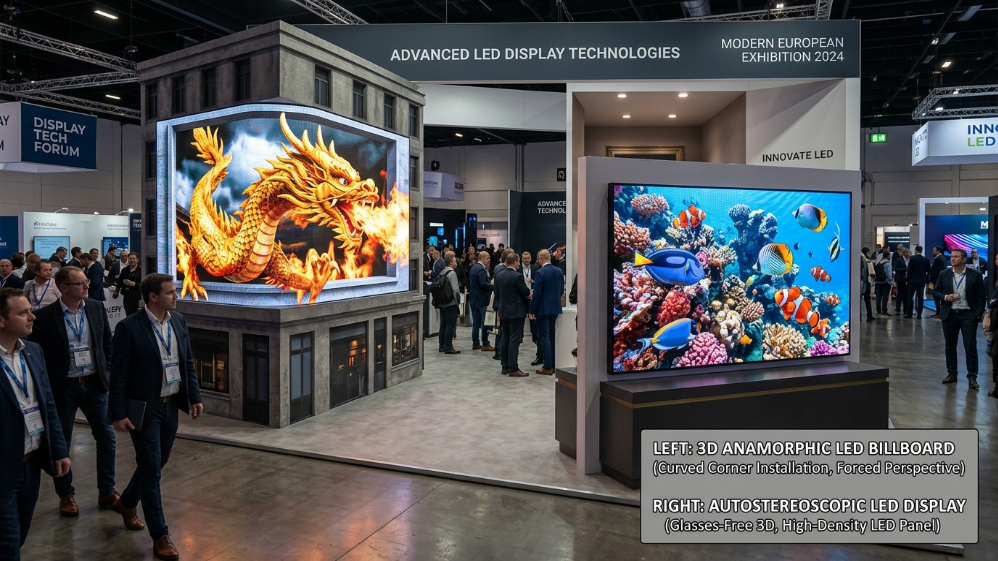
The phrase “naked eye 3D Billboard” gets used loosely across the industry, and that looseness is exactly where buyers lose money.
Underneath the marketing language sit two genuinely different display technologies, and mixing them up in a spec sheet is the single fastest way to either overpay for hardware you don’t need or under-deliver on a campaign your client is expecting to go viral.
Anamorphic Corner Screens vs. True Autostereoscopic Panels
An anamorphic 3D LED display is, mechanically, a conventional flat LED panel—the 3D effect isn’t in the hardware at all.
The effect is an optical illusion engineered into the video content, calibrated to read correctly from one specific angle, usually a fixed street corner or sidewalk vantage point.
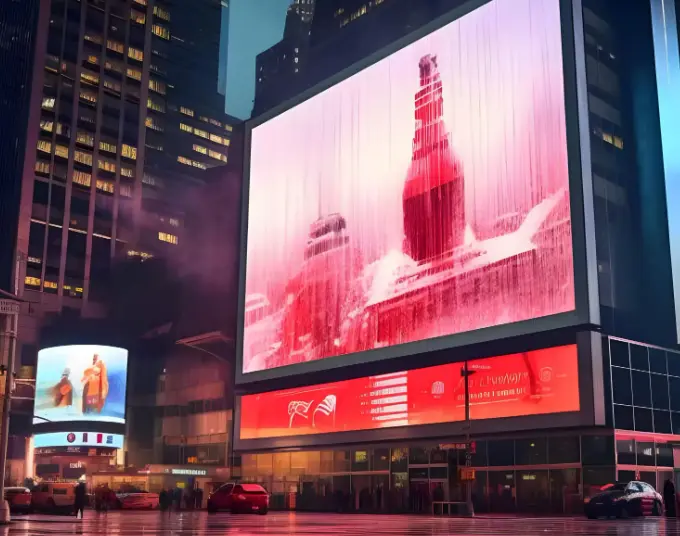
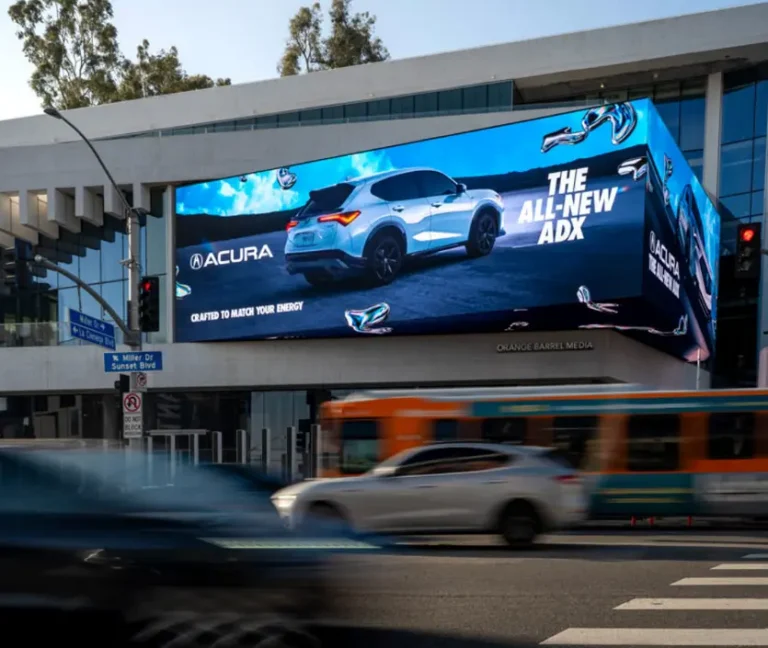
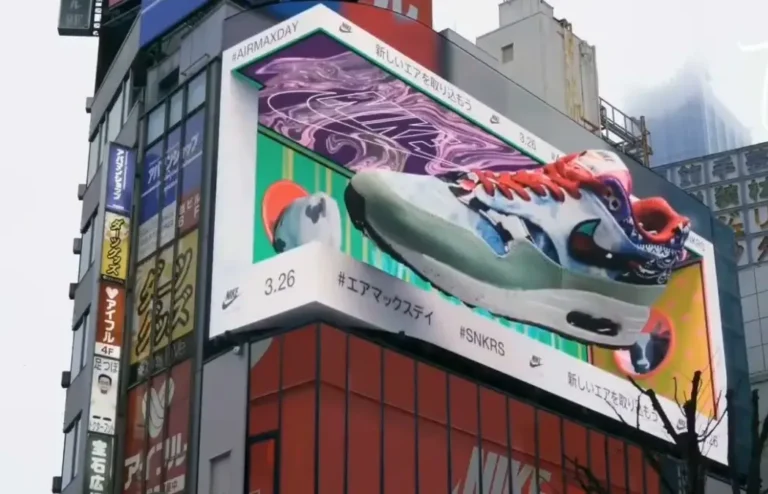
This is what’s actually running behind nearly every viral “naked-eye 3D” billboard out of Seoul, Tokyo, and Times Square.
True autostereoscopic displays work differently at the hardware level, using a lenticular lens array or parallax barrier bonded directly onto the panel to project genuinely different images to each eye—real stereoscopic depth, readable from a wider range of angles, with no single sweet spot required.
Samsung’s recently launched Spatial Signage panel, reported by TechRadar, pushes this technology into a slim 2-inch commercial panel form factor—a signal that autostereoscopic hardware is edging closer to mainstream retail and museum deployment, though it remains a premium, emerging category relative to anamorphic corner screens.
The underlying optical principle isn’t new—engineers have been refining laser and lenticular-based glasses-free 3D projection for outdoor-scale displays for well over a decade, as IEEE Spectrum documented in its early coverage of large-format autostereoscopic research—what’s changed is that the engineering has finally caught up to commercial viability.
| Factor | Anamorphic 3D LED Display | True Autostereoscopic 3D Display |
|---|---|---|
| How the 3D effect is created | Forced-perspective video on a curved/corner cabinet | Lenticular lens or parallax barrier hardware layer |
| Optimal viewing angle | Narrow—one fixed vantage point | Wider—multiple angles supported |
| Hardware complexity | Moderate, structural-engineering focus | High, added optical-layer engineering |
| Typical price impact | Lower hardware cost, higher content-production cost | Higher hardware cost, lower ongoing content cost |
| Best-fit application | Street-level DOOH, viral marketing campaigns | Retail signage, museums, fixed-audience venues |
So Which One Does Your Project Actually Need?
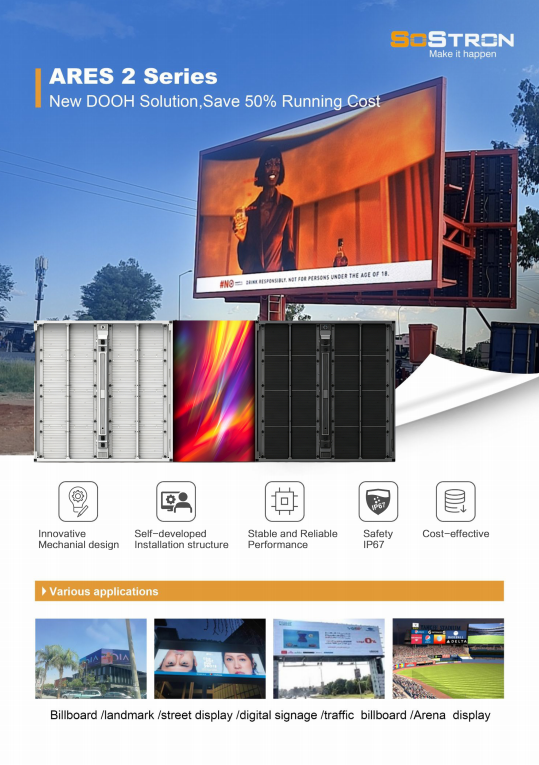
If the goal is a high-impact, shareable campaign anchored at a specific street corner or plaza, an anamorphic corner LED screen is almost always the more budget-efficient answer—it’s what powered nearly every viral 3D billboard case study currently circulating online.
If instead your signage will be approached from many angles—a retail entrance, a lobby, a museum floor—true autostereoscopic hardware earns its higher unit cost precisely because it doesn’t depend on a single sweet spot to function.
For most commercial DOOH and event applications right now, anamorphic remains the more mature, cost-predictable path, which is also why it dominates the pricing data below.
The Real Numbers: Price by Size, Pixel Pitch, and Cost Type

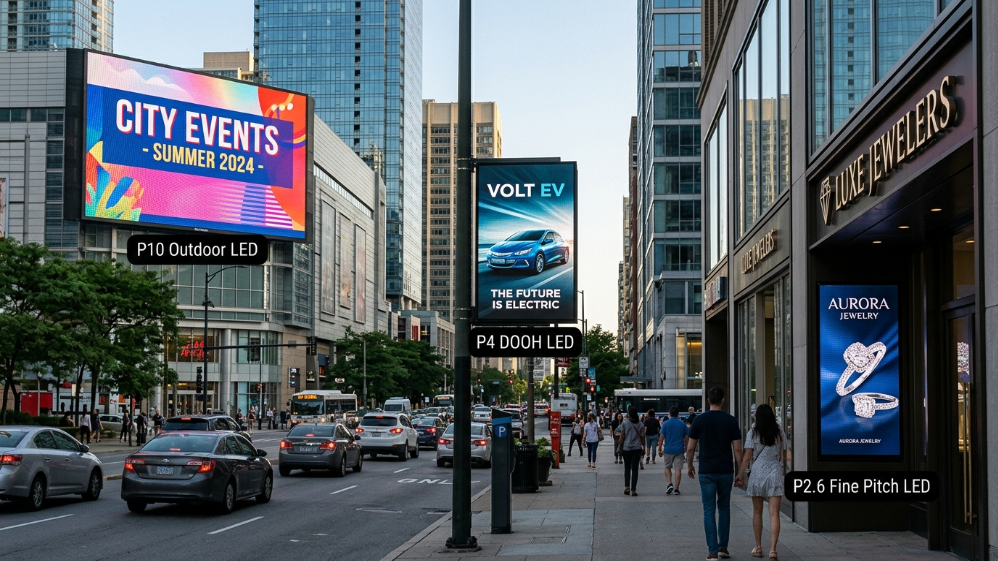
Once the technology decision is made, the variable that moves price more than any other single spec is pixel pitch—the physical spacing between LED pixels, measured in millimeters (P3.91, P4.81, and so on).
A finer pitch packs more pixels into every square meter, which is what lets 3D content render smoothly without visible dot structure breaking the illusion at close range—but it also means more diodes, more drivers, and more PCB material per module, which is exactly where the cost curve steepens.
| Pixel Pitch | Recommended Min. Viewing Distance | Best-Fit Use Case | Price/㎡ (Hardware Only) |
|---|---|---|---|
| P6.67–P10 | 8–15 m | Large outdoor landmark billboards | $900–$1,800 |
| P3.91–P4.81 | 4–8 m | Mid-size street-level DOOH corner screens | $1,800–$3,000 |
| P2.6–P2.9 | 2.5–4 m | Retail entrance, close-viewing anamorphic displays | $3,000–$4,500 |
A wider pixel pitch isn’t a downgrade when your viewing distance supports it—it’s the correct engineering choice.
We routinely see buyers overspend by 30–50% on finer pitch than their site geometry actually requires, paying for resolution nobody will ever stand close enough to see.
Total project cost, though, is never only hardware.
It splits into two buckets that get blurred together far too often in casual quoting:
- CAPEX—the LED panels, curved cabinet structure, steel framework, power system, and installation labor.
- OPEX—the ongoing cost of media space rental if you’re leasing the site, content production, and maintenance.
A supplier quoting “$1,200 a month” is almost always describing OPEX on a rented ad slot, not a hardware purchase.
A supplier quoting “$300,000” is almost always describing CAPEX on an owned installation.
Neither figure is dishonest—they’re simply answering different questions, which is exactly why so many buyers end up comparing numbers that were never meant to sit side by side.
Five Engineering Variables That Actually Move the Price Tag
Pixel pitch sets the baseline, but five further variables shift the final number by 20–40% in either direction, and each one has a direct commercial consequence, not just a spec-sheet footnote.
1. Brightness and IP Rating
Brightness and IP rating decide whether your 3D content is even visible in the environment it’s built for.
An outdoor anamorphic corner screen fighting direct midday sun needs 5,000–8,000 nits and IP65 protection on every module; drop below that spec to trim cost and your flagship creative washes out by noon, undercutting the entire investment.
Indoor retail installations can run comfortably at 800–1,500 nits, cutting both hardware and power draw meaningfully.
2. Refresh Rate Requirements
Refresh rate matters more for 3D content than for a standard 2D DOOH loop.
Anamorphic animation depends on smooth, high-frame-rate motion to sell the depth illusion—a refresh rate under 1,920Hz introduces visible flicker and banding the instant the content is captured on a phone camera, which is a direct hit to performance for a format whose entire ROI model runs on social sharing.
We specify 3,840Hz as a practical minimum for any anamorphic project designed with virality in mind.
3. Curved and Corner Cabinet Structure
Curved and corner cabinet structure is where anamorphic displays diverge most from a standard flat LED wall.
Building an L-shaped or curved cabinet that holds seamless pixel alignment across the bend demands tighter mechanical tolerances than a flat panel—the steel sub-structure, module bracketry, and on-site calibration all add engineering hours a flat-screen quote simply won’t include.
This is frequently where the gap between a supplier’s attractive headline number and their final invoice opens up.
4. CMS Control-System Capability
CMS control-system capability is a feature buyers tend to underweight until they’re actually operating the screen.
A proper CMS delivers:
| CMS Function | Business Value |
|---|---|
| Remote content scheduling | Manage campaigns without on-site operation |
| Brightness monitoring by time of day | Optimize visibility and energy consumption |
| Device-health alerts | Detect problems before they affect campaigns |
| Multi-screen network management | Scale DOOH operations efficiently |
The difference between owning a single billboard and operating a manageable DOOH asset is significant.
The category itself is only getting more valuable: Grand View Research values the global DOOH advertising market at roughly $26.5 billion in 2026, growing at a 10.7% CAGR through 2030, driven in large part by demand for exactly this kind of creative, interactive, full-motion content—which makes remote manageability less of a nice-to-have and more of a baseline requirement for any operator planning to scale.
5. Installation, Steel Structure, and Shipping Location
Installation, steel structure, and shipping vary the most by region.
A Middle East or African deployment typically carries higher logistics and import costs than a domestic North American or European install.
A manufacturer quoting one flat “installation fee” regardless of destination is usually averaging it—favorably or unfavorably, depending on where your project actually sits.
The Cost Line Buyers Almost Always Underbudget: Content Production

Here’s the number that catches even experienced DOOH buyers off guard:
On a mid-size anamorphic project, content production can rival, or exceed, the hardware cost outright.
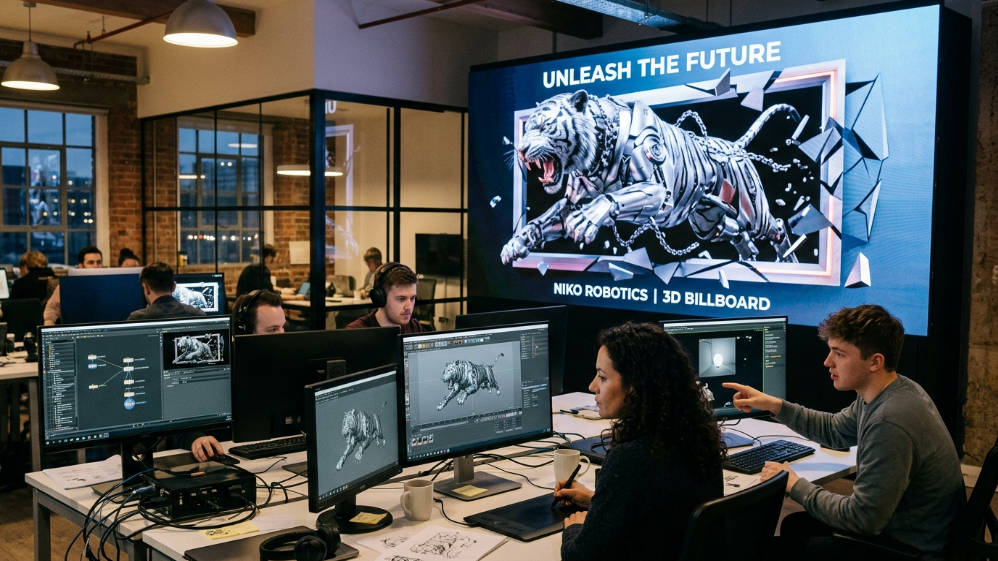
A static or simply looping video is inexpensive to produce, but genuine forced-perspective 3D animation—the kind that makes an object appear to physically break out of the screen—requires:
| Content Production Requirement | Description |
|---|---|
| 3D scene construction | Building the digital environment |
| Object modeling | Creating detailed 3D objects |
| Physics-accurate motion | Making movement appear realistic |
| Rendering | Producing high-quality animation output |
| Geometry calibration | Matching content with screen angle and viewing position |
Get that perspective math even slightly wrong relative to the corner angle on site, and the illusion simply doesn’t read from the sidewalk, no matter how good the hardware underneath it is.
Pricing typically runs by the second of finished animation, scaling with complexity—a simple product reveal costs a fraction of a multi-element scene involving collisions, particle effects, or character animation.
Our standing advice to clients: budget content as a fixed percentage of hardware cost from day one, commonly 15–30% for a first campaign, rather than treating it as an afterthought once the screen is already bolted to the wall.
Retrofitting a content budget after hardware sign-off is, by a wide margin, the most common reason anamorphic campaigns launch late or land flat.
Case Study: Pricing a Corner-Site DOOH Screen in the UAE
A regional DOOH media operator in the UAE came to us mid-2025 with a fairly common brief: a 65㎡ anamorphic corner installation at a high-footfall retail junction, aiming to launch a signature 3D creative within a fixed quarterly ad-sales window.
Their initial budget had been built around a hardware-only quote from a reseller—no line item for structural steel, no line item for content.
Our engineering team walked the site plans and flagged two issues before production began:
- The proposed corner angle didn’t match the building’s actual facade geometry, which would have broken the illusion from the primary viewing approach.
- The original quote had specified a pixel pitch finer than the minimum viewing distance justified, adding cost with no visible benefit to passersby.
We recommended a P3.91 build at 65㎡, revised the cabinet structure to match the corrected corner angle, and separated the quote cleanly into:
| Cost Item | Description |
|---|---|
| Hardware and installation | Approximately $210,000 |
| Steel structure and on-site calibration | Separate engineering cost |
| Content production allowance | Roughly 20% of hardware cost |
The screen shipped, was installed, and calibrated on-site within the operator’s launch window.
Because the corner geometry was corrected before fabrication rather than discovered after installation, the 3D creative read correctly from the primary approach on day one.
The detail worth remembering here isn’t the dollar figure; it’s that the single most expensive mistake in this project would have happened before a single LED module was ever manufactured, if the geometry hadn’t been checked first.
Choosing a Supplier Without Getting Burned on the Quote
Sourcing directly from a manufacturer instead of a reseller typically removes a 15–25% markup layer, and more importantly, it gives you direct engineering accountability.
When your install site has an unusual corner angle or a non-standard structural constraint, you want the people who designed the cabinet on the call, not a middleman relaying specs secondhand.
Before signing anything, verify three things.
1. Confirm the Module-Level QC Process
Ask for the module-level QC process in writing.
Every panel should go through:
| QC Process | Purpose |
|---|---|
| LED bead testing | Check LED performance before assembly |
| IC driver testing | Verify electronic stability |
| Burn-in aging test | Detect long-term operational issues |
| Brightness consistency testing | Prevent visible brightness differences |
| Color uniformity testing | Maintain visual consistency |
A 72-hour aging test under sustained load is a reasonable industry minimum.
2. Confirm IP Rating Certification
Confirm the IP rating is backed by a test certificate, not just a spec-sheet claim.
This is especially important on outdoor deployments where warranty disputes over water ingress are common and expensive.
3. Request a Fully Itemized Quote
Request an itemized quote broken into:
| Quote Category | Included Items |
|---|---|
| Hardware | LED modules, cabinets, electronics |
| Structure | Curved cabinet structure, steel framework |
| Installation | Labor, calibration, commissioning |
| CMS | Control system and monitoring functions |
| Content production | Confirm whether included or quoted separately |
Critically, ask directly whether content production is included or quoted separately, since that’s where apples-to-oranges comparisons hide most often.
What to Have Ready Before You Request a Quote
Before requesting quotes, gather four things:
| Required Information | Why It Matters |
|---|---|
| Installation location | Determines logistics and structural code compliance |
| Target screen size and corner angle | Defines cabinet design requirements |
| Expected minimum viewing distance | Determines correct pixel pitch tier |
| Working budget range | Helps suppliers recommend suitable technology |
A manufacturer that asks these questions before quoting a number is one worth continuing the conversation with.
A manufacturer that quotes a number without asking is one worth being cautious about.
Frequently Asked Questions
How much does a naked eye 3D Billboard cost per square meter?
Hardware typically runs $900–$4,500/㎡ depending on pixel pitch, with finer pitches (P2.6–P2.9) for close-viewing anamorphic screens commanding the premium end.
Is anamorphic 3D LED display cheaper than autostereoscopic 3D?
Generally yes on hardware.
Anamorphic relies on standard LED panels built into a curved structure, while true autostereoscopic requires an added optical lens layer that raises per-panel cost.
What pixel pitch is best for a 3D billboard?
Match pitch to viewing distance:
| Pixel Pitch | Recommended Viewing Distance |
|---|---|
| P6.67–P10 | 8m or more |
| P3.91–P4.81 | Typical street-level corner viewing |
| P2.6–P2.9 | Viewers within roughly 4 meters |
How long does it take to manufacture and install a 3D LED billboard?
Production typically runs 4–8 weeks depending on size and cabinet complexity, plus 1–3 weeks for shipping and installation depending on destination.
Do naked eye 3D Billboards need special maintenance?
Anamorphic structures need periodic calibration checks on module alignment at the corner bend.
Both display types benefit from CMS-based remote brightness and health monitoring to catch panel issues before they undermine the 3D illusion.
Where Sostron Fits Into This

Every number in this guide reflects how we actually quote projects, not a marketing average pulled from a competitor’s blog.
Sostron designs and manufactures LED display hardware out of our own Shenzhen production facility, which means the engineering team sizing your pixel pitch, structural steel, and calibration plan is the same team standing behind the 72-hour aging test every module passes before it ships.
We’ve built outdoor anamorphic billboards, rental stage screens, and fine-pitch commercial installations for DOOH operators, event contractors, and retail brands across North America, the Middle East, and Southeast Asia.
And on every one of them, the projects that stayed on budget were the ones where geometry and content planning happened before fabrication, not after.
If you’re scoping an outdoor anamorphic or landmark 3D installation, our Outdoor LED Display range covers the pixel pitch and brightness tiers referenced throughout this guide, engineered for exactly this kind of curved-cabinet, high-brightness deployment.
And if you’re at the point of turning a budget range into an actual project plan, our team can walk your site geometry and viewing distance with you directly—request a project consultation and we’ll put together an itemized quote the way this article breaks one down:
Hardware, structure, and content, priced separately, with nothing hidden in the total.
Price Note
Please note that the prices mentioned in this guide are reference estimates based on typical market conditions and project requirements. The final cost of a naked eye 3D Billboard project can vary significantly depending on screen size, pixel pitch, brightness requirements, cabinet structure complexity, installation location, shipping conditions, local regulations, and content production needs.
For an accurate quotation, buyers should provide detailed project information, including installation environment, viewing distance, screen dimensions, and required functions. A professional manufacturer will evaluate the complete solution rather than pricing only the LED panels, helping ensure the final budget matches the actual project performance requirements.
References:
IEEE Spectrum – “The Quest for Glasses-Free 3D Displays”
Society for Information Display (SID) – Display Technology Research
About SoStron
Marketing Strategic Director at Sostron