Quick Answer
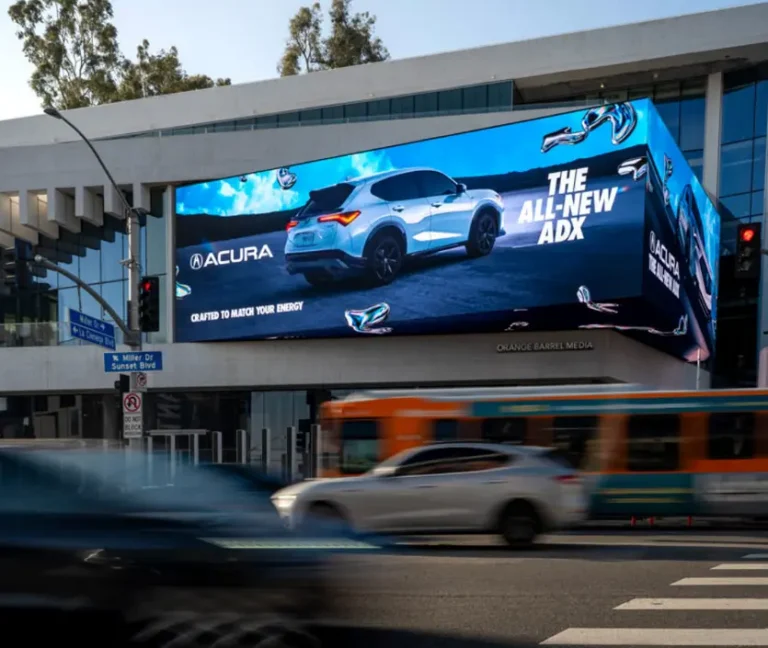
A street advertising LED display is an outdoor digital LED screen designed for advertising, information, and promotional content in public-facing environments such as commercial streets, roadsides, transit areas, retail districts, and urban spaces. Unlike a simple indoor digital sign, it must be specified around sunlight, weather exposure, viewing distance, structural conditions, maintenance access, and operating cost.
There is no single universal price for a street advertising LED display. A practical 2026 planning benchmark for outdoor LED panels varies substantially by pixel pitch and protection configuration. For example, Sostron’s current outdoor LED pricing reference lists panel-only ranges from approximately $450–$650/m² for P10 basic sealed configurations to $900–$1,400/m² for P4 basic sealed configurations. These are reference ranges, not fixed quotations, and they exclude or separately account for items such as structure, control equipment, freight, and installation.
For B2B buyers, the better question is therefore not simply “How much is an LED display per square meter?” It is:
What configuration provides sufficient visibility and reliability for the site without paying for specifications the audience does not need?
| Item | Practical Buying Consideration |
|---|---|
| Application | Roadside, commercial street, pole, transit, façade, or other public-space display |
| Pixel pitch | Select according to viewing distance and content requirements |
| Brightness | Match direct sunlight and ambient-light conditions |
| Protection | Specify weather protection according to the actual installation environment |
| Maintenance | Front or rear access can affect installation and service planning |
| Price | Compare the same scope, not just the LED panel price |
| TCO | Include electricity, maintenance, spare parts, structure, logistics, and installation |
| Supplier | Evaluate engineering support, documentation, warranty, and project experience |
What Is a Street Advertising LED Display?
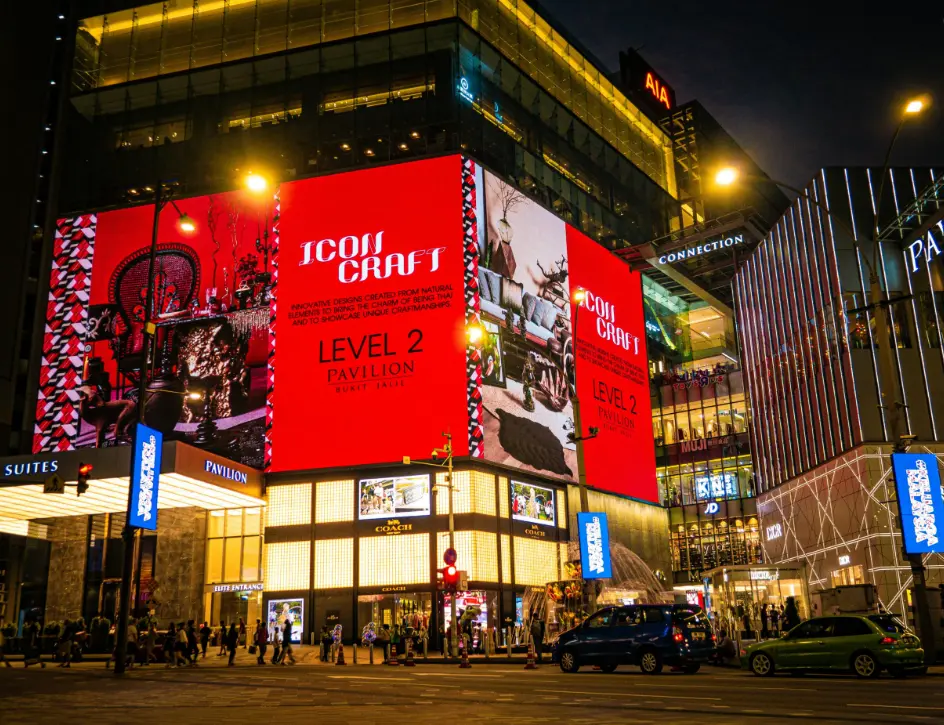
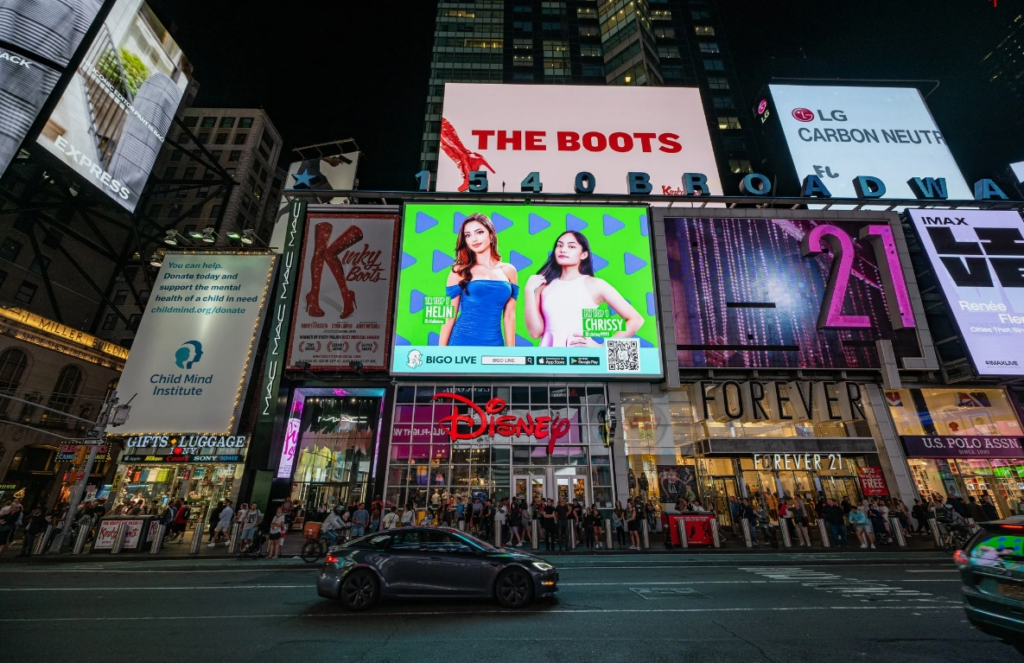
A street advertising LED display is a large-format outdoor LED display used to show dynamic advertising or public-facing content in locations where viewers may be pedestrians, drivers, passengers, shoppers, or visitors.
Typical applications include:
- Roadside digital advertising
- Commercial streets
- Shopping districts
- Building façades
- Street-level digital signage
- Transportation areas
- Outdoor retail advertising
- Pole-mounted displays
- Public-space information displays
- Digital out-of-home (DOOH) advertising
The term can therefore describe several physical formats rather than one standardized product.
Which Street Advertising Formats Are Available?
| Format | Typical Environment | Main Engineering Concern |
|---|---|---|
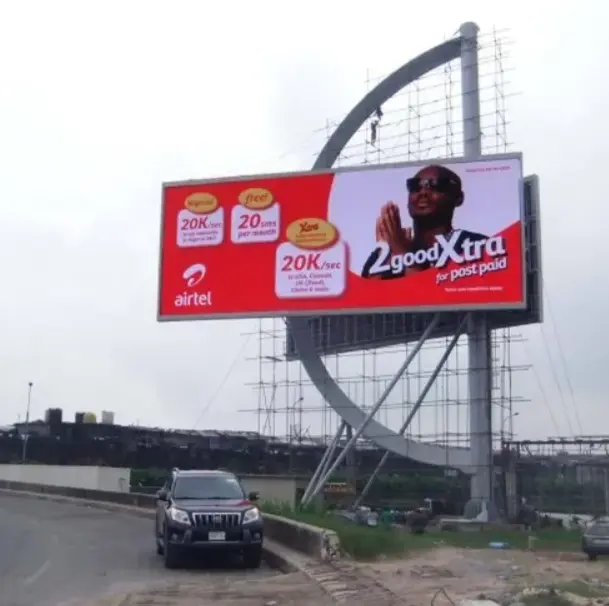
| Roadside LED billboard | Roads and highways | Viewing distance, brightness, structure |
| Pole-mounted LED display | Urban streets and poles | Weight, wind load, maintenance access |
| Street-level display | Commercial districts | Close viewing distance, image quality |
| Building-mounted display | Retail or commercial façades | Structural interface and access |
| Transit-area display | Stations and transport areas | Viewing angle, reliability, content visibility |
| Double-sided display | Roads with traffic in both directions | Power, structure, viewing angles, thermal design |
| Mobile LED display | Vehicles and temporary campaigns | Mobility, power, structural integration |
This distinction matters because a P4 screen for close pedestrian viewing and a P8 screen positioned beside a high-speed road may have completely different engineering priorities.
How Much Does a Street Advertising LED Display Cost?
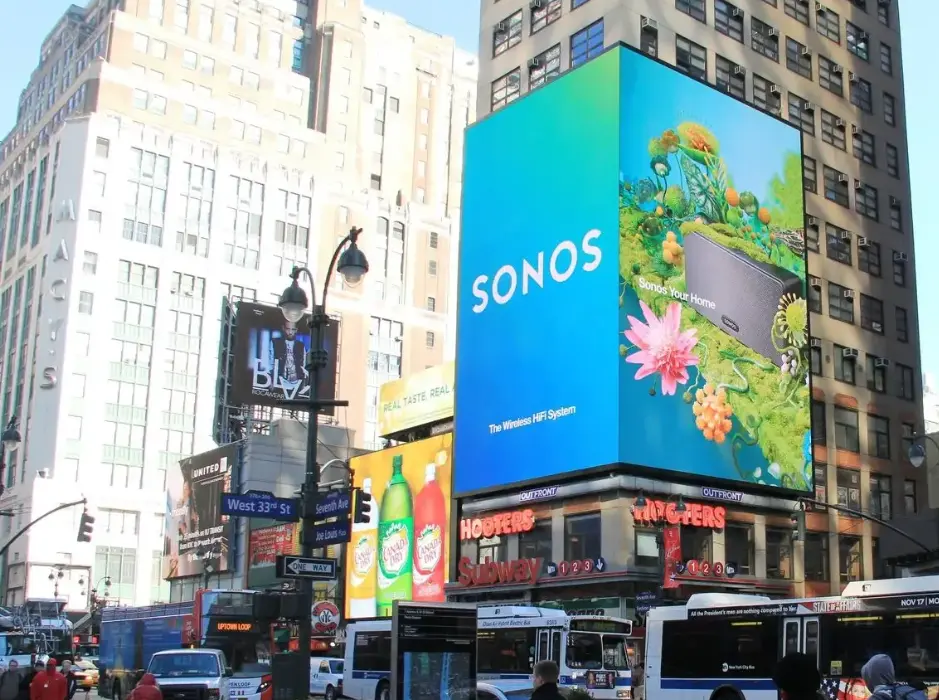
The price depends on the display area, pixel pitch, LED components, cabinet construction, brightness, protection, control system, structure, installation environment, logistics, and project scope.
As a Sostron reference for 2026 outdoor LED pricing, the following panel-only ranges illustrate how pixel pitch and outdoor configuration can affect budget. These are manufacturer reference estimates, not universal market prices or fixed quotations. Actual pricing varies with specification, quantity, cabinet configuration, control system, shipping terms, and project scope.
| Pixel Pitch | Basic Sealed Outdoor Configuration | GOB-Enhanced Configuration |
|---|---|---|
| P10 | $450–$650/m² | $500–$740/m² |
| P8 | $500–$750/m² | $560–$840/m² |
| P6 | $650–$950/m² | $720–$1,040/m² |
| P5 | $750–$1,100/m² | $830–$1,190/m² |
| P4 | $900–$1,400/m² | $990–$1,510/m² |
These figures are reference ranges rather than fixed market quotations and cover the display panels rather than a complete installed project. Sostron notes that control equipment, mounting structure, freight, and on-site installation need to be considered separately.
Why Can Two Street LED Displays With the Same Area Have Very Different Prices?
A 30 m² display is not automatically a 30 m²-equivalent purchase.
Two 30 m² screens can differ because one may require:
- A finer pixel pitch
- Higher daylight brightness
- More robust weather protection
- A lighter aluminum cabinet
- Front maintenance
- Higher refresh rate
- More advanced power management
- Additional structural engineering
- Double-sided configuration
- More demanding thermal management
Therefore, price per square meter should be treated as a starting point, not the final project budget.
What Is Included in a Street Advertising LED Display Price?
One of the most common procurement mistakes is comparing a complete project quotation with a panel-only quotation.
A buyer should ask suppliers to separate the following items:
| Cost Category | What to Check |
|---|---|
| LED modules | LED package, pixel pitch, module design |
| Cabinets | Material, dimensions, weight, maintenance method |
| Power supplies | Quantity, efficiency, redundancy where applicable |
| Receiving cards | Included or excluded |
| Sending/control system | Brand, quantity, control architecture |
| Power distribution | Cabinet, breakers, protection, wiring |
| Steel/aluminum structure | Design, fabrication, surface treatment |
| Installation | Labor, lifting equipment, commissioning |
| Freight | Shipping terms and destination |
| Customs/taxes | Included or excluded |
| Spare parts | Recommended quantity and included components |
| Warranty | Coverage, duration, exclusions |
| Content/control equipment | Media player, CMS, remote management |
A quotation that simply states “$X per square meter” is difficult to compare accurately.
What Determines Street Advertising LED Display Price?
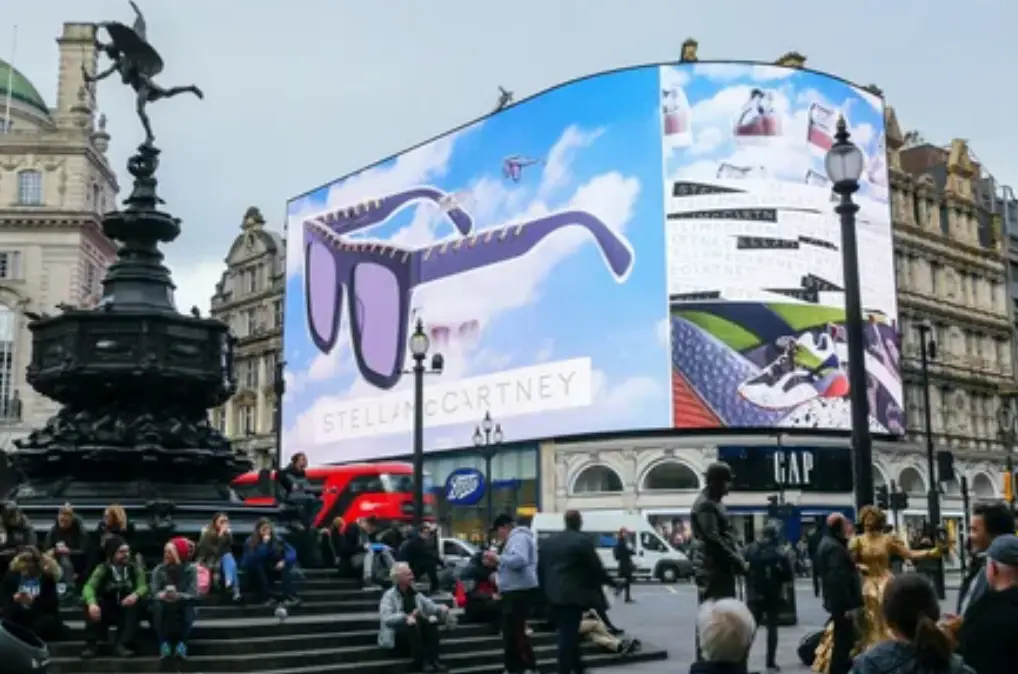
1. Pixel Pitch
Pixel pitch is the distance between adjacent LED pixels.
A smaller pixel pitch provides higher pixel density and can improve image detail at shorter viewing distances. However, it normally increases the amount of LED components required per square meter and therefore increases display cost.
For street advertising, the right question is not:
“What is the smallest pixel pitch available?”
It is:
“What is the appropriate pixel pitch for the actual viewing distance and content?”
Paying for a very fine pitch that viewers will rarely see clearly can increase CAPEX without producing proportional business value.
2. Screen Size
Larger displays increase the number of cabinets, modules, power supplies, structural components, and installation requirements.
However, screen size should not be considered independently from viewing distance.
A smaller screen positioned close to pedestrians can require a finer pitch than a much larger billboard viewed from hundreds of meters away.
3. Brightness
Outdoor LED displays must remain visible under changing ambient-light conditions.
Brightness is commonly specified in nits or cd/m².
There is no universal brightness number that is appropriate for every street installation. A display facing direct sunlight has different requirements from one installed under partial shade.
For example, Sostron’s Ares 3 outdoor LED display is specified with brightness of up to 10,000 nits, demonstrating the type of high-brightness capability available for demanding outdoor environments. This is a product specification, not a recommendation that every street display requires 10,000 nits.
A buyer should consider:
- Direct sunlight
- Screen orientation
- Local climate
- Daytime and nighttime operation
- Automatic brightness control
- Viewing distance
- Local environmental or signage requirements
4. Cabinet Construction
Cabinet material affects:
- Weight
- Structural loading
- Heat dissipation
- Installation
- Corrosion resistance
- Maintenance
- Long-term operating conditions
Sostron’s Ares 3 product documentation describes a 1,000 × 1,000 mm aluminum cabinet with front and rear maintenance access. Because current Sostron product pages show different cabinet-weight figures for Ares configurations, buyers should confirm the exact cabinet weight for the selected model and size before structural calculations or logistics planning.
For a large roadside display, cabinet construction is not simply a cosmetic choice. Lower weight can influence structural design and installation logistics, while thermal performance can influence operating conditions.
Which Pixel Pitch Is Best for Street Advertising?
There is no single “best” pixel pitch.
The selection should start with viewing distance, then consider screen size, content type, budget, and expected image quality.
As an engineering starting-point framework, buyers can consider:
| Application | Typical Viewing Situation | Initial Pitch Direction |
|---|---|---|
| Pedestrian-facing street display | Close viewing | P3–P5 may be considered |
| Commercial street | Short-to-medium distance | P4–P6 may be considered |
| Roadside advertising | Medium-to-long distance | P5–P8 may be considered |
| Highway billboard | Long viewing distance | P8–P10+ may be considered |
These are industry planning ranges, not universal specifications. The final pitch should be validated against the actual site.
When Is a Smaller Pixel Pitch Worth the Extra Cost?
A smaller pitch becomes more useful when:
- Viewers are relatively close
- Text must remain highly detailed
- Advertising contains fine graphics
- The display is viewed by pedestrians
- The screen is used for premium commercial content
- Cameras may capture the display at relatively close distances
A larger pitch may be more economical when:
- Viewing distances are long
- The screen is very large
- Content is designed for distant viewers
- The project prioritizes coverage area over close-up detail
This is one of the most important areas where buyers can avoid unnecessary spending.
What Specifications Matter Most for Outdoor Street LED Displays?
Brightness and Daylight Visibility
Brightness must be sufficient for the installation environment without treating maximum brightness as the only quality indicator.
A good specification review should consider:
- Maximum brightness
- Brightness adjustment
- Day/night operation
- Ambient-light sensing
- LED component quality
- Thermal behavior at high brightness
Higher brightness can increase thermal and power-management requirements, so it should be considered together with cabinet and cooling design.
Weather Protection
Outdoor LED displays need protection against environmental exposure.
IEC 60529 defines the IP Code, which classifies the degrees of protection provided by enclosures against environmental ingress.
However, IEC 60529 does not mean that every outdoor LED display automatically “must be IP65.”
Instead, the required protection level should be specified according to the installation environment, enclosure design, exposure, and project requirements.
For example, Sostron’s Ares product information includes outdoor weather-protection specifications, while the company’s Zimbabwe roadside project uses an IP65 configuration.
Buyers should also ask whether the stated IP rating applies to:
- Front of the display
- Rear of the display
- Complete cabinet
- Module
- Particular installation configuration
Refresh Rate
Refresh rate matters particularly when:
- Cameras record the screen
- The display appears in video content
- The project requires smooth dynamic graphics
- The screen is used for professional advertising production
Sostron’s Zimbabwe roadside project, for example, specifies a 3,840 Hz refresh rate. This is a project-specific configuration and should not be interpreted as a universal minimum for every street display.
Thermal Management
Outdoor LED displays can generate substantial heat, particularly under high brightness and extended operation.
Thermal management can involve:
- Cabinet material
- Heat conduction
- Ventilation
- Fan-assisted cooling
- Passive cooling
- Power-management architecture
- Ambient temperature considerations
- Installation clearance
This is why two displays with similar brightness specifications can have very different engineering designs.
For long-term projects, buyers should ask suppliers:
How is heat removed from the LED modules, driver ICs, and power components under actual operating conditions?
A specification sheet that only states brightness and IP rating does not answer that question.
Should You Choose Front or Rear Maintenance?
Maintenance architecture should be determined by the physical site.
Front Maintenance
Useful when:
- The rear of the screen is inaccessible
- The display is mounted close to a wall
- Space behind the cabinet is limited
- Maintenance must be performed from the viewing side
Rear Maintenance
Useful when:
- There is safe rear access
- The installation is a freestanding billboard
- Technicians can work behind the screen
- The structure is designed around rear service access
For street advertising projects, maintenance access should be considered before the structure is finalized.
Changing a maintenance strategy after installation can be expensive.
How Much Electricity Does a Street Advertising LED Display Use?
Power consumption is often misunderstood because LED manufacturers may specify both:
- Maximum power
- Average or typical power
These are not the same measurement.
A simplified planning formula is:
Energy Cost = Average Power × Operating Hours × Electricity Rate
For a project with a screen area of AA, an estimated average power density PP, daily operating time HH, and electricity rate RR:
Daily Electricity Cost ≈ A × P × H × R
The result is an estimate, not a supplier quotation.
Actual consumption depends on:
- Screen brightness
- Content
- Average image load
- Operating schedule
- Power-management architecture
- Ambient temperature
- Automatic brightness adjustment
- Display configuration
For a long-term DOOH project, comparing only purchase price can therefore miss an important portion of the lifecycle cost.
What Is the Total Cost of Ownership of a Street LED Display?
A street advertising LED display should be evaluated using both CAPEX and OPEX.
CAPEX
Initial project cost may include:
- LED display
- Control system
- Power distribution
- Steel or aluminum structure
- Installation
- Transportation
- Customs and taxes
- Permitting
- Commissioning
OPEX
Operating costs may include:
- Electricity
- Preventive maintenance
- Spare parts
- Module replacement
- Control equipment
- Network connectivity
- Content management
- Cleaning
- Access equipment
- Technician visits
A practical TCO model is:
5-Year TCO = Initial Project Cost + Electricity + Maintenance + Spare Parts + Other Operating Costs
Do not assume that the cheapest screen has the lowest TCO.
Likewise, do not assume that a more expensive energy-saving configuration will automatically pay back within a specific period.
The correct calculation requires actual project inputs.
How Should You Compare P4, P6, P8 and P10?
| Factor | P4 | P6 | P8 | P10 |
|---|---|---|---|---|
| Pixel density | High | Medium-high | Medium | Lower |
| Close viewing | Strong | Good | Less suitable | Generally less suitable |
| Long-distance viewing | May be unnecessary | Good | Good | Good |
| Hardware cost | Higher | Medium-high | Medium | Lower |
| Typical use | Urban / close viewing | Street / commercial | Roadside | Longer-distance advertising |
| Main trade-off | Higher CAPEX | Balance | Cost efficiency | Lower image detail at close range |
The key is to avoid treating this table as a universal product-selection rule.
For example, a P4 screen may be technically impressive but commercially inefficient if viewers are consistently far away. Conversely, choosing P10 solely because it is cheaper can reduce content readability when the audience is relatively close.
Pixel pitch is a viewing-distance decision first and a price decision second.
What Hidden Costs Should Buyers Consider?
A supplier quotation can look competitive while excluding major project expenses.
Before comparing two quotations, ask whether both include:
Structural Costs
- Steel structure
- Aluminum framing
- Anchoring
- Foundation work
- Wind-load engineering
- Surface treatment
Electrical Costs
- Distribution cabinet
- Circuit protection
- Cabling
- Grounding
- Power installation
Installation Costs
- Labor
- Crane or lifting equipment
- Access equipment
- Commissioning
- Local technicians
Logistics Costs
- Packaging
- International freight
- Insurance
- Customs
- Import duties
- Local transportation
Operational Costs
- Electricity
- Spare parts
- Maintenance
- Network connection
- Content management
This is why panel price and project price should never be treated as identical terms.
What Should You Ask an LED Display Supplier Before Buying?
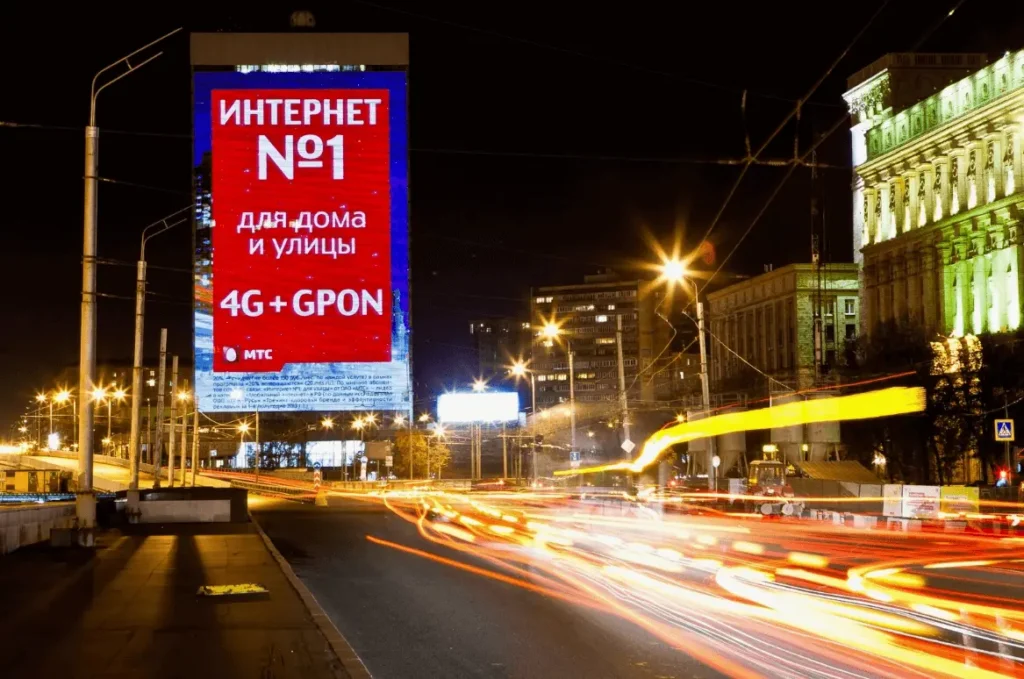
A serious B2B RFQ should provide enough information for the supplier to design the display around the site.
Ask the supplier to confirm:
- What pixel pitch is being proposed, and why?
- What viewing distance was used for the recommendation?
- What brightness is specified?
- Is the brightness maximum or operating brightness?
- What IP protection is provided?
- Is the cabinet front-maintenance or rear-maintenance?
- What is the cabinet weight?
- What is the maximum and typical power consumption?
- How is heat managed?
- What control system is included?
- Is the steel structure included?
- Is installation included?
- What shipping term is being quoted?
- Are customs and local taxes included?
- What spare parts are recommended?
- What exactly does the warranty cover?
- What documentation is supplied?
- Can the supplier provide relevant real project evidence?
This checklist can expose major differences between apparently similar quotations.
What Are the Most Common Buying Mistakes?
Choosing Pixel Pitch Only by Price
A cheaper P8 may not be cheaper overall if the application requires close viewing.
Comparing Panel Prices With Complete Project Prices
A $/m² figure without scope is not a meaningful comparison.
Ignoring Structural Requirements
A large outdoor display is not just an electronic product. The structure must accommodate the physical and environmental conditions of the site.
Treating IP65 as a Universal Outdoor Requirement
IP ratings describe enclosure protection under the applicable standard. The correct rating and implementation depend on the actual application.
Looking Only at Maximum Brightness
Brightness should be considered together with thermal management, power consumption, automatic adjustment, and actual site conditions.
Ignoring Maintenance Access
A screen that is easy to service during design may become expensive to maintain after installation if access is overlooked.
Selecting the Lowest Initial Price
A low purchase price can become less attractive if it comes with higher energy consumption, difficult maintenance, limited spare parts, or inadequate environmental protection.
What Does a Real Street Advertising LED Project Look Like?
A useful reference is Sostron’s Zimbabwe roadside LED billboard project.
The project uses:
- 30 m² total display area
- 5 × 6 m display
- Ares series
- P4.8 pixel pitch
- 4,500 nits brightness
- 3,840 Hz refresh rate
- IP65 protection
- SMD packaging
- 1,000 × 1,000 mm cabinets
- 1,040 × 1,248 pixel resolution
The project is explicitly described as a roadside LED advertising application in Zimbabwe.
This is useful not because its configuration should be copied to every project, but because it illustrates how several specifications are selected together.
A roadside project should evaluate:
screen size + viewing distance + pixel pitch + brightness + protection + cabinet + maintenance + structure + budget
rather than selecting each specification independently.
How Does an Outdoor LED Display Manufacturer Support This Type of Project?
For larger street advertising installations, the supplier’s role can extend beyond manufacturing LED modules and cabinets.
Depending on the project, buyers may need support with:
- Display configuration
- Pixel-pitch selection
- Cabinet selection
- Brightness requirements
- Structural interface
- Thermal considerations
- Control-system configuration
- Installation guidance
- Commissioning
- Spare parts
- After-sales technical support
Sostron’s Ares 3 outdoor LED display is positioned as a fixed-installation outdoor solution, with product configurations including P3.9, P4.8, P6.2, P7.8, and P10.4, along with high-brightness and aluminum-cabinet options.
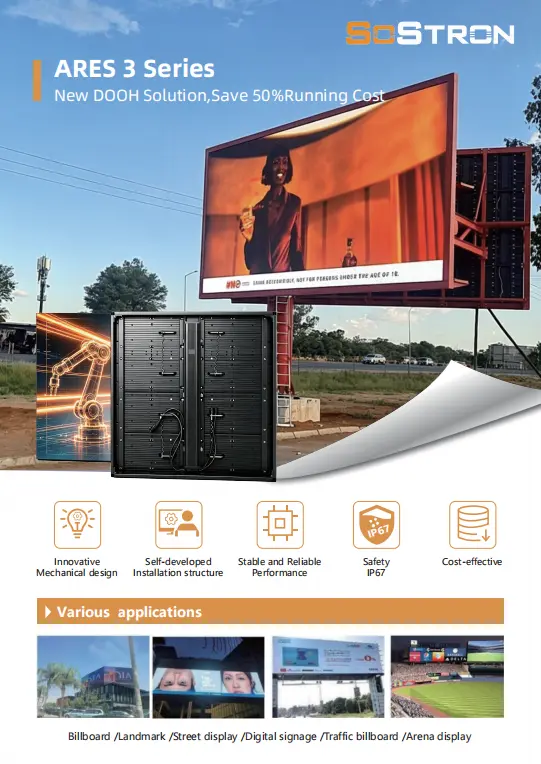
For projects where energy consumption is a major consideration, Sostron also provides an energy-saving outdoor LED display approach based on power-management and display architecture.
Who Should Buy a Street Advertising LED Display?
A street advertising LED display may be appropriate for:
- DOOH advertising operators
- Outdoor advertising companies
- Shopping and commercial districts
- Retail groups
- Property developers
- Transport and public-space operators
- Event and entertainment venues
- Businesses requiring large-format outdoor digital communication
It may be less appropriate when:
- The audience is mostly indoors
- Viewing distances are very short
- The site cannot support the required structure
- Local regulations restrict digital outdoor advertising
- The expected advertising revenue cannot support the total project cost
- A smaller digital signage solution can satisfy the communication requirement
The correct answer depends on the site’s audience, content, regulations, physical conditions, and business model.
When Is a More Expensive Configuration Justified?
Higher CAPEX can be justified when the additional specification solves a real project problem.
Examples include:
Finer Pixel Pitch
Justified when viewers are close enough to benefit from higher pixel density.
Higher Brightness
Justified when the display faces strong daylight and visibility is otherwise inadequate.
Better Thermal Design
Justified for demanding climates or long operating schedules where thermal management is a major reliability consideration.
Lightweight Aluminum Cabinets
Potentially valuable when cabinet weight affects structural design, transportation, installation, or maintenance.
Energy-Efficient Architecture
Potentially valuable for displays that operate for long hours over many years, but the economic benefit should be calculated from the actual power difference and local electricity rate.
The engineering principle is simple:
Pay more when the additional specification solves a measurable operational problem.
How Can Buyers Build a Better Street LED Display Budget?
Before requesting quotations, prepare these project inputs:
| Project Input | Why It Matters |
|---|---|
| Country and city | Climate, logistics, regulations |
| Exact installation type | Determines structure and maintenance |
| Screen dimensions | Determines hardware quantity |
| Viewing distance | Drives pixel-pitch selection |
| Day/night operation | Influences brightness and power |
| Daily operating hours | Needed for TCO |
| Content type | Determines image/detail requirements |
| Mounting method | Affects structure and installation |
| Maintenance access | Determines cabinet/service architecture |
| Target budget | Helps balance CAPEX and TCO |
The more complete the project brief, the less likely the final quotation is to change after engineering review.
Frequently Asked Questions
How much does a street advertising LED display cost?
A practical 2026 planning benchmark for outdoor LED panels ranges widely by pixel pitch and configuration. Sostron’s current reference lists approximately $450–$650/m² for P10 basic sealed panels and $900–$1,400/m² for P4 basic sealed panels. These are reference ranges, not fixed quotations, and a complete project can also require control equipment, structure, freight, installation, taxes, and other costs.
What pixel pitch is best for street advertising?
There is no universal best pixel pitch. Start with viewing distance, then consider screen size, content, brightness, and budget.
As an engineering starting point, P4–P6 may be considered for relatively close urban viewing, while P8–P10 and larger pitches may be considered for longer-distance roadside applications. These ranges are not universal standards; the final selection should be validated against actual viewing distance, screen dimensions, content requirements, ambient light, and budget.
These are engineering starting points rather than mandatory specifications.
What brightness does an outdoor street LED display need?
Brightness should be selected according to sunlight exposure, screen orientation, ambient lighting, viewing distance, and operating conditions. Some outdoor products provide brightness up to 10,000 nits, but that does not mean every street display requires 10,000 nits. The correct specification should be established from the actual site.
Is IP65 required for every outdoor LED display?
No. IEC 60529 defines the IP Code classification system for enclosure protection, but it does not establish a universal rule that every outdoor LED display must be IP65. The required protection level depends on the enclosure, installation environment, exposure, and project requirements.
What is normally excluded from an LED display price?
Depending on the quotation, structural steel, installation, freight, customs, taxes, power distribution, control equipment, and commissioning may be excluded. Always request an itemized quotation before comparing suppliers.
Is a smaller pixel pitch always better?
No. A smaller pixel pitch provides higher pixel density but also increases cost. If viewers are far away, the additional image detail may provide little practical benefit. Pixel pitch should be selected according to viewing distance and content requirements.
How do I calculate the total cost of a street LED display?
Start with:
Initial Project Cost = Display + Control + Structure + Electrical + Installation + Logistics + Taxes/Permits
Then estimate:
TCO = Initial Project Cost + Electricity + Maintenance + Spare Parts + Other Operating Costs
Use actual supplier quotations and local operating costs rather than assuming a universal percentage.
What should I provide to an LED manufacturer for a quotation?
At minimum, provide the installation country and city, screen dimensions, application, viewing distance, expected operating hours, mounting method, content type, maintenance access, and any known structural or regulatory requirements. These details allow the supplier to recommend a more appropriate configuration.
Final Buying Checklist
Before placing an order for a street advertising LED display, confirm:
- Application and audience are defined
- Viewing distance is confirmed
- Pixel pitch is justified
- Brightness is suitable for the environment
- Weather protection is specified
- Cabinet material and weight are documented
- Front/rear maintenance is confirmed
- Maximum and typical power are distinguished
- Thermal-management method is understood
- Control system is included or separately priced
- Structure is included or separately priced
- Installation scope is clear
- Freight and customs responsibilities are clear
- Warranty terms are documented
- Spare-parts requirements are understood
- Local permits and structural requirements are checked
- TCO has been considered, not only purchase price
- Supplier provides relevant technical documentation and real project evidence
About Sostron
Sostron is an LED display manufacturer and commercial display solution provider offering outdoor, indoor, rental, transparent, fine-pitch, and creative LED display solutions. Its services can cover product development and manufacturing, display configuration, engineering support, installation guidance, and after-sales technical support.
For outdoor advertising projects, the appropriate solution depends on the actual application rather than a standard product list. Screen dimensions, viewing distance, brightness, environmental exposure, maintenance access, structure, operating schedule, and total budget should all be considered before final configuration.
For a project quotation, buyers should provide the screen size, installation location, viewing distance, application, and expected operating hours so the display configuration and project scope can be evaluated on the same basis.
References:
IEC 60529 – Degrees of Protection Provided by Enclosures
U.S. DOE – Life Cycle Costs for Acquisition