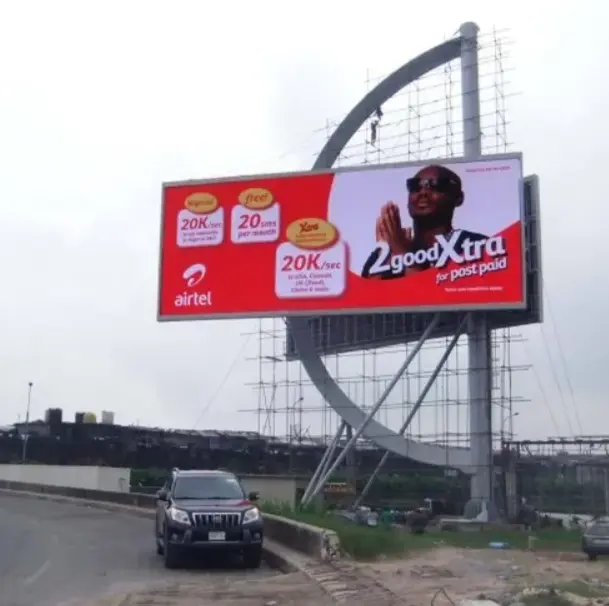
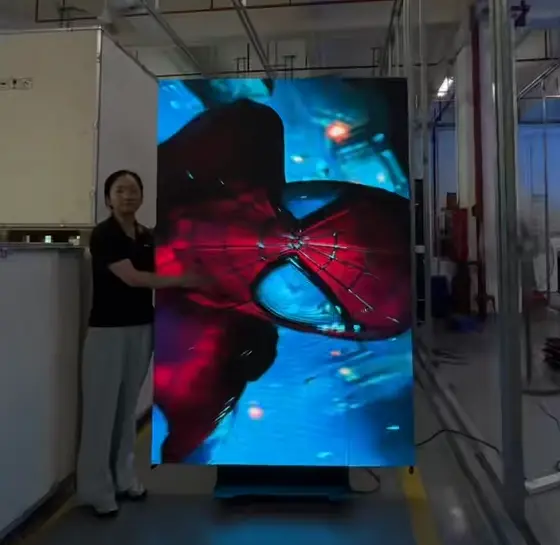
Bottom line up front: Brazil’s outdoor LED display market is projected to reach $312.5 million by 2030, growing at a 14.9% CAGR—making it the fastest-expanding LED market in Latin America. But sourcing here is not like sourcing anywhere else. Before you request a single quote, you need to understand one hard truth: Brazil’s import tax cascade—combining II (Import Duty), IPI, ICMS, PIS/COFINS, and AFRMM—will add 40% to 100% on top of your CIF value. A $50,000 LED video wall from Shenzhen can land in São Paulo at $85,000–$100,000 before installation begins. The table below gives you the operational snapshot every B2B buyer needs before going further.
| Decision Variable | Key Data Point | Implication for Buyers |
| Market CAGR (2024–2030) | 14.9% outdoor LED | Strong ROI environment; justify CapEx now |
| Import tax uplift | 40–100% above CIF | Local sourcing or Ex-Tariff exemption critical |
| Dominant pixel pitch (outdoor) | P6–P10 for billboards; P2.5–P4 indoor | Pixel pitch selection drives total project cost significantly |
| IP rating requirement | IP65 minimum for outdoor | Brazil’s coastal humidity and tropical rain demand full dust/water protection |
| DOOH market size (2025) | $481.55M (OOH+DOOH combined) | Premium inventory growth accelerating via programmatic platforms |
| Key regulatory risk | Lei Cidade Limpa (São Paulo) | Non-compliant installations face fines and forced removal |
Why Brazil Is Latin America’s Fastest-Growing LED Display Market
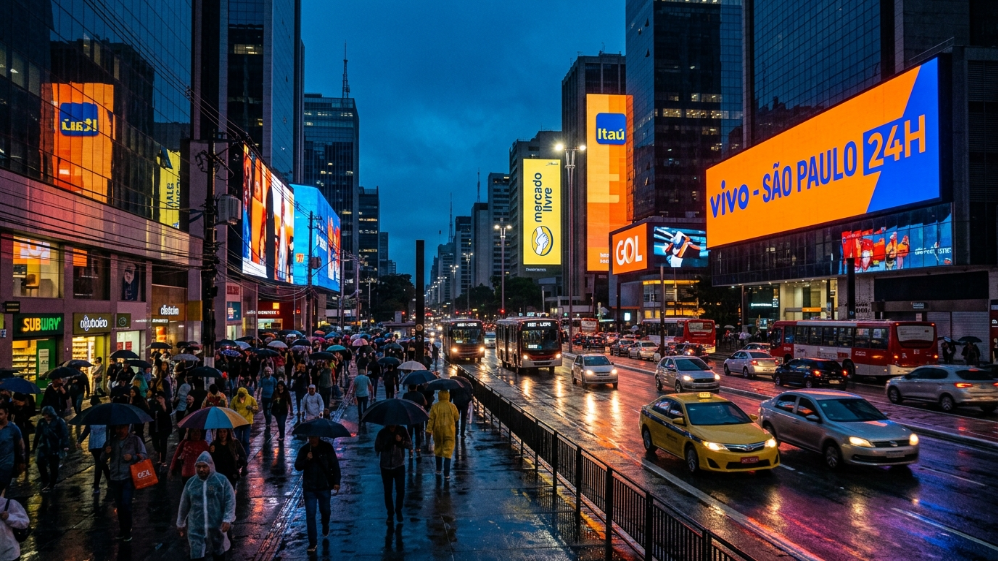
The numbers tell a clear story, but the drivers behind them matter more to procurement teams. Brazil is not growing because LED technology is new here—it’s growing because three structural forces are converging simultaneously.
Urbanization and Smart Infrastructure
First, urbanization. The Southeast region alone—anchored by São Paulo and Rio de Janeiro—accounts for 56.4% of all national OOH advertising insertions. São Paulo’s Smart Sampa infrastructure program has already connected 31,300 devices across the city, with a target of 40,000 by the end of 2026. These aren’t passive screens; they’re addressable nodes capable of delivering context-aware content based on traffic speed, ambient light, and weather conditions. For DOOH advertisers and system integrators, this is new inventory being created at municipal scale—and every new screen is a hardware procurement opportunity.
Event Infrastructure and Global Timelines
Second, event infrastructure. Brazil hosts an average of over 400 major live events annually across music festivals, sports, and corporate production. The 2027 FIFA World Cup—with matches spread across six host cities including São Paulo, Rio, and Belo Horizonte—is already driving stadium and fan-zone LED procurement cycles. Based on our experience with international sporting events of comparable scale, procurement decisions for temporary and permanent LED infrastructure typically begin 18–24 months before opening ceremonies. That timeline is now.
Retail Media Convergence
Third, retail media convergence. In July 2025, THE LED—one of Brazil’s largest LED rental and installation companies—acquired RETAIL MEDIA, signaling the market’s shift toward integrated display-plus-advertising revenue models. For system integrators, this means clients increasingly want LED hardware that is programmatic-ready out of the box, not just a screen that displays content.
DOOH Expansion: How São Paulo’s Smart Sampa Program Is Creating LED Inventory at Scale
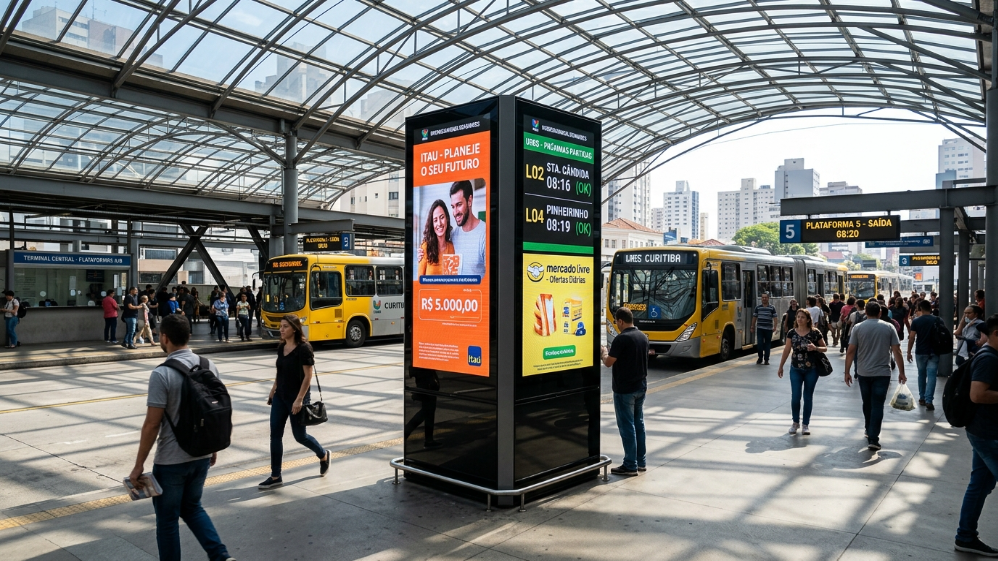
São Paulo’s programmatic DOOH growth is worth understanding at the infrastructure level, because it directly shapes what hardware specifications buyers must meet. The Smart Sampa program links connected street furniture, transit displays, and digital billboards into a unified data network. Screens deployed within this network must meet specific brightness thresholds—typically 3,000–5,000 nits for direct sunlight readability—and must be capable of receiving real-time content updates via IP connectivity.
In November 2025, VIOOH partnered with RZK Digital to expand programmatic DOOH to 800 urban screens across Brazil, delivering four billion monthly impressions to over 75 million viewers. That partnership was built on screens already installed and addressable. The implication: if your LED installation isn’t capable of integration with SSP/DSP programmatic pipes, you are building depreciating infrastructure in a market that is rapidly moving toward automated ad buying.
Understanding Brazil’s LED Display Import Cost Structure Before You Buy
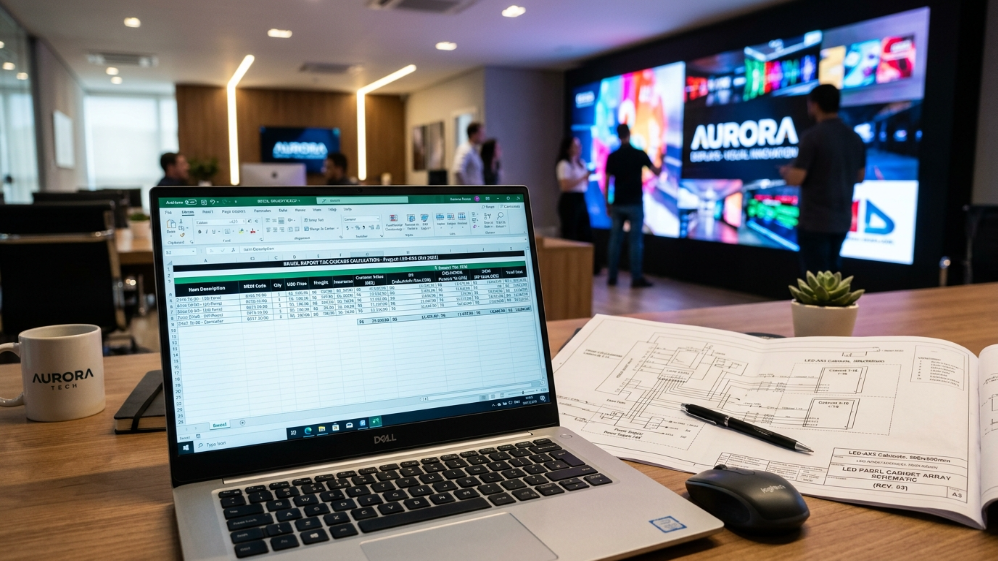
This is where most foreign buyers get burned, and where most LED manufacturer websites stay silent. The Brazilian import regime is among the most complex in the world—not because any single tax rate is extreme, but because of how they stack.
Here is the actual cascade applied to LED display panels imported into Brazil today:
| Tax | Full Name | Rate Applied To | Typical Rate Range |
| II | Import Duty (Imposto de Importação) | CIF value | 12–16% for LED panel NCM codes |
| IPI | Tax on Industrialized Products | CIF + II | 0–15% |
| AFRMM | Merchant Marine Renewal Fee | International freight value | 25% (sea freight) |
| PIS | Social Integration Program | CIF value | 2.1% |
| COFINS | Social Security Financing | CIF value | 9.65% |
| ICMS | State Value-Added Tax | Grossed-up base ($\div 0.82$ at 18%) | 17–18% (São Paulo) |
| SISCOMEX | System fee | Per import declaration | Fixed R$ 185 |
The ICMS calculation deserves particular attention because it behaves unlike any VAT most international buyers have encountered. Brazil calculates ICMS on a “tax-on-tax” basis: the formula divides the pre-ICMS total by (1 minus the ICMS rate) before applying the rate. At an 18% rate, that means you divide by 0.82—producing an effective ICMS burden substantially higher than a naive 18% application would suggest. A procurement team that models ICMS as a simple 18% addition will undershoot the true landed cost by 4–6 percentage points.

The Ex-Tariff Exemption: Does Your LED Display Project Qualify?
Brazil’s customs regime includes a mechanism that few foreign suppliers explain to their customers: the Ex-Tarifário, or Ex-Tariff exemption. Under this program, import duty on the II layer can be reduced to near-zero if two conditions are met: the product cannot compete with a Brazilian-manufactured equivalent, and the importer demonstrates there is no domestically produced alternative that meets the technical specification.
Fine-pitch LED panels below P2.5—particularly those used in broadcast studios, command centres, and high-resolution indoor applications—frequently qualify, because Brazil does not manufacture these components locally at scale. The application requires precise technical documentation: NCM code, detailed technical specifications including pixel pitch, brightness(cd/m²), refresh rate, power consumption, and intended use case. Approvals are made by the Brazilian government on a product-by-product basis.
Working with a licensed Brazilian customs broker (despachante aduaneiro) to prepare this application is not optional—it is the difference between a 14% II rate and a 0–2% Ex-Tariff rate on the most expensive line item in your cost structure. On a $200,000 order, that decision alone saves $24,000–$28,000.
Local vs. Import: How to Choose the Right Sourcing Strategy for Your Brazilian LED Project
The Ex-Tariff route helps, but it doesn’t eliminate the fundamental decision every B2B buyer faces entering this market: source locally, import directly, or work with a Chinese manufacturer that already has a Brazilian representative. Each path has a distinct risk profile, and the right answer depends on your project type, timeline, and technical requirements.
Based on our experience structuring LED procurement for large-scale event and DOOH projects across Latin America, the decision almost always comes down to three variables: total landed cost, after-sales accountability, and installation capability. Local suppliers win on the last two. Imports from China win on unit price—until you run the full landed cost model from the previous section.
Brazilian Local Suppliers: What the Best Ones Offer That Pure Imports Cannot
The Brazilian LED display ecosystem is more mature than most international buyers expect. Crialed, operating since 2008, holds the distinction of being the only Brazilian company approved by PRG for digital visual solutions—a certification that matters deeply for broadcast clients and large-scale event producers who need verified technical standards. LedWave, another São Paulo-based operation, manages one of the country’s largest LED rental fleets and has delivered projects spanning Carnival, corporate conventions, and live broadcast backdrops.
What these suppliers provide that no direct Chinese import can replicate: a local technical team that arrives on-site within hours if a cabinet fails at 11pm during a live concert. For event production companies, that after-sales SLA is worth more than a 15% unit price difference.
The full sourcing comparison breaks down as follows:
| Sourcing Path | Unit Price | Landed Cost (incl. taxes) | Lead Time | After-Sales | Installation Support | Best Fit |
| Brazilian local supplier | Higher | No import taxes—what you see is what you pay | 2–6 weeks (local stock) | On-site team, same-day response | Full local crew available | Events, DOOH networks, broadcast |
| Direct import (China, self-managed) | Lowest | Add 40–100% for full tax cascade | 8–14 weeks + customs | Manufacturer support remote only | Buyer arranges locally | Large fixed installations with long lead time |
| Chinese brand with Brazilian rep | Mid-range | Rep handles import, often duty-included pricing | 4–8 weeks | Rep office provides local support | Varies by rep | Corporate, retail, mid-scale outdoor |
| Chinese brand via distributor (e.g., Optiart/Samsung) | Mid-to-high | Duties absorbed in distributor margin | 2–5 weeks | Distributor warranty, local service | Installer network | Retail, command centres, broadcasting |
One nuance that’s easy to miss: Brazilian distributors of international brands—Optiart is an official Samsung distributor, for instance, installing over 700 screens annually—absorb the import complexity into their margin. You pay more per square metre of LED, but you eliminate SISCOMEX, RADAR licencing, customs broker fees, and the risk of shipments stuck in Receita Federal inspection. For a 12-screen retail deployment on a tight deadline, that trade-off is rational.
LED Display Technical Specifications for Brazil’s Climate, Regulations & Use Cases
Specifying the wrong panel for Brazilian conditions is a procurement error that surfaces 18 months after installation—when refresh cycles accelerate due to heat damage, or when a coastal installation shows pixel degradation from salt air ingress. The technical spec decisions made at RFQ stage determine the 5-year ownership cost far more than the purchase price.
Pixel Pitch: The P-Number That Drives Your Entire Budget
Pixel pitch—the distance in millimetres between the centre of one LED cluster and the next—is the single specification that most directly affects both visual quality and price per square metre. The rule of thumb used across the industry is: minimum viewing distance (metres)=pixel pitch(mm)×1,000÷1,000,or more practically, divide your minimum viewing distance in metres by 1,000 to get the maximum acceptable pixel pitch in millimetres.
A highway billboard viewed from 30 metres can use P10 or even P16 panels—this dramatically reduces cost per square metre and allows for larger cabinet sizes. A retail video wall viewed from 3 metres requires P3 or finer. A broadcast studio XR LED volume for virtual production needs P1.5–P2.5 with a refresh rate of at minimum 3,840Hz to eliminate flicker on camera. Specifying P4 for a TV studio to save 30% on hardware will produce a visible scan-line effect on broadcast cameras—that is not a recoverable situation.
IP Rating and Brightness: Matching Panels to Brazilian Environmental Reality
Brazil’s geographic diversity demands that you stop treating “outdoor LED” as a single category. There is a meaningful difference between an installation in Belo Horizonte’s relatively temperate climate and one on Copacabana Beach in Rio, exposed to salt-laden coastal air, 90%+ relative humidity, and direct equatorial sun at 1,500+W/m² solar irradiance.
The minimum IP rating for any Brazilian outdoor installation is IP65—fully dust-tight and protected against water jets from any direction. For coastal locations and installations subject to direct rain exposure at wind angles, IP67 (temporary immersion to 1 metre) is the appropriate specification. The additional cost over IP54-rated panels is typically 8–12% per cabinet. The cost of replacing corroded modules 18 months into a 5-year DOOH concession contract is not recoverable.
On brightness: outdoor Brazilian installations require a minimum of 5,000 nits for readability in direct sunlight. Installations on west-facing facades in afternoon sun—particularly in cities at lower latitudes—should be specified at 6,000–8,000 nits. The commercial benefit is straightforward: a screen that washes out at 2pm displays no advertising value to operators and triggers advertiser SLA penalties in DOOH network contracts.
5 Long-Tail Questions Brazilian LED Display Buyers Are Searching Right Now
Q1: What is the total landed cost of importing LED displays from China to Brazil, including all taxes?
Expect 40–100% above your CIF value, depending on the product’s NCM classification, your ICMS state rate, and the freight value subject to AFRMM. Run the full 7-layer cascade—II, IPI, AFRMM, PIS, COFINS, ICMS, and SISCOMEX—before approving any supplier quote. A $100,000 CIF order can land at $165,000–$195,000 in São Paulo.
Q2: Which pixel pitch LED display is best for outdoor advertising billboards in Brazil?
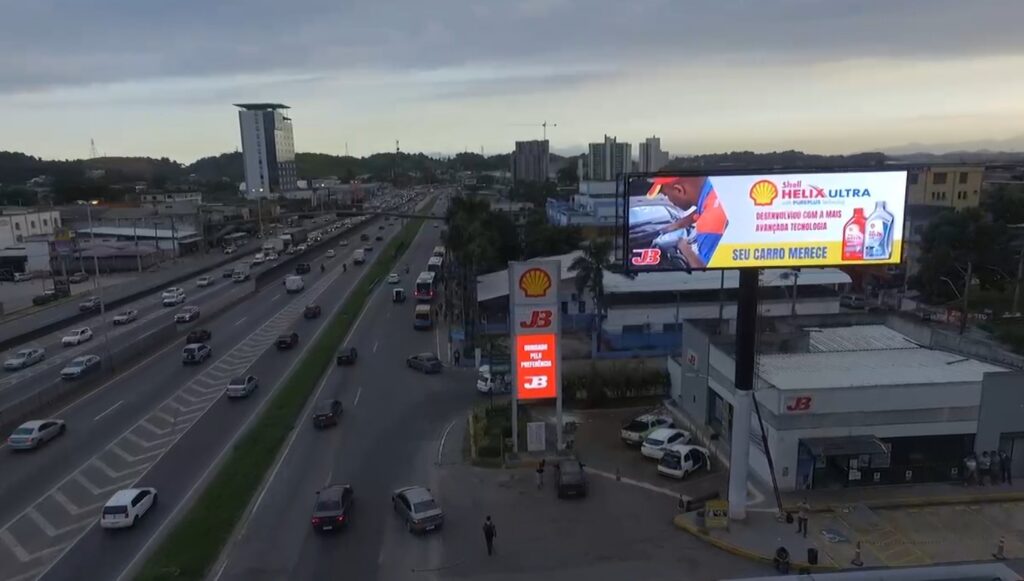
P6 to P10 for highway and high-distance viewing (15m+). P4 to P6 for street-level urban formats viewed at 8–15m. P2.5 to P4 for transit and retail environments below 8m viewing distance. Do not over-specify: P4 on a highway billboard adds 60–80% to cabinet cost with zero visible benefit to drivers.
Q3: Does São Paulo’s Lei Cidade Limpa apply to LED screens and digital signage?
Yes, directly. The law prohibits unlicensed large-format visual communication including LED billboards in public spaces across São Paulo municipality. Operators must hold a valid visual communication permit (Licença de Comunicação Visual), comply with size restrictions by zone, and respect brightness caps—particularly between 10pm and 6am. Non-compliant screens face fines and mandatory removal. This is why DOOH investment in São Paulo is channelling into compliant infrastructure: Smart Sampa-connected street furniture and transit formats that are permitted by municipal concession agreements.
Q4: Is there a duty exemption available for LED displays imported into Brazil?
Yes—the Ex-Tarifário program. Importers can apply for a near-zero II rate if the panel specification has no domestically manufactured Brazilian equivalent. Fine-pitch panels below P2.5, transparent LED displays, and high-refresh broadcast panels frequently qualify. Applications require detailed NCM classification and technical documentation. Engage a licensed despachante aduaneiro (customs broker) before applying—the approval process is product-specific and takes 60–120 days.
Q5: What IP rating do I need for LED display installations near the Brazilian coast?
IP65 is the regulatory and practical floor for all outdoor Brazilian installations. For coastal locations—any site within approximately 20km of the ocean—specify IP66 or IP67. Salt air accelerates corrosion of PCB contacts and LED module housings at a rate that will void most manufacturer warranties if the panel was not rated for marine-adjacent environments. Confirm IP rating certification documentation (IEC 60529 test reports) from any supplier before purchase.
Expert Verdict
Brazil rewards buyers who do their homework before the RFQ stage—and punishes those who treat it like any other emerging market order. The tax structure is non-negotiable and non-recoverable once a shipment clears customs at the wrong duty rate. The climate specification is non-negotiable once a screen goes live on a coastal site.
The buyers who win in this market run the full landed cost model before comparing supplier quotes, engage a customs broker for Ex-Tariff assessment on any order above $80,000 CIF, and spec IP67 and 5,500+ nits as defaults rather than asking suppliers to justify the upgrade. For events and rental, the local supplier ecosystem—particularly Crialed, LedWave, and NA Equipamentos—is deeper and more capable than its international reputation suggests.
The Brazilian LED display market is not a shortcut to a cheap screen. It is a structurally complex, rapidly growing opportunity for integrators and operators who understand the rules. Get the rules right first.
References:
São Paulo Municipal Government – The Enforcement and Evolution of the Clean City Law