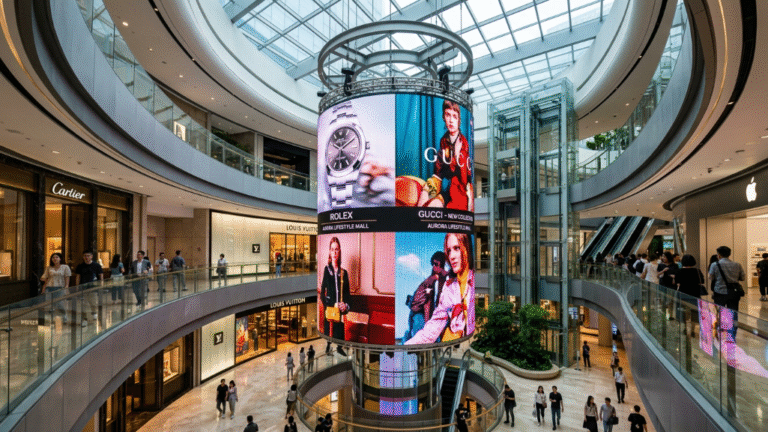
What Is an Esports Live Broadcast LED Display?
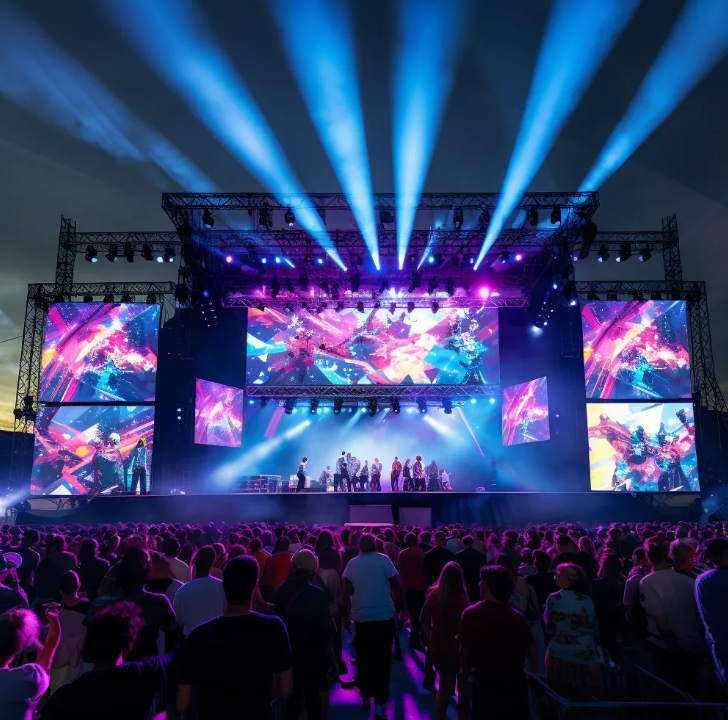
An esports live broadcast LED display is an ultra-high-definition display system purpose-built for high-frame-rate gaming content. Unlike standard commercial LED screens, esports displays must deliver ultra-high refresh rates of 3,840Hz–7,680Hz to eliminate scan lines under broadcast cameras, achieve system-level ultra-low latency below 1ms to maintain perfect audio-video synchronization, and support high grayscale processing to accurately reproduce shadow details in dark game scenes.
This type of display is foundational infrastructure for professional esports tournaments, enabling synchronized global broadcasts and ensuring competitive fairness.
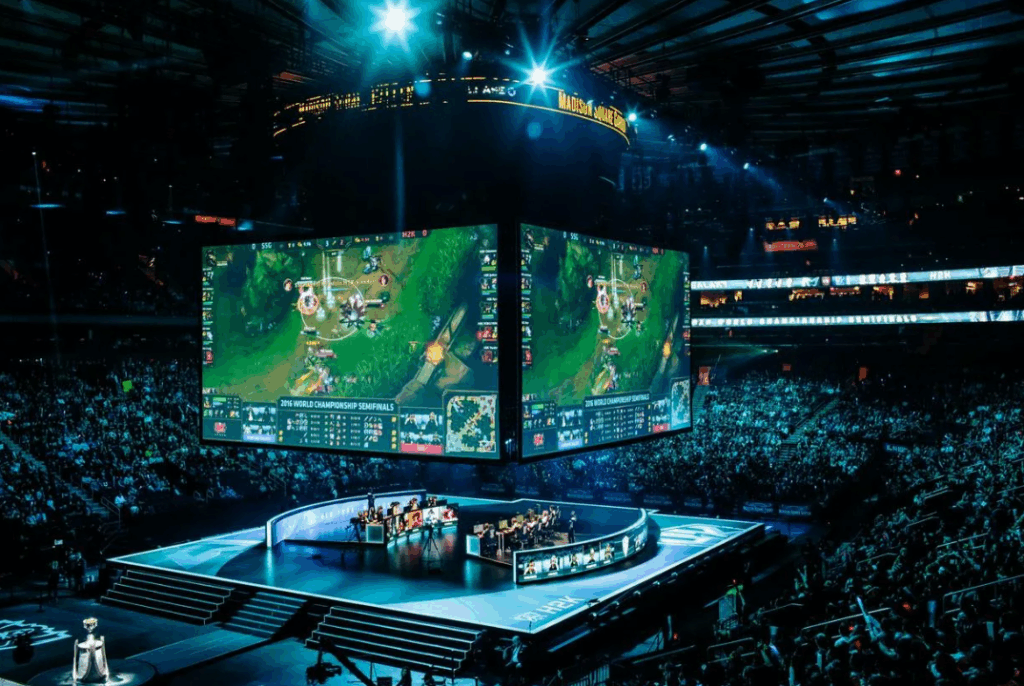
Why a “Regular Advertising LED Screen” Can Ruin an Esports Event
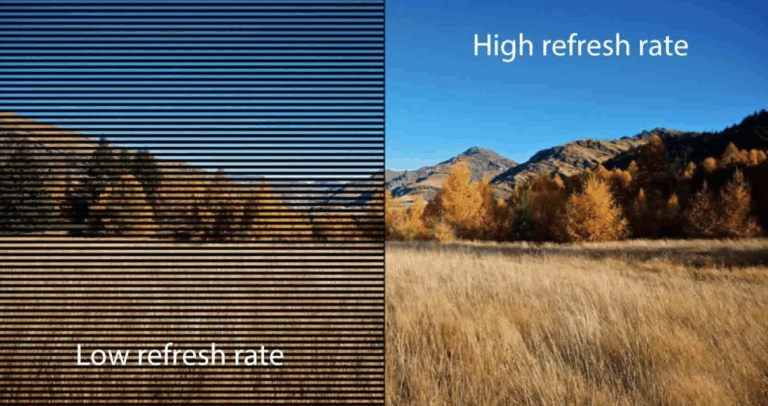
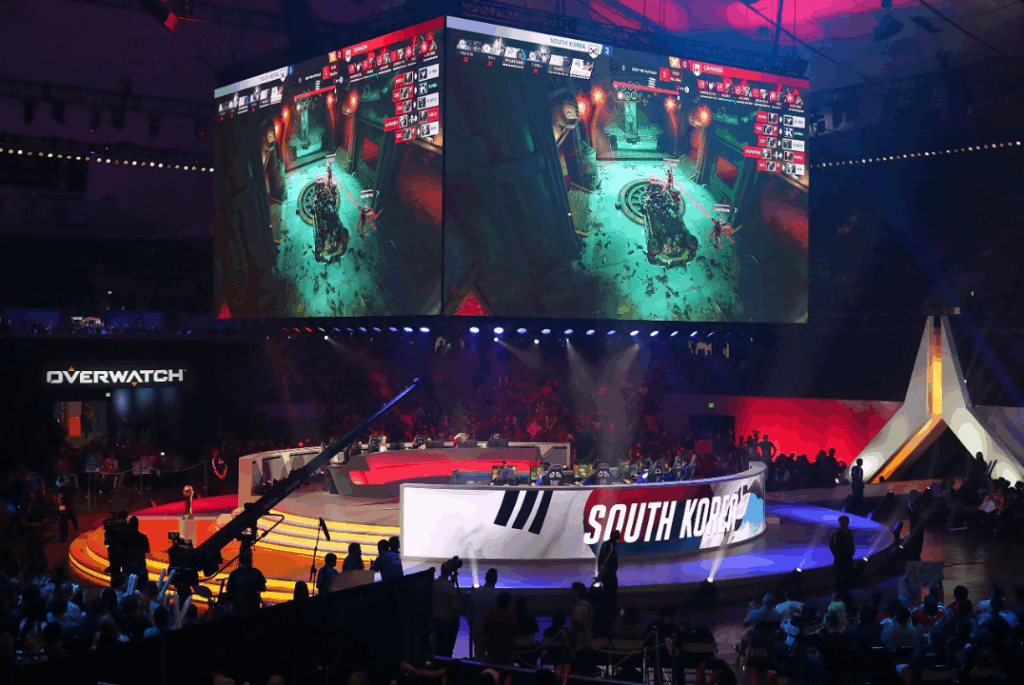
In esports environments, displays must handle highly dynamic visuals at hundreds of frames per second. Standard LED advertising screens—typically around 1,920Hz refresh rate—expose critical flaws when captured by professional cameras:
-
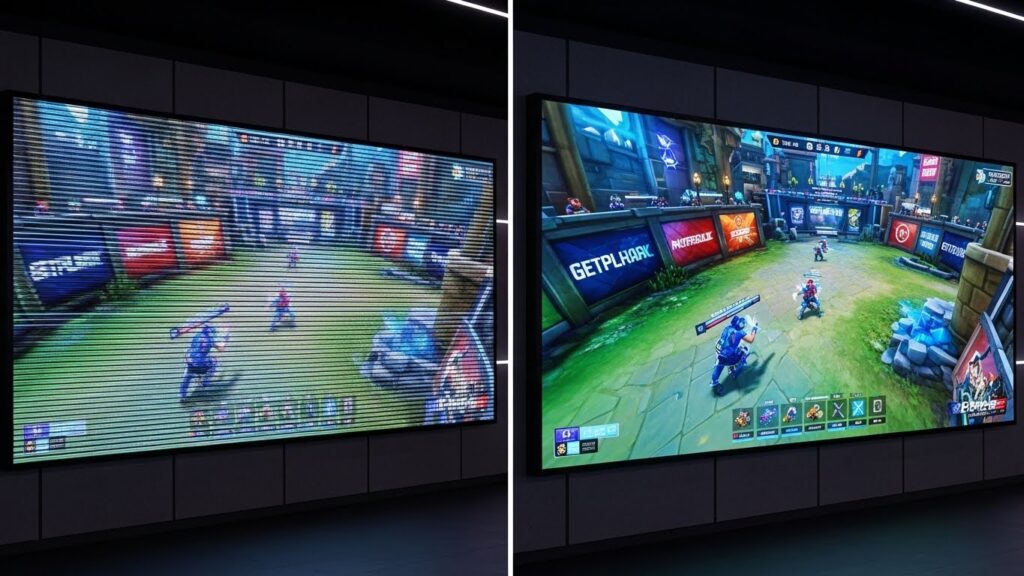
Moiré patterns and scan lines
When directors cut to close-ups of players, background LED screens may show dark horizontal bands, instantly contaminating the broadcast feed. -
Ghosting and motion blur
During fast team fights in games like League of Legends or CS2, poor grayscale response causes image trailing, making it impossible for viewers to see precise player actions. -
System latency
If signal latency from GPU output to screen exceeds one frame (16ms), the audience hears commentary before seeing the action—breaking immersion and professionalism.
Table 1: Esports Broadcast-Grade LED Displays vs. Entry-Level Industry Screens
| Technical Metric | Entry-Level Industry Standard | Esports Broadcast Standard (Sostron) | Business Impact |
|---|---|---|---|
| Refresh Rate | 1,920Hz | 3,840Hz–7,680Hz | Determines flicker-free, camera-safe visuals |
| Latency | 10–20ms | <1ms (sub-frame) | Audio-video sync and live viewing experience |
| Driver IC | Standard dual-buffer IC | High-end PWM IC (e.g., MBI5153 / ICN2053) | Low-brightness grayscale performance |
| Contrast Ratio | 3,000:1 | 8,000:1–10,000:1 | Visibility of dark in-game details |
| Color Depth | 12-bit | 14-bit / 16-bit | Smooth gradients, no banding |
Technical Deep Dive: Four Core Performance Metrics Behind Top-Tier Esports Events
Nanosecond-Level Synchronization and Ultra-Low Latency Architecture
Sostron’s esports solutions use high-performance control systems such as NovaStar MCTRL4K or Brompton processors. By enabling low-latency mode, redundant video processing stages are bypassed, reducing end-to-end signal delay to under 1 millisecond.
This is mission-critical for FPS broadcasts where split-second actions define the outcome.
Broadcast-Grade Scanning and Moiré Suppression
Eliminating moiré is not just about higher refresh rates—it requires precise synchronization between the control system’s GCLK (global clock) and the camera shutter.
Within Sostron’s 15,000㎡ smart manufacturing and aging-test facility, we simulate real broadcast conditions using professional cameras (e.g., Sony and Panasonic 4K broadcast units). By fine-tuning LED surface encapsulation—such as black light-absorbing masks—we minimize reflections and suppress interference across all camera angles.
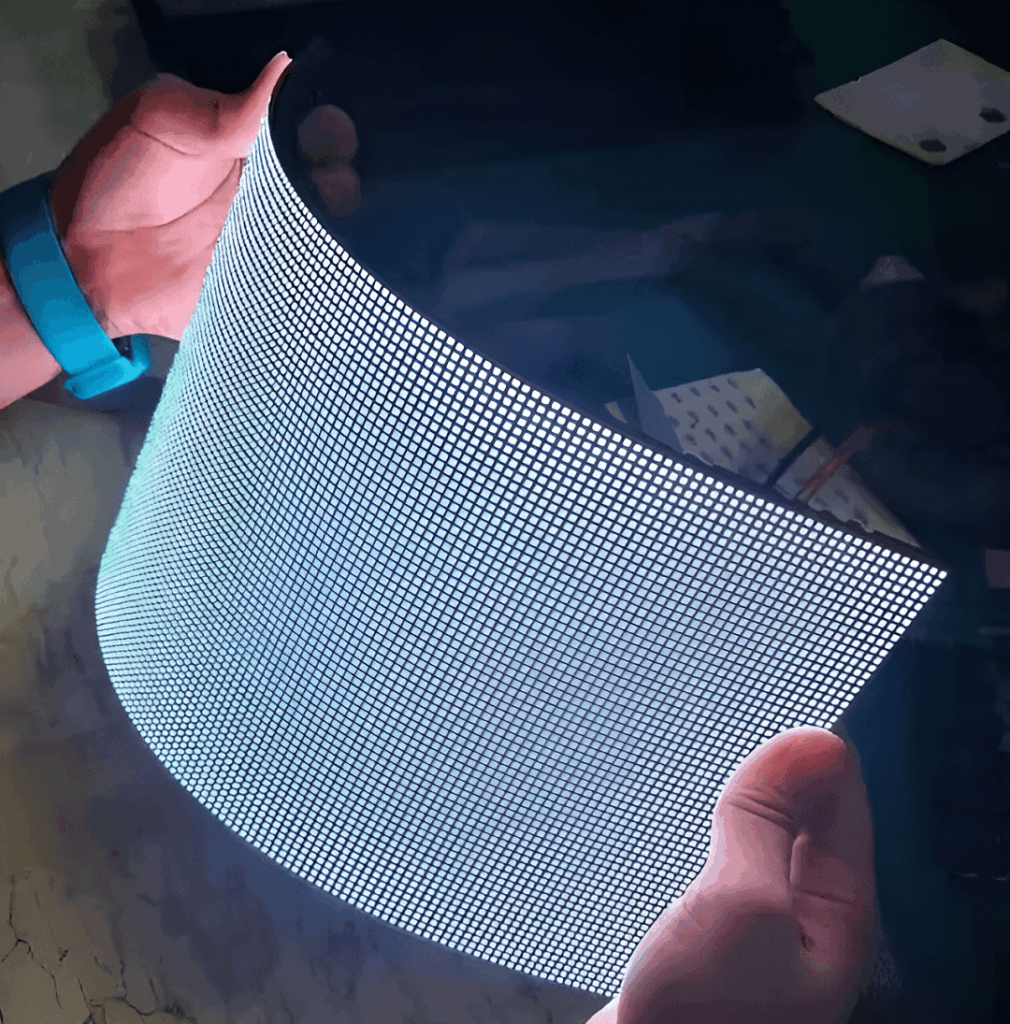
Business Value Analysis: Where Does Your ROI Come From?
If you’re a procurement manager or venue owner, one principle matters: a premium LED display is not an expense—it’s an asset.
-
Brand premium pricing
Global sponsors such as Intel and Monster Energy demand strict logo display quality. Flicker-free, high-definition screens directly increase advertising slot pricing. -
Durability and secondary rental value
Displays using die-cast aluminum cabinets and gold wire LEDs experience over 30% slower luminance decay. After five years, resale value in the rental market typically remains 40%–50%.
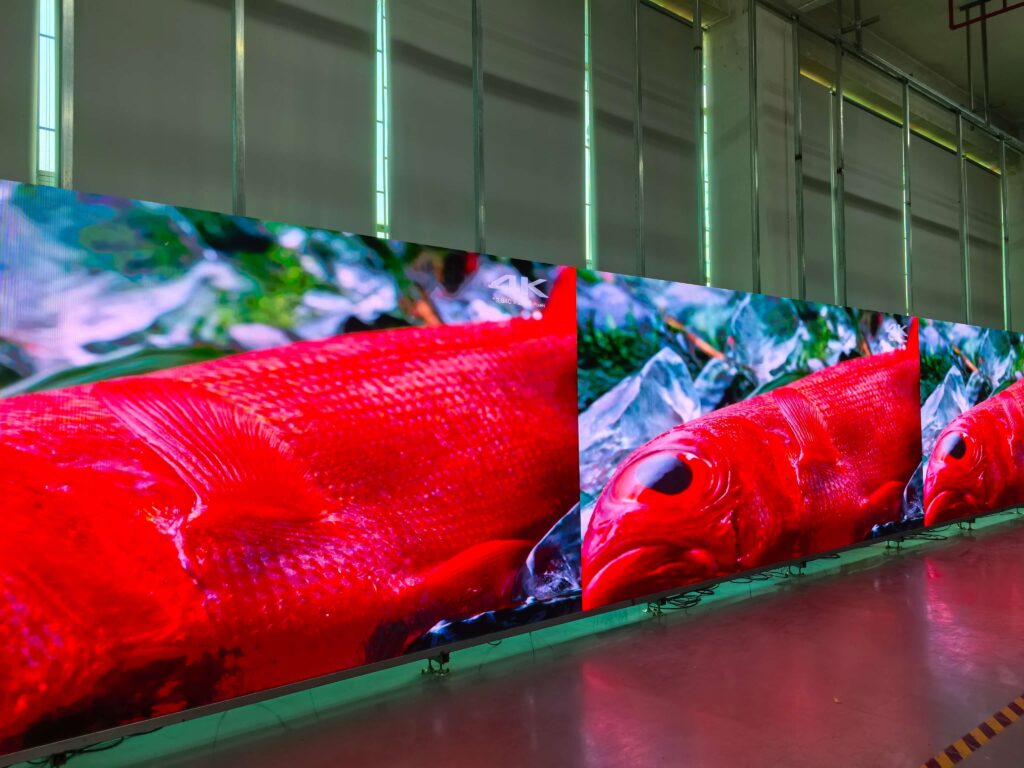
Table 2: Five-Year Total Cost of Ownership Projection
| Item | Low-End Assembled Screen | Sostron Smart Manufacturing Series | Notes |
|---|---|---|---|
| Initial Purchase Cost | 100% | 130% | Includes patented R&D from a 4,000㎡ research center |
| Annual Maintenance (dead pixels) | 15% | <3% | Automated SMT manufacturing stability |
| Power Cost (5-year total) | $10,000 | $6,500 | Common-cathode energy-saving design |
| Residual Value After 5 Years | 10% (near scrap) | 45% (secondary rental use) | Core asset value retention |
Industry Pitfall Guide: Insights from 20 Years of Experience
Pitfall 1: Inflated Refresh Rate Claims
Many manufacturers advertise 3,840Hz, but achieve it by sacrificing grayscale depth. In low-brightness esports environments, this causes severe color banding.
Expert advice:
Review the driver IC datasheet. True esports-grade displays must use high-performance PWM driver chips—not cheap frequency-scanning ICs.
Pitfall 2: Ignoring Cabinet Flatness Tolerance
Esports LED walls often span dozens of square meters. If cabinet precision exceeds 0.1mm deviation, large monochrome scenes (grass, sky, fog) will show visible dark or bright seams.
Expert advice:
Require fully die-cast aluminum cabinets. Sheet-metal cabinets are not acceptable for professional esports applications.
Dedicated Esports Solutions: The Sostron Hima Series
Based on 14 years of real-world deployment, Sostron developed the flagship Hima Series for esports tournaments and XR virtual production.
Core Product: Hima Multi-Purpose Fine-Pitch Rental Series
-
All-scenario adaptability
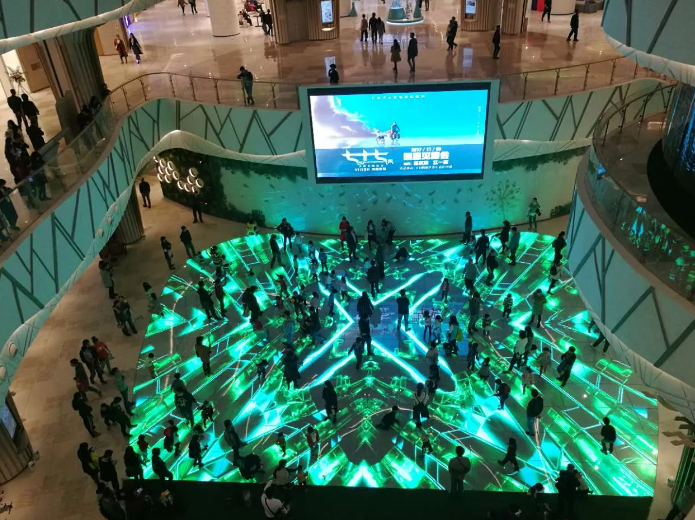
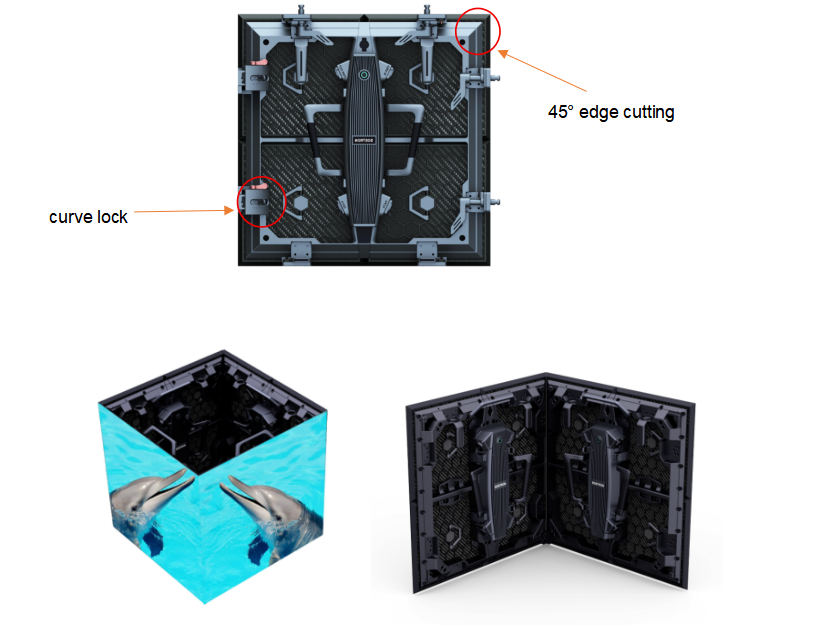
Functions as a main backdrop, interactive floor display (player entrances, dance floors), or right-angle cube screen via quick-swap mounting systems. -
7,680Hz refresh rate
Designed for 4K and 8K broadcasts—stable visuals regardless of camera shutter settings. -
Climbable cabinet system
Engineered for large esports arenas, allowing safe technician climbing and significantly reducing high-altitude maintenance risks.
FAQ: High-Frequency Questions About Esports LED Displays
Q: What pixel pitch is recommended for indoor esports arenas?
A: If the nearest audience is over 3 meters away, P1.9 or P2.5 offers the best cost-performance ratio. For XR virtual production, P1.5 is strongly recommended.
Q: Do your screens support 144Hz or 240Hz gaming inputs?
A: Yes. Sostron’s high-end control chain locks high-frame-rate input and synchronizes output at the display level, ensuring zero dropped frames.
Q: Why is your pricing about 20% higher than competitors?
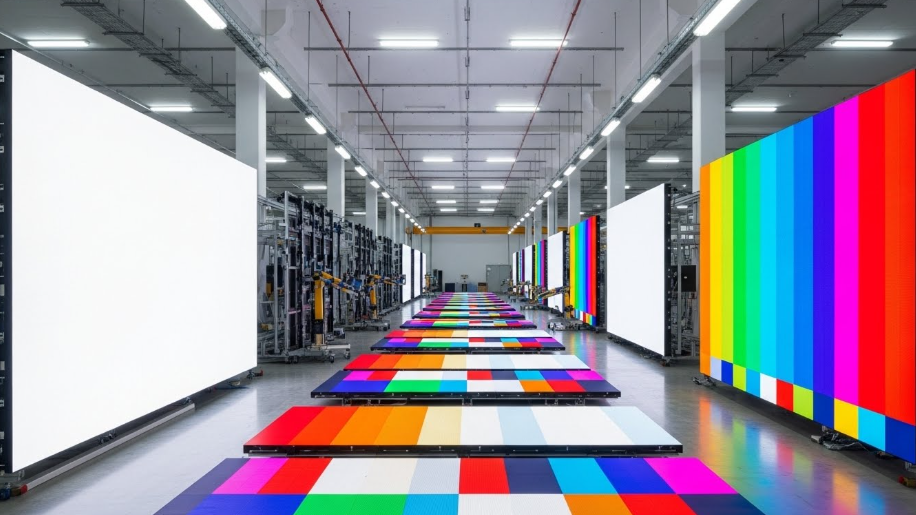
A: That difference reflects supply chain quality and manufacturing assurance. Our 15,000㎡ automated facility runs fully automated lines, and every LED undergoes 72 hours of continuous aging tests. Compared to warehouse-assembled workshops, our dead-pixel rate is over 10× lower.
Conclusion: The Right Screen Is the Foundation of a Successful Tournament
Esports is a battle of visuals. For procurement managers and engineers, avoiding low-price traps and choosing suppliers with national-level high-tech enterprise credentials is the only reliable way to reduce project risk.
Sostron delivers:
-
14 years of industry expertise
-
A 15,000㎡ automated smart manufacturing base for on-time delivery
-
A 4,000㎡ R&D center dedicated to latency and display innovation
Take action now:
Want a customized CAD design and a tailored quotation for your esports venue? Reach out and start building a competition that looks as serious as it plays.
References:
Society of Motion Picture and Television Engineers
Brompton Technology Low Latency Mode