How Much Does It Cost to Hire an LED Screen?
Hiring an LED screen in 2026 typically costs between $500 and $25,000+ per day, depending on screen size, pixel pitch, installation type, and technical support.
Quick Answer: LED Screen Hire Cost at a Glance
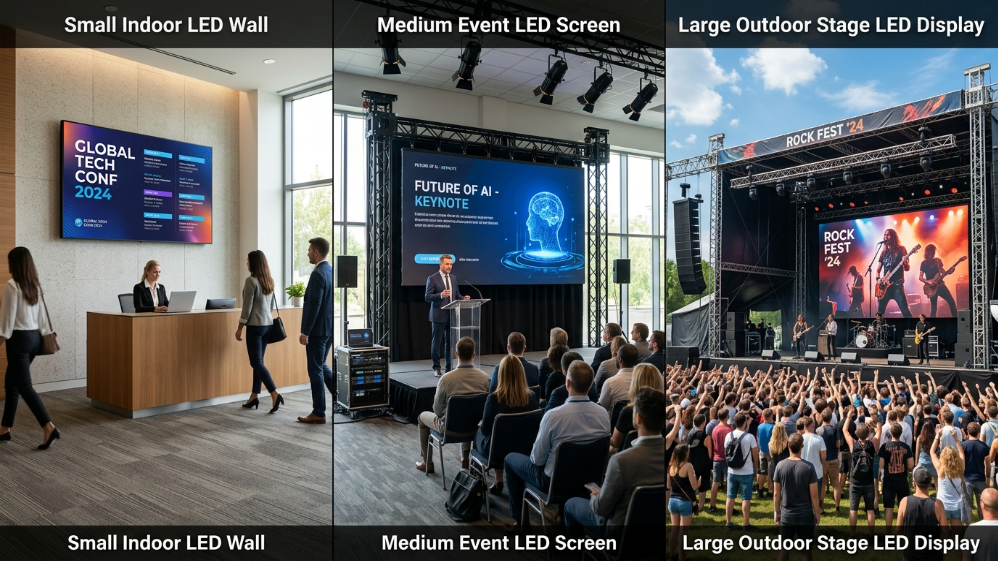
The table below reflects hardware-only day rates. It is important to note that this is not the full invoice amount you will likely receive.
| Screen Category | Typical Size | Pixel Pitch | Day Rate (Hardware Only) | Common Use Case |
| Small Indoor | 3m × 2m | P2.5 – P3.9 | $500 – $1,500 | Corporate meetings, retail activations |
| Mid-Size Event | 6m × 4m | P3.9 – P4.8 | $2,000 – $6,000 | Conferences, brand launches, galas |
| Large Outdoor/Stage | 10m × 6m+ | P6 – P10 | $8,000 – $25,000 | Concerts, festivals, sports events |
| Custom/Bespoke | Varies | P2 – P5 | Quote-based | Immersive installs, trade show builds |
⚠️ Critical Caveat: In the real world, the final invoice is typically 1.5× to 2.5× the hardware rate once labor, logistics, technical staffing, and content services are factored in.
Why LED Screen Hire Quotes Vary So Dramatically
If you receive wildly different quotes for the same brief, it is usually due to two structural factors:
-
Market Fragmentation: Suppliers range from boutique wedding companies to touring production houses. Comparing them is like comparing a taxi to a private jet—they all offer transport, but at different tiers of service and reliability.
-
Event Type Logic: A one-day corporate launch operates on different terms than a four-day music festival or a six-month retail installation.
Event Type Defines the Pricing Framework
-
Day-rate hire: Standard for corporate events and weddings. Predictable, but often excludes labor.
-
Project-rate contracts: Used for festivals and tours. Bundles logistics and crew into a fixed fee for better protection.
-
Long-term placement: Monthly or quarterly agreements for retail or venues. Lower daily rates but requires SLA commitments.
Rental Duration Is Not Linearly Priced
The longer you hire, the lower the daily cost becomes:
-
Days 1–2: Full day-rate applies.
-
Days 3–5: Expect a 15%–30% reduction on hardware.
-
Week-long: Often equivalent to 3.5–4 day rates.
The 4 Core Factors Driving Your Costs
Pixel Pitch: The Most Overlooked Cost Lever
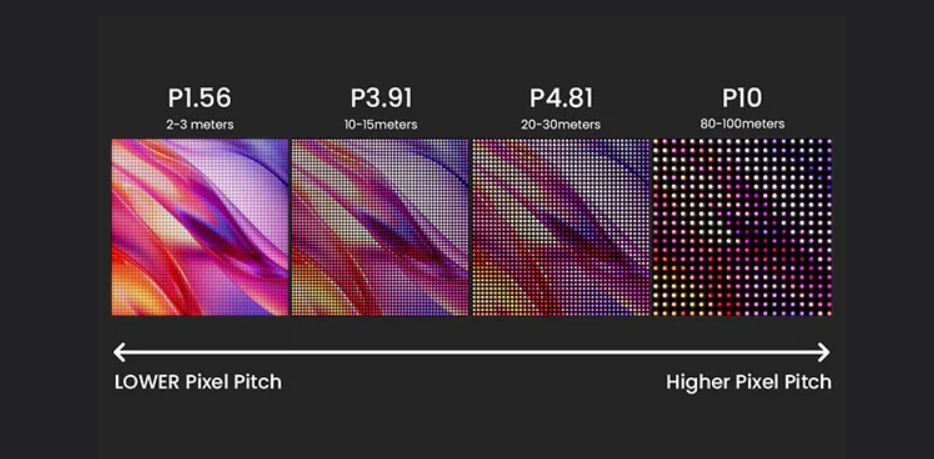
Pixel pitch (“P”) is the distance (mm) between LED clusters. It determines the minimum viewing distance.
-
Formula: $Min. Distance (m) \approx Pixel Pitch \times 1.5 \text{ to } 2$
| Pitch Type | Daily Rate (per m²) | Best For |
| P2.5 Indoor | $80 – $150 | Close-up viewing (high res) |
| P3.9 Indoor | $45 – $90 | Standard conferences |
| P6 Outdoor | $55 – $100 | Large outdoor crowds |
| P10 Outdoor | $30 – $60 | Long-distance viewing |
Total Screen Area and Aspect Ratio
Costs jump at specific structural thresholds:
-
Under 15m²: Standard frames and small crews.
-
15m² – 30m²: Requires on-site technicians and larger transport.
-
Over 30m²: Often requires structural engineer sign-off, specialized rigging, and high-power distribution.
Indoor vs. Outdoor: IP Rating Changes Everything
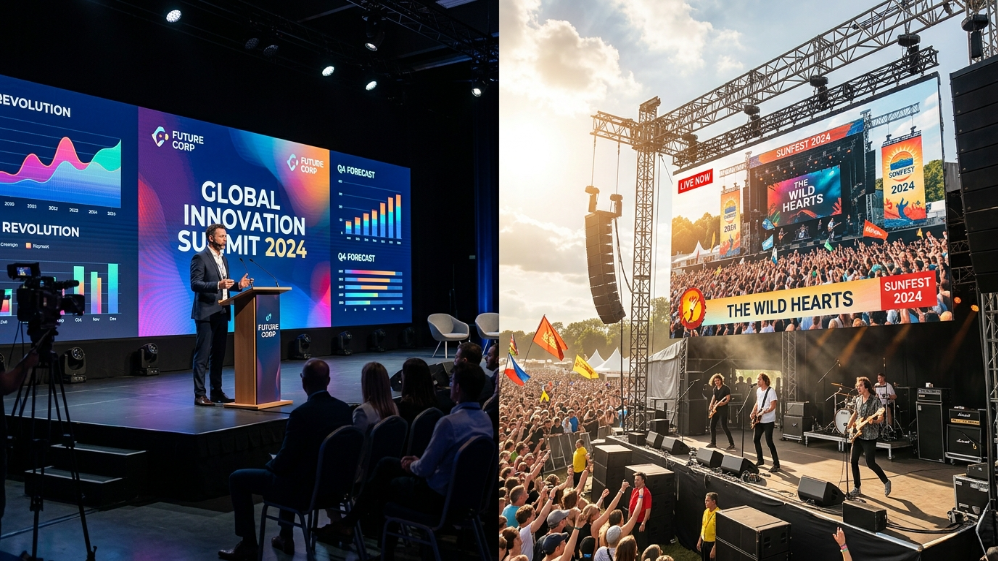
Outdoor screens require higher brightness (nits) and weather protection, significantly increasing the price.
| IP Rating | Protection Level | Typical Application | Cost Premium |
| IP43 | Splashproof | Indoor events | Baseline (0%) |
| IP54 | Dust-resistant | Semi-outdoor/Covered | +15% – 25% |
| IP65 | Water jets | Outdoor festivals | +30% – 50% |
| IP67 | Submersion rated | Wet environments | +50% – 80% |
Installation Method: The Silent Budget Variable
-
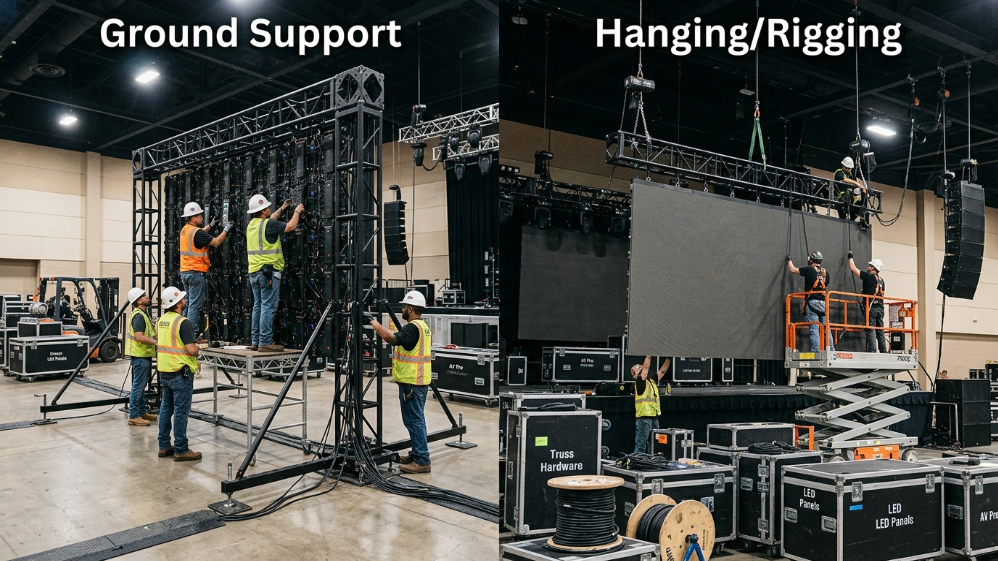
Ground Support: Lowest cost; modular frames supported from the floor.
-
Rigging/Flown: Hanging from the ceiling. Adds $500 – $2,500/day for certified riggers and load reports.
-
Bespoke/Curved: Requires specialized hardware. Expect a 30% – 80% premium.
The Costs Your Quote Sheet Is Not Showing You
Technical Staffing & Services
-
Junior Technician: $250 – $450 per day.
-
Senior LED Engineer: $500 – $900 per day.
-
Content Adaptation: $75 – $150 per hour to ensure your video matches the screen’s non-standard resolution.
Logistics & Infrastructure
-
Transport: Mileage fees (approx. $1.50 – $4.00 per km) often apply outside a specific radius.
-
Power: Large outdoor arrays often require 3-phase power or generators ($300 – $1,200/day).
-
Media Servers: Necessary for complex playback (e.g., Resolume, Disguise) at $200 – $600/day.
Real-World Scenario: Corporate Conference Budget
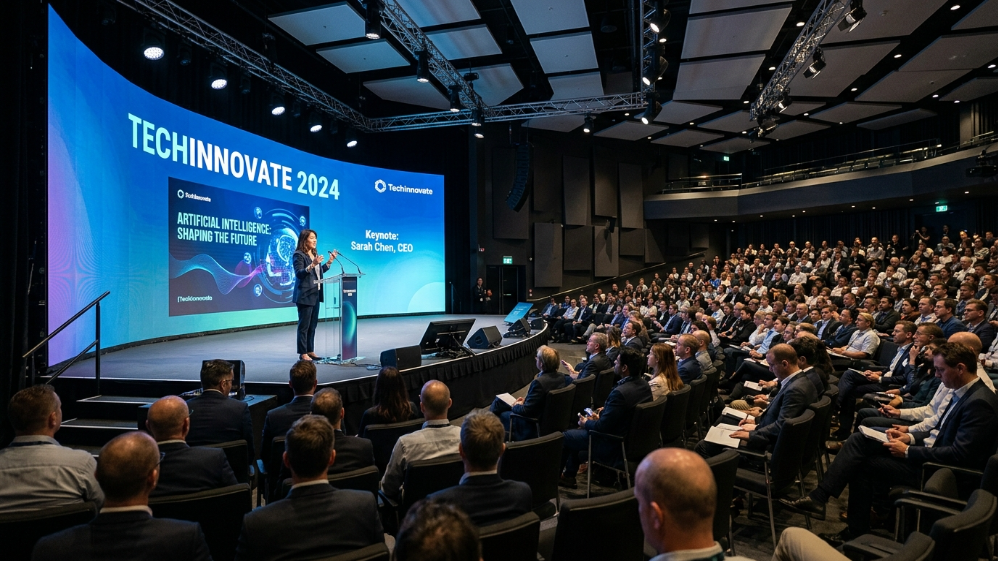
1-Day Event, 300 Attendees, 8m x 4.5m Main Screen
| Cost Line Item | Specification | Estimate |
| Main LED Wall | 8m × 4.5m, P3.9 Indoor | $4,200 |
| Confidence Screen | 2.4m × 1.35m, P2.5 | $650 |
| Senior AV Tech | 1 Day (including setup) | $750 |
| Logistics/Content | Transport & Adaptation | $570 |
| Total (Excl. Deposit) | $6,170 |
Hire vs. Buy: When Does Renting Stop Making Sense?
The hardware “break-even” point is usually 9–12 events. However, when factoring in the Total Cost of Ownership (TCO)—including climate-controlled storage, maintenance (3–5% of value annually), and technical labor—the real break-even is closer to 18–24 events.
The Rule of Thumb: If you run fewer than 15 events per year, hiring is more capital-efficient.
FAQ: Frequently Asked Questions
Does LED screen hire include content creation?
No. It covers hardware and setup. Budget an extra $300 – $1,500 for professional content formatting.
What happens if a panel fails during the event?
Reputable suppliers provide 10%–15% on-site spares. A technician can typically swap a modular cabinet in 10–15 minutes.
Can I hire for just a few hours?
Most suppliers have a one-day minimum rate. You are paying for the labor of setup and pack-down regardless of “on-screen” time.
References:
AVIXA Standard for Visual Display Image Quality
Research on Resolution and Human Perception of Digital Displays