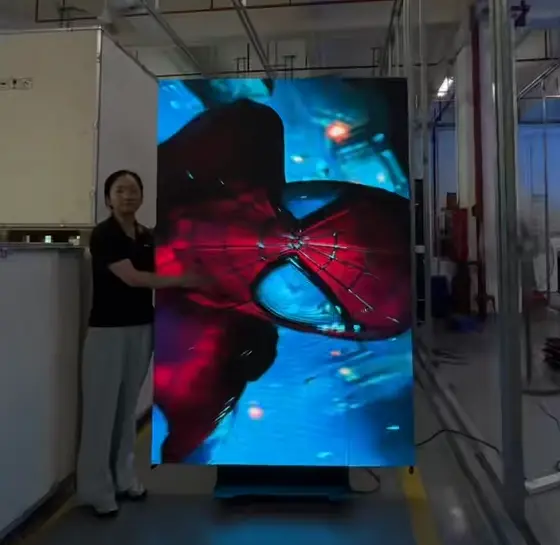
In today’s retail and commercial environments, the LED commercial poster screen has moved from a novelty to a standard fixture. Retail stores, restaurants, hotels, exhibition venues, and event organizers are replacing static printed posters with slim, freestanding LED poster screens because they deliver higher visual impact, remote content control, and a lower long-term cost per impression than printed alternatives. This guide covers everything a B2B buyer needs before requesting a quote: technical specifications, poster formats, control systems, sizing logic, real price ranges, and a purchasing checklist for decision-makers.
1. What Is an LED Commercial Poster Screen?
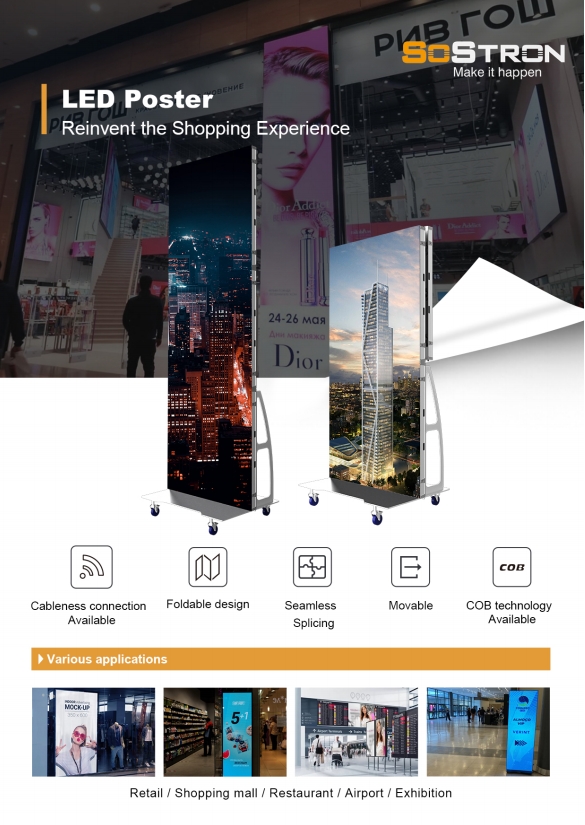
An LED commercial poster screen is a slim, vertical (portrait-orientation) digital display built on LED chip technology rather than LCD backlighting. Unlike traditional LCD digital signage, LED poster screens use direct-emitting LED modules, which means no backlight bleed, wider viewing angles, and significantly higher achievable brightness in a thinner cabinet — typically under 100mm in depth and under 35kg in total weight for a standard unit. This makes it a disruptor of traditional printed posters: content can be updated remotely in seconds, brightness stays consistent under changing lighting, and a single hardware investment supports unlimited campaign changes.
2. Core Technical Specifications You Must Check
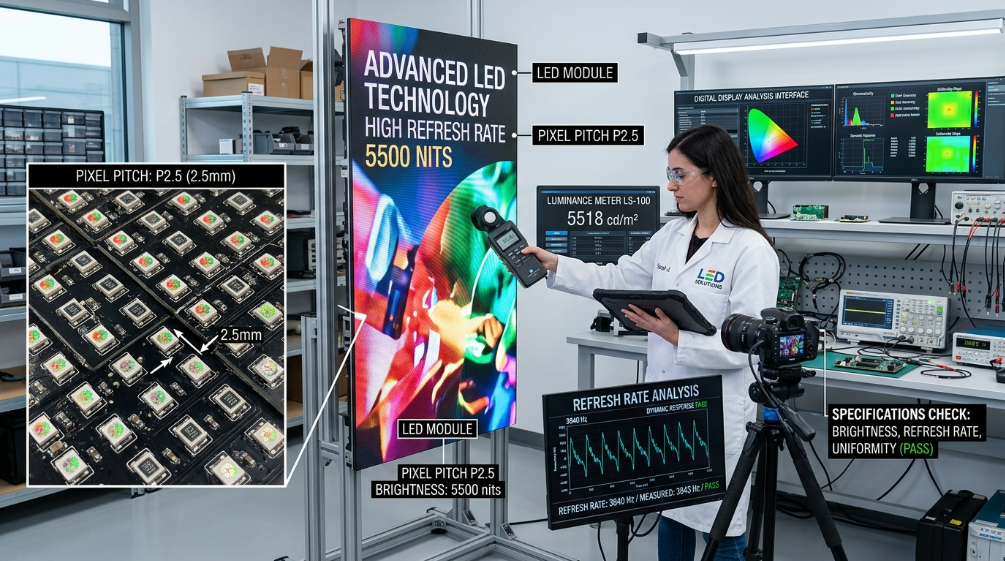
This is the section most price-and-spec comparison guides skip — and it’s exactly where B2B buyers get burned by vague quotes. Before comparing prices between suppliers, make sure every quote specifies the following five parameters on a like-for-like basis.
2.1 Pixel Pitch (P-value)
Pixel pitch is the distance in millimeters between the centers of two adjacent LED pixels, and it directly determines resolution and minimum viewing distance.
| Pixel Pitch | Typical Use Case | Recommended Minimum Viewing Distance |
|---|---|---|
| P1.25 – P1.5 | Close-range retail counters, boutique storefronts | 1.2 – 1.5 m |
| P1.86 – P2 | Standard retail, restaurant, lobby signage | 1.8 – 2.5 m |
| P2.5 | General commercial signage, exhibition booths | 2.5 – 3 m |
| P3 – P4 | Larger poster walls, spliced multi-unit walls, semi-outdoor | 3 – 5 m |
Finer pixel pitch (lower P number) means sharper images at close range but a higher unit cost — this single spec is usually the single biggest price swing factor after size.
2.2 Brightness (Nits)
- Indoor LED poster screens typically run 800–2,000 nits, which is sufficient for controlled indoor lighting without causing glare or eye fatigue at close viewing distances.
- Outdoor or semi-outdoor LED poster screens require 3,000–10,000 nits to remain legible against direct sunlight.
Always confirm whether the quoted nits figure is peak brightness or sustained operating brightness — some suppliers quote peak specs that the panel cannot maintain continuously without accelerated LED degradation.
2.3 IP Rating (Weatherproofing)
Indoor units typically carry no IP rating or a basic dust-resistance rating, which is fine for retail, hospitality, and exhibition floors. If the screen will sit near an entrance, under a canopy, or fully outdoors, insist on an IP65-rated cabinet with sealed connectors and a conformal-coated PCB — this protects against both dust ingress and driving rain, and typically adds 30–50% to unit cost compared to an equivalent indoor-only model.
2.4 Refresh Rate
Refresh rate (measured in Hz) determines whether the screen will flicker on camera. For static retail signage, 1920Hz is generally adequate. If the poster screen will appear in livestreams, product videos, or any camera-facing application (increasingly common for retail social content), specify a refresh rate of 3840Hz or higher to avoid banding artifacts on video.
2.5 LED Packaging Technology: COB vs. GOB
Two packaging approaches dominate the current poster-screen market:
- COB (Chip on Board): LED chips are mounted directly onto the PCB and encapsulated as a unit, offering excellent contrast, a wider viewing angle, and strong impact resistance — increasingly the premium choice for fine-pitch poster screens.
- GOB (Glue on Board): A protective epoxy layer is applied over conventional SMD LEDs after mounting. This is now the mainstream standard for commercial poster screens specifically because it improves waterproofing, protects against accidental knocks during frequent transport and reinstallation, and extends panel lifespan — a meaningful advantage for retailers who relocate displays between store locations or seasonal campaigns.
3. Poster Format Types: Which One Fits Your Application?
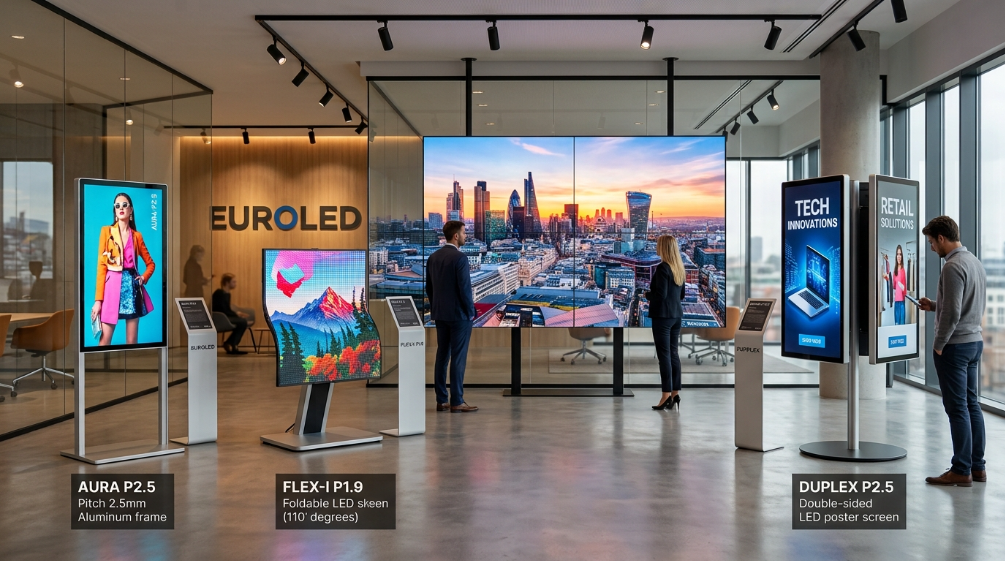
Not all LED poster screens are built the same way. Current commercial product lines are generally segmented into:
- Standard (non-splicing) poster screens — a single fixed-size unit on a floor stand, the most common retail configuration.
- Splicing-ready poster screens — designed to be seamlessly combined side by side to form a larger video wall (e.g., six units spliced into a 16:9 display).
- Foldable poster screens — cabinets that fold flat for transport and deploy in minutes, ideal for brands running rotating in-store campaigns or trade show circuits.
- Double-sided poster screens — two display faces on a single frame, used for center-aisle or island displays that need two-way visibility.
- Battery-powered poster screens — untethered units for pop-up retail, events, or locations without convenient power access.
Matching the right format to your deployment pattern (fixed installation vs. frequent relocation) affects both the upfront price and the cabinet’s structural durability requirements.
4. Application Fields
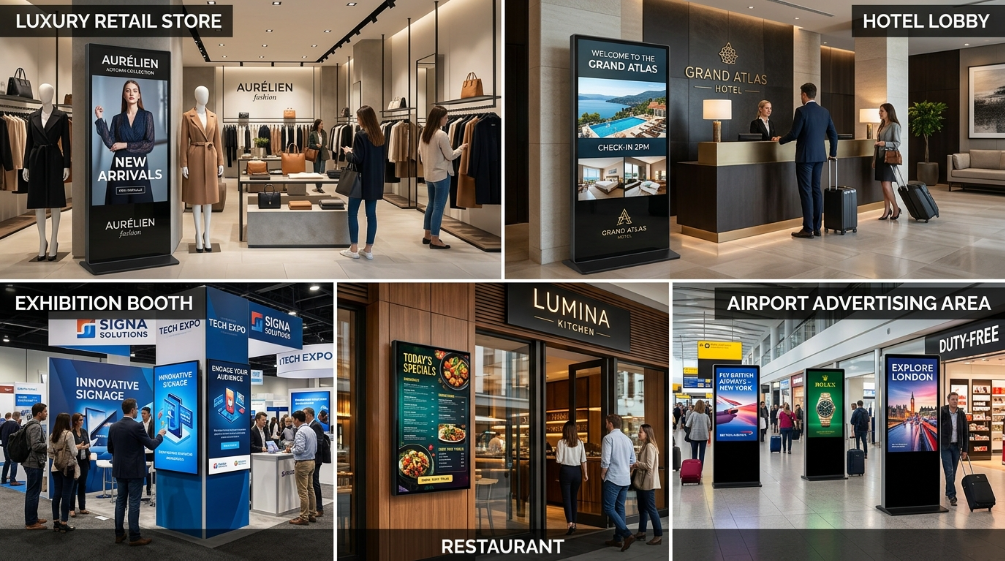
LED commercial poster screens are widely used across retail, catering, hospitality, entertainment, and public services. Beyond simple brand visibility, they serve concrete commercial functions:
- Retail stores: promoting new arrivals and seasonal campaigns at eye level
- Restaurants and cafés: dynamic menu boards and promotional content
- Hotels: guest communication, event promotion, and wayfinding
- Exhibitions and trade shows: booth branding and product showcase
- Transportation hubs and airports: wayfinding and advertising
- Stadiums and entertainment venues: sponsor content and event information
5. Design and Content Innovation
The appeal of an LED poster screen depends heavily on content execution, not just hardware. Unique motion graphics, interactive triggers, and scheduled content rotation all improve dwell time and recall. Most current-generation poster screens support both synchronous mode (content pushed live via WiFi/LAN/USB, ideal for networked multi-store deployments) and asynchronous mode (content stored locally on the built-in media player, ideal for single-unit standalone deployments with no reliable network).
6. What Size LED Poster Screen Do You Need?
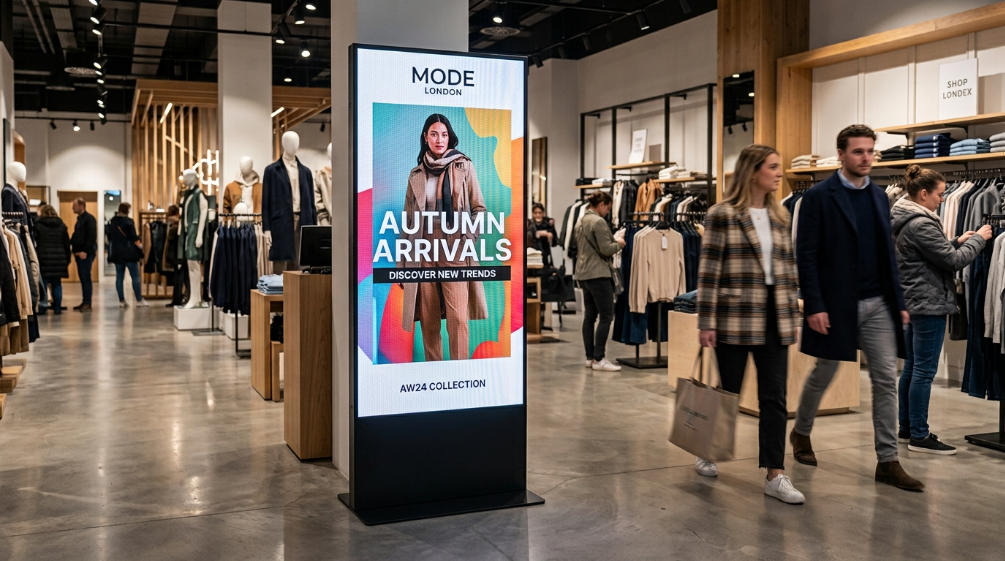
Sizing is best approached from standard industry dimensions rather than arbitrary square-meterage estimates. The most common commercial poster form factor is 640mm × 1920mm (portrait), with larger single-unit options available up to 1280mm × 1920mm, and modular units that splice into custom widths.
- Indoor retail/counter use: single unit, 640×1920mm, P1.86–P2.5
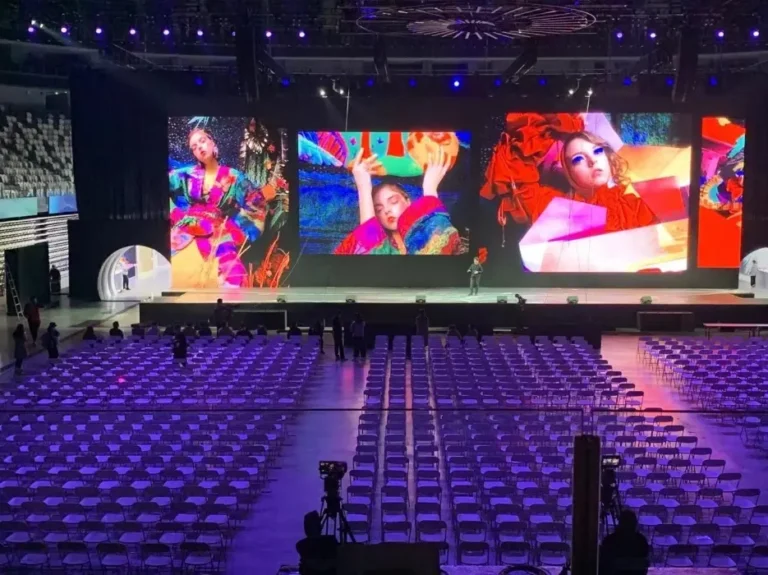
- Lobby or exhibition centerpiece: multiple spliced units for a wider, higher-impact wall (e.g., 10 spliced units can achieve full 1080p resolution)
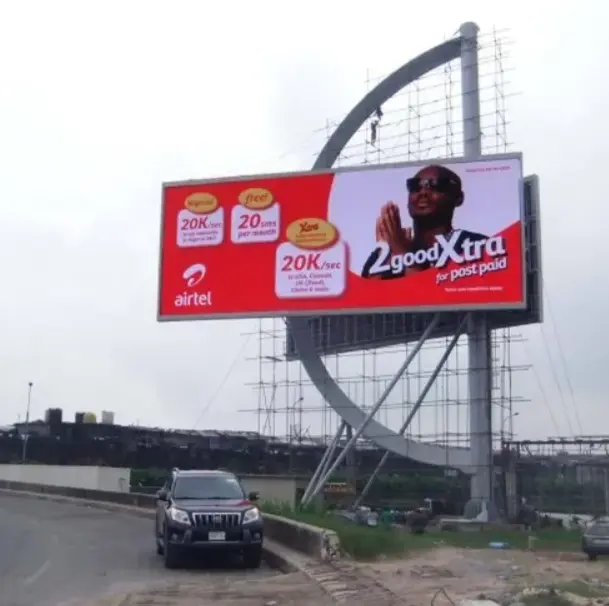
- Outdoor billboard or storefront: larger, IP65-rated units at P3–P4, prioritizing brightness over pixel density since viewing distance is greater
7. Case Analysis
A well-known retail brand deployed LED commercial poster screens at storefront entrances to display new product launches, resulting in a measurable increase in foot traffic and in-store conversions compared to their previous printed poster rotation. Exhibition organizers similarly use spliced poster walls at booth entrances, since the ability to update content between sessions without reprinting materials significantly reduces per-event marketing costs.
8. LED Commercial Poster Screen Price Guide (2026)
Pricing for LED commercial poster screens varies considerably based on the specs covered above. Below is a realistic 2026 market breakdown for a single standard unit (640×1920mm class):
| Tier | Typical Configuration | Price Range (per unit, FOB/EXW) |
|---|---|---|
| Entry-level indoor | P2.5–P4, 800–1,200 nits, non-splicing | $800 – $2,500 |
| Mid-range indoor | P1.86–P2.5, GOB packaging, splicing-ready, WiFi/CMS control | $2,500 – $5,000 |
| Premium indoor / foldable | P1.25–P1.86, COB or premium GOB, foldable, double-sided option | $5,000 – $8,000 |
| Outdoor / IP65-rated | P3–P4, 3,000–10,000 nits, weatherproof enclosure | $6,000 – $15,000+ |
Beyond the unit price, five factors move the final quoted price:
- Size and resolution — larger panels and finer pixel pitch both raise cost, with pixel pitch typically having the greater impact per square meter.
- Technology and packaging quality — GOB vs. COB, LED chip brand (top-tier chips from established manufacturers cost more but reduce dead-pixel rates and extend the 50,000+ hour rated lifespan).
- Control and connectivity features — remote scheduling, cloud-based content management systems (CMS), and multi-unit cluster management add to system cost but reduce ongoing labor cost for multi-location brands.
- Customization — custom cabinet colors, printed brand logos, non-standard sizes, or special installation hardware increase both cost and lead time.
- Brand and supplier reputation — established manufacturers with in-house R&D and after-sales support typically price 10–25% above OEM-only suppliers, but this premium is usually offset by lower failure rates and better warranty coverage.
Note: prices above reflect factory/EXW pricing common in B2B procurement; final landed cost depends on shipping method (ocean vs. air), import duties, and installation.
9. Total Cost of Ownership: LED Poster vs. Printed Poster
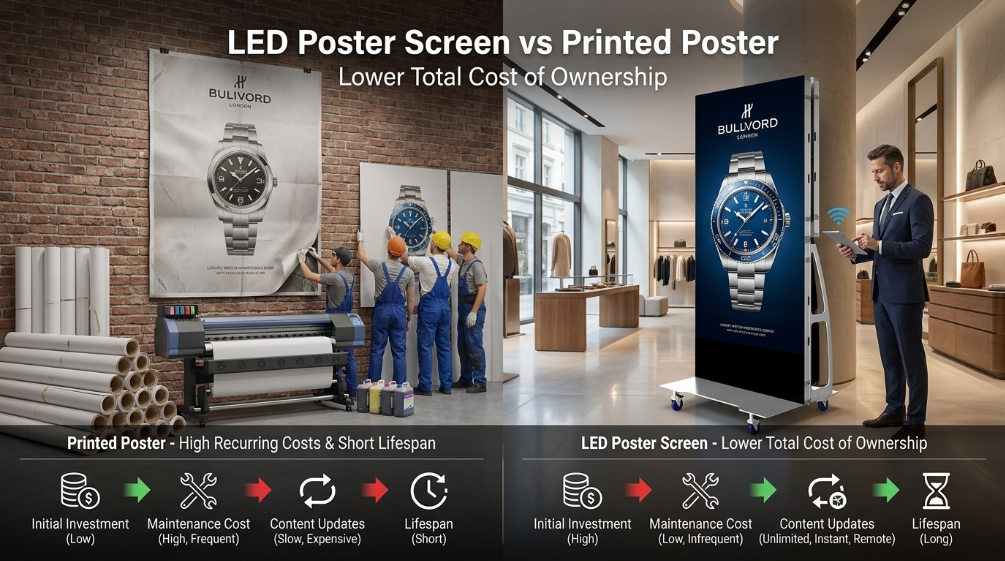
Procurement teams evaluating LED poster screens against traditional printed posters should weigh total cost of ownership, not just upfront price:
- Content changes: A printed poster costs money every time it’s replaced (design, print, shipping, labor). An LED poster screen’s content update cost is effectively zero after the initial hardware purchase.
- Lifespan: A quality LED poster screen is rated for 50,000+ operating hours (roughly 15+ years at typical 8-10 hr/day retail use), compared to a printed poster’s typical 2–8 week campaign life.
- Energy consumption: A standard indoor poster panel draws roughly 150–300W depending on size and average picture content — a modest, predictable operating cost.
- Maintenance: Routine care involves periodic surface cleaning and checking power/data connections; GOB or COB packaging significantly reduces failure rates from dust and moisture compared to unsealed SMD panels.
10. Our LED Commercial Poster Screen – sPoster
Lightweight and portable Compared with traditional LED display screens, sPoster is light in weight with an ultra-thin frame, greatly improving portability. The wheeled bracket design lets a single person move and redeploy it quickly — a real advantage for merchants who frequently change advertising locations.
Intelligent control and multi-unit cluster management sPoster supports WiFi, USB, HDMI, and LAN connectivity, and integrates with Novastar’s synchronous and asynchronous control systems — an industry-standard control platform widely trusted for stability in commercial digital signage deployments. Users can manage content from a computer or smartphone. The built-in dual-mode media player handles real-time content scaling without an external video processor, and 8GB of onboard memory plus USB expansion removes storage constraints for typical retail content libraries.
Plug-and-play, zero-configuration setup sPoster is engineered for end users with no AV background: send the program, plug in the power supply, and the poster automatically plays video, image, and text content — no repeated software configuration required.
GOB packaging for durability sPoster uses GOB (Glue on Board) packaging on its LED modules, protecting against moisture and physical impact during frequent transport and reinstallation — directly addressing the durability concerns of retailers who relocate displays between campaigns or store locations.
Seamless multi-screen splicing LED poster screens can be seamlessly spliced into larger walls. For example, six sPoster units can form a 16:9 golden-ratio display, and ten P3 units can achieve full 1080p resolution as a combined wall.
Diversified installation methods sPoster supports wall-mounted, ceiling-mounted, suspended, and floor-standing installation, along with tilted mounting and unit-cutting for custom, non-rectangular display shapes.
Adaptive brightness and interactivity sPoster connects to external ambient light sensors for automatic brightness adjustment, and supports speaker integration for combined audio-visual advertising.
Customization service SoStron offers custom cabinet branding (printed logos), custom cabinet colors, and custom sizing to help brands maintain a consistent, on-brand in-store presence.
11. Actionable Buying Advice for Procurement Decision-Makers
Before issuing an RFQ, use this checklist to make supplier quotes genuinely comparable:
- Fix your pixel pitch to your real viewing distance first — don’t over-buy resolution you won’t perceive from typical customer standing distance; this is the single largest avoidable cost.
- Specify indoor vs. outdoor explicitly and request the IP rating and sustained (not peak) nits figure in writing.
- Ask which control system the panel uses (e.g., Novastar) and confirm CMS compatibility with your existing digital signage software if you’re deploying across multiple locations.
- Request the LED packaging type (COB or GOB) and dead-pixel warranty terms — this predicts real-world durability far better than headline brightness specs.
- Clarify EXW vs. landed price — freight, duties, and on-site installation can add 15–30% to the quoted factory price.
- Match the format to your deployment pattern — foldable/portable for rotating campaigns, fixed splicing-ready units for permanent installations.
- Confirm rated lifespan and warranty period in the contract, not just marketing copy — this is your best proxy for long-term total cost of ownership.
12. Summary
LED commercial poster screens have become a powerful, cost-efficient tool for modern commercial communication — but the difference between a good investment and a disappointing one comes down to matching pixel pitch, brightness, IP rating, packaging technology, and control system to your actual deployment environment, not just comparing headline prices. When evaluating suppliers, treat the technical specification sheet with the same scrutiny as the price quote, and use total cost of ownership — not just unit price — as your final decision metric.
References:
Solid-State Lighting Research and Technology Development
Display Technology Resources and Standards