What This Guide Answers Upfront
If you’re planning to install outdoor digital signage in Melbourne in 2026, two questions dominate every early conversation: how much will it cost and what approvals do I need? Most guides bury both answers in generic advice. This one leads with them.
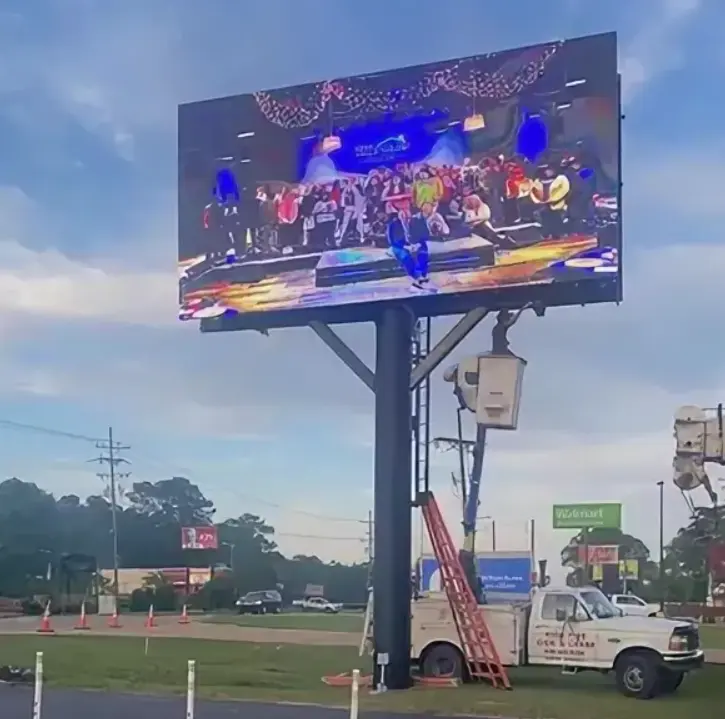
Cost: A single outdoor digital display in Melbourne — hardware, installation, and first-year CMS — runs AUD 6,000–25,000 for a commercial-grade unit. Large LED billboards start at AUD 50,000 and scale past AUD 200,000 for landmark-scale installations. The hardware price is only part of the story; energy, maintenance, and content management add 30–50% to your five-year spend.
Approvals: In Victoria, any externally illuminated sign requires a planning permit. Signs over 8 m² on commercial sites require a planning permit under Clause 52.05 of the Victoria Planning Provisions. Heritage zones trigger additional requirements via Heritage Victoria. Budget 3–6 months for the permit process — starting the approval process before finalising your hardware order is not optional, it’s essential.
Step 1: Define Your Use Case Before Choosing Hardware
The single most common purchasing mistake is selecting a screen size or technology before defining the operational requirements. These four questions should drive every hardware decision:
What is the primary purpose?
Advertising, wayfinding, emergency notifications, and brand awareness each have different content update frequencies, brightness requirements, and viewing distance needs.
What is the viewing distance?
A screen visible from 5 metres needs a pixel pitch below P4. A roadside billboard viewed from 30+ metres can use P8–P10 without visible pixelation. Oversizing pixel density for the viewing distance wastes budget.
How often will content change?
Static or weekly-updated content suits a basic CMS. Real-time data feeds, programmatic ad serving, or emergency override capability require a more capable (and more expensive) software stack.
Who manages the content?
In-house teams need an intuitive CMS with minimal training overhead. Multi-site networks managed by an agency need role-based access, scheduling automation, and remote monitoring.
Step 2: Understand Melbourne’s Permit Requirements
Victoria’s planning framework for outdoor signage is more structured than most buyers expect. Getting this wrong delays your project by months.
Planning permit triggers under Clause 52.05 (Victoria Planning Provisions):
| Trigger | Threshold |
|---|---|
| Any illuminated external sign | Permit required regardless of size |
| Commercial site sign | Permit required if > 8 m² |
| Residential area sign | Permit required if > 0.7 m² |
| Replacing existing sign | Permit required if type, size, or illumination changes |
Building permit triggers:
- Stand-alone sign structures
- Signs more than 1 metre high within 3 metres of a street boundary
- Signs more than 8 metres above ground level
- Display area exceeding 8 m²
Heritage zones: Signs on listed heritage buildings require an Exemption Permit from Heritage Victoria. This is a separate process from the standard planning permit and can add significant time.
What your permit application must include:
- Exact site plan with sign placement and boundary distances
- Dimensions (height, width, depth, ground clearance)
- Method of structural support
- For illuminated signs: proposed operating hours and glare-reduction measures
- Impact assessment on road safety and surrounding streetscape
Timeframe: 3–6 months is typical. Most planning permits, once granted, are valid for up to 15 years.
Step 3: Choose the Right Display Technology
Melbourne’s outdoor signage market in 2026 is dominated by two technologies: high-brightness LCD and direct-view LED. Each has a distinct cost and performance profile.
| Specification | Outdoor LCD | Direct-View LED |
|---|---|---|
| Typical brightness | 2,500–5,000 nits | 5,000–10,000 nits |
| Pixel pitch range | Fixed (screen size dependent) | P4–P10 for outdoor |
| Lifespan | 30,000–60,000 hours | 70,000–100,000 hours |
| Energy consumption | Higher | ~40% lower than LCD |
| Modularity | Panel replacement only | Cabinet-level hot-swap |
| Best for | Single-screen retail/wayfinding | Large-format, billboard, multi-panel |
| Entry price (AUD) | AUD 3,500–10,000/unit | AUD 15,000–200,000+ |
LCD is the right choice for single-screen retail, transport hubs, and wayfinding applications where the viewing distance is short and the installation is relatively compact. Commercial-grade outdoor LCD units with IP65 enclosures and 3,000+ nit brightness are available from AUD 4,000–10,000 per display.
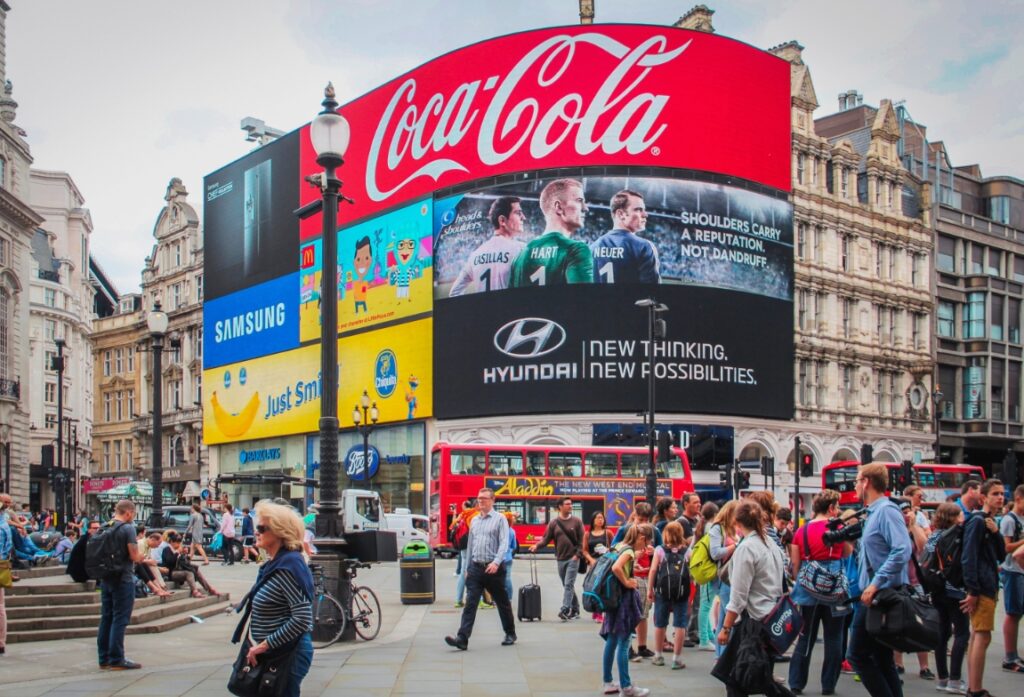
Direct-view LED is the right choice for large-format advertising, roadside billboards, building facades, and any application requiring seamless multi-panel configurations. The higher upfront cost is offset by lower energy consumption and longer service life.
A note on “LED” labelling: Many products marketed as “outdoor LED signage” are actually LED-backlit LCD panels — not direct-view LED. The distinction matters for brightness, modularity, and longevity. Always confirm whether a quoted product is direct-view LED or LCD with LED backlighting.
Step 4: Price Ranges and Budget Planning for 2026
Based on current Australian market data, here are realistic price ranges for outdoor digital signage in Melbourne:
Hardware Costs
| Category | Hardware Price (AUD) | Typical Application |
|---|---|---|
| Small outdoor LCD (32″–55″) | AUD 3,500–8,000/unit | Retail shopfront, café, small venue |
| Medium outdoor LCD (65″–86″) | AUD 8,000–18,000/unit | Transport hub, wayfinding kiosk |
| Outdoor LED display (small, < 10 m²) | AUD 15,000–40,000 | Retail facade, event screen |
| Medium LED billboard (10–30 m²) | AUD 40,000–100,000 | Roadside advertising, commercial precinct |
| Large LED billboard (30 m²+) | AUD 100,000–200,000+ | Landmark advertising, municipal projects |
Installation Costs
- Standard single-screen wall mount: AUD 800–2,500
- Complex outdoor installation (enclosure, cabling, commissioning): AUD 3,000–10,000
- Structural engineering and certification (for large freestanding signs): AUD 2,000–8,000 additional
Ongoing Annual Costs
| Cost Category | Annual Estimate (AUD) |
|---|---|
| CMS / software licence | AUD 300–1,500/screen/year |
| Electricity (outdoor LED, per m²) | AUD 400–900/year |
| Preventive maintenance contract | AUD 500–2,000/screen/year |
| Content production (basic refresh) | AUD 1,000–5,000/year |
Five-Year Total Cost of Ownership (Single Medium Outdoor LED Display)
| Cost Item | Estimated Total (AUD) |
|---|---|
| Hardware | 50,000 |
| Installation | 6,000 |
| CMS (5 years) | 4,500 |
| Electricity (5 years) | 4,000 |
| Maintenance (5 years) | 7,500 |
| Total 5-Year TCO | ~AUD 72,000 |
This TCO model illustrates why energy efficiency and service life matter as much as the purchase price. A cheaper panel with higher energy draw and shorter lifespan can cost more over five years than a premium unit.
Step 5: Key Factors That Move the Price
Several variables can shift your project cost significantly in either direction:
Screen size and resolution: Larger screens and finer pixel pitches cost more. For outdoor LED, moving from P8 to P4 roughly doubles the panel cost per square metre.
Weather resistance rating: IP65 is the minimum for Melbourne’s outdoor conditions. IP66 or IP67 is recommended for installations exposed to direct rain or high-pressure cleaning. Higher IP ratings add cost but are non-negotiable for longevity.
Interactivity: Touchscreen capability, motion sensors, or audience analytics integration adds AUD 3,000–15,000 to a standard installation depending on the technology.
CMS capability: Basic scheduling platforms start at AUD 20/screen/month. Programmatic DOOH integration, real-time data feeds, and multi-site management push this to AUD 80–120/screen/month.
Supplier location and service model: China-direct procurement can reduce hardware costs by 20–40%, but warranty resolution, spare parts logistics, and on-site service response times are significantly slower than working with a local Australian integrator. For mission-critical installations, the service model is as important as the hardware price.
Bulk purchasing: Multi-screen networks typically attract 10–20% hardware discounts. If you’re planning a network of 5+ screens, negotiate pricing as a package rather than per unit.
Melbourne-Specific Considerations
Climate: Melbourne’s weather is genuinely variable — UV intensity, temperature swings from 10°C to 40°C+, and periodic heavy rain. Specify operating temperature range (typically -20°C to +60°C for quality outdoor units) and confirm UV-resistant cabinet coatings. Thermal management (active cooling or heat dissipation design) is critical for screens running 12–18 hours daily.
Power infrastructure: Large LED installations draw significant power. Confirm available power supply at the installation site early — upgrading electrical infrastructure can add AUD 5,000–20,000 to a project.
Road safety compliance: The permit application requires an assessment of whether the sign could distract drivers or obscure sightlines. Animated content near intersections is subject to additional scrutiny. Some councils restrict animation frame rates or require static dwell periods for signs visible from roads.
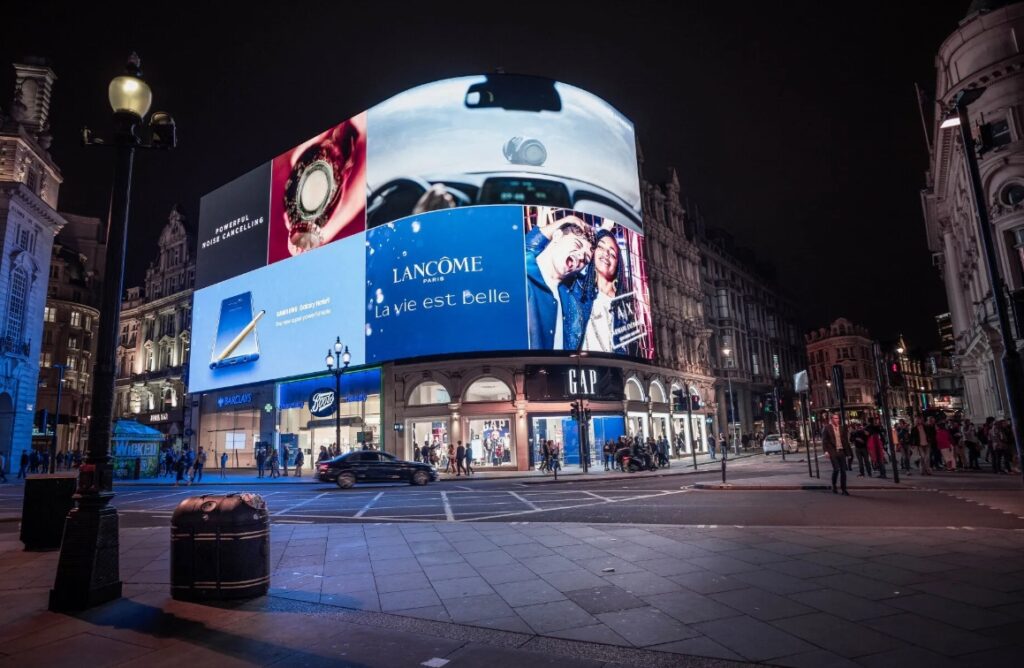
Programmatic DOOH: Melbourne is one of Australia’s most developed programmatic DOOH markets. Platforms including Moving Walls and Hivestack enable audience-targeted, real-time ad serving on connected outdoor screens. If your installation will carry third-party advertising, programmatic connectivity is worth building in from the start.
Choosing the Right Supplier
The supplier decision is as consequential as the hardware decision. Evaluate on these criteria:
- Local service capability: Can they dispatch a technician to Melbourne within 24–48 hours? What is their spare parts inventory in Australia?
- Warranty terms: Industry standard is 2–3 years on hardware. Confirm whether warranty covers parts only or parts and labour.
- CMS ecosystem: Is the content management platform proprietary or open? Proprietary systems create vendor lock-in; open platforms (like those built on standard protocols) give you flexibility to switch.
- References: Ask for Melbourne or Australian case studies. A supplier with no local track record carries higher delivery risk.
- Compliance knowledge: Can they advise on Victorian planning permit requirements, or will you need to manage that independently?
Conclusion
Outdoor digital signage in Melbourne is a significant capital investment — but one with measurable returns in advertising revenue, brand visibility, and operational efficiency when planned correctly. The two variables that most often derail projects are underestimating the permit timeline and underestimating the total cost of ownership beyond the hardware purchase price.
Start with your use case, get your permit process moving early, specify hardware to Melbourne’s climate requirements, and build a five-year TCO model before committing to a supplier. Done right, a well-specified outdoor LED installation in Melbourne will deliver a decade of reliable performance.