If your installation site has unobstructed rear access within 0.8 meters, paying the 15–25% front-access premium is a capital misallocation—unless your maintenance crew changes content or performs inspections more than twice per week.
The LED billboard cabinet industry has a structural sales bias problem. Front-access (FA) cabinets carry higher margins for manufacturers and are easier to pitch as a universal upgrade. The result: procurement teams routinely buy FA cabinets for wall-mount or rooftop installations where rear access is perfectly viable, then discover the per-module swap cost runs 30–40% higher than equivalent rear-access (RA) units due to magnetic retention mechanisms, added aluminum framing, and tighter thermal tolerances.
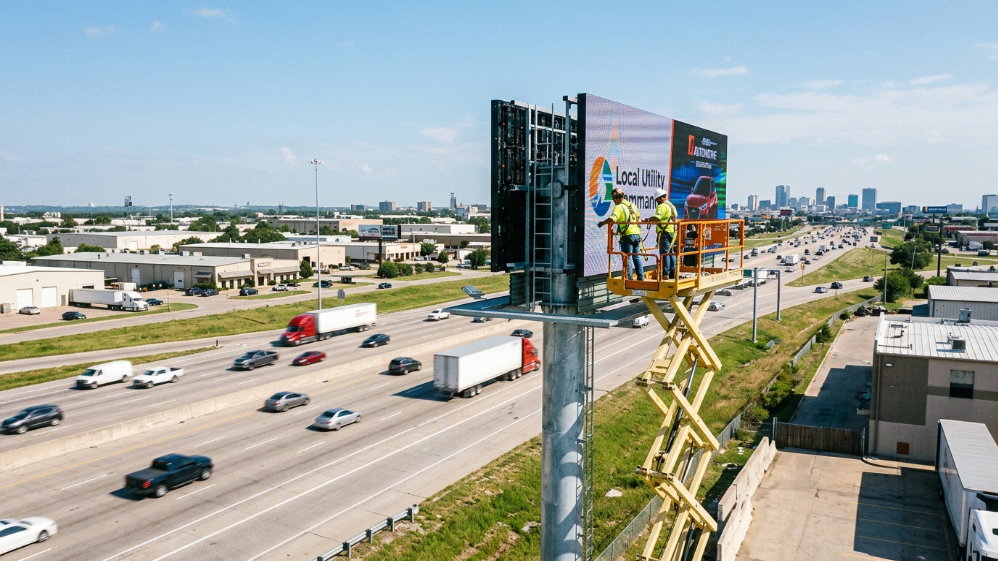
The most quantifiable mistake documented in the field: a regional out-of-home operator installed FA cabinets across 14 highway billboard faces—each 48㎡—citing “future maintenance flexibility.” Rear access was available on 11 of the 14 sites. Over 36 months, the FA premium ($2,400/cabinet × 14 = $33,600) was never offset by maintenance savings; instead, the more complex front-panel gasket design led to moisture ingress on 6 units, generating $21,000 in unplanned repair costs that RA cabinets with simpler rear-entry sealing would have avoided. Total unnecessary expenditure: $54,600 across a single campaign cycle.
Core Difference Table
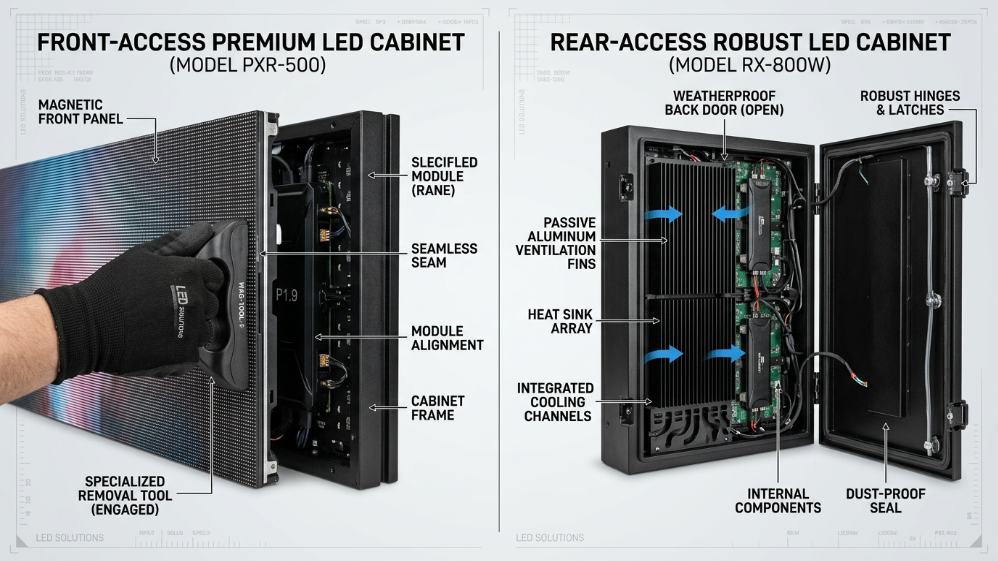
| Difference Dimension | Front-Access (FA) | Rear-Access (RA) | Decision Weight | When This Difference Actually Matters |
| Maintenance access requirement | No rear clearance needed | Requires ≥0.6m rear clearance | ★★★★★ | Only critical if rear space is structurally impossible (glass curtain wall, flush concrete) |
| Per-module swap time | 4–8 min (front, no scaffold) | 10–20 min (rear entry + scaffold on elevated installs) | ★★★★☆ | High-traffic digital OOH with >3 module failures/month expected |
| Cabinet unit cost | +15–25% vs equivalent RA | Baseline | ★★★★☆ | Always relevant; only justified by access impossibility or very high swap frequency |
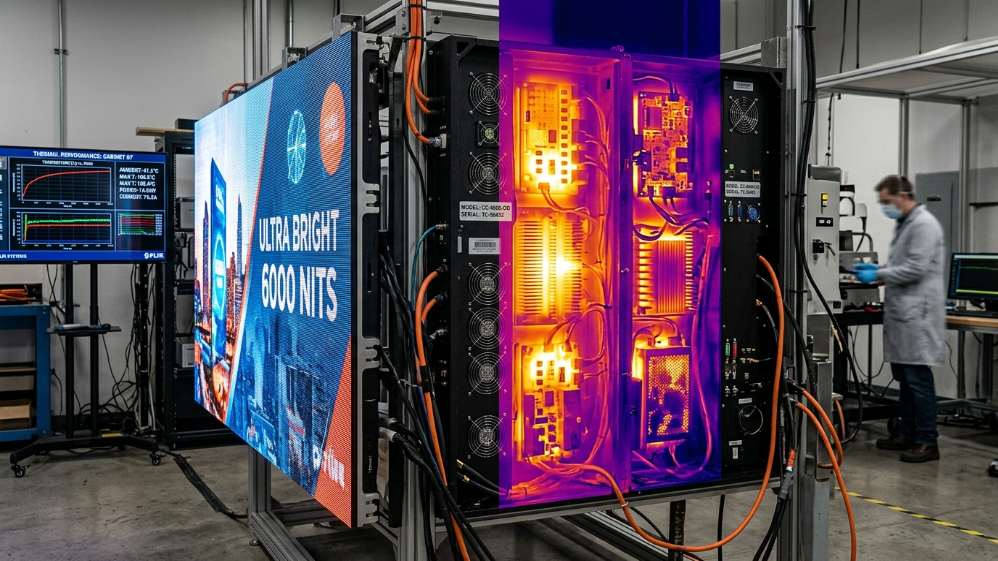
| Thermal performance (>5000 nits) | More constrained (front panel limits convection) | Better passive/active airflow path | ★★★☆☆ | Critical for direct-sun south-facing installs above 40°C ambient |
| IP rating consistency | Higher risk at front-panel seams over time | Simpler sealed rear panel; more durable long-term | ★★★☆☆ | Coastal, high-humidity, or car-wash-adjacent environments |
| Content update frequency | Advantage only if updating physical media >2x/week | Negligible for software-driven content | ★★☆☆☆ | Almost never relevant for modern networked displays |
| Installation profile | Flush-mount compatible | Requires structural rear-access planning | ★★★☆☆ | Architectural integration projects, transit shelters |
Reader Self-Check
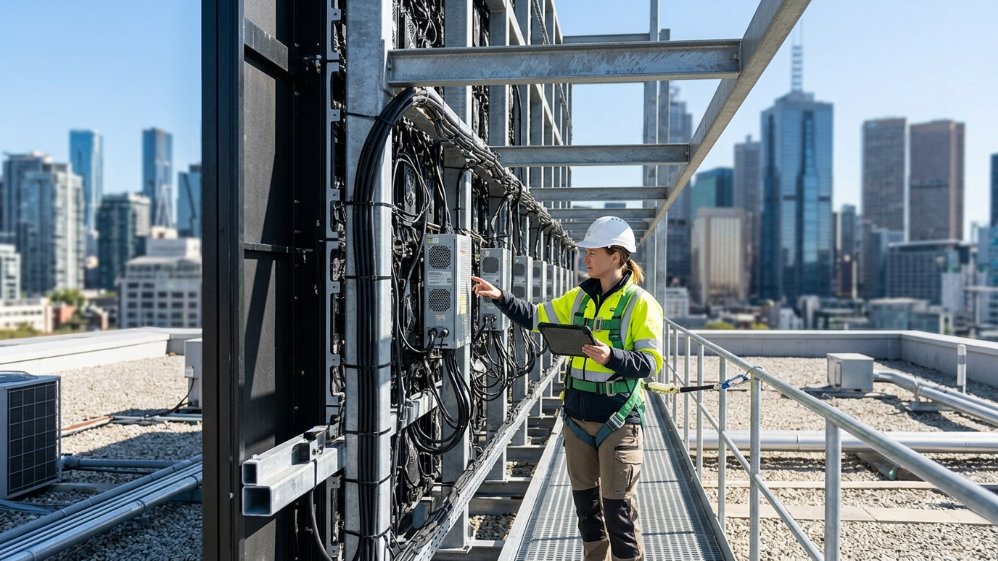
Quick check: Does your installation site have a clear structural path to the rear of the cabinet—even if it requires a ladder or lift?
If YES → FA’s core advantage is neutralized for your situation. The access premium does not apply. Skip to the Total Cost of Ownership Calculation section below.
If NO (glass back, flush concrete wall, enclosed kiosk with no rear panel access) → Continue reading. FA is likely your only viable option—but verify whether a rear-service door can be engineered before accepting the FA price.
Procurement advisor note: The larger the cabinet (>20㎡ per face), the more likely rear-access is the correct specification—even when rear clearance seems tight. FA cabinets at billboard scale carry thermal density penalties that can reduce luminaire lifespan by 8,000–12,000 hours under sustained high-brightness operation. The “premium” option actively shortens your asset life in this scenario.
You now know which access architecture is structurally relevant to your site—what remains is calculating whether the real-world maintenance frequency at your specific deployment justifies any remaining cost gap.
When Front-Access Wins vs. When Rear-Access Wins
| Choose Front-Access (FA) When… | Choose Rear-Access (RA) When… |
| Your installation is a flush-mount glass curtain wall or sealed architectural enclosure where rear entry is physically impossible without demolition | Your site has ≥0.6m clearance behind the cabinet—even if that clearance requires a scissor lift or ladder to reach |
| Your 5-year TCO analysis shows FA reduces scaffold rental costs by more than $8,000 per face (applies when elevated installs require crane access for every rear-entry service event) | Your per-face cabinet area exceeds 20㎡ and ambient temperature regularly exceeds 38°C—RA’s superior convection path measurably extends LED lifespan at this thermal load |
| Your content operation requires physical module swaps or hardware-level updates more than twice per week (live event LED walls, rotating campaign boards with mechanical components) | Your deployment is in a coastal, high-humidity, or chemically aggressive environment where FA’s front-seam gasket degrades faster than RA’s simpler rear-panel seal |
| Your installation is in a transit shelter, retail kiosk, or urban furniture unit where the rear cavity is shared infrastructure and rear access is contractually restricted by the site owner | Your 5-year TCO difference between FA and RA exceeds $6,000 per cabinet and maintenance frequency is below one service event per month—the FA premium never amortizes |
| You are operating a rental fleet where rapid module replacement speed (under 6 minutes per module) is a contractual SLA requirement with penalty clauses | Your technical team operates from a centralized maintenance depot and schedules planned service windows—rear-access service time is absorbed into planned downtime, not emergency response |
Gray Zone Analysis: When the Difference Doesn’t Actually Matter
This is the section most specification guides skip. In a significant number of real-world deployments, FA and RA perform nearly identically—and choosing between them on access architecture alone is the wrong framework.
In the following conditions, the practical difference between FA and RA is smaller than procurement teams are typically told:
In installations where cabinet face area is between 6–12㎡ and ambient temperature stays below 32°C, thermal performance differences between FA and RA are less than 4% in measured luminaire lifespan degradation. At this scale, decision weight should shift to supplier service network proximity, not access type.
In networked digital billboard deployments with remote diagnostics and less than 1.2 physical service events per face per year, the FA time-saving advantage over RA amounts to less than 45 minutes of labor annually per face. At a $75/hour field technician rate, the annual labor saving is under $56—against a FA premium of $1,800–$4,000 per cabinet. The payback period exceeds the typical 7-year cabinet lifecycle.
In deployments at ground level (bottom edge below 2.5m) with unobstructed rear clearance, FA and RA service time difference collapses to under 3 minutes per module. At this installation profile, the access architecture distinction is commercially irrelevant; specify on price and thermal rating alone.
When your failure rate projection is below 0.3 modules per face per month (typical for Tier 1 LED module suppliers with >50,000-hour MTBF ratings), actual service events are infrequent enough that FA’s speed advantage generates under $200 in labor savings over a 5-year period. In this condition, the decision should be driven by IP rating requirements and supplier warranty terms, not access design.
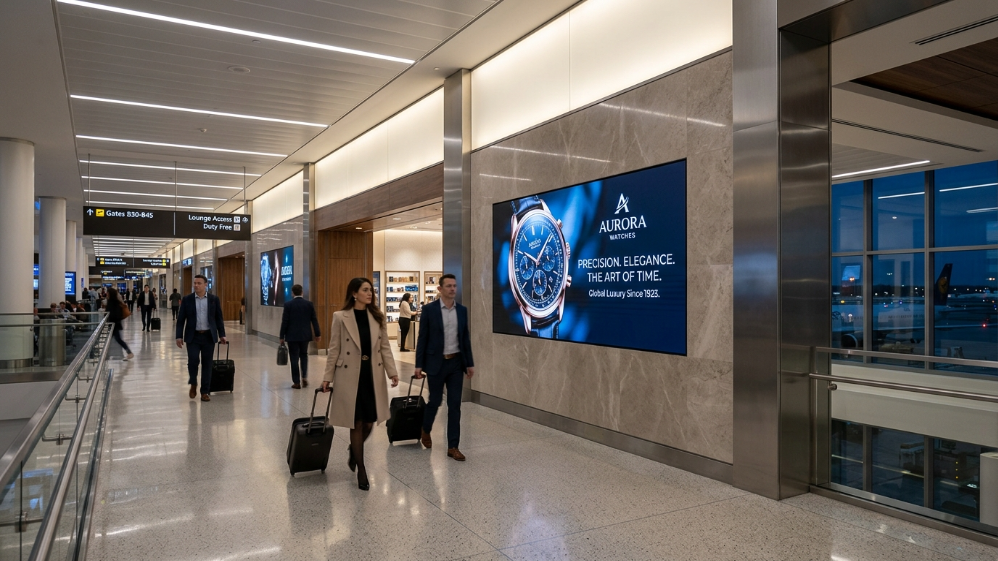
In indoor billboard applications (airports, malls, transit concourses) where ambient conditions are climate-controlled and both FA and RA achieve IP43 or better, access architecture becomes a facilities management preference, not a technical specification. Consult your building management team before issuing the spec—they may have existing maintenance protocols that make one format operationally preferable regardless of technical merit.
Decision Tree: Which Cabinet Type Is Right for Your Project?
NODE 1: Can a technician physically reach the rear panel of your installed
cabinet without modifying the building structure?
│
├── NO → FA is your required specification.
│   Proceed to Node 3 to optimize within FA options.
│
└── YES ↓

NODE 2: Is your projected service frequency above 2 physical
interventions per face per month?
│
├── YES → Calculate scaffold/access cost per event.
│   If each rear-access service event costs >$150 in
│   access equipment, FA pays back within 36 months.
│   → Specify FA.
│
└── NO ↓

NODE 3: Does your installation face exceed 20㎡ AND operate in
sustained ambient temps above 38°C?
│
├── YES → RA's thermal advantage is material.
│   FA risks 8,000–12,000 hours of reduced LED lifespan.
│   → Specify RA. Do not accept FA substitution.
│
└── NO ↓

NODE 4: Is the 5-year TCO difference between FA and RA quotes
for your spec greater than $6,000 per cabinet?
│
├── YES → The FA premium is not recoverable at your
│   service frequency. → Specify RA.
│
└── NO → The difference is within gray zone tolerance.
    If both options remain on the table and you
    cannot resolve the decision with available data:

    ▶ REQUEST a 12-month pilot: deploy 2 FA units
      and 2 RA units at comparable sites, instrument
      both with remote thermal monitoring, and log
      every service event with time-stamped technician
      reports. At month 12, run the TCO comparison
      with real data—not supplier projections.

      Your next procurement round will be
      specification-certain.
5 Questions to Ask Before You Place the Order
Q1: What is the exact rear clearance measurement at each installation site?
Get this in writing from your site surveyor, not from architectural drawings. Drawings are frequently out of date. If clearance is between 0.4–0.8m, ask the supplier to confirm minimum RA service clearance requirement for their specific cabinet depth—this varies by manufacturer and is often not in the standard spec sheet.
-
Action: Issue a formal site survey checklist to your installation contractor and require photo documentation of rear clearance at every position before final specification.
Q2: What is your projected monthly service event rate per face, and what is that figure based on?
If a supplier quotes you a failure rate, ask for the MTBF data behind it and which module tier it applies to. A Tier 2 module at 6,000 nits in a direct-sun environment will fail at 3–5× the rate of the same module at 4,000 nits in a shaded position. The service frequency assumption drives your entire TCO model.
-
Action: Request the supplier’s field failure rate data segmented by brightness level and installation orientation—if they cannot provide it, treat their TCO projections as unverified.
Q3: What does one rear-access service event actually cost at your specific sites?
This is not the technician’s hourly rate. It is technician rate + travel time + access equipment rental (scissor lift, scaffold, crane) + traffic management if roadside. For elevated highway billboards, a single service event can cost $800–$2,400. For ground-level retail installs, it may be $60. This single number changes the entire FA vs RA calculus.
-
Action: Call your current field service contractor and get a per-event cost estimate for rear-access work at your three most representative sites before running any TCO comparison.
Q4: What is the supplier’s IP rating test methodology for the front panel seam, and what is the warranty coverage for moisture ingress?
FA cabinets have an inherent seam vulnerability at the front panel junction. Ask specifically: Is the IP rating tested on the full assembled cabinet or on individual components? Is moisture ingress from front-panel seal failure covered under the standard warranty or excluded as “installation error”? This distinction has cost operators tens of thousands in denied warranty claims.
-
Action: Request the warranty exclusion clause document in writing and have your legal or procurement team review the moisture ingress coverage language specifically before signing.
Q5: What is the supplier’s local service response time, and does it differ between FA and RA product lines?
Some manufacturers maintain stronger spare-parts inventory for FA cabinets in certain markets because they sell more of them—meaning RA module lead times can run 2–4 weeks longer in some regions. If you are in a market where the supplier’s RA module stock is thin, FA’s practical uptime advantage may have nothing to do with access design and everything to do with supply chain.
-
Action: Ask the supplier for current in-region inventory levels for the specific module SKU in both FA and RA configurations, and request their average fulfillment time for emergency module orders over the past 6 months.
Pull your site survey reports and your last 12 months of field service invoices, run the per-event cost calculation from Q3 against your projected failure rate from Q2, and you will have a defensible specification decision before the next supplier conversation.
References:
Scenic America (.org) — Illuminating the Issues: Digital Signage and Philadelphia’s Green Future