The Bottom Line First
If you’re a retailer evaluating whether to rent or buy a transparent LED screen, here’s the direct answer: renting is the smarter choice for most retail scenarios in 2026, especially for seasonal campaigns, pop-up activations, and window display upgrades. Rental eliminates upfront hardware costs (which can exceed 3,000–8,000 per square meter for quality transparent LED panels), removes the burden of maintenance, and gives you access to the latest GOB and COB transparent display technology without long-term depreciation risk.
Transparent LED screens have moved well beyond novelty status. In 2026, they are a proven retail tool used by fashion flagships, automotive showrooms, cosmetics chains, and luxury retail to drive foot traffic and elevate brand perception. This guide breaks down the seven core advantages of renting — with real data, application scenarios, and a product comparison — so you can make a confident procurement decision.
What Is a Transparent LED Screen?
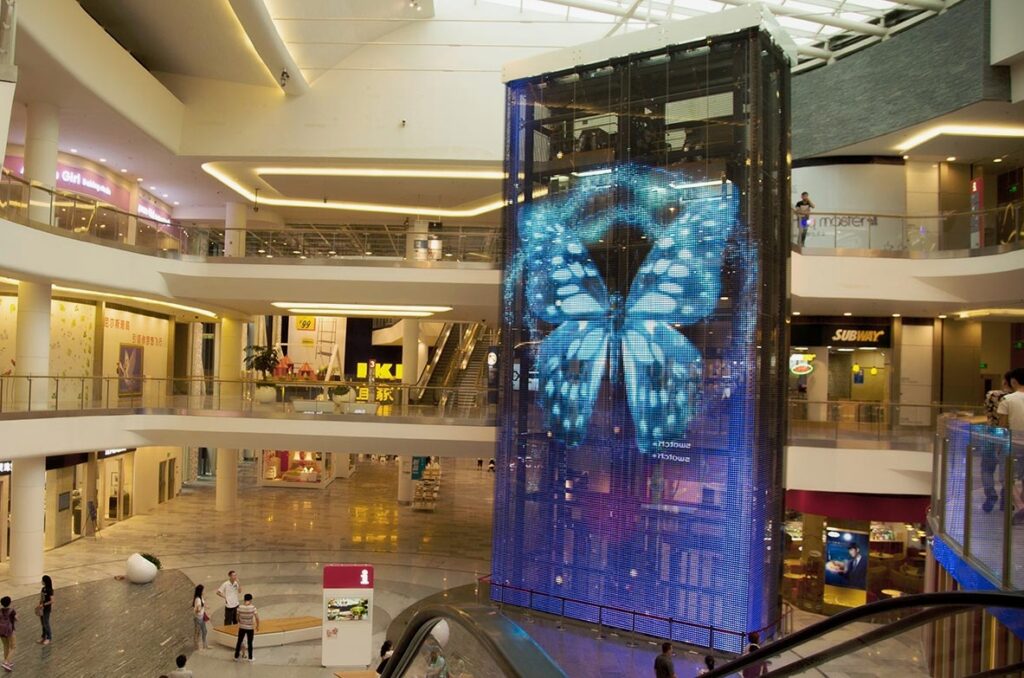
A transparent LED screen is a display panel with an open-grid LED structure that allows light to pass through — typically achieving 60–85% transparency. Unlike conventional LED walls, transparent screens can be mounted on glass storefronts, curtain walls, or interior partitions without blocking natural light or the view inside the store.
Key technical parameters to know:
| Parameter | Typical Range (2026) | Impact |
|---|---|---|
| Transparency | 60% – 85% | Higher = more natural light retained |
| Pixel Pitch | P3.9 – P10 | Smaller = sharper image, higher cost |
| Brightness | 2,000 – 6,000 nits | Higher needed for sunlit storefronts |
| Power Consumption | 100 – 300 W/sqm | Lower = reduced operating cost |
| IP Rating | IP43 – IP65 | Higher needed for semi-outdoor use |
7 Advantages of LED Transparent Screen Rental for Retail Displays
1. Captivates Customer Attention Without Blocking Sightlines
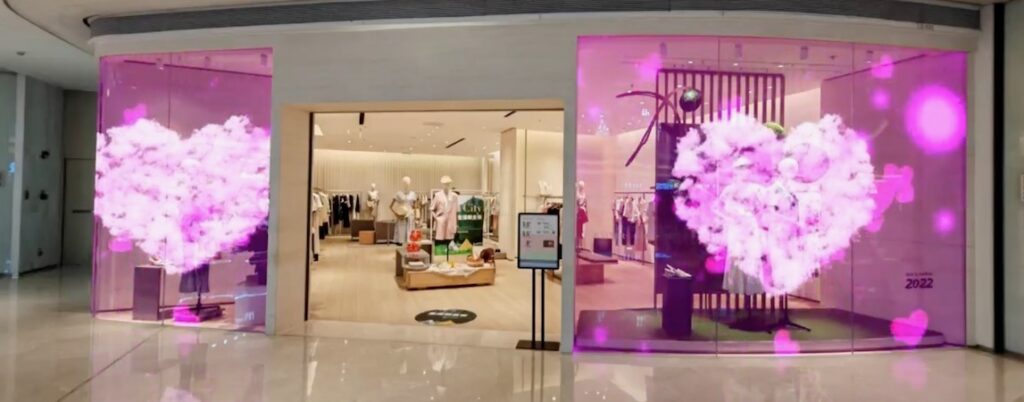
Transparent LED screens deliver high-brightness, high-contrast visuals — typically 3,000–5,000 nits for window-facing installations — while maintaining the open, inviting feel of a glass storefront. Unlike opaque digital signage that walls off the interior, transparent screens let passersby see both the dynamic content and the products inside simultaneously.
In a 2025 retail study by the Digital Signage Federation, stores using transparent LED window displays reported a 23% average increase in foot traffic compared to static window graphics. The dual-layer visual effect — digital content layered over real merchandise — creates a depth and dynamism that static displays simply cannot replicate.
2. Elevates Brand Image with a Premium Aesthetic
The visual language of transparent LED is inherently premium. The floating-image effect, where content appears to hover in mid-air against the store backdrop, signals technological sophistication and brand investment to consumers.
For luxury retail, automotive showrooms, and cosmetics flagships, this matters directly to conversion. Customers associate the quality of the display environment with the quality of the products. Renting a high-spec transparent LED screen for a product launch or seasonal campaign delivers that premium signal without the capital commitment of ownership.
3. Enables Interactive and Sensor-Driven Experiences
Modern transparent LED rental systems in 2026 increasingly support integration with:
- Touch overlays for interactive product browsing
- Motion sensors that trigger content when a customer approaches
- QR code and NFC zones embedded in the display frame
- AI audience analytics that adjust content based on viewer demographics in real time
These capabilities transform a passive display into an active engagement tool. Rental providers typically offer these integrations as add-on services, making it practical to test interactive formats before committing to a permanent installation.
4. Maximizes Space Utilization in High-Rent Retail Environments
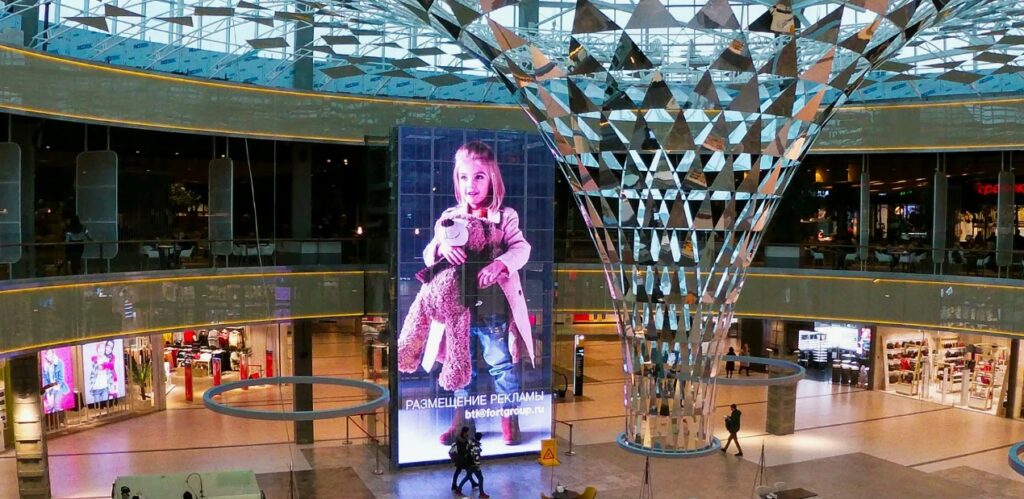
Retail floor space in prime locations is expensive. Transparent LED screens installed on glass curtain walls, window panes, or interior partitions use vertical surface area that would otherwise be underutilized — without consuming any floor space or blocking natural light.
This is particularly valuable in:
- Small-format urban stores where every square meter counts
- Shopping mall storefronts where window visibility drives walk-in traffic
- Multi-story glass facades where large-format content can be displayed across an entire building elevation
The transparency factor means the screen functions as both a display medium and a window simultaneously — a dual-use efficiency that no opaque signage format can match.
5. Delivers Measurable Cost Efficiency vs. Outright Purchase
This is where rental makes its strongest case. The total cost of ownership for a transparent LED installation includes hardware, installation, maintenance, software licensing, and eventual disposal. Rental converts all of these into a predictable, flexible operating expense.
| Cost Factor | Purchase Model | Rental Model |
|---|---|---|
| Upfront Hardware Cost | 3,000–8,000/sqm | $0 |
| Installation | 1,000–3,000 | Included |
| Maintenance & Repairs | Owner’s responsibility | Provider’s responsibility |
| Technology Obsolescence Risk | High (3–5 year cycle) | None |
| Flexibility to Scale | Low | High |
| Typical Daily Rental Rate (US) | N/A | 50–70/sqft |
For seasonal campaigns (e.g., Chinese New Year, Black Friday, summer collections), renting for 2–6 weeks is dramatically more cost-effective than purchasing hardware that sits idle for 10 months of the year.
6. Enables Rapid Deployment with Zero Technical Burden
Professional transparent LED rental services in 2026 include end-to-end logistics: delivery, installation, content system setup, on-site commissioning, and post-event removal. For a retailer, this means zero technical overhead.
Typical deployment timeline for a rental transparent LED installation:
- Day 1: Site survey and structural assessment
- Day 2–3: Hardware delivery and installation
- Day 4: Content system setup, calibration, and testing
- Day 5: Go-live
This 5-day turnaround makes transparent LED rental viable for pop-up stores, product launches, and short-cycle promotional campaigns where speed to market is critical.
7. Supports Sustainability Goals and ESG Commitments
LED transparent screens consume significantly less power than equivalent-area conventional LED displays — typically 100–200 W/sqm versus 300–500 W/sqm for standard indoor LED walls. The rental model adds a further sustainability dimension: hardware is reused across multiple clients and projects, reducing the total volume of electronic waste generated.
For retailers with published ESG targets or sustainability commitments, the rental model provides a defensible, documentable approach to digital display that aligns with circular economy principles increasingly required by EU regulations in 2026.
Rental vs. Purchase: Full Cost Comparison
| Scenario | Recommended Model | Reason |
|---|---|---|
| Seasonal campaign (4–8 weeks) | Rental | Cost-effective, no idle asset |
| Permanent flagship store installation | Purchase | Long-term ROI justifies capex |
| Pop-up store or trade show | Rental | Flexibility, rapid deployment |
| Multi-location retail chain rollout | Hybrid | Purchase core units, rent for peaks |
| Product launch event (1–2 weeks) | Rental | Speed, zero maintenance burden |
Application Scenarios by Retail Sector
Fashion & Apparel
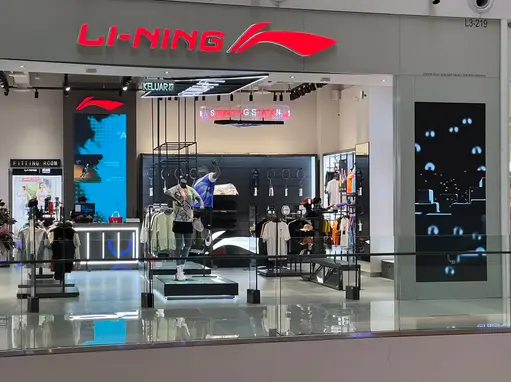
Transparent LED window displays showing runway footage, lookbook content, and new collection launches. The see-through effect lets passersby view both the digital content and the physical merchandise simultaneously, creating a layered visual experience that drives curiosity and store entry.
Cosmetics & Beauty
Product demonstration videos, ingredient storytelling, and influencer content displayed on transparent screens mounted behind product shelving. Customers can watch application tutorials while viewing the actual products on the shelf behind the screen.
Automotive Showrooms
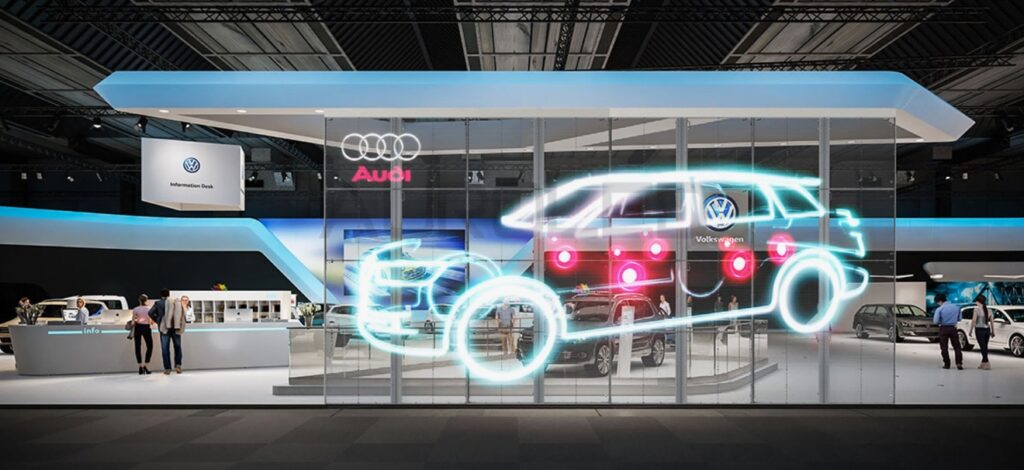
Full-vehicle specification overlays, 360-degree model rotations, and feature highlight animations displayed on large transparent screens positioned in front of or alongside physical vehicles. This format is now standard in premium automotive retail environments globally.
Luxury Retail & Jewelry
High-contrast, high-brightness transparent displays in window installations create the floating-image effect that luxury brands use to signal exclusivity and craftsmanship. The premium aesthetic of transparent LED aligns naturally with luxury brand positioning.
Key Specs to Evaluate Before Renting a Transparent LED Screen
Not all transparent LED rental inventory is equal. Before signing a rental agreement, verify these parameters:
- Transparency rate: Minimum 70% for window-facing installations
- Brightness: Minimum 3,500 nits for any installation with direct sunlight exposure
- Pixel pitch: P3.9 or finer for viewing distances under 5 meters
- Refresh rate: Minimum 1,920 Hz to avoid flicker in video content
- Content management system: Confirm compatibility with your existing content formats (MP4, HTML5, etc.)
- IP rating: IP43 minimum for semi-outdoor window installations
SoStron Crystal: A Rental-Ready Transparent LED Option
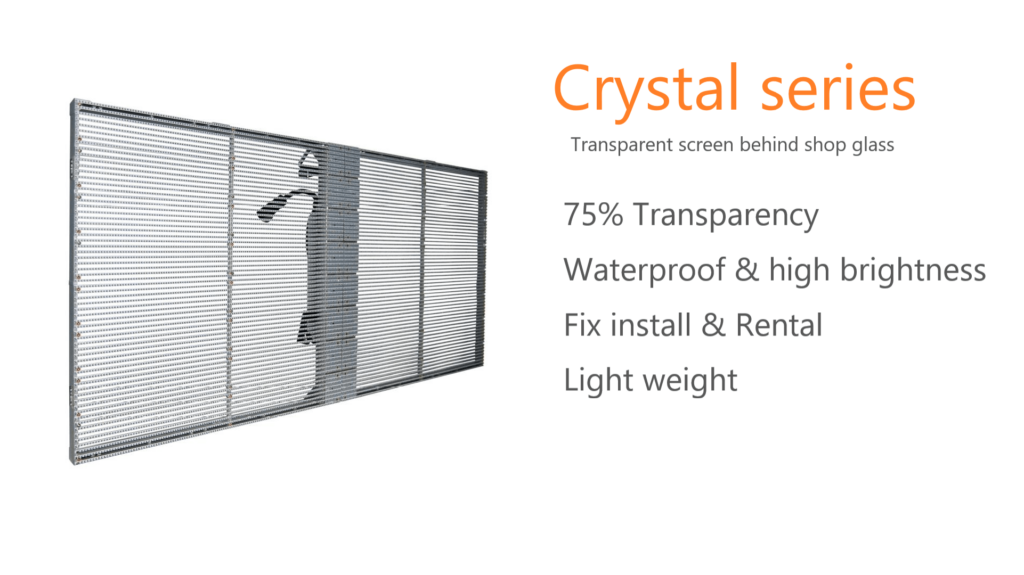
The SoStron Crystal transparent LED screen is a purpose-built rental and retail display product using GOB (Glue-on-Board) encapsulation technology. Key specifications:
| Feature | Specification |
|---|---|
| Transparency | Up to 75% |
| Technology | GOB (Glue-on-Board) |
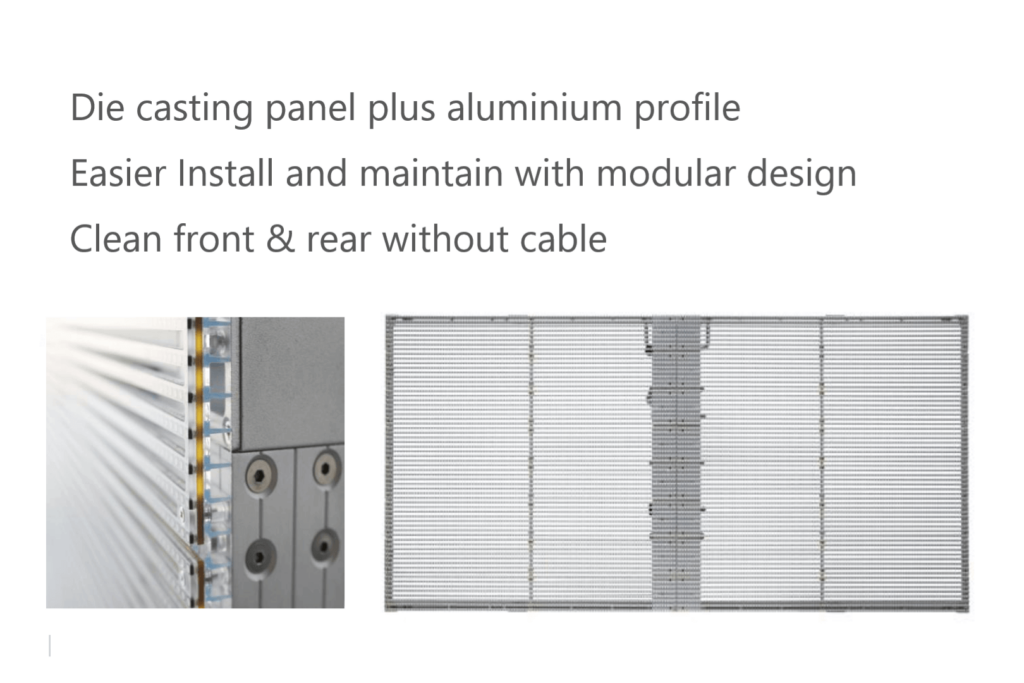
| Panel Construction | Die-cast aluminum profiles |
| Installation | Modular, tool-free assembly |
| Maintenance | Front and rear accessible |
| Contrast | High-contrast for bright environments |
The GOB encapsulation provides better moisture resistance and impact protection compared to standard SMD transparent panels — a meaningful advantage for window-facing retail installations where condensation and cleaning are routine concerns.
Frequently Asked Questions (FAQ)
How much does it cost to rent a transparent LED screen?
In the US market, transparent LED screen rental typically costs 50–70 per square foot per day for standard retail-grade panels. Pricing varies by pixel pitch, rental duration, and whether installation is included.
What is the minimum rental period for transparent LED screens?
Most professional rental providers offer a minimum rental period of 3–7 days. For longer campaigns (4+ weeks), negotiated monthly rates are typically available at 30–40% below the daily rate equivalent.
Can transparent LED screens be used outdoors?
Yes, but the panel must have an IP65 or higher rating for full outdoor exposure. Most rental-grade transparent LED panels are rated for semi-outdoor (window-facing) use at IP43–IP54.
How is content managed on a rented transparent LED screen?
Rental providers typically supply a cloud-based content management system (CMS) with the rental. Content can be updated remotely via web browser or mobile app, with scheduling and playlist management included.
What happens if a panel is damaged during the rental period?
Standard rental agreements include a damage liability clause. Minor wear is typically covered; physical damage from misuse is charged to the renter. Always review the damage policy before signing.
Conclusion
LED transparent screen rental in 2026 offers retailers a low-risk, high-impact path to premium digital display without the capital burden of ownership. The seven advantages outlined here — from attention capture and brand elevation to cost efficiency and sustainability — make a compelling case for rental as the default model for any display campaign under 12 months in duration.
For permanent flagship installations, purchase may offer better long-term ROI. For everything else — seasonal campaigns, product launches, pop-ups, and event activations — rental is the smarter, more flexible choice.