What Is P2.5 Pixel Pitch — and What Resolution Does It Deliver?
The short answer: A P2.5 LED screen has LED clusters spaced 2.5mm apart center-to-center, producing approximately 160,000 pixels per square meter — enough resolution for crisp HD video, detailed charts, and photo-realistic imagery at viewing distances of 2.5–5 meters.
Here’s how to calculate the actual pixel count for any screen size:
Pixels per row = Screen width (mm) ÷ 2.5
Pixels per column = Screen height (mm) ÷ 2.5
Total pixels = Rows × Columns
Example: A 2m × 1m P2.5 screen = 800 × 400 = 320,000 total pixels
That’s comparable to a 720p HD display — which looks sharp and detailed when viewed from the correct distance. Push the screen to 3m × 2m and you cross into full HD territory (1,200 × 800 = 960,000 pixels), which handles 1080p content cleanly.
Why Pixel Pitch Alone Doesn’t Tell the Full Story
Many buyers fixate on the “P” number and overlook two specifications that have equal impact on perceived image quality:
- Refresh rate — Screens below 1,920 Hz produce visible scan lines in video recordings and live streams. For any application where cameras will capture the screen, specify ≥3,840 Hz.
- Color bit depth — Standard panels use 8-bit color processing (16.7M colors). Premium panels use 14-bit or 16-bit processing for smoother gradients in broadcast and cinema applications.
P2.5 vs P2 vs P3: Honest Comparison
This is the question most buyers spend the most time on — and most guides answer it with vague generalities. Here’s the concrete version:
| Specification | P2 | P2.5 | P3 |
|---|---|---|---|
| Pixel pitch | 2.0 mm | 2.5 mm | 3.0 mm |
| Pixels per ㎡ | 250,000 | 160,000 | 111,111 |
| Min. viewing distance | 1.5–2 m | 2.5–3 m | 3–4 m |
| Typical price/㎡ (indoor) | $1,100–$1,800 | $800–$1,200 | $600–$950 |
| Best use case | Control rooms, broadcast studios, luxury retail | Conference rooms, showrooms, stage backdrops, retail | Exhibition halls, large meeting rooms, auditoriums |
| Relative sharpness vs P2.5 | +56% pixels | Baseline | −30% pixels |
When P3 Makes More Sense Than P2.5
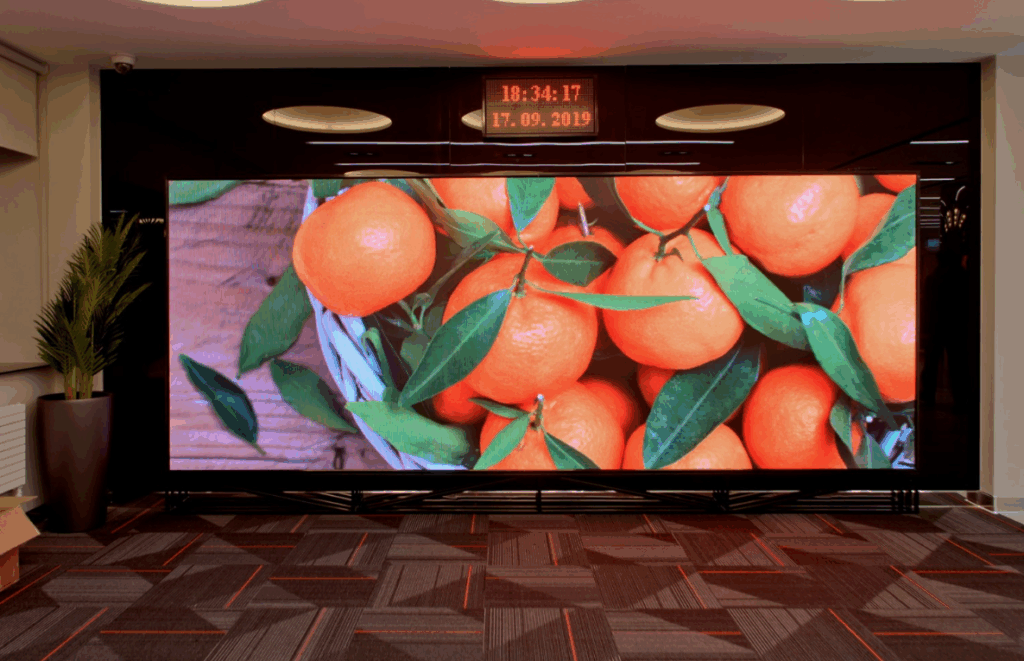
If your audience is consistently seated more than 5–6 meters from the screen, the resolution difference between P2.5 and P3 becomes imperceptible to the human eye. In a 200-seat auditorium where the back row is 15 meters away, a P3 screen will look identical to a P2.5 — and save you 15–20% on hardware costs.
When P2 Justifies the Premium Over P2.5
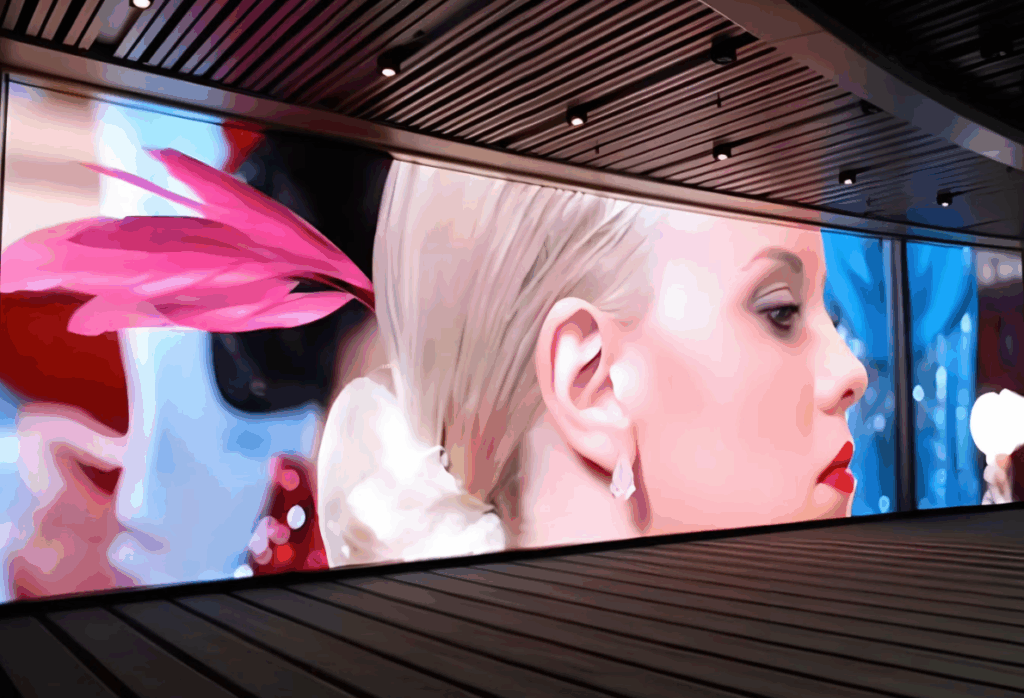
Control room environments, high-stakes data visualization, surgical suites, and broadcast monitor walls often require operators to read fine text and detailed data at 1.5–2 meters. At that distance, P2.5 shows individual pixels if you look closely. P2 closes that gap — worth the premium for mission-critical viewing contexts.
Is P2.5 Right for Your Project?
Run through this decision framework before committing to a pixel pitch:
Viewing Distance Check
- Closest viewer is under 2 meters → Specify P2 or P1.8
- Closest viewer is 2–5 meters → P2.5 is your optimal choice
- Closest viewer is 5–8 meters → P3 delivers the same perceived quality at lower cost
- Closest viewer is 8+ meters → P4, P6, or P8 depending on distance
Application Fit
| Application | P2.5 Suitable? | Notes |
|---|---|---|
| Corporate conference room (10–50 pax) | ✅ Yes | Standard recommendation |
| Retail showroom / product display | ✅ Yes | High color accuracy required — specify high bit-depth |
| Wedding / event stage backdrop | ✅ Yes | Rental cabinet preferred over fixed install |
| Museum or gallery installation | ✅ Yes | Low brightness mode important for ambient environments |
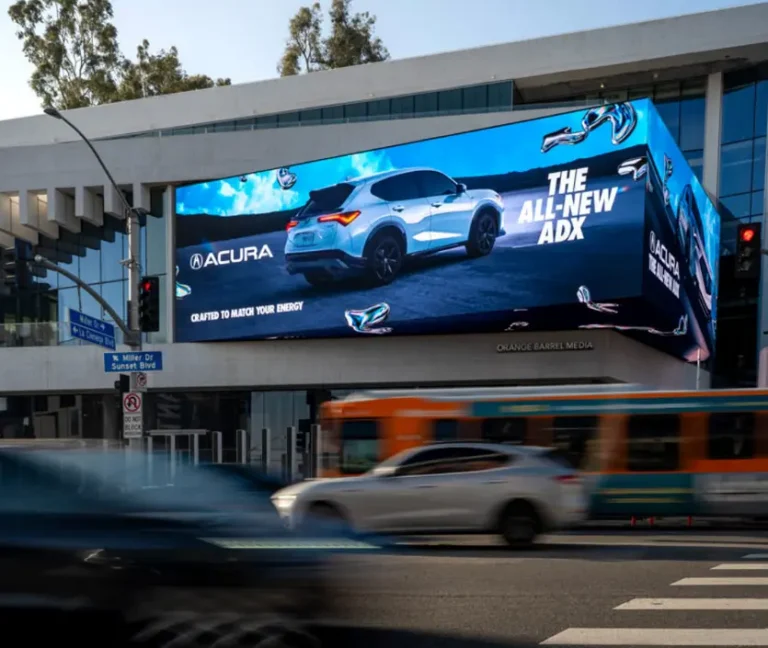
| Outdoor advertising billboard | ⚠️ Conditional | Requires IP65+ housing, cost increases significantly |
| Broadcast studio monitor wall | ⚠️ Borderline | P2 or P1.8 preferred for close-camera applications |
| Highway or large outdoor screen | ❌ No | P8–P10 is more cost-effective at viewing distances >15m |
Budget Reality Check
For a 10 ㎡ conference room display at mid-range P2.5 spec, expect:
- Hardware: $9,000–$12,000
- Steel/aluminum frame + mounting: $800–$1,500
- Control system (Novastar or equivalent): $600–$1,200
- Installation labor: $500–$1,500
- Total all-in: $11,000–$16,000
P2.5 LED Screen Prices (2026, Per ㎡)
Prices have remained relatively stable through 2025–2026, with slight downward pressure from increased Chinese manufacturing volume and upward pressure from component quality improvements.
Indoor P2.5 Pricing by Tier
| Tier | Price Range/㎡ | What You Get | Best For |
|---|---|---|---|
| Entry-level | $750–$900 | Generic LED chips, basic PSU, no-name control card | Budget retail or temporary installations |
| Mid-range | $900–$1,100 | Nationstar or Cree LEDs, Novastar/Linsn control, aluminum cabinet | Corporate, hospitality, permanent retail |
| High-end | $1,100–$1,400 | Premium LEDs, high-refresh IC, 16-bit color, extended warranty | Broadcast, luxury retail, control rooms |
Outdoor P2.5 Pricing by Tier
| Tier | Price Range/㎡ | Key Differentiator |
|---|---|---|
| Entry-level | $950–$1,150 | IP65 basic, SMD LEDs, manual brightness |
| Mid-range | $1,150–$1,350 | IP65/IP66, auto-brightness, anti-UV coating |
| High-end | $1,350–$1,700 | IP67, 10,000+ nits, advanced thermal management |
Regional Price Variation (Same Mid-Range Spec)
| Region | Estimated All-In Cost (20 ㎡) |
|---|---|
| China (domestic supply chain) | $18,000–$22,000 |
| Southeast Asia | $22,000–$28,000 |
| United States | $30,000–$42,000 |
| Western Europe | $35,000–$50,000 |
The U.S. and EU premium reflects higher installation labor, import duties, and local compliance certification requirements (UL, CE marking).
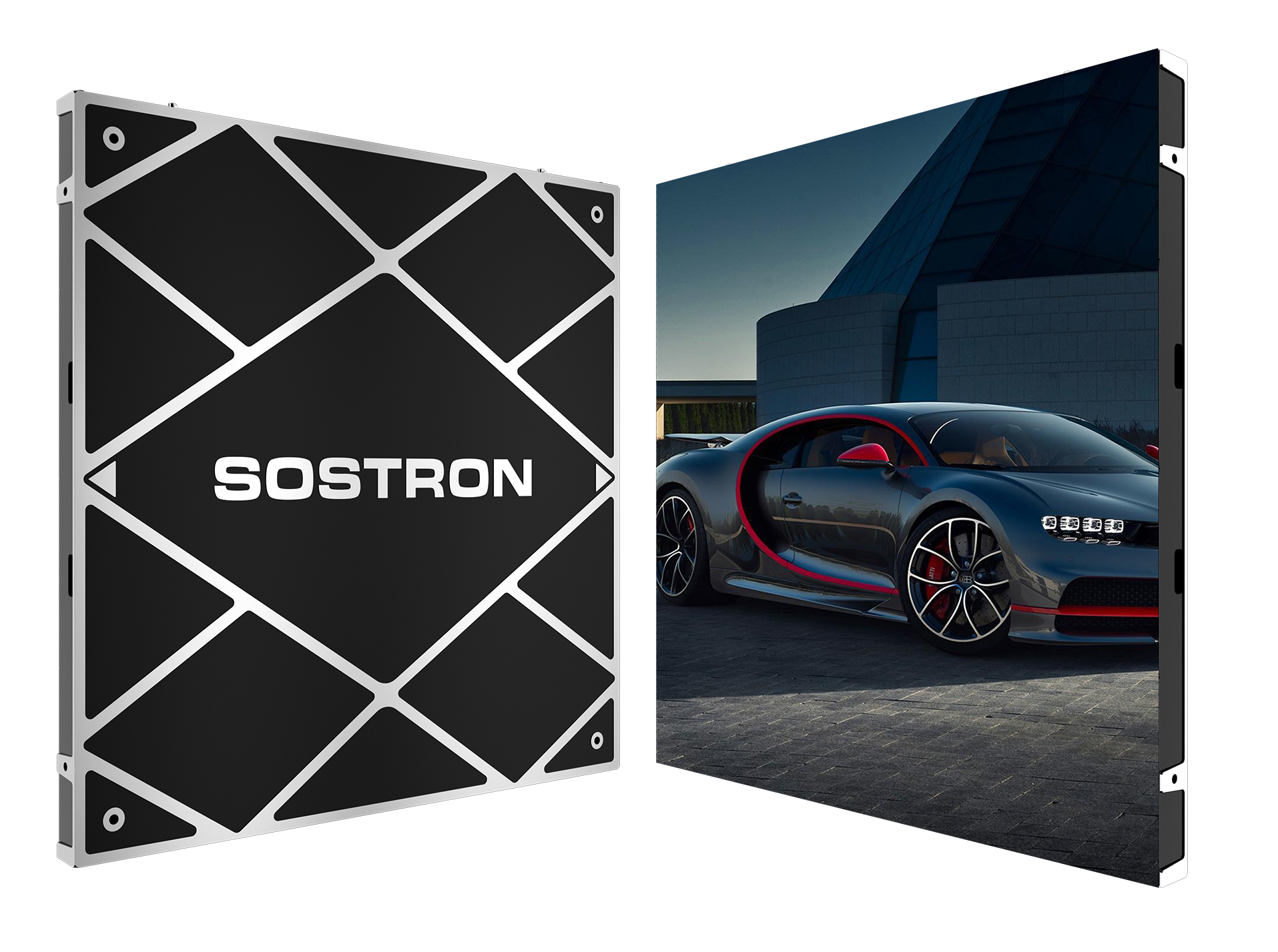
Indoor LED display – Reta2
Five Key Cost Factors Buyers Regularly Overlook {#cost-factors}
Most LED price guides stop at the panel cost. These five factors routinely add 25–60% to total project cost — and most buyers discover them too late.
a. Receiving Card & Control System Compatibility
Your LED panel brand and your control system brand must be certified compatible. Mismatched systems cause color banding, refresh rate degradation, and support headaches. Specify the control system at the same time as the panel — not as an afterthought. Budget $600–$2,500 for a quality Novastar, Brompton, or Linsn system depending on screen size.
b. Power Infrastructure
Large P2.5 installations draw significant power. A 20 ㎡ indoor P2.5 wall at peak brightness draws approximately 4.4 kW. Many venues discover their existing electrical circuits can’t support this load — requiring panel upgrades at $1,500–$5,000 depending on building infrastructure.
c. Cabinet Type: Rental vs. Fixed Install
- Rental cabinets (aluminum die-cast): Lighter, front-serviceable, quick-lock connections. Cost premium of 20–30% over steel, but essential for any installation that will be moved, reconfigured, or transported.
- Fixed install cabinets (steel): Heavier, rear-serviced, but 25–30% cheaper upfront. Correct choice for permanent wall-mount applications.
d. Calibration & Commissioning
Factory-fresh LED panels have natural color and brightness variation between modules (typically ±5–8%). Professional on-site calibration using colorimeters corrects this to produce a uniform image. Calibration costs $300–$800 per session and is non-negotiable for any client-facing or broadcast environment. Many budget installations skip this — and it shows.
e. After-Sales Support & Spare Module Stock
LED modules will fail over time. The industry-standard failure rate is 1–3% of pixels annually. Specify in your purchase agreement: a minimum 5% spare module stock supplied with the original order and a clear response SLA for warranty replacements. Without pre-agreed spares, a dead 10 ㎡ section of a display can sit unrepaired for weeks if modules are out of stock.
Complete Buying Guide: What to Specify
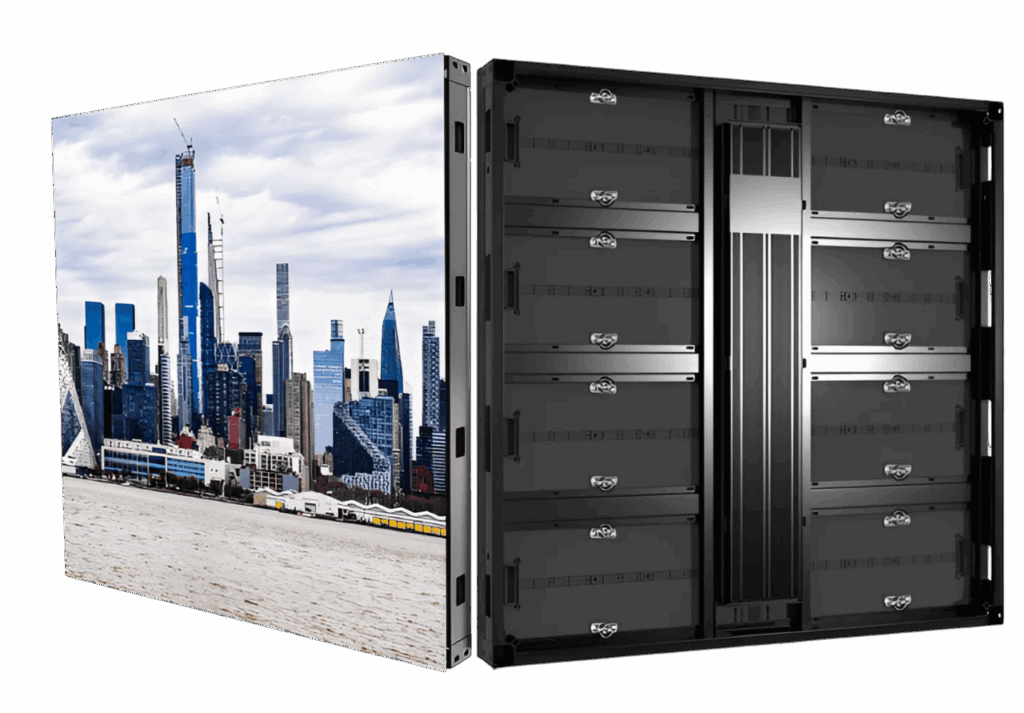
Indoor P2.5 Specification Checklist
- Pixel pitch: 2.5mm
- LED chip brand: Nationstar, Cree, or equivalent Tier-1
- Brightness: 600–1,000 nits (adjustable; avoid fixed-brightness panels)
- Refresh rate: ≥3,840 Hz (essential if cameras will film the screen)
- Color bit depth: ≥12-bit processing
- Cabinet material: Aluminum die-cast (rental) or steel (fixed)
- Control system: Novastar MCTRL or Linsn (matched to panel brand)
- Warranty: ≥2 years on panels, ≥1 year on power supplies
- Spare modules: 5% of total module count included
Outdoor P2.5 Specification Checklist
- Pixel pitch: 2.5mm
- LED type: SMD1415 or SMD1616 (better weather resistance than SMD2525)
- Brightness: ≥5,500 nits (≥8,000 nits for direct sunlight locations)
- IP rating: IP65 minimum; IP66 for coastal or high-humidity environments
- Thermal management: Confirm operating temperature range (typically −20°C to +60°C)
- Auto-brightness control: Ambient light sensor for automatic dimming
- Surge protection: Lightning protection module specified for rooftop or elevated installs
- Certification: CE (EU), UL (U.S.), or relevant local compliance mark
Questions to Ask Every Supplier Before Ordering
- Which LED chip brand and IC driver brand are used in this panel?
- What is the actual (measured, not theoretical) brightness at 100% load?
- What control system brands are certified compatible?
- What is your warranty response time for module replacement?
- Can you provide a reference installation within 12 months of similar size I can contact?
Recommended Products
For Indoor Applications: Reta2 Series
The Reta2 is a well-specified indoor P2.5 panel that addresses the most common failure points in mid-market indoor LED installations:
| Specification | Reta2 Performance |
|---|---|
| Pixel pitch | 2.5 mm |
| Brightness | 600–800 nits |
| Refresh rate | 3,840 Hz |
| Power consumption | 220 W/㎡ (average) |
| Cabinet design | Ultra-thin, front-serviceable, cable-free |
| Rated lifespan | 100,000 hours |
The front-serviceable design is a significant practical advantage in fixed installations where rear access is restricted — common in retail wall-mount and boardroom configurations. The 3,840 Hz refresh rate means the screen performs correctly when captured by smartphone cameras during presentations or events.
Best for: Corporate conference rooms (15–200 pax), hotel ballrooms, retail showrooms, exhibition stands, and hospitality venue display walls.
For Outdoor Applications: Ares Series
Where the Reta2 is optimized for interior environments, the Ares series is engineered for the demands of continuous outdoor operation:
| Specification | Ares Performance |
|---|---|
| Pixel pitch | 2.5 mm (outdoor configuration) |
| Brightness | Up to 10,000 nits |
| IP rating | IP65 standard |
| Cabinet weight | 23 kg per cabinet |
| Module size | 500 × 250 mm |
| Power vs. conventional | ~30% reduction |
| Rated lifespan | 100,000 hours |
The modular cabinet system supports curved installations and 90° corner configurations — important for wrap-around retail facades and stadium perimeter applications. The 10,000 nit peak brightness ensures legibility in direct sunlight, which is the most common failure mode of under-specified outdoor LED installations.
Best for: Shopping plaza facades, gas station canopy displays, outdoor venue screens, transportation hub advertising, and sports venue perimeter boards.
Total Cost of Ownership: 5-Year Breakdown
Buyers who evaluate only the upfront hardware cost consistently underestimate the true investment. Here’s a realistic 5-year TCO comparison for a 20 ㎡ indoor P2.5 installation:
| Cost Category | Year 1 | Years 2–5 (annual) | 5-Year Total |
|---|---|---|---|
| Hardware (panels + cabinets) | $18,000–$22,000 | — | $18,000–$22,000 |
| Control system | $800–$1,500 | — | $800–$1,500 |
| Installation & cabling | $1,500–$3,000 | — | $1,500–$3,000 |
| Electricity (20 ㎡ @ 10hrs/day) | $960–$1,440 | $960–$1,440 | $4,800–$7,200 |
| Module replacements (2% annually) | — | $360–$480 | $1,440–$1,920 |
| Software/CMS subscription | $600–$1,200 | $600–$1,200 | $3,000–$6,000 |
| Calibration (every 2 years) | $400–$600 | $400–$600 | $1,200–$1,800 |
| 5-Year Total | $30,740–$43,420 |
Comparison vs. equivalent LCD video wall: A comparable 20 ㎡ LCD video wall (4K, commercial grade) runs $25,000–$35,000 upfront, but LCD panels have a rated lifespan of 50,000–60,000 hours vs. 100,000 hours for LED — meaning LCD requires replacement at year 8–10, while LED continues operating. Over a 10-year horizon, LED TCO is typically 25–35% lower than LCD for large-format applications.
Frequently Asked Questions
Q1: Can a P2.5 LED screen be used outdoors? Technically yes, but it requires purpose-built outdoor cabinets with IP65+ rating, anti-UV coating, and enhanced thermal management. Indoor P2.5 modules cannot simply be rehoused in outdoor cabinets — the LED chips and driver ICs must be specified for outdoor operating temperatures from the factory. Purpose-built outdoor P2.5 costs $950–$1,700/㎡ versus $750–$1,400/㎡ for indoor. For outdoor locations where viewers are more than 6 meters away, P6 or P8 delivers equivalent perceived quality at significantly lower cost.
Q2: Does a P2.5 screen support 4K or 8K video? Yes, with sufficient screen area. 4K resolution (3,840 × 2,160 pixels) requires approximately 9.6m × 5.4m of P2.5 panel area to display natively. Most conference rooms and showrooms run content at 1080p on a 3–6 ㎡ screen — which P2.5 handles cleanly. If native 4K display is a hard requirement, either increase screen size or specify P1.8–P2.
Q3: How difficult is installation? A professional two-person installation team can mount and cable 10–15 ㎡ per day under standard conditions. Wall-mount fixed installations in concrete or steel-stud walls require a structural assessment first. Ceiling-hung configurations require load calculations. Budget for a site survey ($300–$600) before committing to a configuration.
Q4: What are the ongoing maintenance costs? For a mid-range 20 ㎡ P2.5 installation, expect:
- Electricity: $80–$120/month
- Module replacements: $30–$60/month (amortized over 5 years)
- Software/CMS: $50–$100/month
- Total monthly OpEx: $160–$280
Q5: What is the real lifespan of a P2.5 LED screen? Quality LED panels are rated for 100,000 hours of operation. At 10 hours/day, that’s 27 years of mechanical lifespan. In practice, most commercial installations are refreshed at 8–12 years due to evolving resolution standards and content requirements, not hardware failure. Power supplies typically require replacement at year 5–7 and represent the most common maintenance cost.
Q6: What’s the difference between SMD and COB LED packaging for P2.5? Traditional P2.5 uses SMD (Surface-Mounted Device) LEDs — individual chips mounted on a PCB. Newer COB (Chip-on-Board) packaging integrates multiple chips directly onto the substrate, resulting in better impact resistance, improved viewing angles, and higher contrast. COB P2.5 carries a 20–35% price premium over SMD in 2026 but is increasingly specified for high-touch retail and hospitality environments where physical durability matters.
Q7: How do I verify a supplier’s quoted brightness is accurate? Request a third-party photometric test report. Legitimate manufacturers provide IEC 62341-certified brightness measurement data. A quoted figure of “6,000 nits” means nothing without a test report — brightness is the most commonly overstated specification in LED marketing materials.
Sources
- LED Inside: Global LED Display Market Outlook 2026
- Novastar: LED Display System Integration Guide v4.2