The Question Every Brand Manager Is Actually Asking
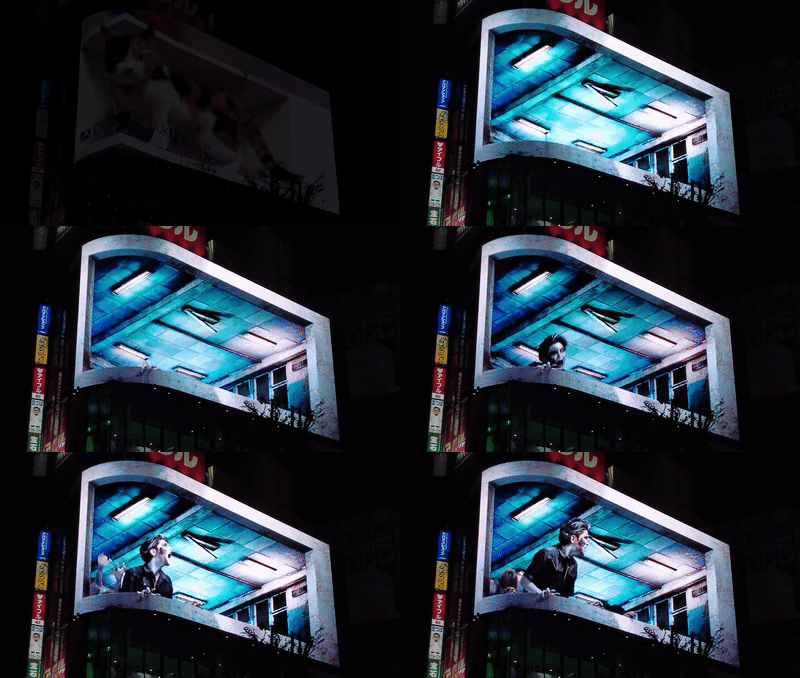
You’ve seen the videos. A giant cat peering over a Tokyo building. A wave crashing out of a Seoul skyscraper. A panda leaping off a Chengdu shopping mall. The footage goes viral, the brand gets millions of impressions, and suddenly every marketing team wants one.
The real question isn’t “what is a 3D billboard?” — it’s “does the investment make sense, and what does it actually cost to build one that works?” The original answer to that question — “prices vary from a few thousand to tens of thousands of dollars” — is not useful. This guide gives you the actual numbers, the technology breakdown, and the case studies that show what’s possible at different budget levels.
What “Naked-Eye 3D” Actually Means
The term “3D billboard” covers several distinct technologies that are frequently confused with each other. Understanding the difference matters because the hardware requirements, content production costs, and visual impact vary significantly across categories.
| Technology Type | How It Works | Glasses Required | Best For |
|---|---|---|---|
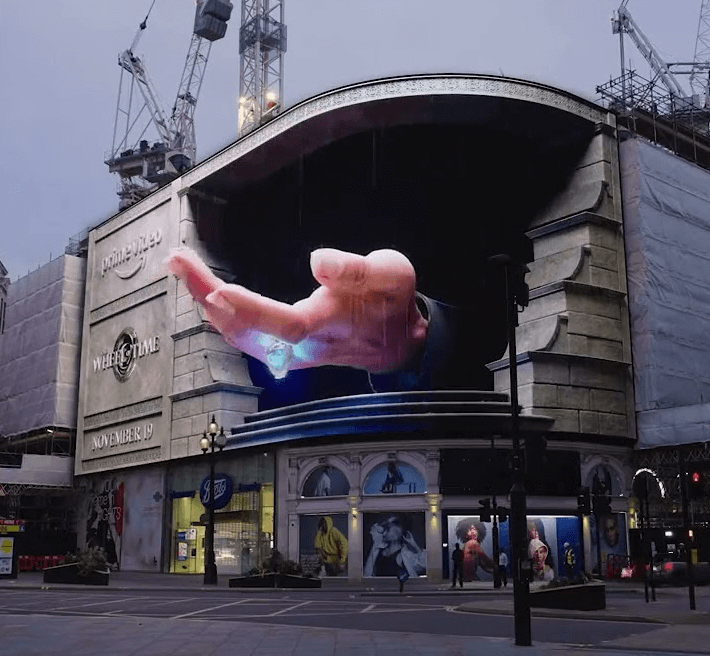
| Anamorphic / Naked-Eye 3D | Perspective-distorted content on L-shaped or corner LED panels creates depth illusion | No | Outdoor landmark installations, brand spectaculars |
| Holographic / Transparent LED | Transparent panels or film create “floating” visuals against a real background | No | Retail, airports, luxury brand environments |
| Forced Perspective (Flat Screen) | Standard flat LED with content designed to simulate depth (“hole in wall” effect) | No | Lower-cost 3D-style content on existing flat screens |
| Stereoscopic 3D | Dual-image display requiring polarized or active-shutter glasses | Yes | Cinema, specialized exhibition environments |
| Projection Mapping | Projectors map content onto 3D physical surfaces | No | Events, architectural installations, museums |
The dominant format in 2026 is anamorphic naked-eye 3D — the corner LED configuration that produces the “object breaking out of the screen” effect. This is what most buyers mean when they say “3D billboard,” and it’s the format this guide focuses on.
How Naked-Eye 3D Technology Works
The effect is simpler than it looks. A naked-eye 3D billboard is typically built from two LED panels joined at a right angle — an L-shape or U-shape corner configuration. Content is produced using anamorphic distortion: the 3D animation is rendered from a specific camera angle that, when viewed from the street, creates the illusion of depth and objects extending beyond the screen boundary.
The technical requirements are more demanding than standard outdoor LED:
| Specification | Standard Outdoor LED | Naked-Eye 3D LED | Why It Matters |
|---|---|---|---|
| Refresh rate | 1,920–3,840 Hz | ≥ 3,840 Hz | Camera capture quality for viral sharing |
| Brightness | 5,000–6,500 nits | 6,500–8,000 nits | Visibility in direct sunlight at corner angles |
| Grayscale depth | 12–14 bit | 14–16 bit | Smooth shadow and depth transitions |
| LED type | Standard shell | Black-shell LEDs | Higher contrast ratio for depth perception |
| Cabinet design | Standard flat | Seamless right-angle corner | Even a 1mm gap at the corner breaks the 3D effect |
| Pixel pitch | P4–P10 typical | P3–P6 typical | Closer viewing distances at corner positions |
The seamless corner joint is the most technically demanding element. Standard LED cabinets are not designed for right-angle assembly — the corner requires custom fabrication, and any visible gap destroys the illusion. This is why experienced manufacturers charge a premium for 3D-capable corner configurations.
Market Size and Growth: 2026 Data
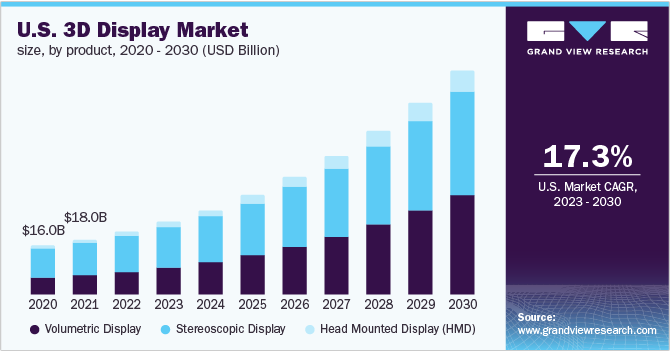
The 3D display market is one of the fastest-growing segments in the broader digital signage industry.
| Market Segment | 2026 Value | Forecast | CAGR |
|---|---|---|---|
| Global 3D Display Market | $196.87 billion | $636.08 billion (2034) | ~15–16% |
| Naked-Eye 3D LED Display Screens | ~$3.0 billion (est.) | $5.5 billion (2030) | ~11% |
| 3D Billboard Content Creation | Fast-growing sub-segment | — | 20.8% |
| Holographic Display Segment | Fastest within display types | — | 20.0% |
| Global Outdoor Advertising Market | $59.18 billion | — | — |
| DOOH share of outdoor ad spend | ~40% | — | — |
The content creation sub-segment growing at 20.8% CAGR reflects a structural shift: as hardware costs decline and more brands adopt the format, the bottleneck moves to high-quality anamorphic content production. This is creating a new category of specialized 3D content studios.
What Does a 3D Billboard Actually Cost?
This is the question the original article failed to answer. Here’s the real breakdown.
Hardware Costs
Naked-eye 3D LED hardware runs 20–30% higher than equivalent flat outdoor LED panels, driven by the black-shell LED requirement, higher refresh rate driver ICs, and custom corner cabinet fabrication.
| Configuration | Approximate Hardware Cost |
|---|---|
| Small corner installation (20–40 sqm total) | USD 60,000–150,000 |
| Mid-size landmark installation (60–120 sqm) | USD 150,000–400,000 |
| Large-scale spectacular (200+ sqm) | USD 400,000–1,000,000+ |
| Premium robotic/kinetic 3D displays | USD 2,000+/sqm |
Content Production Costs
This is the variable most buyers underestimate. Anamorphic 3D content cannot be repurposed from standard 2D advertising assets — it must be produced specifically for the screen’s geometry and viewing angle.
- USD 500–2,000 per second of footage, depending on animation complexity
- A 30-second loop costs USD 15,000–60,000 to produce
- Ongoing content refresh (quarterly or campaign-based) is a recurring cost that must be budgeted separately
Installation and Structural Costs
Corner installations require structural engineering assessment, custom mounting hardware, and precision alignment. Budget 15–25% of hardware cost for installation and commissioning.
Total Project Investment
| Project Scale | Total Investment Range |
|---|---|
| Entry-level (small corner, single campaign) | USD 150,000–300,000 |
| Mid-market (landmark installation, annual content) | USD 300,000–700,000 |
| Premium spectacular (major city, ongoing operation) | USD 700,000–2,000,000+ |
ROI: Does the Investment Make Sense?
The financial case for 3D billboards rests on three revenue mechanisms that standard digital signage cannot replicate.
1. Premium advertising rates. 3D billboard ad slots command 2–3x higher rates than standard digital signage in the same location. For media owners, this directly improves yield per square meter of display area.
2. Audience retention. The format delivers a 15x higher retention rate versus static digital displays. For brand advertisers, this translates to measurably higher recall — digital billboard recall is already at 82% versus traditional static formats; 3D amplifies this further.
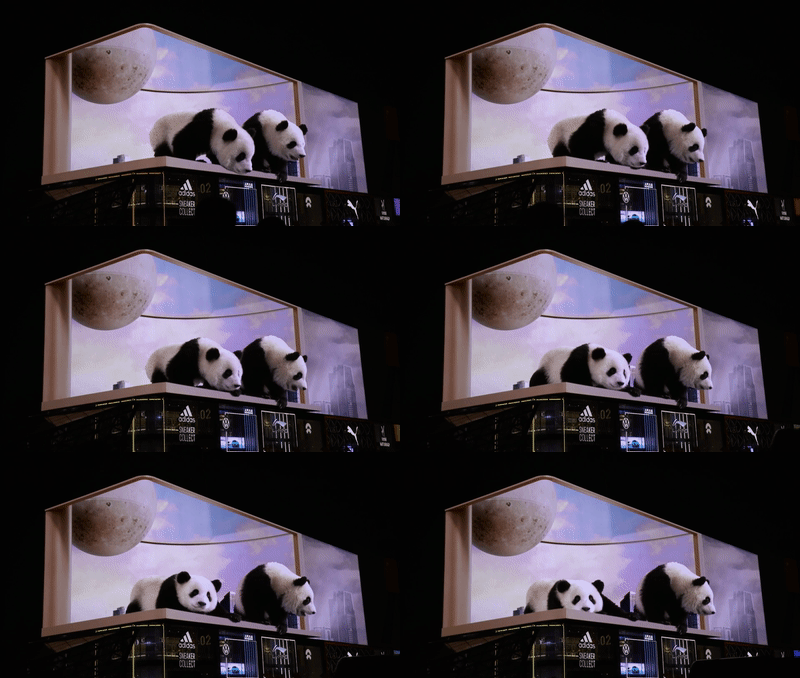
3. Organic social media amplification. This is the mechanism that changes the ROI math entirely. When a 3D billboard goes viral on TikTok or Instagram, the brand receives millions of impressions at zero additional media cost. The Chengdu Taikoo Li panda installation has been shared globally hundreds of times; the Tokyo Cat at Shinjuku Station became a city landmark. This earned media value is difficult to quantify precisely, but it routinely exceeds the original hardware investment for high-quality installations.
The break-even question: For a media owner operating a 3D billboard at premium ad rates, a well-located installation in a high-traffic urban center typically achieves payback within 18–36 months. For a brand owner using the installation for owned advertising, the calculation depends on campaign frequency and the value of earned media.
10 Notable 3D Billboard Case Studies
These installations represent the range of what’s been achieved globally — from viral cultural landmarks to precision brand activations.
| Location | Brand / Content | Technology | Scale | Notable Metric |
|---|---|---|---|---|
| Chengdu Taikoo Li, China | Giant panda | Naked-eye 3D corner | 888 m² | Went globally viral; hundreds of 3D videos played |
| Chongqing “Light of Asia”, China | “Chongqing” character | 8K ultra-HD corner | 3,788 m² | Asia’s largest ultra-HD landmark corner screen |
| Shinjuku Station, Tokyo | Nike sneakers | Naked-eye 3D | 154.7 m² | 190K weekday / 230K weekend foot traffic |
| Shinjuku Station, Tokyo | Tokyo Cat | Curved naked-eye 3D | ~150 m² | Became a permanent Tokyo landmark |
| COEX Artium, Seoul | Mercedes EQE, Audi, BMW | Forced perspective 3D | 80m × 23m | Three automotive brands in rotation |
| MSG Sphere, Las Vegas | Various | Spherical LED + 3D | 112m tall × 157m wide | USD 1.8 billion construction cost |
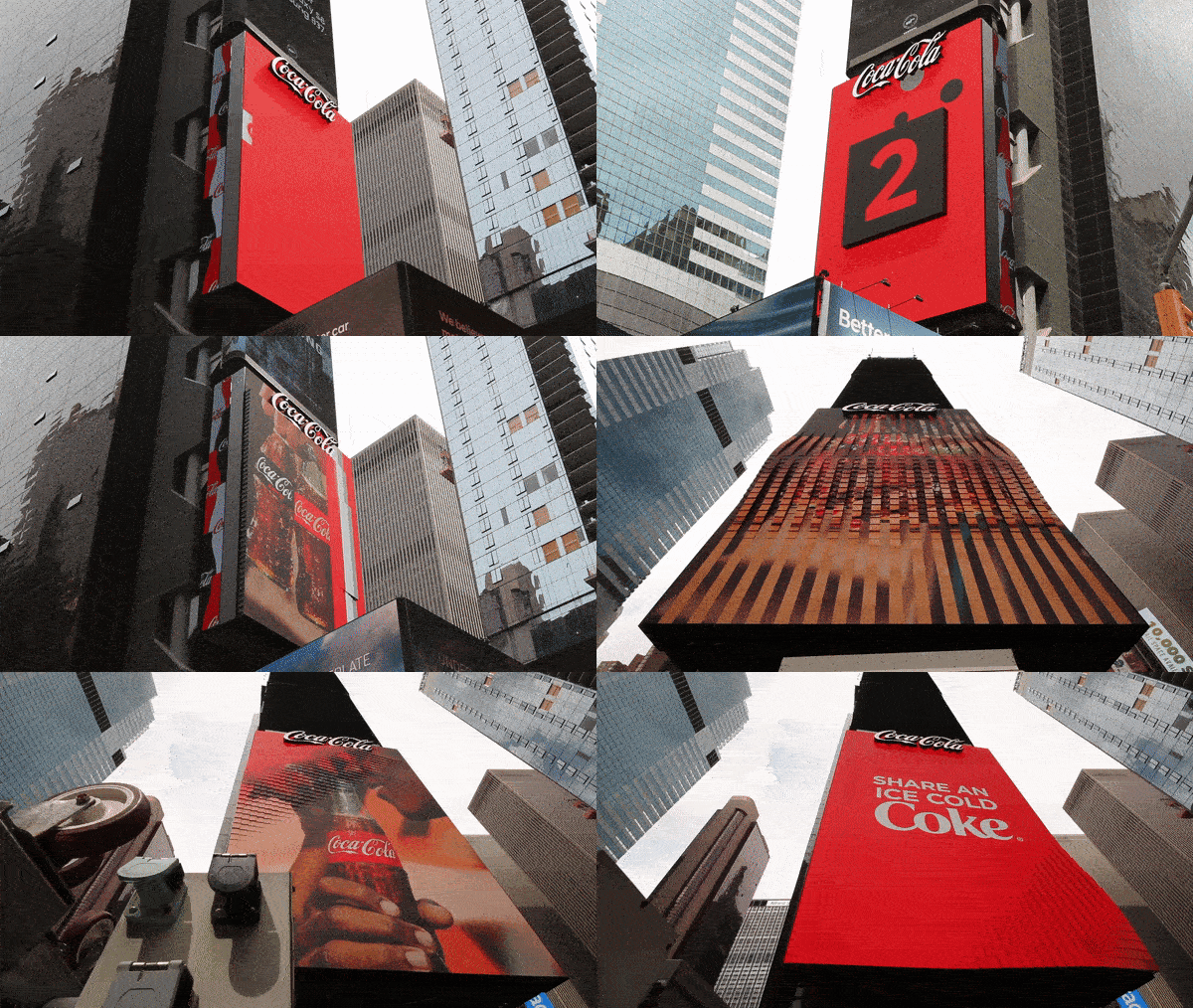
| Times Square, New York | Coca-Cola | Mechanical + 3D video | Large format | Mechanical movement combined with LED |
| Hangzhou Trade Unions Building | City landmark content | P6 ultra-HD outdoor 3D | 2,400 m² | Asia’s largest P6 outdoor 3D screen |
| Singapore Changi Airport T2 | “Natural Rhythm” water show | 892 LED panels, naked-eye 3D | 14m × 17m | Runs every 30 minutes, 4-minute show |
| Piccadilly Circus, London | Meta Quest 2 | Naked-eye 3D | Full screen | “Wish Extraordinary” campaign |
2026 Technology Trends Shaping the Market
Anamorphic Goes Mainstream
What was a niche “spectacular” format three years ago is becoming standard inventory for premium DOOH operators in major cities. Hardware costs are declining as more manufacturers enter the corner-cabinet segment, and the format is now accessible to mid-tier brands beyond luxury advertisers.
AI-Assisted Content Production
AI tools are reducing the cost and time required to produce anamorphic 3D content. What previously required a specialized studio with weeks of production time can now be partially automated, lowering the USD 500–2,000/second production cost for simpler animations. This is the primary driver of the 20.8% CAGR in the content creation sub-segment.
Social Media Amplification Loop
The viral sharing dynamic has become a deliberate part of campaign strategy. Brands now design 3D billboard content specifically for vertical video capture (9:16 aspect ratio) to maximize TikTok and Instagram Reels performance. The physical installation is increasingly treated as a content production asset, not just an advertising medium.
Sustainable LED Infrastructure
The industry is shifting toward solar-integrated, energy-efficient LED modules as sustainability becomes a procurement criterion for both media owners and brand advertisers. New common-cathode LED technology reduces power consumption by 30–40% compared to standard configurations — relevant for large-scale installations with significant operating costs.
Retail and Airport Holographics
Transparent LED panels and holographic film are being adopted in luxury retail and airport lounges for high-dwell-time environments. These installations don’t require the corner configuration of outdoor anamorphic displays and can be retrofitted into existing glass facades — making them accessible to a broader range of venues.
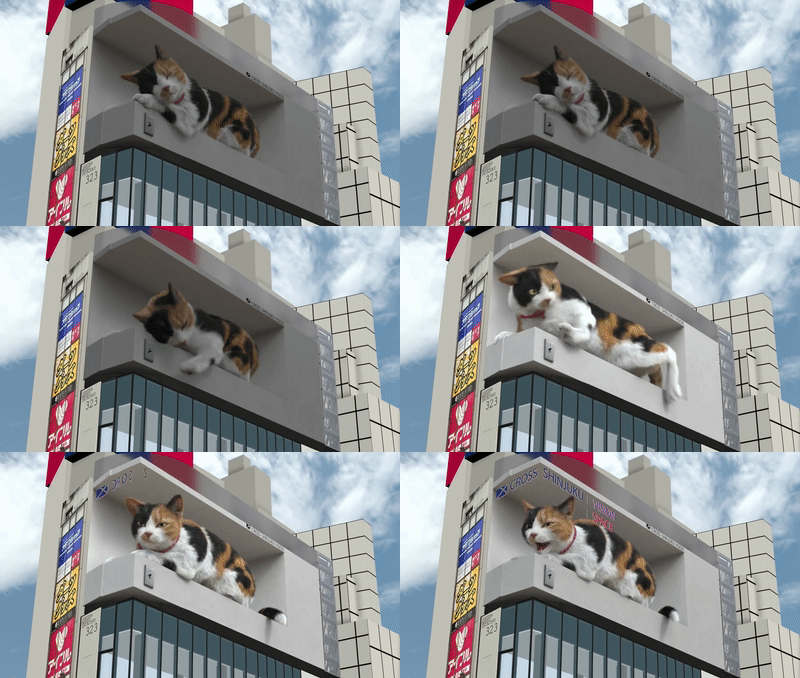
Japan’s 3D digital billboards, using transparent screens and projection technology, achieve realistic 3D effects and high interactivity.
Is a 3D Billboard Worth the Investment? A Decision Framework
Not every location or brand benefits equally from the format. Use this framework before committing budget.
Strong case for investment:
- High-traffic corner location in a major urban center (the corner geometry is essential for the anamorphic effect)
- Brand with strong visual identity and content that benefits from the “breaking out of screen” format
- Media owner seeking to differentiate inventory and command premium ad rates
- Campaign with social media amplification as a primary KPI
Weaker case for investment:
- Flat wall location (no corner — the core technical requirement is absent)
- Brand with primarily text-based or data-heavy advertising content
- Short campaign duration (content production costs are fixed regardless of run time)
- Markets where 3D billboard content has already saturated local social media feeds
The honest assessment: A 3D billboard in the wrong location, with mediocre content, will not go viral and will not deliver the ROI that the format’s best examples suggest. Location and content quality are the two variables that determine whether the investment pays off — hardware quality is table stakes.
FAQ
What is the difference between a naked-eye 3D billboard and a holographic display?
A naked-eye 3D billboard uses anamorphic perspective distortion on a corner LED configuration to simulate depth — it’s a standard LED panel with specialized content and geometry. A holographic display uses transparent LED panels or film to create “floating” visuals against a real background. Both are glasses-free, but the technology, hardware, and content requirements are completely different.
How long does 3D billboard content last before it needs to be refreshed?
Most operators refresh content quarterly or per campaign cycle. The viral amplification effect diminishes significantly after a piece of content has circulated widely on social media — typically within 2–4 weeks of launch. Budget for ongoing content production as a recurring cost, not a one-time expense.
What pixel pitch is best for a naked-eye 3D billboard?
P3–P6 is the typical range for outdoor naked-eye 3D installations. The optimal pitch depends on the minimum viewing distance at the specific location. Finer pitch (P3–P4) is appropriate for pedestrian-level installations with close viewing distances; coarser pitch (P5–P6) works for highway or elevated installations viewed from greater distances.
Can an existing flat LED billboard be converted to 3D?
A flat screen can display forced-perspective 3D content (the “hole in wall” effect), but it cannot produce the full anamorphic naked-eye 3D effect that requires a corner configuration. Converting a flat installation to true naked-eye 3D requires replacing the hardware with a corner cabinet system.
What is the lifespan of a 3D LED billboard?
LED panels in outdoor 3D installations are rated at 100,000 hours — approximately 11 years of continuous operation. In practice, technology refresh cycles (5–8 years) and content strategy evolution typically drive replacement before hardware failure. The corner cabinet structure and mounting hardware have longer lifespans and can often be retained through panel upgrades.