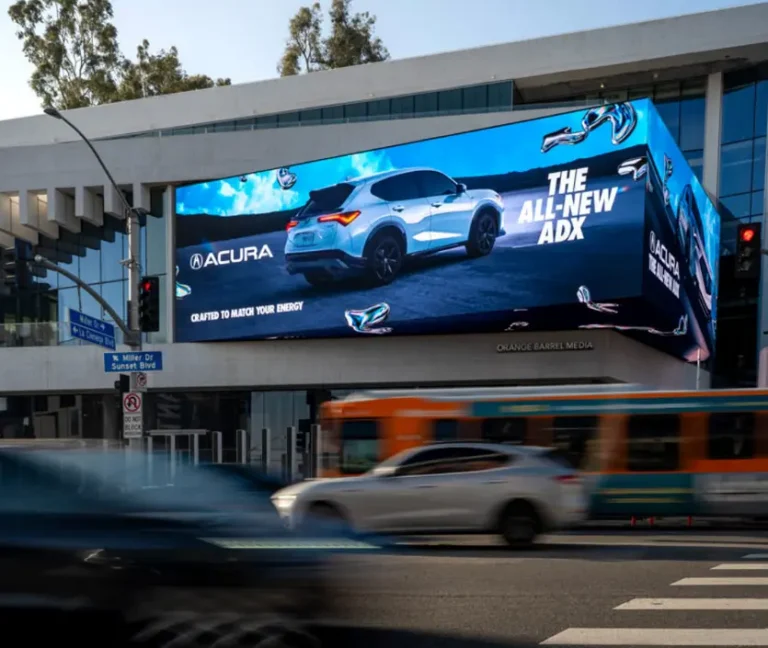
If you’re evaluating Mini LED in 2026, the core question isn’t “is it good?” — it’s “is it the right technology for your specific use case?” Mini LED dominates in bright environments, large-format commercial displays, and any application where static content runs for hours. OLED wins in dark-room cinematic viewing and competitive gaming. MicroLED is the long-term successor to both, but remains cost-prohibitive for most buyers.
This guide covers what Mini LED actually is, how it compares to competing technologies, where it performs best, and what it costs — with current 2026 pricing data.
What Is Mini LED? The Technology Explained
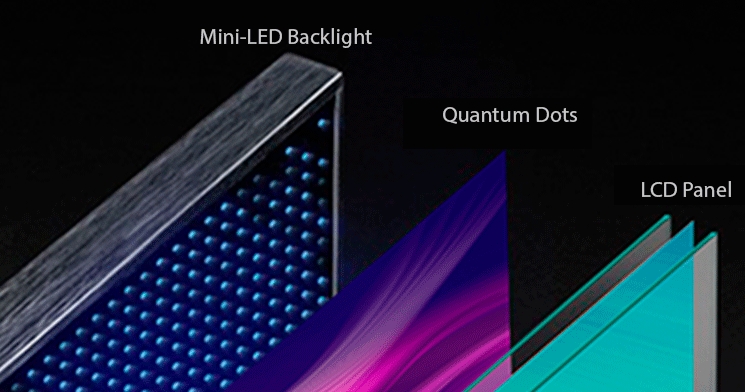
Mini LED is a backlighting technology, not a display type in itself. It uses LEDs smaller than 0.2 mm — roughly 1/100th the size of a conventional LED — packed at high density behind an LCD panel. The LCD layer still controls what you see; Mini LED controls how brightly each zone of that panel is illuminated.
How Local Dimming Works
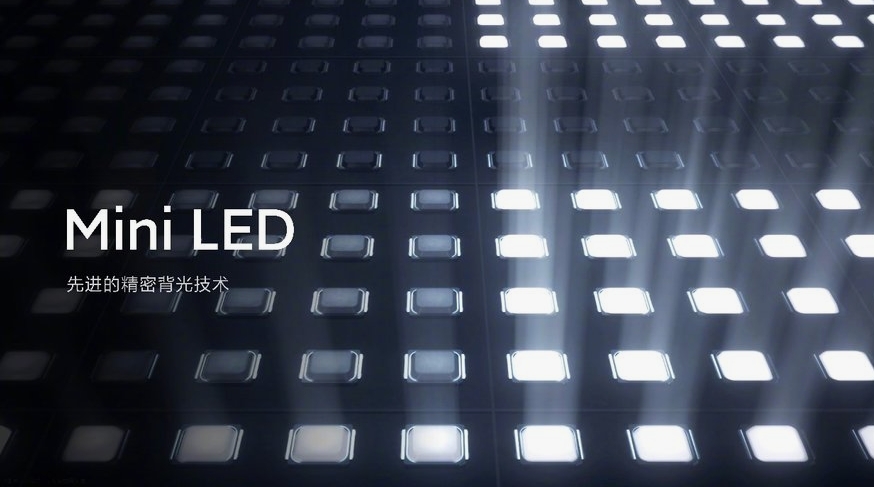
The defining capability of Mini LED is local dimming zones — independently controlled groups of LEDs that can be brightened or dimmed based on what’s on screen. A conventional LED-backlit LCD might have 8–32 dimming zones. A 2026 Mini LED panel can have 1,152–2,304+ zones in a 27″ monitor, or tens of thousands in a large commercial display.
Why this matters:
- A dark scene with a bright highlight (a candle in a dark room, a star field) can have the bright area at full intensity while surrounding zones dim to near-black.
- This produces contrast ratios that approach — though don’t match — OLED’s pixel-level control.
- Color accuracy improves because each zone’s illumination is calibrated to the content being displayed.
Mini LED vs. Standard LED Backlight
| Feature | Standard LED Backlight | Mini LED |
|---|---|---|
| LED size | 1–3 mm | <0.2 mm |
| Dimming zones | 8–64 | 1,000–10,000+ |
| Peak brightness | 400–800 nits | 1,500–3,000+ nits |
| Contrast (local) | Moderate | Very high |
| Blooming (halo effect) | Visible | Reduced, not eliminated |
Key Features and Performance Specs
Brightness — Mini LED’s Strongest Advantage
Mini LED holds the brightness crown in 2026. While OLED peaks at 1,000–1,500 nits in small highlight windows (and dims via automatic brightness limiting on full-screen content), Mini LED sustains 800–1,000 nits across the full panel and delivers 2,000+ nits in HDR highlight zones.
For bright office environments, retail spaces, or outdoor-facing displays, this is a decisive advantage.
Contrast and Black Levels
With 2,304+ dimming zones, modern Mini LED panels achieve contrast ratios that are visually impressive — but not infinite. OLED pixels turn off completely for true black. Mini LED zones control thousands of pixels each, which means some light bleed remains. The “blooming” halo effect around bright objects on dark backgrounds has been significantly reduced by 2026 algorithms but is not fully eliminated.
Zero Burn-In Risk
Mini LED uses an inorganic backlight — there are no organic compounds to degrade. This makes it the correct choice for:
- Control rooms and monitoring centers running 24/7
- Digital signage with static logos or persistent UI elements
- Trading floors and financial dashboards
- Any application where the same content displays for extended periods
OLED carries a real, if low, burn-in risk in these scenarios. Mini LED does not.
Additional Performance Characteristics
- Response time: Fast enough for gaming and broadcast; not as fast as OLED’s 0.03 ms GtG
- Lifespan: 50,000–100,000+ hours depending on operating brightness
- Color gamut: Typically covers 90–98% DCI-P3 with quantum dot enhancement (QD-Mini LED)
- Energy efficiency: Precise zone control reduces power consumption vs. full-array standard backlights
- Form factor: Enables thinner panels than traditional LED-backlit LCD; not as thin as OLED
Mini LED vs. OLED vs. MicroLED: Direct Comparison
This is the comparison most buyers actually need. Here’s the honest breakdown for 2026:
| Spec | Mini LED | OLED (Tandem) | MicroLED |
|---|---|---|---|
| Peak brightness | 2,000–3,000 nits | 1,500+ nits (small window) | 5,000+ nits |
| Black level | Very good (zone dimming) | Perfect (pixel off) | Perfect (pixel off) |
| Burn-in risk | None | Low (improved in 2026) | None |
| Response time | ~1–2 ms | 0.03 ms | <0.1 ms |
| Lifespan | 50,000–100,000 hrs | 30,000–50,000 hrs | 100,000+ hrs |
| Bright room performance | Excellent | Good | Excellent |
| Dark room performance | Very good | Best | Best |
| Price (consumer 65″) | ~1,000–2,500 | ~1,000–3,000 | $10,000+ |
| Commercial availability | Widely available | Widely available | Limited, high cost |
When to Choose Each Technology
Choose Mini LED when:
- The display runs in a bright environment (retail, office, outdoor-facing)
- Static content runs for extended periods (signage, control rooms, dashboards)
- Budget is a constraint but high brightness is required
- Screen size exceeds 80″ — Mini LED’s production efficiency advantage grows at large sizes
Choose OLED when:
- Dark-room cinematic viewing or gaming is the primary use
- Motion clarity is critical (competitive gaming, broadcast monitoring)
- The display is upgraded every 3–4 years (burn-in risk is manageable at that cycle)
Choose MicroLED when:
- Budget is not a constraint and you need the best of all worlds
- Ultra-large seamless tiling (100″+ commercial installations) is required
- Long-term total cost of ownership justifies the premium
Use Cases: Where Mini LED Wins
High-End TVs and Home Theater
Mini LED is the dominant technology in the 80″+ premium TV segment in 2026. TCL and Hisense have expanded their Mini LED lineups to 85–115″ sizes, leveraging 10.5th-generation LCD production lines to keep prices competitive. For large living rooms with ambient light, Mini LED’s brightness advantage over OLED is clearly visible.
Commercial Signage and Digital Displays
Mini LED’s combination of high brightness, zero burn-in risk, and long lifespan makes it well-suited for:
- Retail environments: Product showcases, window-facing displays, interactive kiosks
- Airport and transit signage: High ambient light, continuous operation
- Corporate lobbies: Brand displays running static content 12+ hours/day
Control Rooms and Monitoring Centers
24/7 operation with static UI elements (maps, dashboards, alert indicators) is exactly the scenario where OLED’s burn-in risk becomes a real operational concern. Mini LED eliminates that risk entirely while delivering the brightness and contrast needed for multi-screen monitoring environments.
Stages and Live Events
For event staging, Mini LED panels offer high brightness for well-lit environments and fast enough response for live video. For broadcast-facing or camera-visible applications, however, fine-pitch LED (P1.5–P2.5) or COB panels remain the professional standard due to their superior refresh rates and seamless tiling.
Gaming Monitors
The 27″–32″ Mini LED gaming monitor segment is highly competitive in 2026. Models with 2,304 dimming zones are available under $600 at 32″ 4K, undercutting OLED at that size. For players who game in bright rooms or run productivity workloads alongside gaming, Mini LED is the practical choice.
2026 Pricing Reference
Consumer Displays
| Screen Size | Mini LED Price Range (2026) |
|---|---|
| 27″–32″ monitor | 400–900 |
| 43″–55″ TV | 600–2,000 |
| 65″–70″ TV | 1,000–2,500 |
| 75″–85″ TV | 1,500–4,000 |
| 98″–115″ TV | 3,000–8,000+ |
Commercial Displays (per m²)
| Application | Price per m² |
|---|---|
| Indoor commercial signage | 1,500–3,000 |
| Premium conference / boardroom | 3,000–5,000 |
| Large-format outdoor-facing | 4,000–7,000+ |
Price trend: Mini LED panel costs are declining 5–10% annually as production scales. The 65–70″ consumer segment has seen the sharpest compression, with Mini LED and OLED now converging at similar price points in that bracket.
Limitations to Know Before You Buy
No technology is without trade-offs. Here’s what Mini LED doesn’t do well:
- Blooming: Even with 2,304 zones, a bright object on a pure black background will show a faint halo. It’s much better than 2022 models, but it’s not gone.
- True black: OLED pixels turn off completely. Mini LED zones control thousands of pixels — some light always leaks.
- Thickness: Mini LED panels are thinner than traditional LED-backlit LCD but thicker than OLED. Not a concern for commercial installs; relevant for wall-mount aesthetics.
- Motion clarity: OLED’s 0.03 ms response time is faster. For competitive gaming at 240 Hz+, OLED has a measurable edge.
- Repairability: Commercial Mini LED panels require factory service for backlight failures — field repair of individual LED zones is not practical.
Market Outlook: Where Mini LED Is Heading
Ultra-Large Is Mini LED’s Stronghold
UBI Research’s 2026 analysis confirms the segmentation: OLED is strengthening in the 65–77″ premium bracket as its cost structure improves, while Mini LED is expanding its dominance in 80″+ sizes where production efficiency on 10.5G LCD lines gives it a structural cost advantage.
QD-Mini LED Is Becoming the Standard
Quantum dot enhancement (QD-Mini LED) is now the default configuration for premium Mini LED products. The quantum dot layer converts blue LED light to precise red and green wavelengths, pushing color gamut coverage to 90–98% DCI-P3 and improving color accuracy across the panel.
RGB Mini LED Is the Next Frontier
RGB Mini LED — where red, green, and blue LEDs replace the traditional white backlight with quantum dot conversion — eliminates the conversion efficiency loss and enables even higher brightness and color purity. TCL’s 2026 lineup includes RGB Mini LED models, though at a significant price premium over QD-Mini LED.
MicroLED Remains the Long-Term Successor
MicroLED (self-emissive, no LCD layer) is the technology that Mini LED is bridging toward. Current MicroLED commercial installations cost $10,000+ per square meter. As manufacturing yields improve through 2027–2030, MicroLED is expected to displace Mini LED in the premium segment — but Mini LED will remain the value-performance leader for the foreseeable future.
FAQ
Is Mini LED the same as MicroLED?
No. Mini LED is a backlighting technology for LCD panels. MicroLED is a self-emissive technology where each pixel is its own LED — no LCD layer required. MicroLED offers better contrast and longer lifespan but costs significantly more.
Does Mini LED have burn-in?
No. Mini LED uses an inorganic backlight with no organic compounds. Burn-in is not a risk, making it suitable for static content applications like signage and control rooms.
How many local dimming zones does a good Mini LED display have?
Entry-level Mini LED panels have 200–500 zones. Premium 2026 models reach 1,152–2,304+ zones in a 27″ monitor. More zones = less blooming and better contrast.
Is Mini LED better than OLED for a home theater?
It depends on your room. In a dark room, OLED’s infinite contrast and perfect blacks give it the edge for cinematic content. In a bright living room, Mini LED’s 2,000+ nit brightness is clearly superior.
What is QD-Mini LED?
QD-Mini LED combines Mini LED backlighting with a quantum dot layer that converts blue LED light to precise red and green wavelengths. This improves color gamut (typically 90–98% DCI-P3) and color accuracy compared to standard white-backlit Mini LED.
How long does a Mini LED display last?
Rated lifespan is 50,000–100,000+ hours depending on operating brightness. At 8 hours/day commercial use, that’s 17–34 years of rated operation — significantly longer than OLED’s 30,000–50,000 hour rating.