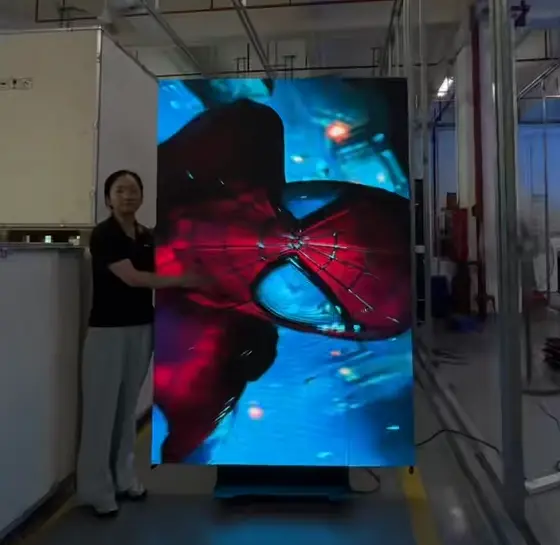
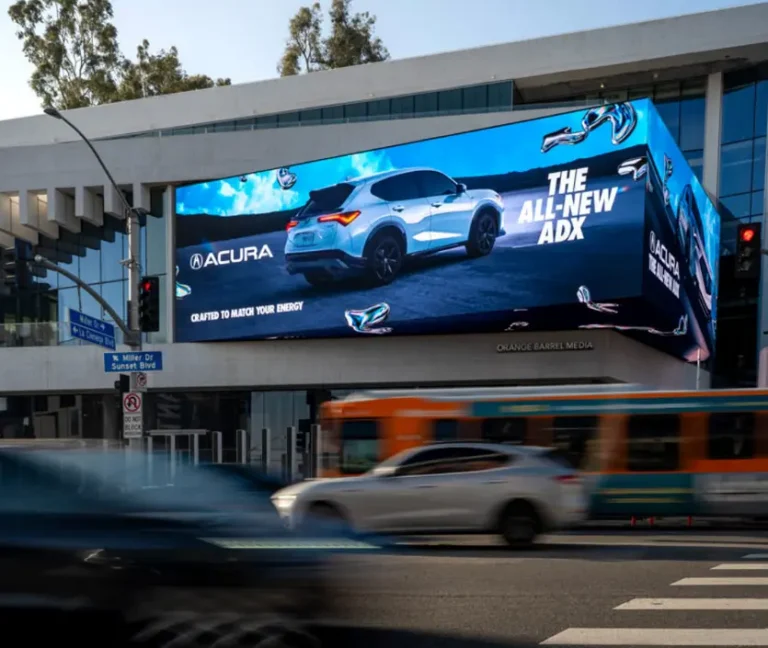
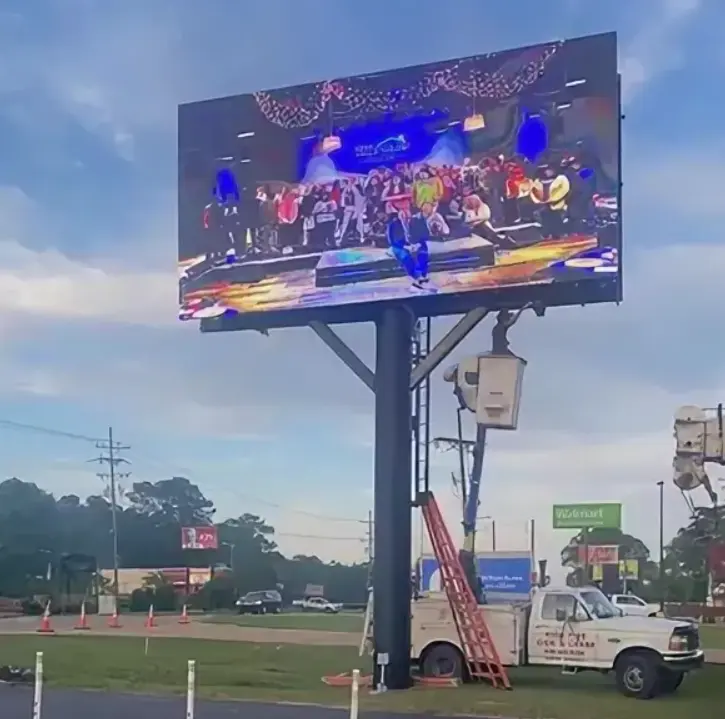
If you are budgeting for an outdoor LED display in 2026, the most useful starting point is not a single “price per square meter.” A commercial outdoor LED screen can cost roughly $300–$1,500+ per m² for screen hardware, depending heavily on pixel pitch, brightness, cabinet construction, weather protection, LED components and application. Premium fine-pitch outdoor systems can exceed this range.
More importantly, the complete project cost can be substantially higher after adding the control system, steel structure, electrical work, freight, installation, commissioning and local compliance requirements.
For a commercial buyer, the right question is therefore not simply “How much do outdoor LED panels cost?” It is:
What technical configuration delivers the required visibility and reliability at the lowest practical total cost of ownership?
The following guide explains outdoor LED display prices, pixel pitch selection, waterproof protection, installation costs and the factors that should be included in a professional quotation.
Outdoor LED Display Price at a Glance
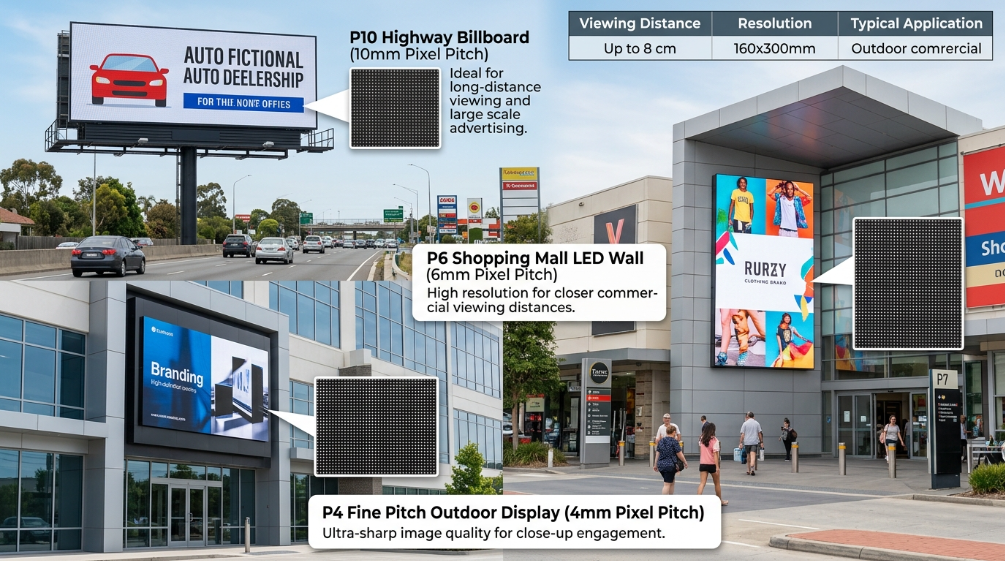
The following ranges are useful for early-stage commercial budgeting. They are indicative hardware benchmarks rather than fixed supplier quotations. Actual prices vary according to quantity, component brands, cabinet design, certification, destination, shipping terms and project requirements.
| Outdoor LED Configuration | Typical Pixel Pitch | Typical Application | Indicative Screen Hardware Price |
|---|---|---|---|
| Long-distance billboard | P8–P10 | Highway, roadside advertising | $300–$700/m² |
| Standard outdoor advertising | P6–P8 | Commercial streets, building façades | $400–$900/m² |
| Higher-resolution outdoor display | P4–P6 | Retail, plazas, premium DOOH | $600–$1,200/m² |
| Fine-pitch outdoor LED | P3–P4 | Close pedestrian viewing, premium façades | $800–$1,500+/m² |
| Premium outdoor LED | P2.5–P3.9 | High-end commercial applications | $1,000–$2,000+/m² |
These ranges should be used for budget planning, not as a substitute for an engineering quotation. Current market guides show similarly broad ranges, with pixel pitch, brightness, weather protection, cabinet design and installation scope among the principal variables.
Outdoor LED Display Price Per Square Foot
North American buyers often calculate project budgets in square feet rather than square meters.
The conversion is:
1 m² = 10.764 sq. ft.
For example, a screen priced at $600/m² is approximately:
$600 ÷ 10.764 ≈ $55.74/sq. ft.
A standard waterproof outdoor LED display may therefore fall broadly around $28–$140+ per sq. ft. for screen hardware, depending on configuration.
Do not confuse this with the installed project price. A turnkey billboard can cost considerably more after structural engineering, steelwork, electrical infrastructure, installation, permits and logistics are included.
What Is an Outdoor LED Display?
An outdoor LED display is a modular, high-brightness digital display system engineered for commercial outdoor environments.
Unlike consumer televisions, commercial outdoor LED displays are normally built from:
- LED modules
- LED cabinets
- LED chips and packages
- driver ICs
- power supplies
- receiving cards
- control systems
- structural mounting systems
They are designed to operate under conditions such as direct sunlight, rain, dust, temperature fluctuations and wind.
Typical commercial applications include:
- Digital billboards
- DOOH advertising
- Building façades
- Shopping centers
- Stadiums
- Transportation hubs
- Gas stations
- Public squares
- Retail storefronts
- Corporate buildings
- Outdoor event venues
The engineering requirements are fundamentally different from those of indoor LED video walls.
What Determines Outdoor LED Display Prices?
There is no single specification that determines the price. The final quotation is the result of several technical and project variables.
1. Pixel Pitch
Pixel pitch is normally the largest hardware price driver.
It describes the distance between the centers of adjacent LED pixels.
A smaller pixel pitch means:
- Higher pixel density
- Higher resolution
- Better image detail at close distances
- More LEDs per square meter
- Higher hardware cost
Typical outdoor configurations include P3.9, P4.8, P6.2, P7.8 and P10.4, although other pitches are available.
The important point is simple:
Do not automatically choose the smallest pixel pitch. Choose the pitch that matches the viewing distance.
For a highway billboard viewed from 30–50 meters, paying a substantial premium for P3.9 may provide little practical benefit. For a retail façade where pedestrians stand 5–8 meters away, the additional resolution can be worthwhile.
2. Viewing Distance and Pixel Pitch Selection
A useful preliminary rule is to connect pixel pitch with the nearest normal viewing distance.
| Pixel Pitch | Typical Viewing Distance | Common Application |
| P3–P4 | 4–10 m | Premium retail, pedestrian areas |
| P5–P6 | 8–20 m | Commercial façades, plazas |
| P8 | 15–30 m | Roadside advertising |
| P10 | 25 m+ | Highway billboards, large-format displays |
These are planning guidelines rather than rigid engineering limits. Content type, screen height, viewing angle and human visual requirements also matter.
The correct purchasing sequence is:
Viewing distance → pixel pitch → screen resolution → hardware cost
not:
Budget → smallest pixel pitch available
3. Brightness: How Many Nits Does an Outdoor LED Screen Need?
Outdoor LED displays must compete with sunlight.
Brightness is normally specified in nits, equivalent to cd/m².
Typical commercial outdoor systems may use approximately:
- 5,000–6,000 nits: standard outdoor environments
- 6,000–8,000 nits: strong daylight applications
- 8,000–10,000+ nits: demanding direct-sunlight environments
However, maximum brightness should not be the only purchasing criterion.
Excessive brightness can increase power consumption and may be uncomfortable at night. A better solution is a display with:
- High daytime brightness
- Automatic brightness adjustment
- Ambient light sensing
- Appropriate nighttime brightness
- Efficient LED and driver architecture
Some 2026 outdoor LED systems now offer brightness levels approaching 10,000 nits while integrating automatic brightness management and energy-saving architectures.
Waterproof Outdoor LED Display Panel Price: Why IP Rating Matters
For buyers searching specifically for Waterproof Outdoor LED Display Panel Price, the IP rating should be evaluated alongside cabinet construction and installation details.
What Does IP65 Mean?
IP65 generally indicates:
- 6: dust-tight protection
- 5: protection against water jets
This makes IP65 a common protection level for outdoor LED applications.
But IP65 should not be interpreted as “the entire LED billboard can be submerged.”
The complete outdoor installation also depends on:
- Module sealing
- Cabinet gasket design
- Cable connectors
- Cable entry points
- Drainage
- Rear protection
- Structural enclosure
- Installation orientation
Some premium outdoor LED systems use higher protection levels such as IP66 or IP67. For example, SoStron’s Ares outdoor series specifies IP66 front protection and IP54 rear protection, while its Ares 2 product documentation lists IP67 protection for the cabinet.
Therefore, when comparing waterproof outdoor LED panel prices, ask the supplier:
What exactly is covered by the stated IP rating?
Outdoor LED Panel Cabinet Materials and Construction
Cabinet construction can have a significant effect on both the purchase price and the long-term project cost.
Steel Cabinets
Steel cabinets are widely used for large fixed billboards because they are:
- Strong
- Familiar to installers
- Relatively economical
However, they are heavier and require effective anti-corrosion treatment, particularly in humid or coastal environments.
Aluminum Cabinets
Aluminum cabinets can offer:
- Lower weight
- Better thermal conductivity
- Improved corrosion resistance
- Easier handling
- Lower structural load
For large façades, lightweight cabinets can potentially reduce requirements for reinforcement and installation labor.
Die-cast aluminum construction is increasingly used in higher-end commercial outdoor LED systems because mechanical precision and thermal performance can be improved compared with conventional fabricated steel structures.
SMD vs. DIP vs. COB for Outdoor LED Displays
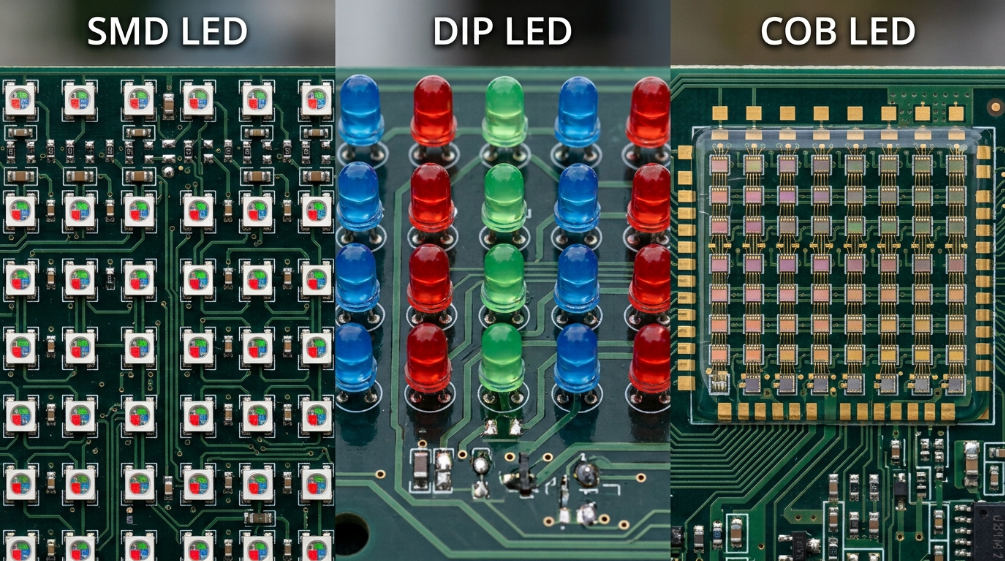
LED package technology also affects outdoor LED panel prices.
SMD
Surface-mounted LEDs are widely used because they offer:
- Good viewing angles
- Full-color performance
- High pixel density
- Flexible pixel pitch options
SMD remains a common choice for commercial outdoor LED displays.
DIP
DIP LEDs have historically been used for very high-brightness outdoor applications.
They can be advantageous where long-distance visibility and rugged outdoor operation are priorities, although the market has increasingly adopted SMD solutions.
COB
COB packages integrate LED dies more directly into the display structure and can provide advantages in protection, durability and fine-pitch applications.
However, COB is not automatically the best choice for every outdoor billboard. The correct technology depends on viewing distance, environment, resolution requirements and budget.
Refresh Rate: Why 3840Hz or 7680Hz Can Matter
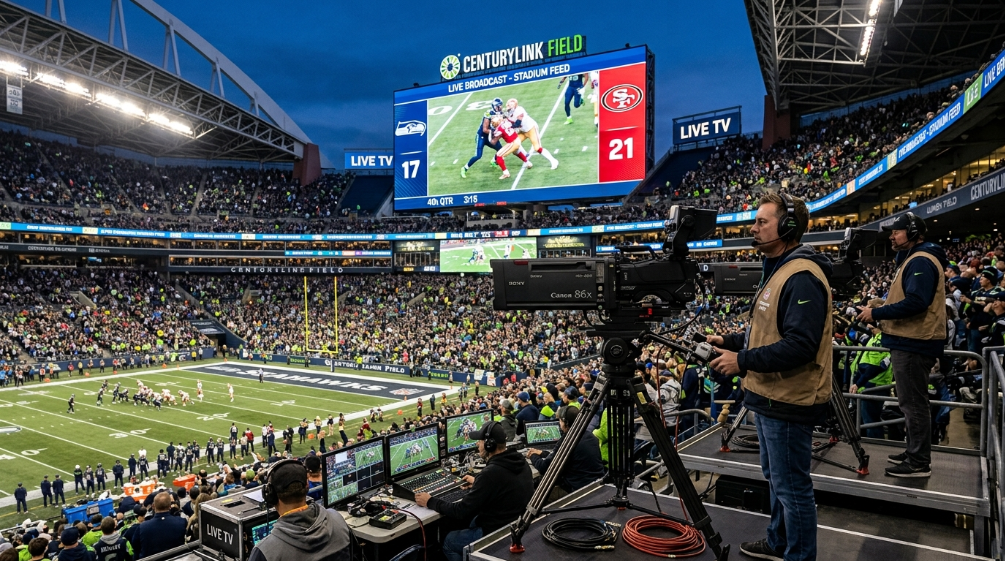
Refresh rate becomes particularly important when the LED screen is:
- Filmed by cameras
- Used for sports
- Installed at live events
- Used for broadcast
- Displaying fast-moving content
A higher refresh rate can reduce visible flicker and improve camera performance.
For general advertising, 1920Hz may be sufficient for some systems, while 3840Hz or higher is commonly preferred for professional commercial applications.
Premium systems can reach 7680Hz. SoStron’s current Ares/Ares 2 specifications, for example, list refresh-rate options up to 7680Hz.
The important purchasing point is not simply “buy the highest number.”
Ask:
What refresh rate is guaranteed under the actual operating configuration?
Large Outdoor LED Screen Price: What Does a Big Billboard Really Cost?
A large outdoor LED screen is not priced simply by multiplying screen area by a headline $/m² number.
Consider a hypothetical:
10 m × 5 m screen = 50 m²
If the hardware price is $700/m²:
50 × $700 = $35,000
That is the approximate screen hardware budget.
The complete project may also require:
- LED cabinets
- Sending system
- Video processor
- Control software
- Distribution cabinet
- Power cables
- Signal cables
- Steel structure
- Structural engineering
- Freight
- Customs/taxes
- Installation
- Commissioning
- Spare parts
- Local electrical work
Therefore:
$35,000 screen hardware does not necessarily mean a $35,000 installed billboard.
This distinction is one of the most important points for commercial buyers.
What Is Included in an Outdoor LED Screen Quote?
Before comparing two supplier quotations, normalize the scope.
A professional quotation should clearly state whether it includes:
| Cost Item | Usually Required? |
| LED modules | Yes |
| Cabinets | Yes |
| Power supplies | Yes |
| Receiving cards | Usually |
| Sending card/system | Usually |
| Video processor | Project dependent |
| Control software/CMS | Project dependent |
| Steel structure | Outdoor fixed projects |
| Electrical distribution | Project dependent |
| Cables | Yes |
| Shipping | Yes |
| Installation | Project dependent |
| Commissioning | Recommended |
| Spare modules | Recommended |
| Local permits | Project dependent |
| Structural engineering | Large installations |
This is why comparing suppliers only by price per square meter can produce misleading results.
Installation and Structural Costs for Outdoor LED Displays
Large outdoor LED screens can impose significant structural loads.
A professional project may require engineering calculations covering:
- Screen weight
- Wind load
- Mounting height
- Building structure
- Steel frame
- Foundation
- Anchor points
- Local building regulations
High-rise façade installations are particularly sensitive to wind load.
For highway billboards, rooftop screens and freestanding LED structures, structural engineering should be treated as part of the LED project rather than an optional afterthought.
A lower screen price is not a bargain if the mounting structure must later be redesigned.
Energy Consumption and Total Cost of Ownership
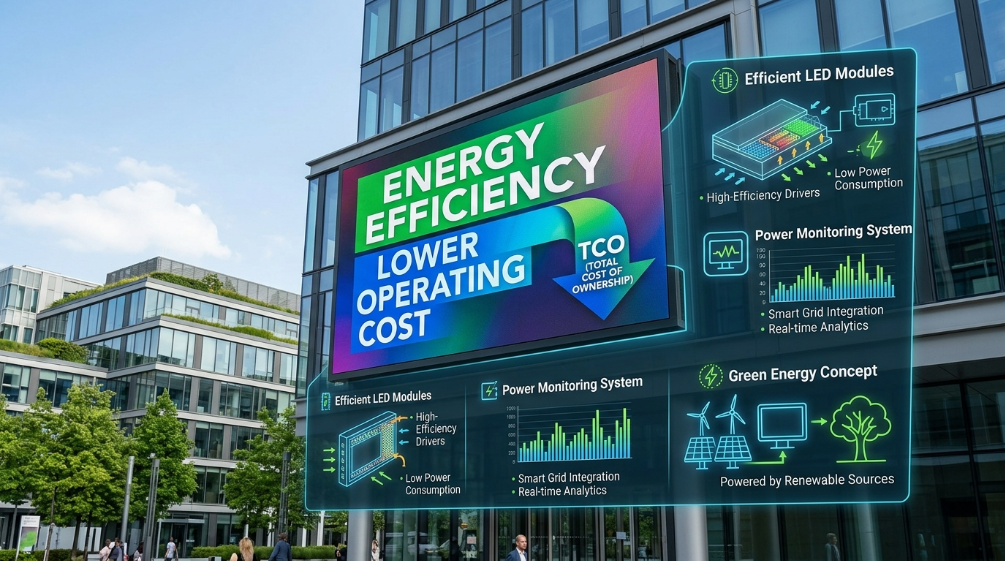
Purchase price is only the beginning of the financial calculation.
Outdoor LED displays consume electricity every day, sometimes for 12–24 hours.
Important variables include:
- Screen area
- Maximum power
- Average power
- Brightness level
- Content type
- Daily operating hours
- Local electricity rate
- Cooling method
- LED efficiency
- Power supply efficiency
For example:
Annual electricity cost = average power × operating hours × electricity rate
A screen that costs $5,000 less initially but consumes substantially more electricity can become the more expensive solution over several years.
This is why Total Cost of Ownership (TCO) should be part of every large commercial LED purchase.
Some newer outdoor LED systems use common-cathode architectures and passive aluminum thermal management to reduce operating energy and heat generation.
Fixed Outdoor LED vs. Rental Outdoor LED
Another common purchasing mistake is comparing fixed-installation LED with rental LED on price alone.
Fixed Outdoor LED
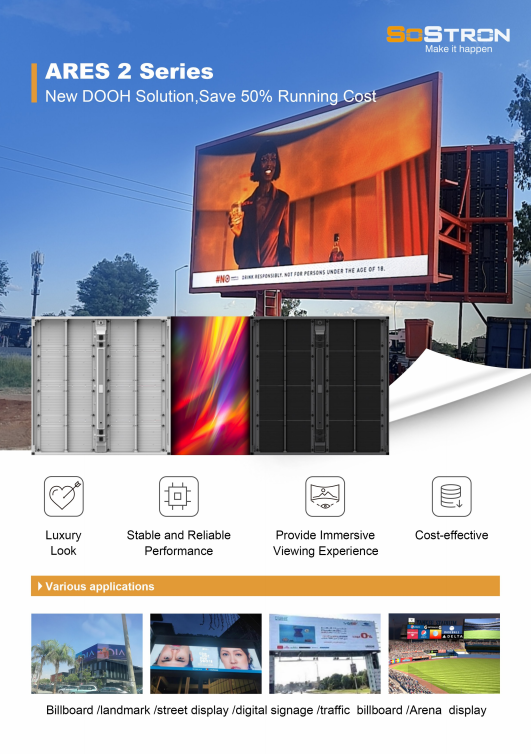
Best suited for:
- Permanent billboards
- Building façades
- Stadium installations
- Retail buildings
- DOOH networks
Priorities include:
- Long-term reliability
- Weather protection
- Structural integration
- Maintenance access
- TCO
Rental LED
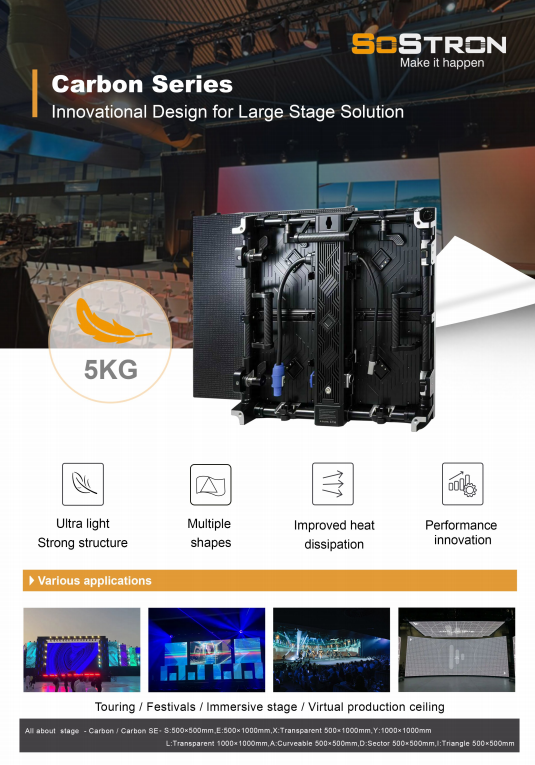
Designed for:
- Concerts
- Events
- Temporary advertising
- Touring productions
Priorities include:
- Fast installation
- Lightweight cabinets
- Quick locking systems
- Frequent assembly/disassembly
A rental screen may have a higher hardware price per square meter because its cabinet is engineered for portability rather than permanent installation.
How Outdoor LED Display Prices Change by Application
The cheapest specification is not necessarily the cheapest solution for a particular application.
Highway Billboard
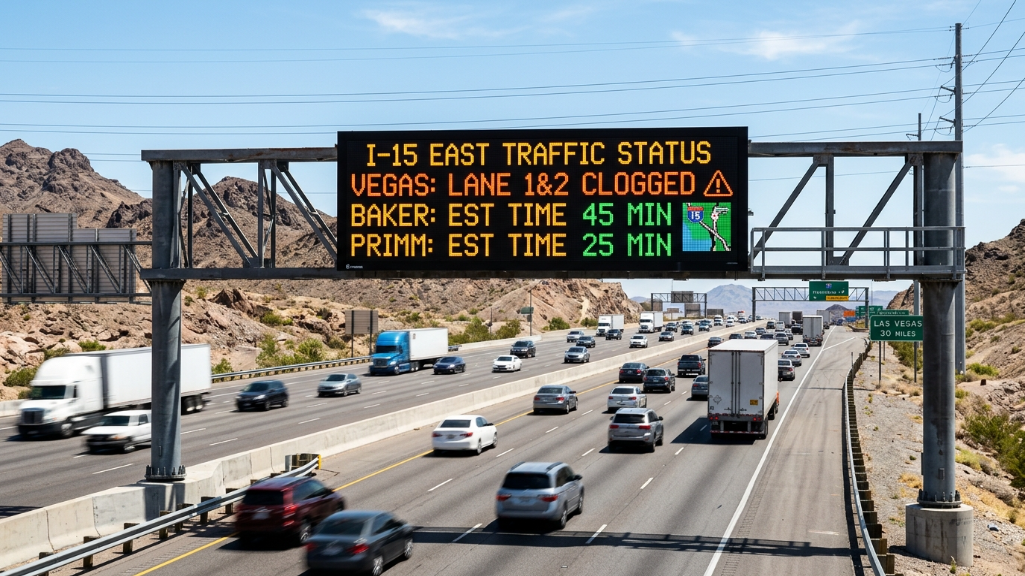
Recommended priorities:
- P8–P10 or larger pitch
- 5,000–7,000+ nits
- High weather resistance
- Long viewing distance
- Strong structural support
Shopping Mall or Commercial Façade
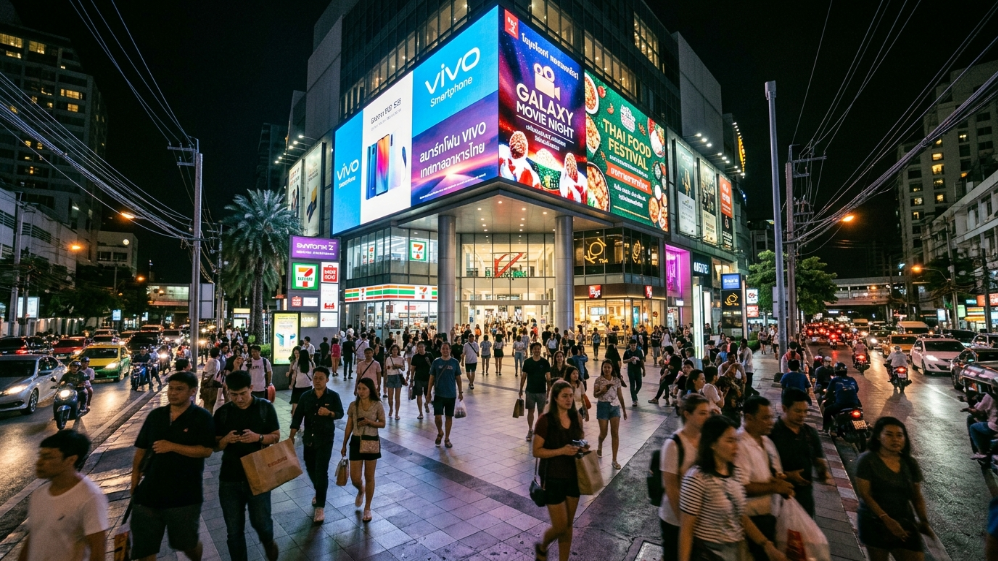
Recommended priorities:
- P4–P6
- High brightness
- Strong contrast
- Fine image detail
- Architectural integration
- Front maintenance where required
Stadium
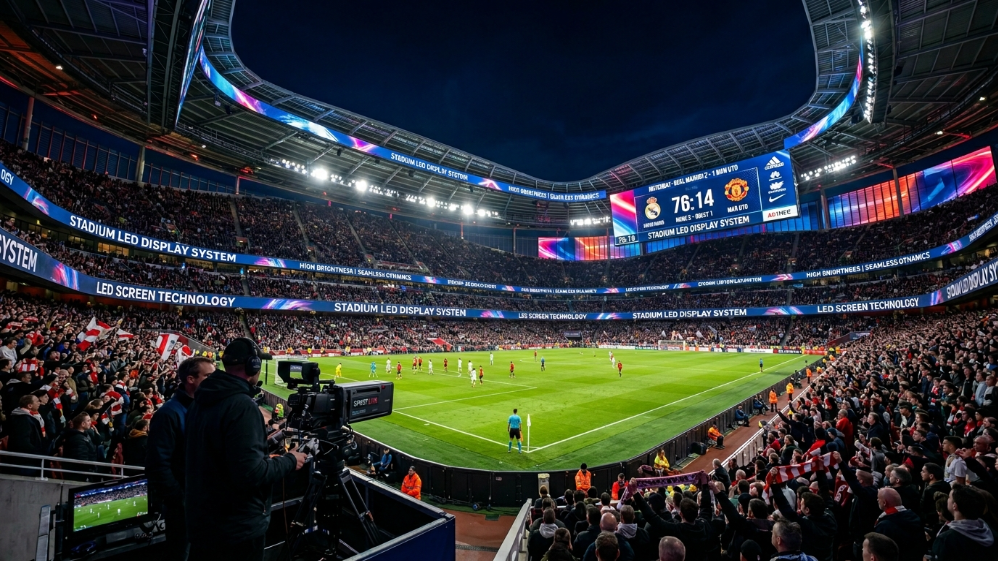
Recommended priorities:
- P6–P10
- High refresh rate
- Wide viewing angle
- Robust cabinet construction
- Camera-friendly performance
- Impact protection
Premium Retail / Pedestrian Area
Recommended priorities:
- P3–P5
- Higher pixel density
- High brightness
- Strong contrast
- Fine content detail
- Architectural appearance
The correct configuration depends on the audience, not simply the available budget.
How to Get an Accurate Outdoor LED Display Price
For a professional quotation, provide the supplier with at least the following information:
- Screen width and height
- Total display area
- Intended application
- Nearest viewing distance
- Typical viewing distance
- Outdoor location
- Direct sunlight exposure
- Required brightness
- Preferred pixel pitch
- IP protection requirement
- Fixed or rental installation
- Front or rear maintenance
- Mounting method
- Approximate mounting height
- Local wind conditions
- Operating hours per day
- Destination country
- Required certifications
- Installation requirements
- Target delivery date
The more complete the RFQ, the less likely you are to receive a misleading “cheap” quotation that excludes critical project costs.
Actionable Advice for Outdoor LED Display Buyers
Before selecting an outdoor LED display supplier, use this five-step process.
Step 1: Start With Viewing Distance
Do not begin with P3, P4 or P5 because they “look better.”
Determine how close the audience will normally be.
Step 2: Set the Minimum Brightness Requirement
Analyze:
- Sun exposure
- Screen orientation
- Climate
- Day/night operation
Then choose an appropriate brightness range.
Step 3: Compare Complete Specifications
Ask every supplier to quote the same:
- Pixel pitch
- Brightness
- IP rating
- Cabinet material
- Refresh rate
- LED package
- Power consumption
- Maintenance method
Step 4: Separate CAPEX From TCO
Compare:
Initial purchase + installation + electricity + maintenance + spare parts
rather than comparing only the screen hardware price.
Step 5: Verify the Supplier’s Engineering Capability
For a large outdoor LED project, ask for:
- Technical datasheet
- IP test documentation
- Product certifications
- Wind-load information
- Structural drawings where applicable
- Warranty terms
- Spare-parts policy
- Reference projects
A professional supplier should be able to explain why its specification costs what it costs.
Frequently Asked Questions About Outdoor LED Display Prices
How much do outdoor LED displays cost?
As an early 2026 budgeting range, commercial outdoor LED screen hardware commonly falls around $300–$1,500+ per m², depending on pixel pitch, brightness, cabinet construction and application.
Premium fine-pitch systems can cost more.
The final installed project price can be significantly higher.
What is the cheapest outdoor LED panel?
Large-pitch displays such as P8 or P10 are generally among the more economical choices because they require fewer pixels per square meter.
They are suitable for long-distance viewing such as highways and large billboards.
Is P5 outdoor LED expensive?
P5 is a mid-to-high resolution outdoor configuration. Depending on components and cabinet design, a commercial P5 system may typically fall around the middle or upper portion of the outdoor LED price range.
The right price depends on brightness, LED package, cabinet material, control system and protection rating.
Is IP65 enough for an outdoor LED display?
IP65 is commonly used for outdoor LED applications and provides dust-tight protection plus protection against water jets.
However, buyers should verify the protection of the complete cabinet, including front, rear, connectors and cable entry points.
How long does an outdoor LED display last?
A well-designed commercial outdoor LED display can provide many years of service, but actual service life depends on LED quality, operating temperature, brightness settings, power management, environmental conditions and maintenance.
Is a higher brightness LED screen always better?
No.
The display needs sufficient brightness for daytime visibility, but excessive brightness can increase energy consumption and create unnecessary light at night.
Automatic brightness adjustment is often more valuable than simply specifying the highest possible nit rating.
Should I buy P4 or P10?
Choose according to viewing distance.
P4 is more appropriate when viewers are relatively close. P10 is often more economical for large billboards viewed from long distances.
The objective is not maximum resolution. It is appropriate resolution at the required viewing distance.
Final Buying Verdict
For commercial outdoor LED projects, Outdoor LED display prices should never be evaluated as a single number per square meter.
The real cost is determined by the relationship between pixel pitch, viewing distance, brightness, weather protection, cabinet construction, control system, structural engineering, installation and long-term energy consumption.
If the screen is for a highway billboard, prioritize visibility, reliability and cost efficiency. If it is for a premium retail façade, a finer pixel pitch, higher contrast and architectural integration may justify the additional investment.
The best outdoor LED display is not necessarily the cheapest panel or the highest-specification screen.
It is the configuration that delivers the required visual performance and reliability with the lowest sensible total cost of ownership.
For an accurate quotation, provide your screen dimensions, viewing distance, application, location and operating requirements rather than asking only for a price per square meter.
References:
ENERGY STAR Program Requirements for Displays
International Commission on Illumination (CIE)