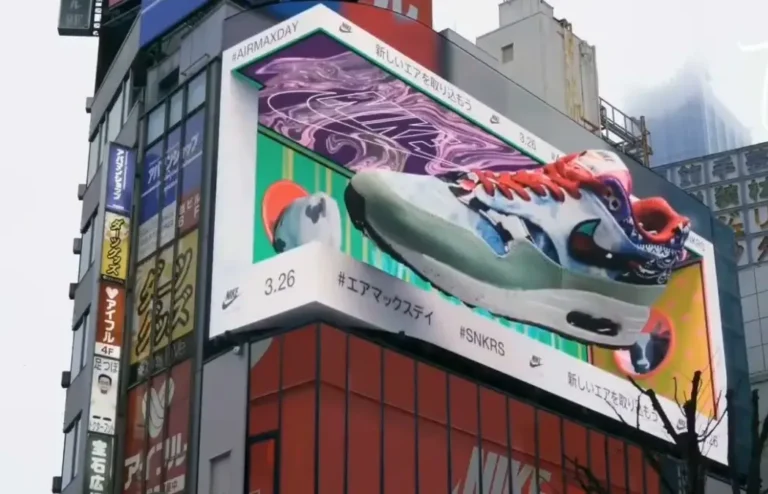
If you only have 30 seconds right now — the table below contains the core conclusion of this entire article. For the vast majority of urban outdoor advertising, DOOH media, and large-scale event scenarios, 5000 nits is the most cost-effective brightness range. It does not push annual electricity costs up by 40% like 7000+ high-brightness screens, nor does it turn into a “glowing gray board” under midday sunlight like cheap 3000 nits displays.
| Installation Environment | Recommended Brightness | Is 5000 Nits Suitable? | Typical Pixel Pitch |
|---|---|---|---|
| Commercial building side walls / semi-shaded areas | 4,000–5,500 nits | ✅ Optimal | P5–P8 |
| Urban street billboards / north-facing or east-facing installations | 5,000–6,500 nits | ✅ Fully suitable | P6–P8 |
| Outdoor event stages / exhibition zones | 4,500–6,000 nits | ✅ Standard configuration | P3.9–P6 |
| South-facing highways with no shading | 7,000–10,000 nits | ⚠️ Upgrade required | P8–P10 |
| Middle East / tropical direct sunlight outdoor environments | Above 8,500 nits | ❌ Not recommended | P10 |
Over the past decade, our team has participated in deploying more than 200 global outdoor LED projects — from the exterior walls of Dubai shopping malls to Southeast Asian DOOH advertising networks. The most common customer mistake was not choosing the wrong pixel pitch, but going to two extremes with brightness specifications: either being pushed by salespeople toward 10,000 nits, resulting in five-year electricity costs exceeding the original screen purchase price; or choosing 4000 nits to save money, only to receive complaints from advertisers during the first summer after project completion that “the screen cannot be seen clearly.” The reason why 5000 nits (5000 cd/m²) is the core specification discussed in this article is because it sits precisely at the intersection of engineering visibility and operating cost.
I. What Does 5000 Nits Actually Mean? A Precise Interpretation from an Engineer’s Perspective
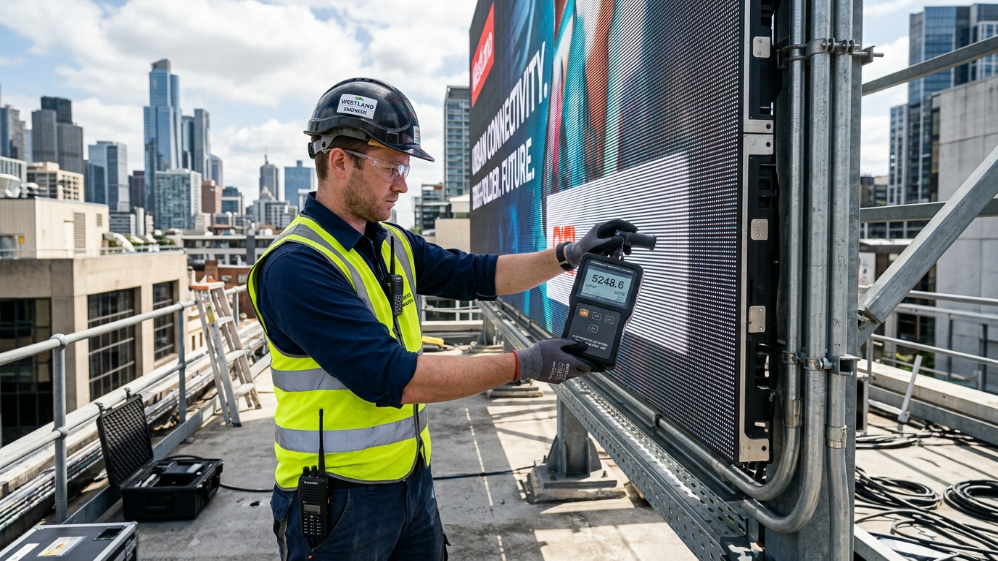
Nit is the international unit of brightness, where 1 nit = 1 cd/m² (candela per square meter). This number represents the intensity of light emitted by the screen toward the viewer per square meter. The outdoor environment competes against sunlight — environmental illuminance at noon on a sunny day can reach 100,000 lux, which is why outdoor LED displays require brightness levels 3–6 times higher than indoor screens (800–1,500 nits).
How Much Sunlight Can 5000 Nits Resist?
According to the industry-standard contrast calculation model, under environmental illuminance conditions of approximately 10,000–30,000 lux (from cloudy weather to overcast urban outdoor conditions), 5000 nits can maintain a contrast ratio of ≥10:1, and image clarity fully meets advertising display standards. This covers more than 80% of operating hours in most temperate cities around the world.
However, higher brightness is not always better. This is the engineering cost that many B2B procurement managers fail to realize:
| Brightness Level | Reference Power Consumption (P8, per m²) | Electricity Cost Increase Compared to 5000 Nits | Theoretical Impact on LED Lifespan |
|---|---|---|---|
| 5,000 nits | ~180–220 W/m² | Baseline | 100,000 hours (rated value) |
| 7,000 nits | ~280–320 W/m² | +45%–55% | Approximately 15%–20% shorter |
| 10,000 nits | ~400–500 W/m² | +90%–120% | Approximately 30%–40% shorter |
Numbers Tell the Story
For a 100-square-meter P8 outdoor screen upgraded from 5000 nits to 7000 nits, assuming 12 hours of daily operation and electricity priced at $0.12 per kWh, the additional electricity cost over five years is approximately $42,000–$55,000 USD. For DOOH operators, this is not merely a specification difference — it is a hidden cost line that directly erodes advertising ROI.
A 5000 nits display paired with an Auto-Dimming system can reduce brightness to 500–800 nits at night, saving approximately 25%–35% in operating electricity costs compared to fixed high-brightness operation throughout the day. This is a commercial advantage that system integrators must include in presentations to project owners.
II. A Truly Professional Quotation Should Include These 7 Categories of Specifications
After receiving supplier quotations, most B2B buyers only look at one number: the price per square meter. This is the most dangerous habit.
Based on our procurement experience across 40+ supplier evaluations, a qualified quotation for a 5000 nits outdoor LED display must clearly include the following items — if any one of them is missing, it likely means additional costs or performance disputes may arise later.
① Core Display Specifications
Pixel pitch (Pixel Pitch, such as P6/P8/P10), measured brightness (distinguishing peak brightness from calibrated brightness), refresh rate (event/live-streaming scenarios require ≥3840Hz), and contrast ratio (B2B baseline: 5000:1).
② Protection and Structural Specifications
IP protection rating (IP65 is the minimum threshold for outdoor applications, while coastal projects are recommended to use IP66+), encapsulation process (SMD or COB), cabinet material (die-cast aluminum is superior to sheet-metal iron cabinets, with 30%+ higher heat dissipation efficiency and 20% lighter weight), and operating temperature range.
③ Control System
Brand (mainstream solutions such as Novastar or Colorlight), number of receiving cards, and whether a video processor is included.
④ Certification Documentation
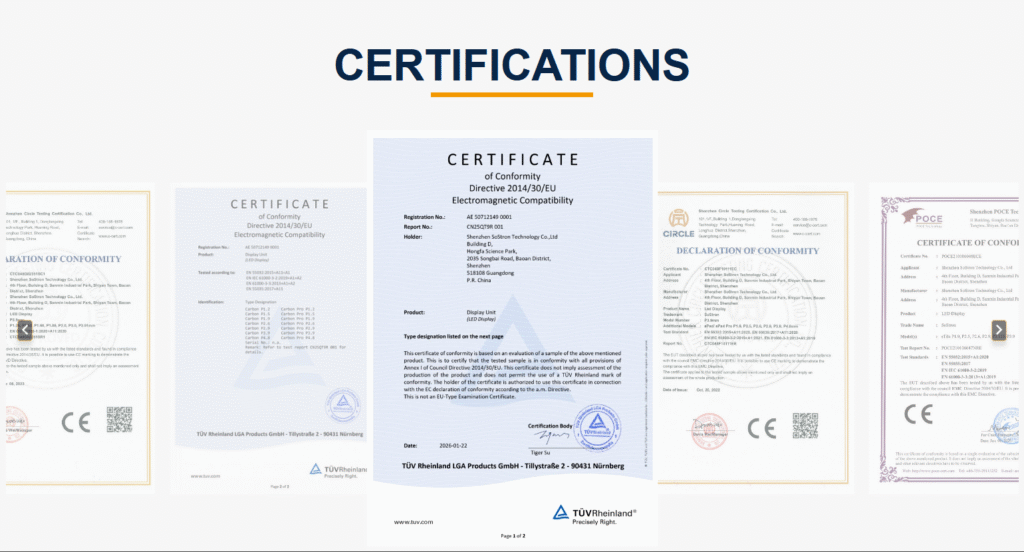
CE (Europe), FCC Part 15 (North America), and RoHS — these three certifications are mandatory thresholds for most international project tenders, and missing any of them directly affects customs clearance.
⑤ Complete Bill of Materials
Display modules, cabinets, power supply brands (such as G-Energy or Mean Well), and recommended spare inventory ratios (typically 5% spare modules based on total display area).
⑥ Delivery and Packaging Terms
Whether the quotation is FOB Shenzhen or CIF destination port, wooden crate packaging specifications, and estimated sea freight or air freight delivery cycles.
⑦ Warranty Terms and Details
Pay close attention to the distinction between “module warranty” and “complete system warranty.” Some factories only provide a 2-year warranty for modules, while power supplies and receiving cards are excluded. High-quality suppliers should provide a unified 3-year warranty covering both modules and the control system.
III. 2026 Price Benchmark: Why Can Two 5000 Nits Screens Differ in Price by 3x?
Many procurement managers are confused when they receive multiple quotations for the first time: the same “5000 nits / P8 / IP65” specification is quoted at $480/m² by Factory A and $1,100/m² by Factory B. This does not mean one party is lying — it means the two quotations are not even based on the same product line.
Below are the five core variables that determine the final quotation of a 5000 nits outdoor LED display, and these are also the dimensions you must align when comparing prices:
| Variable | Entry-Level Solution | Professional Solution | Source of Price Difference |
|---|---|---|---|
| LED Chips | Domestic second-tier brands with copper-wire packaging | Nationstar / Epistar gold-wire packaging | Gold-wire packaging improves salt spray corrosion resistance by more than 3x |
| Cabinet Material | 1.5mm sheet-metal iron cabinet | Die-cast aluminum alloy | Aluminum cabinets provide 30% higher heat dissipation efficiency and extend service life by approximately 2 years |
| Control System | Generic receiving cards | Novastar / Colorlight branded systems | Supports remote monitoring, automatic color calibration, and fault warning |
| Certification Coverage | No third-party certifications | Complete CE + FCC + RoHS certificates | Directly impacts customs clearance and project tender qualifications in Europe and North America |
| Warranty Terms | 1-year module warranty / others excluded | Unified 3-year system warranty | Maintenance cost difference within 3 years can reach 15%–25% of the purchase price |
According to data from 40+ projects we’ve evaluated, projects choosing professional-grade solutions have an average 18% lower five-year TCO (Total Cost of Ownership) compared to entry-level solutions. The reason is straightforward: the annual brightness decay rate of LED chips with gold-wire packaging is approximately 2.5%, while copper-wire packaging in high-humidity environments can reach 5%–8%. By the third year, your advertising display brightness may already have dropped below 4000 nits, followed inevitably by advertiser complaints.
IV. Different Decision-Making Logic for Three Types of B2B Buyers
DOOH Advertising Operators
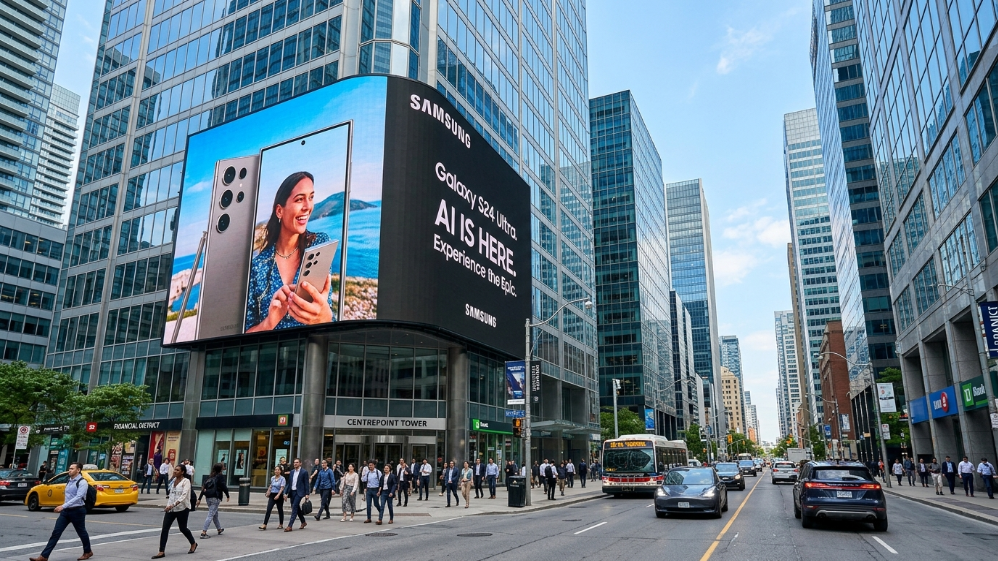
The core requirement for DOOH advertising operators is the stability of advertising inventory. In temperate cities, 5000 nits provides over 85% daytime visibility coverage, which is sufficient to guarantee daytime visibility KPIs to advertisers. It is recommended to prioritize suppliers that provide 72-hour continuous aging test reports, and to explicitly include a ≥80% brightness retention clause for the third year in the contract.
System Integrators
System integrators face pressure from multiple projects and multiple delivery batches. What these buyers need most is not the lowest price, but model stability — the same specification remaining unchanged for 2–3 consecutive years to facilitate spare-part interchangeability across projects. Signing a Blanket Order agreement with the factory can secure 8%–15% annual discounts while also locking in production priority.
Event Planning and Rental Companies
Event planners and rental companies are highly sensitive to weight and installation speed. A 5000 nits display combined with fast-lock aluminum cabinets (single cabinet ≤25kg) is the golden combination for daytime outdoor events. It is worth noting that refresh rate requirements in event scenarios are non-negotiable — live broadcast camera shooting requires ≥3840Hz to eliminate moiré patterns, and this parameter must be written into the technical specification section of the quotation.
V. After Receiving a Quotation, These 4 Signals Mean You Should Change Suppliers
Not every problem can be identified directly from the quotation itself. Based on our on-site factory inspection experience, the following are the most common practical pitfalls:
① Brightness Data Does Not Specify Testing Conditions
If “5000 nits” does not specify whether it refers to Full White brightness or Average Picture Level (APL) brightness, the number itself is meaningless. Professional suppliers should provide test reports based on IEC 62341 standards.
② IP65 Certificate Is Self-Declared Without Third-Party Verification Numbers
Legitimate CE/IP certifications can be verified in official databases such as TÜV, SGS, or Intertek using certificate numbers. Certificates that cannot be verified directly create customs clearance risks in Europe and North America.
③ Warranty Terms Exclude Power Supplies and Receiving Cards
These two components account for more than 60% of on-site maintenance work orders for outdoor LED displays. Excluding them from the warranty means you are assuming the primary operational maintenance risk yourself.
④ No Clear Statement of COB/SMD Encapsulation Technology in the Quotation
In coastal, high-salt-spray, or tropical projects, exposed solder joints in SMD packaging may oxidize within 18 months, leading to large-scale dead pixels. Such projects should require COB packaging or GOB (Glue on Board) protection technology.
FAQ: The 5 Most Common Questions About Purchasing 5000 Nits Outdoor LED Displays
Q1: What Is the Market Price Range for 5000 Nits Outdoor LED Displays in 2026?
For complete FOB Shenzhen solutions including the control system, the reference price range for P8 specifications is approximately $650–$950/m², while P6 specifications are approximately $850–$1,200/m². These prices do not include certifications, installation, or steel structures. Large-volume projects (over 100m²) can usually negotiate discounts of 8%–12%.
Q2: How Big Is the Actual Viewing Difference Between 5000 Nits and 7000 Nits Outdoor LED Displays?
Under environmental illuminance below 30,000 lux (cloudy weather to sunny shaded areas), the visual difference perceived by the human eye is extremely small. The visibility threshold between the two appears under direct midday sunlight (60,000–100,000 lux) — which is exactly why Middle Eastern and Southeast Asian tropical projects require 7000+ nits, while most temperate cities do not need the upgrade for the majority of operating hours.
Q3: What Are the Best Pixel Pitches for 5000 Nits Outdoor Displays?
It depends on the minimum viewing distance: P4–P5 is suitable for close-range scenarios within 10 meters (shopping mall exteriors and pedestrian streets); P6–P8 covers standard urban advertising scenarios with viewing distances of 15–40 meters; and P10 is suitable for highways or stadium displays viewed from over 50 meters away. At P8 pixel pitch, 5000 nits achieves the best balance between performance and cost-effectiveness.
Q4: How Many Years Can a 5000 Nits Outdoor LED Display Last?
High-quality products have a rated LED lifespan of 100,000 hours (equivalent to approximately 22 years based on 12 hours of operation per day), but the actual brightness maintenance standard is usually defined as L70 (brightness retaining 70% of the initial value). Under normal heat dissipation conditions, the L70 lifespan of a 5000 nits product is approximately 50,000–70,000 hours, or about 11–16 years. Heat dissipation design (aluminum cabinets > iron cabinets) and chip quality are the two most critical variables affecting this number.
Q5: What Mandatory Certifications Are Required for Outdoor LED Displays Sold in European and North American Markets?
For the European market: CE certification (including EMC Directive and Low Voltage Directive) + RoHS compliance declaration are both mandatory. For the North American market: FCC Part 15 Class B certification is required, while some state-level projects additionally require ETL or UL certification. Both markets also require third-party verification reports for IP65 protection ratings. It is recommended to clarify the target market during the inquiry stage and confirm certification coverage with the supplier before advancing commercial negotiations.
Expert Verdict
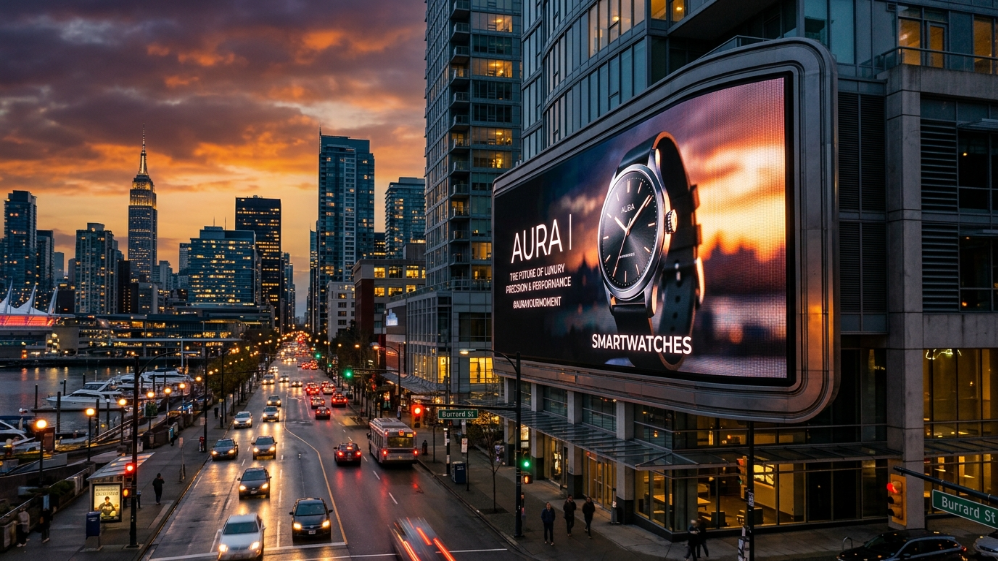
5000 nits is not a compromise — it is precise matching. In standard outdoor deployments in temperate cities, it represents the most reasonable intersection between engineering visibility and operating cost. What truly matters is not the brightness number itself, but the chip packaging technology, certification qualifications, and warranty terms behind that number.
The first thing you should do after receiving a quotation is not compare prices, but compare the completeness of the technical specifications. A quotation that does not clearly define encapsulation technology and warranty boundaries is not a quotation you should sign, no matter how low the price may be.
References:
IEC 62341 Series – LED packages for general lighting
FCC Part 15 Subpart B – Radio Frequency Devices