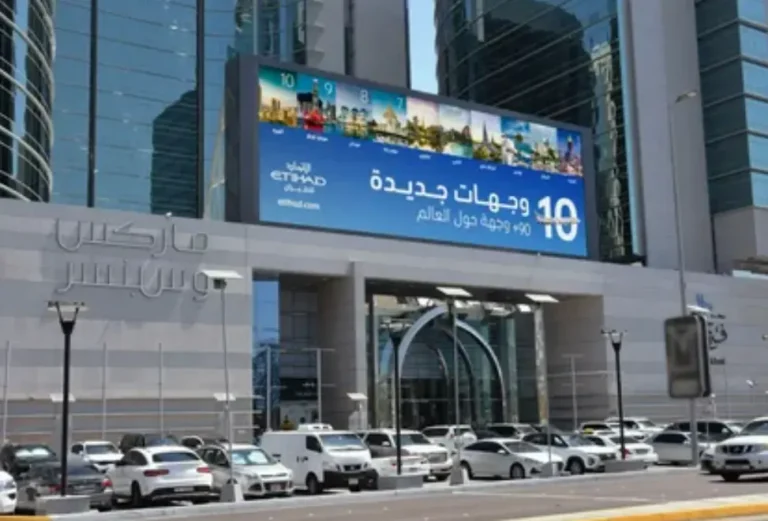
Flexible LED screens work by mounting surface-mount device (SMD) diodes onto a pliable, polyimide-based Flexible Printed Circuit (FPC) rather than a rigid fiberglass board. These modules utilize embedded neodymium magnets to snap onto custom-curved steel frames, routing power and data through flat ribbon cables to achieve seamless convex and concave display surfaces.
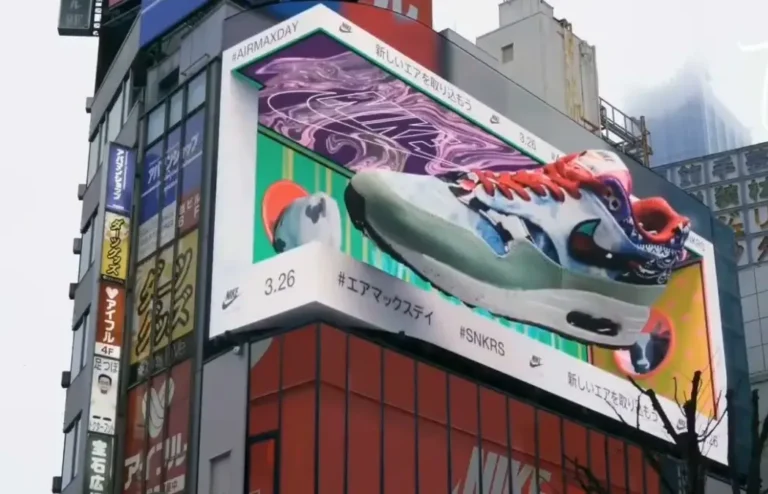
Immersive Digital Out-of-Home (DOOH) advertising and 3D retail displays rely heavily on this technology to wrap structural columns and create wave-shaped ceilings. As an engineer overseeing LED production lines in Shenzhen for two decades, I frequently see buyers make a critical error: they assume the flexibility comes entirely from the rubber casing.
In reality, the mechanics of a reliable flexible display happen at the micro-routing level. If you are sourcing six-figure display hardware for an event or permanent installation, you must understand the underlying structural physics and failure points before signing a purchase order.
The Core Mechanics: How Flexible LED Screens Actually Work
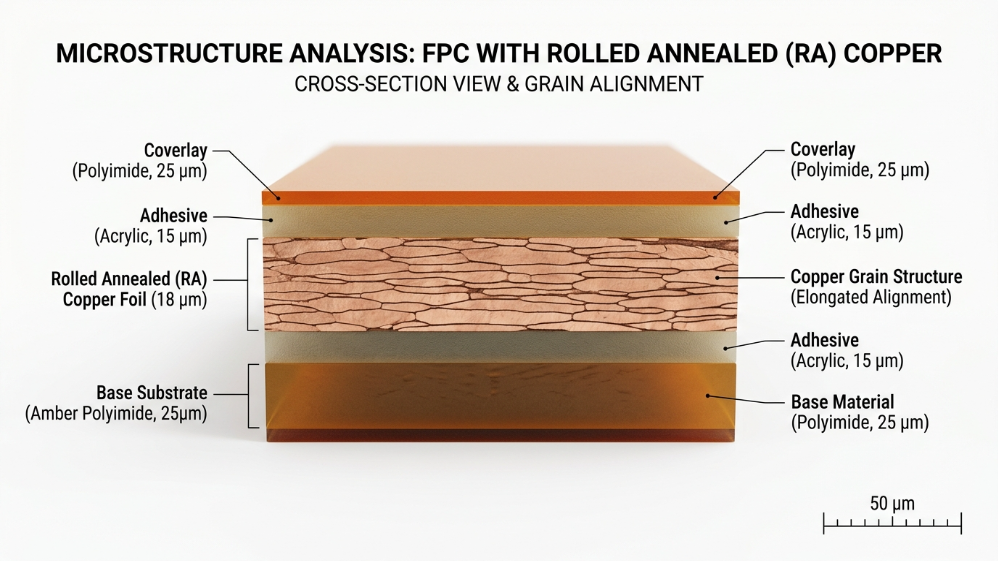
Flexible Printed Circuits (FPC) and Rolled Annealed Copper
The foundation of any flexible module is the FPC. Standard rigid LED panels use an FR4 fiberglass printed circuit board, which is highly stable but entirely static. Flexible panels replace this with thin polyimide substrates that can bend repeatedly without snapping.
However, the copper traces carrying power and data are the actual stress points. Quality factory engineers specify rolled annealed copper for these traces instead of standard electrodeposited copper.
-
The Science: The rolling and annealing process aligns the copper grain structure horizontally.
-
The Benefit: This specific metallurgical alignment allows the internal circuitry to compress and stretch during installation without micro-fracturing.
Silicone Masking and SMD Alignment
Standard rigid screens utilize hard plastic masks to protect the diodes. Flexible modules require a UV-resistant, anti-static silicone potting and masking shell to achieve their malleability. This silicone layer performs a highly specific mechanical function: maintaining precise pixel pitch (the distance between SMDs) when the module is curved.
-
If the silicone is too stiff: The SMD diodes will shear off the soldering pads during a tight bend.
-
If the silicone is too soft: The LEDs will shift out of vertical alignment, creating visible dark lines and distorted geometry in your DOOH content.
Power, Data, and Magnetic Modular Assembly
Traditional LED walls rely on heavy, die-cast aluminum cabinets. Flexible screens eliminate the cabinet entirely, relying on three specific hardware features:
-
Neodymium Magnetic Anchors: High-strength magnets embedded into the silicone base allow modules to snap onto galvanized steel or iron tube substructures.
-
Flexible Flat Cables (FFC): Low-profile ribbon cables route data from the receiving card without creating physical tension or restricting the bend radius.
-
Decentralized Power Routing: Power units and control boxes are often mounted remotely or hidden within the substructure framework.
Standard Rigid LED vs. Flexible LED Screens (Technical Comparison)
| Feature / Specification | Standard Rigid LED Panels | Flexible LED Modules |
| Base Material | Fiberglass (FR4) PCB & Die-cast Aluminum | Polyimide FPC & Silicone Shell |
| Mounting Mechanism | Interlocking Cabinets & Steel Fasteners | Magnetic Anchors & Custom Steel Frames |
| Min. Bend Radius | N/A (Strictly flat or faceted) | Up to ~120° (Depends on pixel pitch) |
| Weight per SQM | 25kg – 40kg+ | 10kg – 15kg |
| Thermal Dissipation | Excellent (Aluminum acts as heat sink) | Moderate (Requires specialized low-power ICs) |
| Primary Applications | Billboards, Stadiums, Virtual Production | Pillar wraps, Wave ceilings, Stage backdrops |
Factory-Insider Insights: Technical Specs Procurement Managers Must Verify
Minimum Bend Radius (MBR) vs. Pixel Pitch
Do not trust a specification sheet claiming a P1.2 (1.2mm pixel pitch) flexible module can wrap a tight 30cm radius. When pixel density is that high, SMD components are physically packed together with minimal clearance. Bending a high-density module aggressively causes the diodes to physically collide, fracturing the microscopic solder joints. Always calculate your MBR against the desired pixel density before finalizing your steel substructure design.
The Thermal Management Challenge
Flexible modules wrapped in silicone act as thermal blankets. If a manufacturer cuts costs by using standard driving ICs (Integrated Circuits), the module will overheat, causing color shifting and premature diode failure.
Expert Tip: Specify high-efficiency, low-power ICs (such as Macroblock or ICN) and verify that your installation environment has active HVAC routing, especially for 360-degree indoor pillar wraps where heat gets trapped.
Real-World Applications & DOOH Case Studies
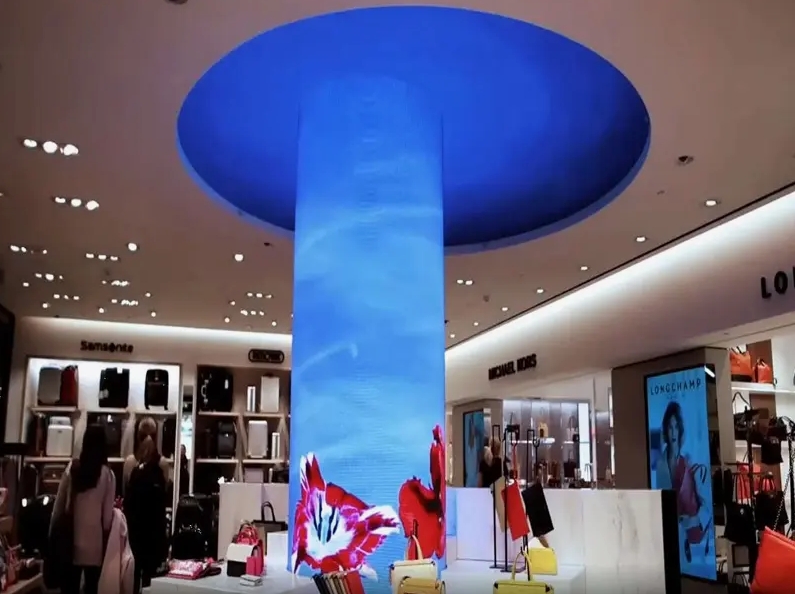
Immersive DOOH Advertising (Retail Pillar Wraps)
DOOH networks frequently encounter “dead zones” due to concrete pillars. By deploying P2.5 flexible magnetic modules onto cylindrical steel jackets, integrators convert bare structural supports into 360-degree digital ad inventory. This application often increases total sellable screen real estate in mall concourses by up to 40%.
Live Events and Stage Design (Rapid Deployment)
Touring productions utilize flexible technology to break away from standard 16:9 ratios. Using magnetic flex panels, a small AV crew can skin a flowing, ribbon-like stage truss in under eight hours. The lightweight nature (10kg–15kg/sqm) allows for complex shapes without exceeding venue rigging load limits.
Sourcing from Shenzhen: The B2B Buyer’s QA Checklist
Before issuing a 30% deposit, verify these parameters with your sales engineer:
-
Refresh Rate: Specify driving ICs capable of >3840Hz to prevent flickering on smartphone cameras.
-
SMD Wire Material: Confirm the use of gold wire bonds inside the LED diodes. Cheap iron wire bonds will corrode under the thermal stress of a silicone-encased module.
-
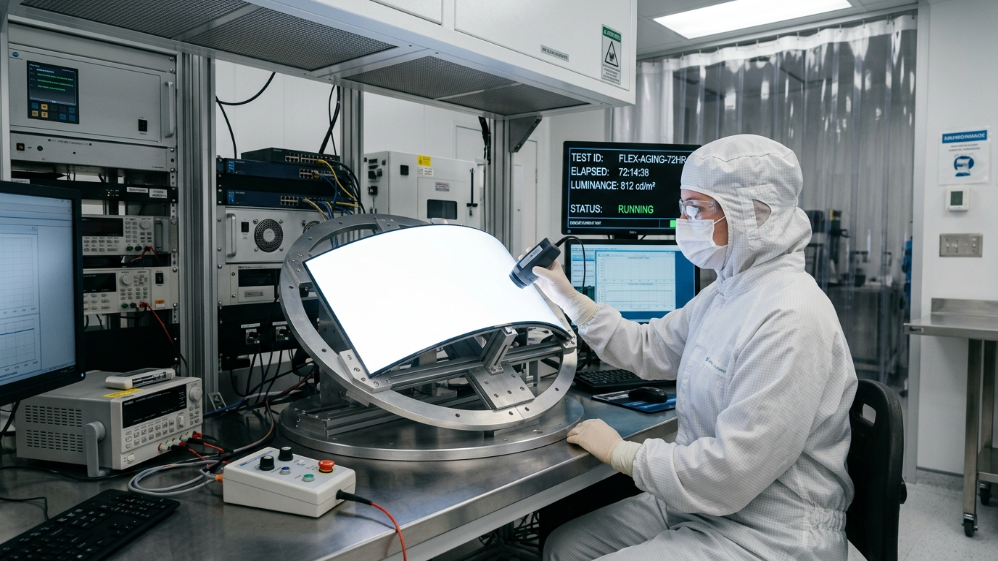
Aging Test Protocol: Demand video proof of a 72-hour white-screen aging test conducted on curved test jigs. Testing flat hides stress fractures that only appear under tension.
Frequently Asked Questions
Can you cut a flexible LED screen to size?
No. Flexible modules contain precisely routed copper lines. Slicing through the FPC destroys these internal pathways. Screens must be assembled as a tiled grid of manufactured modular dimensions (e.g., 320x160mm).
Are flexible LED screens waterproof (IP65)?
Standard modules are IP31 (Indoor). While the silicone mask resists light moisture, the exposed FPC backing and magnets do not. Outdoor applications require custom-engineered modules with dual-layer conformal coating and sealed enclosures.
How long do flexible LED screens last?
Approximately 100,000 hours, though actual lifespan depends on thermal management. Poorly ventilated spaces can reduce effective brightness and lifespan by up to 30%.
How do you fix a dead pixel on a flexible LED screen?
Maintenance is simplified via magnetic front-serviceability. A technician uses a magnetic suction tool to pop the faulty module off the frame, swaps the ribbon cable, and snaps a new module in place within seconds.
Sourcing reliable flexible LED displays requires looking beyond basic resolution and strictly evaluating FPC copper quality, silicone elasticity, and thermal dissipation. To ensure your project succeeds, ensure your supplier adheres to the rolled-annealed copper and high-refresh IC standards mentioned above.
Contact our Shenzhen engineering team today with your structural blueprints to receive a direct technical feasibility assessment for your next curved display project.
References:
IPC-2223: Sectional Design Standard for Flexible Printed Boards
IES TM-30: Method for Evaluating Light Source Color Rendition