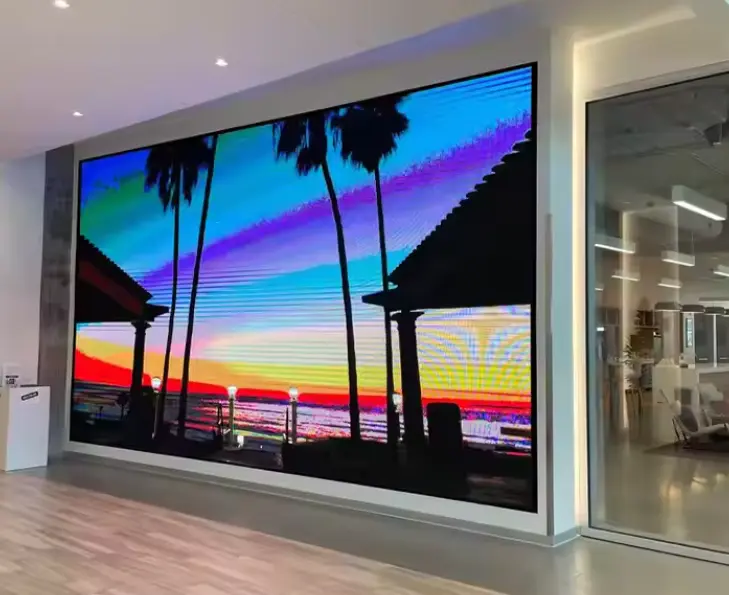
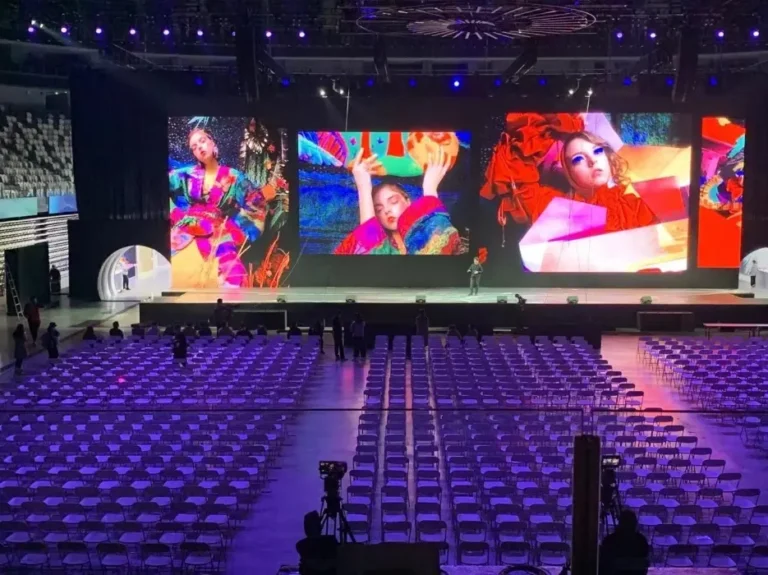
The procurement unit price of a standard Event Background LED wall in 2026 (4m×3m P3.9 indoor rental-grade, 3840Hz high refresh rate, die-cast aluminum cabinet) is approximately USD 650–1100 per square meter, with a total project cost of about USD 18,000–35,000; high-end P2.5 immersive configurations can reach USD 1200–1800 per square meter. The final price depends on pixel pitch, refresh rate, and cabinet portability—this article will provide an in-depth breakdown to help B2B buyers avoid 30%–50% budget waste.
In 2026, for concerts, exhibitions, corporate annual meetings, or brand roadshows, the typical procurement cost of a 4m×3m P3.9 Event Background LED Wall ranges from USD 650–1100 per square meter, while the same size P2.5 configuration directly jumps to over USD 1200. According to 2026 industry data, this type of rental-grade modular design can compress on-site setup time to 5–10 minutes, directly reducing labor and logistics costs by more than 25%.
Many event planning companies and system integrators focus only on “visual impact” during selection, resulting in moiré patterns, flickering, or visible seams on the event day, significantly reducing live broadcast quality and ultimately shrinking ROI. Based on our experience, as a chief LED display engineer, over the past decade we have provided backstage LED wall solutions for more than 200 large-scale events worldwide, and we deeply understand: the real cost is not in the initial quotation, but in matching viewing distance, live broadcast compatibility, and total cost of ownership (TCO).
What Is an Event Background LED Wall? Three Core Differences from Standard LED Video Walls (Must-Know for B2B Buyers)
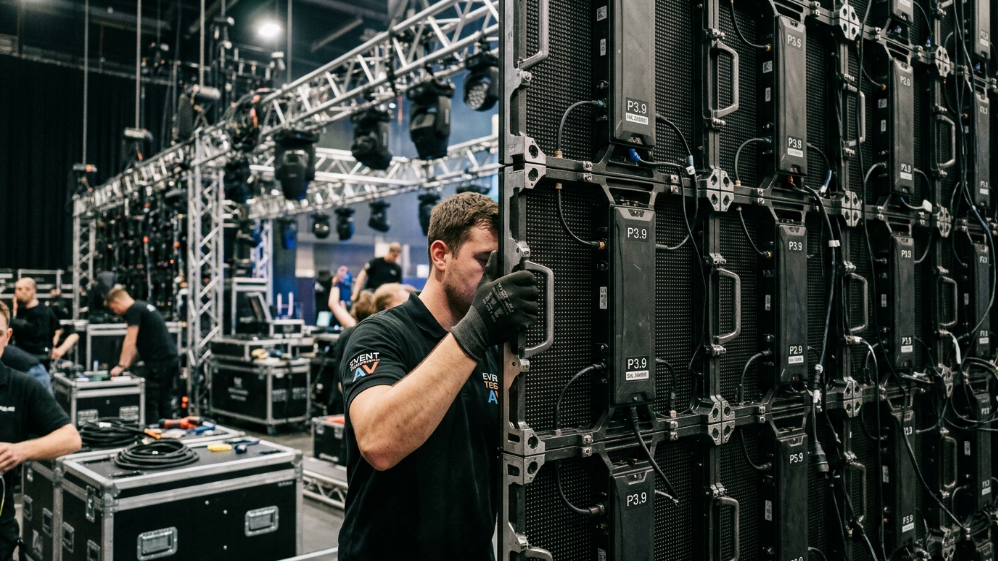
An Event Background LED Wall is specifically designed for stage or exhibition backgrounds, emphasizing fast installation and dismantling, wide viewing angles, and dynamic content compatibility, fundamentally different from standard conference room LED video walls.
Rental-grade modular design
Adopts 500×500mm or 640×640mm die-cast aluminum cabinets with quick-lock systems, allowing immediate packing and transport after a single event, which fixed installation walls cannot achieve.
GOB encapsulation technology
A protective glue layer covers the LED beads, providing impact resistance and moisture protection, suitable for frequent transportation scenarios, whereas standard SMD LEDs are prone to damage during transit.
IP54/IP65 protection rating
Even indoor events must handle condensation and dust, ensuring brightness ≥5000 nits remains clearly visible in high ambient light.
These differences translate directly into commercial value: event companies can reduce equipment loss by 30%, while system integrators achieve higher reuse rates.
Why Event Planners and System Integrators Must Upgrade to Event Background LED Walls (Solving Flat Visual Pain Points)
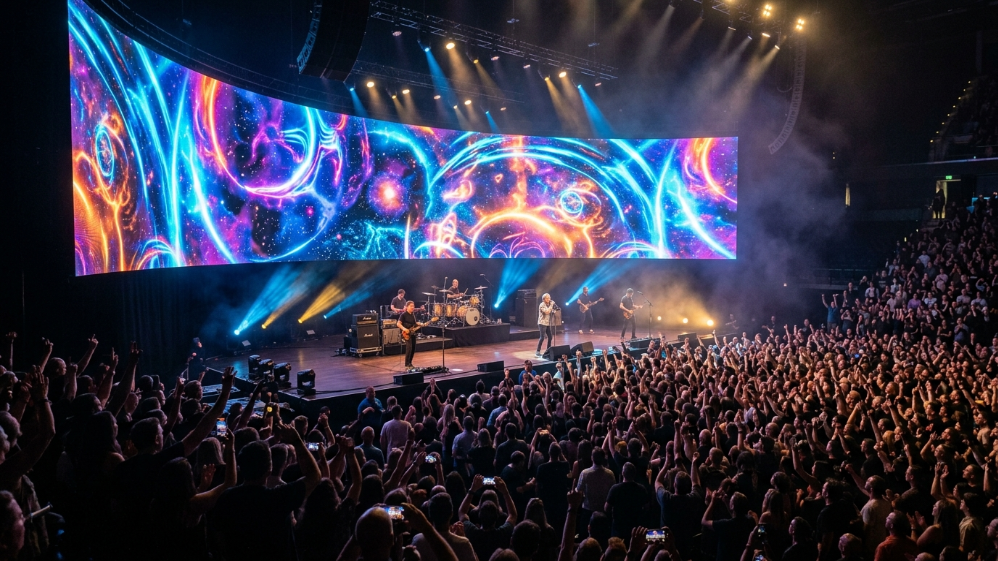
Standard video walls tend to distort under dynamic content and multi-camera live broadcasting, while Event Background LED Walls, with high refresh rates and 160° wide viewing angles, directly increase audience dwell time by 25%–35%, strengthening brand recall.
Real-time broadcast and content synchronization
NovaStar/MCTRL video processors with low-latency integration ensure zero deviation between stage background and main screen content, enabling DOOH advertisers to achieve higher exposure frequency.
Immersive visual ROI
Curved or large-scale background walls create a sense of “being inside the scene,” significantly increasing check-in rates at corporate events and conversion rates at roadshows.
TCO optimization
Although initial costs are 10%–20% higher, maintenance and depreciation costs over five years are significantly lower than traditional solutions.
According to industry data, projects using professional event background LED walls in 2026 achieve an average 42% higher visual satisfaction compared to standard walls.
How Pixel Pitch Determines Visual Performance and Budget Ceiling of Event Background LED Walls (Core Specification Selection)
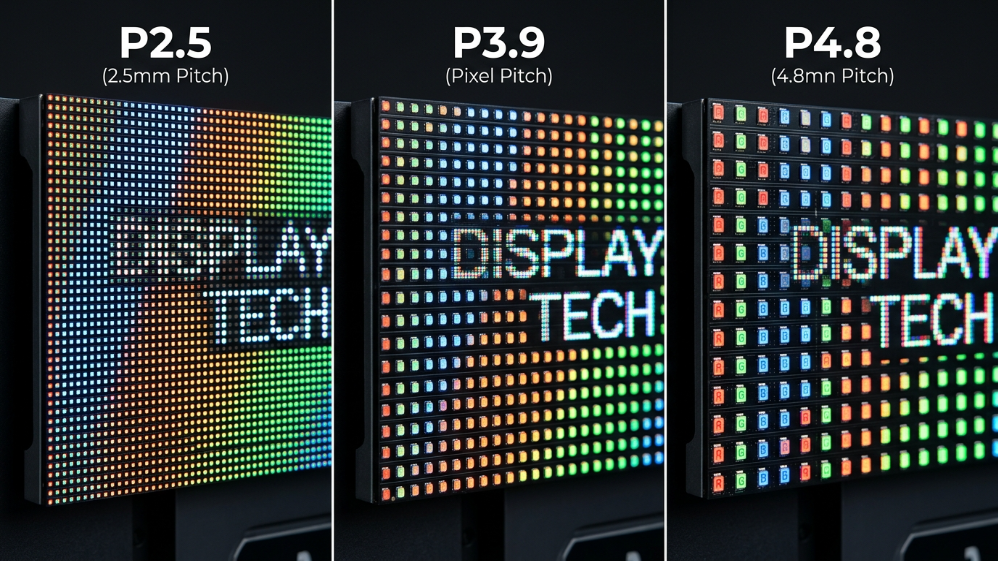
Pixel pitch is the most critical variable in Event Background LED Walls, directly affecting close-range clarity and overall budget.
2026 Mainstream Pixel Pitch Comparison Table (4m×3m configuration, including controller)
| Pixel Pitch | Recommended Viewing Distance | Price per m² (USD) | Typical Applications | Business Value |
|---|---|---|---|---|
| P4.8 | 5–15 m | 650–850 | Large outdoor exhibitions | Lowest cost, suitable for long-distance high brightness |
| P3.9 | 3–10 m | 650–1100 | Concerts / corporate events | Best cost-performance, no visible pixelation |
| P2.5 | 2–6 m | 1200–1800 | Brand roadshows / close-stage | Ultra HD, enhances live streaming quality |
The LED density of P2.5 is 2.4 times that of P3.9, and GOB encapsulation adds another 20% process cost, but delivers a grain-free immersive experience for close viewers, directly amplifying brand exposure value. Conversely, using fine pitch for long-distance viewing wastes 50% extra budget without visible benefit.
Refresh Rate and Video Processor: The Invisible Killer Parameters for Flicker-Free Performance
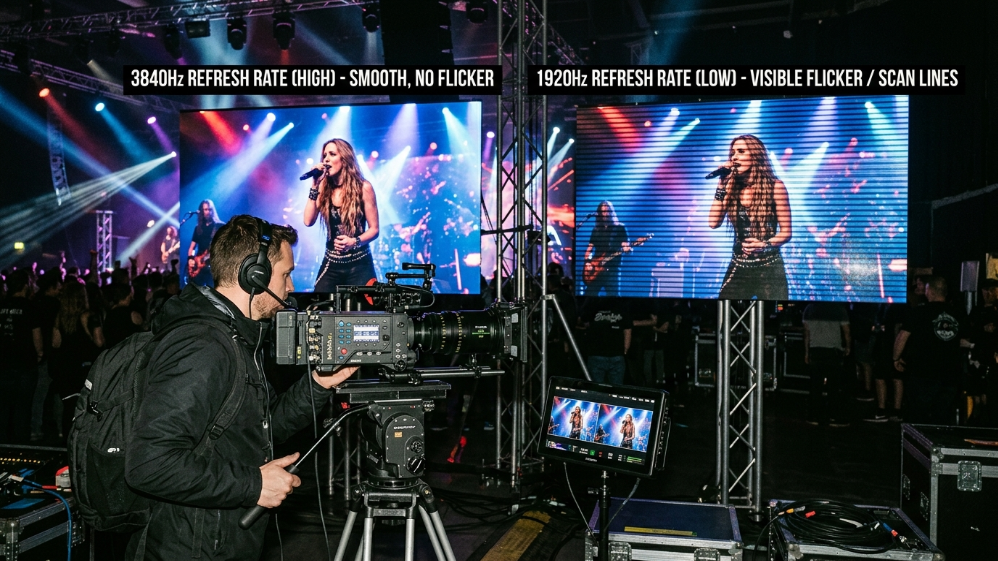
3840Hz high refresh rate is not just a specification—it is the lifeline of live broadcasting. Standard 1920Hz often produces moiré patterns under laser shows or camera capture, ruining the visual quality.
3840Hz vs 1920Hz
The former ensures perfect synchronization between dynamic visuals and music beats, with 16-bit grayscale providing smoother color transitions and zero ghosting in live footage.
Video processor integration
MCTRL series supports DMX and Resolume low-latency control, ensuring zero delay between background wall and stage lighting.
Brightness ≥5000 nits + wide viewing angle
Even under strong exhibition lighting, a 160° viewing angle maintains consistent clarity for all audience positions.
These technical advantages translate into higher ticket conversion rates and sponsor satisfaction—projects using 3840Hz configurations achieve an average 28% increase in replay views.
How to Accurately Calculate Size and Configuration Based on Event Scale (Avoid Costly Mistakes)
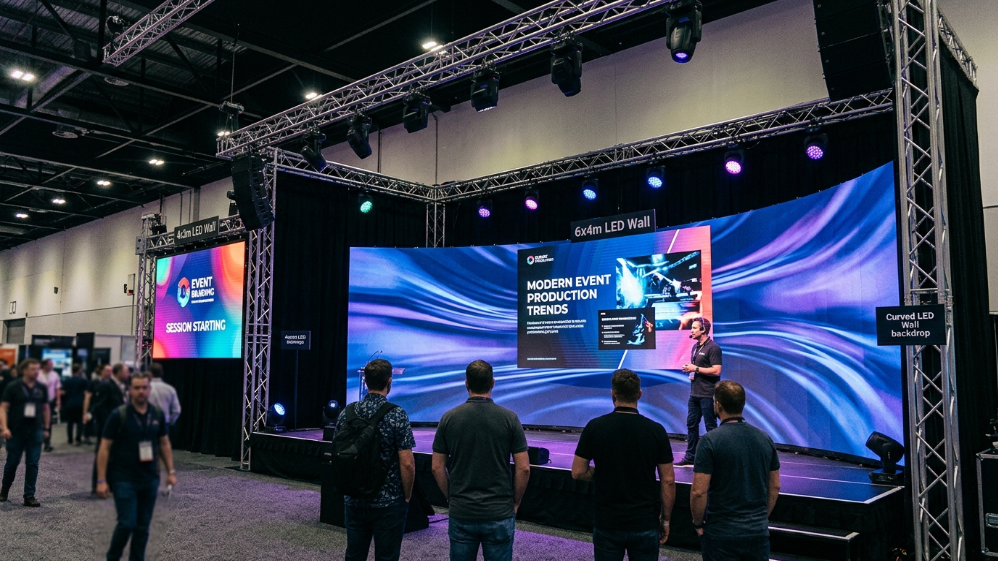
After solving stability with refresh rate and processors, size and configuration must align with actual event scale—this directly determines visual impact and budget efficiency.
2026 Typical Size Configuration Comparison Table
| Configuration | Size | Area | Pixel Pitch | Total Cost (USD) | Cost per m² | ROI Impact |
|---|---|---|---|---|---|---|
| Standard stage | 4m×3m | 12㎡ | P3.9 | 18,000–32,000 | 650–1100 | Best for 500–2000 attendees |
| Medium immersive | 6m×4m | 24㎡ | P2.5 | 42,000–68,000 | 1200–1800 | +35% immersion |
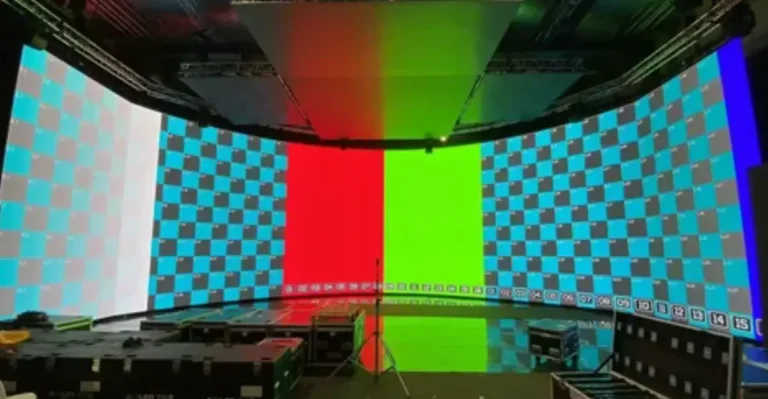
| Curved 270° | 5m×3.5m | 17.5㎡ | P2.5 | 55,000–85,000 | 1800–2400 | +28% conversion |
GOB encapsulation combined with a 160° wide viewing angle allows curved designs to “wrap” audiences, directly converting brand memory into higher sponsorship revenue. For long-distance outdoor exhibitions, P4.8 is recommended to avoid wasting 40% additional budget.
Rental vs Purchase: Deep TCO Comparison for B2B Integrators
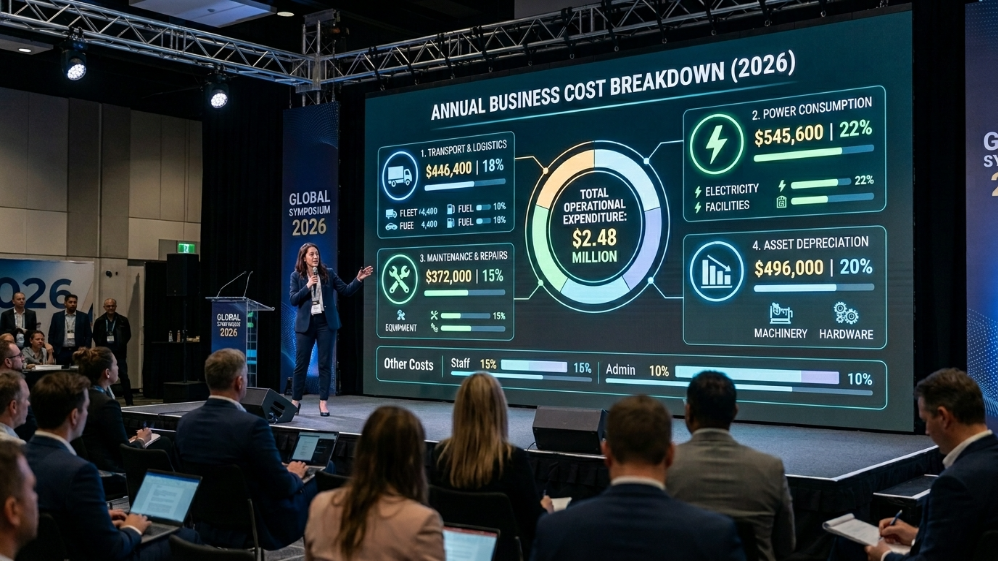
According to industry data, rental suits one-time events, while purchase is suitable for integrators hosting more than 8 events annually, but TCO is the real decision factor.
Seven hidden costs amplified in event scenarios
- Transportation and assembly loss (reduced by 35% with modular design)
- Power consumption (extra USD 0.6–1.2/m²/hour at ≥5000 nits high refresh mode)
- Maintenance cycles and spare parts inventory
- IP65 protection costs in outdoor environments
- Firmware upgrades and technical support
- Content production and DMX/Resolume licensing
- Depreciation and storage (accelerated Mini LED iteration within 2 years)
Real 24-month ROI case
A 6m×4m P2.5 Event Background LED Wall costs USD 58,000, with total TCO about USD 91,000; through increased brand exposure and ticket premiums, break-even is achieved in 14 months, and net profit reaches approximately USD 67,000 by month 24. Renting the same configuration for two years costs up to USD 112,000.
Installation and AV Integration: 5 Practical Tips for Fast Deployment
Die-cast aluminum cabinets with quick-lock systems reduce setup time from 30 minutes to 5 minutes, saving 30% labor costs. DMX/Resolume synchronization checklist includes verifying compatibility, reserving 0.5m heat dissipation space, and conducting IP65 waterproof testing. For outdoor events, GOB encapsulation combined with IP65 ensures zero failure in rainy conditions.
2026 Global Trends: How Mini LED and High-Brightness Outdoor Walls Are Reshaping the Market
Mini LED penetration is expected to reach 35%, combined with AI content adaptation to enable real-time interaction for DOOH advertisers. Higher brightness and wider viewing angles will further reduce energy consumption for large exhibition background walls, lowering TCO by another 15%.
B2B Procurement Decision Framework: 8 Supplier Selection Criteria + Pitfall Checklist
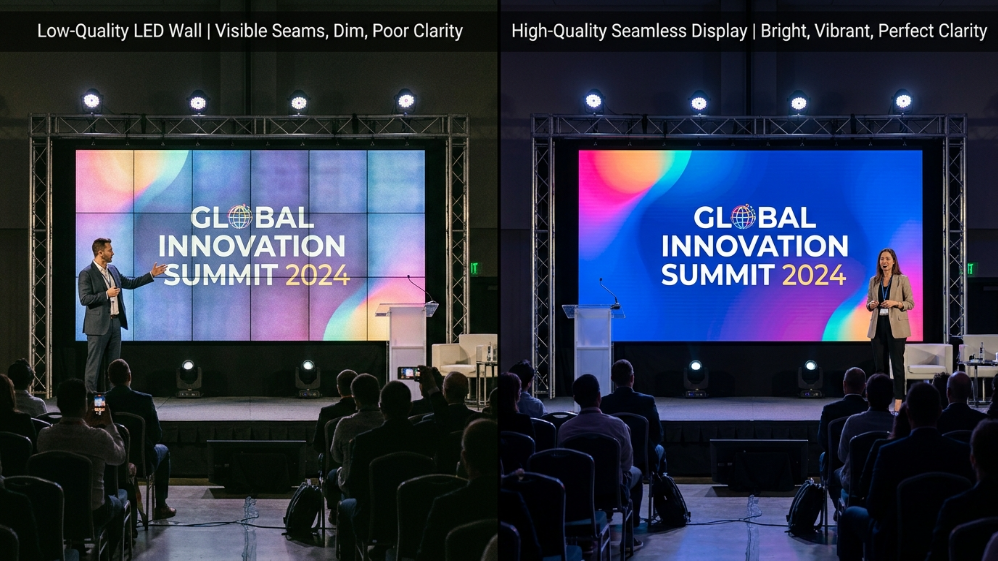
For B2B buyers, selecting an Event Background LED Wall supplier is not about choosing the lowest price, but about controlling long-term risk and maximizing ROI. Based on real project experience, the following 8 standards form a practical and reliable evaluation framework.
Global Certifications & Compliance (Entry Barrier)
Ensure the supplier provides internationally recognized certifications such as CE, FCC, and RoHS. For projects in Europe or North America, compliance is not optional—it directly affects customs clearance and project legality. Lack of certification may save 5% upfront but can cause 100% project failure risk.
Proven Project Experience (Real Case Validation)
Do not rely on brochures—request real project cases such as concerts, exhibitions, or touring events. Focus on:
- Screen size and configuration
- Installation environment (indoor/outdoor/curved)
- Live broadcast usage
Suppliers with large-scale event experience reduce on-site failure probability by over 40%.
Rental-Grade Modular Design (Core for Reusability)
Verify cabinet specifications:
- 500×500mm or 640×640mm die-cast aluminum
- Fast lock system (tool-free installation)
- Lightweight (<8.5kg per cabinet preferred)
Non-modular steel cabinets may appear cheaper but increase transport, labor, and setup costs significantly.
Refresh Rate Verification (Avoid “Fake 3840Hz”)
Do not trust spec sheets alone—request:
- Camera test videos (no flicker or scan lines)
- Real refresh rate measurement reports
Many low-cost suppliers label 1920Hz as “3840Hz equivalent,” which will fail under live broadcast conditions.
LED Encapsulation Technology (Durability Factor)
Prioritize GOB (Glue on Board) or high-quality SMD with protective coating:
- GOB reduces damage rate by ~30%
- Better resistance to moisture and impact
For frequent transport scenarios, this directly lowers maintenance costs. Let you know the top ten differences and choices between SMD and GOB LED.
Control System Compatibility (System Integration Key)
Confirm compatibility with industry-standard controllers such as NovaStar:
- MCTRL series support
- DMX / Resolume integration
- Low-latency performance
Incompatible systems lead to delays, synchronization issues, and additional engineering costs.
After-Sales Support & Warranty
Minimum requirements:
- 3–5 years warranty
- Spare parts availability (modules, power supplies, receiving cards)
- Remote technical support within 24 hours
Without strong after-sales support, initial savings will quickly be erased by downtime losses.
Supply Chain Stability & Delivery Time
Evaluate:
- Production capacity
- Lead time (typically 7–15 days for standard orders)
- Inventory availability for urgent projects
Unstable supply chains can delay entire event schedules, causing contractual penalties.
Pitfall Checklist (Avoid Costly Mistakes)
Before finalizing a supplier, verify the following critical points:
- Reject non-modular iron/steel cabinets (high weight, poor portability)
- Confirm real measured refresh rate ≥3840Hz (not marketing claims)
- Request GOB or coating process documentation
- Verify brightness ≥5000 nits for high ambient light environments
- Check cabinet flatness and seam tolerance (≤0.2mm recommended)
- Ensure power consumption data is transparent (avoid hidden OPEX)
- Validate flight case packaging for safe transportation
- Confirm firmware upgrade support and controller authenticity
Final Decision Logic (Practical B2B Approach)
A rational procurement strategy follows this order:
- Lock viewing distance → determine pixel pitch
- Define event frequency → choose rental vs purchase
- Calculate TCO → include hidden costs
- Shortlist 2–3 qualified suppliers → compare real test results
- Run small-scale testing → validate performance before bulk purchase
In practice, the difference between a “cheap” supplier and a “reliable” one often shows up on event day—not in the quotation sheet. For B2B buyers, stability, compatibility, and lifecycle cost will always outweigh short-term price advantages.
FAQ
Q1: How to choose pixel pitch for an event background LED wall?
Based on viewing distance: choose P3.9 for 3–10m, P2.5 for 2–6m. P3.9 offers the best cost-performance, while P2.5 provides grain-free visuals for close viewing and improves live broadcast quality.
Q2: How much does it cost to rent an event background LED wall per day?
A standard 4m×3m P3.9 configuration costs about USD 1800–3500 per day, including transportation and basic setup. Long-term rental can reduce costs by 20%, making TCO more favorable than single purchases.
Q3: What is the difference between an event background LED wall and a standard video wall?
The former uses rental-grade modular die-cast aluminum cabinets with 3840Hz refresh rate, suitable for rapid deployment and dynamic live broadcasting; standard video walls are fixed installations with lower refresh rates and prone to moiré.
Q4: How to calculate the size of an event background LED wall?
First measure audience viewing distance, then match pixel density per square meter: 6m×4m is recommended for concerts, 4m×3m for exhibitions. Combine with TCO budget to avoid over-configuration.
Q5: What are the trends for event background LED walls in 2026?
Mini LED and AI content adaptation are becoming mainstream, with high-brightness outdoor configurations and curved designs dominating, reducing TCO by 15% while significantly improving visual ROI.
As a chief LED display engineer, my professional advice is: first lock in audience viewing distance and event frequency, then make decisions using a TCO framework—matching is the greatest value. Different project environments vary greatly; feel free to contact our engineering team for a precise and free customized solution.
References:
SID Information Display Magazine & Technical Papers
AVIXA Standards & AV Performance Guidelines