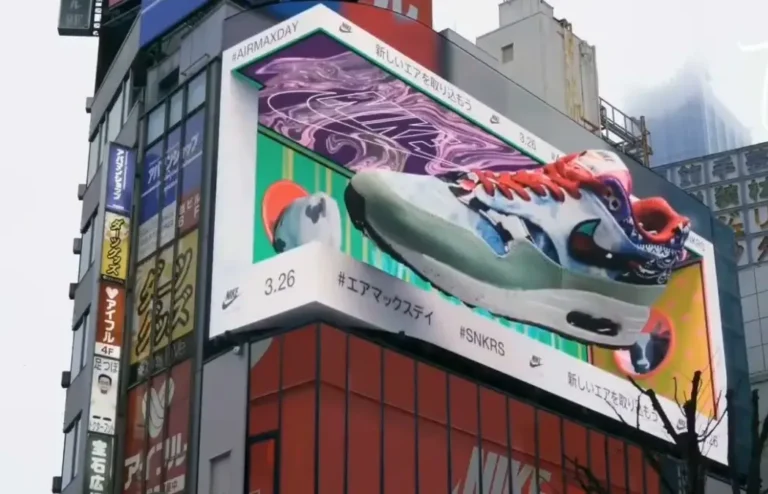
What Is a Curved LED Display?
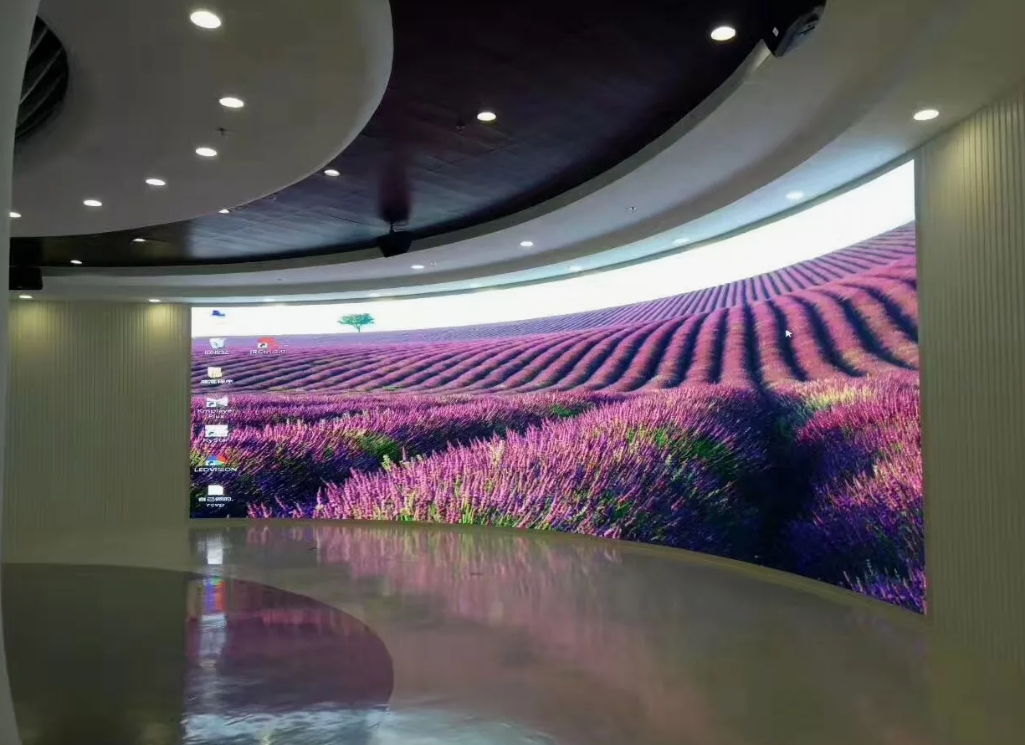
A curved LED display is an LED screen engineered to follow a continuous arc, cylindrical surface, wave, dome, or other non-flat geometry instead of a conventional flat plane. It can be built with rigid LED cabinets arranged at controlled angles or with flexible LED modules that physically bend to the required radius.
For most commercial projects, the right curved LED solution depends on four factors: curvature radius, viewing distance, pixel pitch, and installation environment. Gentle curves may use rigid cabinets with angled connections, while tight curves and cylindrical structures generally require flexible LED modules.
| Project requirement | Recommended approach |
|---|---|
| Gentle concave or convex curve | Rigid curved/angled cabinets |
| Tight-radius curve | Flexible LED modules |
| Column or 360° display | Flexible or purpose-built cylindrical system |
| Wave or irregular shape | Flexible/custom LED modules |
| Standard text and data display | Flat LED is often more practical |
Unlike a flat LED wall, a curved LED display changes the relationship between the screen and the audience. The display can wrap around a wider viewing area, integrate with architectural surfaces, and create a stronger sense of immersion.
How Does a Curved LED Display Work?
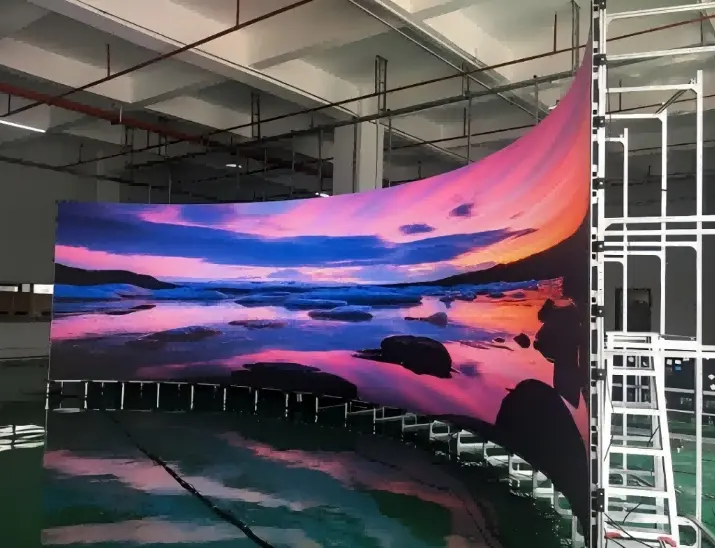
The basic LED technology remains the same as a conventional LED display. LED chips generate light, driver ICs control the pixels, power supplies distribute electrical power, and a sending/control system processes the video signal.
The major difference is the mechanical structure and pixel geometry.
A curved LED screen can be produced in two main ways.
Rigid LED Cabinets Arranged Along a Curve
For a relatively large-radius curve, standard rigid cabinets can be installed at controlled angles. Instead of bending the LED module itself, the individual cabinets create a faceted approximation of a smooth arc.
This approach is suitable for:
- Large stage backdrops
- Gentle concave video walls
- Architectural feature walls
- Large entertainment installations
It can be more economical than a fully flexible system when the required radius is large.
Flexible LED Modules
Flexible LED displays use bendable PCB modules and flexible mechanical materials. The modules can conform to concave, convex, cylindrical, wave-shaped, and other continuous curves within the manufacturer’s specified bending radius.
This configuration is particularly useful for:
- Column wrapping
- Cylindrical LED screens
- Retail architecture
- Museum installations
- Creative brand environments
- Immersive LED walls
A critical purchasing point is that thin does not automatically mean flexible. The module must be specifically engineered to bend safely while maintaining electrical connections, pixel alignment, and mechanical stability.
Types of Curved LED Displays
Concave LED Display
A concave LED display curves inward toward the audience. It is one of the most common configurations for immersive environments because the screen can visually surround the viewing area.
Typical applications include concert stages, theaters, corporate event backdrops, XR environments, and immersive exhibitions.
Convex LED Display
A convex LED display curves outward from the audience. It is often used where the screen needs to be seen from multiple directions.
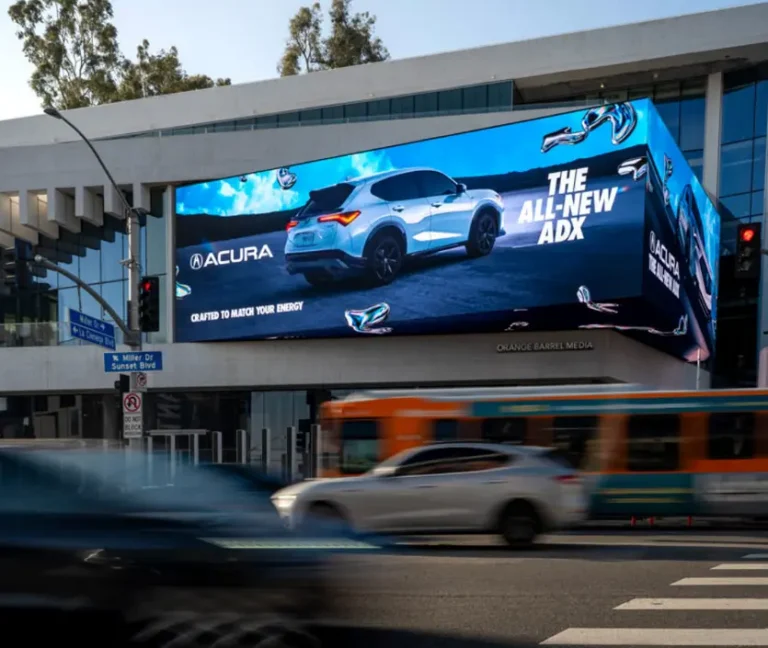
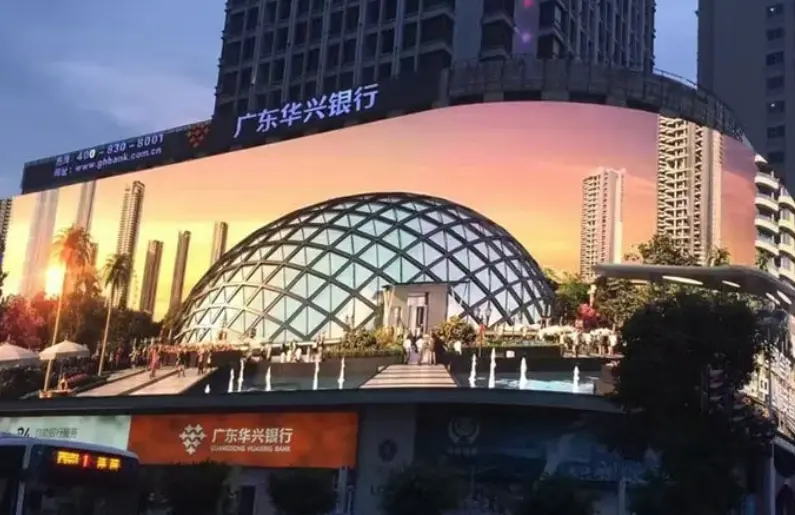
Common applications include architectural columns, shopping malls, reception areas, building features, and landmark installations.
Cylindrical LED Display
A cylindrical LED display wraps around a column or circular structure, potentially providing a 360-degree visual surface.
This format is particularly effective in shopping mall atriums, airports, museums, exhibition centers, entertainment venues, and retail environments where viewers approach from different directions.
Wave-Shaped and Custom LED Displays
Flexible LED modules can also create S-curves, waves, organic architectural surfaces, and other creative configurations.
However, complex shapes require more than flexible modules. The supporting frame, module layout, power distribution, signal routing, calibration, and content mapping must all be engineered around the final geometry.
Curvature Radius: The Most Important Curved LED Specification
When buying a curved LED display, do not simply tell a supplier that you need a “curved screen.”
Define the curvature radius first.
The radius describes how tightly the screen bends. A larger radius produces a gentler curve, while a smaller radius creates a tighter curve.
For project planning, suppliers should normally receive:
- Required radius
- Arc angle
- Screen height
- Arc length or overall width
- Viewing distance
- Curve direction
- Installation surface
- Required maintenance access
The required radius determines whether rigid cabinets, adjustable curved cabinets, or flexible LED modules are appropriate.
A common engineering mistake is choosing the LED panel first and attempting to force the installation structure to match it later. The better process is the opposite: define the geometry first, then select the display technology.
Flexible vs. Rigid Curved LED Displays
| Factor | Rigid Curved System | Flexible LED System |
|---|---|---|
| Curve method | Angled cabinet connections | Physically bendable modules |
| Suitable radius | Usually larger | Can support tighter curves |
| Complex shapes | Limited | Excellent |
| Cylindrical installation | More difficult | Well suited |
| Structural customization | Moderate | High |
| Initial engineering complexity | Lower for gentle curves | Higher |
| Typical applications | Stages, large walls | Columns, retail, immersive spaces |
Neither solution is automatically better.
For a large stage requiring a gentle arc, a rigid system may provide better cost efficiency and structural stability. For a tight column wrap or irregular architectural feature, flexible LED is usually the more appropriate technology.
Key Technical Specifications to Compare
Pixel Pitch
Pixel pitch is the distance between the centers of adjacent LED pixels, measured in millimeters.
A smaller pixel pitch provides higher pixel density and is generally better for close viewing distances. However, selecting the smallest available pitch is not automatically the best decision.
For example:
- P1.5–P2.5: close-range premium, broadcast, and immersive applications
- P2.5–P3.9: retail, corporate, exhibition, and event applications
- P3.9–P4.8: larger stages and moderate viewing distances
- P5 and above: large-format applications where viewers are farther away
The correct pitch should be determined from the closest expected viewer, not simply from the total screen size.
Brightness
Indoor and outdoor curved LED displays have very different brightness requirements.
Indoor systems generally prioritize controlled brightness, contrast, and visual comfort. Outdoor systems must overcome direct sunlight and therefore require substantially higher luminance.
For outdoor curved LED installations, brightness must be considered together with:
- IP protection
- UV resistance
- Heat dissipation
- Weather sealing
- Wind load
- Operating temperature
Refresh Rate
For live events and camera-facing installations, refresh rate becomes particularly important.
A professional curved LED display used for broadcasting, XR, virtual production, or filmed events should generally be specified with a sufficiently high refresh rate and tested with the actual camera system.
For many professional applications, 3,840 Hz or higher is a useful target, although the final specification should also consider the processor, driver IC, camera shutter, scan mode, and actual production environment.
GOB and COB Protection
Curved LED displays installed in public, rental, or high-contact environments may benefit from additional LED protection.
GOB encapsulates the LED surface with a protective layer, helping reduce damage from accidental contact, dust, and moisture.
COB technology directly packages LED chips onto the board and can provide a highly protected pixel surface with strong mechanical resistance.
The appropriate technology depends on the application rather than marketing terminology alone.
Curved LED Display Applications
Concerts and Stage Events
Curved LED walls can extend the visual environment beyond a conventional rectangular stage backdrop.
A concave configuration can improve the sense of depth and allow content to visually surround performers and audiences. Rental systems also need to balance curvature capability with weight, setup time, structural stability, and transportation requirements.
Retail and Shopping Malls
Retail environments often use curved LED displays to transform columns, entrances, feature walls, and atriums into digital advertising surfaces.
The major advantage is not simply a larger image. The screen becomes part of the architecture.
XR and Virtual Production
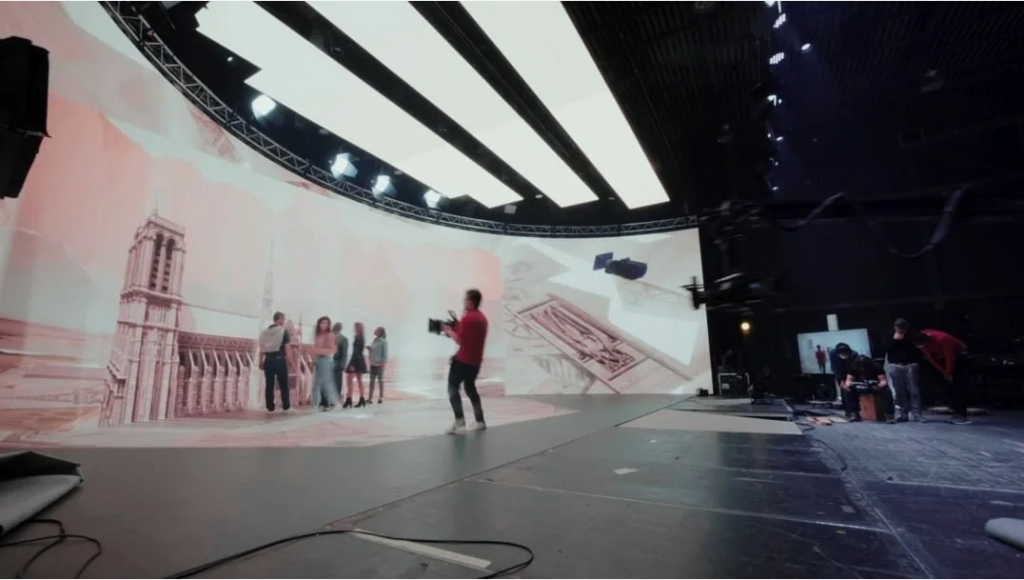
Curved LED systems are increasingly relevant to XR and virtual production because geometry influences camera perspective, light interaction, and the visible environment around the subject.
For camera-facing applications, pixel pitch, refresh rate, processor compatibility, color performance, and moiré testing should be evaluated together.
Museums and Immersive Experiences
Museums and experiential spaces can use cylindrical, dome, wave, and other creative LED structures to place visitors inside a visual environment.
These projects require careful content mapping because conventional rectangular content may not translate correctly onto a non-standard screen geometry.
Corporate and Control Room Environments
A gently curved LED wall can be useful when the screen is extremely wide and the audience is positioned across a broad viewing arc.
However, if the primary content consists of spreadsheets, dashboards, presentations, or text-heavy information, a flat LED display may remain the more practical choice.
Content Design for Curved LED Screens
Hardware is only half of a curved LED project.
Content should be created according to the physical geometry of the screen. Panoramic backgrounds, environmental animation, architectural graphics, product reveals, and immersive motion content usually make better use of curved surfaces than conventional presentation slides.
For complex curved installations, the content team should receive the final pixel map before production.
Pay particular attention to:
- Text placement
- Perspective
- Aspect ratio
- Image stretching
- Edge content
- Audience viewing positions
- Screen-to-camera geometry
Small text placed across an aggressive curve can become difficult to read even when the LED hardware itself has excellent resolution.
How to Plan a Curved LED Installation
A reliable project workflow should follow the physical installation rather than starting with a generic product catalog.
Step 1: Define the Application
Determine whether the screen is intended for advertising, entertainment, XR, retail, architecture, corporate communication, or immersive experiences.
Step 2: Measure the Viewing Geometry
Record the closest and typical viewing distances and determine where the audience will stand or sit.
Step 3: Define the Curve
Provide the radius, arc angle, height, width, and curve direction. Architectural drawings or CAD files are highly useful for complex projects.
Step 4: Select the Display Structure
Choose between rigid angled cabinets, curved cabinets, flexible modules, or a hybrid structure according to the required geometry.
Step 5: Select Pixel Pitch
Match pixel pitch to viewing distance and content requirements instead of selecting the smallest pitch available.
Step 6: Check Power and Signal Distribution
Curved installations can change cable routing and cabinet arrangement. Power distribution, signal transmission, processor capacity, and cabinet addressing should therefore be confirmed during engineering.
Step 7: Plan Maintenance Access
Front-service modules can be particularly valuable when the rear of the display is inaccessible.
A beautiful curved LED wall that requires half the building to be dismantled to replace one module is not clever engineering. It is an expensive future problem.
Curved LED Display Cost
A curved LED display generally costs more than an equivalent flat display because the project may require flexible modules, customized cabinets, special structural frames, additional engineering, more precise installation, and customized content mapping.
The final quotation depends on:
- Pixel pitch
- Screen size
- Curvature radius
- Flexible or rigid construction
- Indoor or outdoor environment
- Cabinet material
- GOB/COB protection
- Control system
- Structural frame
- Installation
- Transportation
- Maintenance requirements
- Content production
Therefore, comparing suppliers only by USD/m² can produce a misleading result.
A better B2B comparison is based on the complete system cost and expected operating requirements.
When Should You Choose a Curved LED Display?
Choose curved LED when the project prioritizes:
- Immersive visual impact
- Wide audience coverage
- Architectural integration
- Creative screen geometry
- Column wrapping
- Cylindrical or panoramic viewing
- Stage and entertainment experiences
- XR and virtual production
- Brand experience
A flat LED display may be preferable when the priority is:
- Lowest initial cost
- Simple installation
- Standard rectangular content
- Data-heavy information
- Frequent reconfiguration
- Straightforward maintenance
- Multi-person collaboration
The goal is not to make every LED display curved. The goal is to use curvature where it creates measurable visual or architectural value.
Curved LED Display Buying Checklist
Before requesting a quotation, prepare these specifications:
| Requirement | Information to provide |
|---|---|
| Application | Retail, stage, XR, advertising, museum, etc. |
| Screen size | Height × width or arc length |
| Curvature | Radius and arc angle |
| Viewing distance | Minimum and typical distance |
| Environment | Indoor, outdoor, semi-outdoor |
| Pixel pitch | Based on viewing distance |
| Brightness | Based on ambient lighting |
| Refresh rate | Especially important for camera use |
| Module type | Rigid, curved cabinet, or flexible |
| Maintenance | Front, rear, or both |
| Structure | Wall, column, truss, custom frame |
| Content | Standard, panoramic, immersive, or custom |
A professional supplier should be able to review these parameters before recommending a specific curved LED configuration.
Why Choose Sostron for Curved LED Displays?
Sostron provides commercial LED display manufacturing and customized display solutions for international projects. Its curved LED capabilities cover flexible modules, creative configurations, rental applications, and customized engineering.
The company operates a 15,000 m² intelligent manufacturing facility and provides engineering support covering product selection, structural design, installation guidance, calibration, logistics, and after-sales technical service.
For curved LED projects, Sostron’s engineering approach focuses on matching the display to the actual project geometry rather than treating a curved screen as a standard flat LED product with a different shape.
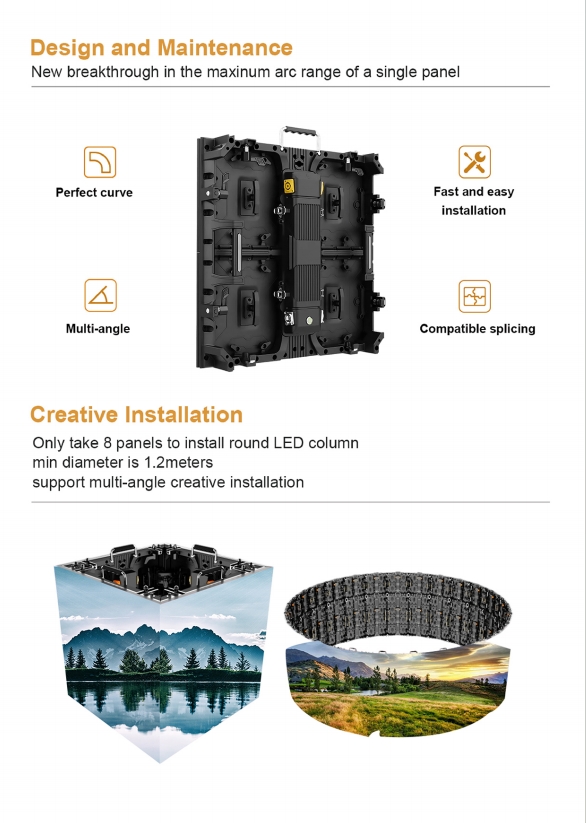
For buyers evaluating flexible curved systems, the sPad Pro 2 is particularly relevant for flexible arc and creative rental applications, while the Hima series provides another option for fine-pitch rental and immersive event environments.
Related Sostron LED Display Solutions
Flexible Curved LED Display
For projects requiring cylindrical, wave-shaped, or other non-flat configurations, explore Sostron’s flexible LED display solutions and engineering approach.
Explore Sostron Flexible Curved LED Solutions
sPad Pro 2 Flexible Arc Rental LED
For curved stage, event, and creative rental projects, the sPad Pro 2 provides a flexible arc-oriented solution designed for more complex display configurations.
View sPad Pro 2 Flexible Arc Rental LED
Hima Rental LED Display
For rental, event, immersive, and fine-pitch applications, the Hima series combines modular construction with flexible configuration options.
Frequently Asked Questions About Curved LED Displays
What is a curved LED display?
A curved LED display is an LED screen whose display surface follows a curved geometry rather than a flat plane. It can use rigid cabinets arranged at angles or flexible LED modules that physically bend to form the required curve.
Is a curved LED display the same as a flexible LED display?
No. A curved LED display describes the final screen geometry, while a flexible LED display describes a display structure capable of physically bending. A curved screen can be constructed from rigid cabinets, flexible modules, or a combination of technologies.
What is the minimum bending radius of a curved LED display?
There is no universal minimum radius. It depends on the module construction, cabinet design, pixel pitch, PCB, mechanical structure, and manufacturer specifications. Always confirm the manufacturer’s tested minimum radius before ordering.
Is curved LED more expensive than flat LED?
Usually, yes. Flexible modules, customized structures, engineering, installation, and content mapping can increase the project cost. However, the premium depends heavily on the required curvature and system design.
Can curved LED displays be used outdoors?
Yes, provided the system is specifically engineered for outdoor conditions. Outdoor projects should consider brightness, IP protection, UV exposure, temperature, drainage, wind load, structural support, and maintenance access.
What pixel pitch is best for a curved LED display?
The correct pixel pitch depends primarily on viewing distance and content requirements. Close-viewing applications generally require finer pixel pitches, while large outdoor displays viewed from farther away can use larger pitches.
Are curved LED displays difficult to maintain?
They can be more complex than flat LED displays, especially when the structure has limited rear access. Front-service or magnetic-module designs can significantly simplify module replacement and routine maintenance.
Final Takeaway
A curved LED display is not simply a flat LED screen that has been bent into a different shape. It is a complete system in which screen geometry, pixel pitch, module construction, structural engineering, viewing distance, content, power, control, and maintenance access must work together.
For a gentle stage curve, rigid angled cabinets may provide the best value. For tight-radius columns, cylindrical installations, or complex architectural forms, flexible LED modules can provide significantly greater design freedom.
The most reliable way to specify a curved LED project is therefore to define the radius and viewing geometry first, select the appropriate LED structure second, and then optimize pixel pitch, brightness, control, installation, and total cost around the actual application.
References:
U.S. Department of Energy — LED Basics
U.S. Department of Energy — Solid-State Lighting R&D Opportunities