Direct Answer: Manufacturing Cost at a Glance
If you’re here for a fast benchmark before a meeting or supplier call, here it is:
| LED Screen Type | Pixel Pitch Range | Estimated Mfg. Cost (per m²) | Typical Use Case |
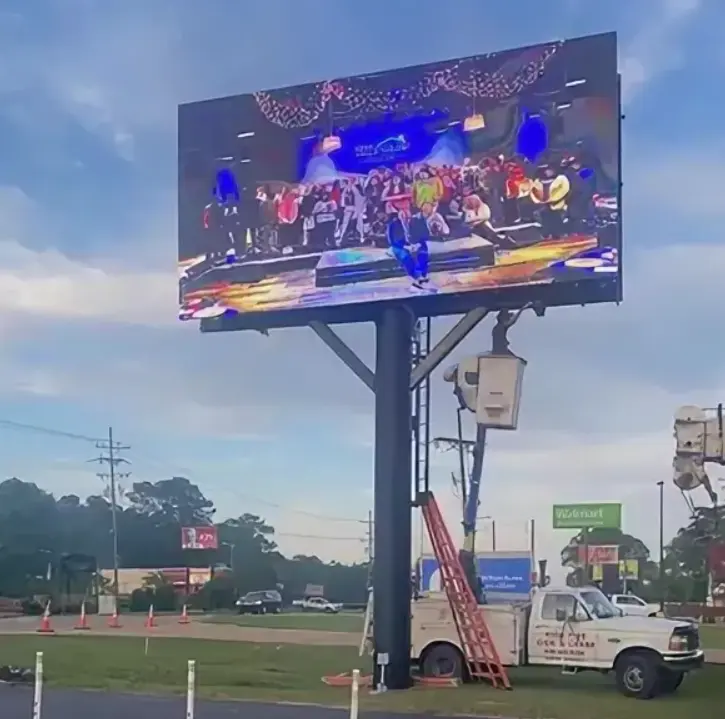
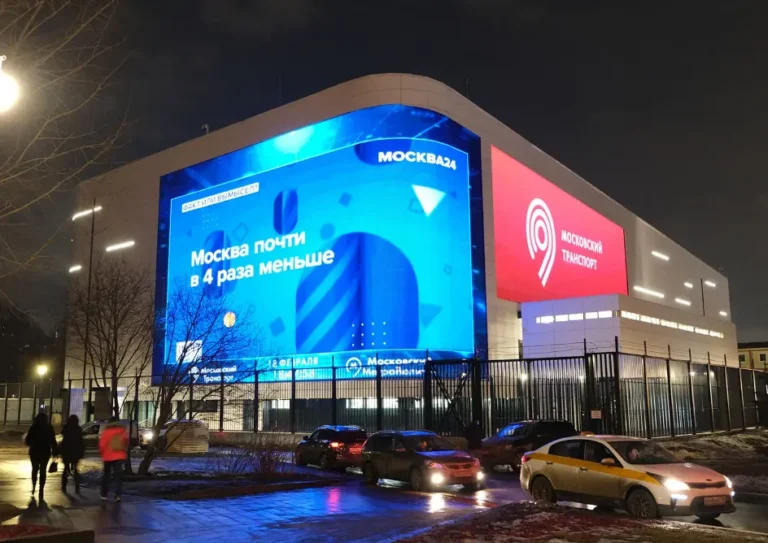
| Outdoor Fixed | P6–P10 | $280–$650 | Billboards, building facades |
| Indoor Fixed | P2.5–P4 | $480–$1,100 | Retail, control rooms, lobbies |
| Fine-Pitch Indoor | P1.2–P1.9 | $1,400–$4,200 | Broadcast, boardrooms, simulation |
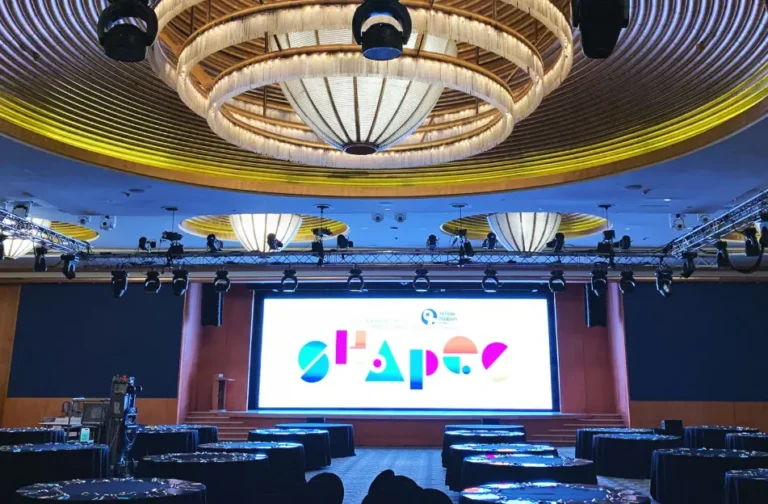
| Rental/Stage | P2.6–P3.9 | $550–$950 | Events, concerts, touring |
| Transparent LED | P7.8–P15.6 | $750–$1,900 | Glass facades, retail windows |
| COB Fine-Pitch | P0.9–P1.5 | $2,800–$6,500+ | Premium AV, command centers |
Critical caveat: These figures represent factory-level Bill of Materials (BOM) + manufacturing overhead costs at MOQ of 30–50 m² and above. Small-batch or single-unit production can push per-m² costs 1.5x to 3x higher before any margin is added. Certification, logistics, and installation are not included—those add a further 15–35% in real-world projects.
Why “Manufacturing Cost” and “Purchase Price” Are Two Completely Different Numbers
Most buyers make one fundamental error: they treat the quote from a Shenzhen sales rep as the manufacturing cost. It isn’t. What you receive is the exit price of a multi-layer commercial chain—and understanding what sits between the factory floor and your invoice is the first step toward making a sound procurement or investment decision.
Here’s what that chain typically looks like:
-
Raw component cost (BOM): The actual cost of LEDs, driver ICs, PCBs, power supplies, and cabinet materials
-
Manufacturing overhead: Labor, SMT line depreciation, aging test electricity, QC labor—typically adding 18–28% on top of BOM
-
Factory margin: Tier-1 Shenzhen factories run at 8–15% net margin; smaller factories push 20%+ to offset lower volume
-
Trading company/agent markup: If you’re not buying direct from a factorys, add another 20–60%—this alone is where most B2B buyers leak significant budget
-
Brand premium: Established names like Absen, Unilumin, or Leyard price at a further 30–80% premium over equivalent-spec white-label product from their own supply chain
The practical implication: A P3 indoor screen that costs $420/m² to manufacture can legitimately reach your desk quoted at $750–$900/m² through a standard distribution channel—and that’s before local taxes or installation. Neither number is dishonest; they’re simply measuring different things.
Who Actually Needs to Know Manufacturing Cost?
This isn’t academic information. The following decision-makers have legitimate, urgent reasons to understand what LED screens cost at the production level:
-
Brand owners evaluating OEM/ODM routes—deciding whether to source finished product or co-develop with a factory
-
Rental & staging companies scaling inventory and modeling asset ROI
-
System integrators needing to validate supplier quotes for large tenders
-
Corporate buyers in APAC or EMEA preparing multi-site rollouts where even a $50/m² error across 500 m² is $25,000 of unbudgeted spend
-
Entrepreneurs or investors assessing the capital requirements of entering LED manufacturing
If you fall into any of these categories, the next section is where you need to spend time.
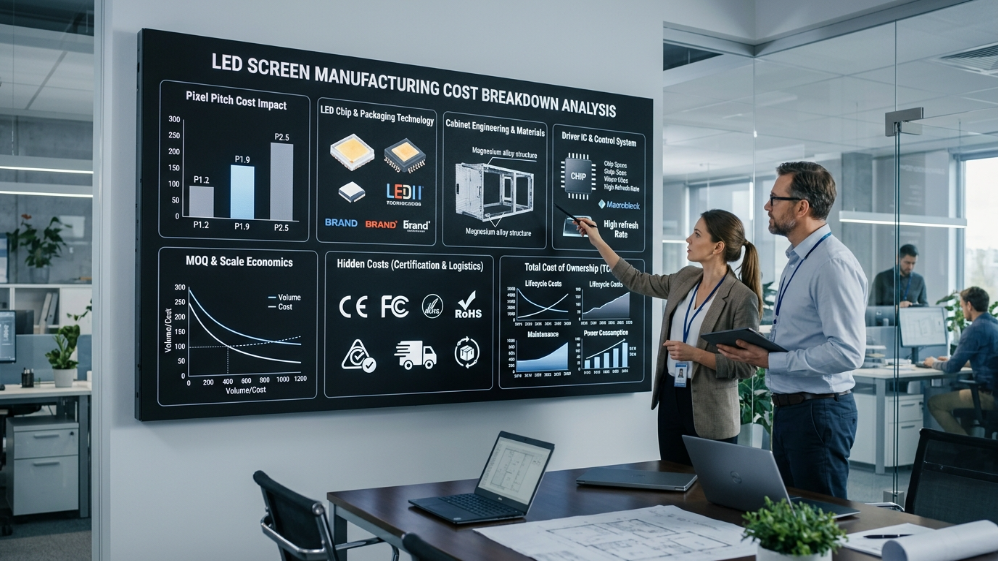
The 4 Core Variables That Drive LED Screen Manufacturing Cost
Forget generic breakdowns that list “hardware, software, installation”—those tell you nothing about why two P4 screens from two factories can differ by $300/m² with identical-looking spec sheets. The real cost engineering happens across four specific technical dimensions.
Pixel Pitch—The Most Powerful (and Most Misunderstood) Cost Multiplier
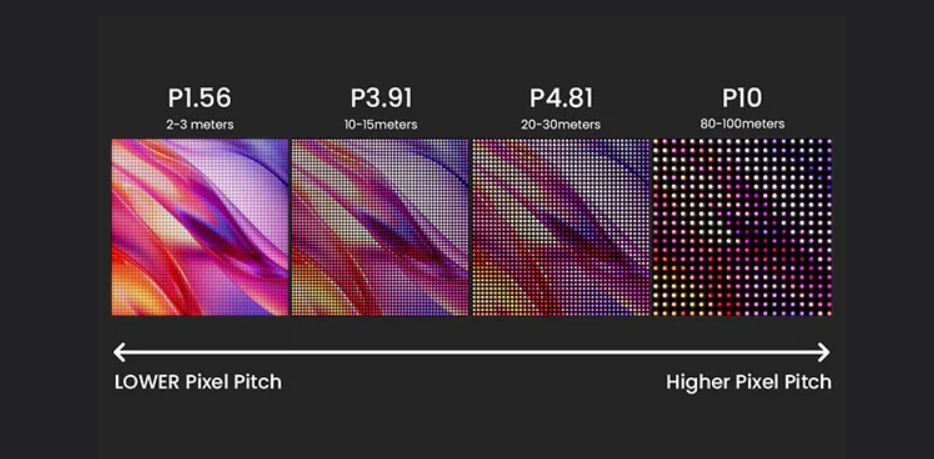
Pixel pitch is the distance in millimeters between the centers of two adjacent LED pixels. It is also, without question, the single variable with the steepest cost curve in LED display manufacturing.
Here’s why the math is brutal: the number of LED pixels per square meter scales as the inverse square of the pixel pitch.
-
A P10 screen contains approximately 10,000 pixels/m²
-
A P4 screen contains approximately 62,500 pixels/m²—6.25x more
-
A P2 screen contains approximately 250,000 pixels/m²—25x more than P10
Each of those pixels is a discrete SMD LED package—sourced, placed by SMT machine, soldered, and tested individually. The implications cascade through the entire manufacturing process:
-
More LEDs per m² = higher component cost, longer SMT placement time, higher defect exposure surface
-
Finer pitch requires tighter PCB tolerances—moving from standard 4-layer PCB to 6-layer, increasing PCB unit cost by 40–70%
-
Fine-pitch below P2 frequently requires COB (Chip-on-Board) packaging instead of SMD, which involves entirely different bonding equipment, yield curves, and process expertise—a factory that makes excellent P4 SMD screens may not be capable of quality P1.5 COB production at all
The cost inflection points to know:
| Pitch Range | PCB Complexity | LED Package Type | Relative Cost Index |
| P6–P10 | Standard 2–4 layer | SMD 2835/3535 | 1.0x (baseline) |
| P3–P5 | 4-layer | SMD 2121/1515 | 1.6x–2.4x |
| P2–P2.9 | 4–6 layer | SMD 1010/0808 | 3.0x–4.5x |
| P1.2–P1.9 | 6-layer | SMD 0606/COB | 5.5x–9x |
| P0.9 and below | 6–8 layer | COB/Micro-LED | 12x–20x+ |
The takeaway for buyers: Do not let a vendor sell you finer pitch than your actual viewing distance justifies. A P2.5 screen installed in a lobby where the nearest viewer is 6 meters away is pure cost inflation with zero visual benefit. The minimum comfortable viewing distance rule of thumb is pixel pitch (mm) × 1,000 = distance in mm—a P4 screen is optimally viewed from 4 meters or beyond.
LED Chip Origin and Packaging Technology—The Biggest Hidden Cost Fault Line
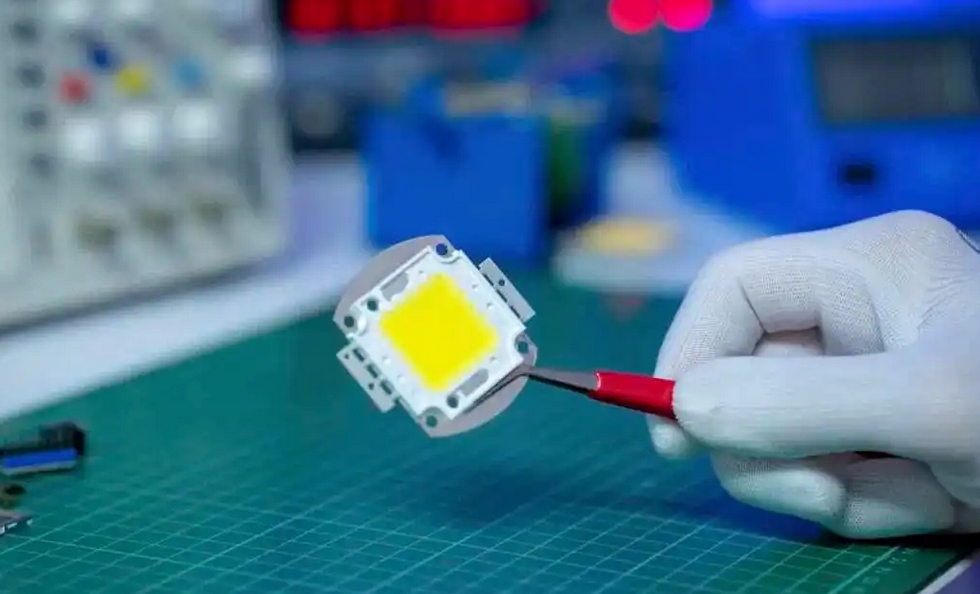
On a spec sheet, two screens can both read “SMD P3, 1000 nits, IP65.” The manufacturing cost difference between them can still be $200–$500/m²—and the reason is almost entirely traceable to what LED chips are inside and how they’re packaged.
The LED chip supply chain is tiered, and the tiers are not equal:
-
Tier 1 International (Cree, Osram, Nichia): Highest luminous efficacy, tightest binning tolerances, longest rated lifespan (100,000+ hours to L70). Cost premium: 4x–10x over domestic Chinese equivalents. Rarely used in standard commercial LED displays; primarily found in medical, broadcast, or defense applications.
-
Tier 1 Domestic China (Epistar/Taiwan, San’an Optoelectronics, Nationstar): The actual workhorse of the global LED display industry. Reliable binning, adequate lifespan (60,000–80,000 hours to L70), and priced at a point that makes large-format displays commercially viable. Most reputable Shenzhen factories use chips from this tier.
-
Tier 2/3 Domestic (unnamed or rebranded): Where the “cheap screen” supply chain lives. Wider binning tolerances mean visible color inconsistency within 12–18 months. Accelerated lumen depreciation. This is the tier responsible for most of the warranty claims and failed installations that give LED displays a bad reputation in certain market segments.
Beyond chip sourcing, packaging technology is a separate cost and quality axis:
-
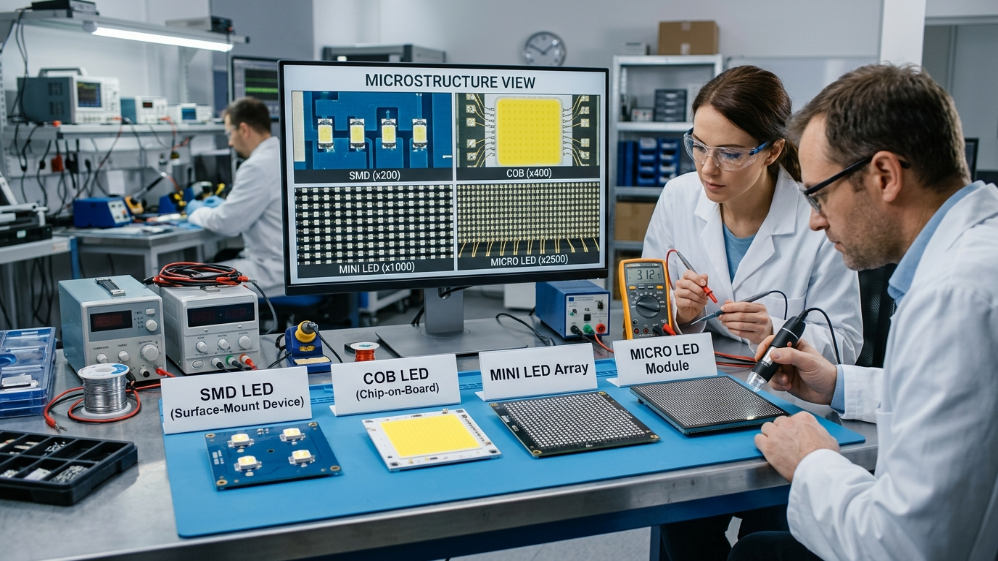
SMD (Surface-Mount Device): Individual LED packages pre-built and then soldered onto the PCB. The industry standard for P2 and above. Vulnerable to physical impact—individual diodes can be dislodged.
-
COB (Chip-on-Board): LED dies are bonded directly to the PCB substrate and encapsulated under a single epoxy or silicone layer. Dramatically more impact-resistant, better heat dissipation, superior contrast—but requires different manufacturing equipment and yields higher process cost (typically 25–40% premium over equivalent SMD at the same pitch).
-
GOB (Glue-on-Board): A surface protection layer applied over standard SMD to improve moisture and impact resistance. A cost-effective middle ground—adds roughly $30–$80/m² to SMD manufacturing cost while delivering meaningful durability improvements for rental and high-traffic applications. Let you understand the comparison and application selection of SMD, COB and GOB.
Cabinet Engineering and Structural Materials—The Line Item That Quotes Always Underrepresent
The cabinet is the structural chassis of every LED display—and it is where experienced project managers find the largest gap between what’s quoted and what’s actually delivered.
Die-cast aluminum vs. steel: this is not a minor materials decision.
-
Die-cast aluminum cabinets require significant upfront tooling investment ($15,000–$60,000 per cabinet mold), but deliver dimensional tolerances within ±0.1mm, critical for seamless tiling across large installations. Weight is typically 30–40% lower than equivalent steel, reducing structural load and installation hardware costs.
-
Steel/iron cabinets have near-zero tooling cost and are accessible to any sheet-metal shop. Tolerances run ±0.5–1mm, which creates visible seam gaps over time—particularly in outdoor installations subject to thermal expansion cycles.
For a buyer, the financial reality is this: die-cast aluminum tooling NRE (Non-Recurring Engineering) cost is a one-time fixed cost that must be recovered across the production run. On a 50 m² order with 40 cabinets, a $30,000 mold cost adds $750 per cabinet or $600/m² in hidden engineering cost—before a single LED is mounted. On a 500 m² run, that same mold cost becomes $60/m², completely changing the unit economics.
This is why custom cabinet projects have fundamentally different cost structures than standard-format screens—and why factories quote “standard” and “custom” on completely different pricing tracks.
Driver IC and Control System—The Specification Line Item Nobody Budgets for Correctly
The driver IC is the semiconductor that controls exactly how much current flows through each LED—and its selection has a direct, measurable impact on both manufacturing cost and end-user image quality.
Two screens with identical pixel pitch and the same LED chip source can deliver dramatically different visual performance based purely on driver IC choice:
-
Refresh rate: Budget driver ICs (ICN2038S tier) deliver 960–1,920 Hz refresh rates—acceptable for static signage, but producing visible flicker banding when filmed with modern smartphones at 60fps or above. High-end ICs (MBI5124, MBI5153, SN32F728) push 3,840–7,680 Hz, eliminating camera flicker entirely. The cost delta between these IC tiers: $15–$45/m², which sounds minor until you’re covering 200 m² for a broadcast studio.
-
Grayscale depth: 16-bit grayscale processing (vs. standard 12-bit or 14-bit) enables smoother gradients in shadow and highlight regions—critical for fine-pitch applications. The ICs capable of this processing are meaningfully more expensive and require more sophisticated PCB routing.
-
Control system hardware: The receiving card+sending card architecture (Novastar, Colorlight, Linsn being the dominant ecosystems) adds $200–$800 per sending card depending on output capacity and redundancy requirements, plus $15–$40 per receiving card with one card typically required per 2–4 cabinet modules. For a 100 m² installation, control system hardware alone can represent $1,500–$4,000 in manufacturing BOM—a figure that disappears silently into the per-m² quote without transparency.
A note on software licensing: Novastar’s advanced calibration platform (COEX) and color management tools are not included in hardware costs. Calibration equipment for post-installation color uniformity correction—a necessity for fine-pitch installations—adds $800–$3,000 in one-time service cost that most project budgets fail to allocate.
Scale Economics and MOQ: Why Your Order Size Rewrites the Entire Cost Model
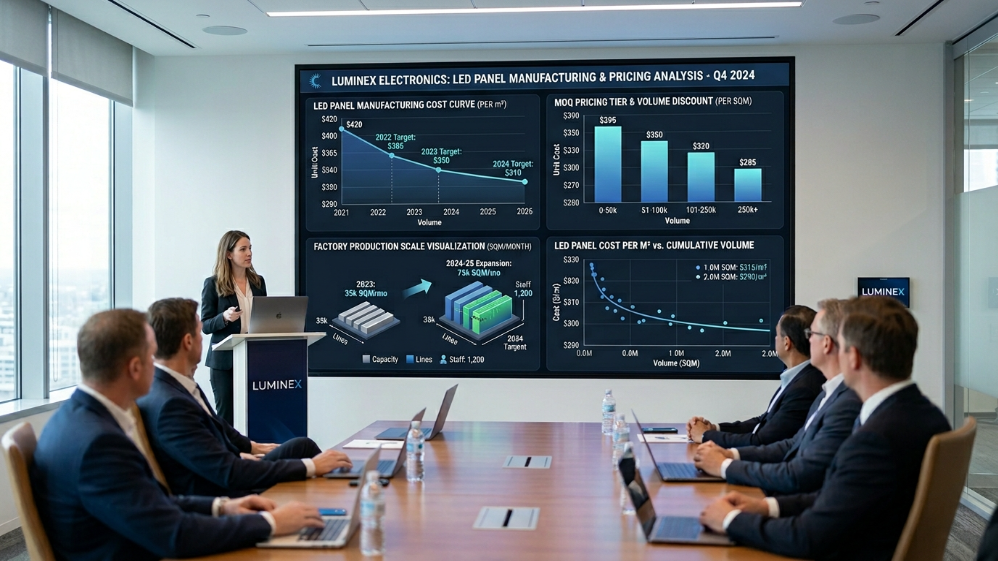
LED display manufacturing is not a linear cost function. It behaves like most capital-intensive manufacturing: fixed costs are real, significant, and they must land somewhere in your invoice.
The Fixed Cost Layer That Small Orders Absorb Disproportionately
Every manufacturing run—regardless of size—incurs the following costs:
-
PCB engineering and Gerber file setup: $200–$600 per board design
-
SMT programming and first-article inspection: $300–$800 per run
-
Aging test infrastructure time: 24–72 hours of powered burn-in per batch
-
QC calibration and color matching: $150–$400 per production run
On a 500 m² order, these fixed costs are invisible—they dissolve into the per-unit cost at under $5/m². On a 10 m² sample order, the same costs can add $150–$200/m² to your effective unit price before the factory has made a dollar of margin.
The MOQ Pricing Curve (Real-World Reference)
Using a P3.91 outdoor rental screen as a reference product:
| Order Volume | Approx. Unit Cost (per m²) | Premium vs. Large Order |
| 1–5 m² (sample) | $1,050–$1,300 | +85%–+130% |
| 10–30 m² | $720–$850 | +27%–+50% |
| 30–80 m² | $580–$660 | +2%–+16% |
| 80–200 m² | $540–$580 | +baseline |
| 200 m² + | $480–$520 | Negotiable below baseline |
The strategic implication: If your project requirement sits at 15–25 m², you are in the most cost-inefficient band of the entire pricing curve. It is frequently worth either consolidating multiple small-site rollouts into one order or negotiating a framework agreement with call-off delivery to access the 50 m²+ pricing tier—even if actual delivery is staggered.
TCO: The Hidden Cost Stack That Decides Whether Your Project Actually Makes Money
Purchase price per square meter is the opening bid of a much larger financial conversation. The buyers who get burned—consistently, predictably—are the ones who stop their cost modeling at the hardware quote. Here is the complete hidden cost stack that professional project owners account for before signing.
Certification and Regulatory Compliance
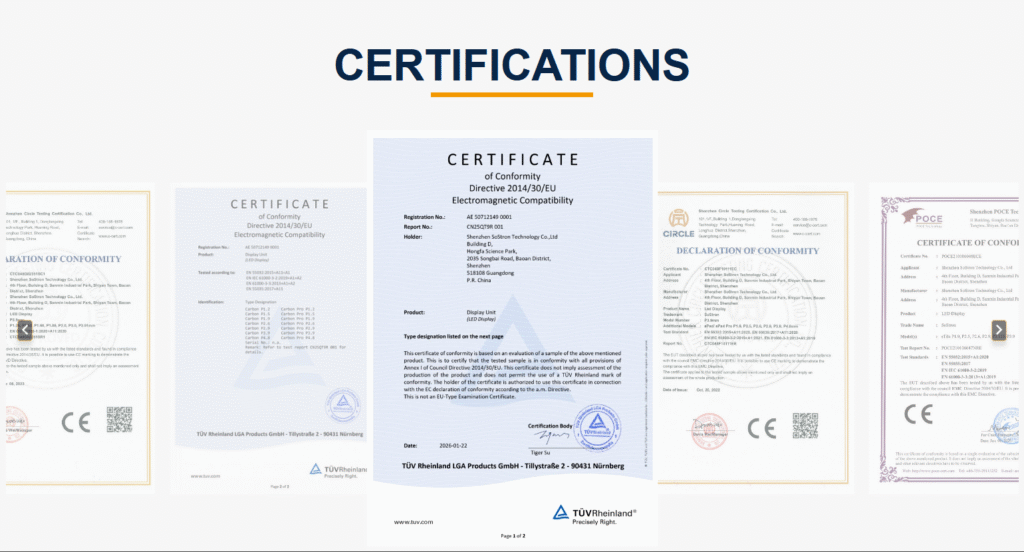
This is the most universally underestimated cost category in cross-border LED procurement:
-
CE marking (EU): EMC+LVD testing, typically $2,500–$6,000 per product family
-
FCC certification (US): $1,500–$4,000, with Class B requirements for indoor displays adding testing complexity
-
UL listing (North America): $4,000–$12,000 and a 6–12 week timeline
-
Australia SAA/Canada CSA: $2,000–$5,000 each
-
RoHS/REACH compliance documentation: Usually included in CE, but requires supplier material declarations—a process that adds 2–4 weeks to procurement timelines
Critical note: Certification is per product model, not per order. If you are sourcing three different pixel pitch variants for a multi-site project, you may be looking at $15,000–$30,000 in certification costs alone before a single screen is installed. These costs are real, non-negotiable in regulated markets, and almost never appear in supplier quotes.
Import Duties and Logistics
-
US import tariff on Chinese LED displays (HTS 8528.59): Currently at elevated levels post-2018 trade actions—effective rates of 25%+ on product value. On a $200,000 hardware order, this is a $50,000+ line item that cannot be avoided through creative invoicing without triggering customs liability.
-
Sea freight (Shenzhen→LA/Rotterdam): $800–$1,800 per CBM for LCL, depending on market conditions. A 50 m² outdoor screen installation typically ships at 8–14 CBM.
-
Inland damage allowance: Industry standard practice is to budget 3–5% of hardware value as a spare parts reserve for transit and installation damage. Do not skip this—a single cracked die-cast cabinet that requires air freight replacement can consume your entire project contingency.
Installation, Commissioning, and Long-Term Maintenance
-
On-site engineering labor: Experienced LED technicians in Western markets run $400–$800/day per engineer. A complex 100 m² outdoor installation realistically requires 2 engineers × 3–5 days = $2,400–$8,000 in commissioning labor.
-
Structural mounting hardware: Rarely included in display quotes. Ground support structures for outdoor LED billboards can add $8,000–$40,000 depending on wind load requirements and foundation engineering.
-
LED lumen depreciation and module replacement: LED phosphors degrade over time. At 50,000 operating hours (roughly 5–6 years at 24/7 outdoor operation), expect visible brightness reduction. Budgeting 5–8% of original hardware cost per year for module replacement and recalibration is conservative but defensible for lifecycle financial modeling.
Real Project Cost Simulation: A 60 m² Indoor P2.5 Corporate Lobby Installation
To make this concrete, here is a realistic cost build-up for a mid-sized corporate installation in a European market:
| Cost Component | Estimated Amount |
| Hardware (P2.5, 60 m² @ $680/m²) | $40,800 |
| CE + RoHS certification (amortized) | $3,200 |
| Sea freight + import duty (EU ~6.5%) | $4,100 |
| Custom steel subframe and mounting | $6,500 |
| Control room hardware (Novastar system) | $2,800 |
| On-site commissioning (2 engineers, 4 days) | $5,600 |
| 5% spare module reserve | $2,040 |
| Total Project Cost | ~$65,040 |
| Effective cost per m² | ~$1,084/m² |
The hardware quote of $680/m² represents only 62.7% of the actual project cost. The remaining 37.3%—over $24,000—is entirely composed of costs the supplier’s quote never mentioned. This is not exceptional; it is typical.
Frequently Asked Questions
Q: What is the manufacturing cost difference between a P4 and a P8 outdoor LED screen?
A: At scale (50 m²+), a P8 outdoor screen typically costs $280–$380/m² to manufacture, while a P4 equivalent runs $520–$750/m²—roughly a 1.8x–2.2x cost premium for P4. The gap stems from LED density (P4 has 4x more pixels per m²), PCB layer count, and longer SMT placement time. For viewing distances beyond 8 meters, P8 delivers equivalent perceived image quality at significantly lower cost.
Q: Can I get a single custom LED screen made, and what does that actually cost?
A: Yes, but the economics are punishing. A single-unit custom P3 indoor screen of 4 m² will cost approximately $3,200–$4,800 in hardware alone—compared to $600–$800/m² at MOQ. Add first-article inspection, custom cabinet tooling amortization, and small-batch SMT setup fees, and effective per-m² cost frequently reaches $800–$1,200 for a one-off unit. Prototyping via a standard-cabinet configuration significantly reduces this premium.
Q: Does the country of LED chip origin actually matter for a commercial installation?
A: Yes—materially. Displays using Tier 1 domestic chips (Nationstar, San’an) carry a credible 60,000–80,000 hour L70 lifespan, adequate for most commercial applications. Unbranded or Tier 3 chips often show visible color shift within 18–24 months under normal operating conditions. For a 5-year outdoor installation, chip selection is the single most consequential quality decision—and it adds only $40–$120/m² to manufacturing cost when specified correctly.
Q: Is COB technology worth the extra cost for a rental LED screen application?
A: Generally, no—for standard touring and events rental. COB’s primary advantages (impact resistance, seamless surface) are most valuable in fixed fine-pitch applications. For rental P2.6–P3.9 screens, GOB (Glue-on-Board) over SMD delivers adequate protection at a $30–$60/m² premium over bare SMD, without the process complexity or cost floor of COB. COB becomes strongly justified for fine-pitch below P2 in permanent broadcast or simulation installations.
Conclusion: The Unit Price Trap and How to Avoid It
The single most expensive mistake in LED screen procurement is treating the per-square-meter hardware quote as the total cost of ownership. As the simulation above demonstrates, hardware routinely represents only 55–70% of total project expenditure—with certification, logistics, structural integration, commissioning, and lifecycle maintenance accounting for the remainder.
Sophisticated buyers evaluate LED screen investments on three numbers: initial hardware cost, year-one total deployment cost, and 5-year TCO per square meter of effective display area. Only when all three are modeled does the true cost difference between a $480/m² screen and a $750/m² screen become visible—and sometimes, the premium product delivers lower 5-year TCO through reduced maintenance frequency and longer calibration intervals.
The variables covered in this guide—pixel pitch, chip sourcing, cabinet engineering, control system specification, MOQ economics, and hidden deployment costs—are not independent. They interact, and a change in one frequently cascades through the others. That is precisely why per-project cost modeling matters more than any published price table.
Given that installation environment, structural requirements, and optimal viewing distance vary significantly across projects, we recommend working directly with an engineering team to model your specific scenario. Contact our engineering team for a precise, no-obligation custom quotation tailored to your application.
References:
IES RP-7-20: Lighting Practice: Industrial Lighting (Illuminating Engineering Society)
IPC-2221B: Generic Standard on Printed Board Design (Association Connecting Electronics Industries)