A 4x3m LED screen (12 sqm total) costs between $8,000 and $52,000 USD in 2026, depending on pixel pitch, LED chip brand, installation environment, and signal processing requirements.
The price per square meter ranges from $650 (outdoor P5–P6 SMD) to $4,300 (indoor fine-pitch P1.2–P1.5 COB).
If you’re in early-stage budgeting, anchor your internal estimate at $18,000–$28,000 for the most common use case: a mid-range indoor P2.5 fixed installation with a Novastar control system and standard steel mounting structure.
That number will shift—significantly—based on four technical variables that most supplier quotes deliberately obscure. This article breaks down exactly what moves the price and why.
What Does a 4x3m LED Screen Actually Cover? (Setting the Spec Baseline)
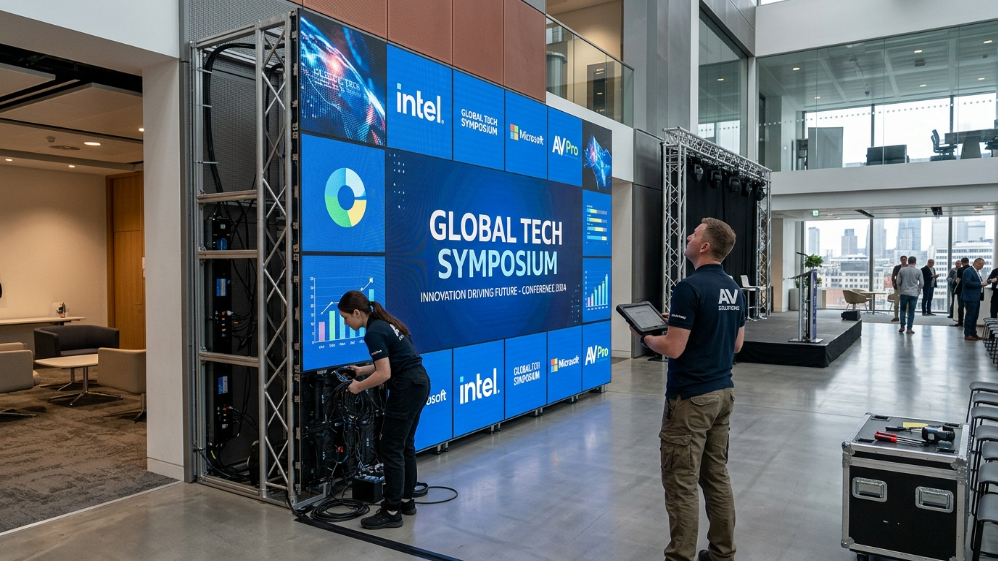
Before evaluating any quote, you need to internalize one number: 12 square meters.
That’s the total active display area of a 4x3m screen.
It sounds obvious, but the implications on cabinet count, power draw, structural load, and pixel density are routinely underestimated by first-time buyers.
Panel Cabinet Breakdown
A 4x3m LED wall is assembled from modular cabinets.
The most common industry-standard cabinet sizes are:
| Cabinet Size | Quantity Required | Notes |
|---|---|---|
| 500mm × 500mm | 48 cabinets | 16 wide × 6 tall or 8 wide × 6 tall |
| 500mm × 1000mm | 24 cabinets | 8 wide × 3 tall |
| 960mm × 960mm | Custom fit required | Adds 8–15% to cost |
The 500×500mm format dominates the rental and event market because individual panels are lighter and easier to transport.
For permanent fixed installations, 500×1000mm die-cast aluminum cabinets are preferred—they reduce seam count and improve structural rigidity over time.
Pixel Pitch and Minimum Viewing Distance
This is the variable that most directly controls whether a $12,000 screen or a $35,000 screen is the correct choice for your application.
At 4×3 meters, the following minimum comfortable viewing distances apply:
| Pixel Pitch | Minimum Viewing Distance | Ideal Use Case at 4x3m |
|---|---|---|
| P1.2 | ~1.2m | Control room, boardroom close-range |
| P1.5 | ~1.5m | High-end conference, broadcast studio |
| P1.8 | ~1.8m | Hotel ballroom, indoor exhibition |
| P2.5 | ~2.5m | Stage backdrop, retail, corporate lobby |
| P3.0 | ~3.0m | Large venue, auditorium rear wall |
| P3.9 | ~3.9m | Rental/event, concert stage |
| P4–P5 | ~4–5m | Semi-outdoor, covered stadium |
| P6–P8 | 6m+ | Outdoor advertising, building facade |
The practical implication: if your audience will be seated 4–6 meters away, a P2.5 screen is adequate and a P1.5 screen is a $15,000+ overspend.
Getting this wrong in either direction is the single most common budget mistake in LED procurement.
The 4 Real Price Drivers for a 4x3m LED Screen
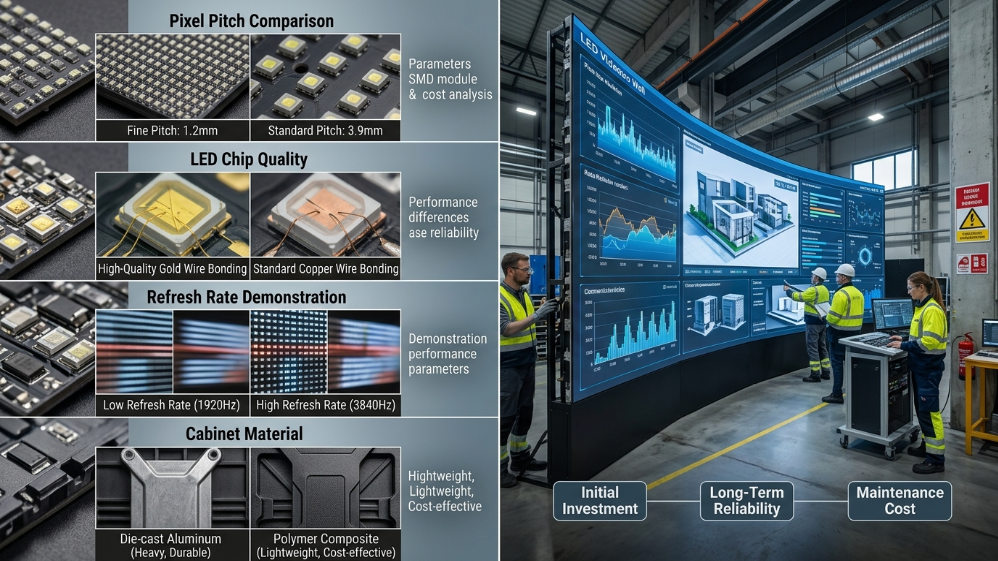
Driver #1 — Pixel Pitch: The Single Biggest Price Variable
Pixel pitch determines LED chip density, which directly governs manufacturing cost.
A P1.5 screen has approximately 2.7× more LED chips per square meter than a P2.5 screen.
Each chip must be individually placed, soldered, and calibrated.
At 12 sqm, the chip count difference runs into the hundreds of thousands.
2026 Price-per-Square-Meter Breakdown
| Pixel Pitch | Technology | Price/sqm (USD) | 12 sqm Total (Hardware) |
|---|---|---|---|
| P1.2 | COB Indoor | $3,800–$4,300 | $45,600–$51,600 |
| P1.5 | COB/SMD Indoor | $2,800–$3,500 | $33,600–$42,000 |
| P1.8 | SMD Indoor | $2,000–$2,600 | $24,000–$31,200 |
| P2.5 | SMD Indoor | $1,400–$1,900 | $16,800–$22,800 |
| P3.9 | SMD Rental | $1,100–$1,500 | $13,200–$18,000 |
| P4 Outdoor | SMD Outdoor | $900–$1,300 | $10,800–$15,600 |
| P6 Outdoor | SMD Outdoor | $650–$900 | $7,800–$10,800 |
Note: These are hardware-only FOB prices. Add 35–55% for shipping, import duties, installation, and control systems in a fully-landed Western market project.
Driver #2 — LED Chip Brand and Bin Quality
Not all LED chips are equal, and the gap between tier-1 and generic chips is not merely a premium for branding—it is a measurable difference in color consistency, lifespan, and failure rate that will cost you far more in maintenance than the upfront savings.
Chip Supply Chain Quality Ranking
| Tier | Brand Examples | Characteristics |
|---|---|---|
| Tier 1 (Premium) | Nichia (Japan), Cree (USA) | Adds $200–$400/sqm over Tier-2 |
| Tier 2 (Mainstream) | Nationstar, Cree-authorized Chinese fabs, Epistar | Reliable bin consistency |
| Tier 3 (Economy) | Unbranded chips | Visible bin variation within 18 months |
The technical term to look for in spec sheets is bin sorting grade.
A properly binned 12 sqm screen will have ΔEuv < 0.003 across all panels.
Ask for this figure in writing.
Suppliers using off-bin chips cannot meet this specification and will typically avoid the question.
Practical impact: a P2.5 screen built with Nationstar chips typically costs 18–25% more than the same pitch screen built with generic chips.
Over a 5-year operational window, the maintenance cost differential often reverses the savings entirely.
Driver #3 — Refresh Rate and Grayscale Depth (Critical for Camera-Facing Applications)
This cost driver is invisible to the naked eye but catastrophically visible on camera.
If your 4x3m screen will ever be captured by a broadcast camera, live streaming rig, or high-speed photography, refresh rate is non-negotiable.
Refresh Rate Comparison
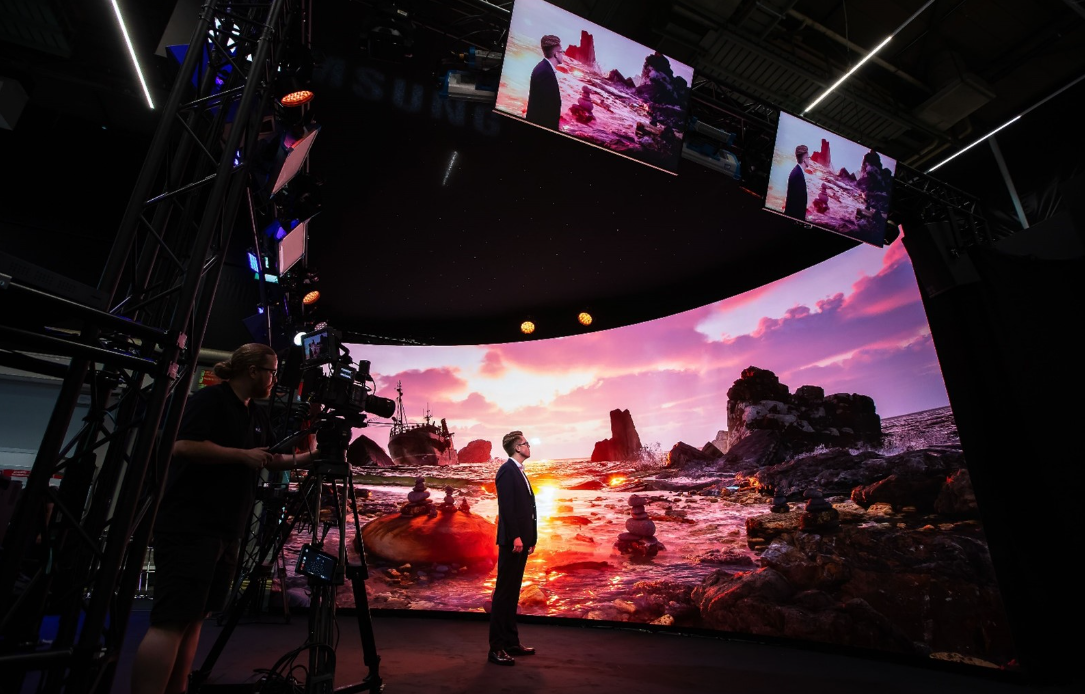
- Camera Flicker: Visible black bars (rolling shutter effect) when filmed.
- Content Loss: Fast-moving content may appear blurry or tearing.
- Not Broadcast Ready: Unsuitable for professional live streaming or TV.
- Flicker-Free: Crystal clear image on all cameras (1/2000s+ shutter speed).
- Smooth Motion: Perfect for fast video playback and sports.
- XR Ready (7680Hz): Essential for virtual production and XR studios.
| Refresh Rate | Application |
|---|---|
| 1,920Hz | Standard non-broadcast use |
| 3,840Hz | Commercial camera-friendly applications |
| 7,680Hz+ | Sports broadcast, film production, virtual production |
Upgrading from 1,920Hz to 3,840Hz typically adds $120–$250/sqm due to upgraded driver IC chips.
For a 12 sqm screen, that’s a $1,440–$3,000 line item that rarely appears separately in supplier quotations.
Grayscale Depth
| Grayscale Depth | Usage |
|---|---|
| 8-bit | Standard content playback |
| 16-bit | HDR content playback |
16-bit grayscale processing adds approximately $80–$150/sqm at the control system level.
Driver #4 — Cabinet Material and IP Rating
Cabinet construction determines both the unit price and the total structural cost of ownership.
Cabinet Material Comparison
| Material | Advantages | Premium |
|---|---|---|
| Die-cast Aluminum | Lighter, tighter tolerances, better heat dissipation | $60–$120/cabinet |
| Steel Frame | Lower cost, higher weight | Standard |
IP Rating Comparison
| Rating | Protection Level | Application |
|---|---|---|
| IP20 | No ingress protection | Indoor only |
| IP43 | Splash-resistant | Covered stage, atrium |
| IP65 | Dust-tight and water-jet resistant | Outdoor installation |
For a 4x3m outdoor P5 screen, upgrading from IP43 to IP65 adds approximately $1,800–$3,600 in hardware cost alone.
Price Range by Use Case: 2026 Market Reference Table
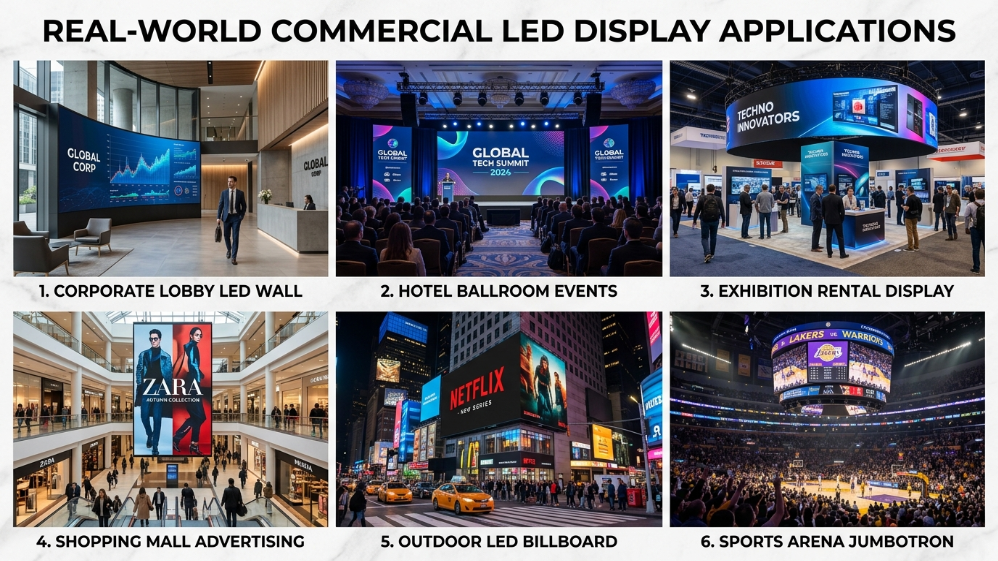
| Application | Recommended Specification | Hardware Cost (12 sqm) | Notes |
|---|---|---|---|
| Corporate Boardroom / HQ Lobby | Indoor P2.0–P2.5, Die-cast Aluminum, 3840Hz | $19,000–$26,000 | Camera-ready |
| Hotel Ballroom / Event Backdrop | Indoor P2.5–P3.0, SMD, 1920Hz | $15,000–$21,000 | Competitive pricing |
| Trade Show / Exhibition Rental | P3.9 Rental Grade, Steel, Quick-lock | $12,000–$17,000 | Rental model |
| Retail Window / Shopping Mall | P1.8–P2.0, High Brightness | $22,000–$30,000 | 2,000+ nits |
| Outdoor Advertising | Outdoor P5–P6, IP65, Steel | $9,000–$14,000 | Permits required |
| Broadcast / Virtual Production | COB P1.5, 7680Hz, Nichia | $38,000–$52,000 | High-end solution |
| Sports Venue / Arena | Indoor P3, High Contrast, 3840Hz | $17,000–$24,000 | Front maintenance preferred |
Total Cost of Ownership: The Numbers Suppliers Won’t Volunteer
The hardware quote you receive covers, at best, 55–70% of what a 4x3m LED screen actually costs to own and operate.
The remaining 30–45% is hidden in installation, logistics, power infrastructure, maintenance, and control system expenses.
Steel Structure and Installation Labor
Structural Support Cost
| Installation Method | Cost Range |
|---|---|
| Floor-standing Totem | $1,800–$3,500 |
| Wall Mount Bracket System | $2,200–$4,500 |
| Ceiling Suspension Rigging | $3,500–$9,000 |
Professional installation labor:
| Service | Cost |
|---|---|
| 2 Technicians, 1–2 Days | $800–$2,500 |
Signal Processing and Control System
A 4x3m P2.5 LED screen delivers approximately 1,600×1,200 native resolution.
Control System Cost
| System | Cost Range | Application |
|---|---|---|
| Novastar MX40 Pro / MCTRL 4K | $1,200–$2,200 | Corporate & Retail |
| Colorlight 5A | $600–$900 | Budget Projects |
| Brompton Tessera SX40 | $6,500–$11,000 | Broadcast & Virtual Production |
Additional equipment:
| Equipment | Cost Range |
|---|---|
| Media Player / Content Server | $400–$1,800 |
| Signal Distribution & Rack Components | Included in project budget |
Total ecosystem cost:
$2,000–$5,500
Power Infrastructure
A 4x3m SMD P2.5 indoor screen draws approximately:
- Peak Power Consumption: 2,800–4,200W
- Average Power Density: 230–350W/sqm
Additional Power Costs
| Item | Cost Range |
|---|---|
| UPS Backup System | $1,500–$4,500 |
| Electrical Panel Upgrade | $800–$3,000 |
A dedicated 30A circuit is generally recommended.
Shipping, Import Duties, and Lead Time Risk
Logistics Cost
| Item | Cost Range |
|---|---|
| Sea Freight (China → US West Coast) | $380–$650 |
| Air Freight | $1,800–$3,200 |
Import Duties
| Market | Duty Rate |
|---|---|
| United States | 25% |
| European Union | 3.5–6% |
| Australia | 0–5% |
Recommended spare parts budget:
- One spare module per 20 cabinets
- Approximately 2–3 spare modules for a 4x3m screen
Annual Maintenance Reality
Typical Maintenance Costs
| Item | Cost Range |
|---|---|
| Module Repair | $35–$120 per module |
| Annual Maintenance Budget | $400–$900/year |
Manufacturers often cite 100,000-hour lifespan figures.
Real-world commercial lifespan is typically 60,000–80,000 hours before noticeable brightness degradation occurs.
Simulated TCO Case: Corporate Lobby P2.5 Fixed Installation (North America)
| Line Item | Estimated Cost (USD) |
|---|---|
| LED Screen Hardware (P2.5, Nationstar, 3840Hz) | $21,500 |
| Novastar MX40 Pro + Media Player | $2,800 |
| Wall-Mount Steel Structure | $3,200 |
| Installation Labor | $1,800 |
| Sea Freight | $520 |
| Import Duty (25%) | $5,375 |
| Electrical Upgrade | $1,400 |
| Spare Modules | $480 |
| Total Installed Cost | $37,075 |
| Year 1 Maintenance | $600 |
| Total Year 1 TCO | $37,675 |
The hardware-only quote is $21,500.
The actual first-year ownership cost is $37,675—approximately 75% higher.
Rental vs. Purchase: When Does Buying a 4x3m Screen Make Financial Sense?
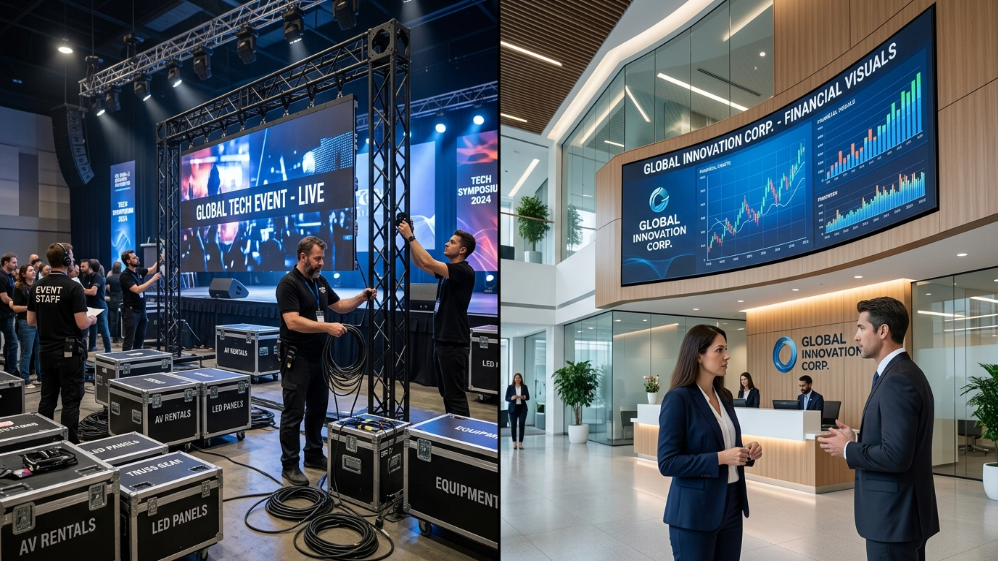
Rental pricing for a 4x3m P3.9 LED wall:
$1,200–$2,800 per event day
Usage-Based Decision Framework
| Annual Usage | Recommendation |
|---|---|
| Under 10 Days | Rent |
| 10–20 Days | Model Both Options |
| 20+ Days | Purchase |
The break-even point typically occurs at approximately 15–25 event-days per year.
The hybrid ownership model—owning the screen while outsourcing rigging and technical labor—is becoming increasingly common among event companies.
FAQ: 4x3m LED Screen Price — Real Buyer Questions
Q: Why do two P2.5 quotes for the same 4x3m screen differ by $12,000?
A:
The pixel pitch label does not reveal:
- Chip brand
- Bin grade
- Refresh rate
- Cabinet material
- Driver IC quality
Always request a complete BOM (Bill of Materials) before comparing quotes.
Q: Is a 4x3m LED screen suitable for permanent outdoor installation in a coastal or high-humidity environment?
A:
Only with:
- IP65-rated cabinets
- Conformal-coated PCBs
- Stainless steel or galvanized hardware
Request a salt spray test report (IEC 60068-2-52) from the supplier.
Budget an additional $180–$280/sqm.
Q: How many amps does a 4x3m LED screen require, and can it run on a standard office circuit?
A:
| Power System | Current Draw |
|---|---|
| 230V Supply | 12–18A |
| 110V Supply | 25–38A |
A standard office circuit is insufficient.
A dedicated 30A circuit is recommended.
Q: What warranty terms should I insist on?
A:
A credible warranty should include:
| Component | Minimum Warranty |
|---|---|
| LED Modules | 3 Years |
| Power Supplies | 2 Years |
| Receiving Cards | 2 Years |
Also confirm whether return shipping costs are covered under warranty terms.
Premium suppliers may offer on-site warranty service for an additional 8–15% of hardware cost.
Conclusion: Why Unit Price Is the Wrong Number to Optimize
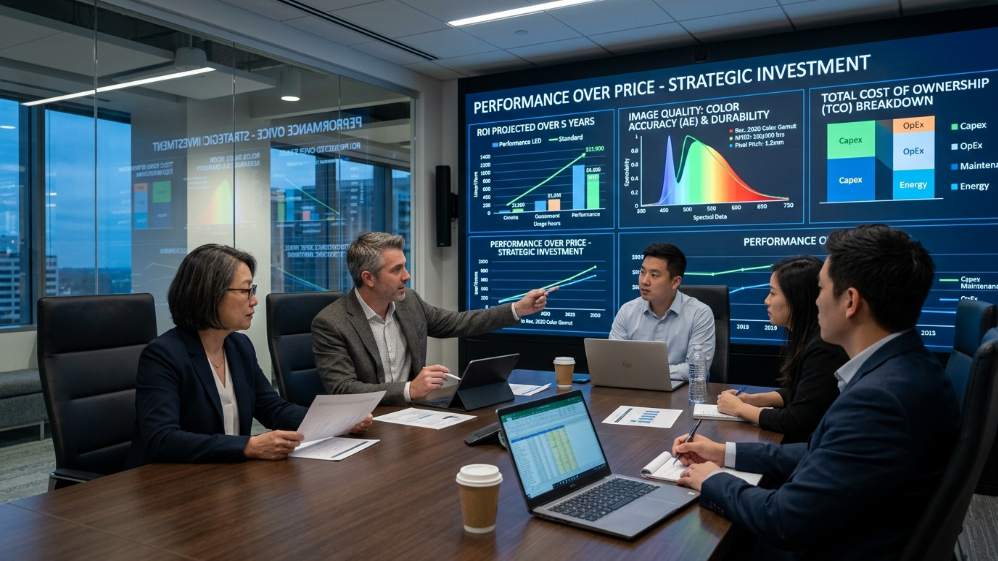
A 4x3m LED screen is not a commodity purchase.
The hardware price is the starting point of a cost analysis, not the conclusion.
As the TCO case above demonstrates, a screen quoted at $21,500 can generate a real first-year cost of $37,675 once installed and operational.
The decisions that determine ROI—pixel pitch, refresh rate, IP rating, LED chip quality, and viewing-distance matching—are engineering decisions, not purchasing decisions.
They should be finalized before accepting a quote, not after the screen has been mounted.
Every project has unique requirements involving viewing distance, ambient light, content type, and structural constraints.
For a precise application-specific cost estimate, work from your floor plan, content requirements, and budget ceiling to determine the specification that delivers the lowest justifiable total cost while meeting performance requirements.
References:
SMPTE Standards and Recommended Practices for Display Systems
AVIXA Display Image Size Calculator & Display Standards