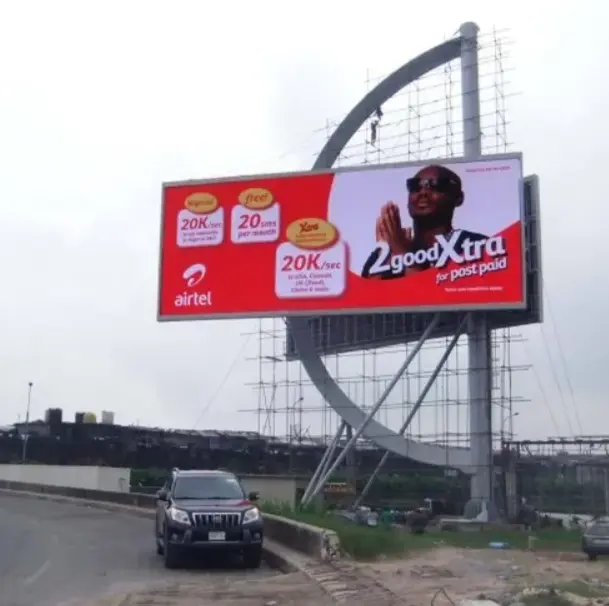
Every procurement manager who has ever requested three LED screen quotes for the same wall knows the frustration comes back at£9,000,another at£16,000,and a third simply says”contact us for pricing.”Nobody explains why.That gap isn’t a sales trick—it’s the direct result of five engineering variables stacking on top of each other,and most suppliers never break them down for the buyer.A UK LED display price in 2026 typically falls between£1,100 and£17,000 per square metre for supply-only panels,depending on pixel pitch,indoor/outdoor rating,and application.A standard indoor conference room screen at P2.5 lands around£3,500–£6,000/m²fully installed,while a fine-pitch P0.9 boardroom display can exceed£15,000/m².Here’s the quick reference our engineering team uses when scoping a first-pass budget with a new client:
| Application | Pixel Pitch | Supply-Only Price(£/m²) | Typical Buyer |
|---|---|---|---|
| Corporate boardroom | P0.9–P1.5 | £8,000–£17,000 | Enterprise HQ,government |
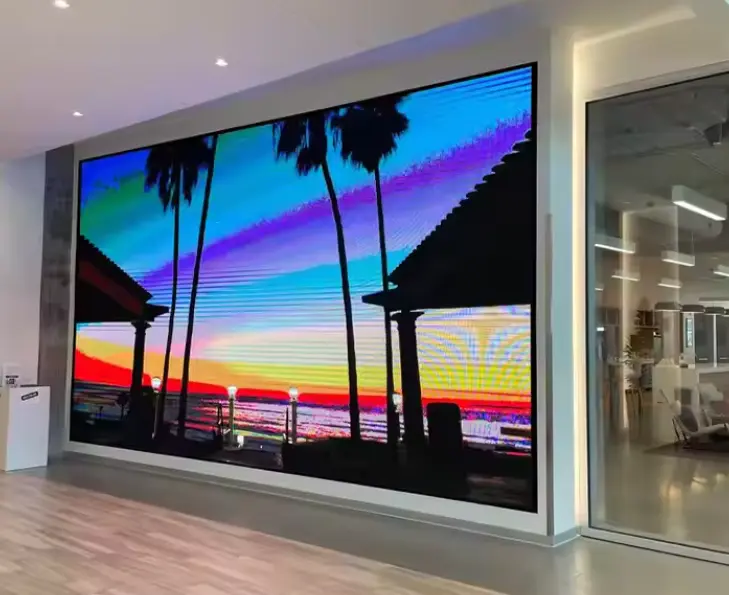
| Retail/lobby display | P1.9–P2.5 | £3,500–£8,000 | Retail chains,hospitality |
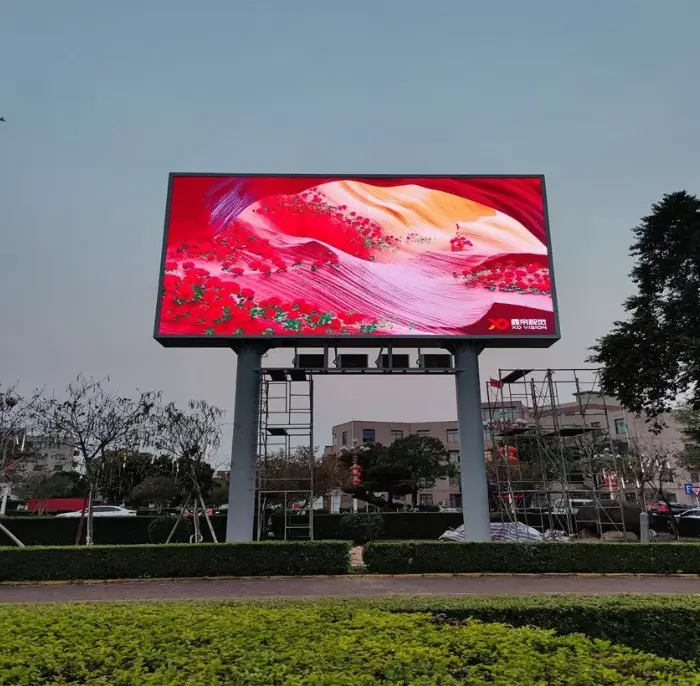
| Outdoor billboard/DOOH | P4–P10 | £1,300–£4,500 | Advertising operators |
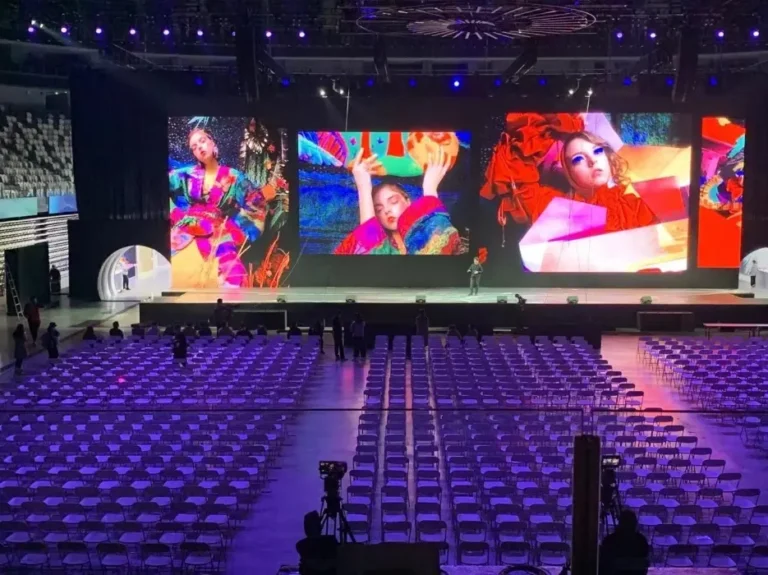
| Event rental wall | P2.9–P3.91 | £1,800–£3,200(purchase) | AV companies,event agencies |
These figures exclude installation,structural steelwork,video processing,and the UK’s 20%VAT—a distinction that trips up a surprising number of first-time buyers,and one that has cost more than one project manager an awkward conversation with finance.
Here’s what actually happens behind that number.Based on our experience delivering LED projects into North America,the Middle East,and Europe,UK-based installers and AV integrators typically operate on a 20–40%margin layered on top of factory cost—which isn’t a criticism,it’s simply how a distribution channel works,and in many cases that margin buys genuinely useful local warehousing and rapid site support.The problem is that almost nobody researching”UK LED display price”ever sees the underlying cost structure,so there’s no way to tell whether a£12,000 quote for a 3m x 2m wall is fair,padded,or a genuine bargain.That opacity is exactly what this guide exists to remove.
What A LED Panel Is Actually Made Of—And Why It Changes The Price
Strip away the marketing language and an LED display is,at its core,a stack of precisely engineered layers PCB substrate,surface-mounted or chip-on-board LED dies,driver ICs that govern grayscale and refresh rate,a die-cast aluminum cabinet for heat dissipation and structural rigidity,and a power supply sized to the panel’s peak draw.Each layer has a cheap version and an engineered version,and the price difference between two quotes for the”same”pixel pitch almost always traces back to which version is inside the box.At our Shenzhen manufacturing facility,every module goes through a 72-hour aging test before it ever gets packed—dead pixels,brightness drift,and colour inconsistency get caught on the factory floor,not on a client’s wall six months into a contract.That single process step is the difference between a screen that runs quietly for a decade and one that starts generating service tickets in year two.
Why Buyers Come To Sostron For This Kind Of Project
We’re not going to pretend every LED manufacturer is the same,because they aren’t,and pretending otherwise would waste your time.What we bring to a project is a design-manufacture-install pipeline built entirely in-house engineering team calculates pixel pitch against your actual viewing distance and ambient brightness before a single quote goes out,our production line handles everything from module binding to cabinet assembly under one roof,and our CMS platform ships as a genuinely integrated part of the system rather than a bolt-on licence fee discovered after signing.Clients working with system integrators,DOOH operators,and stadium contractors across five continents have leaned on this pipeline specifically because it removes the guesswork—you’re not stitching together a panel from one factory,a controller from another,and installation support from a third party who’s never seen either.
The Real Number Behind A UK LED Screen Quote
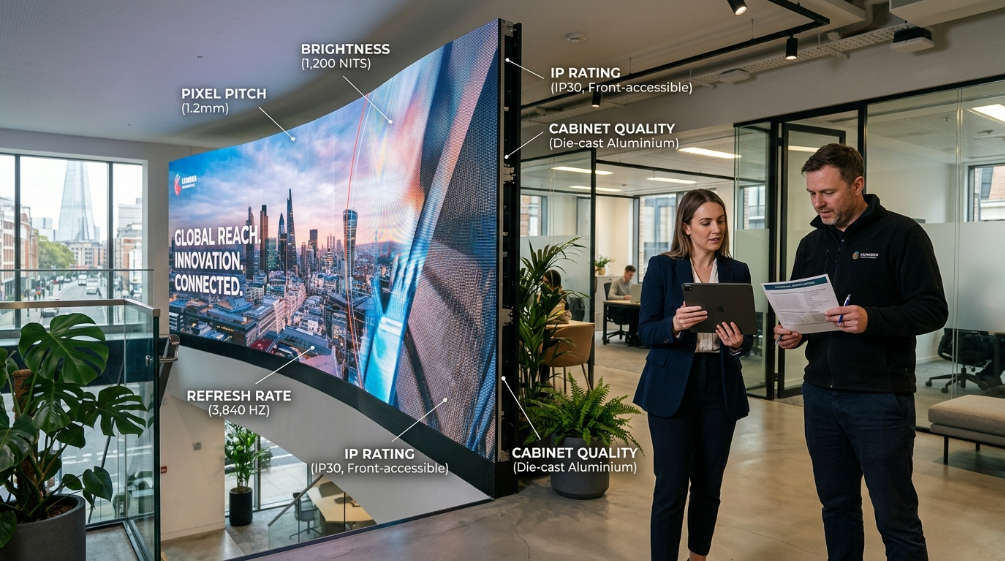
Pricing an LED screen isn’t a single figure—it’s a function of five variables compounding on each other pitch,panel technology(SMD vs COB),IP rating,refresh rate,and cabinet build quality.Miscalculate any one of these in a spec,and a buyer either overpays for resolution nobody will notice or underspecs a screen that fails within eighteen months.According to industry cost data compiled from UK installation portfolios and cross-referenced against Novastar-based control system pricing,the breakdown below reflects current market reality rather than list-price theory.
Pixel Pitch And What It’s Really Buying You
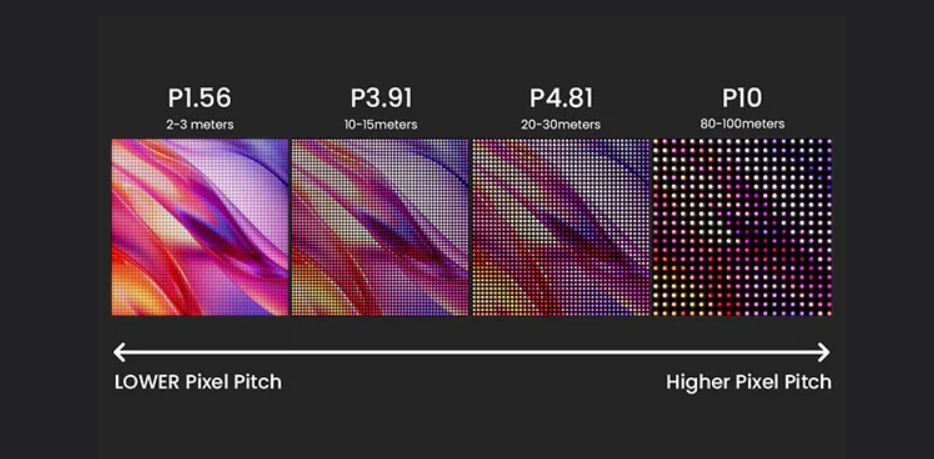
Pixel pitch—the distance in millimetres between adjacent LED clusters—is the single biggest driver of unit cost,because it directly determines how many LED chips and driver ICs get packed into every square metre.A P1.9 panel doesn’t just look sharper than a P2.5 panel on paper;it physically contains roughly 73%more pixels per square metre,which is precisely why the price gap between the two typically runs 60–80%.
| Pixel Pitch | Pixels per m² | Ideal Viewing Distance | Price Band(£/m²,supply-only) |
| P0.9–P1.2 | 700,000–1.2M | 0.9–1.5m | £13,000–£17,000 |
| P1.5–P1.9 | 280,000–440,000 | 1.5–2m | £8,500–£13,000 |
| P2.5 | 160,000 | 2.5–4m | £3,500–£8,000 |
| P4–P5 | 40,000–62,500 | 4–6m | £1,800–£3,500 |
| P6.6–P10 | 10,000–23,000 | 6m+ | £1,100–£2,500 |
A rough industry rule holds up well in practice viewing distance in metres should roughly equal pixel pitch in millimetres,so a P4 screen reads cleanly from 4 metres back.Specifying P1.9 for a lobby display viewed from 5 metres away doesn’t buy a sharper picture—it buys£5,000-plus per square metre of resolution the human eye physically cannot resolve at that distance.We flag this on nearly every consultation call,because it’s the single most common way a budget quietly overshoots by 40%before installation is even discussed.
Indoor,Outdoor,And Rental Aren’t The Same Product
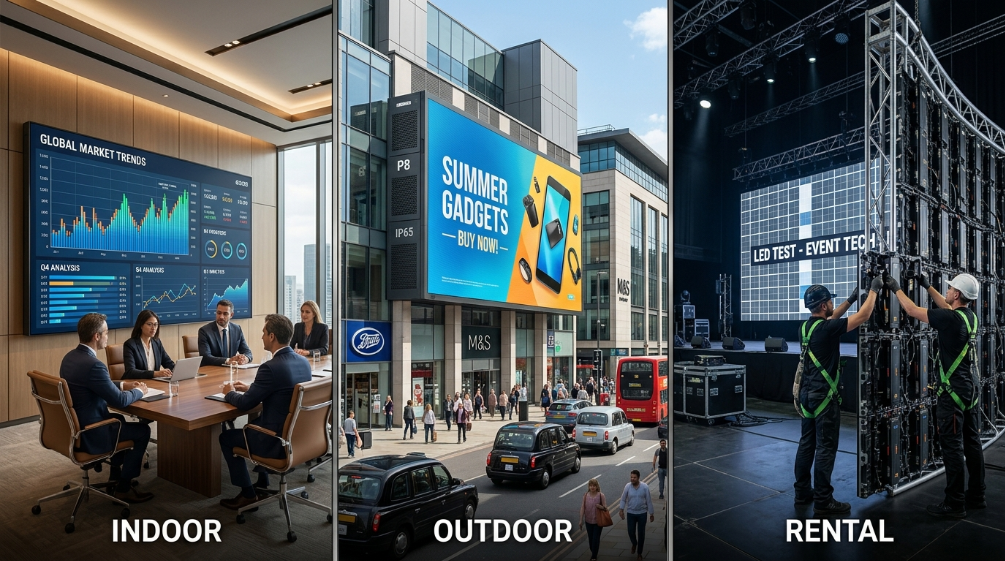
Indoor and outdoor panels aren’t the same hardware with different paint jobs—the engineering underneath diverges substantially,and the price gap reflects that honestly.Outdoor screens need to run at 5,000–10,000 nits of brightness to stay legible under direct sunlight,versus 600–1,200 nits for an indoor unit,which means heavier-duty LED chips,more aggressive thermal management,and IP65-rated(or higher)enclosures to keep moisture and grit out of the cabinet electronics.That weatherproofing and brightness overhead typically adds 30–60%to per-m²cost compared to an equivalent indoor pitch.
Rental screens occupy a different pricing category entirely,because the buyer isn’t paying for a fixed installation—they’re paying for a lightweight,quick-lock cabinet built for repeated rigging and de-rigging without panel damage. Our Carbon Series exists specifically for this use case,and it’s worth understanding even for buyers who are purchasing outright rather than renting,since the design philosophy behind rental-grade hardware tells you a lot about long-term durability.
| Screen Type | Key Engineering Difference | Typical Price Range |
| Indoor fixed | Lower brightness,sealed but not weatherproof,finer pitch options | £3,500–£17,000/m² |
| Outdoor fixed | IP65+,5,000–10,000 nits,anti-UV coating | £1,300–£4,500/m² |
| Rental/event | Lightweight die-cast cabinets,quick-lock connectors | £1,800–£3,200/m²(purchase);£800–£6,000/day(hire) |
Budgeting By Project Size—Where The Math Stops Being Linear
Small doesn’t mean simple,and that catches a lot of first-time buyers off guard.A 2m²retail display might run£8,000–£16,000 fully installed,simply because fixed costs—video processor,power distribution,commissioning labour—don’t shrink proportionally with screen area.Larger installations benefit from economies of scale on a per-m²basis,but total project cost obviously climbs with them.A 3m x 2m indoor P2.5 wall typically lands between£18,000 and£35,000 including installation and signal processing,while large-format outdoor billboards or stadium fascia screens routinely exceed£150,000–£200,000 once structural steel and DOOH network integration enter the picture.Understanding this non-linear relationship matters before requesting quotes—it’s exactly why two suppliers can both be quoting honestly while landing on wildly different totals for the same square footage.
Five Cost Drivers Hiding Inside Every Quote
Pixel pitch sets the baseline,but four other variables routinely swing a final number by 20–50%—and they’re the ones buyers forget to ask about until the invoice lands.
COB versus SMD technology is the question our engineering team fields most from corporate and command-centre clients.
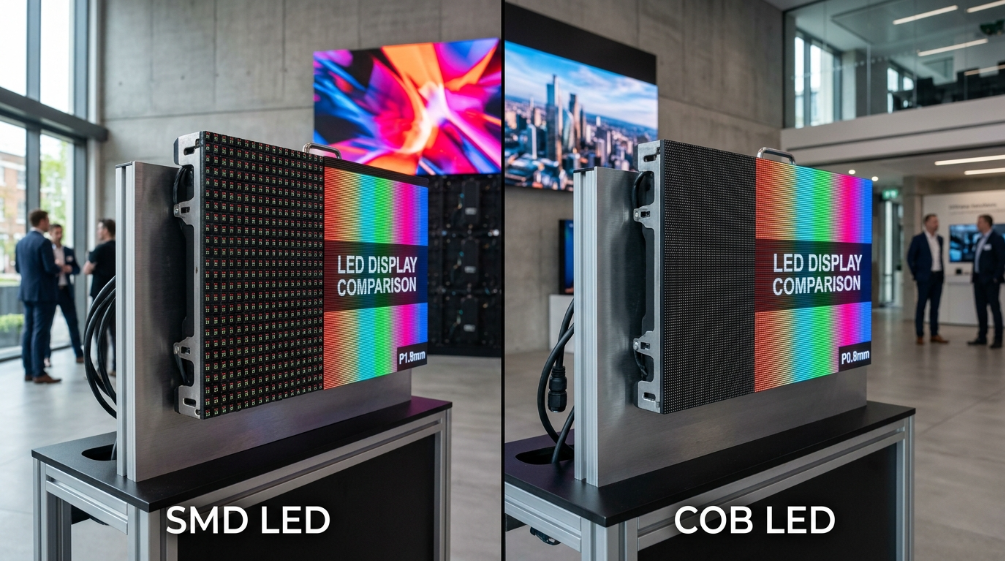
SMD(Surface-Mounted Device)remains the industry default and delivers strong value at most pixel pitches.COB(Chip on Board)encapsulates the LED die directly into the PCB surface rather than mounting a discrete package on top of it—that’s the feature.The benefit shows up over time COB panel like our Cobra Series is markedly more resistant to physical impact,has no protruding components to snag or wear down,and holds colour uniformity better at close range across years of daily operation.For a boardroom or control room viewed at arm’s length for a decade,that durability translates directly into fewer service calls and a lower total cost—even though the upfront COB premium runs 15–30%above a comparable SMD panel.
Refresh rate matters more than most quotes disclose upfront.
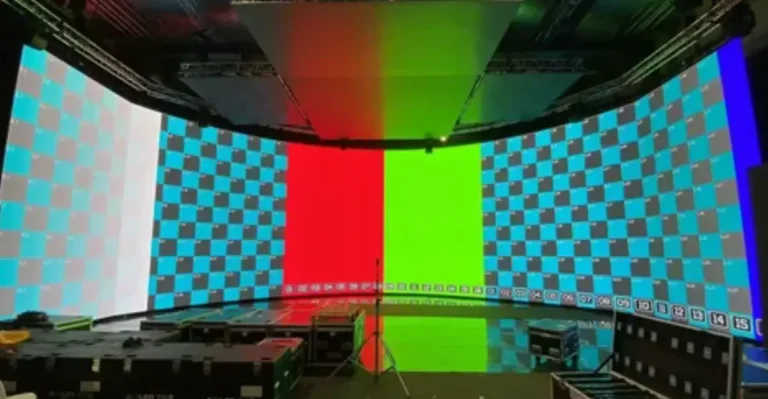
A standard 1,920Hz panel handles static signage without issue,but any screen appearing on camera—broadcast studios, XR virtual production stages—needs 3,840Hz or higher to avoid banding and flicker on film.Sourcing a high-refresh panel after a project has already been specced typically costs 25–40%more than building it into the original quote,because it requires an entirely different tier of driver IC.
Control system and CMS software are frequently quoted as an afterthought,and buyers often assume they’re bundled when they aren’t.
Always confirm whether a quote includes a CMS licence for remote brightness monitoring,content scheduling,and multi-screen management—for a DOOH operator running dozens of sites,this isn’t a nice-to-have,it’s the difference between a manageable network and a logistical headache.
A Recent Project Worth Mentioning
One case that illustrates this well mid-sized European DOOH operator came to us after a first-generation installation from a regional supplier started showing dead pixels and brightness inconsistency within fourteen months—well short of the rated lifespan they’d been promised.Their replacement spec called for P4 outdoor panels across a network of roadside billboards,and the sticking point wasn’t pixel pitch,it was reliability under continuous 16-hour daily operation in variable weather.We rebuilt the spec around our Ares Series with Meanwell-grade power supplies and full 72-hour aging test documentation per batch,paired with remote CMS monitoring so their team could catch brightness drift before it became visible to the public.The panels have now run through two full summers without a module replacement—the kind of outcome that doesn’t show up on a price list,but is exactly what”total cost of ownership”is supposed to mean in practice.
Buying Local Versus Buying Direct
This is the question we hear most often from system integrators comparing a UK LED display price against an international manufacturer quote for the identical specification.
A UK reseller or installer adds real value through local warehousing,faster site visits,and English-language project management—services genuinely worth paying for on tight-turnaround projects.But that convenience carries a channel margin,typically 20–40%on top of factory cost,before installation labour is even added.For buyers with in-house or contracted installation capability,which describes most system integrators and AV production companies already,that margin is paying for a logistics layer they may not actually need.
Sourcing direct from a manufacturer changes the equation,provided three things get verified upfront:
| Verification Point | Why It Matters | What To Ask For |
| CE Certification | Legal requirement for UK/EU market entry | Copy of certificate+test reports |
| Warranty Terms | Determines who bears failure risk post-install | Written coverage period,spare parts SLA |
| Aging Test Records | 72-hour burn-in catches dead pixels before shipping | Factory QC report per batch |
| Shipping Incoterms | Determines who owns risk/cost at each stage | Clarify EXW vs FOB vs DDP |
On Incoterms specifically(Ex Works)gives the lowest headline price but shifts freight,insurance,and customs entirely onto the buyer.DDP(Delivered Duty Paid)costs more upfront,but the manufacturer handles clearance and UK delivery—usually the safer route for a buyer’s first international LED procurement.Buyers who insist on EXW pricing without prior freight-forwarding experience often lose any manufacturer-side savings to unexpected customs delays and demurrage fees,which is a lesson we’ve watched a few clients learn the hard way before switching to DDP on their next order.
The Cost Nobody Puts On The Quote Sheet
Purchase price is one line item.Across a 50,000-hour rated lifespan,energy draw and maintenance frequency compound into a considerably larger number.A well-built panel with premium driver ICs(Macroblock-tier)and a Meanwell-grade power supply draws less current for equivalent brightness and fails less often—that’s the feature,and the benefit is a lower electricity bill plus fewer emergency service visits,which is what actually matters to a facilities budget five years down the line.Cheaper panels without proper aging testing tend to show dead pixels and brightness drift within 12–18 months,and replacement modules for an unsupported or discontinued product line can become genuinely impossible to source,forcing a full re-purchase far earlier than anyone planned for.
Typical Budgets By Industry Use Case
| Application | Typical Pixel Pitch | Price Range(£/m²,installed) | Key Requirement |
| DOOH/outdoor advertising | P4–P8 | £2,500–£7,000 | 5,000+nits,IP65,remote CMS |
| Retail/commercial indoor | P1.9–P2.5 | £4,500–£9,000 | Seamless bezel,colour accuracy |
| Stadium/sports venue | P6–P10 | £2,000–£5,000 | High brightness,wide viewing angle |
| Stage/event rental | P2.9–P3.91 | £3,000–£5,500 | Lightweight cabinets,fast rigging |
| Transparent/luxury retail | Mesh 3.9–7.8mm | £6,000–£12,000 | High transparency,natural light passthrough |
Getting A Quote That Actually Matches What You’ll Pay
Before contacting suppliers,have these ready dimensions,minimum viewing distance,indoor/outdoor environment,required brightness(or ambient light conditions),content type(static signage vs.broadcast video),installation method(wall-mount,floor-standing,rigged),power availability on-site,and whether CMS software and installation labour should be folded into the quoted figure.A specification missing even two of these forces suppliers to quote worst-case assumptions—which is precisely how buyers end up comparing quotes that were never actually for the same product in the first place.
Questions Buyers Ask Us Most
How much does a 3m x 2m LED screen cost in the UK?
Fully installed,expect£18,000–£35,000 for an indoor P2.5 wall of this size,or£8,000–£16,000 for an outdoor P6–P8 unit,excluding VAT.
Is it cheaper to buy or rent an LED display?
Rental wins for single events or short-term use—daily hire runs£800–£6,000.Purchase becomes cost-effective once a screen sees more than roughly 8–10 uses a year.
How much does installation add on top of the panel price?
Installation,structural steelwork,and signal processing typically add 25–40%on top of the supply-only panel price,depending on site complexity.
Does a manufacturer’s warranty cover shipping damage on an international order?
Only if agreed in writing beforehand—always confirm whether coverage begins at the factory gate or at final delivery,particularly under EXW terms.
Can I get a custom LED display price quote directly from a manufacturer?
Yes—Sostron provides free specification-based quotes once viewing distance,size,and application are confirmed,typically within 24–48 hours.
Where This Leaves You
If there’s one number worth carrying out of this guide,it’s 60–80%—that’s what pixel pitch alone can swing a budget by,and it’s the variable buyers get wrong most often.Spec to your real viewing distance first,verify CE certification and aging test records before comparing any two quotes side by side,and don’t assume a UK reseller price is the only door available to you.
That’s the gap Sostron was built to close.We design,manufacture,and support LED displays from a single Shenzhen facility,which means the price you’re quoted reflects factory cost plus genuine engineering support—not three separate margins stacked on top of each other.If your project calls for durable,near-field viewing,take a look at our Cobra COB Series built for command centres and premium indoor environments.And if you’re still scoping a project and want numbers specific to your space rather than a general range,our team can turn a full custom quote around within 48 hours once we have your dimensions and viewing distance in hand.
Price Note
Please note: LED display prices can vary significantly depending on pixel pitch,screen size,installation conditions,shipping terms,configuration,and project requirements.Prices shown in this guide are indicative 2026 UK market ranges rather than fixed quotations.VAT,installation,structural work,transport,control systems,and other project-specific costs may be additional.Always request a detailed,application-specific quotation before making a purchasing decision.
References:
GOV.UK — Product regulations by sector and current approaches to UKCA and CE regimes
GOV.UK — Electrical Equipment (Safety) Regulations