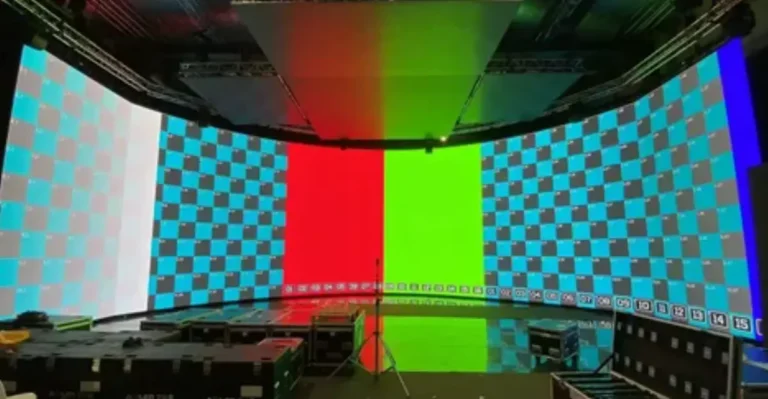
Choosing the right commercial LED display cabinet size is one of the first and most expensive decisions in any video wall or billboard project. Cabinet dimensions determine the final screen aspect ratio, how many people it takes to install, the load on the supporting structure, how fast a technician can swap a failed module, and how much usable pixel area you get from the wall opening.
This guide covers the four cabinet formats you will quote most often (500x500mm, 500x1000mm, 640x480mm and 960x960mm), shows how size drives cost and structural design, explains how to hit a true 16:9 ratio, and highlights the differences between indoor commercial and outdoor billboard cabinets. If you are specifying a project now, browse our full range of Commercial LED Display Solutions alongside this guide.
Why Cabinet Size Matters in Commercial LED Projects
An LED screen is assembled from cabinets, so the cabinet is the smallest unit you can plan, ship, lift, power, calibrate and replace. Cabinet size therefore affects:
- Final screen dimensions and aspect ratio: total width and height are always integer multiples of the cabinet size.
- Installation labor and equipment: larger cabinets are faster per square metre but may require a crane or lift.
- Structural and wall load: weight per square metre and total dead load drive steel design and anchoring.
- Service strategy: front or rear maintenance, module-level versus cabinet-level swaps, and spare-part stocking.
- Signal and power topology: pixels per cabinet affect receiving card loading, cable runs and power distribution.
Standard LED Cabinet Dimensions and Their Main Applications
| Cabinet Size (W x H) | Aspect Ratio | Typical Weight* | Typical Pixel Pitch | Typical Environment | Main Applications |
|---|---|---|---|---|---|
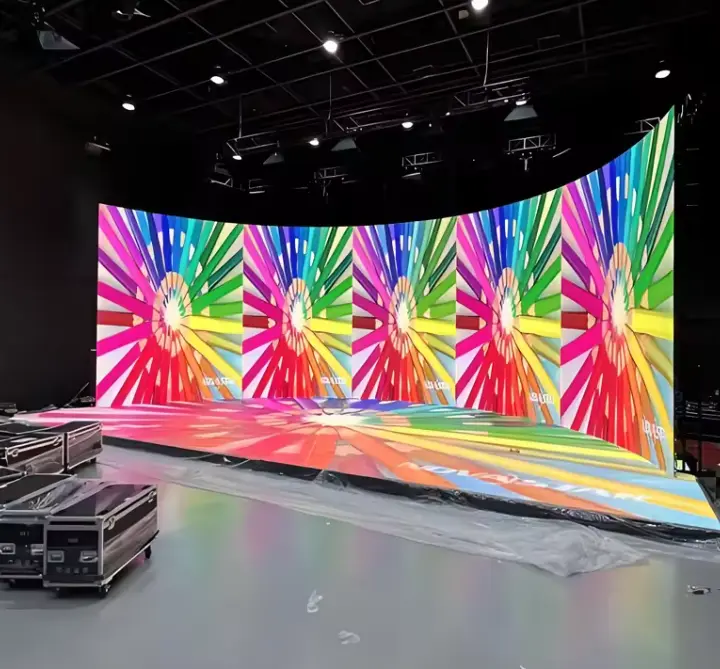
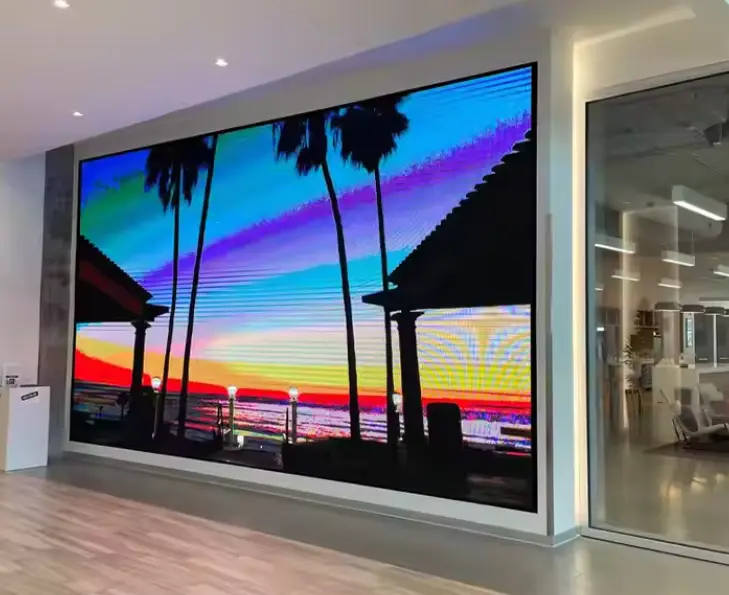
| 500 x 500 mm | 1:1 | 7-9 kg (die-cast aluminum) | P1.5 – P4.8 | Indoor, semi-outdoor | Retail video walls, lobbies, control rooms, broadcast studios, rental staging |
| 500 x 1000 mm | 1:2 | 14-18 kg (die-cast aluminum) | P2.6 – P4.8 | Indoor, outdoor | Large indoor walls, stage backdrops, storefront and facade screens |
| 640 x 480 mm | 4:3 | 15-25 kg (steel or aluminum) | P2.5 – P10 | Indoor and outdoor | Fixed installations, wall-mounted outdoor screens, 16:9 wall building via 4×3 arrays |
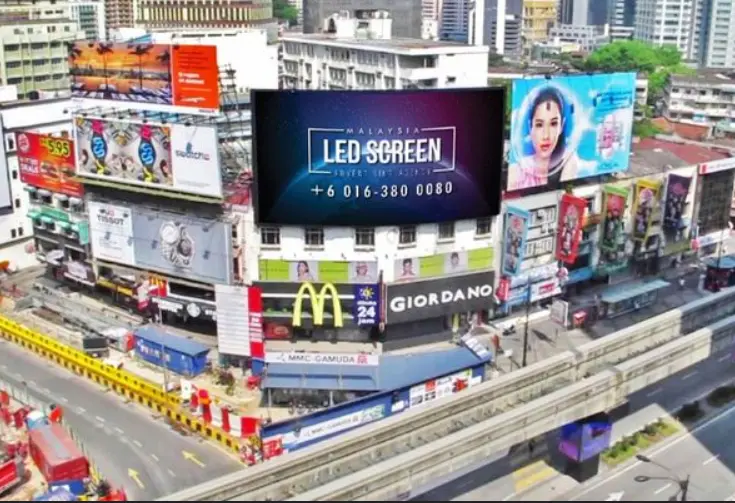
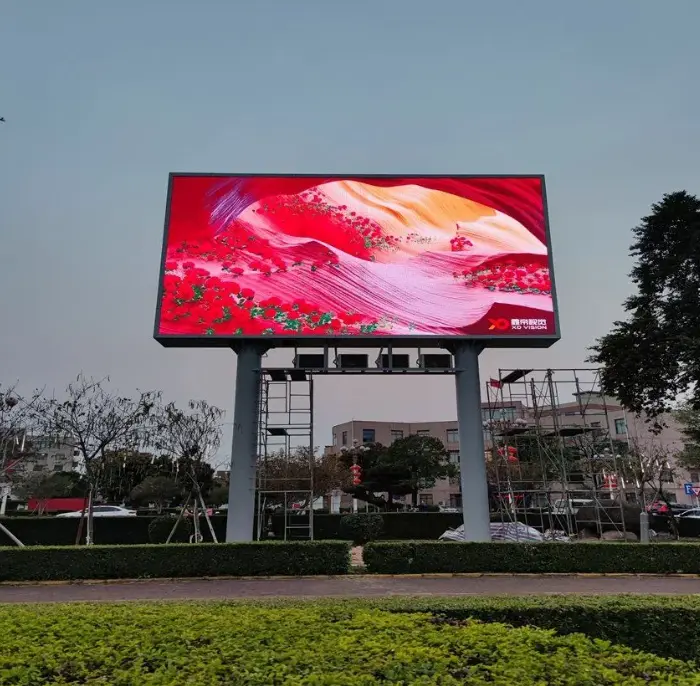
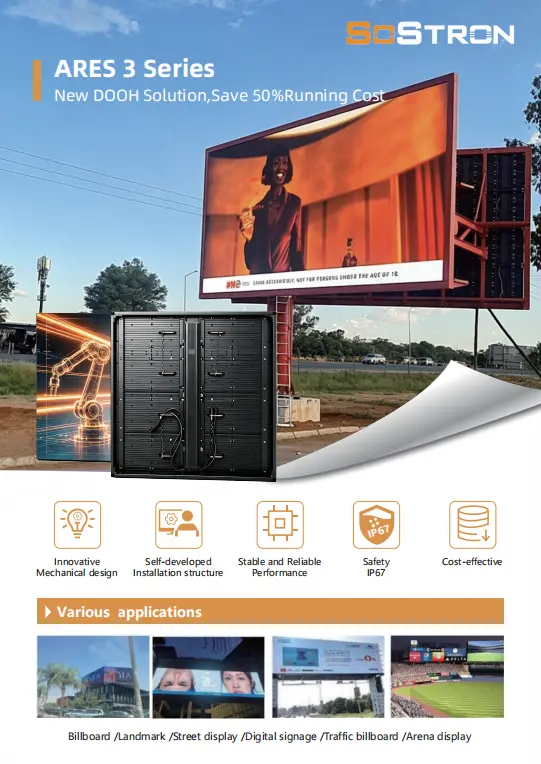
| 960 x 960 mm | 1:1 | 60-100 kg (steel) | P6 – P16 | Outdoor | Billboards, building facades, highway and rooftop advertising, stadium perimeter screens |
*Weights are indicative and vary by manufacturer, material, pitch and whether power supplies and receiving cards are included. Always confirm against the project datasheet.
500 x 500 mm Cabinets: The Flexible Indoor Standard
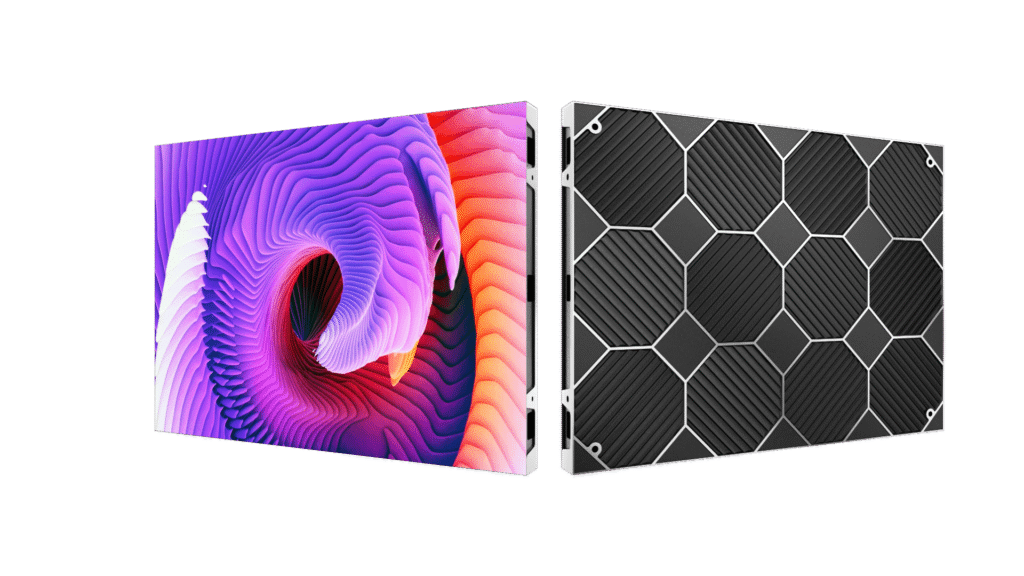
- Why integrators choose it: low weight allows one-person handling, and the square format supports curved, corner and creative-shaped installations.
- Pixel density: a 500 mm cabinet at P2.6 delivers roughly 192 x 192 pixels; at P3.9 about 128 x 128 pixels, which keeps per-cabinet signal loading modest.
- Maintenance: most designs support front or rear service with magnetic modules, which suits tight wall-mounted installs.
- Watch out for: more cabinets per wall means more seams, more cabling points and more calibration work on very large screens.
500 x 1000 mm Cabinets: Faster Builds for Larger Indoor Walls
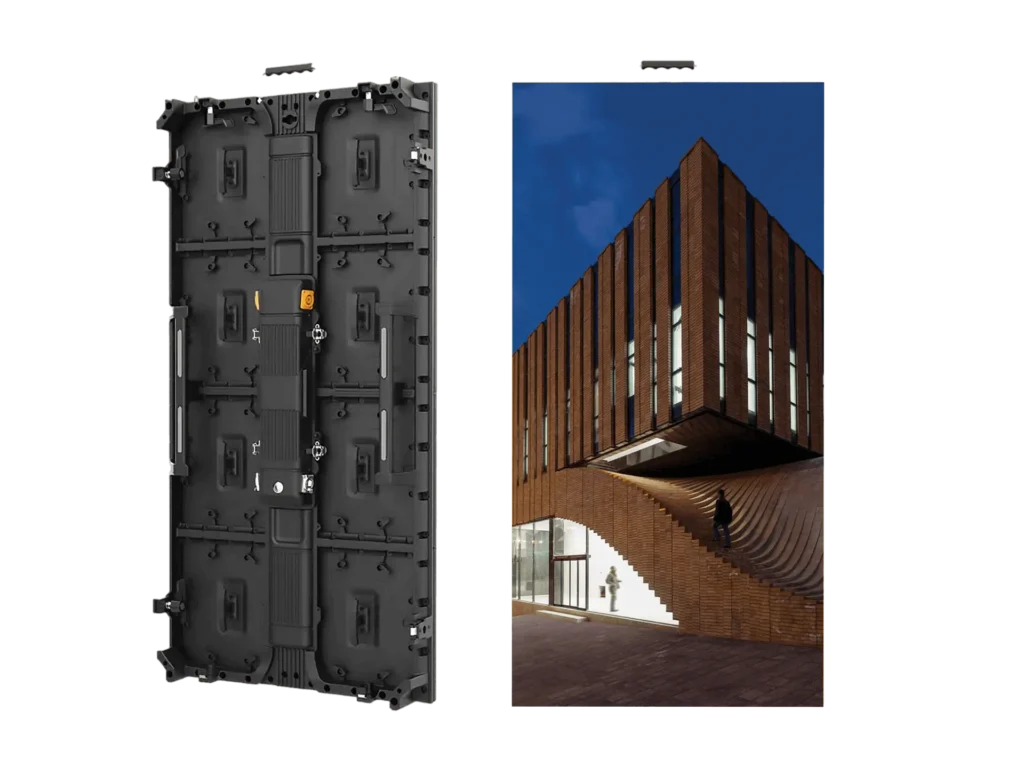
- Why integrators choose it: each cabinet covers 0.5 m², so large walls need roughly half the cabinet count and half the seams of a 500×500 build.
- Mounting: fewer lifting and alignment steps per square metre reduce labor hours on high or long walls.
- Watch out for: the cabinet is long, so verify service clearance, shipping case size and the lift path through doors and elevators.
640 x 480 mm Cabinets: The Practical Mid-Size Format
- Why integrators choose it: a 4 x 3 array of 640×480 cabinets produces a 2560 x 1440 mm wall, which is a true 16:9 ratio, and larger multiples such as 8 x 6 stay 16:9.
- Pitch flexibility: this format is commonly offered across fine-pitch indoor and standard-pitch outdoor options, so one cabinet footprint can serve different sites.
- Watch out for: confirm module layout and ingress rating for outdoor use, since construction differs widely between suppliers.
960 x 960 mm Cabinets: Outdoor Billboard Scale
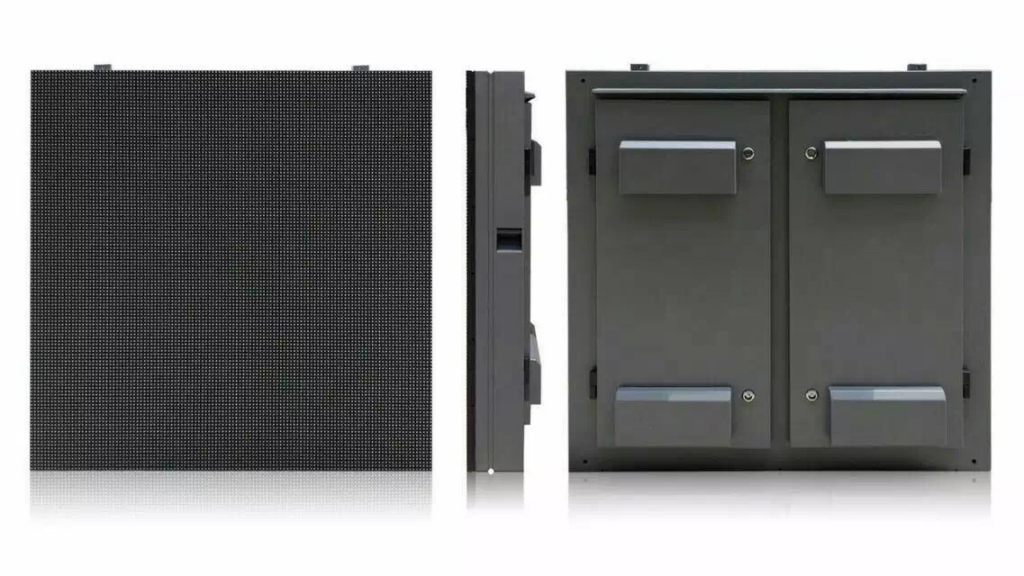
- Why integrators choose it: each cabinet covers about 0.92 m², and the rigid steel structure suits large fixed billboards and facades with fewer lifts and fewer seams.
- Structure: cabinets are typically bolted into a steel frame, with a rear maintenance walkway or front service design depending on site access.
- Watch out for: heavy units need crane planning, certified rigging points and a structural engineer’s sign-off on both the frame and the wind load.
How Cabinet Size Affects Installation Cost
Cost is not just the price per cabinet. Compare the full installed cost per square metre, including labor, equipment, structure and commissioning:
- Labor hours: fewer, larger cabinets reduce the number of mounting, leveling and cabling operations. On a 40 m² indoor wall, 500x1000mm needs about 80 cabinets, while 500x500mm needs about 160.
- Equipment: lightweight 500x500mm units can be hand-installed from a scissor lift, whereas 960x960mm units normally need a crane, hoist or boom lift.
- Cabling and controllers: more cabinets means more data and power jumpers, more receiving cards and more potential failure points.
- Calibration and seam tuning: every extra seam is a place where brightness or color mismatch can show up, which raises commissioning time.
- Spare parts: smaller cabinets are cheaper to stock as spares, while a single large cabinet failure has a higher replacement cost.
Cabinet Size and Structural Load
Dead load, measured in kg per square metre, is the number your structural engineer needs first. As a rule of thumb, indoor die-cast aluminum cabinets land around 30 kg/m², while steel outdoor billboard cabinets can reach 50 to 90 kg/m² before the support frame is added. Always request the certified datasheet weight for the exact cabinet you intend to use.
- Wall-mounted indoor walls: check the wall substrate (masonry, drywall, steel stud) and the number and rating of anchor points per cabinet.
- Outdoor billboards: add wind load, snow load where relevant, and seismic requirements to the dead load, per local building code.
- Point loads: larger, heavier cabinets concentrate load on fewer fixing points, so verify connection details rather than only average kg/m².
- Thermal expansion: long steel frames expand and contract, so allow for movement joints where the design requires them.
Cabinet Size and Maintenance Strategy
Front Service vs. Rear Service
Wall-mounted installs with no rear access need front-serviceable cabinets, usually 500x500mm or 500x1000mm with magnetic modules. Freestanding or frame-mounted billboards typically allow rear access, which suits the larger steel formats.
Module-Level vs. Cabinet-Level Repairs
- Small cabinets: a failed unit can be swapped quickly by one technician with minimal downtime and a low-cost spare.
- Large cabinets: repairs are usually done at module, power supply or receiving card level to avoid removing a heavy unit.
- Stocking: hold at least 2 to 5 percent spare modules and spare power supplies and receiving cards from the same production batch to keep color consistent.
Matching Cabinet Size to a 16:9 Screen Ratio
Most video content is produced in 16:9, so the screen should match that ratio to avoid scaling, letterboxing or cropping. The screen width and height must both be whole multiples of the cabinet dimensions, so the cabinet grid must satisfy columns : rows = 16 : 9 after accounting for the cabinet aspect ratio.
| Cabinet Size | Cabinet Grid for 16:9 | Resulting Screen Size | Practicality |
|---|---|---|---|
| 500 x 500 mm | 16 x 9 (144 cabinets) | 8000 x 4500 mm | Works well, but only in sizes that are multiples of 8 m x 4.5 m |
| 500 x 1000 mm | 32 x 9 (288 cabinets) | 16000 x 9000 mm | Exact 16:9 only at very large sizes; usually mixed with 500×500 cabinets to fine-tune |
| 640 x 480 mm | 4 x 3 (12 cabinets) | 2560 x 1440 mm | Excellent: small 16:9 walls, scalable to 8 x 6 (5120 x 2880 mm) |
| 960 x 960 mm | 16 x 9 (144 cabinets) | 15360 x 8640 mm | Only suited to very large billboards; 16:9 is rarely required outdoors |
Practical Ways to Hit 16:9
- Use a native 16:9 cabinet (for example, 640 x 360 mm or 600 x 337.5 mm formats offered for fine-pitch walls) when the screen size is small to medium.
- Mix 500x500mm and 500x1000mm cabinets in one wall to land on a 16:9 height without reaching 144 units.
- Confirm the pixel resolution, not only the physical size. A wall can be 16:9 in millimetres but not match 1920×1080 or 3840×2160 pixels, which affects scaling quality. Calculate pixels as screen width divided by pixel pitch.
- For billboards and advertising screens, a custom ratio is often acceptable because content is created for the specific screen.
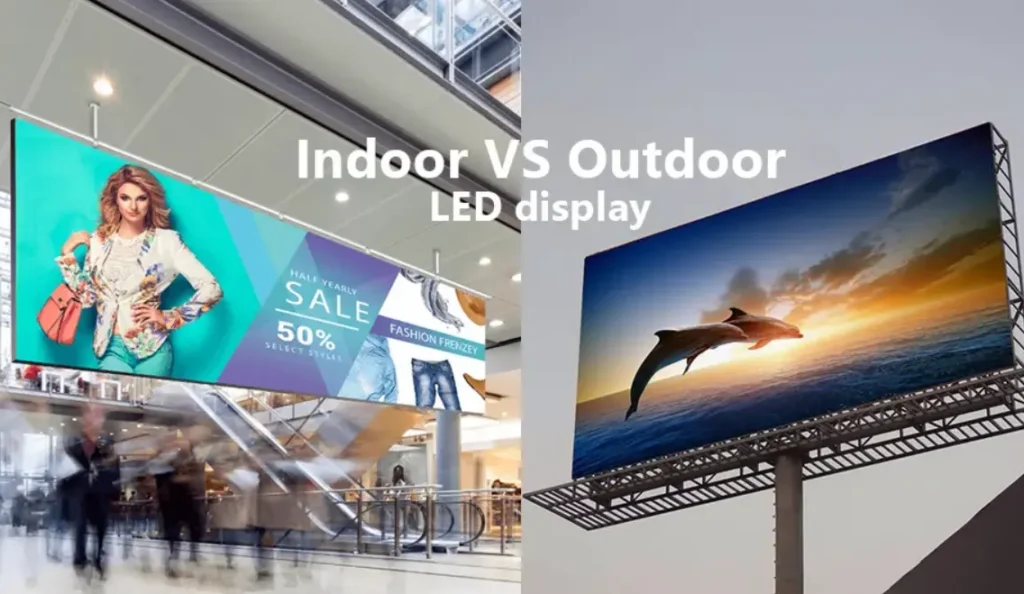
Indoor Commercial vs. Outdoor Billboard Cabinet Sizes
| Factor | Indoor Commercial Cabinets | Outdoor Billboard Cabinets |
|---|---|---|
| Common sizes | 500×500, 500×1000, 640×480, 600×337.5 mm | 640×480, 960×960, 960×640 and similar large steel formats |
| Pixel pitch | P0.9 – P4.8 (fine pitch for close viewing) | P4 – P16 (coarser pitch for long viewing distance) |
| Cabinet material | Die-cast aluminum or magnesium, lightweight | Steel or aluminum, weather-sealed and corrosion-protected |
| Ingress protection | Typically IP30 – IP40 | Typically IP65 front and IP54 – IP65 rear, depending on design |
| Brightness | 600 – 1,500 nits | 5,000 – 8,000+ nits |
| Weight per m² | Approx. 25 – 40 kg/m² | Approx. 50 – 90 kg/m² plus frame |
| Service access | Front service common (magnetic modules) | Rear walkway or front service, depending on structure |
| Main design drivers | Seamless look, viewing distance, color accuracy | Weather, wind load, visibility in sunlight, structural strength |
Why Outdoor Cabinets Are Larger
Outdoor LED billboards are viewed from tens of metres away, so a coarser pixel pitch is acceptable. That allows larger modules, larger cabinets and fewer seams, which also reduces the number of sealed joints exposed to rain, dust and temperature swings.
Why Indoor Cabinets Stay Smaller
Indoor LED walls are seen at close range, so fine pitch, flatness, seam accuracy and calibration matter more than ruggedness. Lighter 500 mm class cabinets make precise alignment and quick front service practical in finished interiors.
Cabinet Size Selection Checklist for Integrators
- Viewing distance: minimum viewing distance in metres is roughly equal to the pixel pitch in millimetres; choose pitch first, then a cabinet that supports it.
- Available opening: measure the wall or frame and fit whole cabinets, leaving space for bezels, trim and ventilation.
- Access path: check doors, lifts and corridors for cabinet and packaging dimensions.
- Mounting method: wall mount, hanging, floor stack, pole or steel frame each favor different formats.
- Service access: decide front versus rear maintenance before choosing the cabinet.
- Content ratio: confirm the target aspect ratio and native resolution with the content team.
- Environment: specify ingress protection, brightness, operating temperature and corrosion resistance for outdoor sites.
- Power and signal: calculate pixel count and power draw per cabinet to size controllers, power circuits and cabling.
- Future expansion and spares: keep the same cabinet size across phases so later additions match.
Need Custom Cabinet Sizes or Wholesale LED Pricing?
Sostron supplies commercial LED display cabinets to contractors, system integrators and distributors worldwide. Our engineers can provide custom cabinet size CAD drawings, load data and project-specific wholesale pricing for your next installation.
Send us your screen dimensions, pixel pitch, environment and mounting details, and we will propose the cabinet layout that fits.
Frequently Asked Questions
What are the standard commercial LED display cabinet sizes?
The most common sizes are 500 x 500 mm and 500 x 1000 mm for indoor and semi-outdoor use, 640 x 480 mm for mixed indoor and outdoor fixed installs, and 960 x 960 mm for large outdoor billboards. Custom sizes are available from manufacturers for special architecture.
Which LED cabinet size is best for a 16:9 video wall?
A 4 x 3 array of 640 x 480 mm cabinets gives a 2560 x 1440 mm wall, which is exactly 16:9. Native 16:9 cabinets such as 640 x 360 mm are also common. With 500 x 500 mm cabinets you need a 16 x 9 grid (8000 x 4500 mm) to hit 16:9.
How much does a 500x500mm LED cabinet weigh?
A die-cast aluminum 500 x 500 mm indoor cabinet typically weighs 7 to 9 kg, which is about 30 kg per square metre. Weight varies by manufacturer and by whether power supplies and receiving cards are included, so check the datasheet.
Is a bigger LED cabinet always cheaper to install?
Larger cabinets reduce the number of lifts, seams and cable connections, which usually lowers labor per square metre. However, they can require cranes or lifts, stronger structures and higher-cost replacement units, so compare total installed cost rather than cabinet price alone.
What is the difference between indoor and outdoor LED cabinet sizes?
Indoor cabinets are smaller and lighter (500 mm class) with fine pixel pitch for close viewing. Outdoor billboard cabinets are larger and sturdier (640 x 480 mm up to 960 x 960 mm), use coarser pitch, higher brightness and weather-sealed, corrosion-resistant construction.
How do I choose between front and rear maintenance cabinets?
Choose front service when the screen is flush-mounted on a wall with no rear access, which is common for indoor installations. Choose rear service when there is a walkway or open frame behind the screen, which is typical for outdoor billboards and large steel structures.
Can I mix different LED cabinet sizes in one screen?
Yes, if they share the same pixel pitch, brightness class, module type and control system. Mixing 500 x 500 mm and 500 x 1000 mm cabinets is a common way to reach a target height or aspect ratio. Keep all cabinets from the same production batch where possible for color consistency.
Where can I get custom cabinet drawings and wholesale pricing?
Contact Sostron’s engineering team through the Request Custom Cabinet Specifications page with your screen size, pitch and environment details. You will receive cabinet layout CAD drawings and wholesale quotations. You can also explore Commercial LED Display Solutions for available product lines.
References:
ASCE/SEI 7-22 — Minimum Design Loads and Associated Criteria for Buildings and Other Structures