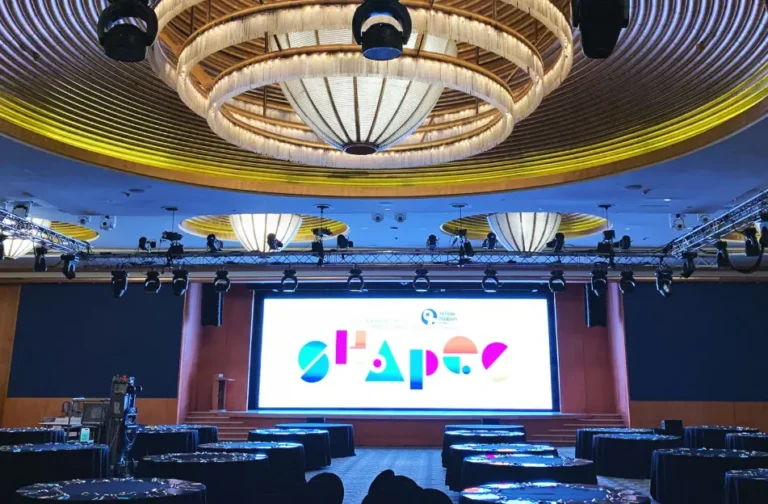
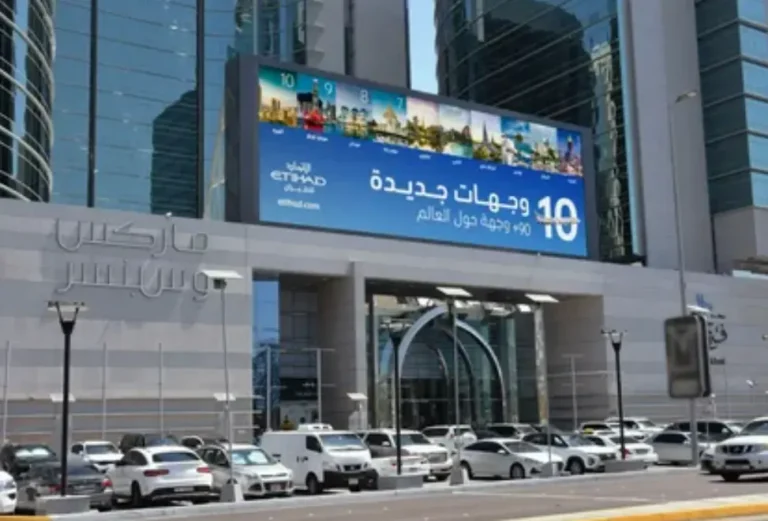
If you are procuring an outdoor Cordoba LED screen, Spain in 2026, relying on standard European specifications will guarantee hardware failure. The extreme Andalusian climate demands highly specialized engineering. To maximize ROI and ensure zero downtime for your Digital Out-of-Home (DOOH) campaigns, your baseline deployment architecture must meet the following non-negotiable parameters:
Table 1: 2026 Mandatory Engineering Baseline for Cordoba Outdoor LED Displays
| Engineering Parameter | Recommended Specification | Commercial Benefit (ROI) |
| Luminance (Brightness) | Minimum 7,500 Nits (cd/m²) | Guarantees absolute visibility under direct Spanish sunlight, maximizing peak-hour DOOH ad revenue. |
| Thermal Management | Common Cathode Technology | Reduces internal heat by up to 30%, preventing thermal shutdown during 45°C+ summer heatwaves. |
| Ingress Protection | True IP65 (Front & Rear) or IP68 | Eliminates risk of failure from aggressive summer dust and sudden Mediterranean torrential rains. |
| Refresh Rate | ≥3840Hz | Ensures flicker-free capture for mobile phones and broadcasting during local festivals. |
| Compliance | CE, RoHS, EMC Class B | Prevents legal delays at Spanish customs and ensures compliance with EU electromagnetic regulations. |
Deploying commercial video walls in Southern Spain is a high-stakes investment. B2B buyers—whether system integrators or event production companies—frequently face catastrophic revenue loss due to one critical oversight: underestimating the heat. When ambient temperatures exceed 45°C (113°F) in July and August, poorly specified SMD (Surface-Mounted Device) panels experience rapid thermal degradation, resulting in massive dead pixel clusters, color shifting, and even fire hazards. Based on our experience with engineering and deploying over 15,000 square meters of high-end LED infrastructure across Southern Europe, success requires treating the environment not as an afterthought, but as the foundational variable of your structural design.
Here is the deep-dive technical and commercial blueprint for dominating the Andalusian DOOH and B2B display market.
Why Cordoba, Spain is a Rapidly Growing Market for DOOH and LED Displays
The digital signage landscape in Andalusia has shifted dramatically. According to the European DOOH Market Projection (Q1 2026), Southern Spain is experiencing a 14.5% Year-over-Year increase in digital ad-spend, heavily driven by the tourism and luxury retail sectors. Cordoba, sitting at the nexus of rich history and modern commerce, presents a highly lucrative, yet complex, environment for LED deployment.
The Intersection of Historical Tourism and Modern Digital Signage
Cordoba is a UNESCO World Heritage heavyweight. The city attracts millions of international tourists annually to landmarks like the Mezquita-Catedral. For global DOOH advertisers, this represents an incredibly dense, high-value impression zone. However, integrating massive digital billboards near historic sites requires finesse.
City councils mandate strict aesthetic integrations. Bare steel cabinets and messy cabling are no longer legally permitted in commercial historic zones. Modern B2B buyers must source ultra-slim, lightweight die-cast aluminum cabinets that offer Full Front Serviceability.
-
The Feature: Front-access modules allow technicians to replace power supplies or receiver cards directly from the face of the screen using a magnetic vacuum tool.
-
The Benefit: This eliminates the need for bulky rear-maintenance catwalks, allowing the screen to be flush-mounted against historical brickwork. It drastically reduces real estate leasing costs and cuts maintenance labor time by 70%.
Opportunities for System Integrators and Event Planners in Andalusia
Beyond permanent DOOH installations, the local event economy is booming. From the Fiesta de los Patios to massive outdoor music festivals across Andalusia, AV rental companies demand inventory that can perform flawlessly under harsh conditions.
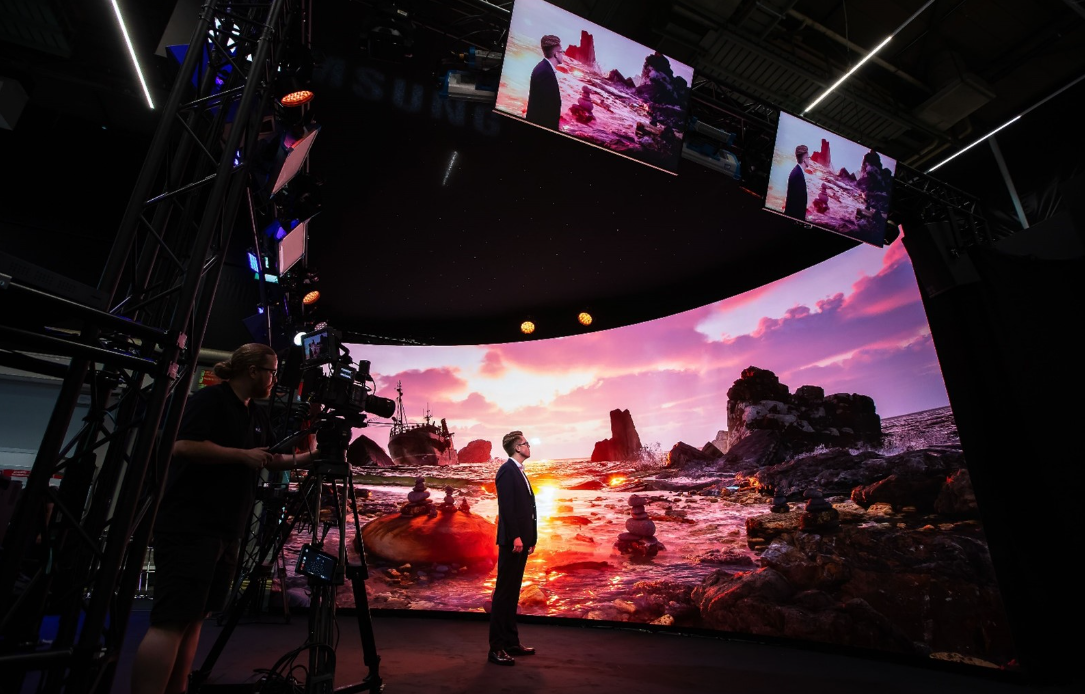
- Camera Flicker: Visible black bars (rolling shutter effect) when filmed.
- Content Loss: Fast-moving content may appear blurry or tearing.
- Not Broadcast Ready: Unsuitable for professional live streaming or TV.
- Flicker-Free: Crystal clear image on all cameras (1/2000s+ shutter speed).
- Smooth Motion: Perfect for fast video playback and sports.
- XR Ready (7680Hz): Essential for virtual production and XR studios.
For these applications, investing in a robust rental LED cabinet featuring a High Refresh Rate (3840Hz or 7680Hz) is paramount.
-
The Feature: A high refresh rate dictates how many times per second the display hardware updates the image buffer.
-
The Benefit: When festival-goers point their smartphone cameras at the stage, a 3840Hz screen eliminates the ugly black scan lines (Moiré effect) in their videos. This protects the event’s brand reputation and ensures high-quality viral marketing across social media platforms.
Conquering the Andalusian Climate: Essential Features for an Outdoor Cordoba LED Screen
If there is one absolute truth for a Chief LED Engineer, it is this: heat is the ultimate enemy of the Light Emitting Diode. Cordoba is frequently cited as one of the hottest cities in Europe. Selecting an LED supplier who fundamentally understands thermal dynamics is the difference between a system that lasts 10 years and one that fails in 10 months.
Heat Dissipation: Why Common Cathode Technology is Vital for 45°C+ Summers
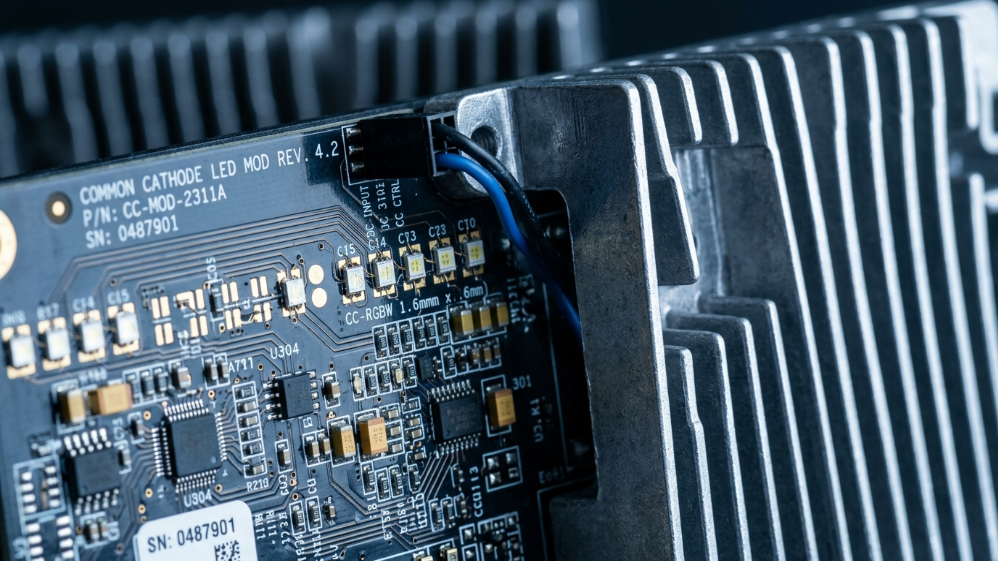
Historically, outdoor LED screens utilized Common Anode technology, pushing a uniform 5V of power across all Red, Green, and Blue (RGB) chips simultaneously. This is massively inefficient because the Red LED chip only requires 2.8V to light up. The excess voltage is burned off entirely as pure heat, effectively turning your expensive DOOH billboard into a giant industrial heater right in the middle of a Spanish heatwave.
Enter Common Cathode Technology.
-
The Feature: This advanced PCB (Printed Circuit Board) design separates the power supply. It delivers precisely 2.8V to the Red chip and 3.8V to the Green and Blue chips, eliminating excess voltage waste.
-
The Benefit: By adopting Common Cathode architecture for your Cordoba LED screen, internal cabinet temperatures are reduced by an astonishing 12°C to 15°C. This prevents the system from entering thermal throttling during the peak 2:00 PM sun. Furthermore, it slashes Total Cost of Ownership (TCO) by reducing energy consumption by up to 30%, an aggressive financial advantage given Europe’s current energy pricing.
Table 2: 2026 TCO & Thermal Comparison for a 50sqm DOOH Billboard in Cordoba
| Technology Type | Peak Internal Operating Temp (At 45°C Ambient) | Power Consumption (Max/Average) | 5-Year Lifespan Expectancy (TCO Impact) |
| Traditional Common Anode SMD | 68°C – 75°C (Requires HVAC) | 900W/m² / 300W/m² | Severe lumen depreciation; 40% higher maintenance costs. |
| Advanced Common Cathode SMD | 52°C – 55°C (Passive cooling) | 600W/m² / 200W/m² | Sustained brightness; 30% reduction in electricity OPEX. |
Combating the Spanish Sun: Ensuring 7,000+ Nits Brightness and Auto-Dimming
A digital display is mathematically useless if the ambient sunlight overpowers its luminous output. While standard outdoor screens in Northern Europe can survive on 5,000 Nits (cd/m²), the intense UV index in Andalusia requires a heavy-duty approach.
To penetrate the glare of a Cordoba summer afternoon, engineers specify custom high-brightness SMD or advanced DIP (Dual In-line Package) LED lamps capable of pushing 7,000 to 10,000 Nits.
-
The Feature: High-luminous-efficacy LED diodes paired with highly responsive ambient light sensors.
-
The Benefit: High brightness guarantees that premium ad content is sharp, vivid, and highly readable even at high noon, securing maximum CPM (Cost Per Mille) rates for media buyers. Concurrently, the integrated light sensor automatically drops the brightness to 1,500 Nits at midnight. This solves two problems: it prevents dangerous light pollution that could blind local drivers (ensuring regulatory compliance) and vastly extends the lifespan of the diodes.
IP65 and IP68 Ratings: Protecting Against Dust and Sudden Mediterranean Storms
Cordoba’s climate isn’t just about heat; it is characterized by long, incredibly dusty dry spells, occasionally interrupted by violent, sudden Mediterranean downpours (the “Gota Fría”).
Do not accept a supplier quote that simply states “waterproof.” You must demand specific Ingress Protection metrics.
-
The Feature: A fully sealed aluminum chassis with an IP65 rating for the front and rear, or an ultra-rugged IP68 rating for the individual LED modules, utilizing aerospace-grade silicone potting.
-
The Benefit: An IP65/IP68 rating guarantees absolute dust-tightness, preventing fine Andalusian dirt from short-circuiting the receiver cards. When a sudden storm hits, the hermetically sealed modules and waterproof Neutrik aviation connectors ensure zero water ingress. For a B2B system integrator, this means eliminating emergency truck-rolls and expensive on-site technician dispatches during bad weather.
Once you have secured the thermal and environmental architecture required to survive the Andalusian climate, the next engineering phase is aligning the hardware with its specific commercial environment. A screen built for a highway interchange operates on entirely different logic than one rigged for a weekend music festival.
What Are the Top Applications for LED Video Walls in Cordoba?
DOOH Advertising: Maximizing ROI in High-Traffic Commercial Zones
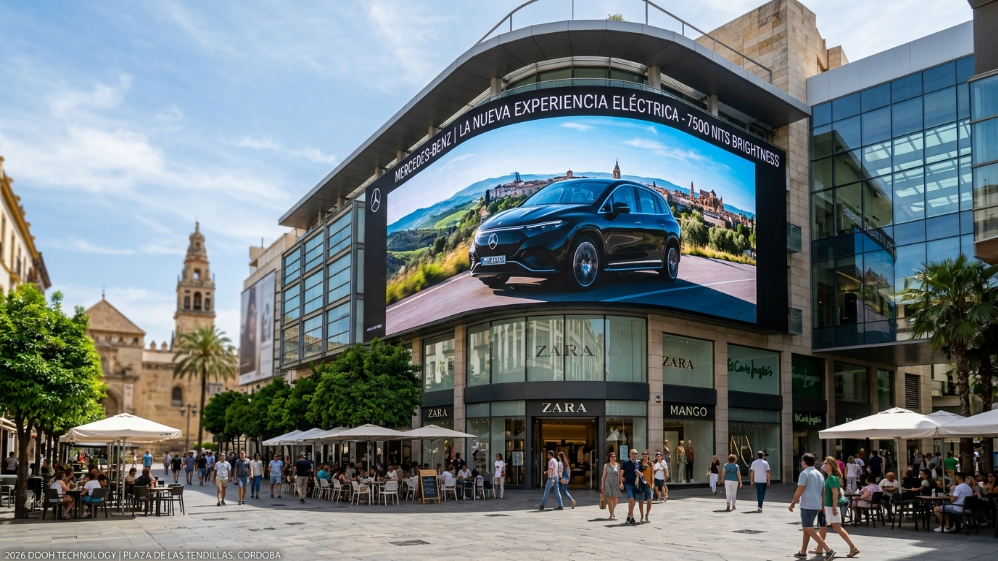
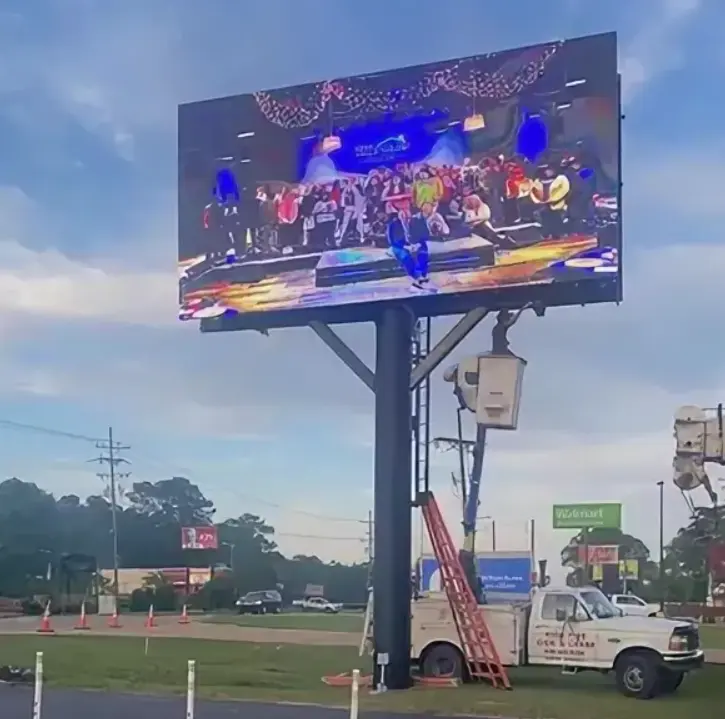
For media agencies deploying Digital Out-of-Home (DOOH) networks along key arteries like Avenida del Brillante or near the commercial districts, absolute reliability translates directly to ad revenue. Advertisers demand 99.9% uptime. To achieve this, we engineer these permanent outdoor billboards with dual-backup data and power systems.
-
The Feature: Redundant receiving cards and power supplies built into the cabinet chassis.
-
The Benefit: If a power unit fails due to an unexpected grid surge, the backup immediately takes over without dropping a single frame of the advertisement. You avoid client compensation claims and protect your agency’s reputation for premium digital real estate.
Stage and Event LED Rentals for Andalusian Festivals
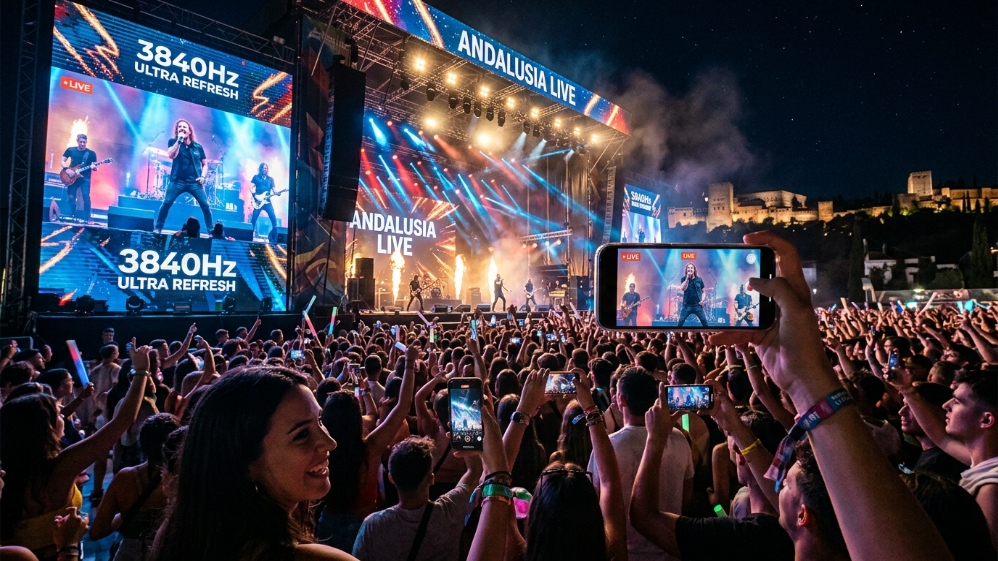
The rental market operates on speed and weight. When staging companies set up for events like the Feria de Córdoba, labor hours dictate profitability. Heavy, cumbersome steel cabinets will destroy your margin.
-
The Feature: Ultra-lightweight die-cast aluminum rental cabinets (typically 500x500mm or 500x1000mm) equipped with fast-lock mechanisms and a High Refresh Rate (3840Hz to 7680Hz).
-
The Benefit: A two-man crew can seamlessly rig a massive 40-square-meter video wall in under three hours. More importantly, the extreme refresh rate ensures that when local news stations broadcast the event, the LED background appears crystal clear on camera, completely devoid of disruptive scan lines or flickering.
Retail and Hospitality: Indoor Fine Pixel Pitch Solutions
Not all lucrative projects in Cordoba are battling the sun. Luxury retail boutiques and high-end hotel lobbies require a more intimate visual experience. Here, we transition from rugged outdoor modules to indoor Fine Pixel Pitch (P1.8-P2.5) displays.
-
The Feature: High-density SMD packaging or advanced COB (Chip-on-Board) technology that eliminates physical bezels entirely.
-
The Benefit: B2B integrators can deliver seamless, wall-to-wall 4K or 8K canvases. Shoppers standing merely 2 meters away will experience perfectly smooth, high-contrast imagery, driving brand engagement and increasing in-store dwell time without the visual fatigue caused by older LCD video walls.
How to Choose the Right LED Screen Supplier for Your Spanish Projects
Sourcing a Cordoba LED screen requires more than comparing Alibaba quotes. B2B procurement officers must evaluate suppliers based on their technical mastery and legal compliance specifically tailored for the European Union market.
Selecting the Right Pixel Pitch (From P2.5 Indoor to P10 Outdoor)
Pixel pitch—the physical distance in millimeters between the center of one LED pixel to the next—dictates both your visual clarity and your hardware budget. Over-specifying your pitch wastes capital; under-specifying ruins the viewer experience.
Table 3: Multi-Dimensional Pixel Pitch Selection Matrix for Cordoba Deployments
| Pixel Pitch | Environment | Minimum Optimal Viewing Distance | Typical Cordoba Application | Estimated CapEx Impact |
| P1.8 – P2.5 | Indoor Only | 1.8 to 2.5 Meters | Luxury Retail, Boardrooms, Hotel Lobbies | Premium/High |
| P3.9 – P4.8 | Indoor/Outdoor Rental | 4 to 5 Meters | Corporate Events, Festival Stage Backgrounds | Moderate/Scalable |
| P6.67 | Outdoor Permanent | 7 Meters | High-Street Retail Facades, Bus Shelters | Standard/Cost-Effective |
| P8 – P10 | DOOH/Highway | 8 to 10+ Meters | Massive Highway Billboards, Stadium Scoreboards | Lowest per sq.m. |
Strict European Compliance: CE, RoHS, and EMC Class B
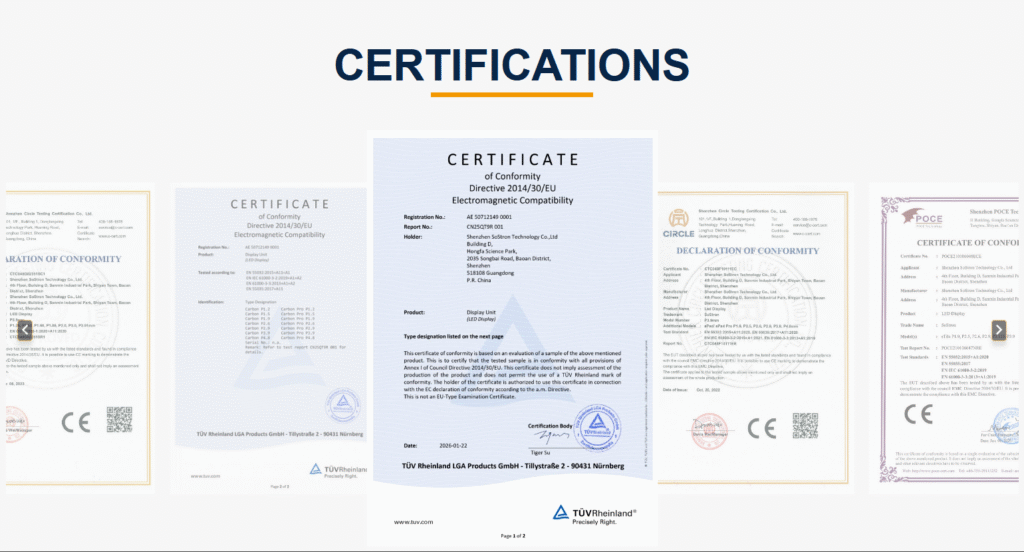
Attempting to import uncertified electronics into Spain is a logistical nightmare. Spanish customs authorities at the Port of Valencia or Algeciras will impound containers lacking proper documentation.
-
The Feature: Verified CE marking, RoHS compliance (Restriction of Hazardous Substances), and specifically, EMC Class B certification.
-
The Benefit: CE and RoHS guarantee the product meets European safety and environmental standards. However, EMC (Electromagnetic Compatibility) Class B is the critical differentiator. Standard Class A screens emit high levels of electromagnetic interference, which can disrupt local telecommunications, Wi-Fi, and emergency responder radios. EMC Class B shielding ensures your DOOH installation operates legally in residential and commercial areas without triggering heavy fines from Spanish regulatory bodies.
Front vs. Rear Maintenance: Reducing Downtime and Service Costs
Real estate in historic Spanish cities is heavily constrained. Traditional outdoor screens require a 60cm to 80cm rear access corridor for technicians to perform maintenance.
-
The Feature: Fully independent Front Serviceability.
-
The Benefit: By allowing modules, hub boards, and power supplies to be extracted from the front face using a specialized T-wrench or vacuum tool, integrators can mount the screen directly flush against a wall. This saves thousands of Euros in structural steel fabrication and vastly opens up the number of viable installation locations across Cordoba.
Navigating Logistics and Installation in Southern Spain
Custom Clearances and Shipping Timelines to Andalusia
Procuring directly from a Tier-1 global manufacturing hub (like Shenzhen, China) requires precision timeline management. Standard ocean freight to Spanish ports typically requires 30 to 35 days of transit time, followed by 5 to 7 days for customs clearance and inland freight to Andalusia. For B2B buyers working on strict event deadlines, we strongly advise initiating the procurement cycle at least 65 days prior to the required “power-on” date.
Compliance with Cordoba’s Heritage Site Installation Regulations
When installing near protected zones, structural weight is heavily scrutinized by local engineers. Retrofitting an old facade demands ultra-lightweight architecture. Utilizing magnesium-alloy cabinets instead of standard iron cuts the structural load by up to 40%. Furthermore, your operating software must feature robust brightness scheduling to comply with local light-pollution ordinances, automatically dimming the display at dusk to protect the historic ambiance of the city.
Frequently Asked Questions (FAQs) About LED Displays in Spain
How much does a commercial LED video wall cost in Andalusia?
Pricing is entirely dictated by pixel pitch, brightness requirements, and structural needs. For a high-quality outdoor DOOH screen (e.g., P6.67 or P8) engineered for Spanish heat, expect a CapEx of €800 to €1,800 per square meter. Indoor fine-pitch solutions (P2.0) typically range from €1,500 to €3,500 per square meter due to the density of the diodes.
What is the realistic lifespan of an outdoor LED screen in extreme heat?
While the industry standard quotes 100,000 hours, sustained 45°C ambient heat will degrade inferior screens within 20,000 hours. However, by deploying Common Cathode technology and high-efficiency heat sinks, a properly maintained display in Cordoba will reliably deliver 70,000 to 80,000 hours of commercial viability (roughly 8 to 10 years) before significant lumen depreciation occurs.
Can I rent an LED screen for a short-term event in Cordoba?
Yes. For short-term deployments like the Festival de los Patios, system integrators rely on AV dry-hire companies. Ensure the rental contract specifies IP65 outdoor-rated cabinets and a minimum refresh rate of 3840Hz to guarantee your event photography isn’t ruined by screen flicker.
What is the difference between EMC Class A and EMC Class B for Spanish installations?
EMC Class A is only legally permissible for heavy industrial zones. If you are installing an LED screen in a commercial district, retail street, or residential area in Cordoba, you must legally specify EMC Class B. Class B hardware features superior electromagnetic shielding, preventing interference with nearby civilian electronics and telecom networks.
Do I need planning permission to install a digital billboard in Cordoba?
Absolutely. You must obtain a municipal license (licencia de obra y actividad) from the Cordoba City Council. Approval hinges on structural safety, aesthetic integration, and strict adherence to nighttime brightness limits. Partnering with a supplier who provides comprehensive CAD drawings and CE certifications is mandatory for expediting this approval process.
Partner with a Global LED Display Manufacturer for Your Spain Projects
The Expert Verdict:
Procuring an LED display for Southern Spain is an engineering challenge, not just a purchasing exercise. Off-the-shelf, budget hardware will not survive an Andalusian summer, and non-compliant electronics will be seized at the border. You need a factory-direct manufacturing partner who engineers for extreme thermal loads, guarantees EMC Class B compliance, and understands the precise requirements of DOOH and AV staging. Stop gambling your project capital on middle-men. Demand Common Cathode technology, mandate true IP65 sealing, and secure your supply chain with hardware built specifically to dominate the Spanish market.
References:
ICNIRP Guidelines on Limiting Exposure to Electromagnetic Fields (100 kHz to 300 GHz)
IDA Professional Lighting Guide: Electronic Message Centers (EMCs) / Outdoor LED Signage