The Two Problems Every Church Faces Before Installing a Screen
The first problem is visibility. Projectors wash out in daylight. Any sanctuary with windows, skylights, or architectural lighting that cannot be fully blacked out will produce a projected image that is dim, low-contrast, and difficult to read from the back rows. Congregation members strain to read lyrics. Visitors feel disconnected. The technology meant to enhance worship becomes a source of frustration.
The second problem is the budget conversation. LED screens cost more upfront than projectors — that is true. But the comparison most churches make stops at the purchase price and ignores lamp replacement cycles (300–800 per lamp, every 2,000–4,000 hours), projector maintenance, and the operational cost of a system that requires a darkened room to function. When the full 5-year cost is calculated, LED screens are consistently the more economical choice for any church running services more than three times per week. This guide gives you the numbers to make that case internally.
Why LED Screens Are Now the Standard for Modern Worship Spaces
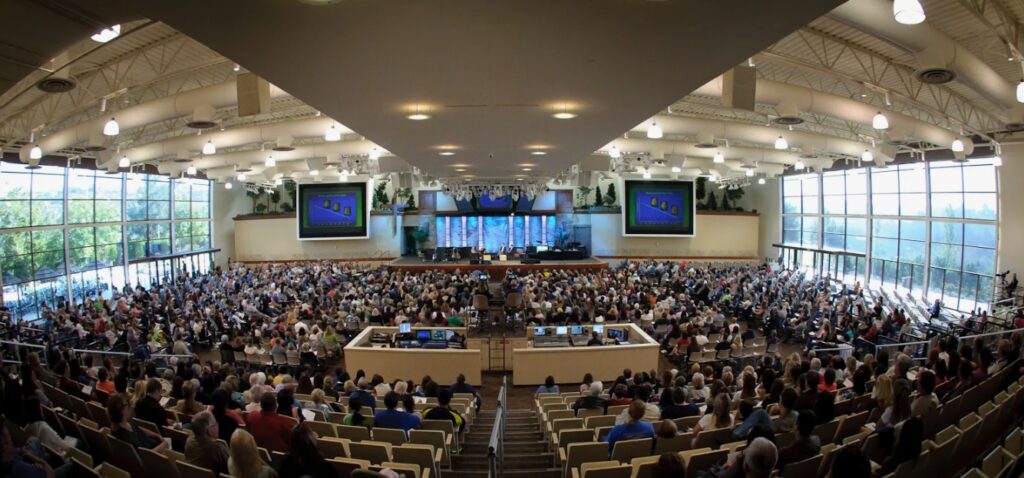
Over 68% of urban churches and 42% of suburban churches in North America and Europe have adopted or are actively planning professional LED display systems as of 2026, according to the Religious Technology Association’s annual survey. That figure has more than doubled since 2020. The shift is not driven by technology enthusiasm — it is driven by practical outcomes: better sermon retention, higher congregation engagement, and lower long-term operating costs.
The core advantage is physics. LED screens are self-emissive — each pixel generates its own light. A 1,500-nit LED screen in a sunlit sanctuary delivers a clear, vivid image. A 5,000-lumen projector in the same space produces a washed-out rectangle. For churches that cannot or choose not to install blackout systems, LED is not a luxury — it is the only technology that works.
LED Screen vs. Projector: Full Comparison for Church Applications
| Dimension | LED Screen | Laser Projector | Traditional Lamp Projector |
|---|---|---|---|
| Brightness (typical) | 1,000–2,000 nits | 500–800 nits equivalent | 300–500 nits equivalent |
| Performance in ambient light | Excellent | Moderate | Poor |
| Image size flexibility | Any size (modular) | Fixed throw ratio | Fixed throw ratio |
| Lifespan | 80,000–100,000 hrs | 20,000–30,000 hrs | 2,000–4,000 hrs (lamp) |
| Lamp/bulb replacement | None | None | 300–800 per lamp |
| Maintenance frequency | Low (annual inspection) | Moderate | High (frequent lamp changes) |
| Blackout room required | No | Partial | Yes |
| Text legibility | Excellent at all distances | Good in dark conditions | Poor in ambient light |
| Worship software integration | Native (HDMI/SDI) | Native (HDMI) | Native (HDMI) |
| 5-year TCO (medium church) | 35,000–65,000 | 28,000–55,000 | 22,000–50,000 |
| Installation complexity | Moderate (structural mount) | Low (ceiling mount) | Low (ceiling mount) |
| Heritage building suitability | Good (reversible mounting) | Excellent | Excellent |
The TCO gap narrows significantly when lamp replacement and downtime costs are included for projector systems. For churches running 4+ services per week, LED reaches TCO parity with laser projectors within 3–4 years.
Core Applications: What Church LED Screens Actually Do
Lyrics, Scripture, and Sermon Support
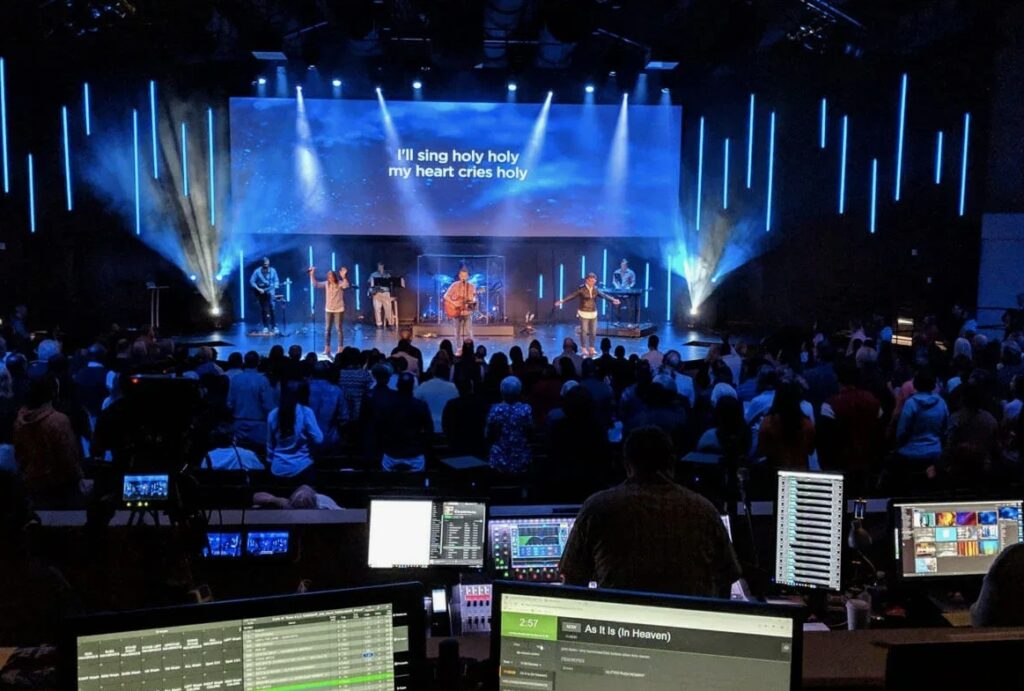
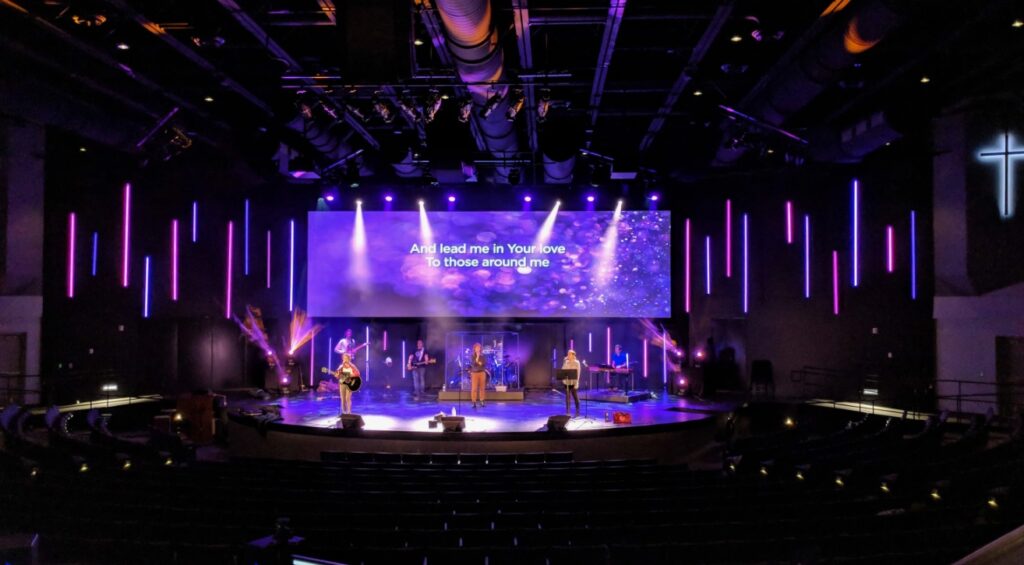
The primary function for most congregations. LED screens display hymn lyrics, Bible verses, sermon outlines, and supporting visuals in real time, synchronized with the service flow. Key requirements for this use case:
- Text legibility at maximum viewing distance (back row)
- Color temperature calibrated for warm, welcoming tones (not the cool blue-white of default factory settings)
- Smooth content switching without visible flicker or transition artifacts
- Native integration with ProPresenter, EasyWorship, or MediaShout
Live Video and IMAG (Image Magnification)
For congregations of 500+, IMAG — displaying live camera feeds of the pastor, worship team, and choir — is essential for connection. Members in the back rows see facial expressions and gestures they would otherwise miss entirely. This requires:
- High refresh rate (3,840Hz minimum) for flicker-free camera output
- SDI or HDMI input from the video production system
- Sufficient screen size for the viewing distance (see pixel pitch table below)
Atmosphere and Visual Worship
Dynamic backgrounds, seasonal visuals, and thematic environments transform the sanctuary experience. Advent candle animations, Easter sunrise sequences, and nature backgrounds for contemplative prayer are all standard content categories in 2026. LED screens enable these without the color shift and brightness loss that projectors produce on textured surfaces.
Lobby and Foyer Communication
Secondary screens in lobbies, foyers, and hallways display event schedules, community announcements, giving information, and welcome messages. These typically use P2.5–P3.9 panels at lower brightness settings, managed through the same content system as the main sanctuary screen.
Pixel Pitch Selection Guide for Church Installations
The standard formula: minimum viewing distance (m) = pixel pitch (mm) × 1,000 ÷ 3,438
| Pixel Pitch | Minimum Viewing Distance | Recommended Church Size | Typical Screen Area | Cost Range (per m²) |
|---|---|---|---|---|
| P1.2–P1.5 | 0.3–0.4m | Broadcast studio, recording chapel | 4–8m² | 8,000–15,000 |
| P1.8–P2.0 | 0.5–0.6m | Small–medium (100–400 seats) | 8–16m² | 4,000–8,000 |
| P2.5 | 0.7m | Medium (300–600 seats) | 12–25m² | 2,500–5,000 |
| P3.0–P3.9 | 0.9–1.1m | Large (600–1,500 seats) | 20–50m² | 1,500–3,000 |
| P4.0+ | 1.2m+ | Mega-church, outdoor overflow | 40m²+ | 800–1,800 |
For most churches, P2.0–P2.5 is the practical optimum — it covers viewing distances from 6–20 meters, which encompasses the majority of sanctuary configurations, at a cost that is manageable for mid-size congregations.
5-Year Total Cost of Ownership: LED vs. Projector
| Cost Category | LED Screen (P2.5, 16m²) | Laser Projector (equivalent) | Lamp Projector (equivalent) |
|---|---|---|---|
| Hardware purchase | $45,000 | $18,000 | $8,000 |
| Installation | $8,000 | $3,000 | $2,500 |
| Lamp replacement (5yr) | $0 | $0 | 4,500–9,000 |
| Annual maintenance | 500–1,000/yr | 800–1,500/yr | 1,200–2,000/yr |
| Energy cost (5yr, 3×/wk) | 1,800–2,500 | 2,200–3,000 | 2,500–3,500 |
| Downtime/emergency repair | Low | Moderate | High |
| 5-Year TCO | 58,000–68,000 | 35,000–55,000 | 28,000–50,000 |
The projector advantage is real at the 5-year mark for lower-frequency use. However, for churches running daily or near-daily services, the lamp replacement and maintenance costs for projectors compound rapidly. At 6+ services per week, LED TCO reaches parity with laser projectors within 4 years.
Church-Specific Installation Considerations
Sanctuary Architecture and Mounting
Church sanctuaries present unique structural challenges that standard commercial LED installations do not:
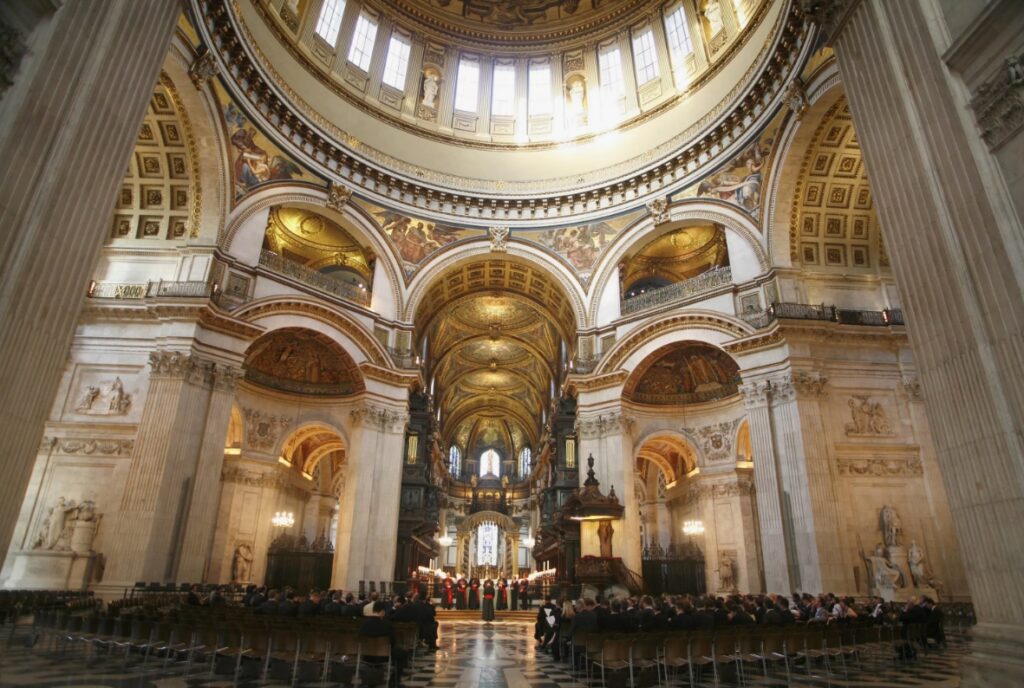
- High ceilings — rigging and installation at 8–15m height requires specialized equipment and adds 3,000–8,000 to installation cost
- Heritage and listed buildings — reversible mounting systems (no permanent structural modification) are required; add 15–25% to installation cost
- Acoustic panels and surfaces — cable routing must avoid disrupting acoustic treatment; plan routing paths before finalizing screen position
- Sightline geometry — screen placement must account for balcony overhangs, column obstructions, and the angle from the back row; a professional site survey is essential
Ambient Light Management
Unlike commercial installations where ambient light is controlled, church sanctuaries often have:
- Stained glass windows producing colored light that shifts throughout the day
- Architectural lighting designed for atmosphere, not display visibility
- Seasonal variation in natural light levels
Specify screen brightness based on the worst-case ambient light condition (midday summer service with full window light), not average conditions. For most sanctuaries with significant natural light, 1,200–1,500 nits is the minimum practical brightness.
Curved vs. Flat Screen Configuration
| Configuration | Best For | Advantage | Consideration |
|---|---|---|---|
| Flat single screen | Rectangular sanctuaries, centered seating | Simplest installation, lowest cost | Limited side-angle visibility |
| Dual flat screens (flanking) | Wide sanctuaries, side seating sections | Full coverage for wide seating | Requires synchronized content output |
| Curved screen | Fan-shaped or semicircular seating | Consistent viewing angle across all seats | Higher cost, more complex installation |
| Transparent LED | Heritage buildings, glass facades | Preserves architectural visibility | Lower brightness, specialized content |
Worship Software Integration
Church LED screens must integrate with the presentation software the worship team already uses. In 2026, the three dominant platforms are:
ProPresenter 7 — industry standard for large and medium churches; supports HDMI, SDI, NDI output; native multi-screen management; used by approximately 60% of professional church AV installations.
EasyWorship 7 — popular with smaller and mid-size congregations; simpler interface; strong Bible verse integration; HDMI output standard.
MediaShout 7 — strong in liturgical and traditional denominations; supports complex service order management; HDMI/SDI output.
All three platforms output standard HDMI or SDI signals that connect directly to LED screen processors without additional middleware. Confirm with your supplier that the LED processor supports the resolution and refresh rate your software outputs — most modern processors handle 1080p and 4K at 60Hz without issue.
Pricing Guide: 2026 Budget Ranges by Church Size
Small Churches (100–250 attendees)
- Screen area: 6–10m²
- Recommended spec: P2.5 indoor, flat
- Hardware: 15,000–28,000
- Installation (including cabling and processor): 4,000–7,000
- Total installed: 19,000–35,000
- Content system: ProPresenter or EasyWorship license (600–1,200/yr)
Medium Churches (300–600 attendees)
- Screen area: 12–20m²
- Recommended spec: P2.0–P2.5 indoor, flat or curved
- Hardware: 30,000–65,000
- Installation: 7,000–12,000
- Total installed: 37,000–77,000
- Optional: secondary lobby screen (P3.9, 4–6m²) adds 8,000–15,000
Large Churches (700–1,500 attendees)
- Screen area: 25–50m² (main) + side screens
- Recommended spec: P1.8–P2.5 main screen, P2.5–P3.9 side/overflow
- Hardware: 70,000–180,000
- Installation: 15,000–30,000
- Total installed: 85,000–210,000
- IMAG camera system adds 15,000–40,000
Mega-Church / Multi-Campus (1,500+ attendees)
- Screen area: 50–120m² main auditorium + campus network
- Recommended spec: P1.5–P2.0 main, P2.5 secondary
- Hardware: 180,000–500,000+
- Full AV integration: 50,000–150,000+
- Total installed: 230,000–650,000+
How to Get an Accurate Quote: 5 Steps
Step 1 — Measure your sanctuary precisely. Provide the supplier with: room dimensions, ceiling height, distance from screen position to front row and back row, and photos of the installation wall.
Step 2 — Define your primary use case. Lyrics and scripture only? IMAG video? Atmospheric backgrounds? Each use case has different refresh rate and brightness requirements that affect pricing.
Step 3 — Specify your worship software. Tell the supplier which platform you use and what resolution it outputs. This determines the processor specification.
Step 4 — Request itemized quotes. Ask for hardware, installation, cabling, processor, and warranty to be quoted separately. Bundled quotes make comparison difficult and hide where costs are concentrated.
Step 5 — Ask about the warranty and local service. A 3-year parts and labor warranty with a local service partner is the minimum acceptable standard. Ask specifically: what is the response time for a panel failure on a Sunday morning?
Conclusion
Church LED screens in 2026 are not a luxury upgrade — they are the practical solution to the visibility and operational cost problems that projector systems cannot solve in naturally lit sanctuaries. The upfront investment is higher, but the 5-year TCO is competitive, the operational reliability is superior, and the worship experience improvement is measurable.
For most congregations, P2.0–P2.5 at 12–20m² is the right specification. Start with a professional site survey, get itemized quotes from at least three suppliers, and confirm worship software compatibility before committing. The technology decision is straightforward once the numbers are on the table.
SoStron’s indoor LED panels — P1.8 through P2.5 — are optimized for worship venue applications, with warm color calibration, high refresh rates for camera-facing installations, and module-level serviceability for long-term reliability. Our team supports church projects from initial specification through installation and ongoing maintenance.