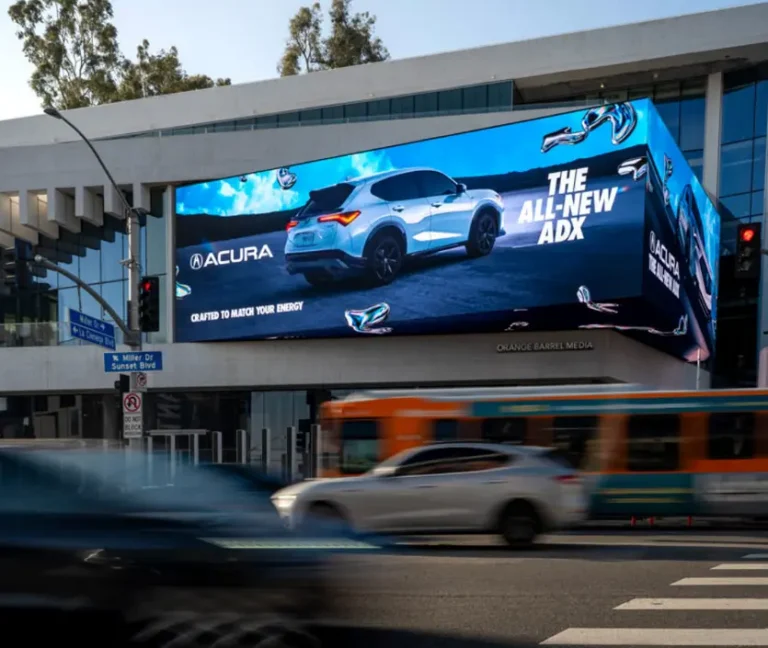
What Is a Football Stadium LED Billboard?
A football stadium LED billboard is a large-format digital display system installed around a match pitch or within a stadium structure to deliver advertising, live content, and real-time information to spectators — and, critically, to TV audiences worldwide.
This distinction matters. A pitch-side perimeter board at a Premier League or Champions League match isn’t just speaking to 60,000 people in seats. When that board appears in frame during a broadcast, it reaches tens of millions of viewers globally. That’s the core reason brands pay a significant premium for stadium LED advertising over conventional outdoor formats.
Modern football stadium displays are no longer simple rotating panels or static printed boards. They are networked, software-managed LED systems capable of delivering dynamic video content, real-time data overlays, and multi-language brand messaging — all switchable in seconds from a central control room.
Types of Screens Used in Football Stadiums
Football stadiums use several distinct display formats, each serving a specific function. Understanding the difference matters whether you’re a venue specifying a system or a brand planning a placement strategy.
Pitch-Side Perimeter LED Boards
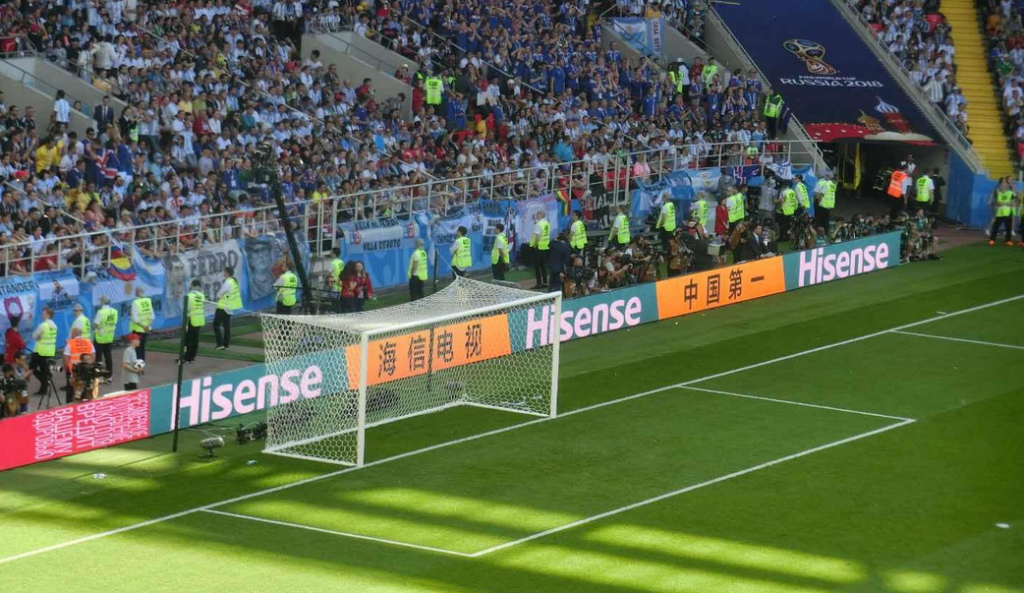
The most recognizable format. These horizontal LED strips run along the touchlines and goal lines, typically 1.0–1.2 meters tall and extending the full length of the pitch perimeter. They rotate through advertiser content on timed cycles — usually 8–12 seconds per brand per rotation.
- Pixel pitch: P6–P10 (balancing close-up readability with broadcast camera capture)
- Brightness: 6,000–8,000 cd/㎡ (required for floodlit night matches and outdoor daylight)
- Viewing angle: 120°+ horizontal to remain legible from all stand positions
Giant Video Screens (Jumbotrons)
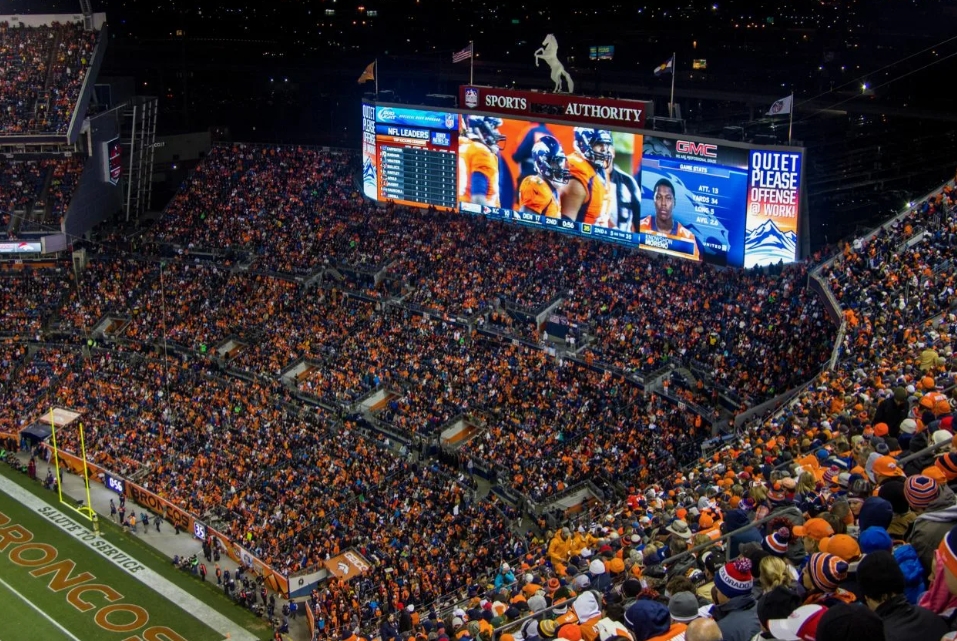
Large-format LED scoreboards mounted at the ends of the stadium or above the main stands. These serve a dual function: match content delivery (replays, lineups, live stats) and advertising during stoppages.
- Typical size: 60–200 ㎡ per screen
- Pixel pitch: P8–P12 (viewed from 50–150 meters)
- Content split: Typically 60% match content / 40% commercial during a standard match
Roof-Hanging Centrepiece Screens
Found in premium venues like Tottenham Hotspur Stadium or the Allianz Arena. Suspended displays provide 360° visibility to all seating sections and are increasingly used for immersive fan experience content, not just advertising.
Fascia & Concourse Digital Signage
LED displays embedded into stadium fascia bands, concourse walls, and hospitality areas. These serve wayfinding, retail promotion, and sponsor branding. Pixel pitch: P3–P5 (close-range viewing).
Scoreboard & Statistics Display
Dedicated LED panels showing live scores, match clock, player stats, and VAR decision notifications. In 2026, these are increasingly integrated into the main video screen system rather than standalone hardware.
How Stadium LED Billboards Actually Work
The process is more sophisticated than most people outside the industry realize. Here’s the operational chain from content creation to what viewers see on-screen:
Step 1 — Content Production & Formatting
Advertisers supply creative assets (static images, motion graphics, or video clips) formatted to the specific pixel dimensions of each display. Pitch-side boards require ultra-wide aspect ratios — often 768 × 96 pixels or similar — which means standard TV or digital ad formats must be specially re-edited. This is a common mistake brands make: repurposing standard 16:9 video onto perimeter boards produces poor results.
Step 2 — Content Ingestion & Scheduling
Assets are uploaded to a centralized Content Management System (CMS). Stadium operators schedule ad rotations by match phase: pre-match, first half, half-time, second half, and post-match. Each phase commands different rate cards — half-time typically carries a premium of 40–70% over standard in-play slots due to higher sustained attention from fans.
Step 3 — Signal Transmission
Content is distributed from the control room to individual display nodes via fiber optic cabling (standard for professional stadiums) or high-bandwidth network switching. Signal processors handle color calibration, brightness control, and synchronization across multiple boards to ensure consistent output across the full perimeter.
Step 4 — Real-Time Management & Dynamic Switching
During live matches, operators can override scheduled content instantly. If a VAR decision extends stoppage time or a sponsor has a time-critical message, content can be pushed to boards in under 30 seconds. In 2026, leading systems like those integrated with Daktronics, Absen, or Unilumin platforms support API-triggered dynamic content — meaning a goal scored can automatically trigger a pre-set animated brand response.
Step 5 — Monitoring & Performance Reporting
Post-match, operators generate exposure reports showing: number of rotations per advertiser, estimated on-site impressions based on attendance, and — for broadcast-facing boards — third-party broadcast measurement data from services like Nielsen Sports or Sponsorworks, which track on-screen seconds of brand exposure across all broadcast markets.
Why Stadiums Invest in Big Screens — The Business Case
Stadium operators don’t install multi-million dollar LED systems out of aesthetic preference. The business case is clear and measurable.
Revenue Generation
A modern stadium LED ecosystem is a direct revenue asset. Perimeter board inventory at a top-flight European football club sells for €2,000–€25,000 per match per advertiser depending on league, broadcaster reach, and slot position. Annual LED advertising packages at clubs like Manchester United or Real Madrid are valued in the tens of millions of euros.
Fan Experience & Dwell Time
Research consistently shows that stadium screens increase fan satisfaction scores and dwell time before and after matches. Fans who arrive early and engage with screen content at concessions, merch, and food & beverage points — all monetizable interactions.
Broadcast Value Amplification
For clubs with international broadcast deals, pitch-side boards are essentially global advertising inventory. A 6-second brand rotation that appears in frame during a Champions League broadcast reaches audiences in 200+ countries. This is why brands pay a broadcast premium on top of stadium attendance rates.
Operational Efficiency
Modern LED systems reduce staff requirements versus manual scoreboard systems, support multilingual content for international fixtures, and enable real-time emergency communication — a growing requirement from UEFA and FIFA venue standards.
What Makes a High-Performance Stadium LED System?
Not all stadium LED installations are equal. For venue operators or brands evaluating a potential placement, these are the specifications that determine real-world performance:
| Specification | Entry Level | Professional Standard | Elite Tier |
|---|---|---|---|
| Brightness (cd/㎡) | 4,000 | 6,000–7,000 | 8,000–10,000 |
| Pixel Pitch (perimeter) | P10 | P6–P8 | P5–P6 |
| Refresh Rate | 960 Hz | 1,920 Hz | 3,840 Hz+ |
| IP Rating | IP54 | IP65 | IP66 |
| Viewing Angle | 100° H | 120° H | 140° H |
| Lifespan | 60,000 hrs | 80,000–100,000 hrs | 100,000+ hrs |
| CMS Integration | Manual | Cloud-based | API + programmatic |
Why refresh rate matters for stadiums specifically: Low refresh rates produce horizontal scan lines on broadcast camera footage — a visible defect that can cause brand damage for advertisers whose logo appears on a board that “flickers” on television. 1,920 Hz is the minimum for broadcast-quality capture; 3,840 Hz is recommended for 4K broadcast environments.
Brand Advertising on Stadium Billboards: What You Need to Know
If you’re a marketing director evaluating stadium LED advertising for your brand, these are the operational realities that most agency pitches leave out.
What You’re Actually Buying
Stadium LED advertising is sold in several formats:
- Perimeter board rotations — shared inventory, rotating with other brands
- Dedicated zones — exclusive ownership of a specific board section for a match or season
- Naming rights integration — brand appears in corner boards, scoreboards, or goal-net LED frames
- Half-time or pre-match full-board takeovers — all boards display one brand simultaneously
Creative Specifications Are Non-Negotiable
Pitch-side perimeter boards have extreme aspect ratios. Your standard 1920×1080 video will not work. Brands must produce assets specifically formatted for the board dimensions — typically in a ratio of 8:1 or wider. Work with a production partner who has done stadium-format creative before.
Measuring Your ROI
In 2026, brand teams should insist on the following metrics from any stadium advertising partner:
- On-site impressions (attendance-based, by section)
- Broadcast seconds (measured by Nielsen Sports, Sponsorworks, or equivalent)
- Equivalent media value (EMV) vs. standard TV CPM in the same markets
- Social media pickup rate — stadium screens increasingly generate organic social content when fans film and post match moments
2026 Trends: AI, Programmatic DOOH & Immersive Display
The stadium display industry has shifted significantly since 2023. These are the developments reshaping what stadium LED technology looks like — and what it can do.
Programmatic Content Delivery
Stadium operators are connecting their LED inventory to programmatic DOOH exchanges, enabling brands to bid for specific match slots in real time — similar to digital display advertising. This is now operational at select Premier League, Bundesliga, and MLS venues, with wider rollout expected through 2026.
AI-Driven Dynamic Content
Content management platforms now integrate AI triggers that connect brand messaging to live match events. A sporting goods brand can pre-load creative assets linked to goal alerts, so that a goal automatically deploys a branded celebratory animation on the perimeter boards within seconds. This contextual relevance dramatically increases brand recall.
Second-Screen & Mobile Integration
Leading venues are connecting stadium LED systems with official club apps and second-screen experiences — so that on-screen polls, fan cams, and interactive graphics are synchronized between the big screen and individual fan devices. This creates a unified, immersive environment rather than a one-way broadcast.
Curved & Circular LED Formats
New architectural LED formats — including curved corner boards, circular centrepiece displays, and LED-embedded seating fascias — are moving from concept into installation at flagship venues. These formats maximize field-of-view coverage and provide new creative canvases for advertisers.
Sustainability Compliance
EU Digital Signage Directive updates and FIFA/UEFA venue guidelines now require new installations to meet minimum luminous efficacy standards (measured in lm/W). High-efficiency LED drivers and smart dimming systems are becoming mandatory, not optional, for new builds and major refurbishments.
Frequently Asked Questions
Q1: What pixel pitch is used for football stadium perimeter boards? Professional pitch-side perimeter boards typically use P6 to P10 pixel pitch. P6–P8 is preferred for venues where cameras shoot close to the boards; P10 is acceptable for larger perimeters where the primary audience is in-stadium rather than broadcast.
Q2: How bright do stadium LED billboards need to be? Outdoor and floodlit stadium environments require a minimum of 5,500–6,000 cd/㎡. For daytime matches in direct sunlight, 7,500–9,000 cd/㎡ is recommended. Insufficient brightness causes washed-out visuals that make sponsor logos illegible — a contractual issue with advertisers.
Q3: Can stadium LED boards display different ads simultaneously to different camera angles? Yes. Modern multi-zone CMS platforms support zone-specific content, meaning the board section facing the main broadcast camera can display a different ad from the section visible to in-stadium fans. This is increasingly used to separate broadcast-market advertising from local market campaigns.
Q4: How long does a stadium LED perimeter system last? Quality LED panels are rated at 80,000–100,000 hours. At 6 hours/match, 40 matches/year, that’s 35+ years of mechanical lifespan. In practice, systems are typically refreshed at 10–15 year intervals due to technology advancement and resolution standards — not hardware failure.
Q5: What is the standard size of football stadium perimeter boards? FIFA regulations stipulate perimeter boards should be no taller than 1.0–1.2 meters to avoid obstructing sightlines for lower-tier seating. Length varies by stadium, but a full perimeter installation for a standard 105m × 68m pitch requires approximately 320–360 linear meters of board.
Q6: How do stadium operators measure advertising effectiveness? In 2026, the standard measurement stack combines: attendance-based on-site impressions, third-party broadcast monitoring (Nielsen Sports or Sponsorworks), and social media brand mention tracking. Broadcast exposure data — measured in “on-screen seconds” across all airing markets — is increasingly the primary metric for brand ROI.
Sources
- UEFA: Stadium Infrastructure & Technology Guidelines
- FIFA: Stadium Safety & Security Regulations — Technical Appendix