Quick Answer (What You Need to Know First)
An LED dance floor is a modular illuminated platform built from interlocking LED panels that displays dynamic colors, animated patterns, or full video content — and some models respond to movement in real time. If you’re deciding whether to rent or buy one in 2026, here’s the short version:
- Rental cost: 1,600–4,800 per event depending on size and features
- Purchase cost: 450–2,200+ per m² depending on type and pixel pitch
- Best for: Weddings, nightclubs, concerts, corporate events, trade shows
- Key spec to check first: Pixel pitch (≤10mm for video content), IP rating (IP65 minimum), and load capacity (1,000+ kg/m² for commercial use)
I’ve worked with LED display systems across dozens of event installations — from compact 12×12 ft wedding setups to 20×20 ft concert stages. The single biggest mistake buyers make is choosing based on price alone without checking pixel pitch and load capacity. This guide covers everything you need to make the right call.
What Is an LED Dance Floor?
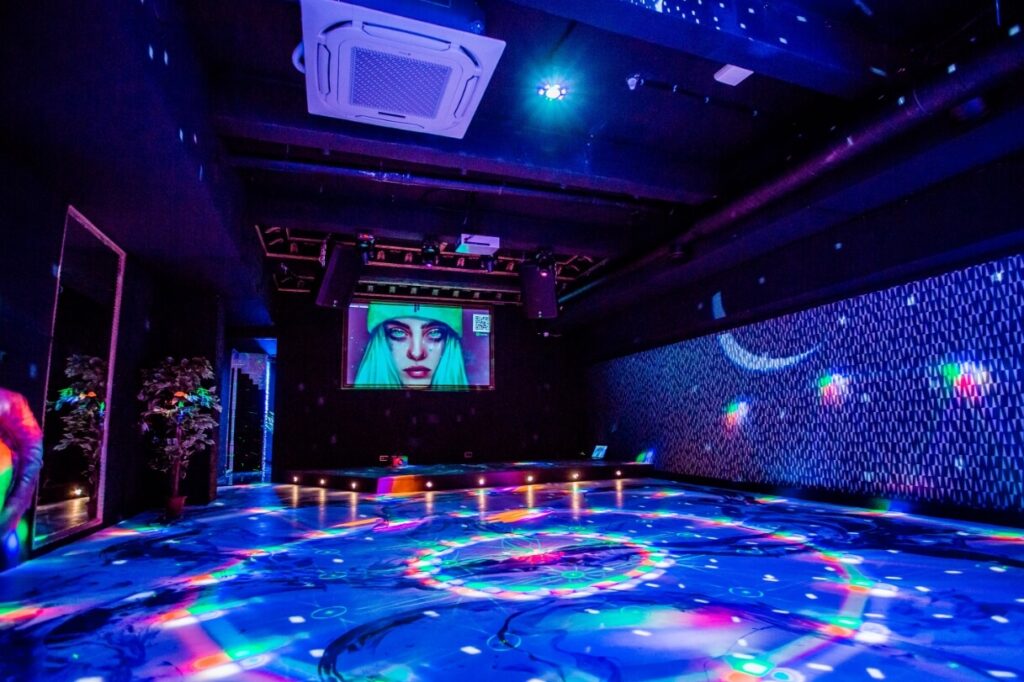
An LED dance floor is a performance and event surface made from modular LED pixel panels that can display shifting colors, animated graphics, or full-resolution video. Unlike a static stage or plain hardwood floor, the surface itself becomes part of the visual experience.
Core components of every LED dance floor system:
- LED pixel panels (density determines visual clarity)
- Control system — typically a computer or lighting controller running DMX, Madrix, or Resolume
- Power distribution unit
- Optional: interactive sensors for real-time motion response
The modular design means panels can be assembled into virtually any shape or size, then broken down and transported to the next venue. This flexibility is why LED dance floors have become standard equipment for event rental companies, nightclubs, and touring concert productions.
LED Dance Floor vs. Regular Dance Floor
| Feature | LED Dance Floor | Regular Dance Floor |
|---|---|---|
| Lighting | Embedded LEDs — millions of color combinations | Relies on ambient or overhead stage lighting |
| Interactivity | Programmable; advanced models respond to movement | Static; no programmability |
| Visual content | Can display video, logos, custom animations | No display capability |
| Atmosphere control | Real-time sync with music via DMX/MIDI | Fixed appearance throughout event |
| Portability | Modular — assembles and disassembles in hours | Usually fixed or semi-permanent |
| Cost | Higher upfront or rental cost | Lower cost |
| Maintenance | Requires panel inspection, software updates | Standard floor cleaning only |
The core advantage of an LED dance floor is not just the light — it’s the ability to transform the entire atmosphere of a space on demand. A regular dance floor is a surface. An LED dance floor is a stage element.
Types of LED Dance Floors in 2026
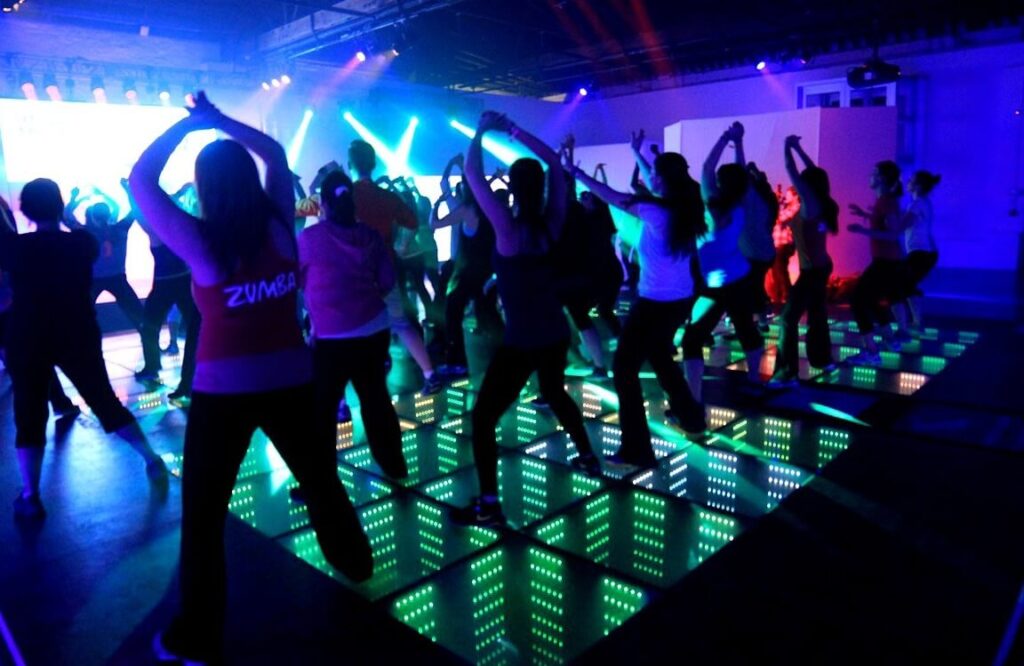
The market has matured significantly. In 2026, there are four distinct categories:
1. RGB LED Dance Floor
The most common and cost-effective option. Displays vivid color patterns and basic animations. Best for weddings, birthday parties, and club nights where the goal is atmosphere rather than high-resolution content.
2. Video LED Dance Floor
Higher pixel density panels capable of displaying full video, brand logos, and photorealistic imagery. Used in TV productions, fashion shows, and high-end corporate events. Requires a more powerful control system.
3. Interactive LED Dance Floor
Built-in pressure or infrared sensors detect movement and trigger real-time visual responses. Each step creates a ripple, spark, or custom animation. Increasingly popular for brand activations, entertainment venues, and experiential marketing.
4. Outdoor Waterproof LED Dance Floor
Weatherproof panels rated IP65 or higher, designed for festivals, open-air weddings, and outdoor events. Handles rain, humidity, and temperature fluctuations that would damage standard indoor panels.
| Type | Pixel Pitch | IP Rating | Best Use Case | Relative Cost |
|---|---|---|---|---|
| RGB LED | 15–20mm | IP54–IP65 | Parties, clubs, weddings | $ |
| Video LED | 6–10mm | IP65 | TV, concerts, corporate | $$$ |
| Interactive | 10–12mm | IP65 | Brand activations, entertainment | $$$$ |
| Outdoor Waterproof | 10–15mm | IP65–IP67 | Festivals, outdoor events | $$ |
Standard Sizes and Dimensions
LED dance floor size is determined by venue footprint, expected guest count, and event type. Here are the standard ranges used across the industry:
Small LED Dance Floor
- Length: 3.6 m – 6 m (12 ft – 20 ft)
- Width: 3 m – 4 m (10 ft – 13 ft)
- Typical use: Intimate weddings, private parties, small club nights
- Guest capacity: 20–40 people on the floor at once
Medium LED Dance Floor
- Length: 6 m – 10 m (20 ft – 33 ft)
- Width: 4 m – 6 m (13 ft – 20 ft)
- Typical use: Mid-size receptions, corporate events, regional concerts
- Guest capacity: 40–100 people
Large LED Dance Floor
- Length: 10 m+ (33 ft+)
- Width: 6 m – 10 m+ (20 ft – 33 ft+)
- Typical use: Arena concerts, large-scale festivals, TV productions
- Guest capacity: 100+ people; often combined with stage extensions
Practical sizing rule: Allow approximately 4–5 sq ft (0.37–0.46 m²) per dancer for comfortable movement. For a 100-person event where roughly 30% are dancing at any time, a 16×16 ft (approximately 5×5 m) floor is a reasonable baseline.
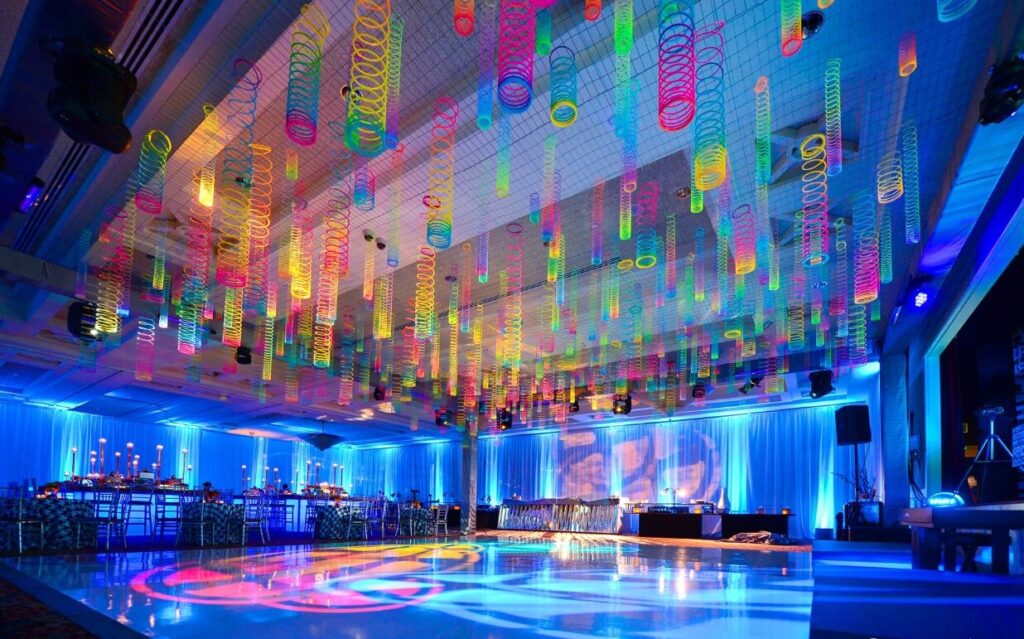
How Much Does an LED Dance Floor Cost in 2026?
Cost varies significantly based on whether you’re renting for a single event or purchasing for repeated use.
Rental Pricing (Per Event, 2026)
| Package | Floor Size | Duration | Estimated Total Cost |
|---|---|---|---|
| Basic | 12 ft × 12 ft | 4 hours | ~$1,600 |
| Mid-Range | 16 ft × 16 ft | 6 hours | ~$2,900 |
| Premium | 20 ft × 20 ft | 8 hours + technician | 4,500–4,800 |
Full rental cost breakdown:
| Cost Component | Low | Average | High |
|---|---|---|---|
| LED floor rental | $1,000 | $2,400 | $4,800 |
| Delivery & setup | $150 | $350 | $800 |
| Takedown & pickup | $100 | $250 | $600 |
| Electrical & power | $50 | $150 | $400 |
| Taxes & permits | $0 | $60 | $180 |
Source: LatestCost.com, March 2026
Purchase Pricing (Per Square Meter)
| System Type | Price per m² | Notes |
|---|---|---|
| Portable rental panel | ~$450 | 12mm pitch, IP65, ~18 kg/m² |
| Fixed club installation | ~$1,800 | 8mm pitch, IP67, ~25 kg/m² |
| Interactive sensor floor | ~$2,200 | 10mm pitch, IP65, ~22 kg/m² |
Interactive and sensor-enabled systems carry a 30–50% premium over equivalent non-interactive panels. For a permanent nightclub installation covering 50 m², budget 90,000–110,000 all-in including control systems, installation labor, and cabling.
Cost-Saving Tips
- Choose mid-range pixel density (10–12mm) over HD unless you’re displaying video content
- Book off-peak days — weekday installations can reduce rental fees by 15–25%
- Bundle delivery and setup into a single trip with your vendor
- For recurring events, a purchase amortizes faster than 8–10 rentals
Critical Technical Specifications
This is where most buyers go wrong. Marketing language like “HD” or “ultra-bright” means nothing without actual numbers. Here are the specs that matter:
| Specification | Minimum Threshold | Why It Matters |
|---|---|---|
| Pixel Pitch | ≤10mm for video; 15mm for color effects | Determines image sharpness at viewing distance |
| Brightness | 800–1,200 nits (indoor) | Ensures visibility under stage lighting |
| IP Rating | IP65 (indoor); IP67 (outdoor/permanent) | Protects against moisture and cleaning |
| Load Capacity | 300–500 kg/m² (light use); 1,000+ kg/m² (commercial) | Safety for performers and large crowds |
| Refresh Rate | >1,920 Hz | Prevents flicker in video recordings |
| Operating Voltage | 24V or 48V DC | Affects power draw calculations |
Control protocol compatibility to verify:
- DMX512 — standard lighting integration
- Art-Net / sACN — networked large-scale rigs
- Wi-Fi / Bluetooth — standalone app control
- MIDI — live music synchronization
Safety certifications required for public venues: CE, RoHS, or UL. Do not accept panels without documentation.
How to Choose the Right LED Dance Floor
After evaluating dozens of systems across event types, here’s the decision framework I use:
Step 1: Define Your Use Case
- One-time event → rent portable panels
- Frequent rentals (10+ events/year) → purchase rental-grade panels
- Permanent venue → fixed installation system
Step 2: Match Pixel Pitch to Content
- Displaying video, logos, or photographic imagery → pixel pitch ≤10mm
- Color animations and ambient glow effects → 15–20mm is sufficient and more cost-effective
Step 3: Verify Environmental Requirements
- Indoor dry venue → IP65 minimum
- Outdoor or humid environment → IP65 required, IP67 preferred
- Venues with wet cleaning protocols → IP67 mandatory
Step 4: Check Load Capacity Against Your Crowd
Never assume. Request the load capacity spec in kg/m² and calculate against your expected crowd density. A floor rated at 300 kg/m² is not appropriate for a packed nightclub.
Step 5: Test Before You Commit
Request unedited video demos from suppliers — edited footage routinely hides real-world brightness and seam quality. Ask for references from comparable events.
Red Flags to Avoid
- Supplier cannot provide a spec sheet
- No customer references available
- Vague terms like “HD” without a stated pixel pitch
- Visible panel seams in demo footage (trip hazard and manufacturing quality indicator)
Applications by Event Type
| Event Type | Recommended Floor Type | Key Feature Priority |
|---|---|---|
| Wedding reception | RGB or Video LED | Photogenic visuals, custom monogram display |
| Nightclub / bar | RGB LED (permanent) | Music sync, durability, easy maintenance |
| Concert / stage show | Video LED | High resolution, large format, fast setup |
| Corporate event / product launch | Video or Interactive | Branding display, audience engagement |
| Festival / outdoor event | Outdoor Waterproof LED | IP67 rating, temperature resistance |
| Trade show / exhibition | Interactive LED | Foot traffic attraction, memorable experience |
| TV production | Video LED | High refresh rate (>3,840 Hz), camera-ready |
Installation and Maintenance
Installation Checklist
- Verify floor surface is level before laying panels (tolerance: ±2mm per meter)
- Plan power distribution — calculate total draw by panel count before running cables
- Use expansion joints for floors larger than 10×10 m to prevent warping
- Test all panels individually before the event, not just as a group
- Confirm control system software version matches panel firmware
Maintenance Best Practices
- Clean surfaces with non-abrasive, alcohol-free cleaners only
- Inspect connectors and wiring before and after every event
- Store panels in padded protective cases — stacking without protection causes pixel damage
- Keep control software updated; outdated firmware is the most common cause of display glitches
- Schedule a full panel diagnostic every 6 months for permanent installations
SoStron Hima LED Dance Floor: A Hands-On Look
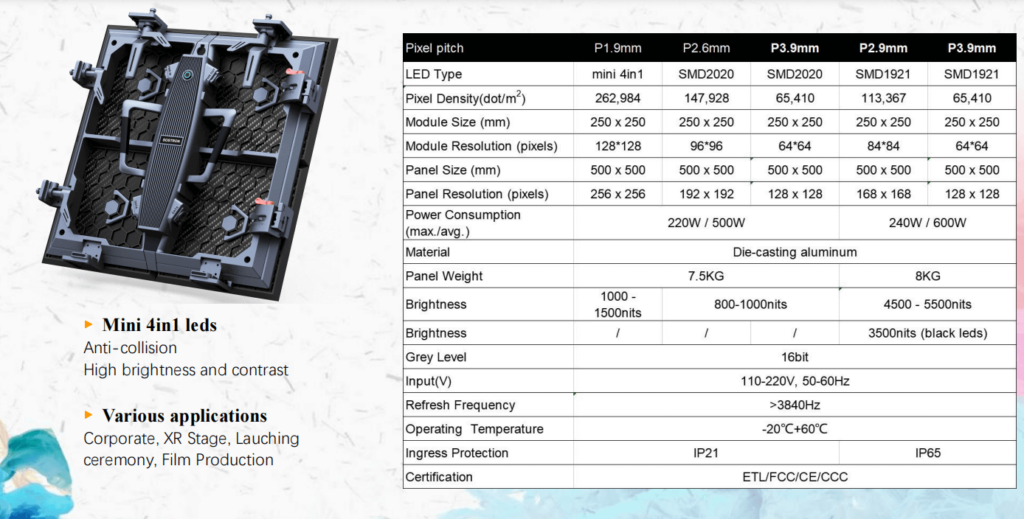
Having tested the SoStron Hima system across multiple event setups, it stands out in a few specific areas worth noting.
Design highlights:
- 90° installation design with 45° angle-cut cabinet edges — this enables creative non-rectangular layouts that most standard panels cannot achieve
- Compact 500×500 mm panel size with built-in handles — genuinely faster to carry and position than the 600×600 mm panels common in the market
- Die-cast aluminum construction — the flatness tolerance is noticeably tighter than injection-molded alternatives, which translates directly to seamless panel joins
Practical performance:
- The panel-to-panel connection is tool-free and locks positively — setup time on a 16×16 ft floor runs approximately 45–60 minutes with two people
- The built-in handle placement is well-thought-out; single-person carry is comfortable even for extended load-in sessions
- Ground screen and interactive equipment configurations are both supported from the same panel base, which reduces inventory complexity for rental operators
Where it fits: The Hima is best suited for event rental operators and venue owners who need a system that handles frequent assembly/disassembly without degrading connection quality. It is not the highest-resolution option on the market, but for RGB animation and interactive event use cases, the build quality-to-cost ratio is competitive.
FAQ
Q: What is the minimum size for an LED dance floor at a wedding? A: For a wedding with 80–120 guests, a 12×12 ft (approximately 3.6×3.6 m) floor is the practical minimum. For 150+ guests, 16×16 ft is more appropriate to avoid crowding.
Q: Can LED dance floors be used outdoors? A: Yes, but only with panels rated IP65 or higher. Standard indoor panels will fail in humid or wet conditions. Always verify the IP rating before outdoor deployment.
Q: How long does it take to set up an LED dance floor? A: A standard 16×16 ft rental floor takes 2–4 hours with a two-person crew, including panel layout, cabling, and control system configuration. Larger or more complex installations require more time.
Q: What is the lifespan of an LED dance floor? A: Quality panels from reputable manufacturers are rated for 50,000–100,000 hours of operation. For a rental business running 200 events per year at 8 hours each, that’s 30+ years of panel life — though connectors and control systems typically need servicing sooner.
Q: Do LED dance floors require a dedicated power circuit? A: Yes. A 16×16 ft floor typically draws 3–6 kW depending on brightness settings. Consult your electrician and venue power specs before installation. Remote venues may require a generator.
Q: Is an interactive LED dance floor worth the extra cost? A: For brand activations, entertainment venues, and experiential events, yes — the engagement uplift is measurable. For standard weddings and club nights, the 30–50% price premium over RGB floors is rarely justified.
Q: What pixel pitch should I choose for a wedding? A: For a wedding where the floor displays color animations and a monogram, 12–15mm pixel pitch is sufficient and significantly more cost-effective than sub-10mm video panels.
Summary
An LED dance floor is one of the highest-impact visual elements available for events in 2026. The right choice depends on four variables: use case, pixel pitch requirement, environmental conditions, and budget. For most events, a modular IP65-rated RGB or video LED system with 10–12mm pixel pitch hits the optimal balance of visual quality, durability, and cost. For permanent installations or high-frequency rental operations, invest in die-cast aluminum construction and verify load capacity before purchase.