The decision between projection and LED is no longer a matter of preference — it is an engineering question with a measurable answer. Below is the performance benchmark every serious buyer should demand before specifying a movie theater LED display.
| Specification | DCI-Grade LED Cinema Screen | High-End Laser Projector |
|---|---|---|
| Black Level (cd/m²) | ≤ 0.005 cd/m² | 0.02 – 0.05 cd/m² |
| Native Contrast Ratio | 100,000:1 | 3,000:1 – 10,000:1 |
| Color Gamut | 100% DCI-P3 / up to 97% Rec.2020 | 95–99% DCI-P3 |
| Peak Brightness | 300 – 500 nits | 14–60 fL (≈48–200 nits) |
| Consumable Lifespan | 100,000+ hrs, no lamp replacement | 20,000 hrs laser module |
| Brightness Uniformity | Emissive, pixel-level | Reflective, center-hot |
| DCI Content Playback (DCP) | Yes (with certified media server) | Yes |
| Projection Booth Required | No | Yes |
These numbers are not marketing language. They represent the fundamental physics of emissive versus reflective display technology — and for cinema operators and luxury AV integrators evaluating a high-end home cinema video wall, understanding the gap is where every productive conversation begins.
Why Projectors Can No Longer Deliver the Premium Cinema Experience Buyers Now Demand
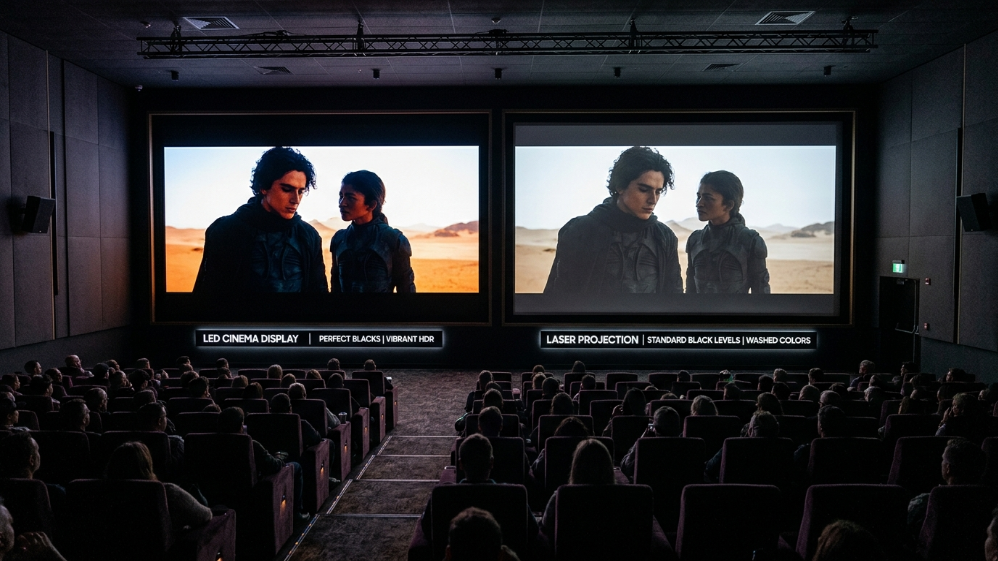
Let’s be direct about the problem. A high-end laser projector throws light at a surface and hopes it bounces back cleanly. The image you see is the result of that reflection, which is why even the finest projection systems produce blacks that measure 0.02 cd/m² at best — not because the technology is poorly engineered, but because the physics of reflection prevents it from going lower. Ambient scatter, lens flare, and screen-surface imperfections all erode the dark end of the tonal range.
For a standard multiplex running family films, this is acceptable. For a PLF (Premium Large Format) auditorium competing on image quality, a director’s screening room reviewing HDR masters, or a villa basement cinema where a client has spent $800,000 on the room itself — it is not.
Based on our experience specifying display systems across commercial and luxury residential environments, the single moment that converts a skeptical buyer is placing a DCI-P3 LED screen and a calibrated laser projector side by side in a dark room and rolling a high-contrast scene. The projector’s blacks appear dark gray. The LED panel disappears. That 0.005 cd/m² floor is not a specification number — it is what your eyes experience as the absence of light.
According to industry market research, the global LED cinema screen market was valued at $159 million in 2025 and is forecast to reach $461 million by 2032 at a 16.3% CAGR. The commercial exhibitor community has recognized this shift. The engineering case has been settled. The question now is which specification profile fits which application — and how to avoid buying a large-format indoor LED display that was never designed for cinematic use.
What Separates a True LED Cinema Screen from a “Large LED Display” — The 5 Specs That Define Theater-Grade Performance
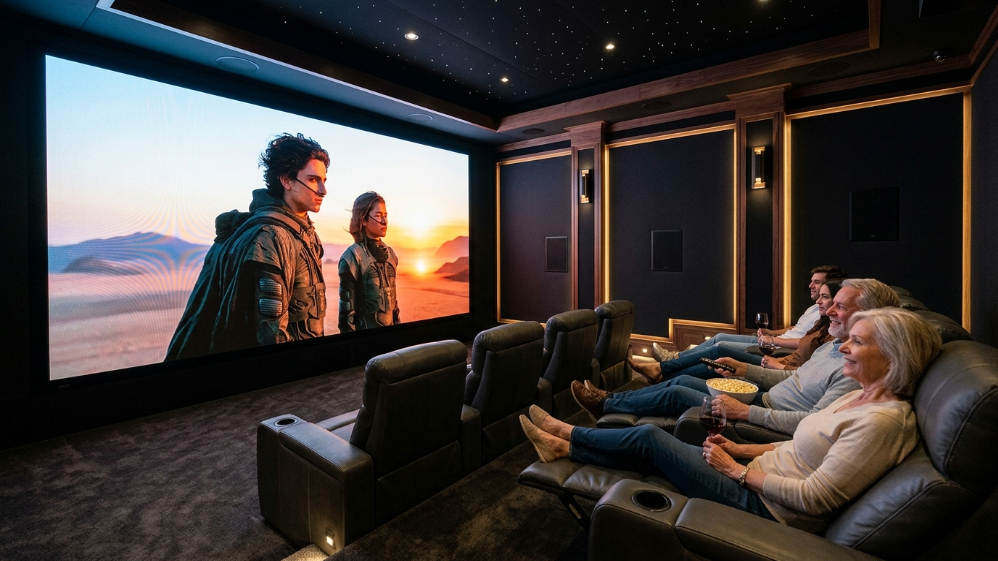
Not every small-pitch LED wall qualifies as a cinema-grade display. The specifications below are non-negotiable thresholds, not preferences.
1. Black Level: Why 0.005 cd/m² Is the Number That Matters More Than Contrast Ratio
Most LED manufacturers quote contrast ratio. Discard that number and ask for the absolute black level in cd/m² instead.
Here is why. A display can claim 5,000:1 contrast ratio while still producing a black that measures 0.10 cd/m² — which is perceptibly gray in a dark room. The ratio tells you nothing about the absolute floor. The absolute floor tells you everything about how HDR10 and Dolby Vision tone-mapping will perform, because both standards require a genuine near-zero black to render specular highlights and shadow detail simultaneously.
Cinema-grade LED panels achieve black levels at or below 0.005 cd/m² through two engineering approaches: precision drive current control at the individual LED die level, and advanced packaging technologies such as COB (Chip-on-Board) or Micro LED in Package (MIP), which eliminate the inter-pixel gaps and reflective surfaces that cause ambient light contamination in conventional SMD (Surface-Mount Device) panel designs.
Commercial benefit
HDR10 and Dolby Vision grading relies on a display that can render a 0.0050 cd/m² shadow simultaneously with a 1,000-nit specular highlight in the same frame. Without the true black floor, tone-mapping algorithms compress the dark range — and your audience sees it as flat, washed-out shadow detail in every night scene.
2. DCI-P3 vs. Rec.2020: How to Future-Proof Your Color Investment
DCI-P3 covers approximately 25% more of the visible color spectrum than the Rec.709 standard used in broadcast and consumer displays. Every feature film delivered as a DCP (Digital Cinema Package) is mastered to DCI-P3. Your LED cinema screen must cover 100% DCI-P3 — not 95%, not 98% — or color accuracy in saturated primaries will be compromised at the mastering white point.
The more forward-looking question is Rec.2020. The next generation of theatrical content is being mastered to this wider gamut standard, which encompasses approximately 75% of all visible colors. The LED panels you specify today should provide documented color volume data across both DCI-P3 and Rec.2020 — not just peak nit claims.
| Color Standard | Coverage vs. Visible Spectrum | Primary Use |
|---|---|---|
| Rec.709 / sRGB | ~35% | Broadcast, consumer streaming |
| DCI-P3 | ~45% | Theatrical cinema (current standard) |
| Rec.2020 | ~75% | Next-gen HDR mastering, 8K content pipeline |
| Display P3 | ~42% | Consumer HDR (Apple, Netflix) |
A DCI-P3 LED screen specified today should be validated against Rec.2020 coverage data. Panels achieving 97%+ Rec.2020 coverage protect your investment against content pipeline evolution for the next decade.
3. Pixel Pitch Selection: Matching Resolution to Viewing Distance
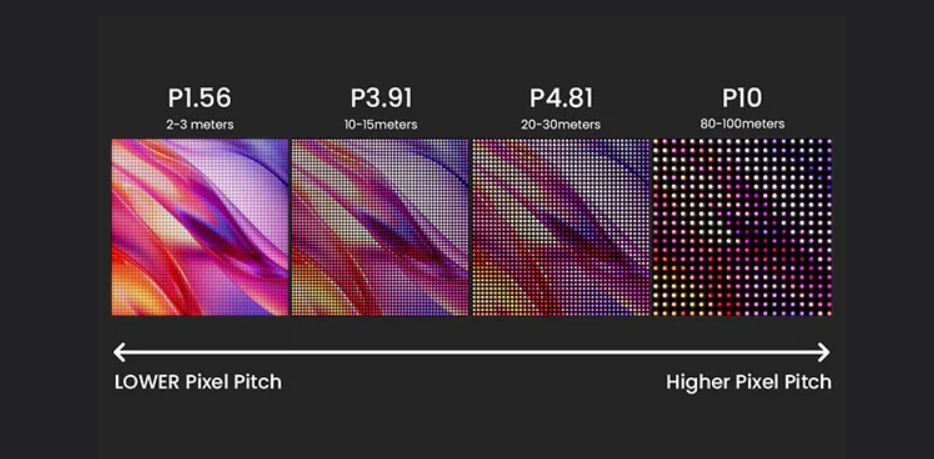
Pixel pitch is the center-to-center distance between adjacent LED pixels, measured in millimeters. Selecting the wrong pitch for your viewing distance is the most common specification error in cinema LED installations — and it produces visible pixelation that no amount of post-processing can correct.
The minimum comfortable viewing distance (in meters) is approximately equal to the pixel pitch (in mm) multiplied by 1,000, then divided by the screen height in pixels, producing a “retinal limit” calculation. In practical terms for cinema:
| Application | Recommended Pixel Pitch | Minimum Viewing Distance | Resolution Achievable |
|---|---|---|---|
| Luxury private cinema / director suite | P0.9 – P1.25mm | 1.5 – 3m | Native DCI 4K at screen sizes 100″–150″ |
| Small commercial auditorium (≤ 8m screen) | P1.25 – P1.56mm | 3 – 5m | Native DCI 4K |
| Mid-size PLF auditorium (8–12m screen) | P2.5mm | 5 – 9m | DCI 4K scaled |
| Large-format flagship (12–20m screen) | P3.3mm | 9 – 15m | DCI 4K scaled |
For high-end home cinema video wall installations, P0.9mm and P1.25mm COB-packaged panels are the correct specification entry point. At a 3-meter viewing distance — typical for a dedicated residential screening room — anything coarser than P1.56mm will produce a visible screen-door effect on high-contrast content.
The Solution: SoStron Products Recommended for Cinema & High-End Private Theater Applications
After reviewing SoStron’s full product line, two series are best suited to the LED cinema and high-end private theater market.
① SoStron Reta 2 — Small Pitch COB/SMD Series (P1.25 – P2.5mm)
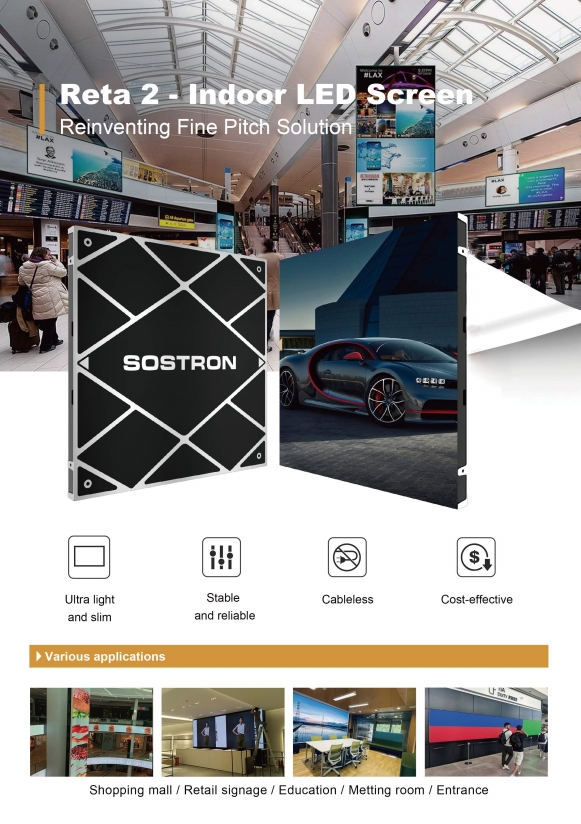
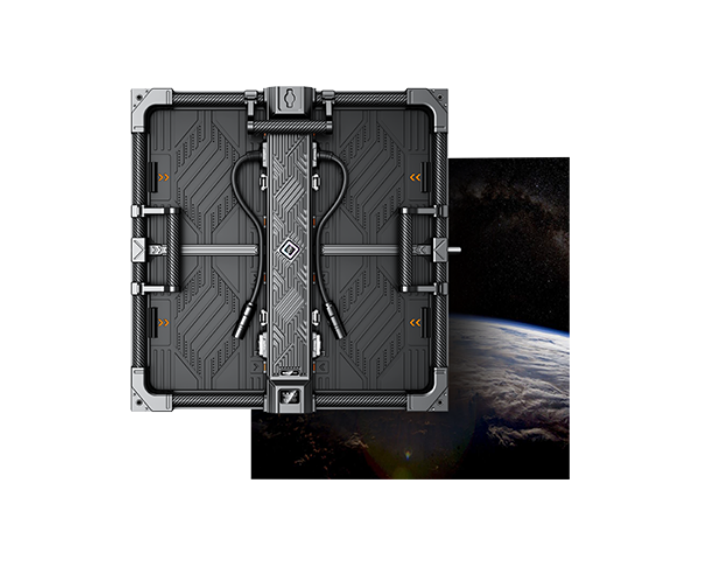
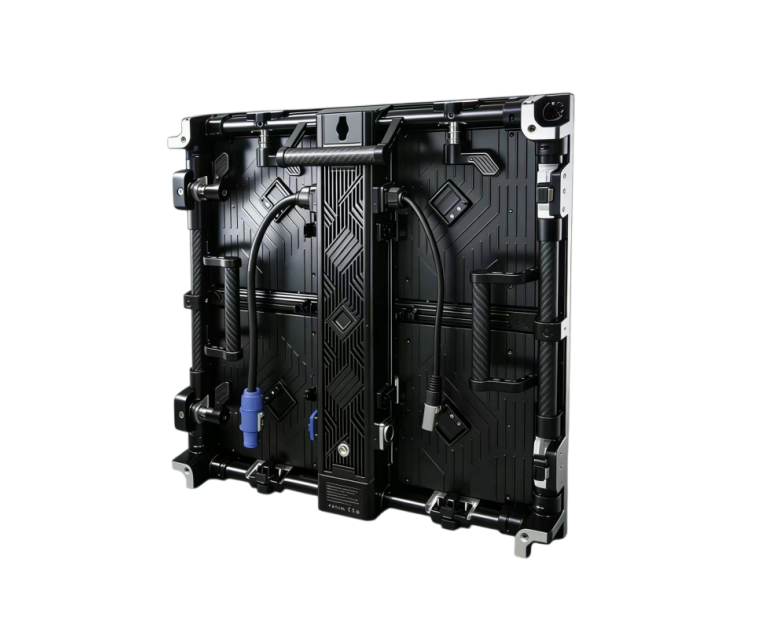
The Reta 2 is SoStron’s flagship fine-pitch indoor display series, available in pixel pitches from P1.25mm to P2.5mm with SMD1212 and SMD1515 packaging.
Key cinema-relevant attributes include wide-angle color uniformity, high refresh rate support (3,840Hz+ refresh rate) for flicker-free capture, and a modular 640×640mm cabinet system that enables seamless aspect ratio configuration for both scope (2.39:1) and flat (1.85:1) cinema formats.
For private home cinema and director’s screening room applications at viewing distances of 3–6 meters, the P1.25mm configuration achieves a pixel density of 640,000 pixels/m² — sufficient to render native DCI 4K content without visible pixel structure at the design seat position.
② SoStron Hima Series — Fine-Pitch Rental/Modular Configuration
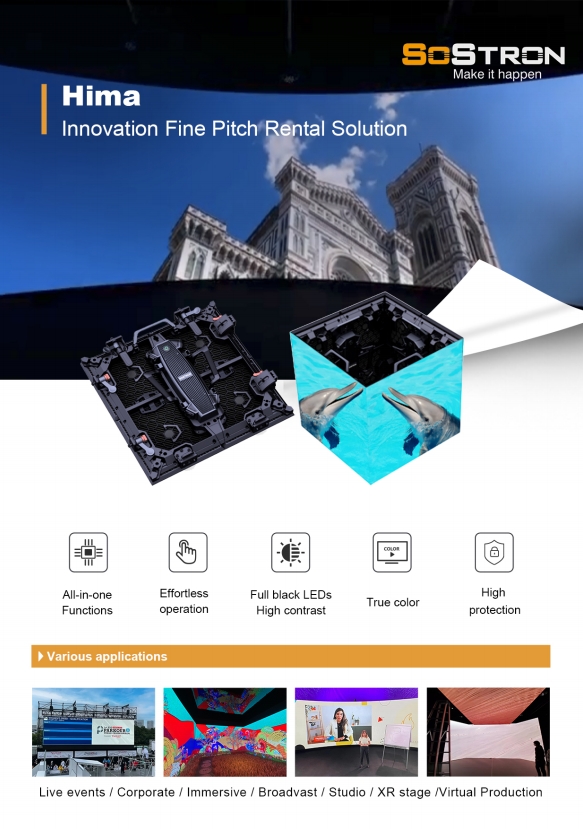
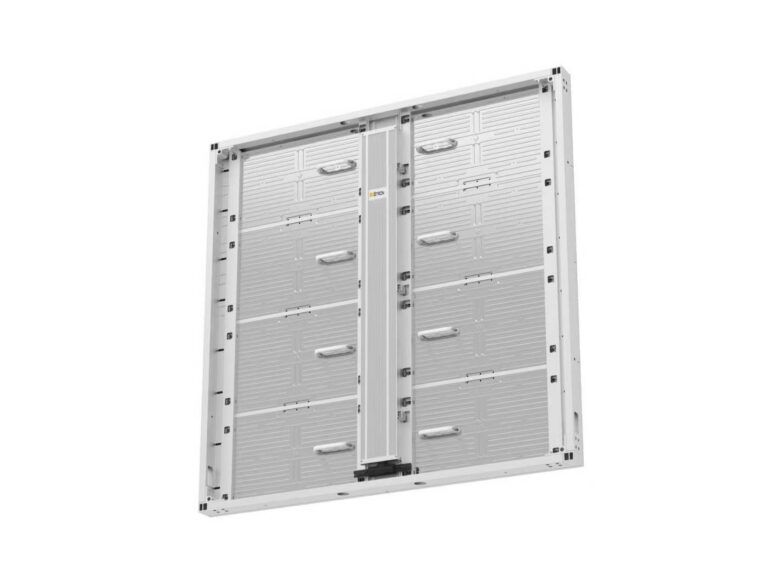
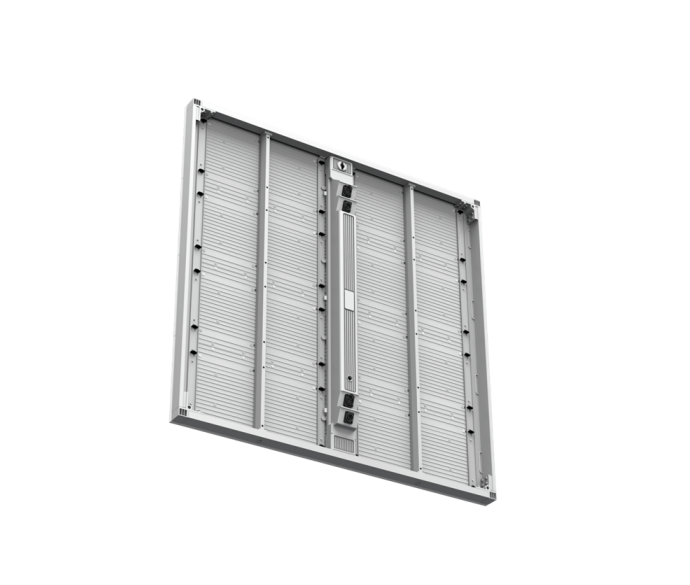
For commercial auditorium operators requiring flexible screen sizing across multiple PLF formats, the Hima Series offers a modular cabinet architecture with rapid assembly.
This series is particularly relevant for cinema operators evaluating projector-free auditorium designs where screen dimensions vary between bookings or configurations.
→ Consult with SoStron’s engineering team for a pixel-pitch and screen-size calculation specific to your auditorium geometry and primary seat distance.
Real-World Case Study: USA High-End Indoor LED Wall — 100sqm P1.9 GOB Installation
One of SoStron’s most instructive deployments for the cinema-adjacent market is a 100sqm P1.9 GOB LED wall project completed for a high-end corporate entertainment venue in the United States.
The client required a large-format, seamless display capable of rendering high-contrast 4K content in a controlled-light environment — a specification profile directly parallel to a premium private screening room.
The GOB (Glue-on-Board) surface treatment was selected specifically for this application: the optical coating eliminates inter-pixel micro-reflections that standard SMD panels exhibit under directed ambient light, measurably improving perceived black depth without requiring total blackout conditions.
The 100sqm installation delivers a screen area equivalent to approximately a 10m × 10m display wall — scalable for cinema auditoriums in the 8–12m screen class.
Reported outcomes from the deployment included measurably higher perceived contrast compared to the client’s previous projection system, with zero lamp maintenance requirements after commissioning.
This case validates a principle we consistently observe across premium indoor LED deployments: the GOB/COB surface treatment is not an optional upgrade for cinema applications — it is the baseline engineering requirement for any environment where black-level performance and ambient light resistance are performance criteria.
The Acoustic Integration Challenge — Why “Sound Behind the Screen” Makes or Breaks Your LED Cinema Installation
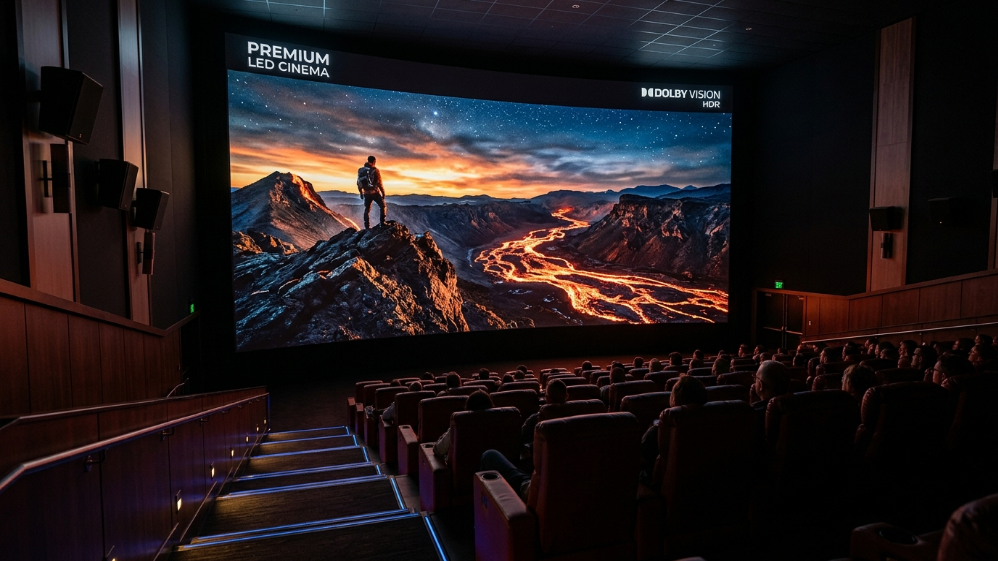
The Engineering Problem
Here is the issue that stops more LED cinema projects mid-specification than any other: a solid LED panel is acoustically opaque.
In a conventional projection setup, the LCR (Left-Center-Right) loudspeakers sit behind a perforated screen fabric. Center-channel dialogue arrives from exactly where the actor’s mouth appears on screen — an alignment that decades of psychoacoustic research confirms is fundamental to immersive perception.
Install a standard LED wall and those speakers must relocate to the sides or ceiling. The result is phantom center imaging, dialogue that appears to come from the wrong direction, and an object-based audio system (Dolby Atmos, Auro-3D, DTS:X) that cannot be calibrated correctly regardless of how much is spent on the amplification chain.
The Engineering Solution
The engineering solution is acoustic transparency through micro-perforated LED cabinet design.
Precision-drilled apertures in the module structure allow the main sound channel to pass through without acoustic coloration, while maintaining the structural integrity of the display.
Unilumin’s UCine system — the first DCI-certified acoustically transparent LED cinema screen, installed at Xinjiekou International Cinema in Nanjing at 20.48m × 10.8m — demonstrated that the perforation approach is viable at full theatrical scale.
GDC Technology’s Tricorne LED, showcased at CinemaCon 2026, applies the same principle with speakers positioned directly behind the panel.
For integrators specifying a high-end home cinema video wall where full Dolby Atmos calibration is a deliverable, not an afterthought, acoustic transparency should be treated as a mandatory specification line — not an upgrade option.
Commercial Cinema LED Screen ROI: The 10-Year Business Case
| Cost Category | Dual-Laser Projector (10 Years) | LED Cinema Screen (10 Years) |
|---|---|---|
| Initial CAPEX (mid-size PLF auditorium) | $180,000 – $280,000 | $220,000 – $380,000 |
| Laser module replacement cycles | $15,000 – $25,000 per cycle (×2–3 replacements) | $0 |
| Alignment / calibration labor (annual) | $3,000 – $6,000/yr | $800 – $1,500/yr |
| Projection booth HVAC & space cost | $4,000 – $8,000/yr operational | Eliminated |
| PLF ticket premium uplift (30–60% premium) | Baseline | +$180,000 – $400,000 cumulative revenue |
| Estimated 10-Year Net TCO Advantage | — | Break-even by Year 5–6; net positive thereafter |
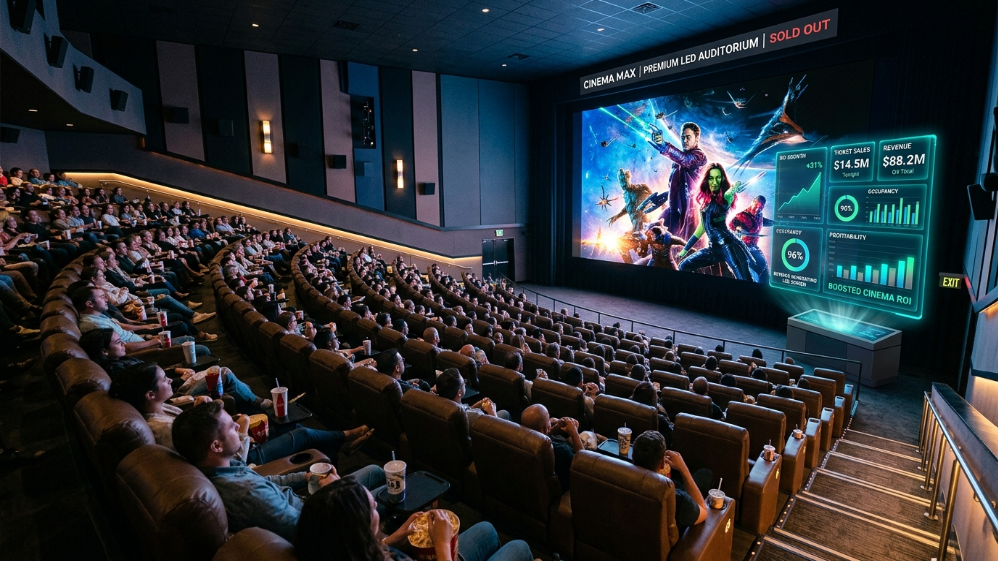
Figures are indicative ranges based on published operator data and industry benchmarks. Actual results vary by auditorium utilization rate, market, and configuration.
The revenue side of this equation is where the business case accelerates.
Pathé Dar Essalam in Rabat operates 12 Samsung Onyx screens and is the largest Onyx operator in Europe.
Trilith Cinemas in Fayetteville, Georgia became the first US theater to install the Onyx ICD generation in December 2025.
Both operators positioned LED cinema not as a technology upgrade but as a revenue-generating brand asset.
5 Questions B2B Buyers Ask Before Signing an LED Cinema Screen Purchase Order
Q1: Does a DCI-certified LED screen actually let us play first-run Hollywood films?
Yes — with conditions.
DCI certification enables playback of encrypted DCP (Digital Cinema Package) files through an approved media server (Dolby IMS3000, GDC).
Without DCI compliance, you cannot legally decrypt and exhibit first-run studio content, regardless of screen quality.
For luxury residential buyers, DCI compliance is also the technical gateway to the Bel Air Circuit — the exclusive content distribution service that gives DCI-certified private home theaters access to Hollywood releases.
It is a genuine differentiator, not a checkbox.
Q2: What refresh rate is required to eliminate flicker for camera capture in production environments?
For director’s screening rooms and post-production facilities that also serve as content review environments, specify a minimum 3,840Hz refresh rate.
This ensures flicker-free capture at standard camera frame rates (24fps, 30fps, 60fps) without banding artifacts.
Consumer-grade LED walls frequently operate at 960Hz or 1,920Hz — visible on camera even when imperceptible to the naked eye.
The SoStron Reta 2 supports refresh rates compatible with high-speed camera capture, making it appropriate for hybrid cinema/production room applications.
Q3: How does pixel surface treatment (GOB vs. COB vs. standard SMD) affect cinema black levels?
Standard SMD panels have exposed LED dies separated by visible gaps.
Under directed ambient light — common in architectural cinema rooms that don’t achieve total blackout — these gaps create micro-reflections that contaminate the black floor.
GOB (Glue-on-Board) applies an optical epoxy coat that seals the surface and eliminates micro-reflections, measurably improving black level performance in real-world ambient light conditions.
COB (Chip-on-Board) goes further: the LED chips are bonded directly to the substrate with no individual packaging, producing a flat, monolithic surface with the lowest achievable inter-pixel light scatter.
For cinema applications, COB at P1.25mm and below is the engineering-correct choice.
Q4: Can the same LED video wall handle both DCI cinema content (DCP) and consumer streaming (Netflix 4K, Apple TV+)?
Yes — but only if the panel and media server chain supports both colorimetric profiles.
DCI content is mastered at a white point of D65 at DCI-P3; consumer HDR10 content targets the BT.2020 container with Display P3 primaries at a different white point.
Panels that support dual-mode operation (e.g., 300 nits DCI-grade HDR and 500 nits consumer HDR) handle this correctly.
Single-profile displays will render one format accurately and the other with a perceptible color temperature shift.
Q5: What is the minimum room size for a residential LED cinema video wall installation?
At P1.25mm pixel pitch, the minimum recommended viewing distance is approximately 2.5–3 meters for a seamless image.
A 130″–150″ diagonal screen configured for 2.39:1 scope format requires a room width of approximately 5–6 meters for proper sight-line geometry.
Below this room size, the engineering recommendation shifts to a P0.9mm or sub-1mm COB panel to maintain retinal resolution at the shorter viewing distance.
Room acoustic treatment and thermal management for LED heat dissipation should be planned during the architectural phase, not retrofitted.
Expert Verdict
The projection era in premium cinema environments is not ending gradually — it has already ended for every operator and integrator who has done the physics calculation correctly.
A DCI-P3 LED cinema screen at 0.005 cd/m² black level is not a better projector. It is a categorically different display technology that removes the ceiling on what HDR content can look like in a controlled environment.
For commercial exhibitors: if your PLF auditorium is running laser projection, your competitive position erodes every quarter that a competitor operates an LED screen in the same market.
The TCO argument holds from Year 5 onward — the brand argument holds from Day 1.
For luxury residential integrators: the Bel Air Circuit access, the DCI-grade black level, and the elimination of lamp maintenance are not features you are selling to your client.
They are proof that the room you designed performs at the same reference standard as a Hollywood studio screening suite.
That is what the client is paying for.
Specify correctly. Specify once.
Contact SoStron Engineering Team
For pixel-pitch calculations, screen-size configurations, and product specifications for your specific cinema or private theater project, contact SoStron’s engineering team directly.
LED Cinema Screen Price Summary
Price Reminder: The total investment for a cinema-grade LED screen depends on pixel pitch (P0.9–P3.3), screen size, COB/GOB/SMD packaging technology, DCI certification requirements, media server integration, audio transparency design, and installation complexity. As a general reference, commercial LED cinema screens typically range from $2,500–$8,000+ per square meter, while complete theater-grade LED cinema systems can range from $220,000 to over $1 million depending on auditorium size and performance requirements. For accurate budgeting, request a project-specific quotation based on your screen dimensions, viewing distance, and content playback requirements.
References:
Digital Cinema Initiatives (DCI) – Digital Cinema System Specification
Society of Motion Picture and Television Engineers