What Is a Virtual Production LED Wall?
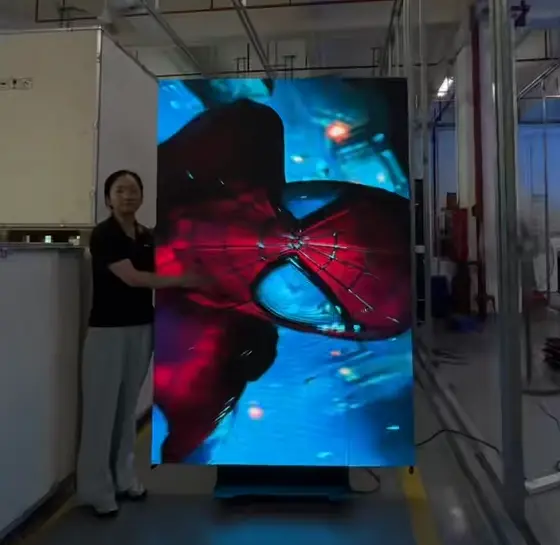
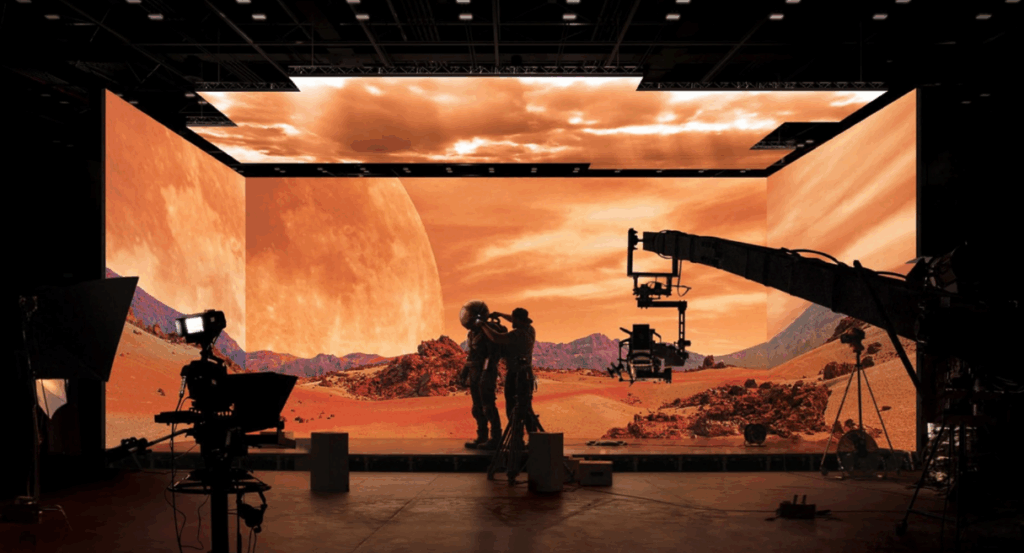
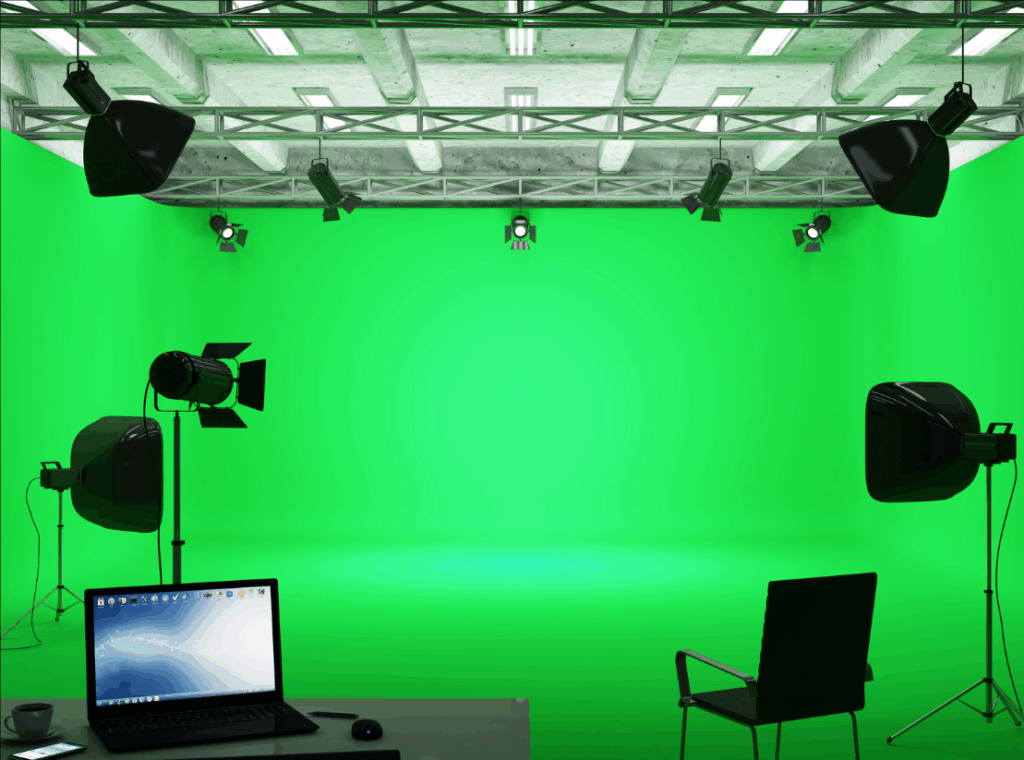
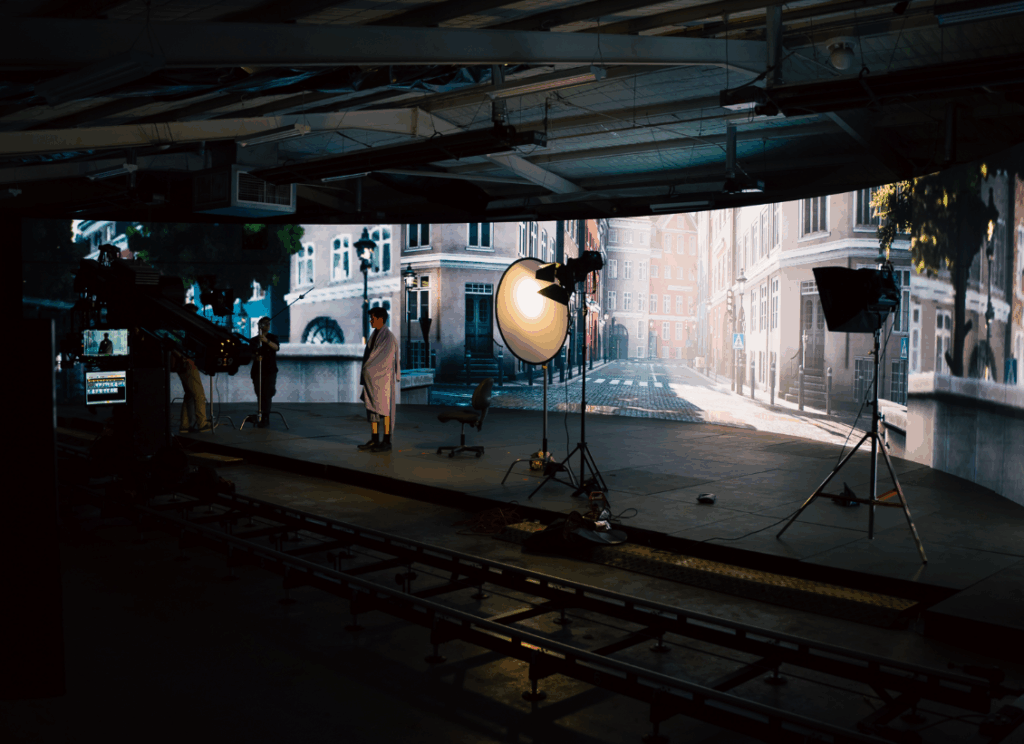
A virtual production LED wall — also called an LED volume, XR stage, or VP wall — is a curved or flat array of high-resolution LED panels that displays photorealistic, real-time rendered environments on set. Actors perform in front of them; cameras see a finished composite. No greenscreen keying. No spill correction. No weeks of rotoscoping.
Having worked alongside production teams across film, broadcast, and large-scale events, the single most consistent feedback from first-time users is this: the moment the director of photography sees the wall reflecting real, dynamic light onto the talent’s face, the conversation about budget changes completely.
How It Works — The Three-Layer System
| Layer | Component | Function |
|---|---|---|
| Display | Fine-pitch LED panels (P1.2–P2.6) | Renders the virtual background |
| Tracking | Camera tracking system (optical/mechanical) | Sends live camera position to the engine |
| Rendering | Real-time engine (Unreal Engine 5, Disguise) | Adjusts perspective parallax in real time |
The result: the virtual background moves with the camera, creating genuine in-camera parallax that no post-compositing workflow can fully replicate.
Why Virtual Production Adoption Accelerated After 2023
- Disney’s The Mandalorian proved viability at scale (now Season 3+)
- Unreal Engine 5’s Lumen and Nanite features made real-time photorealism commercially accessible
- LED panel costs dropped approximately 15–20% between 2022 and 2025 as COB technology matured
- Brands and e-commerce platforms discovered LED volumes as a tool for high-frequency content production, not just feature films
2026 Pricing Breakdown by Configuration
This is the question most buyers search for first — so here it is, front and center.
Configuration A — Entry-Level Small Wall (~10×20 ft / ≈18 m²)
Best for: Commercial shoots, talking-head video, small studio content
| Item | Estimated Cost (USD) |
|---|---|
| LED Panels (P2.5) | $20,000–$35,000 |
| Control System (entry) | $3,000–$6,000 |
| Mounting Structure | $2,000–$5,000 |
| Total Hardware | $25,000–$46,000 |
Configuration B — Mid-Scale Studio Volume (~20×40 ft / ≈74 m²)
Best for: Broadcast productions, mid-budget films, brand campaigns
| Item | Estimated Cost (USD) |
|---|---|
| LED Panels (P1.5) | $70,000–$150,000 |
| Control/Sync System (Brompton/Novastar) | $10,000–$25,000 |
| Camera Tracking System | $20,000–$60,000 |
| Real-Time Rendering Server | $15,000–$40,000 |
| Mounting Structure & Labor | $10,000–$20,000 |
| Total | $125,000–$295,000 |
Configuration C — Large-Scale Film Volume (1,000+ m²)
Best for: Major studio productions, permanent virtual stages
Large-scale installations typically range from $4–$15 million, including all associated infrastructure. Processing systems at this scale often require $500,000–$1 million in specialized hardware and software licenses alone.
2026 Per-Square-Meter Panel Price Reference
| Pixel Pitch | Use Case | Price Range (per m²) |
|---|---|---|
| P0.9–P1.2 | Feature film, extreme close-up | $3,000–$5,000+ |
| P1.5–P2.0 | Film production, broadcast | $1,500–$3,000 |
| P2.5–P3.5 | Commercial, mid-range studio | $800–$1,500 |
| P4–P5 | Events, long-shot backgrounds | $600–$900 |
Note: COB panel prices rose 18–22% in 2025; high-end brands are typically priced 15–25% above market average.
Key Cost Factors Explained
Pixel Pitch — The Biggest Price Driver
Pixel pitch (measured in mm) is the distance between pixel centers. Smaller = sharper = more expensive.
- P2.5 and above: Suitable for wide and medium shots, lower budget
- P1.5–P1.2: Required for close-ups and when cameras operate inside 15 ft of the wall
- Moiré risk: Finer pitch doesn’t guarantee immunity — camera resolution and shooting distance both factor in, and as industry practitioners note, “the higher the resolution, the higher-resolution cameras you start using — you end up in moiré-land somewhere regardless”
Refresh Rate and HDR Capability
For camera-facing displays, a minimum of 3,840 Hz refresh rate is the professional baseline. Premium panels now reach 7,680 Hz, which adds approximately $25/ft² to panel cost but eliminates banding artifacts at high frame rates (120fps+).
HDR and high-brightness specs to check:
- Peak brightness: 4,000–5,000 nit for daylight scene matching
- Color gamut: DCI-P3 coverage ≥95%
- Black level uniformity: Critical for shadow detail
Control Systems
Professional LED processors — Brompton Technology, Novastar, Megapixel VR — range from $3,000 to $30,000+ depending on output channel count and synchronization precision. For virtual production, frame-accurate genlock and low-latency signal paths are non-negotiable.
Camera Tracking
This is where mid-budget projects often under-invest. Inadequate tracking breaks the parallax illusion completely. Optical (passive marker), mechanical (encoder), and hybrid systems each have different cost profiles:
- Entry-level mechanical tracking: $8,000–$20,000
- Professional optical tracking (e.g., Mo-Sys StarTracker): $25,000–$60,000+
Structural Installation
Installation typically adds 20–40% to hardware cost depending on rigging complexity and structural requirements. Curved, ceiling-inclusive, or floor-interactive “LED cube” builds require custom engineering and significantly increase structural costs.
Buy vs. Rent: Which Model Fits Your Operation?
The Rental Market in 2026
Large pop-up LED volumes — approximately 80 ft diameter, 360° enclosed — run $100,000–$400,000 per week. Medium pop-up volumes are more common, costing approximately $100,000–$250,000 per week, inclusive of motion capture and camera tracking. Copilotco
For shorter or one-off projects, rental is almost always the right decision. For studios planning 300+ hours of annual production time, ownership economics take over.
5-Year Total Cost Comparison
| Factor | Purchase (Mid-Scale) | Rental Equivalent |
|---|---|---|
| Year 1 Capital Cost | $200,000–$295,000 | $0 |
| Annual Rental at 20 weeks/yr | — | $400,000–$1,000,000 |
| Annual Maintenance (10% of hardware) | $20,000–$30,000 | Included |
| 5-Year Total Cost | $300,000–$445,000 | $2M–$5M+ |
| Break-Even Point | — | ~Year 2 |
For mid-volume users (300–600+ hours annually), spreading capital expenditure across five years significantly lowers cost per operating hour compared to rental. Cumulative rental spending can exceed ownership cost within 2–3 years at moderate event volumes.
Buy if:
- You operate a dedicated virtual production studio
- You run high-frequency ad, streaming, or broadcast campaigns
- You want to build a proprietary content asset library
Rent if:
- This is your first virtual production project
- Your usage is fewer than 50–100 hours annually
- You need specialized scale (feature film) temporarily
ROI Analysis by Use Case
Advertising Production
Simulate any location — Arctic tundra, Tokyo skyline, Mars surface — without a location budget. LED walls have reduced single-ad production costs from over $280,000 to approximately $114,000 by eliminating location fees, travel, and exterior permits.
- Typical ROI cycle: 12–24 months for studios doing 4+ campaigns/year
Film & Television Production
The Mandalorian remains the benchmark: virtual production cut per-episode post-production time from 2–3 months to 1–2 weeks, reducing per-episode costs by over $200,000. The technique is now standard across major streamers including Netflix, Prime Video, and Apple TV+.
- Typical ROI cycle: 24–36 months for production companies
E-Commerce Livestreaming
TikTok Shop and Douyin-style shoppable live content represents the fastest-growing segment for LED volume adoption in 2025–2026. Session conversion rates on immersive LED-wall-produced streams run significantly higher than static backgrounds.
- Typical ROI cycle: 6–12 months for high-frequency streaming operations
ROI Calculation Example
Scenario: A $142,800 entry-level LED studio generates $285,000/year in billable production revenue, with $71,400 in annual operating costs.
ROI = Investment ÷ Net Annual Profit = $142,800 ÷ ($285,000 – $71,400) ≈ 0.67 years (~8 months)
Hidden Costs Most Buyers Overlook
This is where first-time buyers consistently get surprised. Hardware sticker price is only part of the equation.
Operational Running Costs
Power consumption represents a major ongoing expense, with large LED walls consuming 100–500 kilowatts during operation. At typical commercial electricity rates, this translates to $50–$250 per hour of operation, adding substantial costs for busy production facilities.
Annual Maintenance Contracts
Maintenance contracts typically cost 8–15% of initial hardware investment annually but provide essential support for mission-critical production environments — including regular calibration, component replacement, software updates, and emergency repair services.
Staffing
The second-biggest cost outside of the LED hardware is often the people. A large virtual production team typically runs around 14 skilled technicians. Labor rates in major metros run approximately $145–$195/hour for union technicians.
Depreciation and Obsolescence
Fine-pitch systems depreciate faster due to rapid innovation cycles. Most professional LED walls have a 5–7 year useful lifecycle under standard operating conditions. P3–P5 panels often remain commercially viable longer because viewing-distance tolerances are less demanding.
Climate Control
LED panels generate substantial heat. Dedicated HVAC for a mid-scale studio adds $15,000–$40,000 to build-out costs and meaningful monthly utility overhead.

d. Control Systems and Synchronization
Professional controllers (e.g., Brompton, Novastar) and sync systems range from $3,000 to $30,000 depending on project scale.
e. Installation Structure
Hanging or curved setup? Ground screen interaction? Costs also include steel structures, trusses, and labor.
Pricing Reference for Mainstream Configurations (USD)
a. Small-Scale Entry-Level LED Wall (~10×20 ft)
| Item | Estimated Cost |
|---|---|
| LED Panels (P2.5) | $20,000–$35,000 |
| Control System | $3,000–$6,000 |
| Mounting Structure | $2,000–$5,000 |
| Total | $25,000–$45,000 |
b. Mid-to-Large-Scale Studio LED Wall (~20×40 ft)
| Item | Estimated Cost |
|---|---|
| LED Panels (P1.5) | $70,000–$150,000 |
| Control/Sync System | $10,000–$25,000 |
| Camera Tracking System | $20,000–$60,000 |
| Rendering Server | $15,000–$40,000 |
| Mounting Structure | $10,000–$20,000 |
| Total | $125,000–$295,000 |
ROI Analysis Across Different Use Cases
Return cycles vary significantly depending on use:
Ad Production vs. Film Making vs. Virtual Livestreaming
-
Advertising: Simulate any location (e.g., Northern Lights). LED walls reduced single ad production costs from $285,000 to $114,000, improving efficiency by 30%. Ideal for high-frequency, fast-turnaround projects. ROI cycle: 1–2 years.
-
Film Making: The Mandalorian reduced post-production time from 2–3 months to 1–2 weeks. Per-episode costs dropped by ~$214,000. Best for big-budget films. ROI cycle: 2–3 years.
-
Livestreaming: Platforms like TikTok use LED walls to create immersive shopping scenes. Single-session conversion rates increased by 40%. High upfront cost, but frequent use leads to fast ROI (6–12 months).
- Corner and floor configuration support: Native 90° corner modules and floor-tile panels enable full immersive cube/L-shaped builds without custom fabrication
- Front and rear maintenance access: Reduces service downtime and after-sales labor cost — critical for rental-model operators
- Modular investment path: Panels work across rental-out, permanent installation, and XR studio configurations without re-engineering the system
The Hima Series is particularly well-positioned for the fast-growing e-commerce livestreaming segment, where turnaround speed and reconfigurability matter as much as pure image quality.
Frequently Asked Questions
What is the minimum budget to start a virtual production LED studio?
A functional small-wall setup (≈10×20 ft, P2.5 panels) can be assembled for $25,000–$46,000 in hardware. Add a basic rendering workstation ($8,000–$15,000) and entry-level camera tracking ($8,000–$20,000), and a minimal but operational XR studio is achievable under $80,000–$100,000.
How does pixel pitch affect camera performance?
Pixel pitch determines minimum camera-to-wall distance for a clean image. As a rule:
- P2.5: Keep cameras 12+ feet from wall
- P1.5: Cameras can work 6–10 feet from wall
- P1.2 and below: Safe for extreme close-up work
Moiré interference is a real risk regardless of pixel pitch when ultra-high-resolution cameras (8K+) are used — camera angle, focal length, and shooting distance all contribute.
Can LED walls work for outdoor events?
Yes, with the right IP-rated panels. IP65-rated front panels handle rain and dust exposure. Brightness above 4,000 nit is necessary for daylight-readable outdoor applications. Curved and weather-resistant mounting systems are available but add to structural cost.
How long does it take to set up a virtual production LED wall?
- Small wall (<20 m²): 4–8 hours with a 2-person team
- Mid-scale studio volume: 1–3 days with a 4–6 person crew
- Large film volume (full curved ceiling/floor): Up to 1–2 weeks including calibration and tracking setup
What rendering engine is best for virtual production in 2026?
Unreal Engine 5 (with Lumen real-time global illumination and Nanite virtualized geometry) is the industry standard. Disguise remains dominant for live broadcast and event environments. Notch is popular for motion graphics-heavy productions.
Is a virtual production LED wall right for a small business?
It depends on usage frequency. For SMEs doing 4+ ad campaigns or 20+ livestream sessions per month, an entry-level setup under $100,000 total (including hardware, structure, and basic server) can achieve ROI within 12 months. For lower-frequency use, renting is the financially sound approach.
Conclusion: The Right Question Isn’t “Can I Afford It?” — It’s “Can I Afford Not To?”
Virtual production LED walls have crossed from premium novelty to production infrastructure. The per-project economics — eliminated location costs, reduced post-production overhead, reusable digital asset libraries — make them cost-competitive against traditional production methods at scale.
The key variables are usage frequency and configuration matching. An oversized P1.2 wall for a talking-head podcast studio is money wasted. A P2.5 entry-level wall running 15 hours per week for a product e-commerce brand could pay for itself inside one year.
The decision framework:
- Calculate your current annual spend on location, travel, and post-production compositing
- Estimate how many shooting days/year you would realistically run on an LED wall
- Run the 5-year ownership vs. rental comparison for your volume tier
- Match pixel pitch to your actual shooting distance requirements — not to aspirational specs
If you’re producing content at volume and quality matters, the math increasingly favors ownership. The technology is mature, the supply chain is established, and 2026 panel costs are meaningfully lower than they were three years ago.