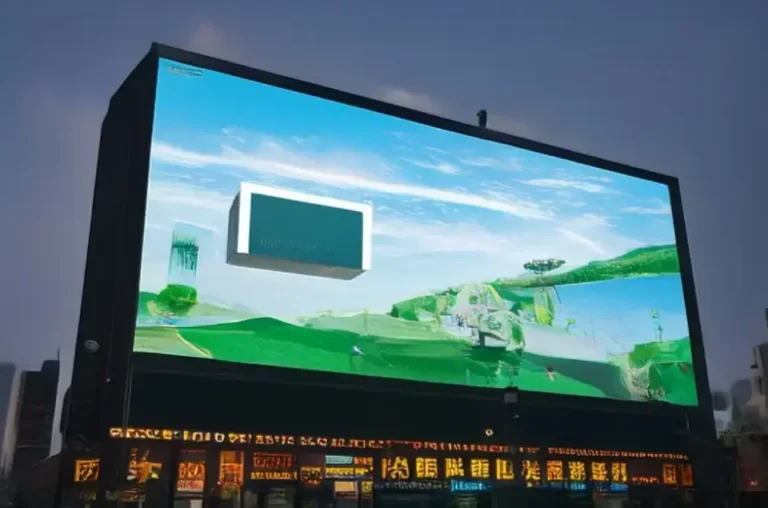
Table of Contents
ToggleStop wasting your budget on the price-red-ocean P2.6, or on fragile traditional fine-pitch equipment that easily breaks. To win high-premium orders in the 2026 high-end audiovisual rental (AV Rental) market, our conclusion is very clear: you need a P1.9 small spacing rental display screen equipped with GOB/IMD surface protection technology and full-dimensional edge protection. This configuration not only seamlessly meets the ultra-high standards of 4K/8K broadcast cameras, but also reduces LED bead damage rates caused by single installation and dismantling to an astonishing below 0.01%.
From a market pricing perspective, the mainstream acquisition and rental cost structure for P1.9 LED rental screens in 2026 is already quite clear. Standard SMD entry-level models typically range from $1,100–$1,600 per square meter, while mid-range versions with basic high refresh rates and die-cast cabinets are priced around $1,600–$2,200 per square meter. For the high-end configuration recommended in this article—featuring GOB protection, 7680Hz ultra-high refresh rate, and full front & rear maintenance systems—the total price generally falls between $2,200–$3,200 per square meter, with premium customized solutions for xR virtual production or broadcast-grade applications reaching $3,500+ per square meter.
In other words, this is no longer a question of “cheap or expensive,” but rather whether you are positioned in the tier of the market that is actually able to command premium project budgets.
In recent years, countless system integrators and event producers have complained about the same critical pain point: high-end clients are increasingly intolerant of image imperfections, yet traditional Fine Pixel Pitch (small pitch) LEDs are extremely fragile. A single international transport or overnight teardown often results in large-scale “dead pixels” on cabinet edges and devastatingly high repair costs. Based on our experience following technical execution in over 500 global top-tier performances and launch events, we found that investing in anti-collision P1.9 rental screens can increase actual equipment lifespan and turnover efficiency by at least 40%. According to the latest InfoComm 2025 industry research data, more than 70% of leading global AV rental companies have already adopted anti-collision P1.9 as their enterprise flagship “entry standard.”
Table 1: 2026 AV Rental Equipment Asset Upgrade Configuration Matrix (Full-Scope Business Guide)
| Core Target Market | Recommended Pixel Pitch | Required Technical Specifications | ROI & TCO Impact | Expected Payback Period |
|---|---|---|---|---|
| xR virtual production / high-end broadcast streaming | P1.9 (NPP) | ≥7680Hz high refresh + Brompton control system | Eliminates moiré completely, enables high-budget studio long-term contracts | 12–15 months |
| International automotive summits / luxury brand launches | P1.9 (NPP) | GOB protective coating + die-cast anti-collision cabinet | Retina-level viewing within 2 meters, damage rate reduced to 0.01% per event | 15–18 months |
| Large outdoor music festivals / sports events | P3.9 / P4.8 | 7500nits ultra-high brightness + IP65 protection | Weather-resistant, extremely high turnover rate, large-scale deployment focused | 8–12 months |
Why P1.9 Small Spacing Rental Display Screens Are Taking Over the High-End Event Market
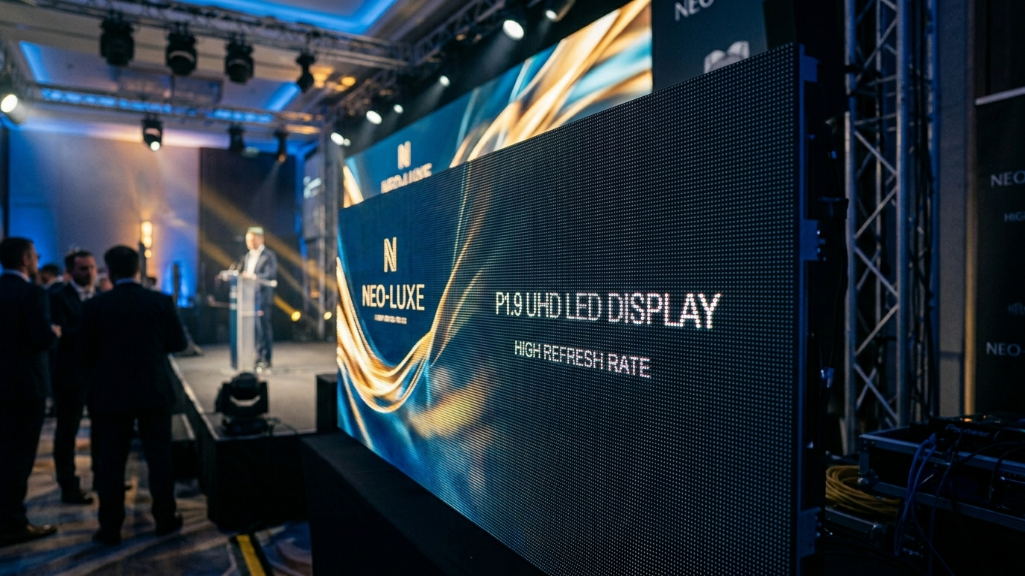
The essence of B2B AV rental is “selling visual experience.” When experience creates a generational gap, price is no longer the only factor.
The irreversible shift from P2.6 to fine pixel pitch (NPP) in the rental market
Once upon a time, P2.6 was the undisputed king of indoor rentals. But now it has become a low-margin, highly commoditized product. Modern corporate summits and luxury brand launches often require viewing distances as close as 2–3 meters. At such distances, the pixel structure of P2.6 becomes clearly visible, while P1.9 delivers truly retina-level smooth imagery. For rental companies, upgrading to P1.9 means gaining premium pricing power, completely escaping low-end price competition.
Eliminating broadcast interference: the commercial value of high refresh rates
As a low-level hardware engineer, I have witnessed too many live broadcast disasters caused by screen flickering.
Feature: High-end P1.9 rental screens must adopt premium PWM driver ICs, pushing high refresh rates to 3840Hz or even 7680Hz.
Benefit: This means that under high-speed broadcast studio cameras or esports tournament setups, the display produces no moiré effects or scan lines. This directly determines whether your equipment can enter the most profitable broadcast-grade rental market segment.
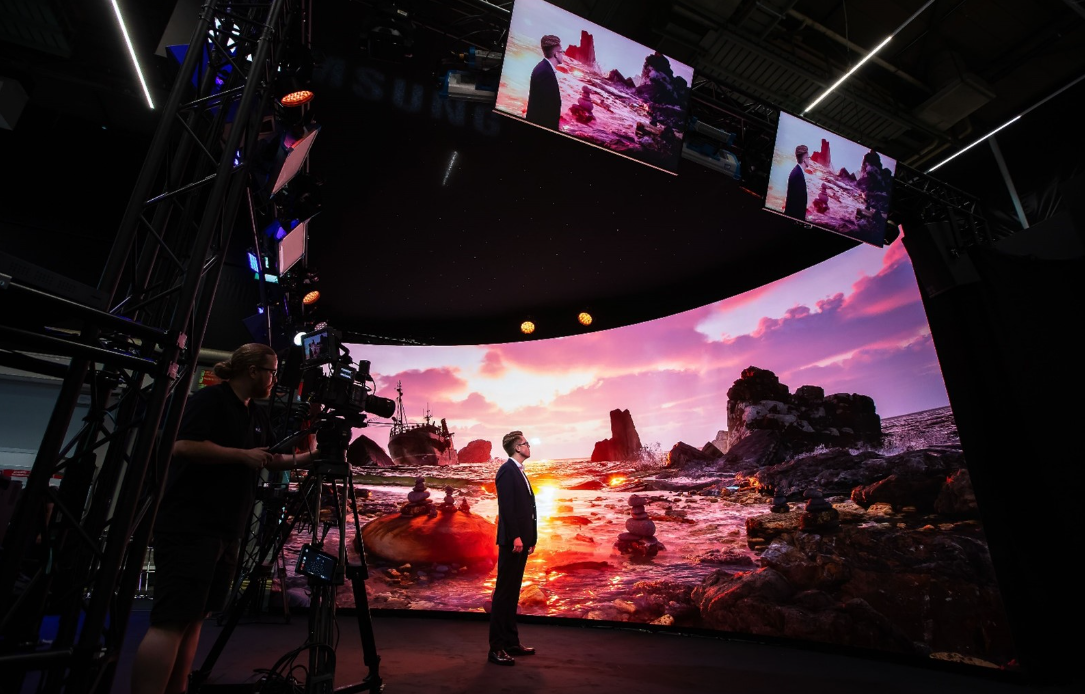
- Camera Flicker: Visible black bars (rolling shutter effect) when filmed.
- Content Loss: Fast-moving content may appear blurry or tearing.
- Not Broadcast Ready: Unsuitable for professional live streaming or TV.
- Flicker-Free: Crystal clear image on all cameras (1/2000s+ shutter speed).
- Smooth Motion: Perfect for fast video playback and sports.
- XR Ready (7680Hz): Essential for virtual production and XR studios.
Solving the Fatal Weakness: The Anti-Collision and Durability Revolution of P1.9 LED Screens
The core metric for B2B buyers is only one: Total Cost of Ownership (TCO). The biggest threat to P1.9 is not failure to light up, but physical impact. A P1.9 without anti-collision design is essentially a “profit-eating shredder.”
GOB vs traditional SMD packaging: the data does not lie
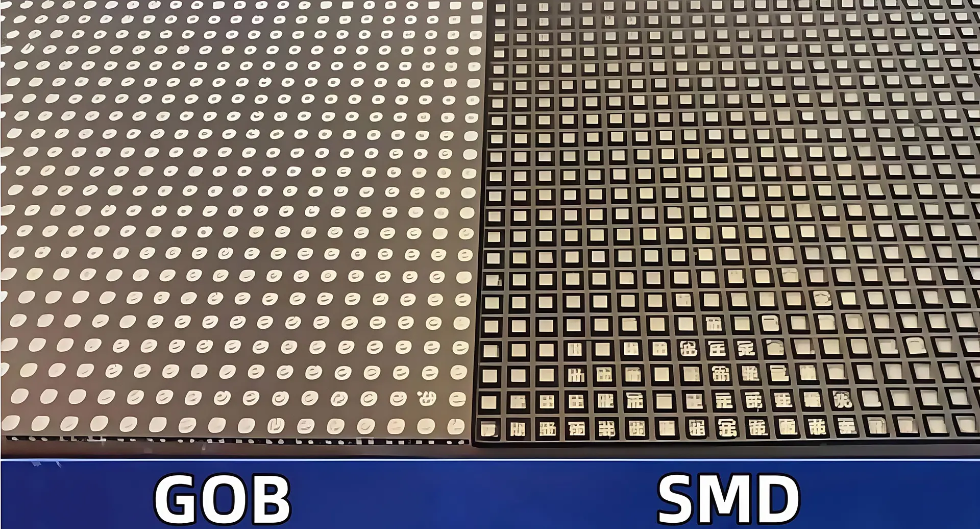
In traditional SMD packaging, the LED pads of P1.9 are extremely small, with a push force typically under 2kg. In the rough “fast assembly and disassembly” rhythm of the rental industry, LED detachment is common. The emergence of GOB (Glue on Board) technology represents a leap in engineering capability. A custom high-transparency epoxy layer is coated over the LEDs, bonding individual chips into a solid unified surface.
Table 2: Quantitative Analysis of GOB Protection Technology on Rental TCO and Operational Efficiency
| Key Metrics | Traditional SMD P1.9 Rental Screen | GOB + Edge Protection P1.9 Rental Screen | Operational Impact |
|---|---|---|---|
| Surface impact resistance | <2.5 kg (easy detachment) | >10.0 kg (armor-grade) | Allows non-specialist technicians to handle transport, significantly reduces repair costs |
| Dust, moisture & static resistance | Weak (exposed solder pads) | Strong (IP65-level sealed surface) | Stable operation in high humidity coastal venues or indoor cooling environments |
| Annual maintenance material cost per m² | ~$350–$600 | <$50 | Major reduction in hidden OPEX, significantly improves profit margin and shortens TCO cycle |
| Post-event cleaning time | Requires careful cleaning with alcohol | Quick wipe with damp cloth | Reduces teardown cleaning time by 80%, lowers labor cost during non-revenue periods |
Die-cast aluminum cabinet and edge protection mechanism
P1.9 cabinet assembly precision reaches micron-level standards. We use high-precision die-cast aluminum cabinets, which not only reduce weight but also integrate an Auto-locking Edge Protection mechanism.
Feature: When the cabinet bottom touches the ground or is placed into a flight case, anti-collision corner protectors automatically deploy, lifting the LED surface by 2mm.
Benefit: Rental operations often require hundreds of square meters to be dismantled within a few hours at night. Workers inevitably drop cabinets onto the ground. This 2mm physical buffer protects the most fragile edge LEDs, significantly reducing dependence on highly skilled technicians.
Locking in High Returns: Three Core Performance Metrics for P1.9 Rental Displays
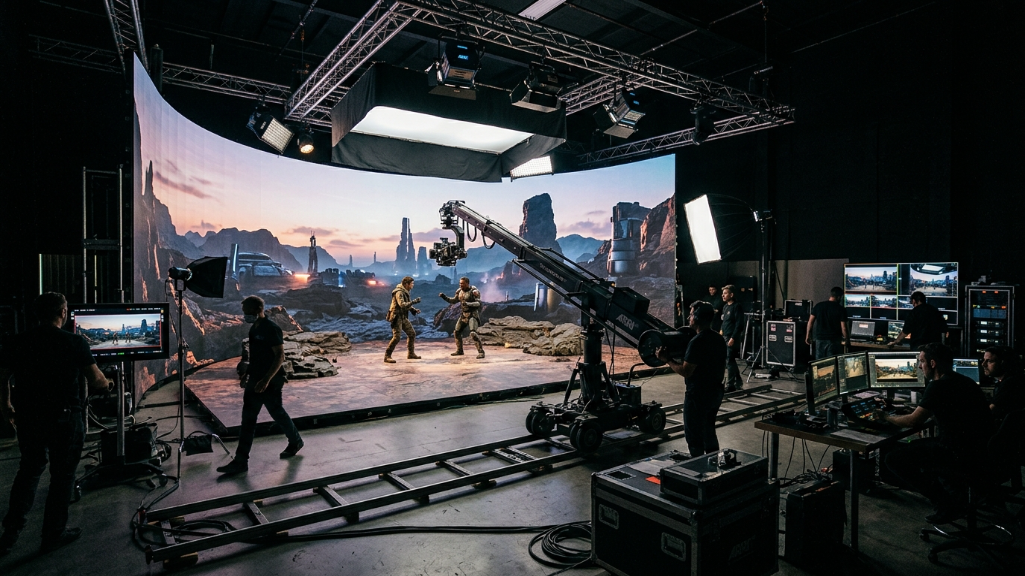
Once durability is solved, the real factors that determine whether a P1.9 small spacing rental display becomes a “money machine” are on-site operational efficiency and system compatibility.
Extreme labor efficiency: One-Man Installation system
Time is profit. A large-scale launch event typically allows only 12 hours for setup.
Feature: Modern top-tier P1.9 cabinets must include auto-locking mechanisms and lightweight design.
Benefit: One person can complete assembly and locking, improving installation efficiency by at least 40%. Projects that originally required 10 workers overnight can now be completed easily with 6.
100% front and rear maintenance: reducing downtime to seconds
In high-end projects, screen blackouts during live broadcasting are catastrophic.
Feature: Modules, power supplies, and receiving cards support full front and rear maintenance design.
Benefit: If a module fails in the center of the screen, engineers can remove and replace it from the front using a suction tool in under 10 seconds. This rapid response capability is the foundation for guaranteeing SLA commitments to premium clients.
Core processing power: deep compatibility with Brompton and Novastar
A high-quality P1.9 panel is only the shell; the image processing system is the soul.
Feature: High-end P1.9 rental screens must natively support Brompton Technology or advanced Novastar systems.
Benefit: Enables 14-bit/16-bit grayscale and precise color calibration, seamlessly supporting xR virtual LED production and Hollywood-grade film rendering requirements.
Commercial Monetization: Top Profit Scenarios for P1.9 Small Pitch Rental Screens
The core logic of investing in P1.9 is to enter blue-ocean markets that demand zero tolerance for visual defects.
Table 3: High-Value Application Scenarios and Profit Matching Model
| High-Yield Scenarios | Core Client Pain Points | Required Technical Support from P1.9 | Expected Price Increase vs P2.6 |
|---|---|---|---|
| Cross-border medical / tech product launches | VIP proximity viewing requires flawless detail display, zero tolerance for defects | Retina-level seamless splicing; Brompton/Novastar color calibration eliminating color deviation | +45% to +60% |
| xR virtual production & Hollywood immersive studios | Camera movement causes moiré; background must sync perfectly with physical sets | ≥7680Hz refresh; 16-bit grayscale; wide color gamut accuracy | +120%+ |
| Global esports tournaments | High-speed motion causes blur affecting broadcast quality | High frame rate support; nanosecond response panels eliminating motion blur | +35% to +50% |
PAA (People Also Ask): Advanced Buyer Risk Prevention Guide
Q1: What is the exact difference in visual experience between P1.9 and P2.6 rental LED displays?
The visual threshold is different. P2.6 only looks smooth beyond 3 meters, while P1.9 reduces the comfortable viewing distance to under 1.9 meters. In high-end indoor events, P1.9 delivers a seamless “LCD-like” immersive experience.
Q2: Are P1.9 fine pitch LED screens too fragile for cross-country touring?
If using traditional SMD packaging, yes. But with GOB coating and bottom edge protection systems, P1.9 cabinets can withstand frequent global transport and aggressive handling.
Q3: Can P1.9 rental cabinets be used for outdoor daytime events?
Not recommended. P1.9 is designed for indoor visual excellence with brightness around 800–1200 nits and IP31/IP43 protection. Direct sunlight requires P3.9 or P4.8 outdoor screens.
Q4: How does a high refresh rate (e.g., 7680Hz) benefit my rental business?
It is your “entry ticket” to broadcast and live-streaming markets, eliminating scan lines and flicker under multi-camera high-speed production environments.
Q5: Is it mandatory to use Brompton processors for P1.9 screens?
Not mandatory, but strongly recommended. In high-end European and US film/xR markets, Brompton’s color mapping and grayscale performance are widely considered industry standard.
Expert Verdict
Stop fighting tomorrow’s market with yesterday’s hardware thinking. Upgrading to a P1.9 small spacing rental display screen with armor-grade GOB protection and rapid one-man deployment design is the key asset for breaking out of low-end competition and building a strong business moat. When planning your next inventory upgrade cycle, do not focus only on price per square meter. Demand real TCO models and physical impact test data from suppliers. Remember: only pixels that survive rough handling can generate continuous high-value cash flow.
About SoStron
Marketing Strategic Director at Sostron