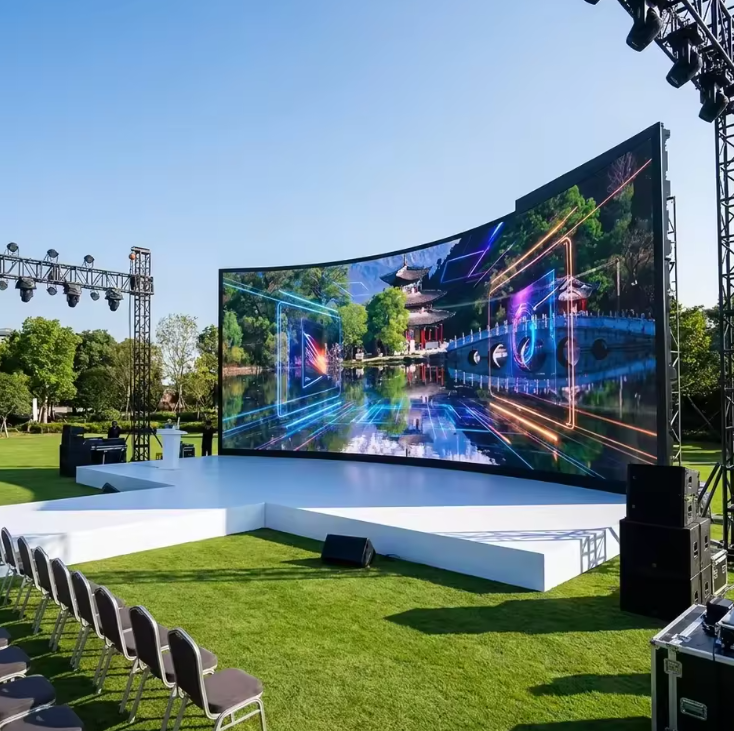
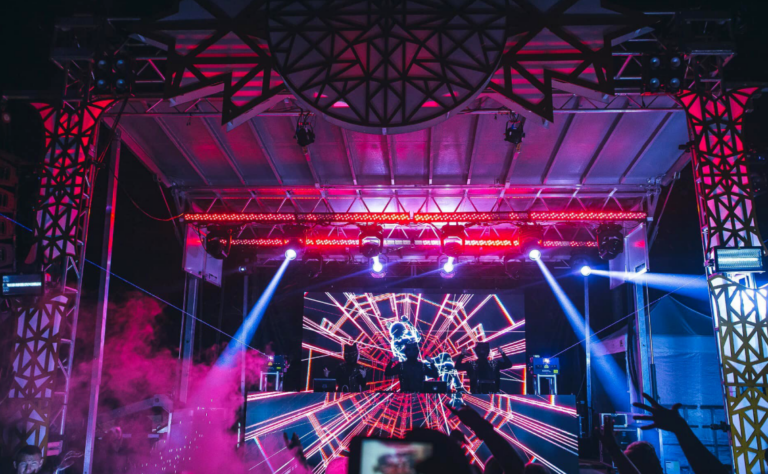
If you’re sourcing LED screen rental in Lima for a concert, corporate conference, or DOOH campaign, here’s what the market looks like right now:
| Rental Category | Pixel Pitch | Daily Rate (USD/m²) | Typical Use Case |
| Indoor Premium | P2.9 | $120–$180 | Corporate conferences, product launches |
| Indoor Standard | P3.9 | $80–$130 | Exhibitions, trade shows, indoor concerts |
| Outdoor Event-Grade | P3.9–P4.8 | $100–$150 | Open-air festivals, Lima park events |
| Outdoor High-Brightness | P6.0+ | $70–$110 | DOOH campaigns, stadium perimeters |
Rates are inclusive of technician support. Transport from Callao logistics hub and rigging are typically billed separately. (The pricing below reflects current market averages in Lima’s LED rental sector and may vary depending on logistics, availability, and event complexity.)
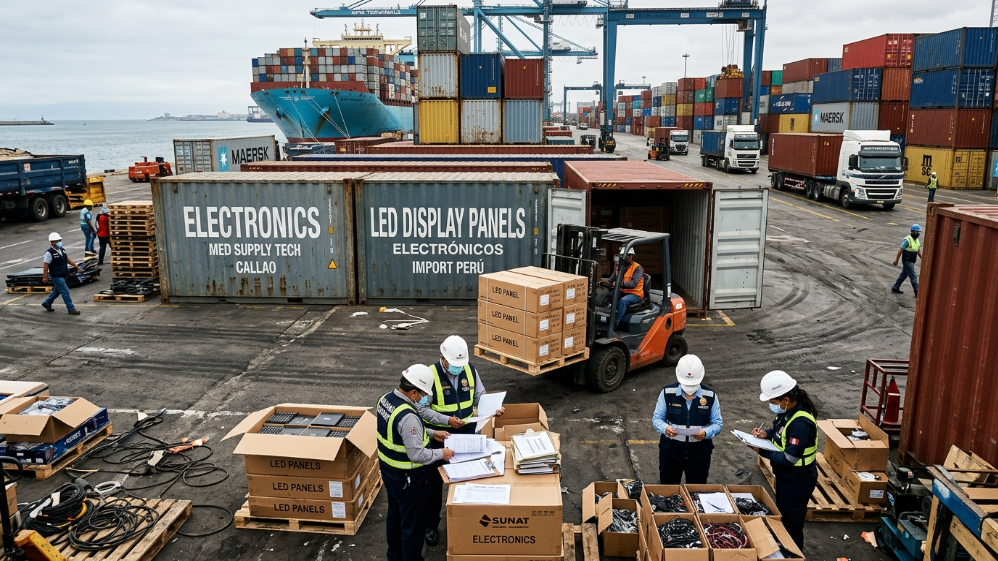
Peru’s LED rental market is structurally different from most. There are no domestic LED screen manufacturers in the country—every cabinet, power supply, and control processor arrives via Callao port from Shenzhen. That single fact shapes everything: your lead times, your warranty coverage, your contingency options when a panel fails at 11 PM on night one of a three-day festival. Understanding this supply chain reality is not optional context. It is the difference between a project that runs cleanly and one that quietly destroys your client relationship.
Why Lima Is Becoming South America’s Fastest-Growing LED Rental Market
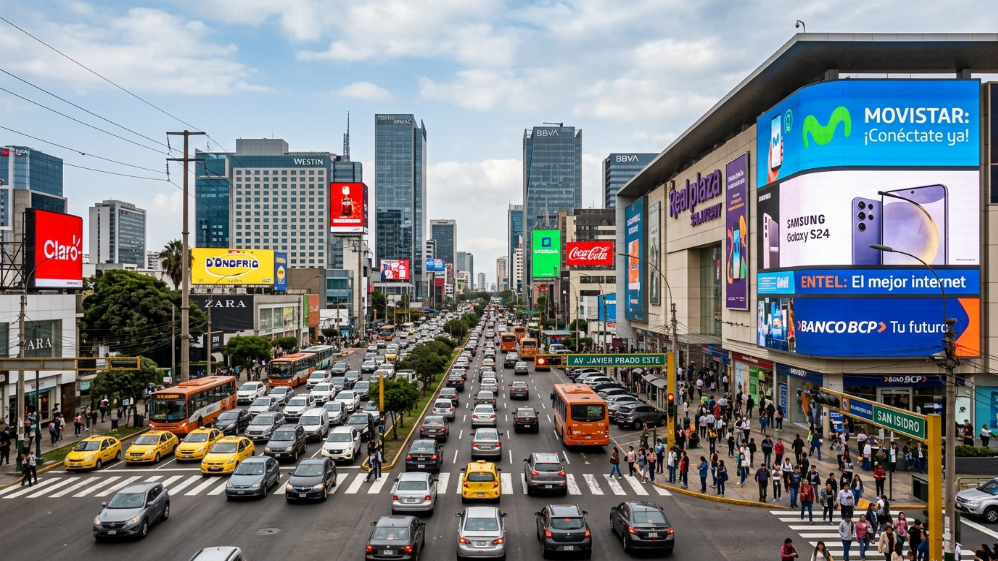
Lima is not a secondary market. It is the logistics, commercial, and media capital of a country with 33 million people, a growing middle class, and an event production industry that has expanded aggressively since 2022. Based on our experience supplying LED systems across Latin America, Peru now ranks among the top five markets in the region for large-format display demand—driven by three converging forces.
First, corporate event spend in Lima has recovered sharply post-pandemic, with multinationals and local conglomerates running product launches, sales summits, and shareholder events at venues like the Centro de Convenciones de Lima and Westin Lima. These events demand LED video walls—not projectors. The shift is permanent.
Second, Lima’s outdoor festival circuit has professionalised. Events at Parque de la Exposición, the Costa Verde amphitheatre, and venues surrounding the Estadio Nacional now routinely spec outdoor LED stages at 200–600 m² of total display area. Organisers who tried to cut costs with rear-projection rigs have learned the hard way: Lima’s coastal glare destroys projected images before midday.
Third, DOOH advertising investment is accelerating. Samsung’s installation of South America’s largest DOOH LED signage at Plaza Norte—a 487 m² outdoor display featuring a 16mm pixel pitch outdoor screen—demonstrated what premium-spec LED can achieve in Lima’s retail environment. That installation triggered a wave of competitive investment from mall operators and outdoor media companies across Miraflores, San Isidro, and Surco.
What Does LED Screen Rental Actually Cost in Lima? (Transparent Pricing Breakdown)
Most suppliers won’t publish numbers. We will.
P3.9 Indoor vs. Outdoor Panels: Daily Rate Benchmarks
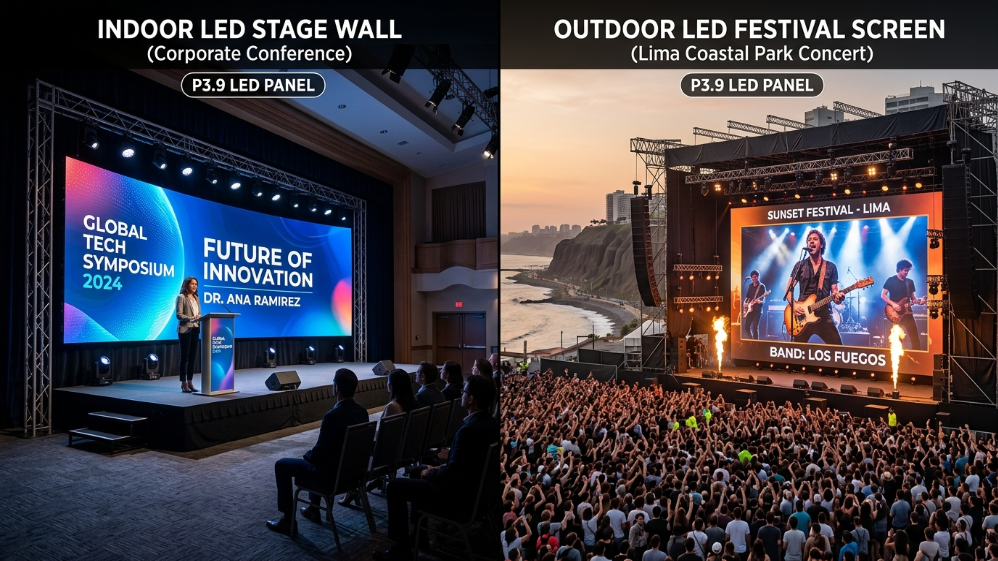
The P3.9 die-cast aluminum cabinet—typically 500×500mm, weighing approximately 8–9 kg per panel—is the workhorse of Lima’s rental industry. It dominates for a simple reason: it balances image resolution at mid-range viewing distances (5–25 metres), fast rigging due to its magnetic front-service design, and supply chain reliability given that Shenzhen factories produce it at massive volume.
For a 40 m² indoor stage wall at a San Isidro corporate event, you’re looking at a package cost of $4,800–$7,200 for a two-day rental. That figure includes the panels, a Nova MX40 or equivalent sending card, basic steel truss structure, and one on-site LED technician. It does not include content playback management, cameras, or the 63A power feed your venue electrician needs to prepare.
Outdoor configurations run higher—not because the panels cost more to rent, but because outdoor deployments require ground-stacking steel towers or roof-hung truss systems, wind load engineering sign-off for Lima’s coastal gusts, and weatherproof cable management. A 60 m² outdoor stage wall for a two-day festival at Costa Verde should be budgeted at $9,000–$15,000 all-in, depending on structural complexity.
These rates are typical benchmark prices for LED screen rental in Lima and are influenced by pixel pitch, brightness, and rental duration.
The Costs Lima Suppliers Don’t Put on Their Quotes
Peru applies import duties on LED display equipment under HS Code 8528.52. The combined effective cost of importing a system into Peru—ad valorem duty plus IGV (Peru’s 18% VAT equivalent) plus customs agent fees at Callao—adds 12–18% on top of CIF Lima value. For rental operators who refreshed their inventory in 2024–2025, those costs are embedded in your day rate. For buyers who consider importing panels directly for a single project and then renting them out—a model some integrators attempt—the calculation changes significantly, and almost always unfavourably for sub-15-event annual use cases.
| Cost Component | Rental Model | Direct Import Model |
| Panel acquisition | Included in day rate | $1,450–$2,100/m² installed |
| Peru import duties (IGV+aranceles) | Absorbed by supplier | +12–18% of CIF Lima value |
| Local assembly & steel structure | Quoted separately | Fabricated locally (+15–25%) |
| Technician on-site | Included or $180–$280/day | Must hire independently |
| Break-even point | Any project under 15 event-days/year | 15+ event-days/year over 2–3 year horizon |
| After-sales risk | Supplier bears it | You bear it entirely |
The decision rule is blunt: if you run fewer than 15 chargeable event-days per year on LED, renting delivers better capital efficiency, every time. Above that threshold, ownership starts to make financial sense—provided you have local technical staff and a storage facility within the Lima metropolitan area.
How to Choose the Right Pixel Pitch for Your Lima Event
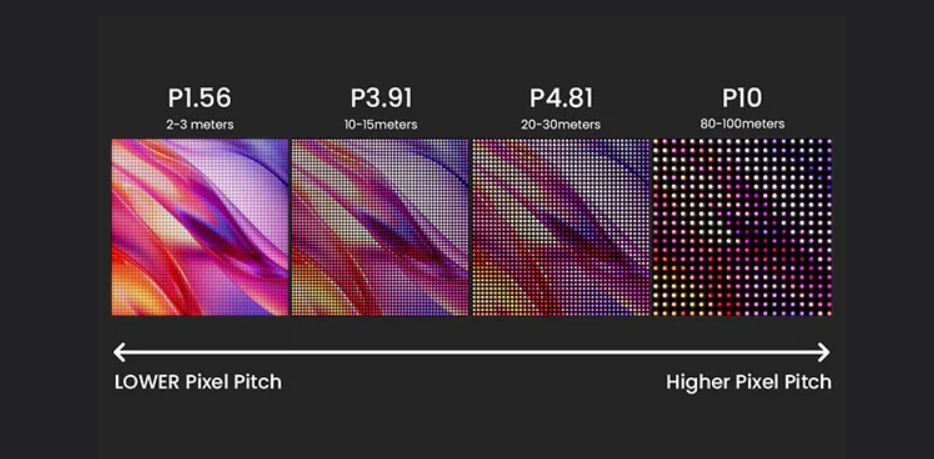
Pixel pitch—the distance in millimetres from the centre of one LED pixel to the centre of its neighbour—is the specification that most directly determines image quality at a given viewing distance. It is also the spec most frequently misrepresented in rental proposals.
The governing formula is simple: minimum comfortable viewing distance (in metres) equals pixel pitch (in mm) multiplied by approximately 3. A P3.9 panel delivers its optimal image quality at viewing distances above 11–12 metres. Below that, individual pixels become visible to the human eye, and high-production-value content looks soft. This matters practically: a 10×5 m LED wall at the back of a 300-seat conference room at Hilton Lima Miraflores, where the front row sits 4 metres from the screen, needs P2.6 or P2.9—not P3.9. Specifying the wrong pitch is a common and expensive mistake.
Pixel Pitch Selection Guide for Lima’s Primary Venue Types
| Venue Type | Typical Viewing Distance | Recommended Pixel Pitch | Brightness Requirement |
| Indoor conference (≤300 pax) | 4–15 m | P2.6–P2.9 | 800–1,200 nits |
| Indoor concert/large arena | 10–30 m | P3.9–P4.8 | 1,000–1,500 nits |
| Outdoor stage (night event) | 15–50 m | P3.9–P4.8 | 3,500–4,500 nits |
| Outdoor stage (day event, coastal Lima) | 15–50 m | P3.9–P4.8 | ≥5,000 nits |
| DOOH billboard/mall exterior | 8–40 m | P6.0–P10.0 | 6,000–8,000 nits |
The brightness column deserves particular attention for Lima. The city’s coastal latitude and high UV index mean that outdoor LED walls operating in direct afternoon sun require a minimum of 5,000 nits to maintain image legibility. Panels rated at 3,500 nits—which would perform adequately in an equivalent northern European outdoor event—wash out visibly in Lima between 11 AM and 4 PM. Rental suppliers who quote P3.9 outdoor panels without specifying the nits figure are leaving a critical variable undefined. Always ask for the photometric data sheet.
Why Refresh Rate Matters More Than Most Lima Buyers Realise
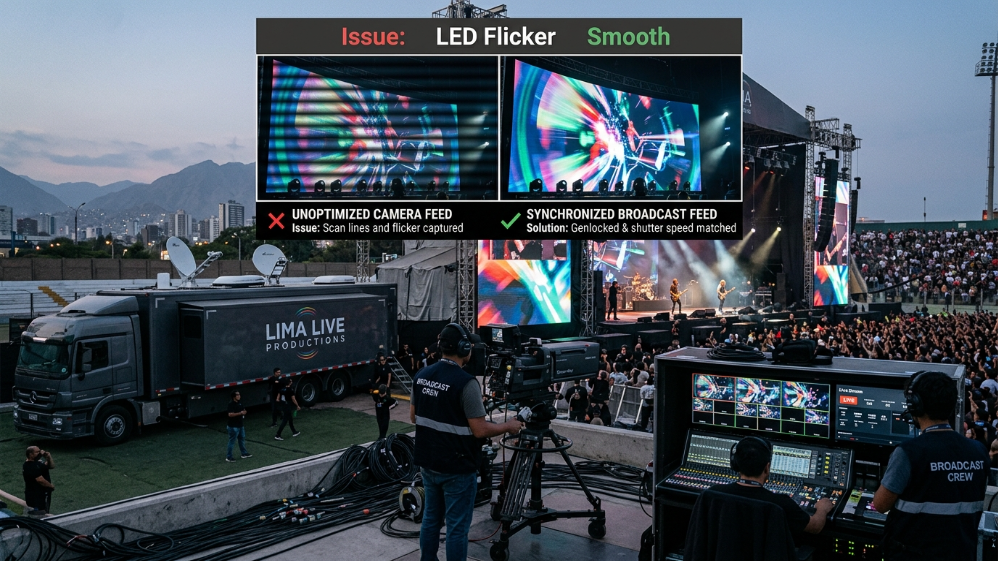
A specification that frequently disappears from rental quotes is the panel’s refresh rate, measured in Hz. For events where broadcast cameras or social media video capture is part of the production—which includes virtually every corporate event and concert in Lima above a certain budget level—panels with a refresh rate below 1,920 Hz will produce visible horizontal banding in video recordings. This phenomenon,caused by the mismatch between LED scan frequency and camera shutter speed, is irreversible in post-production.
Premium rental panels operating at ≥3,840 Hz eliminate this problem entirely. Based on our experience reviewing post-event footage from Lima productions, approximately 30% of incidents where clients report “the screen looked bad on camera” trace directly to low-refresh-rate panels being substituted into a rental package without disclosure. It is a substitution that saves the supplier money and costs the client their broadcast quality. Specify ≥3,840 Hz refresh rate in writing before signing any Lima LED screen rental contract.
Lima’s Unique Operational Challenges (And How Top Suppliers Solve Them)
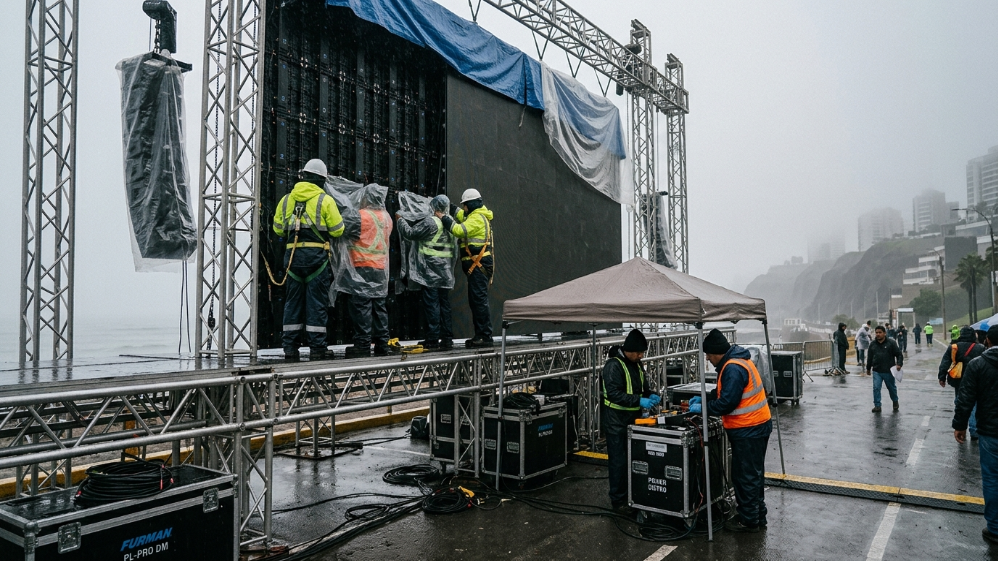
Pixel pitch and nits get most of the attention in pre-sales conversations. The issues that actually damage projects in Lima rarely appear in spec sheets.
Garúa season runs from June through November. Lima’s coastal fog—a fine, persistent mist driven by the Humboldt Current—doesn’t announce itself with a weather forecast. It arrives overnight and coats every exposed surface with micro-droplets. Outdoor LED cabinets without a minimum IP65 ingress protection rating will accumulate moisture inside the power supply housing within 48 hours of exposure. The failure mode is not immediate; it is a short-circuit three weeks after your event that destroys a power card and voids the warranty because moisture damage is classified as improper operating conditions by most Chinese manufacturers. Specify IP65 as a floor, not a preference. For permanent DOOH installations in Lima’s coastal districts, IP66 is worth the premium.
Lima’s power infrastructure at event venues is inconsistent. Municipal venues, park spaces, and older hotel ballrooms across Miraflores and Barranco frequently deliver power at voltages that fluctuate ±15% from nominal—wider than the ±10% operating tolerance of most LED driver ICs. A quality rental supplier will include automatic voltage regulators (AVRs) as standard in their package. If yours doesn’t, budget $80–$150/day per AVR unit and source them independently. A large LED wall tripping its protection circuit mid-keynote because of a voltage spike is a recoverable technical failure. It becomes an unrecoverable client relationship failure if it happens during a live broadcast.
Andean transport for multi-city productions is a separate discipline. If your Lima event is part of a national tour that includes Arequipa (2,328 m AMSL) or Cusco (3,399 m AMSL), LED panel power supplies and fan-cooled processing units rated for sea-level operation will run hot at altitude. Derate your power supply loading by approximately 10% per 1,000 m above sea level, and verify that your supplier’s flight cases are structurally rated for road transport on Peruvian highland routes—not just air freight.
B2B Buyer’s Checklist: 7 Things to Lock Down Before Signing a Lima LED Rental Contract
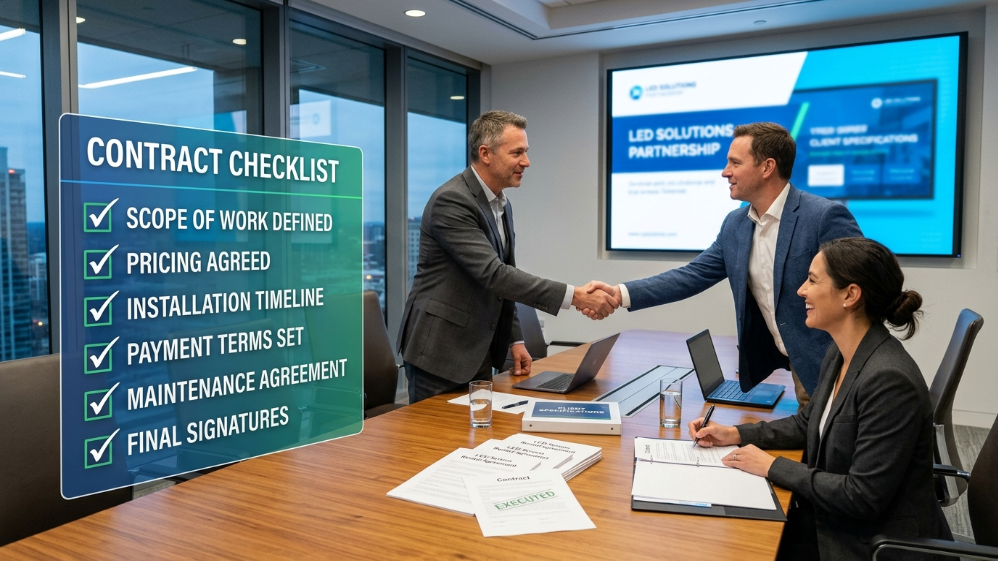
The Lima LED rental market has matured significantly since 2020, but it is not uniformly professional. Vetting a supplier takes less than 30 minutes if you know what to ask. Here is the checklist we apply before recommending any rental partner for a production.
| # | Verification Point | Why It Matters | What to Ask For |
| 1 | Panel brand & model documentation | Prevents bait-and-switch to inferior panels after deposit | Request the exact cabinet model number and manufacturer datasheet |
| 2 | Refresh rate certification | Broadcast & camera capture quality | Demand ≥3,840 Hz; request the spec sheet, not a verbal assurance |
| 3 | IP rating for outdoor use | Lima garúa and coastal humidity exposure | IP65 minimum; ask for the IEC 60529 test certificate |
| 4 | On-site technician qualification | Signal chain troubleshooting, Novastar/Brompton controller fluency | Ask how many Lima productions the technician has run in the past 12 months |
| 5 | Contingency panel inventory | 5–8% panel failure rate is normal over a 3-day run | Supplier must hold ≥10% spare panels on-site, at no extra cost |
| 6 | Power & structural engineering sign-off | Municipal permits for outdoor rigging in Lima require structural calculations | Ask if they provide a PE-stamped load calculation for truss systems |
| 7 | Contract clause: equipment substitution | Prevents spec downgrade after signing | Require written consent for any substitution of panels, sending cards, or processors |
Items 2 and 7 eliminate the largest category of post-event disputes in Lima’s rental market. Get them in the contract. A supplier who resists either clause is telling you something important about how they operate.
Lima LED Screen Rental for DOOH Advertisers: A Different Calculation
For DOOH advertisers and outdoor media operators, the rental calculus is fundamentally different from the event production model. You are not renting a screen for 48 hours—you are evaluating whether a rental arrangement bridges the gap between campaign start date and your CAPEX cycle, or whether it makes sense to own inventory and monetise idle periods between campaigns.
According to industry data from Peru’s outdoor advertising sector, Lima’s premium DOOH locations in Miraflores, San Isidro, and Surco command CPM rates that support LED infrastructure investment at utilisation rates above 60% annually. Below that utilisation threshold, renting display time from an existing DOOH operator—rather than renting the physical screen—typically delivers better economics.
Where rental genuinely wins for DOOH buyers: pop-up campaigns at high-footfall Lima events. Larcomar, Jockey Plaza’s outdoor plaza, and the Costa Verde corridor during summer weekends generate audience densities that justify short-term, high-brightness outdoor LED deployment at day rates that convert positively against standard Lima OOH media buying rates. A 20 m² P6.0 outdoor panel running a 72-hour campaign at a Jockey Plaza activation costs approximately $4,200–$6,000 all-in—against a media buy equivalent that would require negotiating with three separate outdoor contractors.
Frequently Asked Questions: Lima LED Screen Rental
Q1: How much does it cost to rent an LED screen in Lima for one day?
For a standard 20 m² indoor P3.9 setup at a Lima venue, budget USD $1,600–$3,200 for a single day, inclusive of panels, structure, sending card, and one technician. Outdoor configurations with ground-stacking steel and high-brightness panels start at $2,200–$4,500 for the same footprint, depending on structural requirements and rigging complexity.
Q2: Can I rent an LED screen in Lima with less than one week’s notice?
Technically yes—most Lima rental operators hold standing inventory. Practically, short-notice bookings significantly narrow your pixel pitch options and eliminate the best-maintained panels, which are allocated to pre-booked events. For any event above 40 m² of display area, 3–4 weeks lead time is the operational minimum. Festival-scale productions (100 m²+) should book 6–8 weeks out to guarantee structural engineering sign-off and permit clearance.
Q3: What pixel pitch should I specify for a Lima outdoor concert?
For outdoor stages where the front row of the audience is 15 metres or further from the screen, P3.9 is the industry standard and the most cost-effective choice. If your event includes broadcast camera coverage and the stage is smaller, P2.9 panels at 1,200–1,500 nits offer a noticeable resolution upgrade at approximately 20–30% premium in day rate.
Q4: Do Lima LED rental suppliers provide technical operators on-site?
Professional suppliers include one LED technician in the day rate as standard. Verify this explicitly—some lower-cost operators include “delivery and setup” but charge separately for the operational technician who monitors the screen during the event. For productions running multiple screens simultaneously or integrating with broadcast switchers, budget for a dedicated LED operator at $180–$280/day, separate from any AV director or video engineer on your production team.
Q5: Are there LED screen rental suppliers in Lima who can handle Andean region events?
A small number of Lima-based integrators have demonstrated capacity to execute productions in Arequipa, Trujillo, and Cusco—but this capability must be verified, not assumed. Ask specifically: do they own dedicated highland-rated transport cases, do they carry altitude-derated power equipment, and have they completed productions above 2,500 m AMSL in the past 18 months? If the answer to any of those is vague, treat their highland service capability as aspirational rather than operational.
Expert Verdict
Lima’s LED rental market is functional but uneven. The inventory exists, the technical capability exists, and for most event profiles the economics work clearly in favour of renting over buying. What the market lacks is consistent specification transparency—and that gap is where projects fail.
Lock in three numbers before you sign anything: pixel pitch, refresh rate, and nits. Get them in the contract with substitution restrictions. Require contingency inventory on-site. Confirm your technician’s actual production history rather than their employer’s portfolio. Do those things, and Lima’s LED screen rental market will serve your production reliably. Skip them, and you’re exposed to a category of failure that no amount of post-production can fix.
The screen is the centrepiece of your production. Treat the rental agreement with the same rigour you apply to the content running on it.
All pricing ranges mentioned in this article are indicative benchmarks based on current market conditions in Lima’s LED screen rental industry. Final costs may vary depending on pixel pitch, brightness level, rental duration, structural complexity, logistics requirements, and on-site technical support. For accurate budgeting and project planning, it is strongly recommended to request a detailed quotation from a qualified local supplier based on your specific event specifications.
References:
ANSI V202.01 Display Image Size for 2D Content in Audiovisual Systems
SMPTE Standards & Recommended Practices for LED Displays and Broadcast Imaging