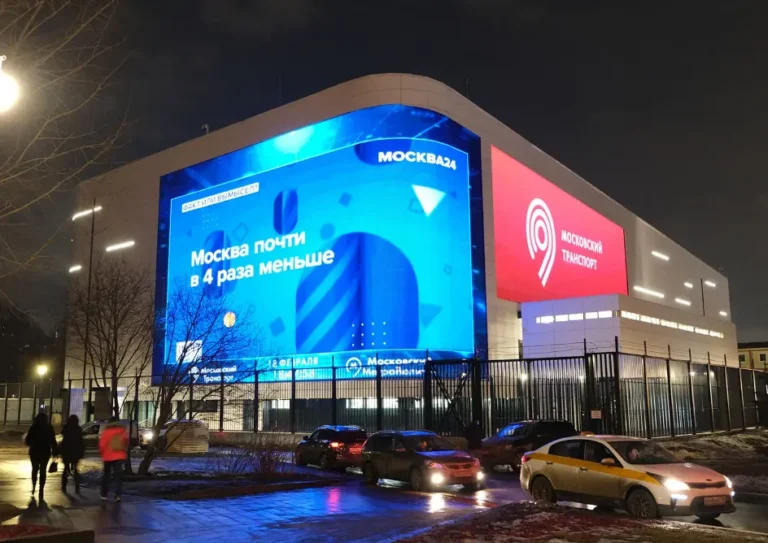
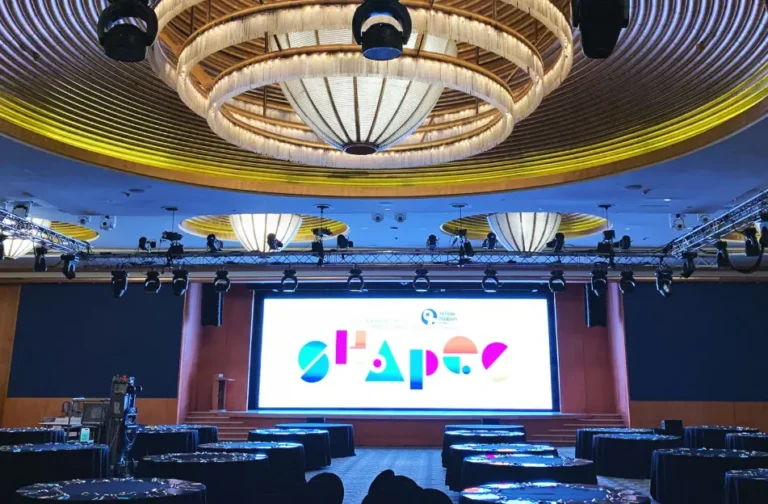
Quick answer: A standard indoor LED advertising machine (LED poster display, P1.5–P2.5mm) typically costs $1,000–$5,000 per unit or $600–$1,600 per m² for the screen alone, while outdoor and fine-pitch models run $1,200–$4,000+ per m². Total project cost also includes structure, control system, installation, and ongoing content/power costs — often adding 20–40% on top of the screen price.
Key takeaways:
- Price is driven mainly by pixel pitch (smaller pitch = sharper image = higher cost)
- Indoor units: $600–$1,600/m² | Outdoor units: $1,200–$4,000+/m²
- A floor-standing LED poster machine (640×1920mm cabinet) typically runs $1,000–$5,000 per complete unit
- Total cost of ownership includes structure, control system, shipping, installation, and power — not just the panel
- Typical ROI/payback period for retail deployments: 8–14 months
- Expected lifespan: 80,000–100,000 hours (roughly 10+ years at typical daily runtime)
What Is an LED Advertising Machine? (And How It Differs from an LED Poster or LED Billboard)
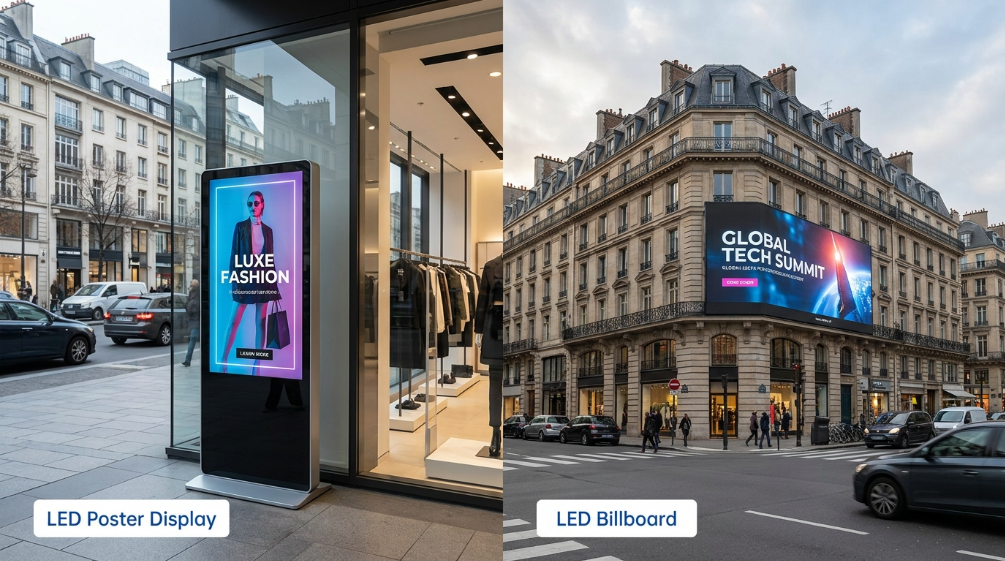
The terms get used loosely, which causes confusion during procurement. Here’s the distinction that matters for pricing:
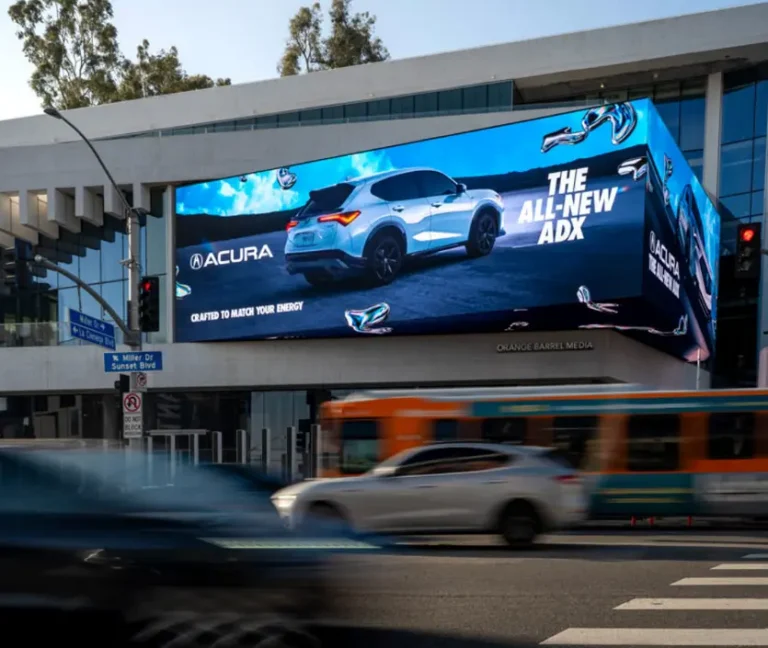
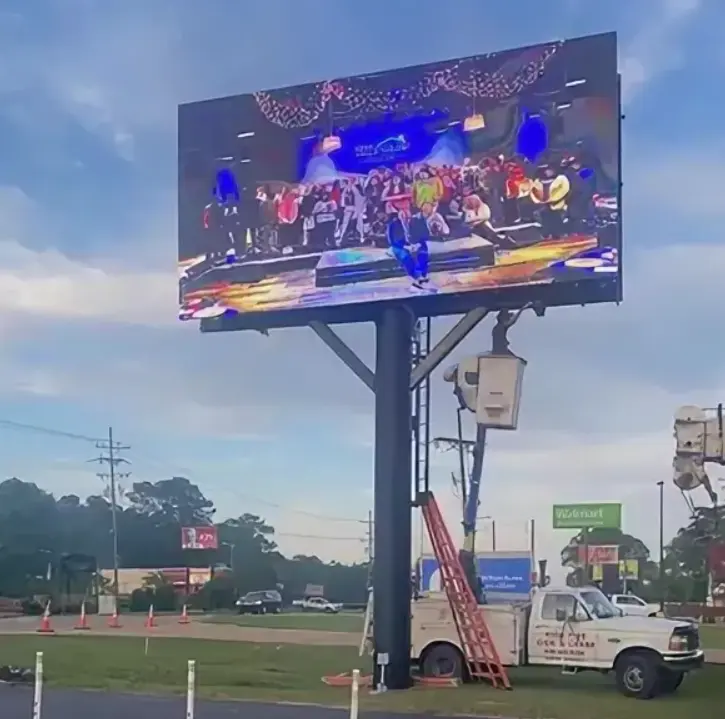
- LED advertising machine (“LED poster”) ≠ LED billboard. An LED advertising machine is a compact, self-contained, often mobile/floor-standing display (typically a 640×1920mm cabinet on wheels or a wall-mount frame) built for indoor or semi-outdoor retail, lobby, and event use. An LED billboard is a large, permanently installed outdoor structure built for long-range visibility.
- LED advertising machine + fine pixel pitch (P1.5–P2.5) = the format most buyers actually mean when they search this term — a close-viewing, high-resolution digital signage unit for malls, showrooms, and storefronts.
- LED ≠ LCD for this application. LED displays are self-emissive (each pixel produces its own light), giving true blacks and higher contrast (5,000:1+) that stay visible in bright ambient light. LCD poster displays are cheaper upfront but rely on backlighting, which limits brightness and contrast in daylight or well-lit retail environments.
A typical unit — like a floor-standing sPoster-style LED advertising machine — consists of an LED display cabinet, a folding or fixed support structure, a built-in control box, and caster wheels for repositioning between locations.
How LED Advertising Machine Pricing Works
Four variables drive most of the price difference between quotes:
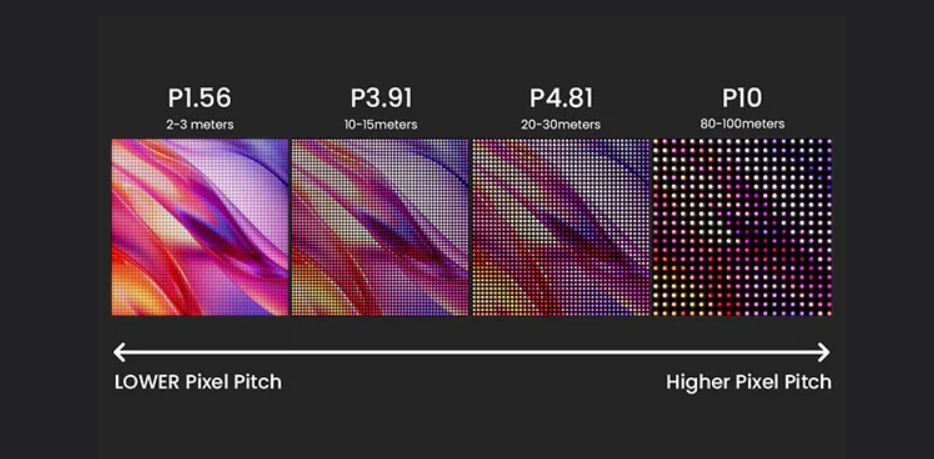
1. Pixel pitch — the center-to-center distance between LED pixels, in mm. Smaller pitch packs more LEDs and driver ICs into the same area, which directly raises both material and manufacturing cost.
2. Indoor vs. outdoor rating — outdoor units need higher brightness (often 4,000–8,000 nits vs. 600–1,200 nits indoors), waterproof IP65-rated enclosures, and more robust power/thermal management, which adds 30–60% to the base price.
3. Cabinet and packaging technology — die-cast aluminum cabinets with GOB (Glue-on-Board) encapsulation cost more than standard SMD packaging but improve impact resistance, dust/moisture protection, and typically extend usable life.
4. Control system tier — entry-level receiving cards (e.g., basic HUB75 boards) are inexpensive but limited in resolution and color depth; professional-grade systems (e.g., Novastar or Huidu receiving cards paired with a sending card/video processor) support higher refresh rates, deeper color processing, HDR, and remote/cloud content management, typically adding $200–$1,000+ per project depending on scale.
2026 LED Advertising Machine Price Guide by Pixel Pitch
| Pixel Pitch | Typical Use / Viewing Distance | Environment | Price Range (per m²)* | Complete Unit Price (640×1920mm poster)* | Best For |
|---|---|---|---|---|---|
| P1.25–P1.5 | Close viewing, 1–2m | Indoor | $1,800–$3,500 | $3,500–$6,000+ | Flagship retail, brand showrooms |
| P1.8 | Close viewing, 1.5–3m | Indoor | $1,200–$2,500 | $2,500–$5,000 | Malls, corporate lobbies |
| P2.0–P2.5 | Standard retail, 2–5m | Indoor | $900–$1,600 | $1,500–$3,500 | General retail, exhibitions |
| P3–P4 | Store entrances, 5–10m | Indoor/semi-outdoor | $600–$1,000 | $1,200–$2,800 | Storefronts, transit lobbies |
| P4–P6 | Mid-range outdoor, 8–15m | Outdoor | $700–$1,200 | Custom (structure-dependent) | Building facades, plazas |
| P8–P10 | Long-range, 15m+ | Outdoor | $200–$500 | Custom | Highway billboards, stadiums |
Typical values based on 2026 market pricing across multiple suppliers; actual project pricing depends on brand, order volume, and configuration. Always request a project-specific quote.
Note on the original 2024 estimates: Earlier pricing (P5 ≈ $800/m², P4 ≈ $700/m², P3 ≈ $1,100/m², P2 ≈ $1,200/m², P1.5 ≈ $2,700/m²) reflected screen-hardware-only pricing at that time. 2026 market ranges are somewhat wider because they account for brand tier, IP rating, and control system quality — buyers should treat any single-number quote as a starting point, not a final landed cost.
Total Cost of Ownership: What’s Included Beyond the Screen Price
The screen itself is usually 55–70% of total project cost. A realistic budget also includes:
- Structure and mounting (floor stand, wall bracket, or truss): 10–15% of project cost — complex sites or custom finishes increase this.
- Control system and software: a sending card/video processor plus network setup, typically $300–$1,500+ depending on scale and whether HDR/cloud management is required.
- Shipping and installation labor: 5–15%, higher for outdoor structural installs.
- Content production and management: ongoing cost, often outsourced or handled by an in-house media team; not one-time.
- Power consumption: LED advertising machines typically draw 150–350 W/m² average (peaking higher at full white brightness), which is efficient relative to traditional lightboxes but should be budgeted for 24/7 retail operation.
- Maintenance and spare parts: budget for occasional module or power-supply replacement; suppliers with local spare-parts stock reduce downtime significantly.
ROI reference point: Retail deployments commonly report payback periods of 8–14 months, driven by reduced print/lightbox replacement costs and measurable engagement lift (commonly cited in the 25–40% range for promotional content) — though actual returns vary by footfall and campaign strategy, and should be validated against your own store traffic data rather than assumed.
Application Scenarios and Selection Guidance
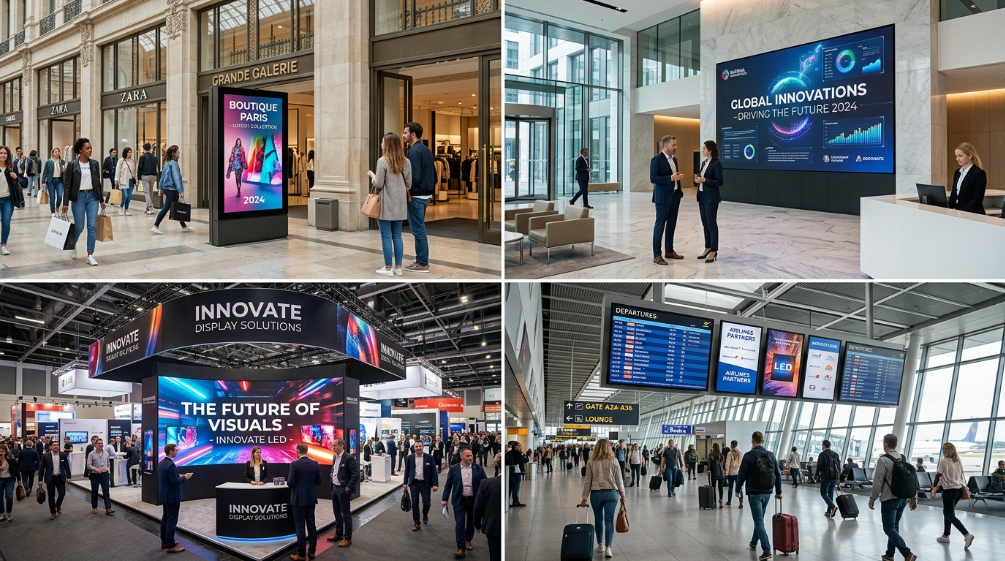
Retail stores and shopping malls — P1.8–P2.5, floor-standing or wall-mount units at store entrances, endcaps, and checkout areas. Prioritize color accuracy and a mobile base so displays can be repositioned for seasonal campaigns.
Corporate lobbies and showrooms — P1.5–P2, wall-mounted or embedded into architectural panels. Prioritize a slim cabinet depth and quiet, low-heat operation for close, extended viewing.
Exhibitions and trade shows — P1.8–P2.5 foldable or splice-capable units. Prioritize weight (under ~45kg per module for easy transport/setup) and quick-lock cabinet connections, since these units are frequently moved between venues.
Hospitality (hotels, restaurants) — P2–P3, often wall-mounted for menu boards or promotional content; brightness in the 600–1,000 nit range is usually sufficient for indoor ambient lighting.
Transit hubs and airports — P2.5–P4, higher duty-cycle units (near-24/7 operation) with robust control systems and remote monitoring, since downtime in high-traffic locations has an outsized cost.
Outdoor DOOH and building facades — P4–P10, IP65-rated, 4,000–8,000 nit brightness with automatic ambient-light dimming to control both visibility and power draw.
Selection Checklist: How to Choose the Right LED Advertising Machine
Use viewing distance, environment, and budget together — not in isolation:
- Measure your typical viewing distance. Under 2m → P1.5–P1.8. 2–5m → P2–P2.5. 5m+ or outdoor → P3 and larger.
- Confirm the environment. Indoor-only → standard IP30–IP43 units are fine. Semi-outdoor (covered storefront) or full outdoor → require IP65-rated, high-brightness models.
- Check ambient light levels. Bright, sunlit spaces need 4,000+ nits; typical indoor retail lighting is well served by 600–1,200 nits.
- Decide on mobility. If content or location changes seasonally, prioritize a foldable/wheeled unit under ~45kg per cabinet. If it’s a permanent install, a fixed structure can reduce cost.
- Verify the control system. Confirm whether remote content updates (WiFi/4G/cloud) are supported, and whether the receiving card supports the color depth (10-bit+ recommended) and refresh rate (3,840Hz+ recommended to avoid camera-flicker issues if the display will be filmed).
- Ask about warranty and spare parts. A 1–3 year standard warranty is typical; confirm the supplier stocks spare modules and can ship replacements quickly, since this affects real-world downtime more than the headline warranty length.
- Get a landed-cost quote, not just a per-m² screen price — request structure, control system, shipping, and installation itemized separately so you can compare suppliers accurately.
Example Technical Specification (Indoor Floor-Standing LED Advertising Machine)
To illustrate how these variables come together in a real product spec, here is a typical configuration for a die-cast aluminum, floor-standing LED advertising machine available in three pixel pitches:
| Item | P1.5mm | P1.8mm | P2.5mm |
|---|---|---|---|
| Pixel Density (pixels/m²) | 422,500 | 284,444 | 160,000 |
| Poster Dimensions (W×H) | 640 × 1920 mm | 640 × 1920 mm | 640 × 1920 mm |
| Resolution | 416 × 1248 | 342 × 1032 | 256 × 768 |
| Weight per Poster | 45 kg | 45 kg | 45 kg |
| Cabinet Material | Die-casting aluminum | Die-casting aluminum | Die-casting aluminum |
| IP Rating (front) | IP43 | IP43 | IP43 |
| Brightness (after calibration) | 600–1,000 nits | 600–1,000 nits | 600–1,000 nits |
| Refresh Rate | 7,680 Hz | 7,680 Hz | 7,680 Hz |
| Color Processing | 14-bit | 14-bit | 14-bit |
| Average Power Consumption | 220 W/m² | 220 W/m² | 220 W/m² |
| Operating Temp/Humidity | -20~45°C / 10%~60% | -20~45°C / 10%~60% | -20~45°C / 10%~60% |
| Expected LED Lifetime | 100,000 hrs | 100,000 hrs | 100,000 hrs |
This kind of spec sheet is what to request from any supplier before comparing prices — two “P2.5” quotes can differ significantly in real-world cost if one uses a lower-grade control card or a thinner cabinet material. See our full [sPoster Advertising Machine specifications] for the complete data sheet.
Frequently Asked Questions
How much does an LED advertising machine cost?
Indoor units typically cost $1,000–$5,000 per complete floor-standing unit, or $600–$1,600/m² for the screen alone. Outdoor and fine-pitch models run higher, often $1,200–$4,000+/m², before structure and installation costs.
What’s the difference between an LED advertising machine and a regular LED billboard?
An LED advertising machine (LED poster) is a compact, often mobile unit designed for close-range indoor or storefront viewing. An LED billboard is a large, fixed, long-range outdoor structure. They use similar core technology but different pixel pitch, brightness, and mounting.
Is LED better than LCD for a digital advertising display?
For most retail and advertising use, yes. LED displays are brighter, have better contrast in ambient light, and typically last longer (80,000–100,000 hours). LCD is cheaper upfront but performs worse in bright environments and has a shorter practical lifespan.
Can LED advertising machines be used outdoors?
Standard indoor units (IP30–IP43) cannot. Outdoor use requires an IP65-rated model with significantly higher brightness (4,000–8,000 nits) to remain visible in direct sunlight.
How long do LED advertising machines last?
Quality units are rated for 80,000–100,000 hours of LED lifetime — roughly 10+ years at typical daily operating hours — though power supplies and modules may need occasional replacement within that window.
What’s the typical payback period (ROI)?
Retail deployments commonly report 8–14 months, based on reduced print/lightbox costs and engagement gains, though this varies by location traffic and campaign use.
Do I need a special control system to run content?
Most modern units support WiFi, USB, or 4G content updates through a control app. Larger or multi-unit deployments benefit from a professional control system (e.g., Novastar or Huidu based) for centralized scheduling, brightness calibration, and remote monitoring.
What’s included in the total price besides the screen?
Structure/mounting, control system and software setup, shipping, installation labor, and ongoing power and content management costs — typically adding 20–40% on top of the screen’s per-m² price.
Article reviewed for technical accuracy against current LED display industry pricing and specification data (2026).
Ready to compare real pricing for your project? [Get a custom LED advertising machine quote →] · [Download the full product spec sheet →] · [Book a consultation with our display specialists →]
References:
IEC 62717:2014+AMD1:2015+AMD2:2019 — LED modules for general lighting – Performance requirements
IEC 60529 — Degrees of protection provided by enclosures (IP Code)