2026 Budget Benchmarks (USA):
-
Metric Price: $800 – $6,000 per square meter
-
Imperial Price: $75 – $550 per square foot
-
Scope: Raw hardware only (varies by pixel pitch/resolution).
-
Expert Insight: Do not base your final budget on factory hardware quotes alone. In the US market, integration, compliance, and labor can significantly inflate these figures.
-
Note: This range is strictly for raw hardware based on resolution.
-
Critical Warning: The most frequent mistake US buyers make is looking only at factory hardware costs while ignoring “landed costs” and local labor.
Having managed AV procurement and LED integrations across North America—from corporate lobbies in Manhattan to XR virtual production volumes in Atlanta—I can tell you that the true cost of a US installation is often double the hardware quote. You must factor in domestic shipping, structural engineering, high-end video processors, and expensive US union labor rates.
This guide strips away marketing fluff. It provides exact 2026 pricing data, details mandatory US safety certifications (UL/FCC), and breaks down the specific market applications driving the massive demand for LED displays in America today.
2026 Market Prices of LED Video Walls in the USA
Unlike the European or Asian markets, US buyers often calculate costs in both square meters and square feet. The price of an LED display is dictated by its “Pixel Pitch” (the distance in millimeters between pixels). A smaller pitch means higher resolution and a much higher price tag.
Based on my recent 2026 project audits, here is the realistic hardware pricing table for commercial-grade panels in the United States:
| Category / Pixel Pitch | Best US Use Case | Price per Sqm (USD) | Price per Sq. Ft. (USD) |
| P2.5 (Standard Indoor) | Retail stores, church stages, hotel lobbies | $800 – $1,500 | $75 – $140 |
| P1.5 – P1.8 (Fine Pitch) | Corporate boardrooms, control rooms | $1,500 – $2,500 | $140 – $230 |
| P0.9 – P1.2 (MicroLED/COB) | Executive suites, luxury retail, 4K setups | $3,500 – $6,000+ | $325 – $550+ |
| P6.0 – P8.0 (Standard Outdoor) | DOOH billboards, stadium scoreboards | $2,000 – $3,500 | $185 – $325 |
| P2.3 – P2.6 (XR Production) | Hollywood/Atlanta virtual production studios | $2,500 – $4,500 | $230 – $418 |
Expert Field Note: These prices represent the LED cabinets and receiving cards only. They do not include the video processor, mounting frames, or US-based installation labor.
The Content Gap: Hidden Costs of US AV Integrations
When auditing quotes for clients, I frequently see agencies under-budgeting because they rely on direct-from-factory pricing found online. Operating in the United States introduces unique costs that you must prepare for in 2026.
Video Processing & Control Systems
An LED wall requires a brain to scale and map the image. In the US, the two dominant control ecosystems are NovaStar (standard commercial) and Brompton Technology (high-end broadcast/XR). A basic 4K NovaStar processor costs roughly $1,500. However, if you are building an XR studio and require Brompton Tessera processors for high-frame-rate rendering, expect to spend upwards of $8,000 to $12,000 just on the processing infrastructure.
Union Labor and Installation
If you are installing a large video wall in cities with strong union presences (like Las Vegas convention centers, Manhattan corporate offices, or Chicago arenas), you must use IATSE or IBEW labor. Union AV technicians in 2026 charge between $100 and $150 per hour. A massive 500-square-foot lobby wall can take a 6-man crew a full week to rig, align, and calibrate, easily adding $30,000 to your budget.
Structural Mounting Hardware
You cannot screw LED cabinets directly into drywall. You need precision-engineered mounting frames. In the US, AV integrators rely on heavily tested brands like Chief or Peerless-AV. These custom extrusion frames ensure ADA compliance and perfect Z-axis alignment, but they will add $100 to $200 per square meter to your material costs.
Strict US Compliance & Certifications
This is the most critical dimension that overseas manufacturers fail to explain to US buyers. If your hardware lacks the proper certifications, the local US Fire Marshal or building inspector will shut your project down, forcing you to tear the screen off the wall.
-
UL / ETL Certification: Nationally Recognized Testing Laboratories (NRTLs) like UL (Underwriters Laboratories) or ETL must certify the power supplies and internal wiring of the LED cabinets. If a non-certified screen causes an electrical fire, your corporate insurance will not cover the damages.
-
FCC Part 15 Compliance: LED screens emit electromagnetic interference. If your screen is not FCC certified, it can disrupt local Wi-Fi, cellular signals, or emergency radio frequencies. The Federal Communications Commission actively fines businesses operating non-compliant hardware.
-
ADA Protrusion Limits: The Americans with Disabilities Act dictates that any object mounted on a wall between 27 inches and 80 inches from the floor cannot protrude more than 4 inches into a hallway or walking path. This is why you must use ultra-slim LED cabinets and recessed wall builds for US corporate lobbies.
Application Scenarios Driving the US Market
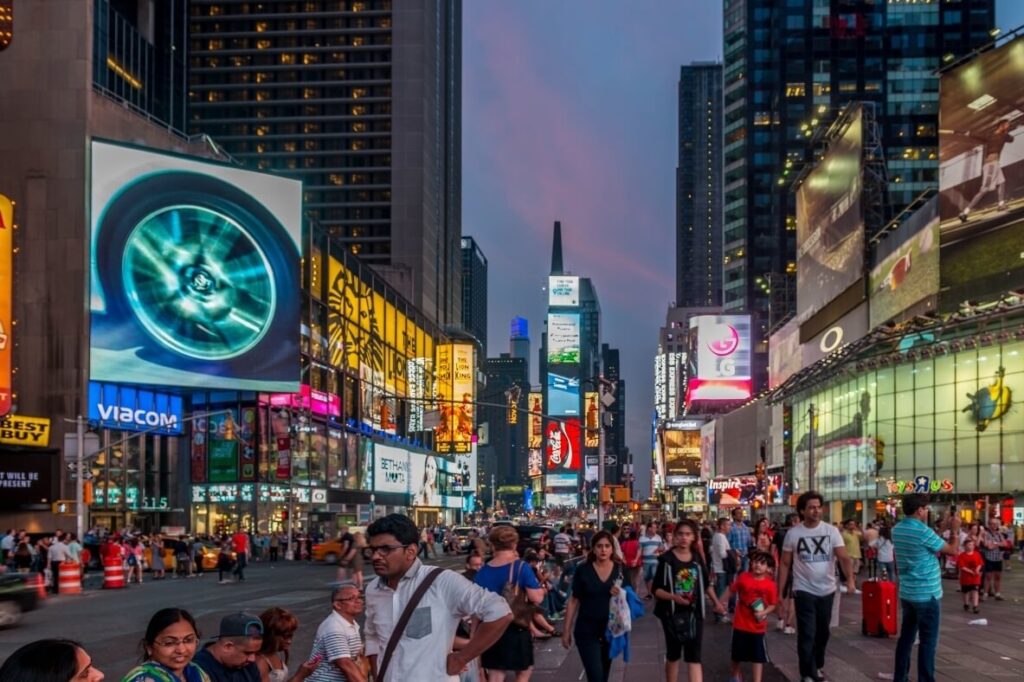
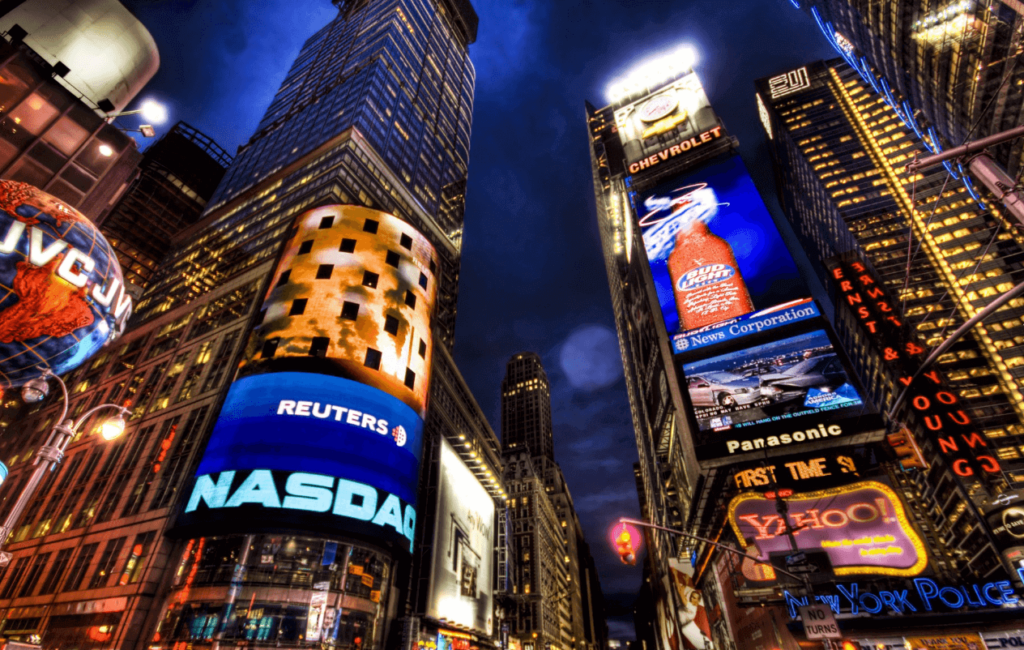
The demand for LED video walls in the US is no longer limited to Times Square. The technology has penetrated every sector of the American economy.
Virtual Production and XR Broadcasting (Hollywood & Atlanta)
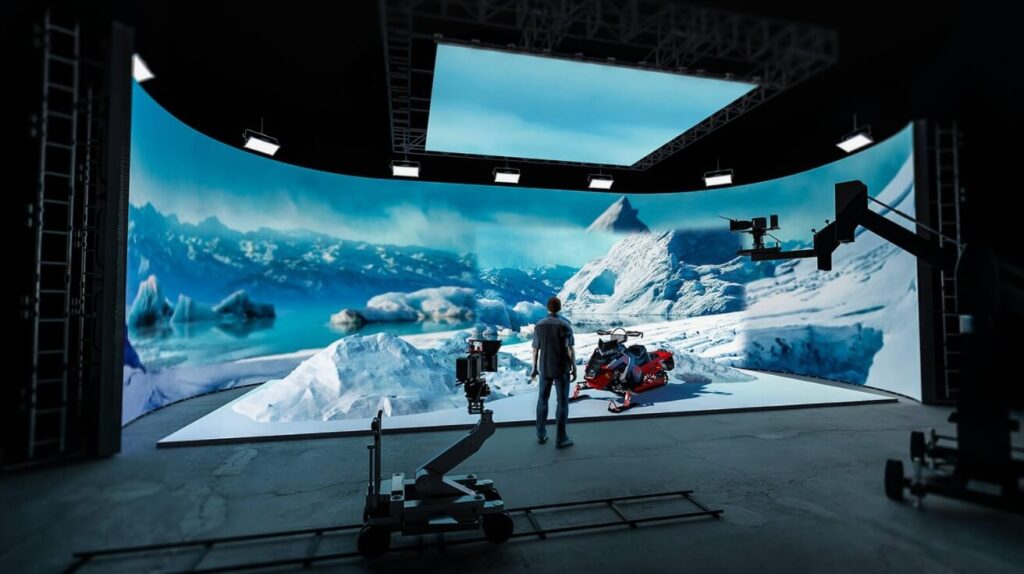
The US leads the world in cinematic virtual production. Following the success of shows like The Mandalorian, soundstages across California and Georgia are replacing green screens with massive, curved LED volumes.
These specific screens (usually P2.3 to P2.6) require ultra-high refresh rates (7680Hz), a 99% DCI-P3 color gamut, and specialized processing to synchronize perfectly with ARRI or RED cinema cameras without causing moiré patterns or scan lines.
Corporate and Command Centers
Fortune 500 companies are tearing out aging LCD video walls (which suffer from ugly bezels) and washed-out projectors. In modern boardrooms, P1.2 and P1.5 fine-pitch LED walls are the standard. They allow for split-screen data visualization (PowerPoint, Zoom, and financial tickers simultaneously) under full fluorescent office lighting without any loss of contrast.
Sports Events and Live Entertainment
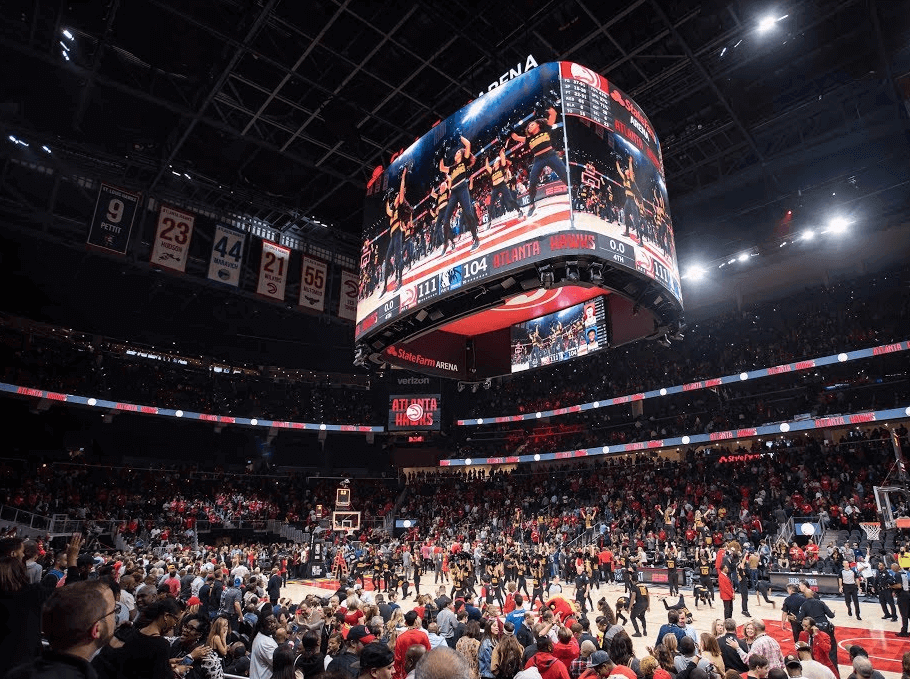
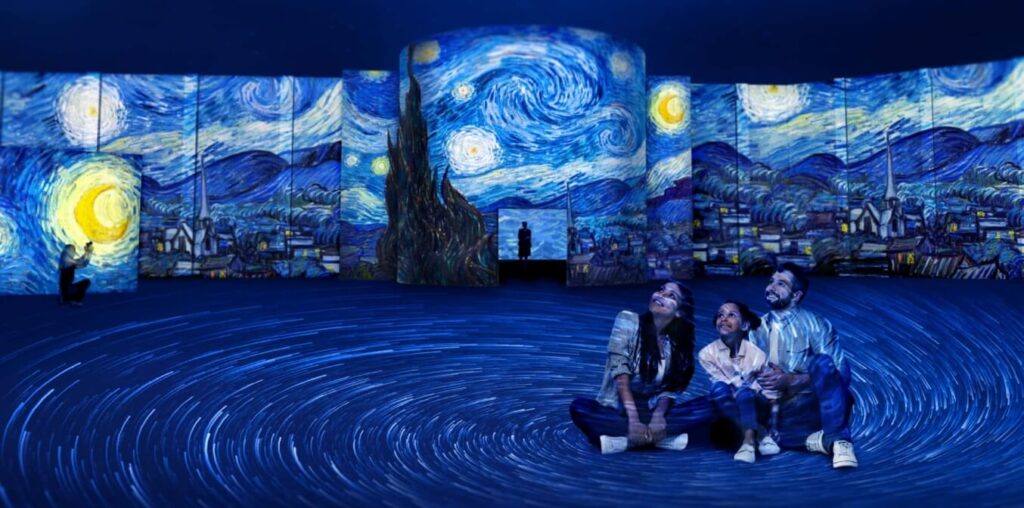
From the massive “Halo Board” in Atlanta’s Mercedes-Benz Stadium to the immersive LED Sphere in Las Vegas, the US sports and entertainment industry relies on LEDs to drive ticket sales. Modern stadium screens integrate HDR (High Dynamic Range) and real-time data overlays to enhance the fan experience.
Commercial Advertising (DOOH)
Digital Out-Of-Home (DOOH) advertising remains highly lucrative. Real estate developers are installing transparent LED meshes on the glass facades of high-end retail stores (like Fifth Avenue in NYC) and 90-degree curved screens to display viral “Naked-Eye 3D” anamorphic advertisements.
Technology Shift: COB, MicroLED, and Energy Efficiency
To understand where your money is going in 2026, you must understand the technological shift happening in the hardware.
The Rise of COB (Chip on Board)
For the past decade, SMD (Surface Mounted Device) was the standard. Diodes were soldered onto a board. However, in high-traffic US corporate lobbies, SMD screens were easily damaged if a person bumped into them.
In 2026, COB (Chip on Board) has taken over. The LED chips are bonded directly to the board and sealed with an epoxy resin. This makes the screen waterproof, dustproof, and highly impact-resistant. Furthermore, COB offers absolute true blacks, mimicking the contrast ratio of OLED TVs.
Energy Efficiency and California Title 24
Power consumption is a massive operational cost. Older LED walls drew immense amounts of electricity and required external HVAC cooling. Modern 2026 displays utilize common-cathode technology, reducing power consumption by up to 30%. This is particularly critical for installations in California, where strict Title 24 energy efficiency standards dictate exactly how much power commercial lighting and AV systems are legally allowed to consume.
Return on Investment (ROI) and Cost-Effectiveness
While the initial capital expenditure (CapEx) of an LED video wall is high, the Total Cost of Ownership (TCO) over a 10-year period makes it the most cost-effective visual medium available today.
-
Lifespan: A commercial-grade LED display has a half-life of roughly 100,000 hours. If operated for 12 hours a day, the screen will last over 20 years before its brightness degrades by 50%. Compare this to high-lumen laser projectors, which require expensive optical engine maintenance every 20,000 hours.
-
Maintenance: LED walls are highly modular. If a pixel dies, you do not throw away the screen. A technician simply uses a magnetic tool to pop out a 6×6-inch module from the front and snaps a $50 spare part into place in under 60 seconds.
-
Revenue Generation: For retail and DOOH applications, a digital CMS allows media owners to rotate 10 different advertisers in a single loop, effectively multiplying the ad revenue of a single wall space by ten compared to static printed signage.
Frequently Asked Questions (FAQ)
Are LED video walls better than LCD video walls?
Yes, unequivocally. LCD video walls are created by stacking multiple TVs together, which results in thick, highly visible black bezels (lines) slicing through your content. LED video walls are completely seamless, offering a single, uninterrupted canvas. Furthermore, LEDs are significantly brighter (up to 1,200 nits indoors) compared to standard LCDs (500 nits).
How do I clean an indoor LED video wall?
If you have a traditional SMD screen, you must use a specialized anti-static brush or a dry microfiber cloth, as applying water or harsh chemicals can short-circuit the exposed diodes. If you have a modern COB screen with an epoxy resin seal, you can safely wipe it down with a damp microfiber cloth.
Does an LED wall generate a lot of heat?
Modern indoor LED panels running at standard office brightness (600 nits) generate minimal heat thanks to passive aluminum heat sinks. They do not require dedicated air conditioning. However, massive outdoor DOOH screens running at 8,000 nits will generate significant thermal output and require robust architectural ventilation.
Conclusion
The technology behind LED video walls in the USA has matured drastically by 2026. From Hollywood’s XR stages to Manhattan’s corporate boardrooms, these displays are transforming visual communication. While the initial investment—especially when factoring in US labor and UL compliance—is substantial, the long-term ROI, 100,000-hour lifespan, and unparalleled visual impact make LED technology the definitive choice for modern AV integration. If you are planning a US-based project, prioritize finding a manufacturer and local integrator who guarantees FCC and UL compliance to protect your investment.