The Core Answer First
If you’re a filmmaker still relying on green screen for complex environment shots, you’re spending more time and money in post-production than you need to. In 2026, LED volume stages have crossed the affordability threshold for productions as small as 2–5M—adramaticshiftfromthe10M+ minimum of 2020. The technology delivers real-time photorealistic environments, reduces post-production VFX workload by 40–70%, and gives directors final-quality images through the lens on set, not six months later in a VFX suite.
The virtual production LED wall market is valued at $3.7 billion in 2026 and growing at 16% CAGR, with LED volume stages themselves expanding at 31.5% CAGR — the fastest-growing segment in the entire display industry (Mordor Intelligence / SNS Insider, 2026). This guide covers the technology, the costs, the workflow, and the practical decisions filmmakers and producers need to make to use it effectively.
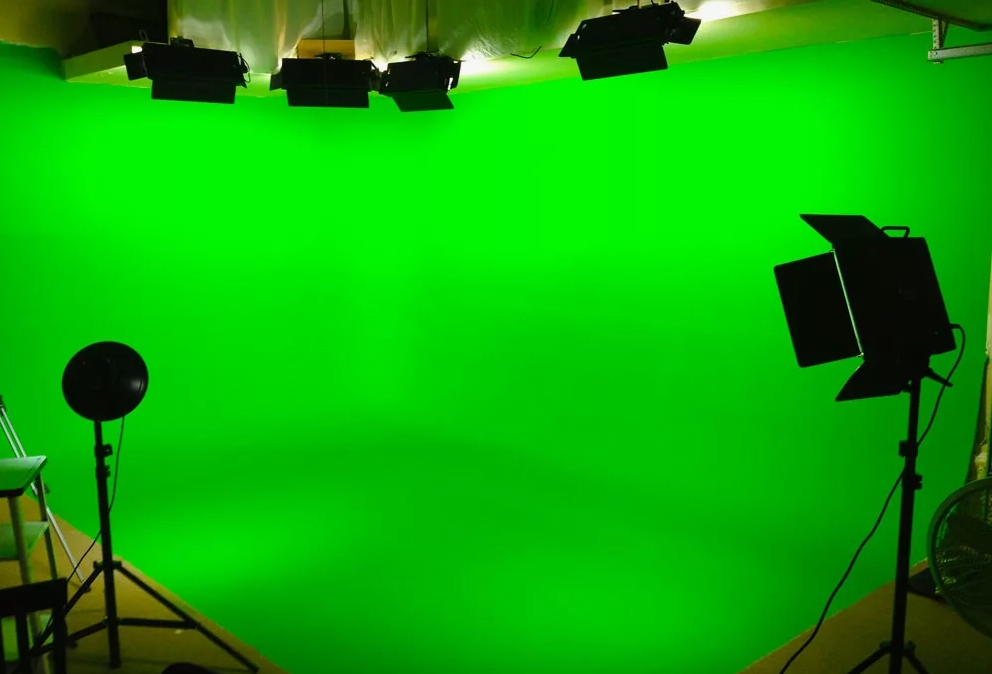
Why Green Screen Is Losing Ground
Green screen technology has been the backbone of virtual filmmaking since its large-scale adoption in Star Wars (1977). But its structural limitations have never been resolved — only worked around:
| Pain Point | Green Screen Reality | LED Volume Solution |
|---|---|---|
| Actor lighting | Unnatural green spill, approximated in post | Physical light from the LED wall — accurate and real |
| Director confidence | Environment invisible on set | Final-quality image visible through lens in real time |
| Post-production load | Full compositing required per frame (2–3 hrs/frame) | Reduced 40–70%; environment already rendered |
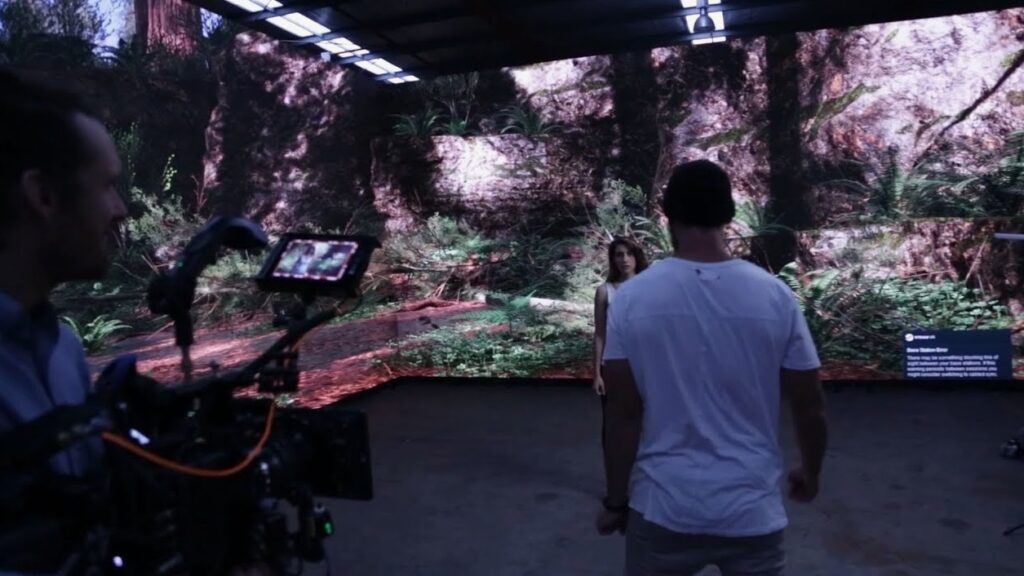
| Actor performance | 60% of actors report difficulty immersing in scene* | Real environment visible, instinctive reactions captured |
| Reshoots | Common due to compositing edge failures | Significantly reduced — issues caught on set |
*Source: Beijing Film Academy Virtual Filmmaking Performance Study
The fundamental problem with green screen is that it defers the most critical creative decisions — what the environment looks like, how it lights the actors, how it interacts with camera movement — to post-production, where changes are expensive and slow. LED volume stages move those decisions back to the set, where they belong.
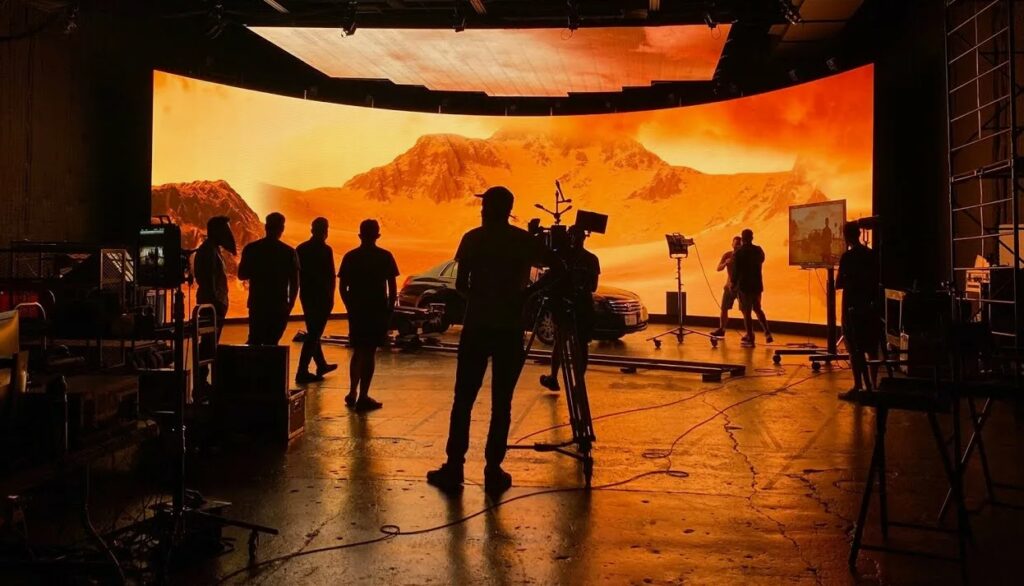
How LED Volume Technology Works: ICVFX Explained
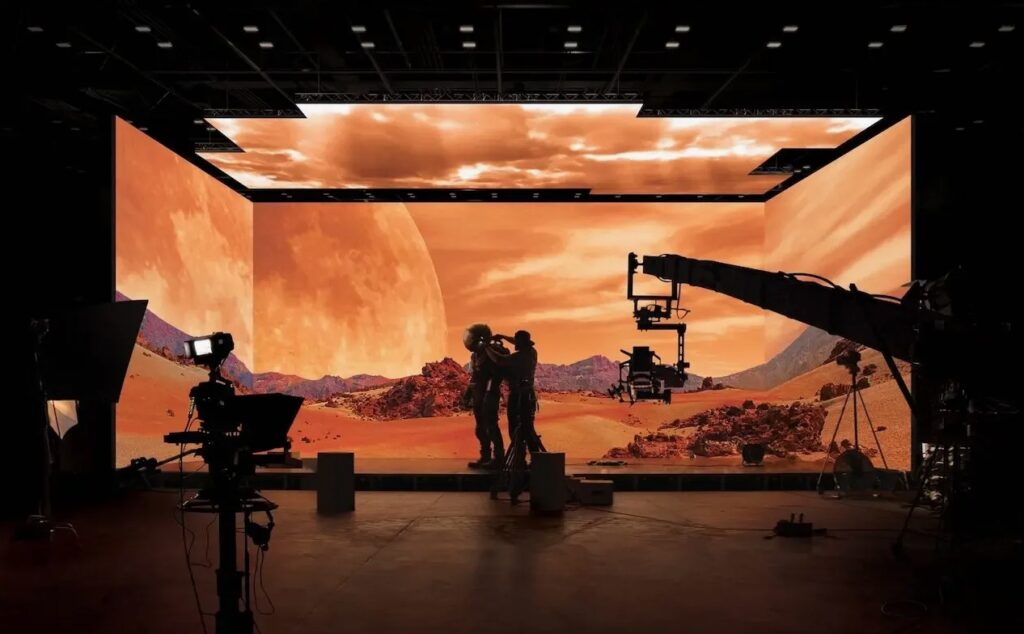
The technical term for LED volume filmmaking is ICVFX — In-Camera Visual Effects. The principle is straightforward: a curved or cylindrical wall of high-resolution LED panels surrounds the physical set, rendering photorealistic 3D environments in real time via game engine software (Epic Games’ Unreal Engine is the current industry standard). The LED wall functions simultaneously as a display and as a practical light source — the environment on screen physically illuminates the actors and props in front of it.
The three-component system:
- LED wall: High-resolution panels (typically P1.5 or finer for principal photography) arranged in a curved or full-volume configuration
- Real-time rendering engine: Unreal Engine 5 with Nanite and Lumen technology for photorealistic environments at 8K resolution
- Camera tracking system: Optical or mechanical tracking that feeds camera position data to the rendering engine, enabling perspective-correct parallax as the camera moves
The result: when the camera moves, the virtual environment responds correctly in real time. The background is not a static image — it is a live, interactive 3D world that responds to camera position, lens focal length, and depth of field.
Key Technical Specifications for Virtual Production LED Walls
Not all LED panels are suitable for virtual production. The requirements are significantly more demanding than standard commercial display applications:
| Specification | Minimum for VP Use | Recommended (2026 Standard) | Why It Matters |
|---|---|---|---|
| Pixel Pitch | P2.5 | P1.5 or finer | Finer pitch eliminates visible pixel structure in camera |
| Refresh Rate | 3,840 Hz | 7,680 Hz | Eliminates flicker artifacts in high-speed camera shooting |
| Brightness | 1,000 nits | 1,500–2,500 nits | Sufficient output to serve as practical light source |
| Color Accuracy | DCI-P3 90% | DCI-P3 100% + Rec.2020 | Accurate color matching between LED and camera sensor |
| Response Time | 1ms | 0.01ms | Eliminates motion blur in dynamic environment rendering |
| Viewing Angle | 140° | 160°+ | Maintains color accuracy across wide camera angles |
| Calibration | Manual | Auto-calibration with Unreal Engine integration | Consistent color across all panels in the volume |
Leading LED panel manufacturers for virtual production in 2026: ROE Visual (Black Onyx series), INFiLED, Leyard Optoelectronic, Sony Crystal LED, and Samsung The Wall — all offering purpose-built VP-grade panels with Unreal Engine integration.
Cost Breakdown: From Indie to Hollywood Scale
LED panel prices have dropped 30–40% since 2019, driven primarily by Chinese manufacturers scaling production. This cost reduction is the primary reason virtual production has become accessible to mid-budget productions.
Hardware Investment (Stage Build)
| Stage Scale | LED Wall Area | Pixel Pitch | Build Cost (2026) | Target Production Budget |
|---|---|---|---|---|
| Compact indie | 50–100 sqm | P2.5 | 50,000–200,000 | 500K–2M |
| Mid-range | 150–300 sqm | P1.5–P2.0 | 1M–3M | 2M–10M |
| Premium studio | 400–800 sqm | P1.2–P1.5 | 3M–8M | 10M–50M |
| Hollywood flagship | 800+ sqm | P1.2 or finer | 8M–15M+ | $50M+ |
Daily Rental Rates (2026)
- Compact regional stage: 5,000–15,000/day
- Mid-range studio stage: 15,000–40,000/day
- Premium flagship stage (LA/London): 40,000–80,000/day
Production Savings That Justify the Cost
Productions replacing location-heavy sequences with LED volume work report 15–25% overall budget savings. A $5M drama that previously required 12 days of international location shooting can compress that spend significantly — and productions qualifying for regional VFX tax incentives (UK: 40% rebate; Abu Dhabi: up to 50% cash rebate) can effectively generate gap financing through production efficiency.

Global LED Volume Stage Landscape in 2026
The geography of virtual production infrastructure has shifted dramatically since 2022:
| Region | Market Share | Key Facilities | Growth Driver |
|---|---|---|---|
| North America (LA) | ~40% | Manhattan Beach Studios, Trilith, Lux Machina | Established base, major studio demand |
| UK/Europe | ~25% | Pinewood, Sky Studios Elstree, Cinecitta | 40% UK VFX tax credit |
| Asia-Pacific | ~20% | Wuxi Studios (China), Dongdaemun (Korea), Fox Studios (Australia) | 19% CAGR, fastest-growing region |
| MENA | ~5% (rapidly growing) | NEOM Media Hub (1,200 sqm), Film AlUla | Saudi Vision 2030, $4B+ infrastructure investment |
| Rest of World | ~10% | Emerging markets | Regional content demand |
China-specific context: Wuxi Studios operates China’s largest LED volume. Domestic productions including major streaming titles for iQIYI, Youku, and Tencent Video are increasingly using LED volume stages, driving rapid capacity expansion across Tier 1 production cities.
Real-World Applications and Case Studies
Hollywood Scale: The Mandalorian and Beyond
The production of The Mandalorian (Disney+) established the LED volume as a viable Hollywood tool. A 270° LED volume rendered alien landscapes in real time, with lead actor Pedro Pascal describing the experience as acting in a genuinely physical environment. The production reduced location shooting by an estimated 60% while maintaining visual quality indistinguishable from on-location footage.
Subsequent productions including Avatar 3, Dune: Part Two, and The Wandering Earth 3 have all incorporated LED volume stages for specific sequences, with each production pushing the technology’s capabilities further:
- Avatar 3: Pixel-level lighting control for underwater scene simulation
- Dune: Part Two: Real-time camera tracking with automatic depth-of-field matching
- The Wandering Earth 3: Curved cockpit LED displays for spacecraft interior sequences
Independent Production: The Accessible Entry Point
At Hangzhou Film Industry Park, independent director Chen Mo’s sci-fi short Letters from Mars demonstrated the accessible end of the spectrum. Renting an LED shooting studio at under $2,800/day and using Unreal Engine’s Nanite technology for real-time 8K Martian surface rendering, the production cut 40% from its post-production budget. The actors’ genuine physical reactions to the simulated environment — instinctive responses impossible to replicate against a green screen — added authenticity that elevated the final product beyond its budget class.
Streaming and Episodic: The Strongest ROI Case
TV and streaming represent the fastest-growing application for LED volume stages at 21%+ CAGR. The economics are compelling: shooting the same virtual environment across 8–10 episodes of a series amortizes the pre-production investment across a much larger content volume than a single film, dramatically improving ROI.
Challenges and Limitations Filmmakers Must Know
Virtual production is not a universal solution. Understanding its limitations is as important as understanding its capabilities:
- Extended pre-production requirement: Virtual art department work must begin 8–12 weeks before principal photography — significantly earlier than traditional workflows. Productions that discover this late pay for it in schedule and budget.
- Skilled crew shortage: Experienced LED volume operators and virtual art department leads are supply-constrained, especially outside established markets. Facility availability does not equal crew availability.
- High-contrast scene limitations: Bright daylight and exterior environments still challenge current panel brightness. Hybrid LED + CGI approaches are common for these scenarios.
- No unified technical standards: Compatibility friction between stages and VFX pipelines remains an industry-wide problem with no standardized solution as of 2026.
- Information asymmetry costs: Producers without verified facility data — pricing benchmarks, credits, availability — face 15–20% margin leakage from negotiating without market knowledge.
2026 Technology Trends Shaping the Next Generation
MicroLED Enters Virtual Production
MicroLED technology is moving from prototype to commercial availability for virtual production applications in 2026. At SID 2026, BOE and Tianma demonstrated transparent MicroLED panels with pixel pitches below P0.9 and brightness exceeding 6,000 nits — specifications that would eliminate the remaining brightness limitations of current LED volume stages for exterior daylight simulation.
AI-Driven Real-Time Rendering
NVIDIA’s latest Omniverse platform integrates AI-accelerated ray tracing that reduces rendering latency for complex 3D environments by approximately 40% compared to 2024 benchmarks. This enables more complex virtual environments to run in real time on existing hardware.
Dynamic Calibration and Auto-Matching
Sony Crystal LED’s latest generation integrates automatic color matching with Unreal Engine 5, eliminating the manual calibration process that previously required 2–4 hours of setup time per shooting day. Unilumin’s intelligent dimming system reduces energy consumption by 30% while maintaining calibrated output.
Light Field Display Integration
Professor Zhang Tao (Chinese Academy of Sciences Flexible Electronics Lab) projects that light field display technology integrated with MicroLED panels will begin commercial deployment in virtual production environments by 2027–2028, enabling true volumetric depth perception that eliminates the remaining visual distinction between LED-rendered and physically present environments.
How to Choose the Right LED Volume Stage for Your Production
Three things to verify before booking any facility:
- Panel specifications: Confirm pixel pitch (P1.5 or finer for principal photography), brightness (minimum 1,500 nits), and refresh rate (minimum 3,840 Hz). Request the technical spec sheet, not just marketing claims.
- Verified project history: Ask for a reel of productions shot at the facility in your content category. A stage that has only shot commercials may not have the workflow experience for long-form drama.
- Resident crew experience: Confirm that experienced LED volume operators and a virtual art department supervisor are available for your dates — not just the hardware.
Timeline planning:
- Book the facility 12–16 weeks before your shoot date
- Begin virtual art department pre-production 8–12 weeks before photography
- Allow 2–3 weeks for technical rehearsals and camera tests on the actual stage
Frequently Asked Questions (FAQ)
What pixel pitch do I need for a virtual production LED wall?
P1.5 is the current industry standard for principal photography in 4K drama and film. P2.5 is acceptable for soft-focus backgrounds or productions shooting at lower resolutions. For close-up work or high-speed camera applications, P1.2 or finer is recommended.
How much does it cost to rent an LED volume stage for one day?
In 2026, daily rental rates range from 5,000forcompactregionalstagesto80,000 for premium flagship facilities in LA or London. Most mid-range stages fall in the 15,000–40,000/day range, typically including basic technical crew.
Can independent filmmakers afford LED volume production?
Yes, in 2026. Productions in the 2–5MrangecannowjustifyLEDvolumestages—asignificantshiftfromthe10M+ threshold of 2020. Compact stages renting at 5,000–15,000/day are accessible for short films, music videos, and low-budget features.
Does LED volume replace all green screen work?
No. LED volume excels for environment-heavy sequences where actor lighting interaction is critical. Pure CGI environments, aerial shots, and sequences requiring full 360° coverage still typically use green screen or location shooting. Most productions use a hybrid approach.
What rendering engine is used for LED volume virtual production?
Epic Games’ Unreal Engine 5 is the current industry standard, used in the majority of professional LED volume productions globally. Its Nanite geometry system and Lumen global illumination enable real-time photorealistic rendering at 8K resolution.
Conclusion
LED video walls have fundamentally changed the economics and creative possibilities of virtual production. In 2026, the technology is no longer a Hollywood-exclusive tool — it is accessible to mid-budget productions globally, with a growing network of stages across North America, Europe, Asia-Pacific, and MENA. The combination of falling hardware costs, maturing workflows, and generous regional tax incentives has made LED volume production a financially rational choice for a much wider range of projects than was possible even two years ago.
For filmmakers and producers evaluating the technology, the key shift in mindset is this: LED volume is not a post-production tool. It is a pre-production and production tool that moves creative decisions earlier in the process, where they are cheaper and faster to make.