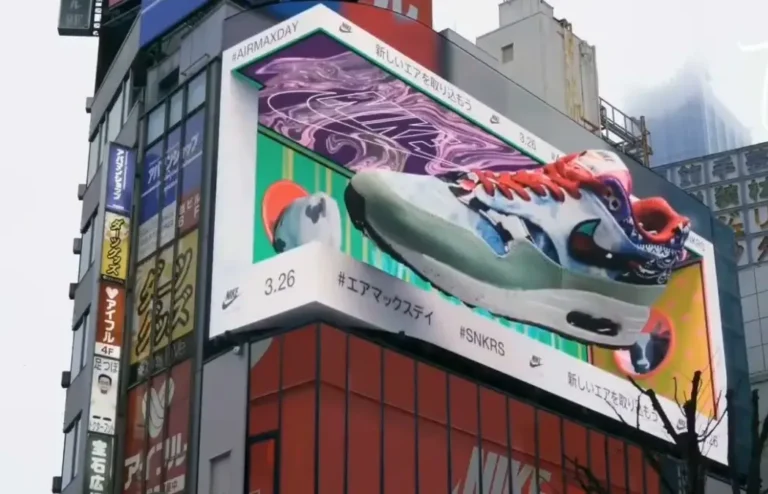
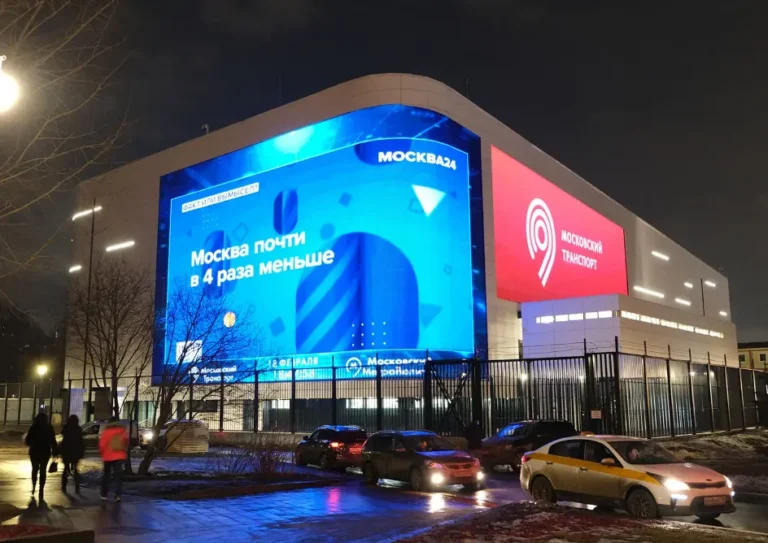
If you are comparing concert LED screen prices, do not evaluate suppliers by the panel price alone. A professional concert LED system is priced according to pixel pitch, screen size, brightness, refresh rate, cabinet design, control equipment, rigging, transportation, installation, and technical support.
As a practical 2026 reference, factory-direct LED panel pricing can range from several hundred to several thousand US dollars per square meter depending on specification, while a complete concert deployment can cost substantially more after adding processing, structure, logistics, labor, and other system components. Current market references show wide variation because a P2.6 indoor rental wall, a P3.9 touring system, and a high-brightness outdoor festival wall are fundamentally different products.
The right question is therefore not simply “How much is a concert LED screen?” It is:
What specification will deliver the required image quality and reliability at the lowest practical total cost?
What Is a Concert LED Screen?
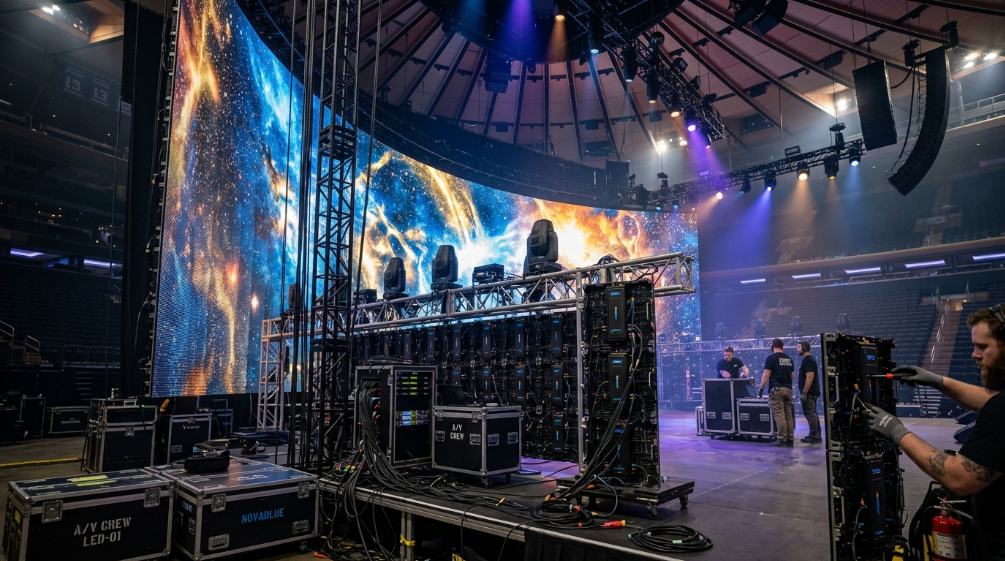
A concert LED screen is a modular direct-view LED display system designed for concerts, festivals, touring productions, stage shows, corporate events, and other professional live-event environments.
Unlike a fixed commercial LED billboard, a rental concert LED screen normally uses lightweight cabinets that can be assembled, dismantled, transported, flown from truss, or ground-stacked repeatedly.
Common cabinet sizes include 500 × 500 mm and 500 × 1000 mm. Multiple cabinets are mechanically connected to create large seamless LED walls in rectangular, curved, or creative configurations.
The modular design is important for touring productions because the same inventory can be reconfigured for different venues.
A typical concert LED system may include:
- Main stage LED backdrop
- Left and right side screens
- IMAG screens
- Curved or creative LED structures
- LED floor screens
- B-stage displays
- Architectural LED elements
- Outdoor festival LED walls
For a professional production, the LED cabinet is only one part of the system. The complete solution can also include video processors, media servers, sending and receiving cards, power distribution, signal cables, rigging equipment, flight cases, spare parts, and technical crew.
Concert LED Screen Prices: How Much Does a Concert LED Screen Cost?
There is no single standard price because concert LED displays are configured for different environments and viewing distances.
As a broad 2026 market reference, factory-direct purchase prices can range from approximately $300 to more than $3,000 per square meter, depending on pixel pitch, brightness, LED components, cabinet construction, and application. Rental pricing is normally calculated differently and can range from tens to hundreds of dollars per square meter per day before transportation and crew costs.
A simplified reference is:
| Concert LED Screen Type | Typical Pixel Pitch | Indicative Purchase Range | Typical Application |
|---|---|---|---|
| Fine-pitch indoor | P1.9–P2.6 | $500–$1,500+/m² | Theater, indoor concert, broadcast |
| Standard touring | P2.9–P3.9 | $350–$1,000+/m² | Concert touring, stage backdrop |
| Outdoor festival | P3.9–P5.9 | $450–$1,200+/m² | Outdoor concerts and festivals |
| High-resolution / premium | P1.5–P2.5 | $1,000–$3,000+/m² | XR, broadcast, close viewing |
| Curved / creative | P2.6–P3.9 | Project dependent | Immersive stage design |
These are planning references rather than fixed quotations. The final price depends on the exact cabinet, LED package, control system, quantity, destination, and project requirements.
Why Can Two Concert LED Screens With the Same Pixel Pitch Have Different Prices?
Because pixel pitch is only one variable.
The quotation may change according to:
- LED chip and LED package quality
- Driver IC
- Cabinet material
- Cabinet weight
- Brightness
- Refresh rate
- Grayscale performance
- IP protection
- Power supply
- Receiving card and control system
- Calibration
- Mechanical locking system
- Front/rear maintenance design
- Rigging accessories
- Flight cases
- Warranty and technical support
This is why comparing suppliers purely by price per square meter can produce misleading results.
A lower-priced panel may require additional structural support, more crew hours, more spare parts, or more expensive logistics.
Purchase Price vs. Rental Price: Which Is Better?
For concert production companies and rental houses, the buy vs. rent decision is often more important than the initial panel price.
Renting a Concert LED Screen Makes Sense When:
- You only organize a few events each year.
- The screen specification changes from event to event.
- You do not want to maintain an LED inventory.
- You need local installation and technical support.
- The event is a one-off concert or festival.
- Transportation and storage would be expensive.
Buying a Concert LED Screen Makes Sense When:
- You operate frequent events.
- You run a touring production.
- You are an AV rental company.
- You need the same LED configuration repeatedly.
- You want to generate rental revenue from your own inventory.
- You can manage maintenance, spare parts, storage, and logistics.
For example, a rental company running dozens of shows each year can potentially achieve better long-term economics by owning a standardized P2.6, P2.9, or P3.9 inventory rather than repeatedly renting from another supplier.
The break-even point should be calculated from utilization rate, not simply the number of events.
The Hidden Costs Behind Concert LED Screen Prices
The LED panel is rarely the complete project cost.
A professional concert deployment can also require:
| Cost Component | Why It Matters |
| LED cabinets | Main display hardware |
| Video processor | Handles scaling, switching and signal processing |
| Media server | Manages complex playback and show content |
| Sending/receiving cards | Transmits video data to the LED wall |
| Power distribution | Provides stable electrical supply |
| Data cables | Carries video/control signals |
| Rigging | Required for flown LED walls |
| Ground support | Required for some stacked configurations |
| Flight cases | Protect panels during touring |
| Transportation | Important for multi-city productions |
| Installation crew | Load-in, assembly and testing |
| Dismantling crew | Load-out after the show |
| Spare modules | Reduces downtime risk |
| Technical support | Troubleshooting during production |
Current industry pricing guides increasingly distinguish panel price from total project cost for exactly this reason.
For a touring company, transportation and labor can become a significant part of the total cost over an entire season.
How to Choose Pixel Pitch for a Concert LED Screen
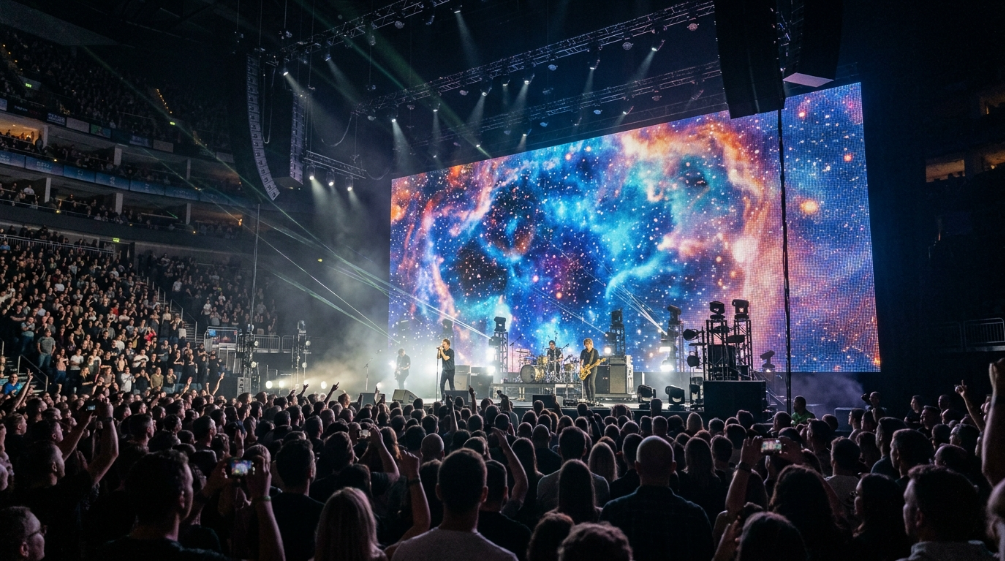
Pixel pitch is the distance between the centers of two adjacent LED pixels.
A smaller pixel pitch means:
- Higher pixel density
- Greater image detail
- Better close-range viewing
- Higher screen cost
The correct pixel pitch depends primarily on the closest important viewing distance, not simply the desire for the highest resolution.
| Pixel Pitch | Typical Application | Approximate Viewing Position |
| P1.5–P1.9 | XR, broadcast, theater, close-range stage | Very close |
| P2.5–P2.6 | Indoor concerts, premium stage | Close |
| P2.9 | Indoor/outdoor rental | Medium |
| P3.9 | Concert touring and festivals | Medium to long |
| P4.8 | Large outdoor stages | Long |
| P5.9+ | Large venues and long-distance viewing | Long |
A practical starting point is to relate pixel pitch to viewing distance, then validate the choice with the actual venue layout.
Do not automatically choose P1.9 simply because it has a higher pixel density. If the audience is 15–30 meters away, a larger pitch may provide sufficient visual quality while reducing acquisition cost.
Brightness: Indoor Concert vs. Outdoor Festival
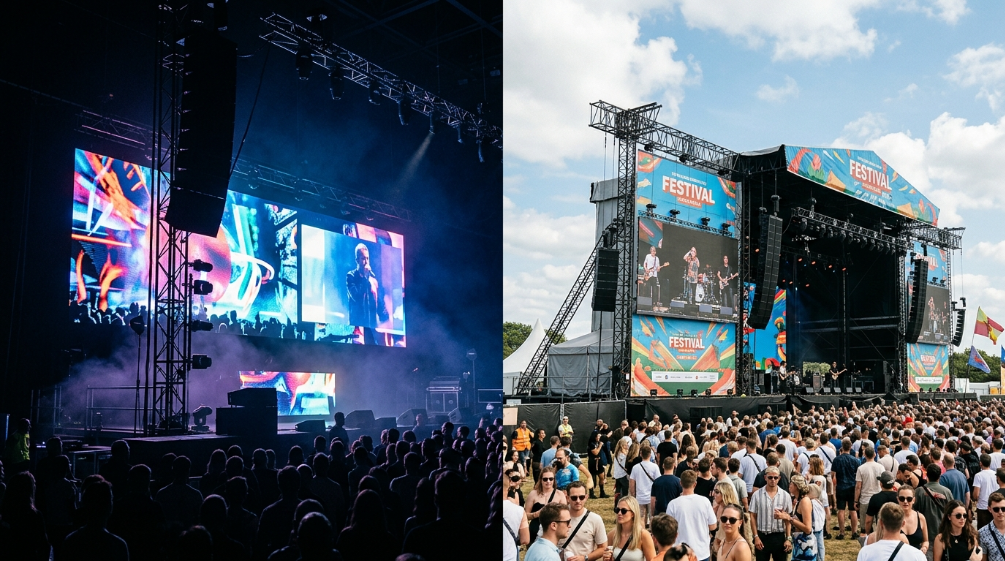
Brightness is measured in nits, or cd/m².
Indoor concert screens generally require much less brightness than outdoor festival displays.
Typical considerations include:
- Indoor venue: approximately 800–1,500 nits
- Outdoor evening event: approximately 4,000–5,500+ nits
- Daytime outdoor festival: often 5,000 nits or higher
The actual requirement depends on direct sunlight, stage lighting, camera exposure, viewing distance, and the content being displayed.
For outdoor concerts, also evaluate the weatherproofing and structural design rather than treating brightness as an isolated specification.
Outdoor rental systems commonly use IP65-class protection for appropriate environmental protection.
Refresh Rate and Camera Performance
- Camera Flicker: Visible black bars (rolling shutter effect) when filmed.
- Content Loss: Fast-moving content may appear blurry or tearing.
- Not Broadcast Ready: Unsuitable for professional live streaming or TV.
- Flicker-Free: Crystal clear image on all cameras (1/2000s+ shutter speed).
- Smooth Motion: Perfect for fast video playback and sports.
- XR Ready (7680Hz): Essential for virtual production and XR studios.
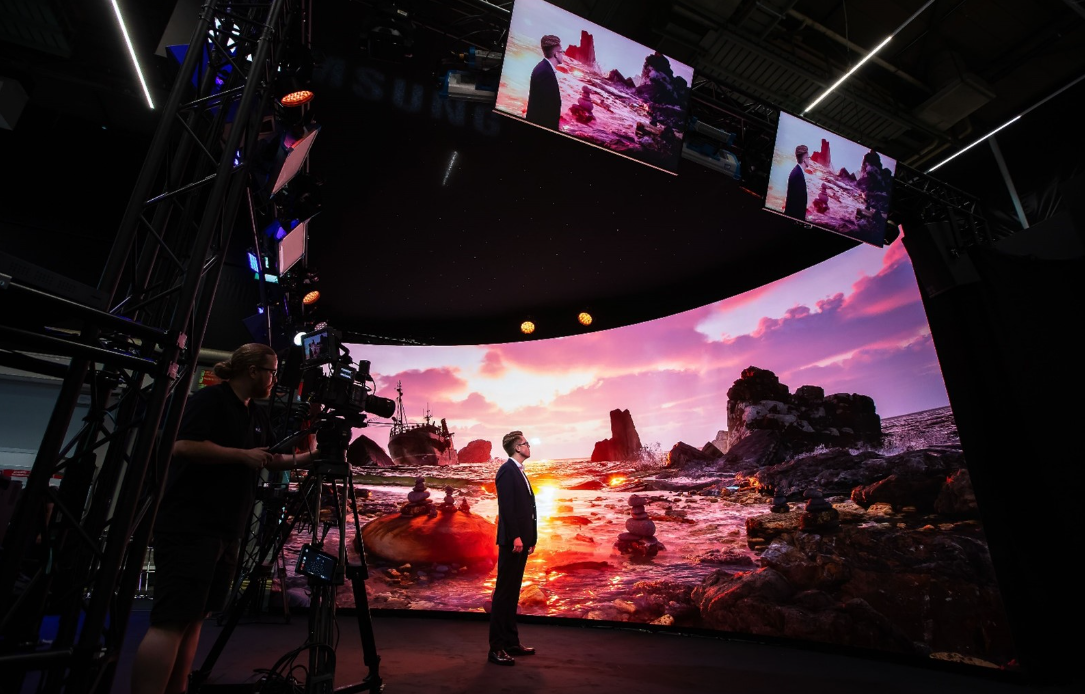
A concert LED screen may look perfectly smooth to the audience but still produce problems on camera.
This is because professional cameras can expose:
- Scan lines
- Flicker
- Banding
- Uneven brightness
- Moiré patterns
For concerts that use live broadcast, IMAG, livestreaming, slow-motion footage, or social-media video production, a high refresh rate should be part of the specification.
3,840 Hz or above is a common professional target, while premium camera-facing systems may specify 7,680 Hz or similar high-refresh performance.
However, refresh rate should not be evaluated alone.
Camera performance also depends on:
- Scan mode
- Driver IC
- PWM technology
- Grayscale
- Pixel structure
- LED mask
- Camera shutter speed
- Processing chain
- Color calibration
For broadcast and XR applications, ask the supplier for an actual camera test rather than accepting a refresh-rate number on a datasheet.
Contrast, Grayscale and Color Calibration Matter on Camera
Concert content contains large areas of black, gradients, skin tones, shadows and saturated colors.
A screen with poor grayscale performance can make dark scenes look crushed or uneven.
A professional system should therefore be evaluated for:
- Contrast
- Grayscale depth
- Color temperature
- Gamma
- White balance
- Cabinet-to-cabinet uniformity
- Module calibration
- Brightness uniformity
This becomes especially important when several LED walls are used simultaneously and the camera moves between them.
Color mismatch between the main wall and IMAG side screens can become surprisingly visible during a live broadcast.
Lightweight Cabinets Are Important for Touring
A concert LED screen may be assembled and dismantled dozens or hundreds of times during its service life.
Cabinet weight therefore affects much more than transportation.
It can influence:
- Rigging load
- Truss requirements
- Crew fatigue
- Truck space
- Installation speed
- Venue structural limitations
- Transportation cost
Modern touring LED systems increasingly use lightweight aluminum or carbon-fiber construction.
For example, SoStron’s Carbon family is designed around lightweight carbon-fiber construction and high-refresh performance for touring, stage and XR applications.
The economic advantage should be calculated across the entire touring operation, rather than judged only by the cabinet’s purchase price.
Flown LED Screen vs. Ground-Stacked LED Screen
There are two common structural configurations.
Flown LED Screen
The screen is suspended from a truss or other engineered rigging structure.
Advantages include:
- Cleaner stage appearance
- Better sightlines
- Efficient use of floor space
- Large backdrop configurations
But the total suspended load must be checked carefully.
Cabinet weight, rigging hardware, motors, truss and safety equipment all contribute to the structural load.
Ground-Stacked LED Screen
The screen is installed on the stage floor or a dedicated support structure.
Advantages include:
- Easier access
- Simpler maintenance
- No overhead suspension requirement
- Suitable for many temporary stages
The correct choice depends on the stage design, venue restrictions and structural engineering requirements.
Concert LED Screen Features That Matter for Touring
Quick-Lock Mechanical Design
Fast locking systems reduce assembly and dismantling time.
This matters when a production has a narrow load-in window.
Anti-Collision Protection
Rental cabinets experience significantly more mechanical stress than permanent indoor displays.
Corner protection and robust mechanical construction can reduce damage during transportation and repeated installation.
Front Maintenance
Once a screen is flown or installed close to stage scenery, rear access may be impossible.
Front-access modules and power supplies allow technicians to replace components without dismantling the entire wall.
Curved Configuration
Curved LED cabinets can create:
- Concave screens
- Convex screens
- Wrap-around stages
- Circular structures
- Creative architectural shapes
The ability to create curved configurations is increasingly important for immersive stage design.
Flight Cases
For touring companies, flight cases should be considered part of the LED system rather than an optional accessory.
Proper packaging reduces the risk of:
- Broken LED modules
- Damaged cabinet corners
- Loose connectors
- Mechanical deformation
What Functions Does a Concert LED Screen Provide?
A concert LED screen is not simply a background.
1. Main Stage Backdrop
The main LED wall can display:
- Artist visuals
- Music videos
- Motion graphics
- Live camera feeds
- Brand content
- Song-specific animations
2. IMAG — Image Magnification
IMAG screens show close-up camera footage to audience members sitting far from the stage.
This is especially useful in:
- Arenas
- Stadiums
- Outdoor festivals
- Large theaters
The signal path should be designed for low latency so the displayed image does not visibly lag behind the live performance.
3. Side Screens
Side screens improve visibility for audiences positioned outside the main viewing axis.
4. LED Floor
LED floor systems allow the stage surface itself to become a dynamic visual element.
5. Curved and Immersive Structures
Multiple LED surfaces can be synchronized to create a continuous visual environment.
6. XR and Virtual Production
Fine-pitch, high-refresh LED systems can also be used for camera-facing XR and virtual production environments.
This requires stricter control of:
- Pixel pitch
- Moiré
- Refresh rate
- Camera synchronization
- Color
- Latency
How Professional Concert LED Systems Are Connected
A typical signal chain looks like this:
Camera / Playback Source → Switcher or Media Server → Video Processor → Sending Card → Receiving Card → LED Cabinets
Every stage can affect final performance.
For complex productions, compatibility between the LED display, processor, media server and camera system should be confirmed before the event.
Premium systems can also support HDR workflows, low-latency processing and advanced color management. SoStron’s Carbon platform, for example, specifies HDR10 support and professional receiving-card configurations for advanced production workflows.
Real Concert LED Screen Applications
Concert LED displays are now used across a wide range of professional productions.
Large Music Festivals
Outdoor festivals generally require:
- High brightness
- Weather protection
- Large viewing distances
- Strong mechanical construction
- Fast deployment
Arena Concerts
Arena productions often combine:
- Main backdrop
- Side screens
- IMAG
- Curved LED elements
- B-stage screens
Touring Productions
Touring systems prioritize:
- Lightweight cabinets
- Fast locking
- Flight cases
- Repeatable calibration
- Spare parts
- Easy maintenance
Corporate and Brand Events
The same rental LED technology is also used for:
- Product launches
- Brand activations
- Award ceremonies
- Corporate conferences
- Large-scale presentations
How to Choose a Concert LED Screen Supplier
Do not evaluate suppliers only by the lowest quotation.
Ask for a complete specification including:
- Exact pixel pitch
- LED package brand
- Driver IC
- Refresh rate
- Brightness specification
- Contrast ratio
- Grayscale
- Cabinet weight
- Cabinet dimensions
- IP rating
- Maintenance method
- Locking mechanism
- Power consumption
- Control system
- Calibration process
- Spare-parts policy
- Warranty
- Technical support
- Delivery schedule
- Transportation and packaging
For touring operations, also ask:
How quickly can replacement modules, power supplies and receiving cards reach the next venue?
That question can be more important than saving 5% on the original panel quotation.
Current supplier-selection content increasingly emphasizes spare inventory and regional technical support because downtime during a tour has a direct operational cost.
Concert LED Screen Buying Checklist
Before approving a purchase or rental contract, confirm:
- Pixel pitch matches the closest important viewing distance.
- Brightness matches indoor or outdoor ambient conditions.
- Refresh rate is suitable for camera use.
- LED modules have consistent color and brightness.
- Cabinet weight meets venue and rigging limits.
- IP rating is suitable for outdoor exposure.
- Front maintenance is available where required.
- Control equipment is compatible with the production workflow.
- Flight cases are included for touring applications.
- Spare modules and power supplies are available.
- Warranty terms are documented.
- Technical support responsibilities are clearly defined.
- Transportation, installation and dismantling are included or separately quoted.
- The quotation specifies whether the price is FOB, CIF, delivered or fully installed.
Actionable Advice for Concert LED Screen Buyers
If you are currently requesting quotations, do not send suppliers only:
“Please quote a 50 m² concert LED screen.”
Instead, provide:
Venue: indoor / outdoor
Screen size: width × height
Closest viewing distance: meters
Farthest viewing distance: meters
Event type: concert / festival / touring / corporate
Camera: yes / no
Installation: flown / ground-stacked
Operating hours: daytime / nighttime
Rental or purchase: specify
Destination: city and country
Required delivery date: specify
This information allows the supplier to recommend a real configuration rather than simply sending a generic price list.
For a rental company, also request a TCO comparison covering the LED cabinets, flight cases, control system, rigging, transportation, spare parts and technical support.
For an event organizer, compare the complete installed/rental package, not only the LED screen price per square meter.
For a touring production, prioritize weight, mechanical durability, maintenance speed, spare-parts availability and technical support alongside image quality.
That is usually where the difference between a cheap LED screen and a commercially reliable concert LED system becomes visible.
Frequently Asked Questions About Concert LED Screen Prices
How much does a concert LED screen cost?
A concert LED screen can range from several hundred dollars per square meter for standard rental-oriented configurations to several thousand dollars per square meter for premium fine-pitch or specialized systems. Complete projects cost more after control systems, rigging, transportation, installation and technical services are included.
What is the best pixel pitch for a concert LED screen?
P2.6–P3.9 is a practical range for many concert applications, but the correct choice depends on viewing distance. P1.9 or finer can be appropriate for close-range, broadcast or XR applications, while P4.8 and larger pitches can work well for large outdoor venues.
What refresh rate should a concert LED screen have?
For productions involving professional cameras, 3,840 Hz or higher is a sensible specification target. High-end camera-facing applications may use 7,680 Hz-class systems. Actual camera performance should be verified through testing because refresh rate alone does not eliminate every image artifact.
What brightness is needed for an outdoor concert LED screen?
A professional outdoor concert LED screen commonly uses approximately 4,500–6,000+ nits, depending on sunlight and event conditions. Direct daytime festivals may require higher brightness than nighttime concerts.
Is it better to buy or rent a concert LED screen?
Renting is generally more practical for occasional events. Buying becomes more attractive for rental companies, touring productions and organizations with high annual screen utilization.
What additional costs should I budget for?
Budget for control equipment, power distribution, data cables, rigging, flight cases, transportation, installation, dismantling, spare parts and technical support in addition to the LED cabinets.
Conclusion
The best concert LED screen is not necessarily the screen with the smallest pixel pitch or the lowest price.
For professional B2B projects, the correct specification is the one that balances viewing distance, brightness, camera performance, cabinet weight, mechanical reliability, deployment speed and total cost of ownership.
When comparing concert LED screen prices, ask suppliers to quote the complete system and clearly separate panel cost from control, rigging, logistics, installation and support.
A properly specified P2.6, P2.9 or P3.9 touring system can often deliver better commercial value than an unnecessarily expensive fine-pitch display.
The objective is simple:
Buy or rent the specification your production actually needs—not the specification that looks most impressive on a quotation sheet.
Related SoStron LED Products
- Carbon / Carbon SE — Large Stage Rental LED Display: Lightweight touring solution designed for large stages, concerts and event rental applications. Carbon / Carbon SE Large Stage Rental LED Display
- Hima — Fine-Pitch Rental LED Display: Flexible rental platform covering P1.5–P3.9 configurations for concerts, stages, XR and event applications. Hima Rental LED Display
References:
USC Viterbi School of Engineering — The Volume / LED Video Wall
IEEE — LED Flicker / Modulation Standard