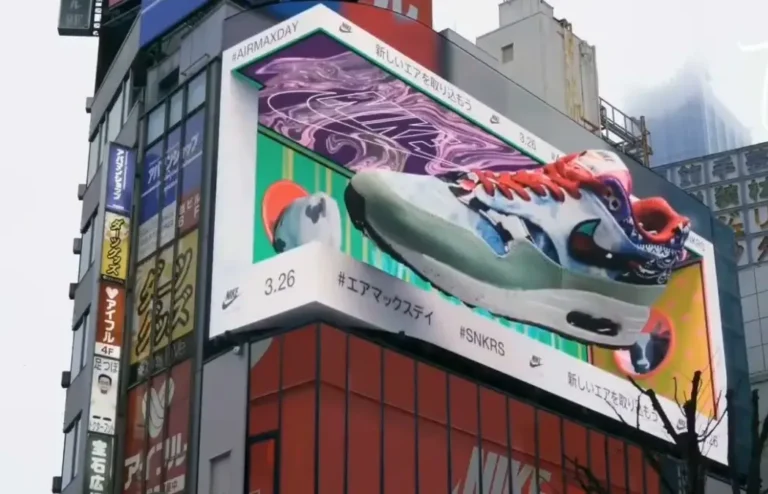
If you’ve ever had a client request a 7.2m × 3.1m LED wall for a three-day conference — only to discover the venue has a 1.2m service elevator — you already understand why assemblable LED screens exist. They are not a compromise. They are the engineering answer to a real operational problem.
The short version: An assemblable LED screen is a display system built from standardized, interlocking die-cast aluminum cabinets — typically 500×500mm or 500×1000mm — that snap together on-site using tool-free quick-lock mechanisms. A 24m² wall that would take a fixed-install crew two days can be erected by two technicians in under four hours. That is not a marketing claim; it is a function of cabinet weight (5–8 kg per unit) and the mechanical precision of modern locking systems.
For B2B buyers — system integrators, event production companies, and DOOH network operators — the decision to invest in assemblable LED technology is fundamentally a cost-structure decision. The display hardware is only part of the equation. Labor, logistics, storage, and maintenance cycles determine whether a display asset generates margin or destroys it.
What Is an Assemblable LED Screen? (And Why It’s Replacing Fixed Installations)
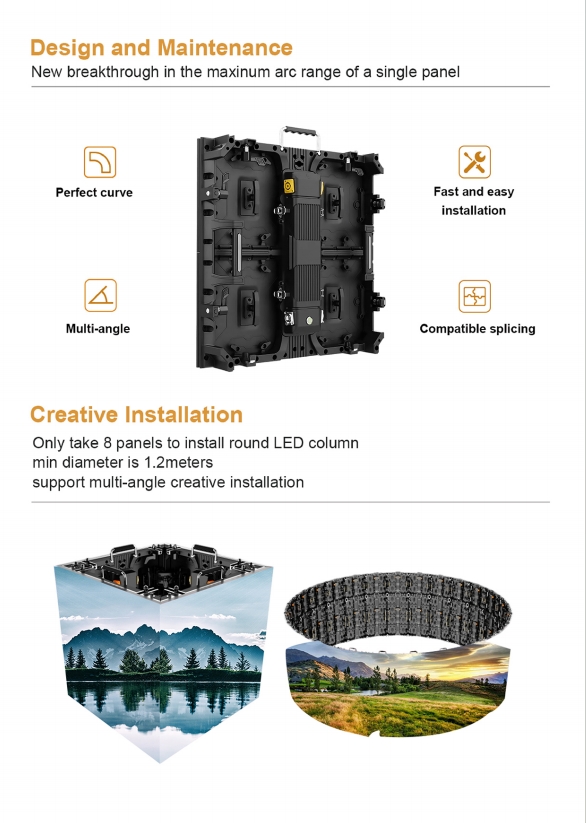
The term covers any LED display architecture where the final screen is constructed from discrete, self-contained cabinet modules at the deployment site. Each cabinet carries its own LED modules, power supply, and receiving card — a fully independent unit that connects electrically and mechanically to its neighbors.
Three structural formats dominate the market:
| Format | Cabinet Weight | Assembly Method | Primary Use Case |
|---|---|---|---|
| Assemblable / Modular Rental | 5–9 kg | Tool-free quick-lock (magnetic or bayonet) | Events, touring, temporary installs |
| Fixed Installation | 12–25 kg | Bolted to permanent steel structure | Billboards, building facades, control rooms |
| All-in-One (Integrated) | 30–80 kg | Single-unit placement | Boardrooms, retail point-of-sale |
The distinction that matters commercially: fixed installations front-load cost into structure and labor. Assemblable systems move that cost into hardware precision — and that hardware travels with you.
Based on our experience deploying modular LED walls across 200+ event projects, the break-even point versus renting fixed-format screens is typically reached at the fifth to seventh deployment of the same hardware. After that, the asset generates pure margin.
Three scenarios where assemblable LED consistently outperforms fixed alternatives:
- Multi-venue touring — the same 60m² cabinet inventory configures as a wide stage backdrop at venue A and a tall immersive tunnel at venue B. No additional fabrication.
- Irregular space constraints — cabinets with ±10° arc adjustment capability allow concave or convex curved configurations that custom-fabricated fixed screens cannot economically match below 100m².
- DOOH network scaling — operators can begin with a 10m² pilot installation, purchase additional cabinets to scale to 40m², and maintain a single spare-parts inventory across all sites.
How Assemblable LED Screens Are Built: The Cabinet Engineering That Cuts Setup Time by 60%
Understanding the hardware is non-negotiable for procurement decisions. What follows is not a brochure summary — it is the mechanical reality that separates a €25,000 LED wall from a €60,000 one with identical pixel pitch.
Die-Cast Aluminum Cabinets: The Structural Foundation
The cabinet is the atom of the assemblable LED system. Its quality determines everything downstream: flatness, thermal performance, and how many assembly cycles it survives before mechanical tolerance degrades.
Die-cast aluminum cabinets are manufactured by injecting molten aluminum alloy under high pressure into precision molds. The result is a frame with dimensional tolerance of ±0.1mm — tight enough that 50 cabinets tiled together maintain a visually seamless surface without manual shimming.
| Cabinet Material | Weight (per m²) | Flatness Tolerance | Typical Lifecycle | Commercial Implication |
|---|---|---|---|---|
| Die-cast aluminum | 22–30 kg | ±0.1mm | 5,000+ assembly cycles | Best for high-frequency rental operations |
| Magnesium alloy | 18–22 kg | ±0.15mm | 3,000+ cycles | Preferred for touring (weight-critical) |
| Extruded aluminum | 28–38 kg | ±0.3mm | Fixed install only | Not suitable for assemblable applications |
| Steel frame | 40–60 kg | ±0.5mm | Fixed install only | Billboards, permanent outdoor structures |
For rental and event companies running equipment 80–120 days per year, die-cast aluminum is the default. Magnesium alloy costs 15–20% more per cabinet and is worth the premium only when air freight is part of the logistics chain.
Quick-Lock Mechanisms: Where Minutes Become Money
The locking system is the single most important — and most underspecified — component in an assemblable LED screen. Buyers routinely compare pixel pitch and brightness while ignoring the mechanism that determines whether two technicians can rig a 30m² wall in 45 minutes or 3 hours.
Bayonet Lock
A quarter-turn mechanical fastener integrated into the cabinet side rails. Connects in one motion; tolerates minor misalignment during insertion. Assembly speed: approximately 90 seconds per cabinet-to-cabinet joint under field conditions.
Magnetic Snap Lock
Rare-earth magnets embedded in cabinet edges provide initial alignment and holding force, supplemented by a mechanical pin for structural rigidity. Fast for small-format walls; less reliable above 6m height due to wind load.
Screw-Assisted Quick-Lock
A hybrid system where a single central fastener pre-aligns the joint before secondary locks engage automatically. Slightly slower to install but delivers the tightest flatness tolerance. Preferred for fine-pitch assemblable screens (P2.5 and below) where cabinet gap visibility is critical.
The commercial implication of lock choice is direct: a 60m² stage backdrop has approximately 240 cabinet-to-cabinet joints. The difference between a 90-second and a 180-second lock adds one hour of labor per build. At professional AV crew rates, that is $200–$400 per event — $20,000–$40,000 over a five-year asset life.
GOB Encapsulation: Protection for Screens That Travel
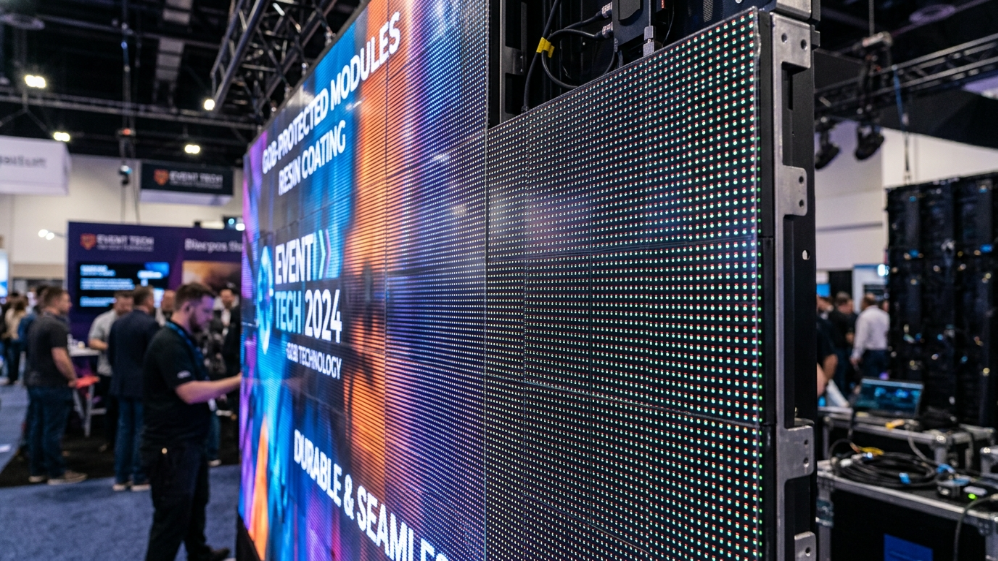
Assemblable LED screens face a stress that fixed installations never encounter: repeated vibration, impact, and temperature cycling during transport.
Standard SMD LED packages — individual diodes surface-mounted on a PCB — are vulnerable to lamp detachment and moisture ingress after 500–800 handling cycles.
GOB (Glue on Board) technology fills the air gaps between LED chips and the PCB surface with a transparent optical-grade resin. The cured compound:
- Protects against water infiltration
- Improves effective IP rating from IP40 to IP54
- Absorbs mechanical shock
- Reduces dust adhesion on the display surface
For rental operators, GOB modules typically reduce lamp-failure maintenance costs by 60–70% compared to bare SMD across a three-year period.
According to field data from mid-scale European rental fleets (50–200m² inventory), GOB cabinets average one module replacement per 180 operational hours versus one per 60 hours for conventional SMD in equivalent conditions.
The trade-off is a slight reduction in contrast ratio and a 12–18% cost premium over standard SMD modules at equivalent pixel pitch.
Choosing the Right Pixel Pitch for Your Assemblable LED Screen Project
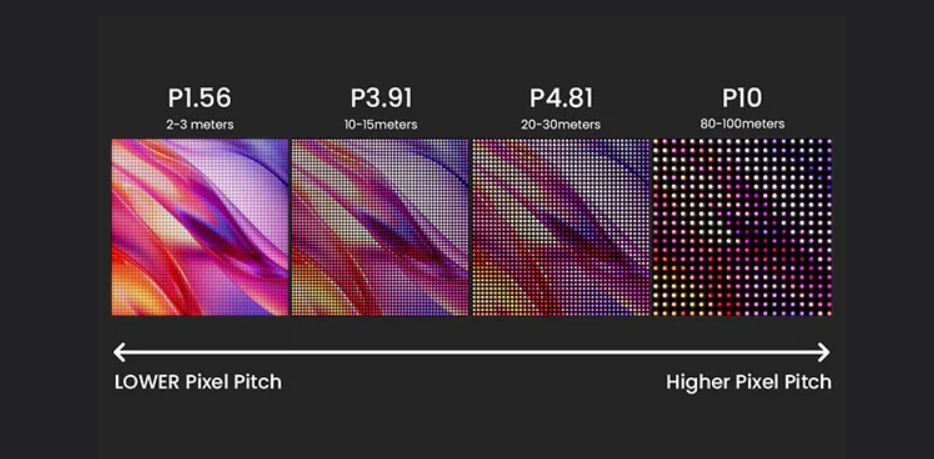
Pixel pitch is the specification buyers fixate on first — and misapply most often.
The number (P2.9, P3.9, P4.81) represents the center-to-center distance in millimeters between adjacent LED pixels.
The rule of thumb that holds up in practice:
Minimum viewing distance (meters) ≈ pixel pitch (mm) × 1.5
A P3.9 screen becomes fully legible at approximately 5.8m.
Pixel Pitch Selection Guide
| Pixel Pitch | Min. Viewing Distance | Typical Cabinet Size | Best-Fit Deployment | Relative Cost Index |
|---|---|---|---|---|
| P1.9 / P2.5 | 3–4m | 480×480mm | Corporate stages, brand activations, trade show booths | ●●●●● |
| P2.9 | 4.5–5m | 500×500mm | Indoor events, conferences, rental inventory (most versatile) | ●●●● |
| P3.9 | 6–7m | 500×500mm / 500×1000mm | Concerts, festivals, large indoor venues | ●●● |
| P4.81 | 7–8m | 500×500mm | Outdoor events, DOOH pilots, stadium perimeter | ●● |
| P6.25 / P8 | 10m+ | 960×960mm | Large-format outdoor, permanent DOOH structures | ● |
For rental inventory decisions, P2.9 and P3.9 cover approximately 80% of event configurations without requiring separate SKUs for different venue sizes.
Refresh Rate Considerations
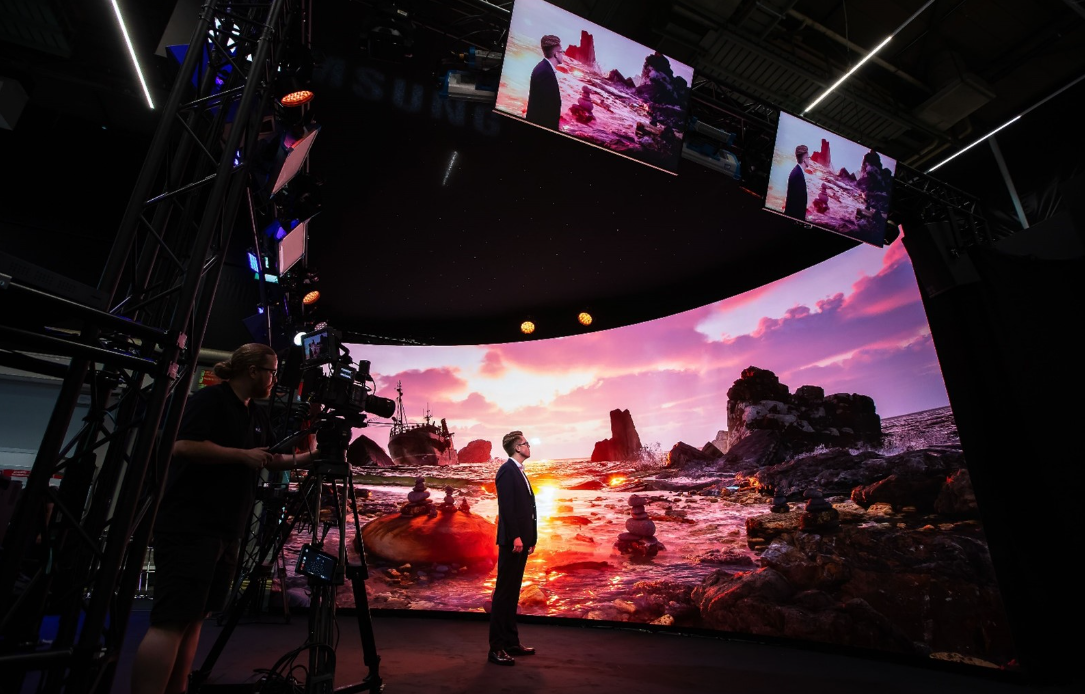
- Camera Flicker: Visible black bars (rolling shutter effect) when filmed.
- Content Loss: Fast-moving content may appear blurry or tearing.
- Not Broadcast Ready: Unsuitable for professional live streaming or TV.
- Flicker-Free: Crystal clear image on all cameras (1/2000s+ shutter speed).
- Smooth Motion: Perfect for fast video playback and sports.
- XR Ready (7680Hz): Essential for virtual production and XR studios.
One specification that consistently gets overlooked during pitch selection is refresh rate.
For DOOH operators running camera-based content capture, or production companies working in XR/virtual production environments, a refresh rate below 3,840Hz produces visible scan lines in camera footage.
Specify ≥3,840Hz whenever camera-readiness is a project requirement.
5 High-ROI Use Cases That Justify the Investment
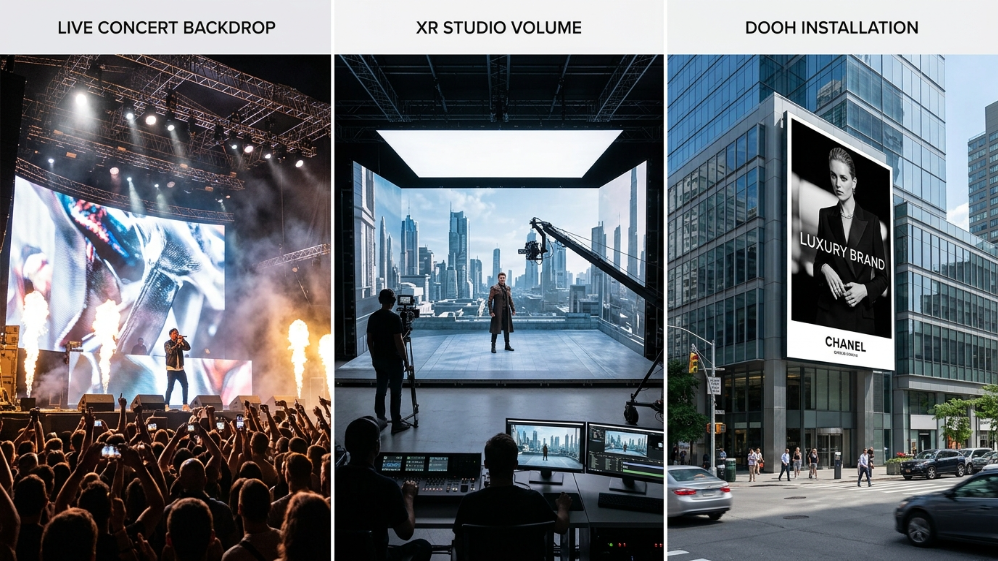
Live Events and Touring
Live events and touring remain the highest-utilization deployment model.
A 60m² P3.9 cabinet inventory, priced at approximately $45,000–$65,000 wholesale, generates $8,000–$15,000 per event rental at professional market rates.
At 20 deployments per year, payback occurs within 8–12 months.
Trade Shows and Exhibitions
Trade shows and exhibitions demand curved and irregular configurations that fixed screens cannot deliver without custom fabrication.
Assemblable cabinets with ±10° arc adjustment capability allow:
- Concave stage backdrops
- Convex retail display arcs
- L-shaped corner configurations
Based on our experience with exhibition clients, the ability to offer curved configurations commands a 20–35% rental premium versus flat-wall competitors using identical pixel pitch.
DOOH Networks
DOOH networks present a different value proposition: incremental scalability.
An operator launching a 3-screen pilot in transit hubs can purchase 30m² of assemblable inventory, validate CPM revenue against projections, and scale to 120m² by purchasing additional matching cabinets.
XR and Virtual Production Studios
XR and virtual production studios require:
- GOB modules
- ≥3,840Hz refresh rate
- 16-bit grayscale depth
The assemblable format enables studios to reconfigure stage dimensions between productions.
Corporate Permanent Installs
Corporate permanent installs increasingly specify front-access assemblable panels because of zero-downtime maintenance.
A front-serviceable cabinet allows a single technician to replace a faulty LED module in under three minutes.
Assemblable LED Screen Procurement Checklist: 7 Specs B2B Buyers Must Verify
1. Cabinet Flatness Tolerance
Request the manufacturing tolerance certificate, not the nominal spec.
Anything above ±0.2mm produces a visible seam line at pixel pitches below P3.9.
2. IP Rating vs. Actual Sealing Method
Ask for test certificates (IEC 60529), not marketing descriptions.
3. Certifications: CE, FCC, RoHS
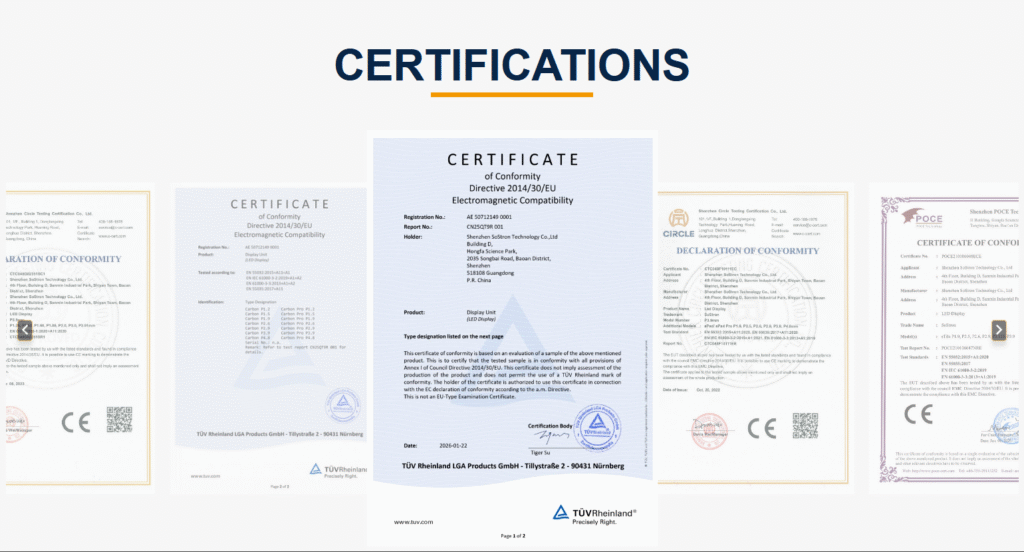
Verify original certificates, not logo appearances on product pages.
4. Power Redundancy Architecture
Professional assemblable screens carry dual power supplies per cabinet with automatic failover.
5. Receiving Card Backup
Specify dual-card redundancy for any deployment where downtime has contractual consequences.
6. Module Replacement Cycle and Connector Lifespan
- Hot-swappable front service
- ≥10,000 insertion cycle connectors
7. OEM/ODM Documentation and White-Label Terms
Verify:
- Technical documentation
- Branded packaging options
- Warranty transfer terms
before committing to a supplier.
FAQ: What B2B Buyers Ask Before Committing
How long does it actually take to assemble a modular LED video wall on-site?
A standard 24m² wall using 500×500mm die-cast cabinets with bayonet quick-lock takes two trained technicians approximately 90–120 minutes including cable routing and controller setup.
First-time assembly with unfamiliar hardware adds 30–45 minutes.
Can assemblable LED screens handle curved or irregular configurations without custom orders?
Yes — provided the cabinet includes an arc-adjustment mechanism.
Most professional rental cabinets allow ±5° to ±10° of angular offset per joint, enabling both concave and convex curves.
What is the realistic minimum order quantity (MOQ) for wholesale assemblable LED panels?
Direct factory orders typically start at 10–20m² (approximately 40–80 cabinets at 500×500mm).
For OEM/white-label programs, MOQs are usually higher — 50m² minimum is common.
How does assemblable LED compare to fine-pitch LED for conference room installations?
Fine-pitch LED (P1.2–P1.9) installed as a fixed wall optimizes for viewing quality at close distances.
Assemblable modular formats optimize for flexibility and serviceability.
What happens when one cabinet fails mid-event?
With dual power supply and dual receiving card redundancy, a single cabinet failure degrades the display area by one cabinet footprint but does not kill the wall.
The failed cabinet can be bypassed in the controller software in under two minutes and physically replaced during a break.
Expert Verdict
The assemblable LED screen market has matured past the point where “modular” is a differentiator.
Every manufacturer now uses that word.
What actually separates a sound investment from a depreciating liability is:
- The mechanical tolerance of the cabinet
- The engineering of the lock system
- The supplier’s ability to maintain module availability five years post-purchase
For system integrators and rental operators entering the market in 2026–2026:
- Specify P2.9 as your primary inventory pitch.
- Require GOB encapsulation if utilization exceeds 60 event days per year.
- Treat dual redundancy on power and signal as non-negotiable.
- Run the five-year total cost model before the first conversation with a salesperson.
The numbers, not the brochure, should drive the decision.
References:
University of California, Berkeley – Electrical Engineering & Computer Sciences
MIT Media Lab – Responsive Environments Group