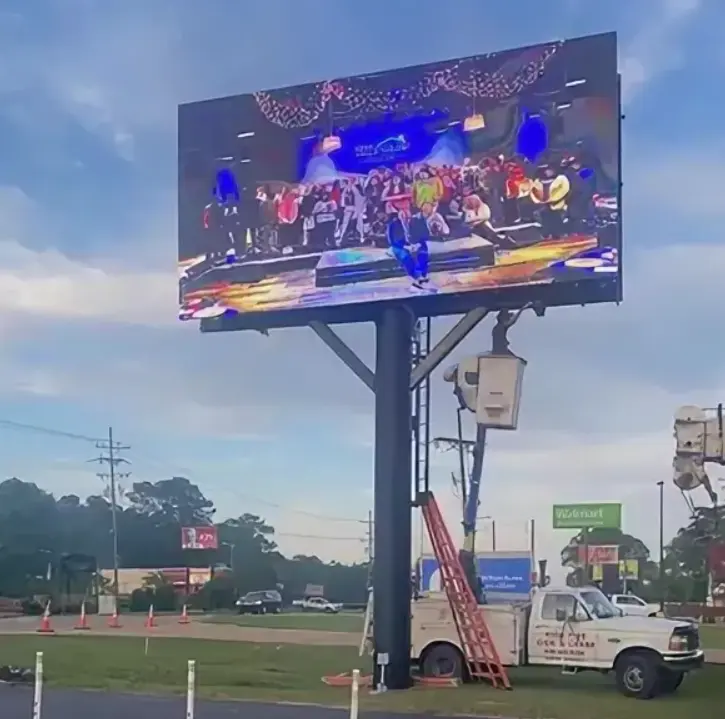
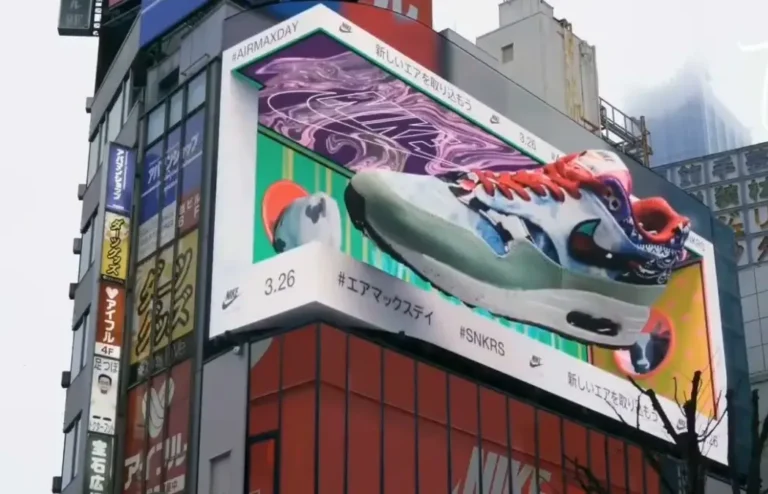
Quick Summary: Outdoor LED Screen Costs at a Glance (2026)
| Application | Typical Pixel Pitch | Brightness (nits) | Estimated Panel Price (USD/m²) | Includes |
|---|---|---|---|---|
| Highway billboard (long distance) | P10–P16 | 5,000–6,500 | $350–$600 | Basic SMD, IP65, steel cabinet |
| City street/advertising pillar (medium distance) | P6–P8 | 5,500–6,500 | $400–$750 | SMD, IP65, Al/steel hybrid cabinet |
| Retail storefront (close-up viewing) | P3–P5 | 6,000–8,000+ | $800–$1,500+ | Premium SMD/COB, IP65, alu cab |
| High-end retail / luxury brand showcase | P2.5–P3.9 | 7,000–10,000+ | $1,200–$2,500+ | COB or premium SMD, high brightness |
| Stadium / arena perimeter display | P6–P10 | 5,500–7,500 | $500–$900 | SMD, IP65, robust steel cabinet |
| Outdoor rental / event screen | P3.9–P6 | 4,500–6,000 | $650–$1,300 | Ruggedized, fast-install design |
| Transparent/creative facade LED | Varies | 4,000–8,000 | $700–$2,000+ | Custom form factor, specialized |
| Premium billboard (energy-certified, 10-yr warranty) | P6–P10 | 5,500–7,000 | $800–$1,500+ | Common cathode, advanced cooling |
*Source: Panel pricing is only the tip of the iceberg—a complete 100 m² project must also include steel structure (10–20% additional), shipping, on-site installation, and control systems (NovaStar/Colorlight)–. Entry-level outdoor SMD: P6 outdoor SMD LED displays market range $250–625 per m²; lower end for commodity volumes, higher for premium gold-wire, high-brightness–. P3.91 outdoor HD waterproof LED screens (high-quality): $900–$1,800 per m²–.*
Here is the blunt truth upfront: There is no fixed price per square meter for outdoor LED screens in 2026—and anyone who gives you a single number without asking about your application, location, viewing distance, and local climate is likely setting you up for a budget disaster. Outdoor LED screens are not off-the-shelf consumer products. They are engineered systems where every component—from the LED chip packaging and driver ICs to the cabinet material and power redundancy scheme—affects both upfront cost and long-term reliability.
Over years of quoting and installing outdoor displays across commercial billboards, transit stations, sports stadiums, and retail storefronts, I have seen what drives costs up and what causes catastrophic failures when buyers chase the lowest price per square meter. This 2026 guide covers exactly what you are paying for at every price tier, the five factors that actually determine cost, the hidden expenses that blow budgets, and how to evaluate whether a quote represents genuine value—not just a low number.
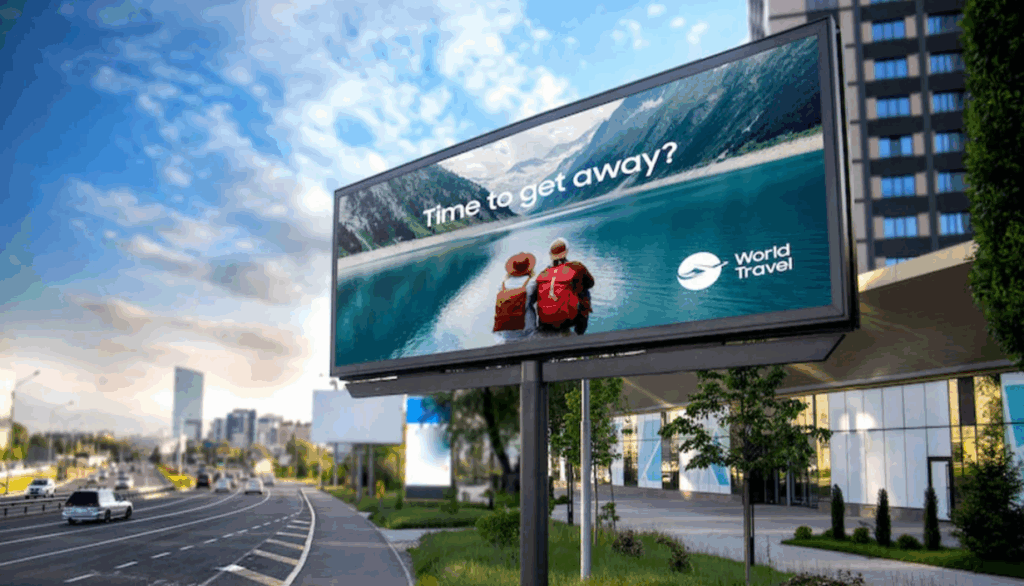
Why Outdoor LED Screen Prices Are So Confusing
The confusion around outdoor LED screen pricing stems from a fundamental misunderstanding: an “outdoor LED screen” is not a product—it‘s a system. Every installation is custom-engineered for specific viewing distances, ambient light conditions, climate exposure, and content requirements.
Think of it like comparing cars: a sedan, a pickup truck, and a sports car all have four wheels and an engine, but their prices vary dramatically because they serve different purposes. Similarly, a P16 billboard viewed from 50 meters away costs far less per square meter than a P3.9 retail display viewed from three meters away—yet both are “outdoor LED screens.”
Here is the 2026 market reality: According to industry data, the global outdoor LED display market was valued at approximately $8.0–$8.67 billion in 2026 and is projected to grow to $17.28 billion by 2032, with a compound annual growth rate of about 12%.– More than 65% of outdoor advertising networks now use LED outdoor displays for their high brightness and visibility–. China’s “15th Five-Year Plan” targets a 17 percent reduction in CO₂ emissions by 2030—directly influencing LED display procurement toward energy-certified, low-carbon models–.
Yet despite market growth, pricing transparency remains elusive. The five factors that follow explain why.
2. Five Core Factors That Affect Outdoor LED Screen Prices
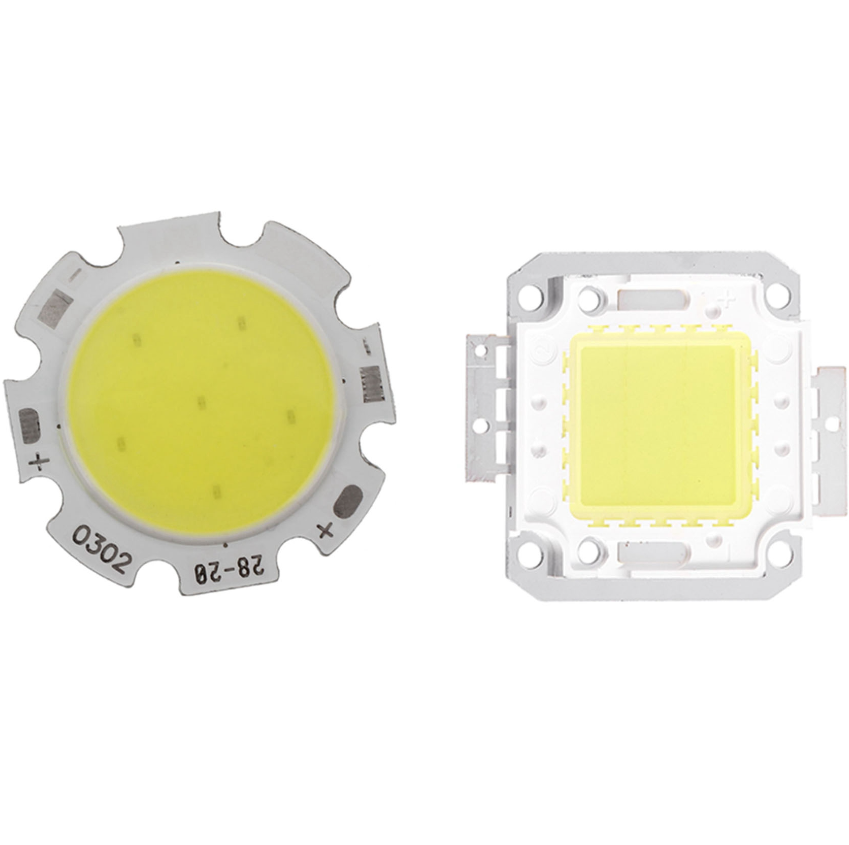
a) Pixel Pitch: The #1 Cost Driver
Pixel pitch—the distance in millimeters between the center of one LED pixel to the center of the next—is the single most important technical factor determining outdoor LED screen cost.
How pixel pitch affects price: Smaller pitch = more LEDs per square meter = higher manufacturing complexity = higher cost per square meter. A P2.5 display has nearly twice as many pixels as a P3.9—roughly 2.5× the LEDs, each requiring individual placement, soldering, and testing–.
2026 outdoor pixel pitch guidance:
| Pixel Pitch | Typical Minimum Viewing Distance | Pixel Density (dots/m²) | Relative Cost Factor |
|---|---|---|---|
| P16–P20 | 50m+ | ~3,900–6,250 | Baseline |
| P10 | 30–50m | ~10,000 | +0–20% |
| P8 | 20–30m | ~15,625 | +15–30% |
| P6 | 15–25m | ~27,777 | +30–50% |
| P5 | 10–18m | ~40,000 | +50–80% |
| P4 | 8–12m | ~62,500 | +80–120% |
| P3 | 5–8m | ~111,111 | +120-200% |
| P2.5+ | 3–5m | 160,000+ | Premium |
Real-world price differentials:
-
P10 screens typically cost 15–30% less than P8 screens for the same build quality.
-
P6 models can cost another 20%+ than P8.
-
For a 10×20 outdoor screen, moving from P3.9 (coarse) to P2.5 (fine) can increase costs by 25–40% or more–.
*Industry note: In the P1.4 and below segment, COB sales share has exceeded 85.5%. While this fine pitch is rare for large outdoor displays, it signals a fundamental shift in premium applications—and those looking for ultra-fine outdoor should budget accordingly–.*
b) Brightness Competing with Sunlight
Outdoor screens compete with ambient light—particularly direct sunlight. Inadequate brightness is the most common reason outdoor displays fail to deliver ROI in daylight hours.
2026 outdoor brightness standards:
| Environment | Minimum Brightness | Recommended |
|---|---|---|
| Semi-outdoor / shaded location | 4,000–5,000 nits | 5,500+ nits |
| Direct sunlight (standard) | ≥ 5,000 nits (absolute minimum) | 6,000–8,000 nits |
| High-exposure (tropical, desert, high-altitude) | 8,000+ nits | 10,000–15,000+ nits |
According to industry sources, outdoor LED screens require at least 5,000 nits to be visible under direct sunlight–. Brightness needs vary by region: high-exposure areas require 8,000–13,000+ nits–. Indoor screens typically need 500–1,000 nits—a fraction of outdoor requirements–.
How brightness affects cost: Every additional 1,000 nits of brightness generally adds 5–10% to the panel cost per square meter. High-brightness screens require higher-grade LED chips, more robust power supplies, and better thermal management—all adding to bill of materials.
2026 brightness innovation: New power-saving technologies like PSE (Power Saving Enhancement) can achieve significant reductions in power consumption while maintaining high brightness by optimizing the power supply path and using specialized components–. Some manufacturers now achieve 5,000+ nits at ~580W/m²—roughly 50% more efficient than traditional outdoor cabinets requiring over 1,000W/m² for similar brightness–.
c) Weather Protection: IP Rating and Durability
Outdoor screens face rain, dust, humidity, temperature extremes, and UV exposure. Protection ratings determine survival.
IP rating requirements in 2026:
| IP Rating | Protection Level | Application |
|---|---|---|
| IP54 | Dust-protected, splashing water | Sheltered outdoor (under eaves) |
| IP65 | Completely dust-tight, water jets | Standard outdoor—baseline for most applications– |
| IP66 | Dust-tight, powerful water jets | Extreme weather or near water sources– |
| IP67 (Front and rear) | Fully sealed, temporary immersion | Harsh marine or tropical climates– |
Cost impact: IP65-rated cabinets can cost 10–20% more than IP54 equivalents due to enhanced sealing, gasketing, and corrosion-resistant materials.
Cabinet material matters too:
-
Steel cabinets: Lower cost, heavier, susceptible to rust over time
-
Aluminum cabinets: Lighter, better heat dissipation, more corrosion-resistant—but more expensive
For high-wind coastal installations or high-temperature desert environments, aluminum significantly outperforms steel despite the upfront premium.
IK impact rating for vandal resistance: For ground-level or accessible installations, an IK10 rating is the industry gold standard—meaning the screen can withstand a 5kg mass dropped from 400mm.–
d) Control System and Processing
The control system is often overlooked by first-time buyers but accounts for 5–15% of total system cost.
Leading brands in 2026: NovaStar and Colorlight dominate the outdoor display market. Higher-end control systems offer:
-
Higher refresh rates (3,840Hz+ for broadcast/filming applications)
-
Better grayscale performance for video content
-
Brighter, more consistent playback across large walls
-
Remote monitoring and diagnostics
Key consideration for 2026: All-in-one video processors with seamless switching, 4K upscaling, and network management capabilities are becoming standard for professional installations. Do not cheap out on the control system—a poor controller will limit the performance of even the best LED panels.
e) Raw Material Costs: The 2026 Inflation Factor
What many buyers do not account for in 2026 is the unprecedented surge in raw material costs—and its direct impact on LED display pricing.
The numbers are stark: In the LED packaging supply chain, gold, silver, and copper account for over 70% of packaging material costs. Since 2025, these materials have seen dramatic increases:
-
Gold has risen over 70%
-
Silver surged approximately 150–170%
-
Copper is up over 35%–
The result in 2026: More than 50 LED manufacturers—including major players across the supply chain—announced price increases of 5–15% in early 2026. Leyard (also known as 利亚德) raised prices 3–15% effective February 2026–. Jiangxi Jimi, Unilumin, and over 50 other manufacturers followed with similar increases–.
What this means for buyers: If you are budgeting for an outdoor LED screen in 2026, expecting 2024 or early 2025 pricing will lead to surprises. Raw material cost pressures have been passed down the supply chain. For large projects, build in a 5–15% contingency for price adjustments, and consider locking in quotes with short validity periods to avoid mid-project increases.
3. Outdoor LED Screen Price Estimates (per Square Meter)
Based on current market data and industry benchmarks, here are typical per-square-meter ranges for panel-only costs:
| Application | Typical Pitch | Brightness (nits) | Panel Price/m² (USD) | Key Features |
|---|---|---|---|---|
| Expressway/Roadside Billboard | P10–P16 | 5,000–6,500 | $350–$600 | Large viewing distance, basic SMD, steel cabinet, IP65 |
| City Information / Transit Display | P6–P8 | 5,500–6,500 | $400–$750 | SMD, IP65, medium viewing distance |
| Retail Storefront / Window | P4–P5 | 6,000–7,500 | $650–$1,200 | Slim aluminum cabinet, high brightness |
| Advertising Pillar (Street Level) | P4–P6 | 5,500–7,000 | $500–$900 | IP65+, good color uniformity |
| Premium Retail / Luxury Brand | P2.5–P3.9 | 7,000–10,000+ | $1,200–$2,500+ | COB or premium SMD, high brightness, superior contrast |
| Outdoor Rental / Event | P3.9–P6 | 4,500–6,000 | $650–$1,300 | Rugged, fast-install, front-serviceable |
| Stadium/Perimeter | P6–P10 | 5,500–7,500 | $500–$900 | High-visibility, weather-sealed, steel cabinet |
| Building Facade / Creative | P6–P16 | 5,500–8,000 | $700–$2,000+ | Custom shapes, often transparent or mesh design |
| Entry-level P10 Billboard (Bulk) | P10 | 5,000–5,500 | $380–$500 | Basic, second-tier LED chips, steel cabinet |
| Value P6 Billboard | P6 | 5,500–6,000 | $450–$650 | SMD with copper wire, basic but reliable |
| Premium Energy-Certified Billboard | P6–P10 | 5,500–7,000 | $800–$1,500+ | Common cathode, 10-year warranty, advanced cooling |
Sources: P6–P10 outdoor screens mainstream range $380–$680 per m²–. P6 outdoor SMD: $250–$625 per m²–. P3.91 outdoor HD waterproof: $900–$1,800 per m²–. P4–P6 outdoor: approx. $615–$1,000 per m²–. Outdoor IP65 displays: $800–$2,500 per m²–.
Total Cost of Ownership: Why the Lowest Quote Is Rarely the Best Deal
Here is where most first-time buyers make their biggest mistake: comparing only the panel price per square meter. In reality, panels typically account for only about 52–58% of total project cost according to 2026 industry data–. A complete outdoor LED installation includes:
What a Complete Quote Should Include
| Component | Typical Cost (% of total) | Critical to Budget For |
|---|---|---|
| LED panels / modules | 50–60% | Primary cost |
| Steel support structure | 10–20% | Essential—90% of cost overruns come from ignoring this– |
| Control system (sending/receiving cards) | 5–10% | NovaStar or Colorlight |
| Power distribution / cabling | 5–10% | Often overlooked in “bare screen” quotes |
| Installation labor | 10–15% | Depends on site complexity, height, access |
| Shipping & logistics | 5–10% | International shipping significantly impacts |
| Waterproofing / sealing | 2–5% | IP65 verification, seam sealing |
| Cooling / HVAC (if required) | 2–8% | For high-brightness or hot climates |
| Spare modules (5–10% recommended) | 5–10% | Essential for long-term maintenance |
| Warranty & after-sales | Included or extra | Verify terms carefully |
Hidden cost examples that blow budgets:
-
“Bare screen” quotes that exclude required power cables, network cables, debugging software, and initial content upload–
-
Standard dimensions assumptions—if your installation requires non-standard sizes requiring module cutting or custom cabinets, add 30%+–
-
Power distribution and structural steel (often quoted separately or not at all until after PO signature)
-
International buyers: customs, duties, and inland transportation
From industry data: 90% of cost overruns originate from ignoring steel structure and installation costs in initial budgeting–. Even if upfront cost is 20% higher, better quality systems with lower failure rates reduce total cost of ownership by year 3–.
How to Get an Accurate Quote
-
Be cautious of “too good to be true” prices.
Ultra-low offers often mean corner-cutting — reused LEDs, poor power supplies, or weak waterproofing. -
Clarify technical specs in the contract.
Include LED brand, model, brightness, IP rating, warranty years, and after-sales response time. -
Define your requirements clearly.
Screen size, viewing distance, and content type all affect your configuration. -
Contact verified manufacturers.
Reach out to established LED display producers or system integrators with your specifications. -
Compare quotes fairly.
Request detailed configuration sheets (P-value, LED brand, IC, power supply, warranty, etc.) — don’t just compare total prices.
Total Cost of Ownership Calculation
For a 100 m² P6–P10 outdoor screen in 2026:
-
Panel hardware only: $380–$680/m² × 100 = $38,000–$68,000
-
Complete installed project (steel + installation + control system + shipping): $48,000–$92,000 total–
The difference? Up to $24,000 of additional costs that the “per square meter” panel quote did not include.
*Field data: Clients choosing common cathode + front-maintenance designs reduced actual five-year TCO by 42% compared to lowest-bid conventional systems–.*
Energy Consumption: The Long-Term Operating Cost
Power consumption has become a major operational cost driver for 24/7 outdoor signage.
2026 Outdoor LED Power Consumption Benchmarks
| Technology Type | Max Power (W/m²) | Average Power (W/m²) | Annual Energy Cost (100m², $0.15/kWh) |
|---|---|---|---|
| Traditional common anode | 450–700+ | 350–500 | ~$15,000–22,000 |
| Common cathode (energy-saving) | 350–500 | 250–350 | ~$10,000–15,000 |
| Premium common cathode flagship | 250–350 | 180–250 | ~$8,000–11,000 |
*ARES Series example: Max ~650W/m², average ~260W/m² (40% load factor)–. Common cathode technology achieves 25–40% reduction vs. traditional with same brightness–.*
Common Cathode vs. Traditional Common Anode Differences:
-
Common cathode (as called 共阴极) reduces heat generation by over 30% and overall energy consumption by 25–40%–
-
Electricity accounts for over 60% of an outdoor screen’s total cost of ownership over five years–
-
When evaluating quotes, ask: “Common cathode or traditional?” The difference in annual operating cost for a 100m² screen can be $5,000–10,000 per year.
2026 energy certifications mean major savings: China‘s “15th Five-Year Plan” targets a 17 percent reduction in CO₂ emissions by 2030—government procurement increasingly mandates energy-efficient models–. The A25 Series Premier Low-carbon and Energy-saving LED Display consumes less than 1 kWh per square meter per day and offers a 10-year warranty–. Modern energy-saving LED screens can cut electricity consumption by 30–50% compared to traditional models–.
How to Get an Accurate Quote in 2026
Based on years of procurement projects, here is my checklist for getting reliable, comparable quotes:
Do This ✅
-
Define your requirements in writing: Screen dimensions, pixel pitch, viewing distance, brightness needs, IP rating, content type, and operating hours.
-
Request a complete configured quote—not just panel price: Ask for line-items covering: LED modules, power supplies, receiving cards, sending card, control software, steel structure, power distribution cabinet, waterproofing, cables, installation labor, shipping, and 5% spare modules.
-
Compare configuration sheets—not total prices: Get the detailed spec sheet including:
-
LED brand and model (domestic vs. Nichia/Cree)
-
Wire bonding material (gold vs. copper/alloy)
-
Driver IC brand (premium vs. generic)
-
Power supply brand (Mean Well vs. generic)
-
Cabinet material (aluminum vs. steel)
-
Refresh rate and grayscale
-
-
Ask for reference installations you can visit: A supplier’s project portfolio of 5+ similar outdoor installations is a strong indicator of quality.
-
Get ironclad warranty terms in writing: IP rating testing reports, dead pixel policy (L0,L1,L2 standards), response time for repairs (24–72 hours), and warranty duration (typically 3–5 years for panels, 2 years for power supplies).
-
Verify the warranty covers on-site service—not just return-to-base: Outdoor screen failures require immediate attention; shipping modules back to China is not acceptable for mission-critical advertising.
Avoid This ❌
-
“Too good to be true” lowball quotes: Ultra-low offers typically mean second-hand LED chips, unregulated power supplies, poor waterproofing, or zero after-sales support–.
-
Quotes without brand specifications: Generic “brand: high quality” is a red flag. Demand specific component brands.
-
Quotes that expire before formal procurement: Given 2026 raw material volatility, lock in quotes with validity dates—otherwise, expect price increase notifications mid-project.
-
No local service presence: If your supplier has no local technicians, troubleshooting becomes expensive and slow.
Common FAQs About Outdoor LED Displays (2026)
Q1: What is the typical lifespan of an outdoor LED display?
A: Quality outdoor displays range 7–12 years for panels, with premium models reaching up to 100,000+ hours (approximately 10+ years for 24/7 operation). Brightness degradation (attenuation) occurs gradually after year 5–6.
Q2: How much electricity does an outdoor LED screen use?
A: Average outdoor screens consume 350–500W/m² for typical content. Common cathode models reduce to 250–350W/m², saving 25–40%. For a 100m² screen, this is $5,000–10,000 per year difference–. Always ask for both maximum and average power figures.
Q3: What hidden costs do buyers most commonly overlook?
A: Steel structure (10–20% of total), power distribution cabinet, installation labor (10–15% of total), spare modules (5–10% recommended), shipping, customs duties, cooling system for high-brightness or hot climates, extended warranty, and content management software.
Q4: Is P8 or P10 better for my billboard?
A: Depends on viewing distance. P10 works well for distances >30m (expressway billboards). P8 is better for 20–30m viewing (city streets, toll plazas). Closer viewing distances require finer pitch for adequate perceived resolution.
Q5: Why do screens with the same pixel pitch have different prices?
A: Brightness differences (5,000 vs. 8,000 nits), LED chip quality (brand, binning, wire bonding—gold wire vs. copper/aluminum alloy), IP rating (IP65 vs IP54), cabinet material (steel vs. aluminum), control system quality (NovaStar vs. generic), power supply brand (Mean Well vs. generic), after-sales support, and warranty terms.
Q6: How can I find a reliable LED manufacturer?
A: Look for: 5+ years in business, 50+ outdoor installation references, transparent component specifications (LED brand, chips, drivers), verifiable IP rating test reports, local or regional service presence, warranty terms in writing, and willingness to provide a reference client list.
Q7: What is the difference between SMD and COB for outdoor applications?
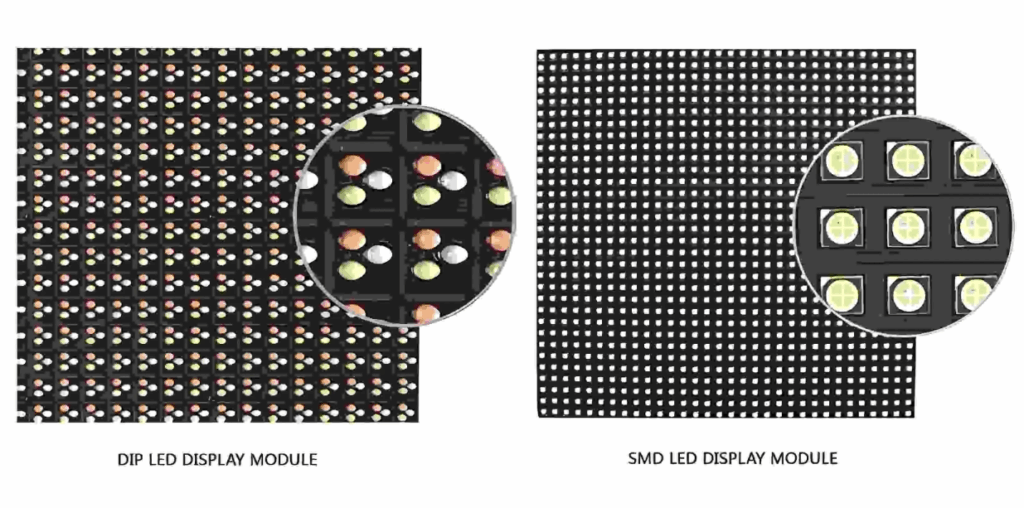
A: SMD (Surface-Mount Device) is the standard packaging for most outdoor displays—cost-effective and suitable for standard viewing distances. COB (Chip-on-Board) in 2026 is emerging in outdoor premium applications, offering enhanced durability, IP65 protection by design, and superior contrast but at a premium price–. COB remains less common for large outdoor billboards, but is gaining ground in premium retail and close-viewing outdoor applications.
Q8: How much should I budget for a complete turnkey outdoor LED installation?
A: For a 100m² P6–P10 project in 2026, total turnkey costs generally range $48,000–$92,000 including panels, steel structure, installation, controls, and shipping–. Panel costs are only 52–58% of total–.
Final Thoughts: The True Cost of an Outdoor LED Screen in 2026
After years of helping clients navigate outdoor LED display procurement, here is my honest conclusion:
There is no single answer to “how much per square meter?”—because value is not measured purely in dollars per square meter. A $400/m² P10 billboard using second-tier LED chips, copper alloy bonding wire, and a questionable IP rating may seem like a bargain—until it fails after 12 months in direct sunlight and rain. A $1,200/m² P6 display using premium gold-wire LEDs, common cathode power delivery, and genuine IP65 aluminum cabinets may cost more upfront but deliver 8–10 years of reliable 24/7 operation.
The outdoor LED display market in 2026 is defined by two opposing forces: raw material inflation pushing prices upward (gold up 70%, silver up to 170%), and manufacturing efficiency gains pulling them downward (small-pitch LED prices fell over 21% year over year in early 2026). The result is a dynamic pricing environment where the lowest quote is rarely the best long-term choice.
Here is what has not changed: A quality outdoor LED screen should be visible under direct sunlight, operate reliably in rain and dust, consume electricity efficiently (or you will pay the difference annually), and include a responsive warranty. These attributes have costs that no amount of vendor negotiation will eliminate.
My final advice: Define your application, viewing distance, and environmental exposure first. Then evaluate quotes on total installed cost—not just panel price per square meter. Ask for component specifications (LED brand, driver IC, power supply, wire bonding type, cabinet material). Visit reference installations that have been in service for 3+ years. Get the warranty in writing. And for the love of all that is visible in the daytime, verify that the brightness meets at least 5,500–6,000 nits for direct sunlight exposure.
The difference between a screen that merely lights up and a screen that genuinely performs as an advertising asset is not measured in dollars per square meter—it’s measured in ROI over the screen’s useful life. Invest accordingly.
References: