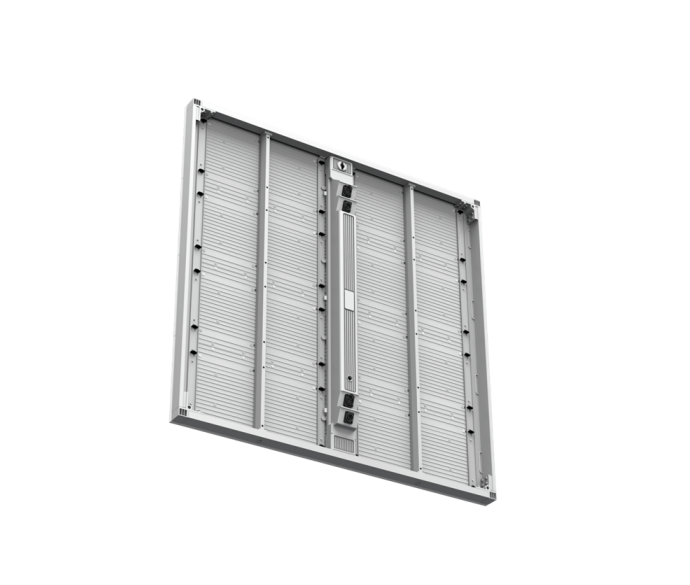
A shopping mall storefront has less than five seconds to stop foot traffic. If the screen behind the glass cannot remain vivid under aggressive ambient light, the display becomes decoration instead of a sales tool. For most retail environments in 2026, the optimal solution is no longer LCD signage. It is a high-brightness window LED display or transparent LED wall with front-service architecture, ultra-slim cabinet depth, and cloud CMS integration.
For B2B buyers evaluating commercial projects, these are the specifications that actually determine project success:
| Key Requirement | Recommended LED Specification | Commercial Impact |
|---|---|---|
| Strong daylight visibility | 3500–5500 nits | Keeps campaigns readable from long distances |
| Premium storefront aesthetics | Cabinet depth under 70mm | Preserves luxury retail appearance |
| Long-hour stability | Low-power driver IC + efficient PSU | Reduces electricity and thermal load |
| Easy maintenance | Front-service modular structure | Lowers long-term operational cost |
| Camera-friendly playback | ≥3840Hz refresh rate | Prevents scan lines during filming and social media capture |
| Flexible content control | Cloud CMS system | Supports multi-store campaign management |
Most LED screens look impressive during installation week. Far fewer still look premium after three years of continuous operation inside a high-traffic shopping mall.
That is where engineering matters.
Based on our experience with retail storefront LED projects, the most common buyer mistake is selecting a display purely by pixel pitch or quotation price while ignoring thermal management, service accessibility, transparency ratio, and brightness calibration. The result is predictable: washed-out visuals, overheating behind glass, difficult maintenance, or a storefront that suddenly feels cheap instead of premium.
According to Grand View Research, global digital signage demand continues to accelerate across retail, transportation, hospitality, and DOOH advertising because high-visibility digital displays directly improve customer engagement and in-store conversion.
That shift explains why modern shopping mall LED walls are no longer treated as simple advertising equipment. They have become architectural branding infrastructure.
Why Window LED Displays Are Replacing Traditional Retail Signage
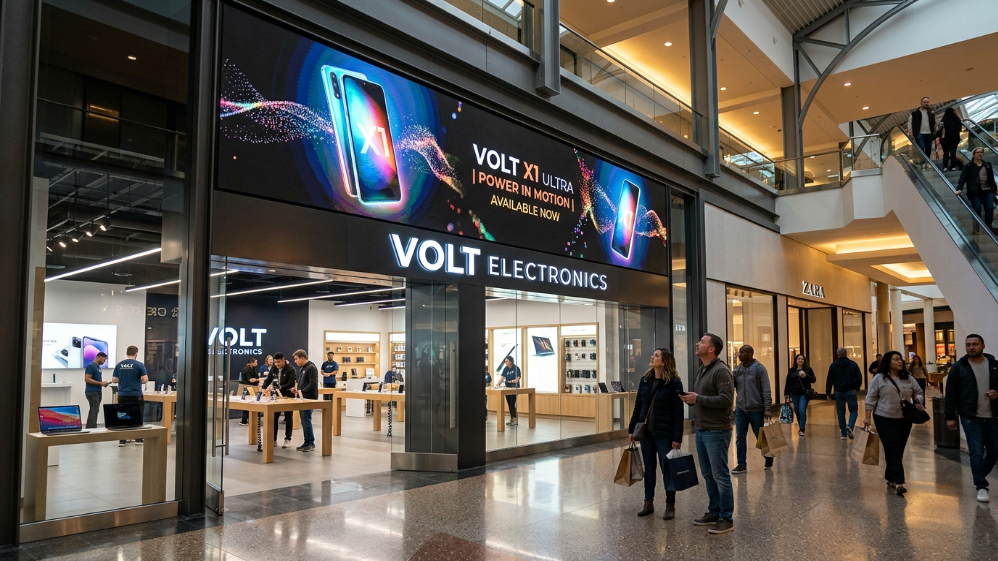
A conventional backlit poster delivers one static message. A modern window LED display behaves more like a digital storefront ecosystem.
It adapts.
It changes campaigns instantly.
It creates motion.
It controls attention.
And attention inside a shopping mall is extremely expensive.
Modern retail competition is visual warfare. Fashion brands, electronics stores, luxury cosmetics, sportswear chains, and automotive showrooms are all competing for the same customer eyesight. Static signage simply cannot maintain the same visual dominance as a properly engineered LED video wall.
This is especially true near:
- Mall entrances
- Glass atriums
- Escalator intersections
- Airport retail corridors
- High-end commercial districts
The challenge is not simply installing an LED wall. The challenge is integrating it into architecture without destroying the visual identity of the storefront.
That is why ultra-slim transparent LED displays have become increasingly important in 2026 commercial retail projects.
Window LED Display vs Transparent LED Display: Which Is Better?
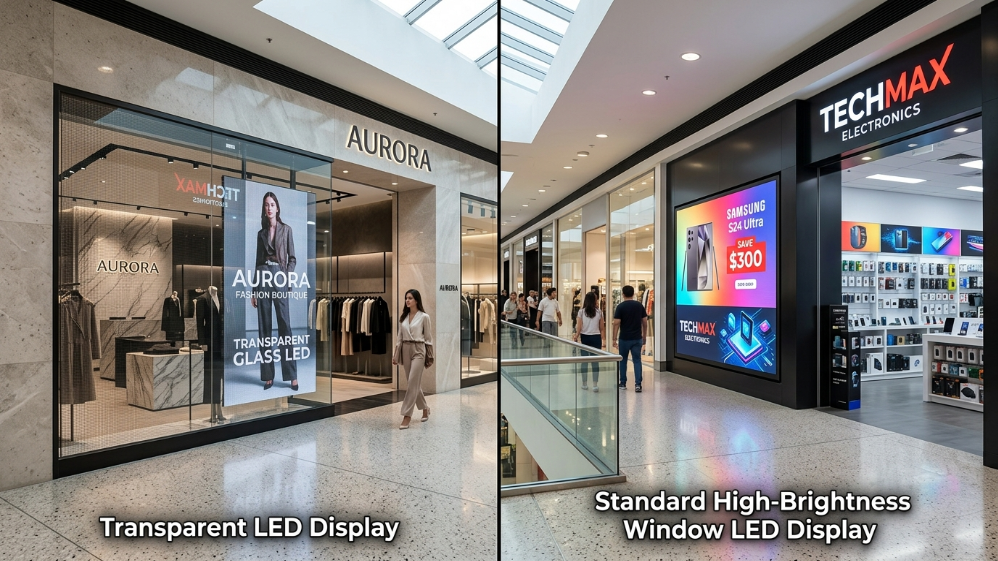
Buyers often confuse these two technologies, but their engineering logic is different.
Window LED Display
A window LED display typically uses high-density LED modules mounted behind storefront glass. Its priority is visual impact and brightness performance.
Best for:
- Electronics retail
- Sports brands
- Shopping mall campaigns
- Telecom stores
- Indoor advertising networks
Transparent LED Display
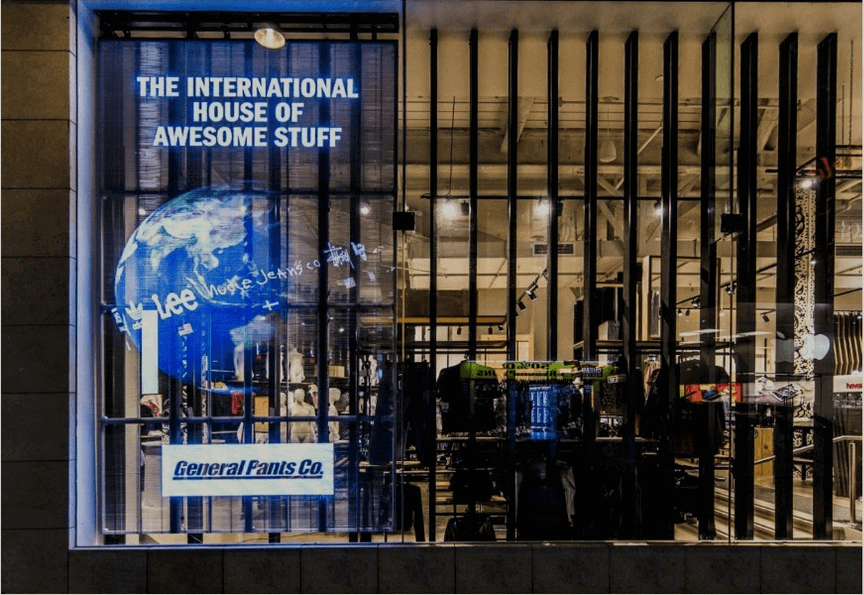
A transparent LED display uses light-bar or mesh-style cabinet structures with high transparency ratios ranging from 40% to 90%.
Its priority is preserving architectural openness while still displaying dynamic video content.
Best for:
- Luxury boutiques
- Automotive showrooms
- Jewelry stores
- Airport retail
- Premium fashion brands
The commercial difference is important.
A standard window LED wall creates stronger visual intensity. A transparent LED display creates stronger architectural elegance.
Neither is universally “better.” The correct choice depends entirely on the storefront’s branding objective.
| Display Type | Core Advantage | Main Limitation | Ideal Retail Environment |
|---|---|---|---|
| High-brightness window LED display | Strong image impact | Lower transparency | Electronics & mass retail |
| Transparent LED display | Luxury architectural integration | Lower contrast in daylight | Premium retail & luxury stores |
| Fine-pitch shopping mall LED wall | Exceptional close-view detail | Higher cost | Indoor atriums & flagship interiors |
Why Brightness Is the Most Critical Technical Parameter
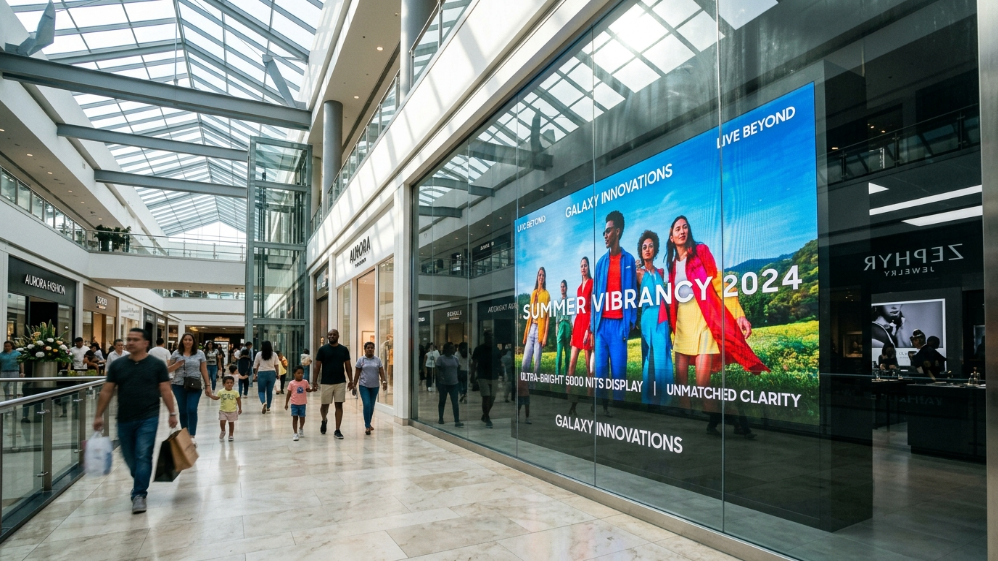
Brightness is not a marketing number. It is a survivability metric.
A shopping mall storefront experiences constant ambient light interference:
- Skylight reflections
- Marble floor reflections
- Competing digital signage
- Glass glare
- Outdoor sunlight spillover
A low-brightness display immediately loses visual authority.
This is why professional shopping mall LED walls often require significantly higher brightness than traditional indoor LED displays.
Recommended Brightness Levels by Application
| Environment | Recommended Brightness |
|---|---|
| Indoor corridor display | 1200–1800 nits |
| Window-facing retail display | 2500–4000 nits |
| Outdoor-facing glass storefront | 4500–5500+ nits |
However, experienced engineers understand that raw brightness alone is dangerous.
An improperly calibrated 5000-nit LED wall may:
- Create severe glare
- Cause color distortion
- Increase eye fatigue
- Generate excessive heat buildup
That is why premium LED systems combine:
- Automatic brightness adjustment
- High grayscale processing
- Anti-reflection optical treatment
- Advanced PWM dimming
- Low-power driver IC technology
The business value is direct.
Better image consistency improves perceived product quality. Retail psychology studies repeatedly show that visual presentation affects consumer trust before staff interaction even begins.
Why Ultra-Slim LED Cabinets Have Become Essential for Modern Retail
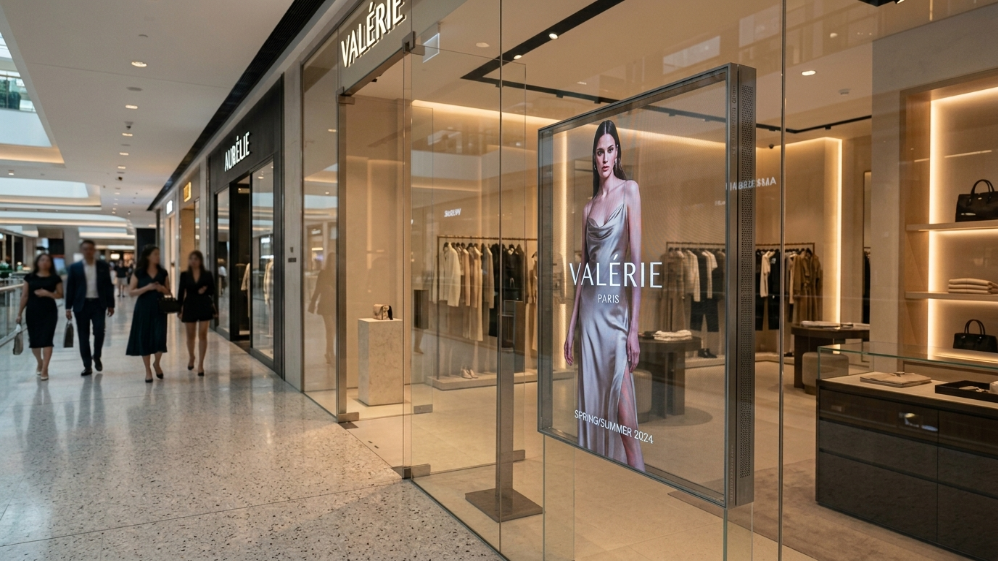
Five years ago, many commercial LED cabinets exceeded 120mm thickness.
Today, premium retail projects increasingly demand ultra-slim cabinet structures below 70mm.
This is not just aesthetics. It is architectural compatibility.
A thick LED wall creates multiple operational problems:
- Reduced interior space
- Increased heat accumulation
- Visible support framing
- Higher structural loading
- Worse storefront transparency
By contrast, an ultra-slim LED display integrates more naturally into modern retail architecture.
Based on our experience with commercial display projects across retail chains and shopping centers, slim cabinet structures also simplify approval processes with mall property management because they reduce structural stress and preserve facade design consistency.
This is particularly important for:
- Luxury shopping malls
- Airport retail environments
- Flagship experience stores
- Automotive brand showrooms
- High-end cosmetics retail
Consumers may not consciously analyze cabinet thickness. But they immediately notice whether a storefront feels premium or visually cluttered.
That reaction influences purchasing behavior more than many buyers expect.
The Engineering Logic Behind Pixel Pitch Selection
One of the biggest misconceptions in the LED industry is the assumption that smaller pixel pitch automatically means a better display.
Not always.
Pixel pitch should match viewing behavior.
A P1.2 LED wall installed where customers mainly view content from 10 meters away wastes budget without creating meaningful visual improvement. Meanwhile, a P5 display inside a luxury cosmetics storefront may appear visibly coarse and damage premium brand perception.
The correct approach is optimization—not specification inflation.
Recommended Pixel Pitch by Viewing Distance
| Viewing Distance | Recommended Pixel Pitch | Typical Application |
|---|---|---|
| 2–4 meters | P1.5–P1.9 | Luxury retail & cosmetics |
| 4–8 meters | P2.5–P3 | Shopping mall storefronts |
| 8–15 meters | P3.9–P5 | Mall atriums & corridors |
| 15m+ | P5–P8 | Large advertising facades |
Professional LED engineers evaluate:
- Customer walking speed
- Viewing angles
- Content motion
- Camera exposure
- Average dwell time
- Architectural sightlines
This explains why experienced LED manufacturers request site drawings before finalizing quotations.
Recommended Solutions for Shopping Mall Window LED Projects
After analyzing retail-focused solutions from SoStron Products and real-world deployment cases from SoStron Case Studies, two product categories stand out as particularly suitable for shopping mall window LED applications.
Solution 1: Reta 2 Small Pitch LED Display
Best for:
- Indoor shopping mall LED walls
- Electronics stores
- Cosmetics retail
- Retail brand flagship stores
Recommended specifications:
- Fine pixel pitch
- Seamless splicing
- High refresh rate
- Front maintenance structure
- Ultra-slim cabinet design
Commercial advantage:
The fine-pitch architecture delivers premium close-view image quality while maintaining stable long-hour operation. For mall environments with heavy pedestrian flow, this significantly improves content readability and perceived brand sophistication.
Solution 2: Transparent LED Display Solutions
Best for:
- Glass storefronts
- Luxury boutiques
- Automotive showrooms
- Airport retail projects
Recommended specifications:
- High transparency ratio
- Lightweight aluminum structure
- Easy wall integration
- Low visual obstruction
- Energy-efficient operation
Commercial advantage:
Transparent LED displays preserve natural light and architectural openness while still transforming the storefront into a dynamic digital advertising surface.
That balance is extremely valuable for premium retail brands.
Case Study: Manila Shopping Mall Outdoor LED Display Project
One notable deployment featured on SoStron Global Cases involved a large outdoor LED display installed at the entrance of a busy shopping mall in Manila.
The engineering challenge was not simply brightness. The display needed to:
- Remain visible under tropical daylight conditions
- Resist humidity and heat
- Operate continuously in high-traffic commercial conditions
- Integrate with the mall facade without overwhelming the architecture
The project demonstrated a broader industry trend: shopping mall LED walls are increasingly expected to function simultaneously as advertising media, architectural enhancement, and digital customer engagement infrastructure.
And that changes how serious B2B buyers evaluate LED display systems.
How to Choose the Right Shopping Mall LED Display System
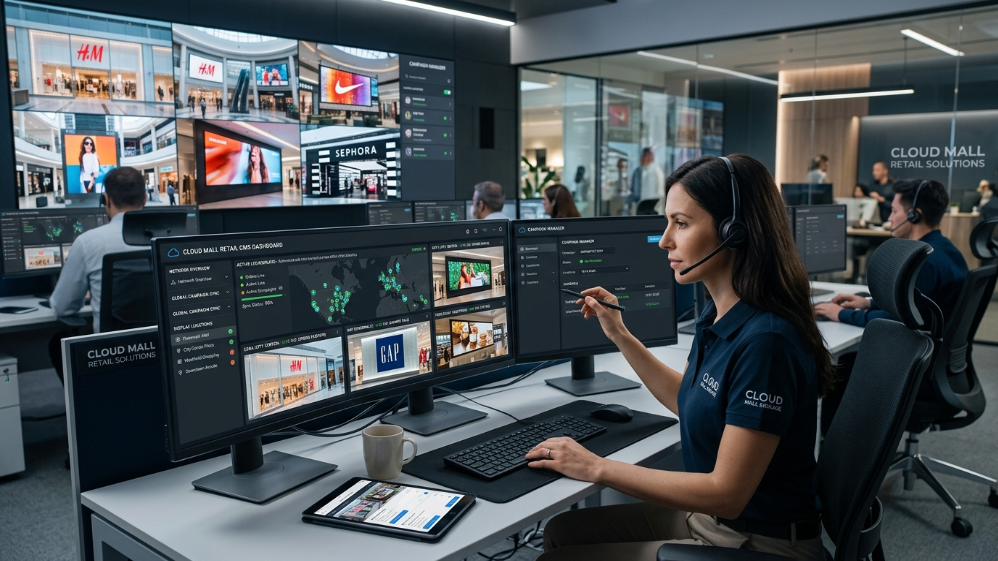
A shopping mall LED wall should never be selected as an isolated product.
It is part display system, part architectural element, part brand communication infrastructure. The most successful retail LED projects in 2026 are usually the ones where engineering decisions were made early—before interior finishing, before electrical routing, and before storefront aesthetics were finalized.
That changes the procurement logic completely.
Professional buyers are no longer asking:
“What is your lowest price per square meter?”
They are asking:
“How will this display perform after 30,000 hours inside a high-traffic commercial environment?”
That is a far more intelligent question.
Because in retail environments, poor LED decisions become visible every single day.
How Mall Architecture Changes LED Engineering
LED displays inside shopping malls operate under constraints that many first-time buyers underestimate.
Unlike outdoor billboards or standard conference room video walls, retail LED systems must coexist with:
- Glass reflections
- Decorative lighting
- HVAC airflow limitations
- Luxury interior materials
- Narrow maintenance access
- Strict property management rules
A technically acceptable LED screen can still become a commercial failure if it disrupts storefront aesthetics.
This is why premium shopping mall LED projects increasingly favor:
- Ultra-slim cabinets
- Front-service access
- Hidden cable routing
- Lightweight aluminum structures
- Fanless thermal designs
- Seamless cabinet splicing
Based on our experience with commercial retail integration projects, cabinet depth often matters more than buyers initially realize.
A bulky 120mm cabinet may appear acceptable on paper. Installed behind luxury storefront glass, however, it immediately feels intrusive and outdated.
By contrast, slim LED systems below 70mm visually integrate into modern retail architecture much more naturally.
That distinction directly affects brand perception.
Recommended LED Structures by Retail Environment
| Retail Environment | Recommended Structure | Why It Works |
|---|---|---|
| Luxury fashion storefront | Transparent LED display | Preserves openness and natural light |
| Electronics flagship store | High-brightness window LED display | Maximizes visual impact and product visibility |
| Mall atrium media wall | Fine-pitch LED wall | Delivers immersive large-scale visuals |
| Airport duty-free retail | Ultra-light transparent LED mesh | Reduces structural loading |
| Automotive showroom | Large-format glass-integrated LED | Creates futuristic presentation effects |
The display should enhance architecture—not overpower it.
That is where many low-cost suppliers fail.
Front-Service vs Rear-Service: The Real Maintenance Cost Difference
Maintenance strategy is rarely discussed during the quotation phase. It should be one of the first topics.
A shopping mall LED wall operating 14–18 hours daily will eventually require:
- Module replacement
- Power supply servicing
- Receiving card maintenance
- Calibration adjustments
- Signal troubleshooting
The question is not whether maintenance will happen.
The question is how expensive and disruptive that maintenance becomes.
Why Front-Service LED Displays Dominate Retail Projects
Modern retail environments rarely provide sufficient rear access space. This is especially true for:
- Glass storefront installations
- Embedded wall integrations
- High-end boutique interiors
- Airport retail corridors
That is why front-maintenance LED displays have become the preferred architecture for commercial retail applications.
With front-service systems, technicians can remove:
- LED modules
- Power supplies
- HUB boards
- Receiving cards
Directly from the front side of the display using magnetic tools or vacuum extraction systems.
The operational benefit is substantial.
| Maintenance Design | Operational Impact | Long-Term Cost Effect |
|---|---|---|
| Front-service LED | Faster repairs | Lower labor cost |
| Modular architecture | Easier spare part replacement | Reduced downtime |
| Tool-less maintenance | Simplified servicing | Faster mall maintenance approval |
| Hot-swappable components | Continuous operation | Lower business interruption risk |
Rear-maintenance systems may appear cheaper initially, but often become significantly more expensive over time because servicing requires:
- Store shutdowns
- Wall disassembly
- Additional labor
- Nighttime maintenance scheduling
For retail chains operating multiple locations, maintenance efficiency becomes a major operational advantage.
Why CMS Platforms Matter More Than Most Buyers Expect
Many buyers still treat LED displays as hardware purchases.
That mindset is outdated.
Modern window LED displays are content ecosystems. The screen itself is only one part of the system. The real operational efficiency comes from the CMS platform behind it.
A modern cloud CMS allows operators to:
- Push campaigns remotely
- Synchronize content across stores
- Schedule seasonal promotions
- Adjust brightness automatically
- Monitor display health status
- Manage emergency messaging
For shopping mall advertising operators and international retail brands, this dramatically reduces content management labor.
Based on our experience with multi-location commercial deployments, centralized cloud control is now considered essential for:
- Franchise retail chains
- Airport retail networks
- DOOH advertising operators
- Luxury brand flagship stores
- Multi-region shopping mall campaigns
Without cloud CMS integration, even premium LED hardware quickly becomes operationally inefficient.
What Buyers Should Look for in a Commercial LED CMS
| CMS Capability | Commercial Value |
|---|---|
| Remote publishing | Faster campaign deployment |
| Multi-screen synchronization | Stronger brand consistency |
| Brightness automation | Improved energy efficiency |
| User permission management | Better operational security |
| Real-time monitoring | Reduced maintenance response time |
| Cloud scheduling | Simplified campaign management |
In 2026, the software layer increasingly determines the long-term value of the LED investment.
How to Evaluate LED Suppliers Beyond Price
Two suppliers may offer displays with similar specifications on paper:
- Same brightness
- Same pixel pitch
- Same cabinet size
- Same refresh rate
Yet the real-world performance difference can be enormous.
The reason lies inside the engineering details buyers often never see.
Professional LED procurement teams now evaluate:
- Driver IC quality
- LED encapsulation brand
- Power supply stability
- Thermal management structure
- Cabinet machining precision
- Calibration consistency
- Spare parts strategy
This is where engineering transparency matters.
Professional LED Procurement Checklist
| Evaluation Area | What Buyers Should Verify | Why It Matters |
|---|---|---|
| LED lamp brand | Nationstar / Kinglight / equivalent | Impacts lifespan and color stability |
| Refresh rate | ≥3840Hz | Eliminates scan lines during filming |
| Cabinet flatness | ≤0.1mm tolerance | Prevents visible seams |
| Thermal structure | Fanless or optimized airflow | Improves long-term reliability |
| Driver IC | Low-power constant-current IC | Reduces energy consumption |
| Certification | CE, FCC, ETL, RoHS | Required for international compliance |
| Redundancy system | Backup signal & power | Prevents black-screen failures |
According to industry maintenance data, poor-quality power systems remain one of the leading causes of commercial LED failure.
That is why experienced buyers increasingly request:
- Aging test videos
- White-balance calibration reports
- Thermal testing documentation
- Brightness consistency reports
- Spare parts availability plans
If a supplier avoids detailed engineering discussion, that is usually a warning sign.
Common Procurement Mistakes in Shopping Mall LED Projects
Even experienced buyers occasionally make decisions that create long-term operational problems.
Mistake 1: Choosing the Highest Brightness Without Environmental Analysis
Higher brightness is not always better.
A poorly calibrated 6000-nit display installed inside a luxury shopping corridor may create:
- Excessive glare
- Customer discomfort
- Overexposed visuals
- Increased heat buildup
Brightness should always match ambient lighting conditions.
Mistake 2: Ignoring Thermal Management Behind Glass
Glass storefront installations trap heat.
Without proper airflow planning, high-brightness LED displays may experience:
- Accelerated LED degradation
- Color inconsistency
- Reduced power supply lifespan
- Increased maintenance frequency
This is particularly critical in:
- Tropical climates
- South-facing storefronts
- Fully enclosed retail windows
Professional thermal planning is no longer optional for premium retail projects.
Mistake 3: Over-Specifying Pixel Pitch
A P1.2 display viewed mainly from 8–10 meters away usually provides minimal commercial advantage over a properly calibrated P2.5 solution.
But it dramatically increases:
- Project cost
- Power density
- Maintenance complexity
Engineering optimization matters more than specification inflation.
Mistake 4: Treating the LED Wall as Decoration Instead of Retail Infrastructure
The best-performing shopping mall LED walls are integrated into:
- Brand storytelling
- Seasonal marketing
- Product launches
- Customer engagement campaigns
- DOOH monetization strategies
Static content wastes dynamic display technology.
The display should continuously generate commercial value.
Recommended 2026 Configuration for Most Shopping Mall Projects
After evaluating current retail deployment trends, several configuration patterns consistently deliver the strongest balance between:
- Visual quality
- Operational stability
- Architectural integration
- Long-term ROI
Recommended Window LED Display Configuration
| Application | Recommended Setup |
|---|---|
| Premium retail storefront | P2.5–P3.9 ultra-slim front-service LED |
| Luxury glass facade | Transparent LED display with 60%–80% transparency |
| Indoor mall media wall | Fine-pitch LED wall with cloud CMS |
| High-traffic retail corridor | 3500–4500 nit high-brightness LED |
| Multi-location retail chain | Cloud-managed synchronized LED network |
For most commercial projects in 2026, the safest long-term investment is not the cheapest LED wall.
It is the display system that still looks premium after years of continuous operation, maintains stable brightness calibration, simplifies maintenance, and integrates naturally into the retail architecture.
A shopping mall LED wall should attract attention.
It should never attract maintenance complaints.
References:
U.S. Department of Energy – Solid-State Lighting Program
SMPTE (Society of Motion Picture and Television Engineers)