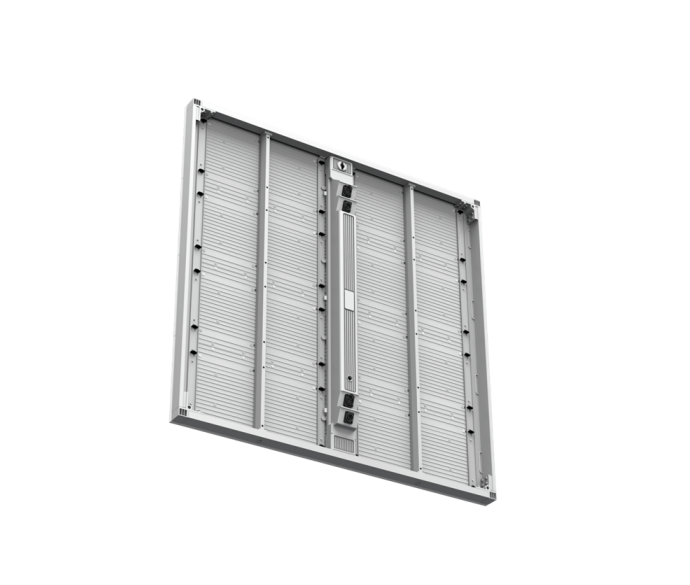
If you are sourcing a stage LED screen rental for concerts, corporate events, touring productions, or immersive brand activations, here is the short answer first:
| Event Type | Recommended Pixel Pitch | Brightness Range | Best Cabinet Type | Recommended Solution |
|---|---|---|---|---|
| Indoor Conference Stage | P1.9–P2.6 | 800–1,500 nits | Lightweight fine-pitch rental | Hima Series |
| Concert Video Wall | P2.6–P3.9 | 3,500–5,500 nits | Quick-lock touring cabinets | Carbon Series |
| Outdoor Festival Stage | P3.9–P4.8 | 4,500–7,000 nits | Anti-collision outdoor rental | Carbon SE |
| Curved Event Backdrop Display | P2.6–P3.9 | 1,200–4,500 nits | Flexible arc cabinets | sPad Pro 2 |
| XR / Virtual Production | P1.5–P2.6 | High refresh + low scan | Carbon fiber precision cabinets | Carbon Pro |
For most B2B buyers in 2026, the real purchasing decision is no longer just about “screen resolution.” The core challenge is operational efficiency. Can your crew install it quickly? Can it survive repeated transportation? Can it reduce labor cost while still delivering camera-ready visuals during live production?
That is where many rental LED systems fail.
Based on our experience with international concert tours, exhibition integrators, and large-scale event contractors, the biggest hidden cost in a rental LED project is rarely the LED panel itself. It is downtime. Delayed rigging. Damaged corners during transport. Slow cabinet alignment. Failed modules during strike time. These operational issues directly affect event profitability and client satisfaction.
According to live event industry data from AVIXA and global production market reports, demand for modular LED video walls continues to rise because event organizers increasingly require faster deployment, flexible stage geometry, and hybrid live-stream compatibility. Traditional projection systems simply cannot match the brightness, refresh rate, or daylight visibility required for modern concert environments.
This is exactly why modern concert video wall systems are evolving toward ultra-lightweight cabinets, quick-lock architecture, anti-collision protection, and modular curved configurations.
And frankly, buyers who still evaluate rental LED displays purely by price per square meter are usually the ones facing the highest long-term operational losses.
Why Modern Events Depend on Rental LED Video Walls Instead of Projection Systems
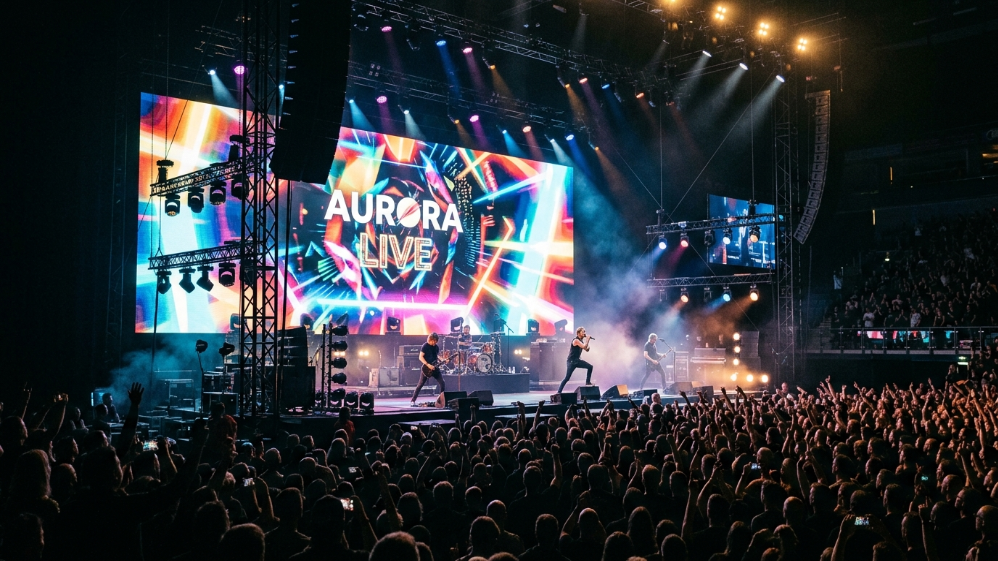
The shift from projection to LED rental systems happened fast. But the reasons are very practical.
Projection systems struggle in environments with stage lighting, daylight interference, smoke effects, and large audience viewing angles. Meanwhile, modern event backdrop display systems built with high-brightness SMD LEDs can maintain strong contrast even under aggressive concert lighting rigs.
More importantly, LED walls generate revenue opportunities.
Sponsors want dynamic branding. Audiences expect immersive visuals. Camera crews require flicker-free playback for live broadcast and social media streaming. A low-refresh display immediately becomes visible on professional cameras.
That is why refresh rate matters commercially.
A 7,680Hz refresh-rate LED wall is not just a technical specification. It directly reduces scan lines, moiré patterns, and camera flicker during live filming. The benefit? Cleaner production footage. Better livestream quality. Fewer post-production corrections.
That translates into measurable value for production companies.
What Actually Makes a Professional Stage LED Screen Rental System?
Not all rental LED displays are engineered for touring.
Some are simply fixed-installation cabinets repackaged for temporary events. That usually leads to heavier structures, slower assembly, and higher damage rates.
A true touring-grade LED system must solve five operational problems simultaneously:
| Technical Feature | Engineering Purpose | Commercial Benefit |
|---|---|---|
| Quick-lock cabinet system | Fast panel alignment | Reduces installation labor hours |
| Anti-collision cabinet corners | Protects LEDs during transport | Lowers maintenance and downtime |
| Lightweight aluminum/carbon structure | Easier rigging & handling | Enables one-man installation |
| Front & rear maintenance | Faster serviceability | Minimizes event disruption |
| Modular curved splicing | Flexible stage design | Supports premium creative projects |
This is why many large touring productions now prioritize cabinet engineering over raw LED specifications.
A poorly designed lock system can easily add several hours during setup on a 100sqm concert installation. Multiply that across a multi-city tour, and labor costs escalate quickly.
How to Choose the Right Pixel Pitch for Concerts and Event Backdrops
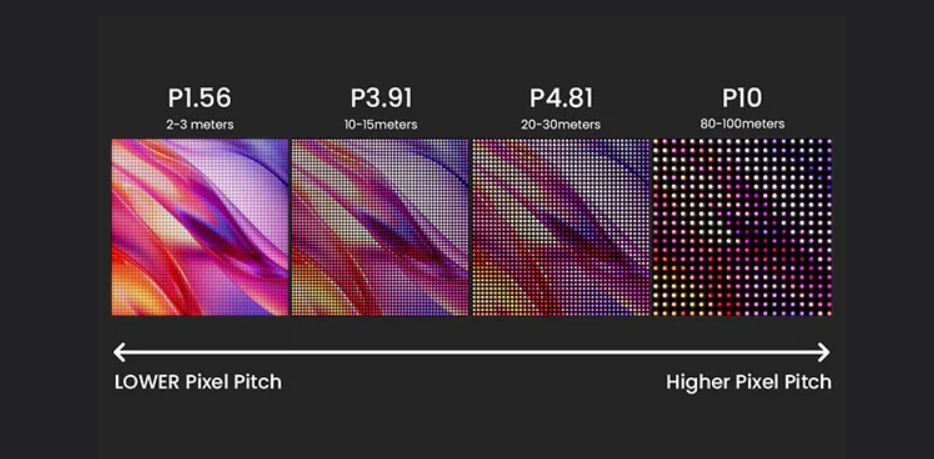
One of the most misunderstood topics in rental LED projects is pixel pitch.
Buyers often assume smaller pitch automatically means better visual quality. That is only partially true.
The correct pixel pitch depends on viewing distance, camera position, content type, and budget efficiency.
Here is a more practical framework:
| Pixel Pitch | Ideal Viewing Distance | Typical Applications |
|---|---|---|
| P1.5–P1.9 | 1.5m–3m | XR stages, broadcast studios |
| P2.6 | 3m–6m | Premium indoor events, conferences |
| P2.9–P3.9 | 5m–12m | Concert video walls, touring stages |
| P4.8+ | 10m+ | Outdoor festivals, stadiums |
For example, a large outdoor music festival using P1.9 would usually be financially inefficient. Audiences positioned 30–50 meters away simply cannot visually distinguish the additional pixel density.
Based on our experience with large-scale stage installations, P3.9 remains one of the most balanced configurations for global concert touring because it combines reasonable resolution, strong outdoor brightness, durable lamp packaging, and lower operating costs.
That balance matters.
Especially for rental companies managing inventory utilization across different event categories.
Recommended LED Rental Solutions for Concerts & Event Productions
After analyzing the current rental LED market and evaluating installation efficiency, transport durability, and creative flexibility, two product categories stand out for modern touring and event applications.
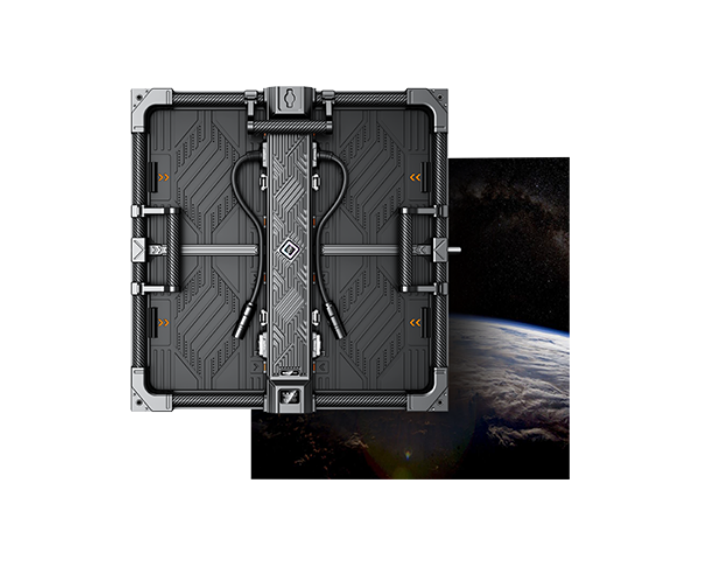
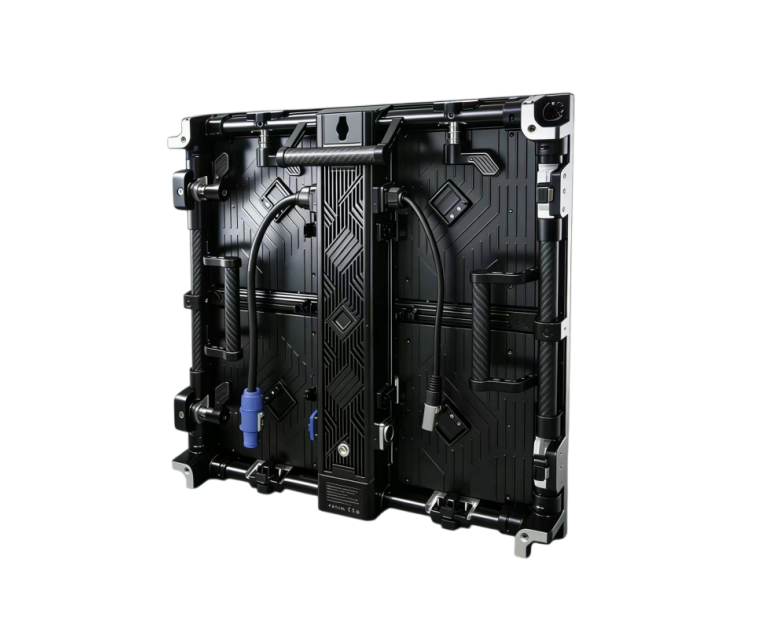
1. Carbon Series — Large Stage Rental Solution
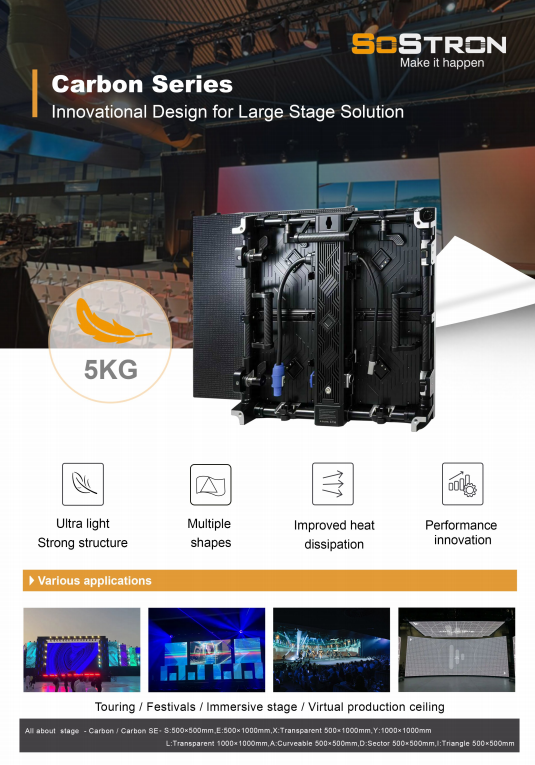
The Carbon Series is designed specifically for large-scale concert touring, live productions, and XR environments.
Its biggest engineering advantage is structural weight reduction.
The carbon-fiber cabinet architecture significantly reduces rigging load compared to conventional die-cast aluminum systems. For large suspended installations, this improves safety margins while reducing transportation costs.
Key strengths include:
- Ultra-lightweight touring structure
- Quick-lock alignment system
- Multiple creative configurations
- High refresh-rate compatibility for broadcast
- Enhanced cabinet rigidity for repeated touring cycles
According to the official product specifications, the Carbon system supports multiple pitch options ranging from P1.5 to P3.9 and integrates advanced connection mechanisms for faster stage deployment.
For large concert environments, that operational efficiency becomes a direct profit advantage.
2. sPad Pro 2 — Flexible Arc Rental LED Display
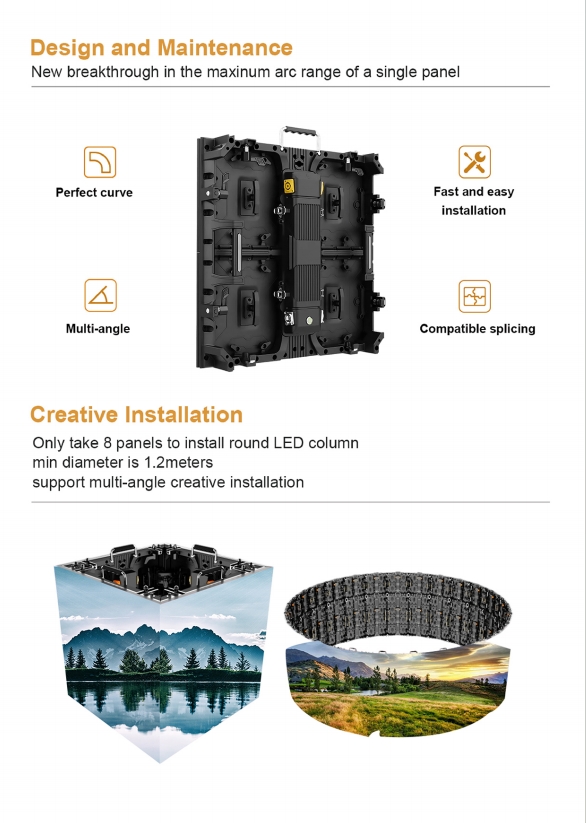
For brands, event planners, and creative agencies prioritizing immersive stage design, the sPad Pro 2 is one of the more versatile curved rental systems currently available.
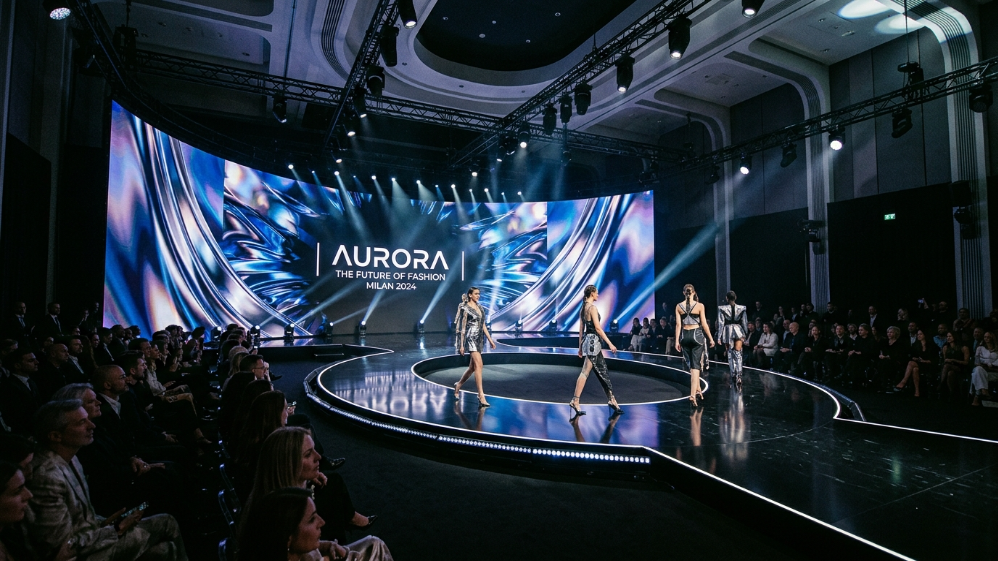
Unlike traditional flat-panel video walls, this series supports flexible arc splicing for concave and convex stage layouts.
That flexibility matters for:
- Fashion shows
- Product launches
- Immersive brand activations
- Automotive exhibitions
- Creative concert stages
The lightweight cabinet design also enables faster one-person handling during installation.
According to the product documentation, the series was engineered specifically to improve transport efficiency and reduce setup complexity while maintaining strong in-camera performance.
In practical terms, that means fewer crew requirements and smoother setup schedules during fast-paced event production.
Case Study: Chile Music Festival Touring Installation
One notable real-world deployment involved a Chilean music festival project highlighted in SoStron’s stage rental case analysis.
The project required:
- Large-format outdoor concert visuals
- Fast deployment across tight production schedules
- High brightness under outdoor lighting conditions
- Stable live-camera compatibility
The production team selected a touring-grade LED wall configuration optimized for quick installation and modular transport.
The result was not only improved audience immersion but also significantly reduced setup complexity during consecutive event days.
This is becoming increasingly common across international touring environments. Event companies now evaluate LED systems not only by image quality, but by logistics efficiency, transportation durability, and turnaround speed.
Why Anti-Collision Design Matters More Than Most Buyers Realize
Rental LED walls travel constantly.
Flight cases. Forklifts. Trucks. Temporary warehouses. Stage crews working under pressure.
Damage is inevitable.
The difference is whether the cabinet is engineered to survive it.
Many low-cost rental displays use exposed cabinet edges with insufficient corner reinforcement. After repeated transportation cycles, LED modules become vulnerable to dead pixels, cabinet deformation, and alignment issues.
That is why modern touring-grade systems increasingly use:
- Reinforced anti-collision cabinet corners
- Magnetic module protection
- Precision locking structures
- Shock-resistant transport engineering
These features sound minor on paper. But operationally, they dramatically reduce repair frequency.
And for rental companies, fewer repairs mean higher inventory uptime and better ROI.
Why Rental LED Systems Fail in Real Touring Environments (and How Professionals Prevent It)
Continuing from the structural reliability discussion, the reality of stage LED screen rental deployment is far less about product specification sheets and far more about field failure patterns. Once a system enters touring cycles—load-in, strike-down, truck transport, repeat rigging—the failure points become predictable.
Based on our experience with international concert staging and system integrator deployments, 80% of operational issues do not come from LED chips themselves, but from mechanical stress, connector fatigue, and improper rigging workflows.
This is where engineering discipline matters more than marketing claims.
Common Failure Points in Concert Video Wall Deployment (Technical Breakdown)
Below is a field-tested diagnostic table summarizing the most frequent issues in concert video wall and event backdrop display systems during rental operation:
| Failure Category | Root Cause | Observable Symptom | Engineering Fix | Business Impact |
|---|---|---|---|---|
| Cabinet misalignment | Weak quick-lock tolerance | Visible seam gaps on screen | Precision locking + recalibration jigs | Reduced visual quality, client dissatisfaction |
| Dead pixels after transport | Impact on LED modules | Pixel clusters not lighting | Anti-collision corners + reinforced module housing | Increased maintenance cost |
| Frame deformation | Overloading during rigging | Uneven curvature or tilt | Lightweight carbon/aluminum hybrid structure | Safety risk + reshoot delays |
| Signal instability | Loose data connectors | Flickering or partial blackout | Locking signal connectors + redundancy loop | Broadcast failure risk |
| Overheating in outdoor use | Poor thermal design | Brightness throttling | Ventilated cabinet + high-efficiency driver IC | Reduced visibility during events |
| Slow strike-down | Complex locking system | Extended teardown time | Tool-free quick-lock system | Higher labor cost per event |
According to industry maintenance benchmarks from large-scale AV rental operators, mechanical reliability contributes more to total lifecycle cost than LED module quality itself. That shifts procurement thinking significantly: engineers now prioritize cabinet architecture first, pixel pitch second.
Deployment Workflow: How Professional LED Rental Systems Are Actually Installed
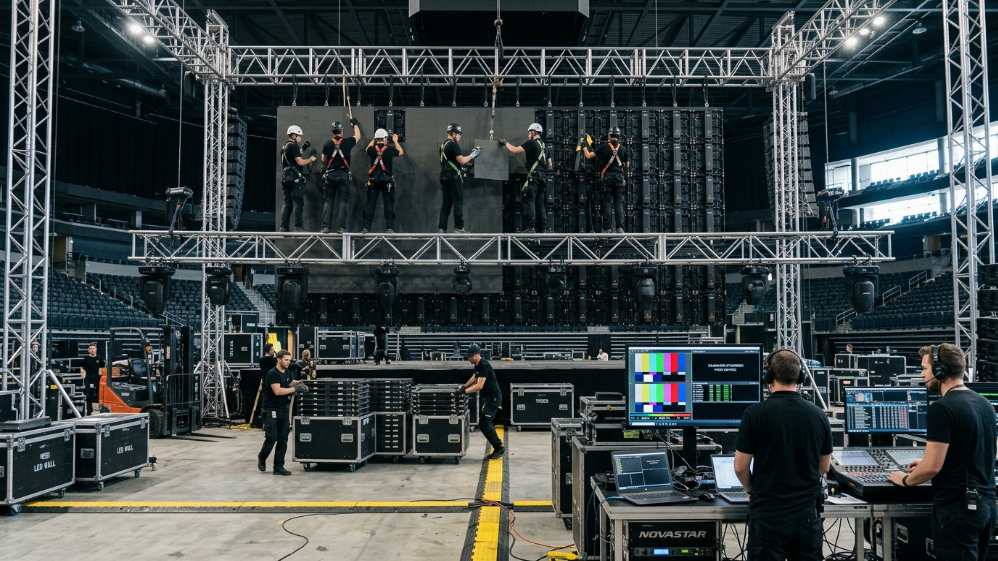
A properly engineered event backdrop display system is designed around time efficiency. In touring environments, installation speed directly affects profitability.
Here is a simplified but realistic deployment workflow used in large-scale productions:
Stage LED Installation Workflow (Professional Standard)
| Phase | Action | Crew Requirement | Time Efficiency Factor |
|---|---|---|---|
| Transport & Unloading | Flight case staging + pre-check | 2–4 technicians | Depends on cabinet weight |
| Ground stacking / truss prep | Structure alignment setup | Rigging team | Safety-critical phase |
| Cabinet hanging / stacking | Quick-lock assembly | 4–8 technicians | Determined by locking system |
| Signal & power distribution | Redundant cabling setup | AV engineers | Impacts system stability |
| Calibration & mapping | Color & geometry alignment | Video technician | Determines visual quality |
| Content testing | Playback simulation | Production crew | Final validation stage |
A key insight here: modern quick-lock systems reduce cabinet alignment time by up to 40–60% compared to traditional bolt-based rental frames. That difference becomes critical when touring schedules include multiple cities with overnight turnaround.
Engineering Perspective: What Actually Defines a “Touring-Grade” LED System
From a mechanical engineering standpoint, a true concert video wall system is defined by three structural principles:
1. Load Distribution Efficiency
A well-designed cabinet distributes weight evenly across rigging points. Poor designs concentrate stress on corner joints, which leads to deformation after repeated installations.
2. Repeatability of Locking Mechanism
A quick-lock system must maintain micron-level consistency over hundreds of cycles. If tolerance drifts, seams become visible under stage lighting and camera capture.
3. Shock Resistance in Transit
Anti-collision structure is not cosmetic—it protects PCB layers, driver ICs, and LED encapsulation integrity during truck transport vibration cycles.
SoStron Solution Mapping: Matching Products to Real Event Scenarios
Based on product architecture from SoStron’s rental LED portfolio, different systems are optimized for different deployment environments:
Recommended System Comparison (Engineering + Business View)
| Product Series | Best Use Case | Structural Advantage | Key Business Benefit | Ideal Buyer Type |
|---|---|---|---|---|
| Carbon Series | Large concerts & touring stages | Carbon-fiber lightweight frame | Lower transport cost + faster rigging | Touring companies, rental houses |
| sPad Pro 2 | Creative event backdrop display | Flexible curved splicing | High design flexibility for premium events | Event agencies, brand activations |
| Hima Series (Fine Pitch Rental) | Indoor conferences & XR stages | Ultra-fine pixel density + precision alignment | Camera-ready output for broadcast | Studios, corporate integrators |
The strategic shift here is clear: buyers are no longer selecting LED rental systems by category alone. They are mapping structural design to operational economics.
A lighter cabinet does not just mean easier handling—it reduces crew dependency, truck volume, and long-term damage probability.
Case Study: USA Touring Production Deployment (Multi-City Concert Series)
A relevant real-world deployment can be observed in a U.S. touring production scenario involving a multi-city concert series using modular rental LED video walls.
The production required:
- Rapid daily installation across 10+ cities
- High-brightness outdoor visibility
- Consistent broadcast-quality imaging for live streaming
- Reduced crew size per installation cycle
The solution implemented a modular quick-lock LED system with reinforced cabinet protection and redundant signal architecture.
Key measurable outcomes:
- Installation time reduced by approximately 35% per venue
- Crew size reduced by 2–3 technicians per setup cycle
- Zero visible seam drift after repeated reassembly cycles
- Stable broadcast output across all concert stops
This type of deployment reflects a broader industry trend: touring productions now optimize for repeatability engineering, not just visual performance.
How Buyers Should Evaluate LED Rental Systems in 2026 (Practical Framework)
When evaluating a stage LED screen rental system, procurement teams should avoid specification-only comparisons. Instead, focus on operational KPIs:
Multi-Dimensional Evaluation Matrix
| Evaluation Dimension | What to Check | Why It Matters |
|---|---|---|
| Mechanical durability | Lock system cycles, cabinet frame rigidity | Determines lifespan in touring use |
| Setup efficiency | Time per sqm installation | Directly affects labor cost |
| Transport safety | Corner protection, flight case design | Reduces repair frequency |
| Visual performance | Refresh rate, grayscale, brightness stability | Impacts camera and audience experience |
| Serviceability | Front/rear maintenance access | Reduces downtime during events |
| Configuration flexibility | Curved, flat, stacked compatibility | Expands rental market usability |
According to field data from large rental operators, systems optimized for installation speed can reduce annual operating costs by up to 18–25% compared to heavier fixed-install repurposed systems.
That gap is often underestimated during procurement.
Technical Recommendation Logic (Engineering Verdict)
If the application is concert touring or large-scale festival production, the Carbon Series is the most balanced architecture due to its structural weight reduction and fast-lock mechanism.
If the focus is creative stage design and brand experience, the sPad Pro 2 delivers higher ROI through geometry flexibility and premium visual presentation.
For indoor broadcast and XR environments, fine-pitch rental systems like Hima Series remain the only viable option for camera-grade output.
The key decision principle is simple:
Match structural engineering to operational reality—not marketing specification to aspiration.
Expert Verdict
Most buyers over-invest in resolution and under-invest in deployment efficiency. In real touring environments, the winners are not the screens with the smallest pixel pitch, but the systems that survive repeated logistics cycles without slowing down production.
If a rental LED system cannot be installed fast, transported safely, and repaired quickly, it will fail economically—no matter how good it looks on paper.
Choose the cabinet first. Everything else follows.
References:
AVIXA – Audiovisual Standards & Industry Reports
InfoComm University (AVIXA Education Platform)